Send a wide shot and a close-up of the water marks and tell us when they appear. You can enquire even if you don't know where the leak starts.
Our indicative rate for a 30–40 sq ft bathroom is HK$4,850, including flood testing. Strip-out and tiling are extra. Bathroom strip-out with new waterproofing costs HK$13,000, excluding tiling. The same work is only charged once. Our roof and soffit photos illustrate site conditions. The source of a leak needs to be checked on site. If you see seepage in a bathroom, kitchen or roof, tell us where and when water appears and what repairs have been attempted. We can then inspect the site and agree the scope. Where new waterproofing is needed, the quote sets out strip-out, substrate repairs, waterproofing, testing and tiling separately. Photos help us discuss the issue but cannot establish the source on their own. Compare our published prices and inclusions below, then send photos for a quote.
Data verification date:2026-11-13・Numbers are accompanied by sources
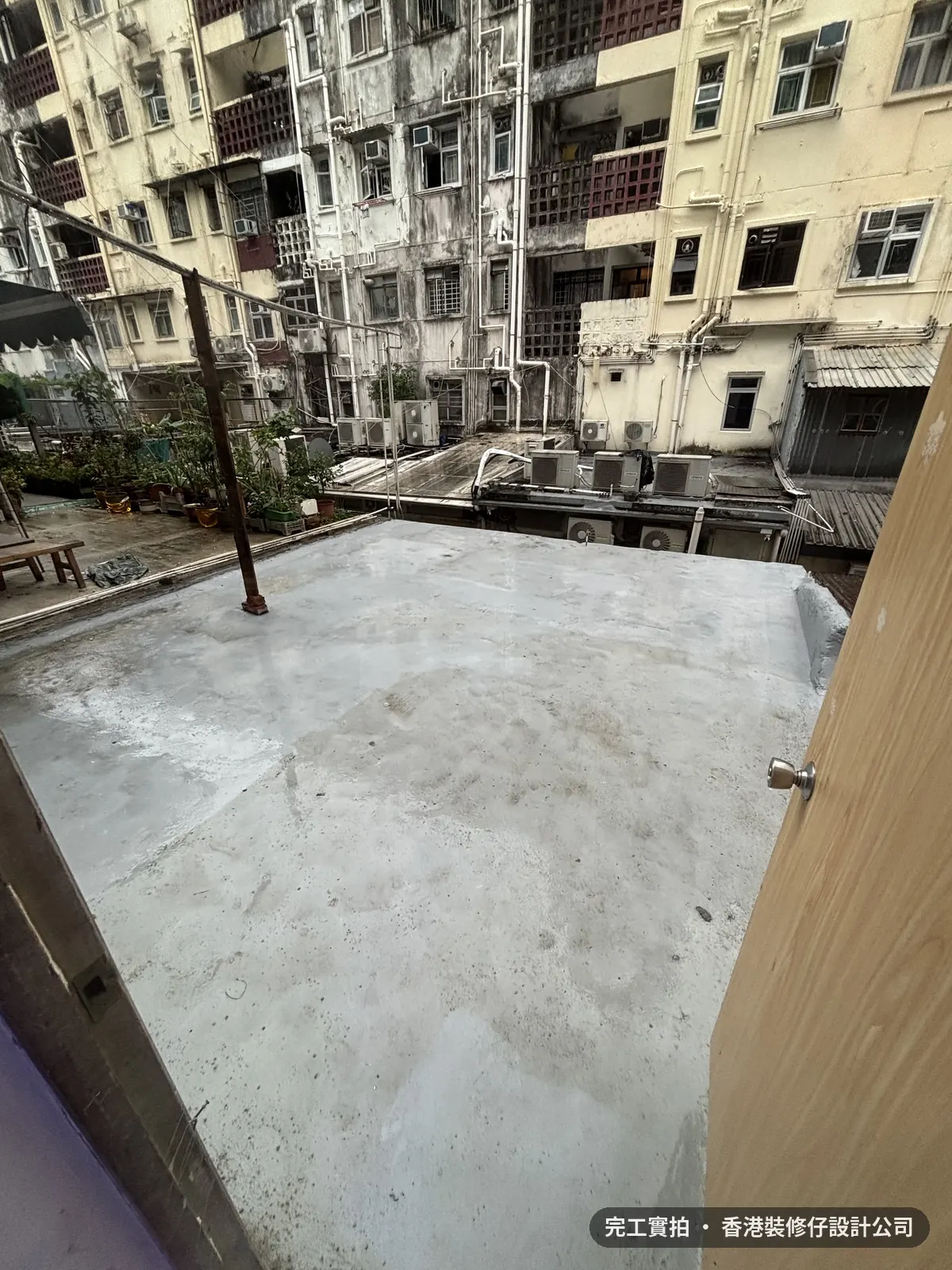
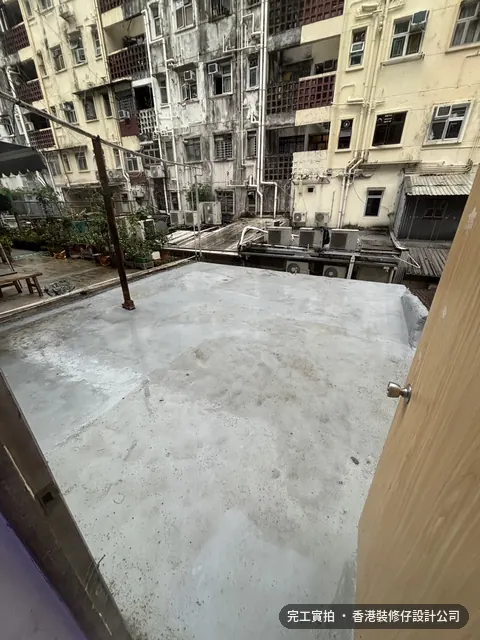
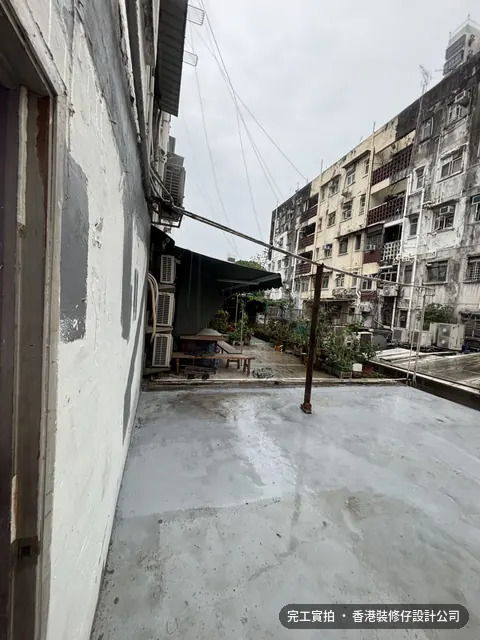
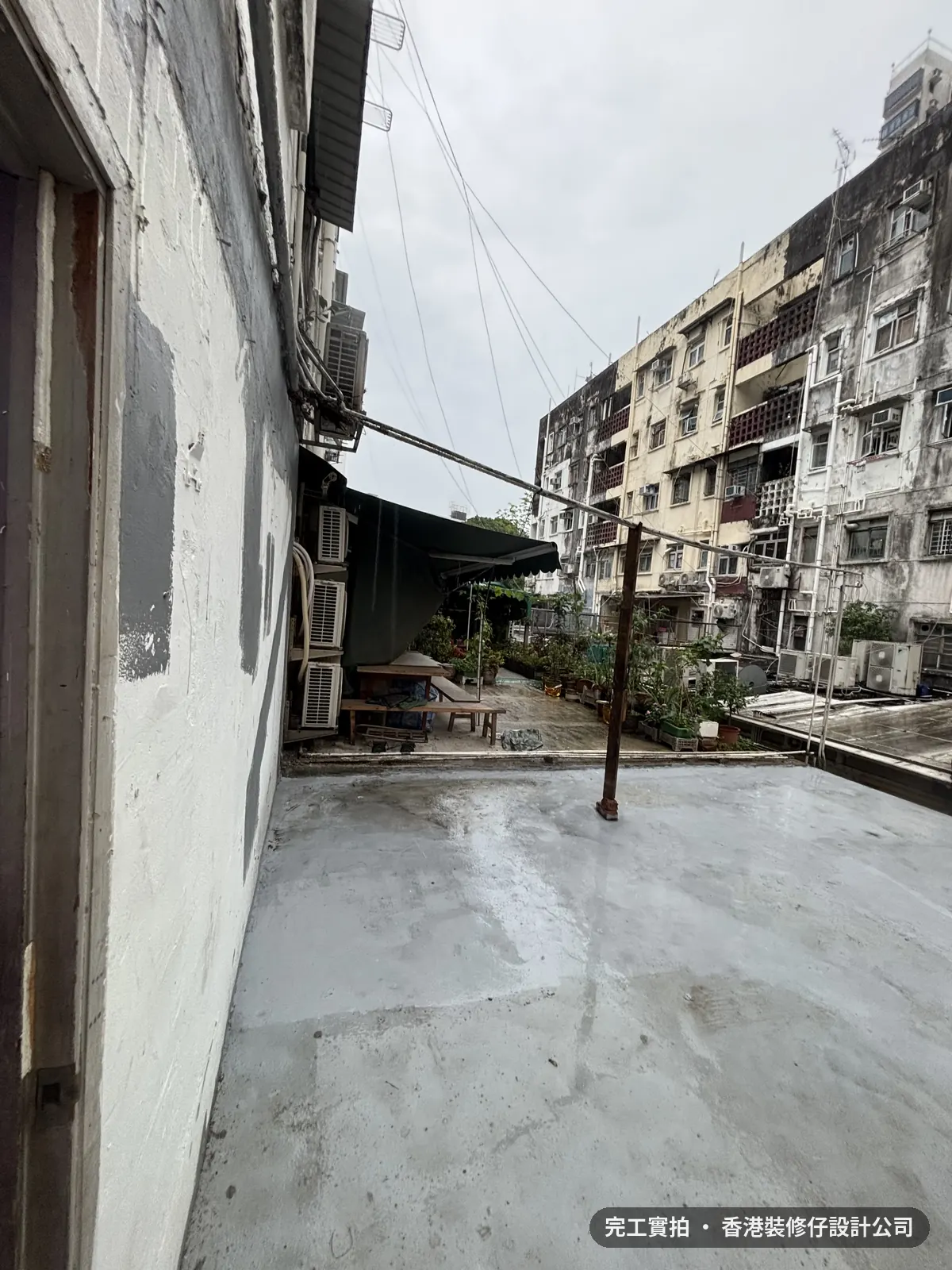
Tung Fat Square, Tai Po · Roof waterproofing · May 2026 · Completed project photos
Scope of work, published prices and photo enquiries
Waterproofing quotes: where and when does the water appear?
A leaking bathroom, a kitchen needing waterproofing and a roof that leaks after rain call for different work. Gather photos and note when the water appears before arranging an inspection. Photos help us discuss the problem but cannot confirm its source.
C02 · Our published indicative prices
The toilet is waterproof (one room, about 30–40 sq ft)
HK$4,850 / room
Waterproofing and flood testing for a bathroom of about 30–40 sq ft. Strip-out, tiling and tile supply are extra. This price covers waterproofing work only.
C03 · Our published indicative prices
Kitchen waterproofing (one room)
HK$4,300 / room
Kitchen waterproofing. Tile removal, new tiling and associated work are priced separately.
C05 · Our published indicative prices
The bathroom was completely dismantled and redone to be waterproofed
HK$13,000 / room
Bathroom strip-out, substrate repairs, waterproofing and flood testing. Tiling is excluded. A10, C01, C02 and C04 are not charged again for the same work.
Choose the items that match your scope. The options are not all added together. Your written quotation after on-site measurement confirms the price.See the full price list and measurement rules
Two bathroom waterproofing options: compare the scope before the price
range
Basis of charge and inclusions
Indicative cost
C02: bathroom waterproofing and flood testing
Around 30–40 sq ft. Strip-out and tiling are extra.
HK$4,850/room
C05: bathroom strip-out and new waterproofing
Strip-out, substrate repairs, waterproofing and flood testing. Tiling is excluded.
HK$13,000/room
These options cover different scopes. Choose one. With C05, A10, C01, C02 and C04 are not charged again for the same bathroom work. For C02 above 40 sq ft, check the rate for the additional area. Neither option is a full bathroom renovation price or a per-square-foot roof rate.
You can enquire without filling in these fields. The button opens a draft in WhatsApp. Add any photos there and send it when you're ready.
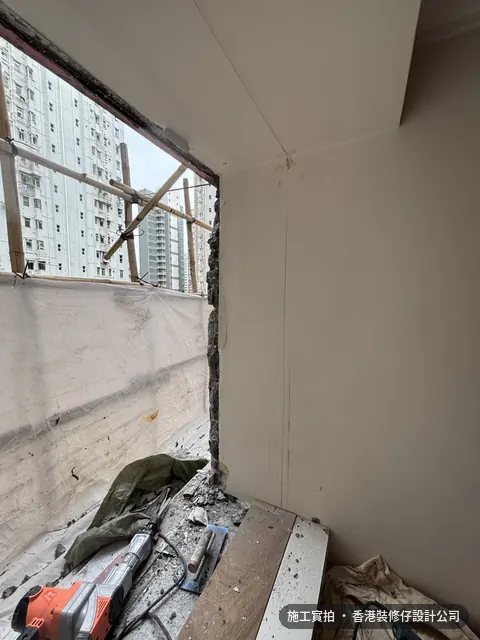
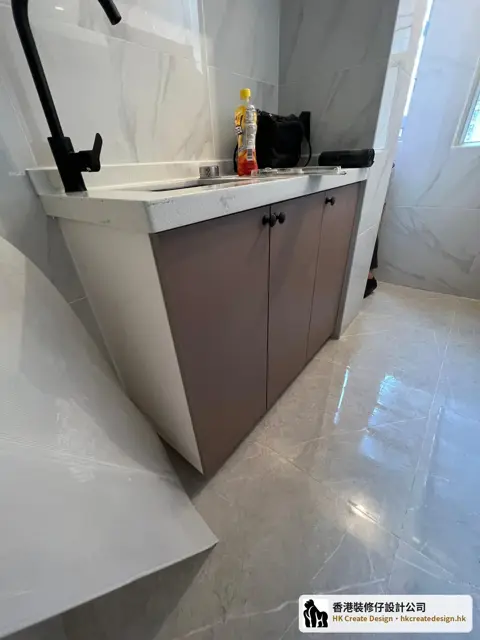
HK Create Design · Records from our sites
Site photos of work in progress
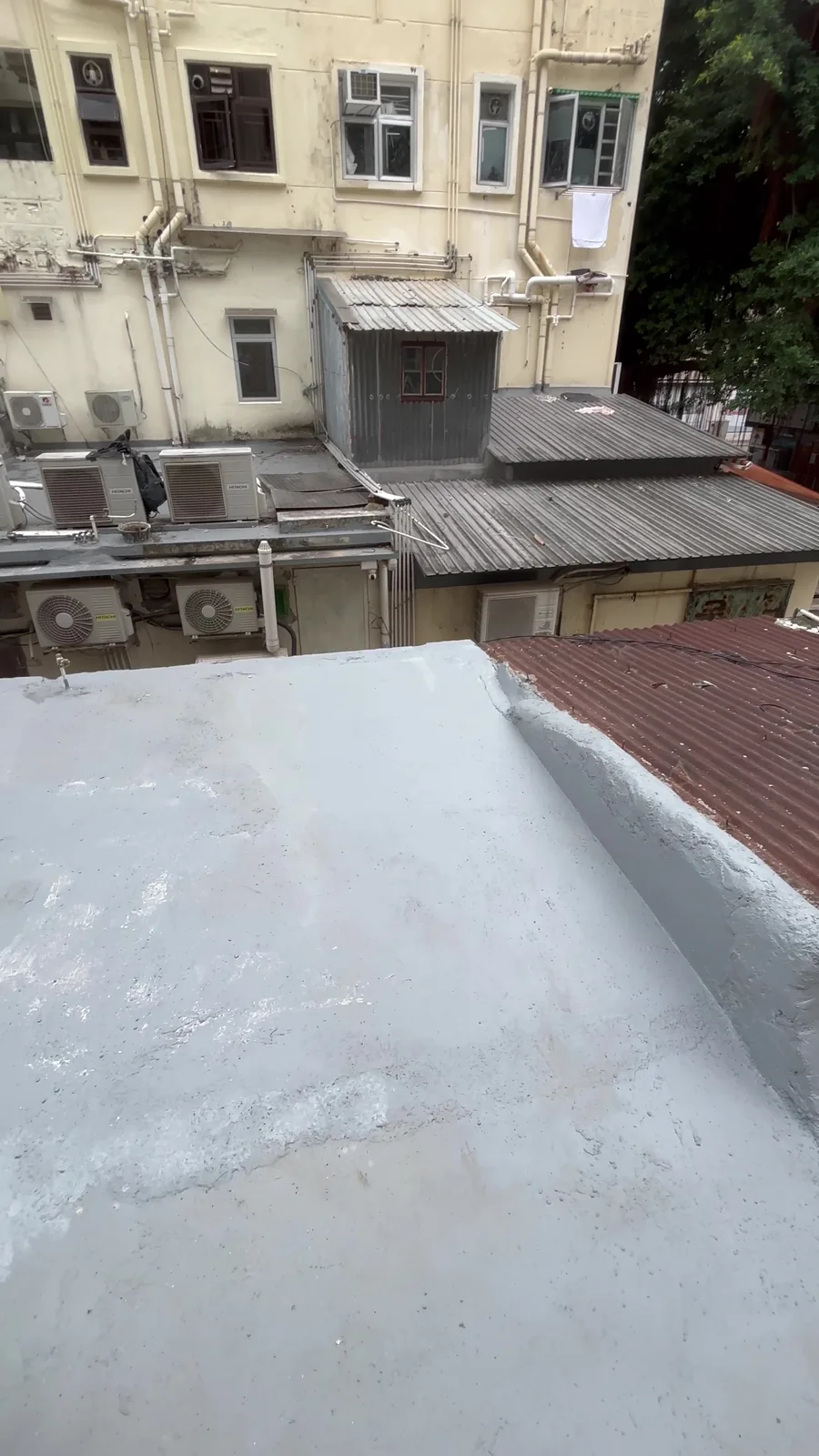
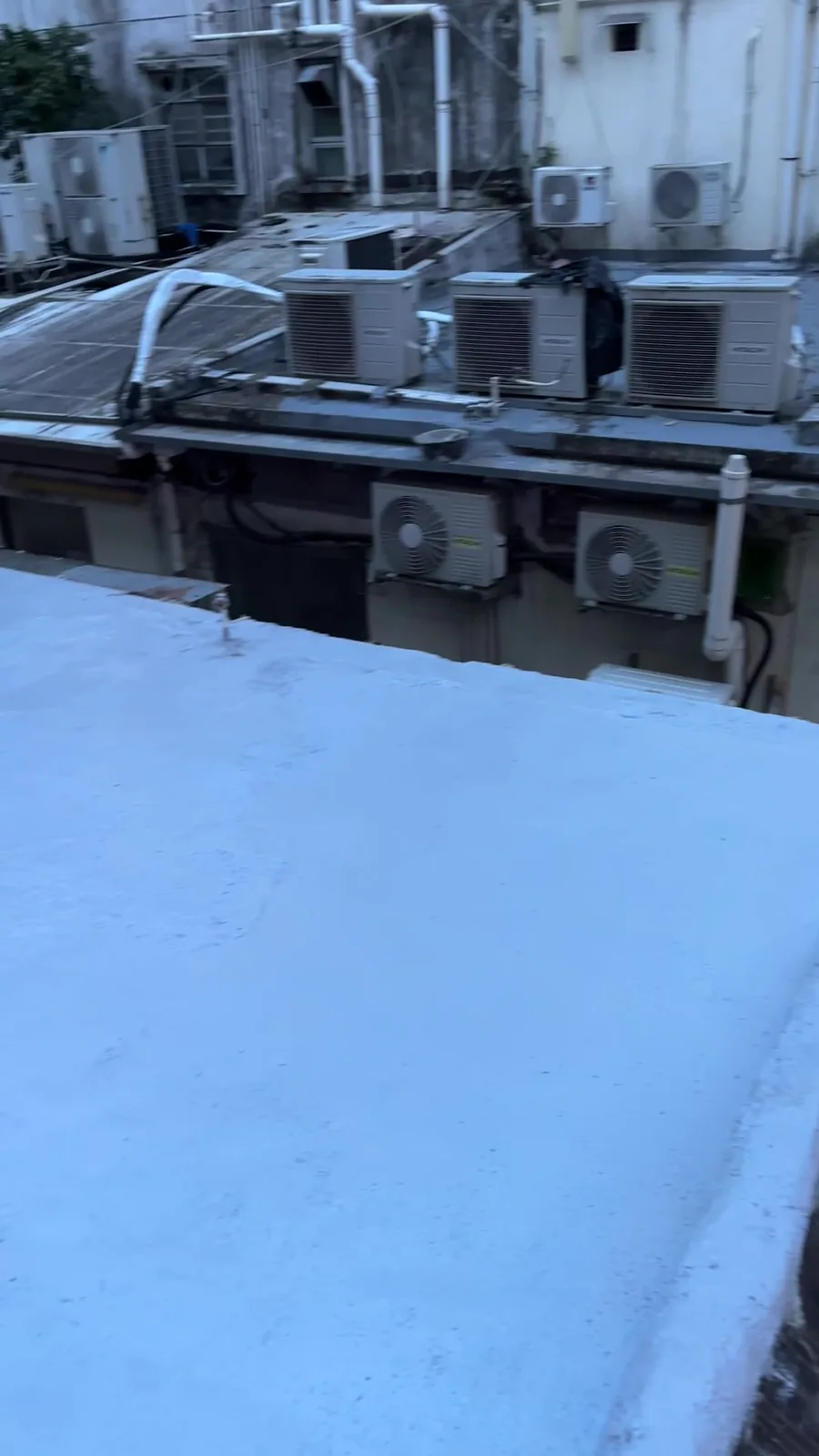
Tai Po rooftop: the same surface on two dates
Video stills from 30 April and 25 June show the surface of the same roof at two points in time. Use them to identify the area under discussion and plan follow-up checks.
Surface: take an overview and a close-up so the area needing work is easy to identify.
02
Junctions: check wall bases, drains and other connections individually.
03
Handover: keep the material details, test results and inspection records for the work carried out.
The later image looks bluer because the lighting changed. Colour differences do not show waterproofing performance. The interval between the dates does not establish the duration of the work, and these images alone do not confirm that a leak stopped or the work passed inspection.
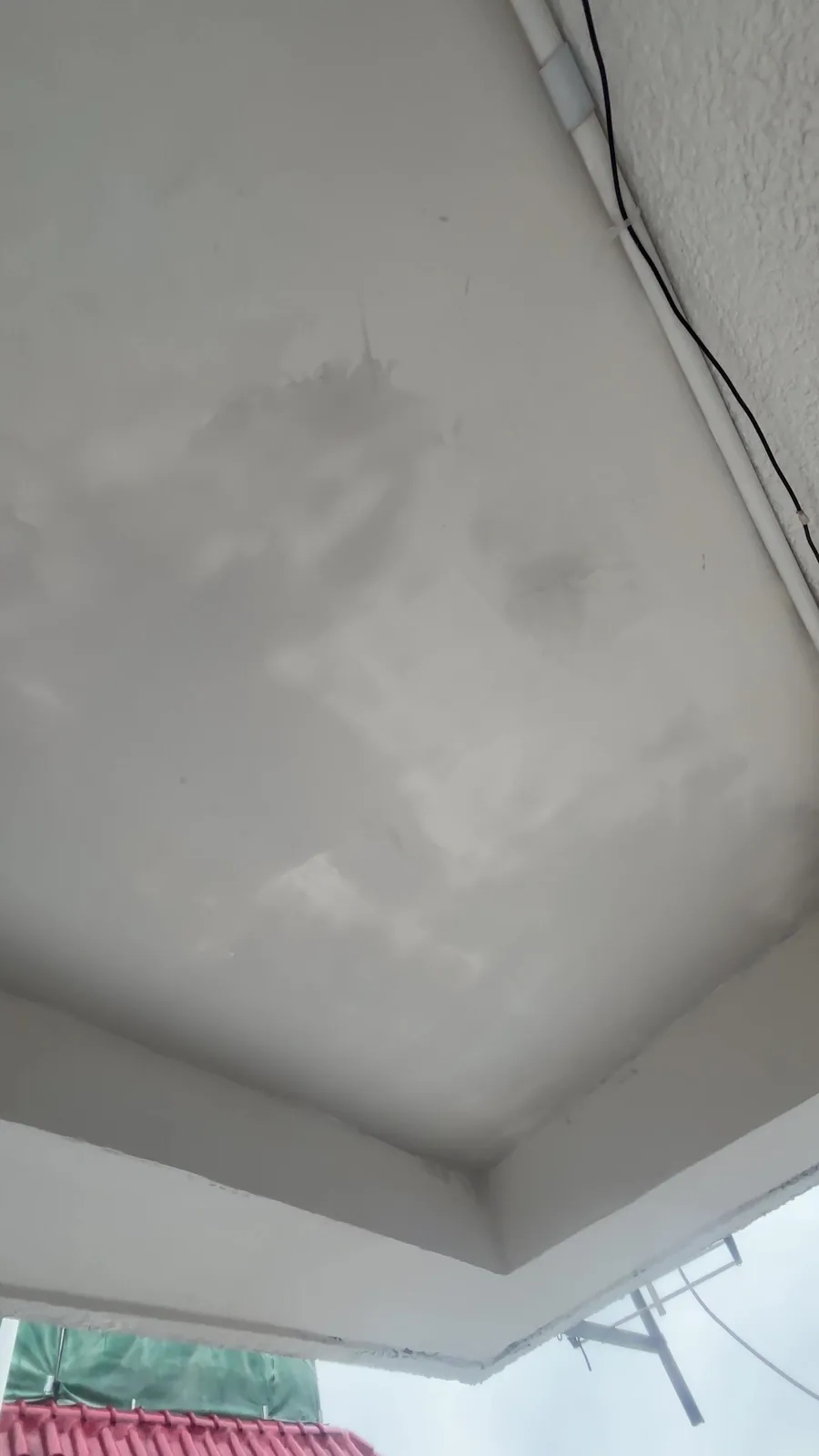
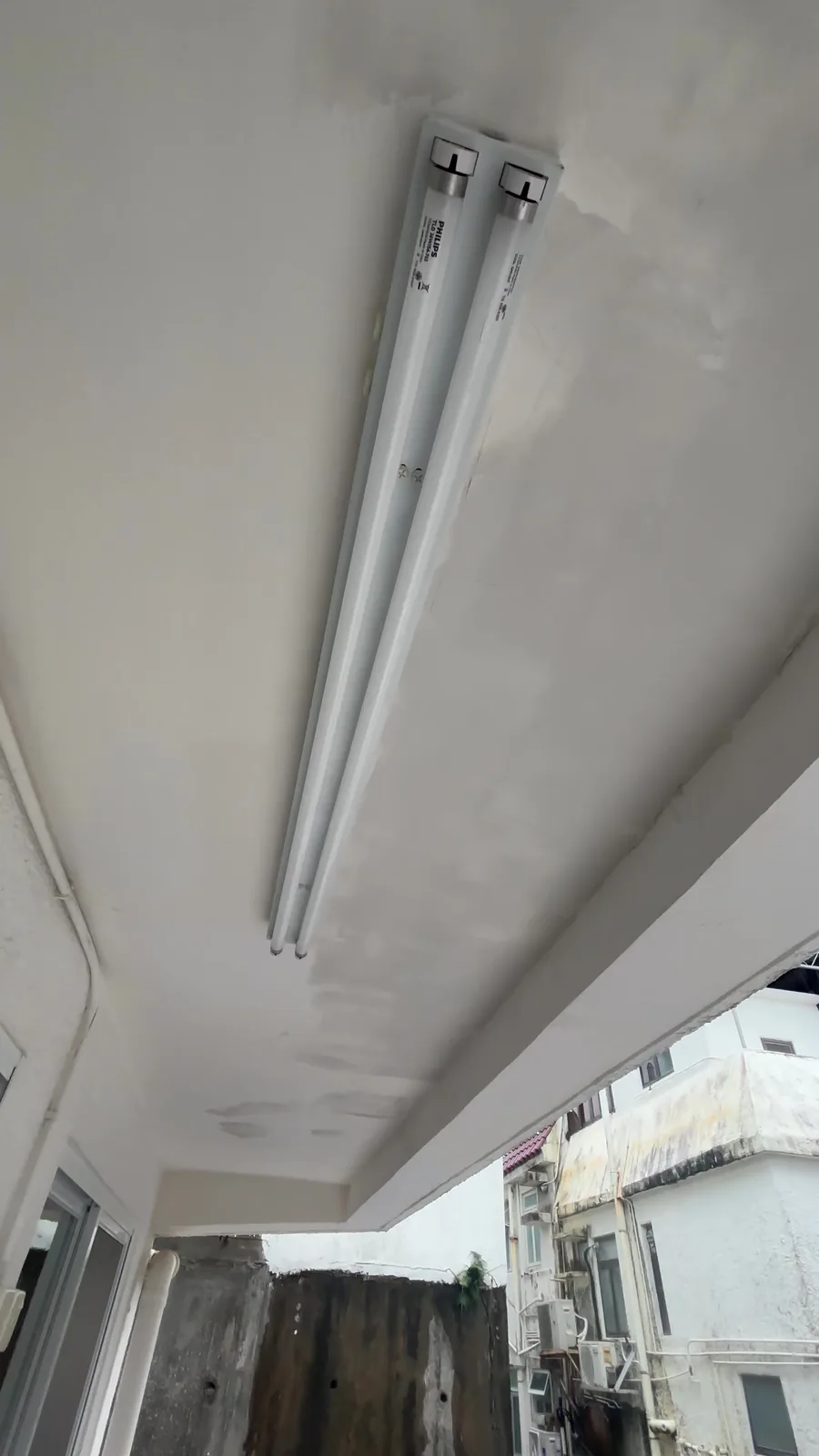
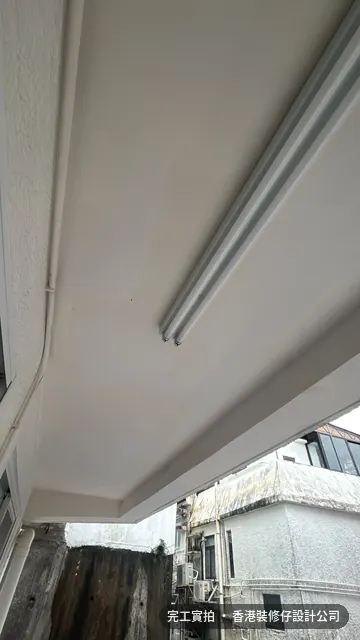
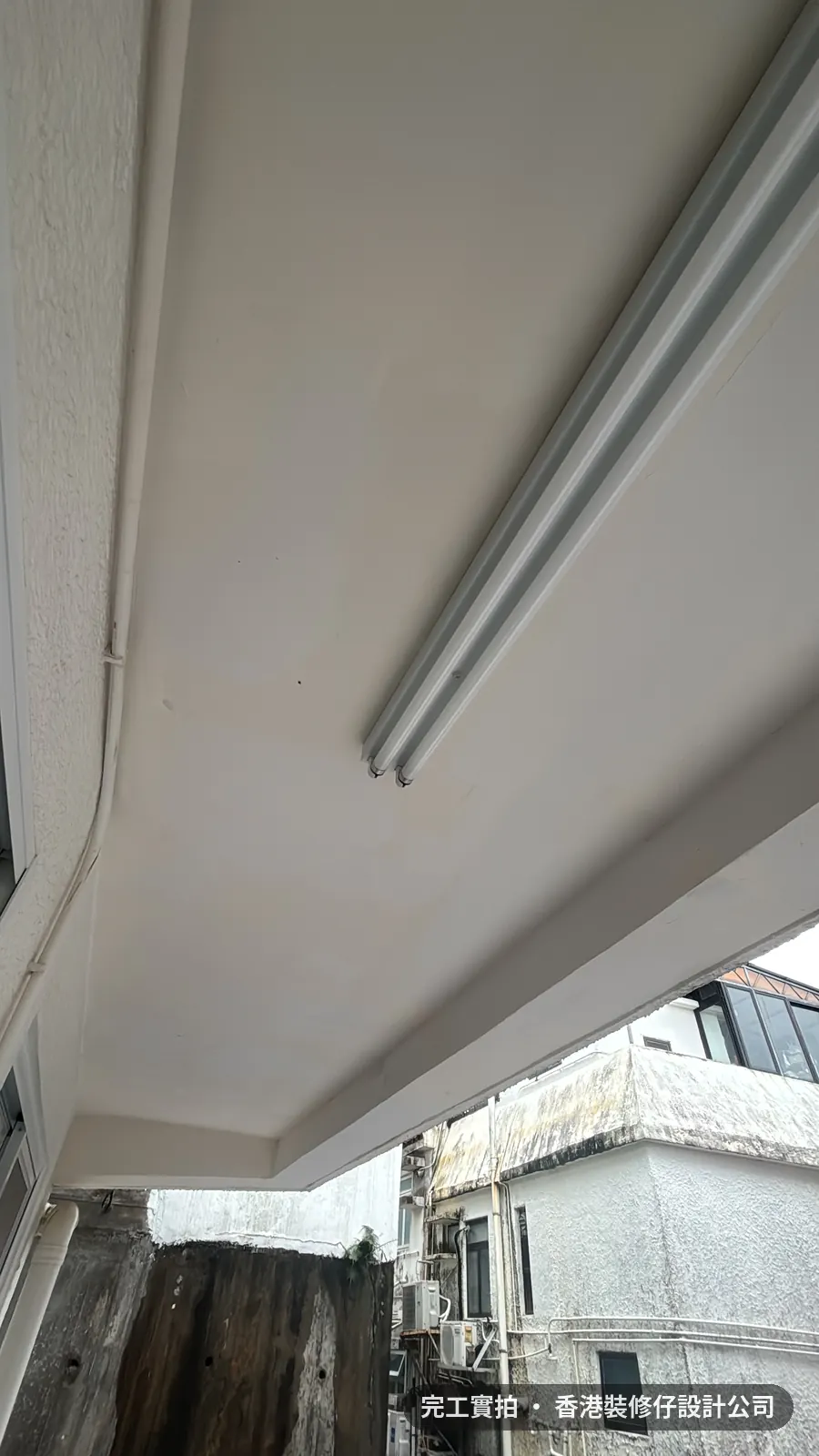
Sai Kung soffit: two views and three details to note before enquiring
A close-up and a wide shot from the same site video show the underside of the eaves, its edges and the areas around the lights. Both show the same stage of work and help you describe the conditions.
Timing: do the marks appear after rain, after water is used or all the time?
02
Surroundings: are there window frames, external wall joints, drains or pipes nearby?
03
Repair history: what work was done before and when did the marks reappear?
These are two views from the same video at the same stage. The photos alone cannot establish the cause of the water marks or how well the waterproofing works.
There’s no rush to compare a total price before you start. It is easier to confirm the scope of the project and follow-up arrangements by first clearly explaining the current situation, reserved projects, site restrictions and the desired results.
REAL PROJECT PHOTOS
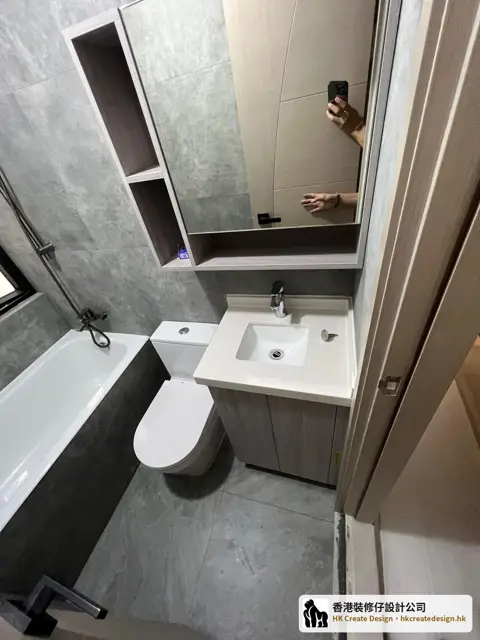
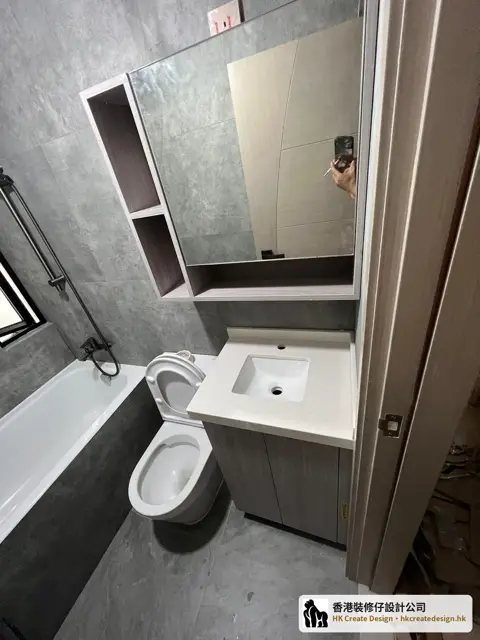
Site photos of work in progress and completed projects
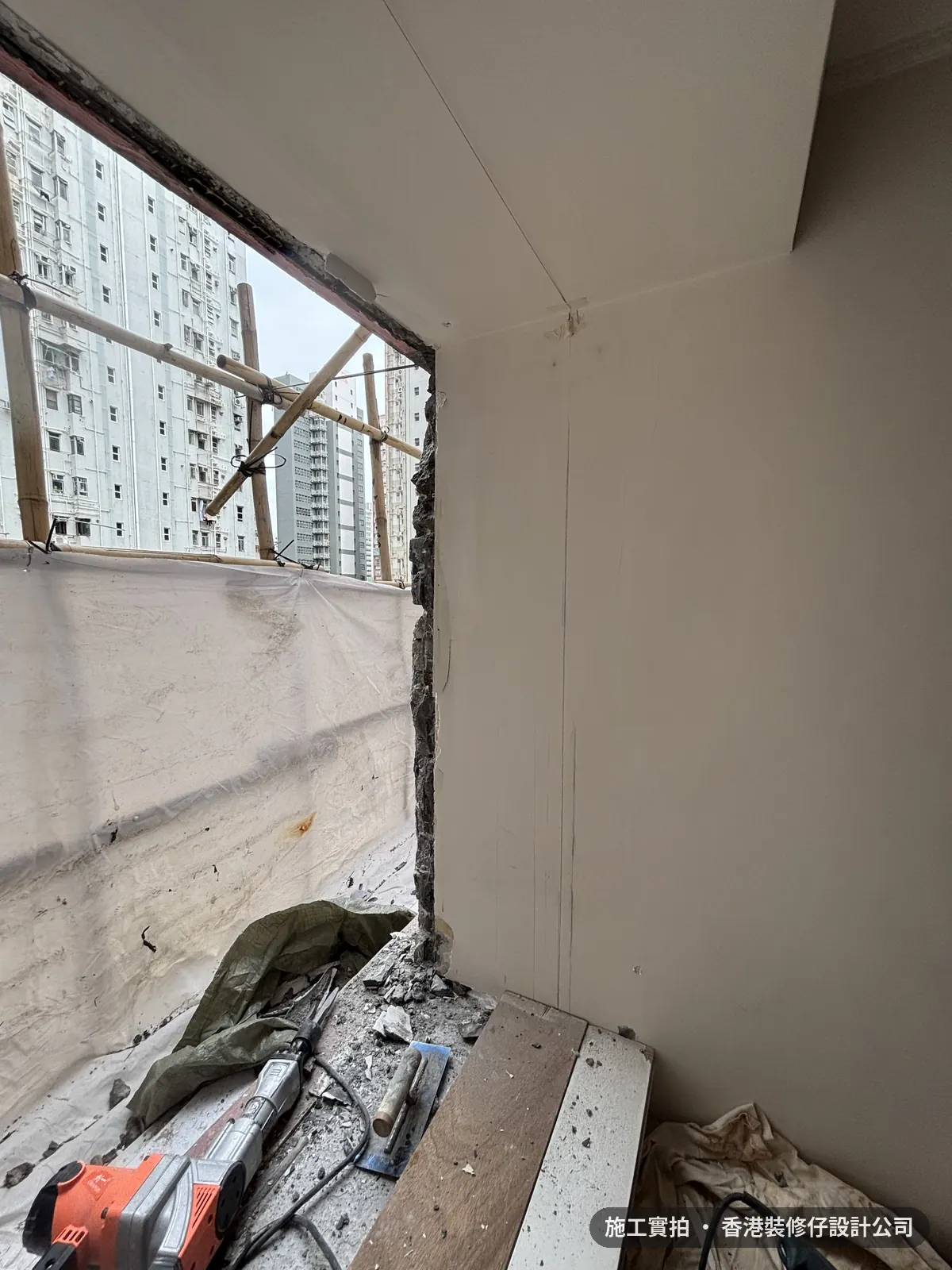
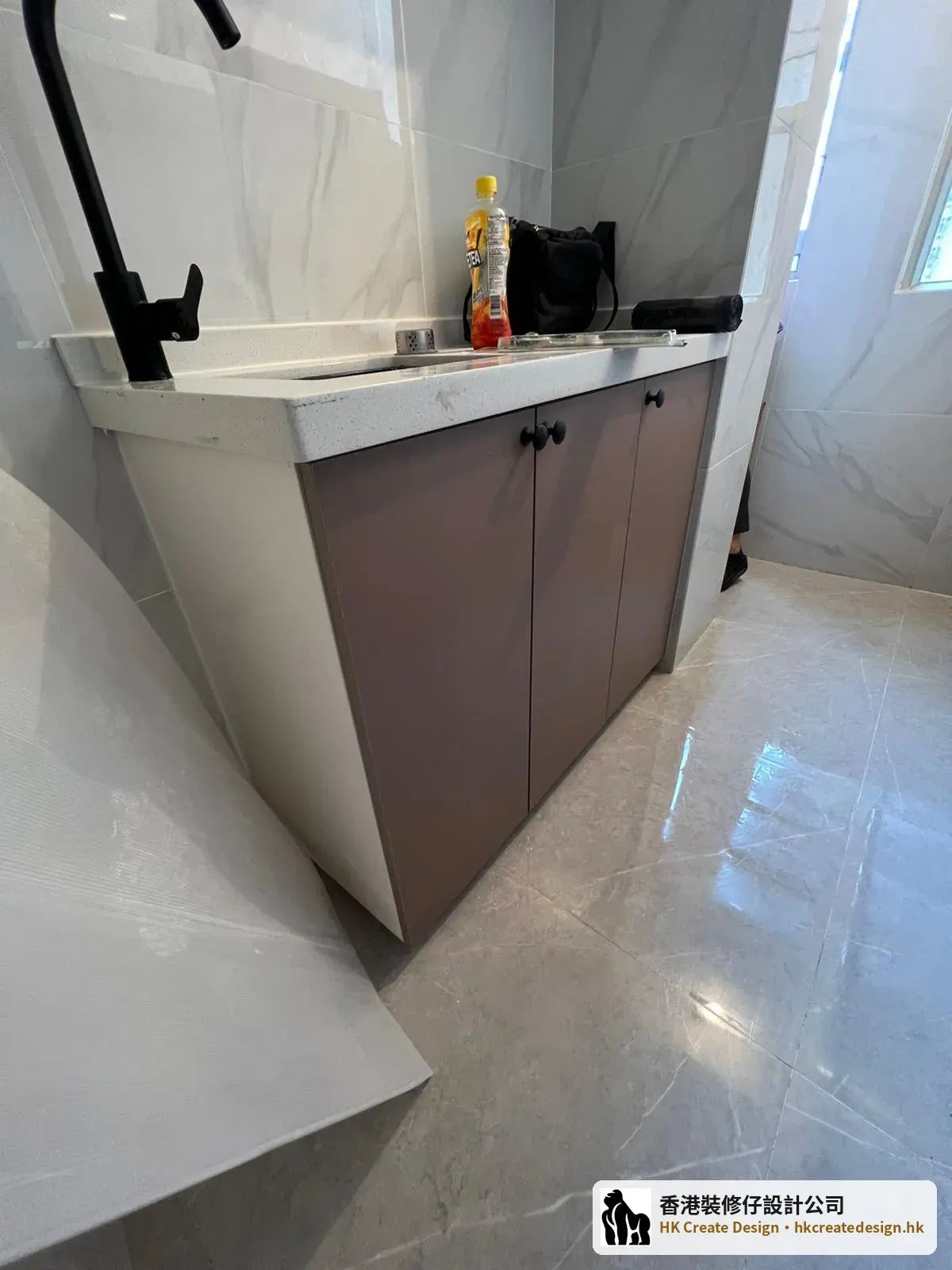
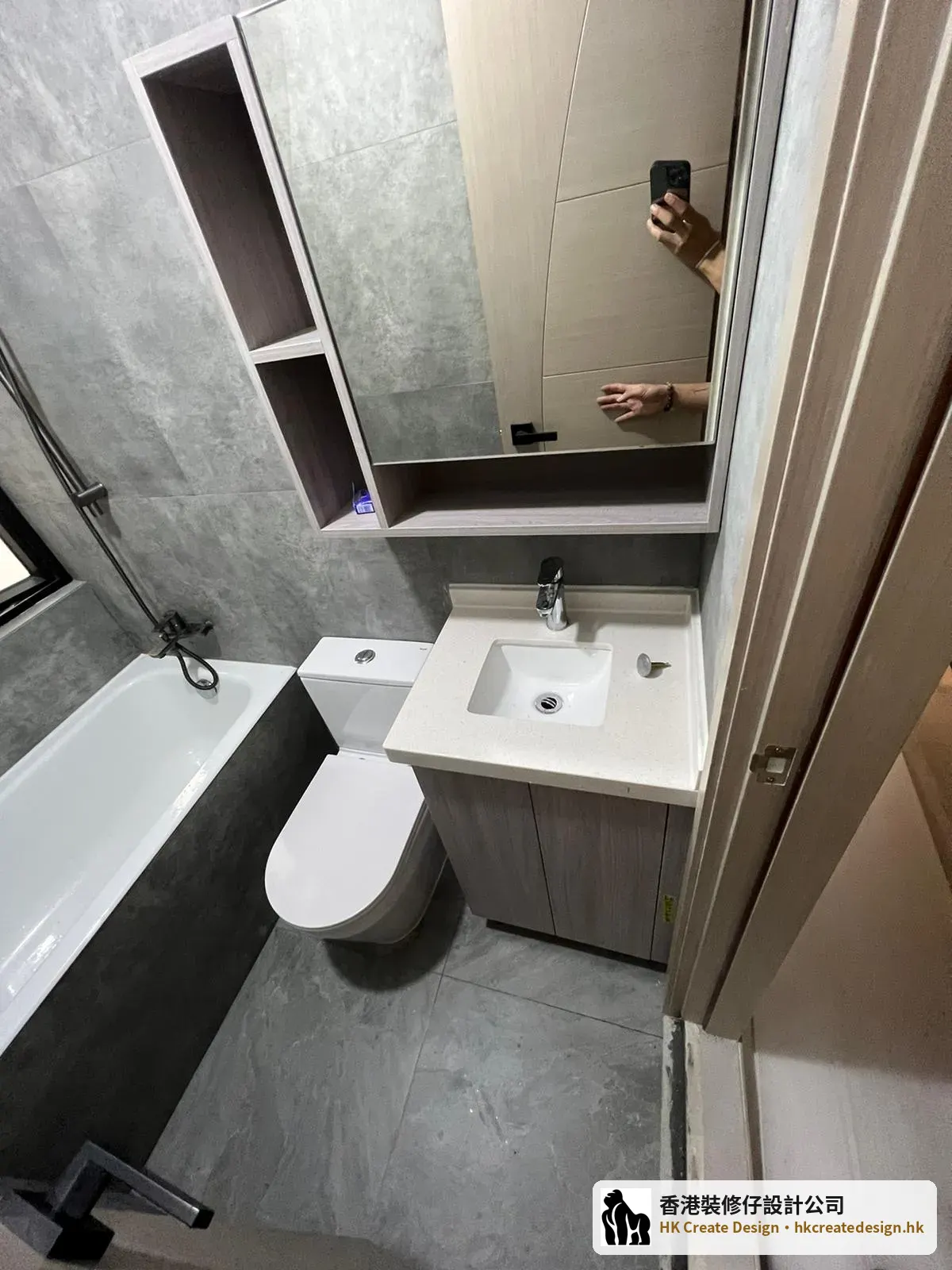
These photographs were taken on actual HK Create Design projects. Client details have been removed.
Completed project photosTung Fat Square, Tai Po · Roof waterproofing · May 2026
Completed project photosTung Fat Square, Tai Po · Roof waterproofing · May 2026
Completed project photosTai Po Tsai Village, Sai Kung · External wall waterproofing · May 2026
Site photoKam Fong Street, Mong Kok · Waterproof render · April 2026
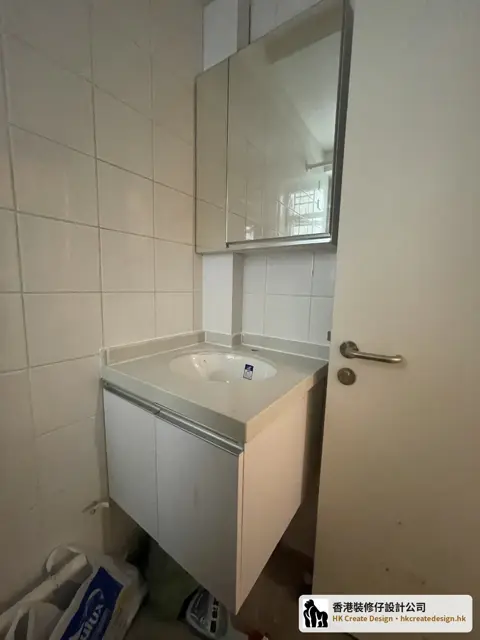
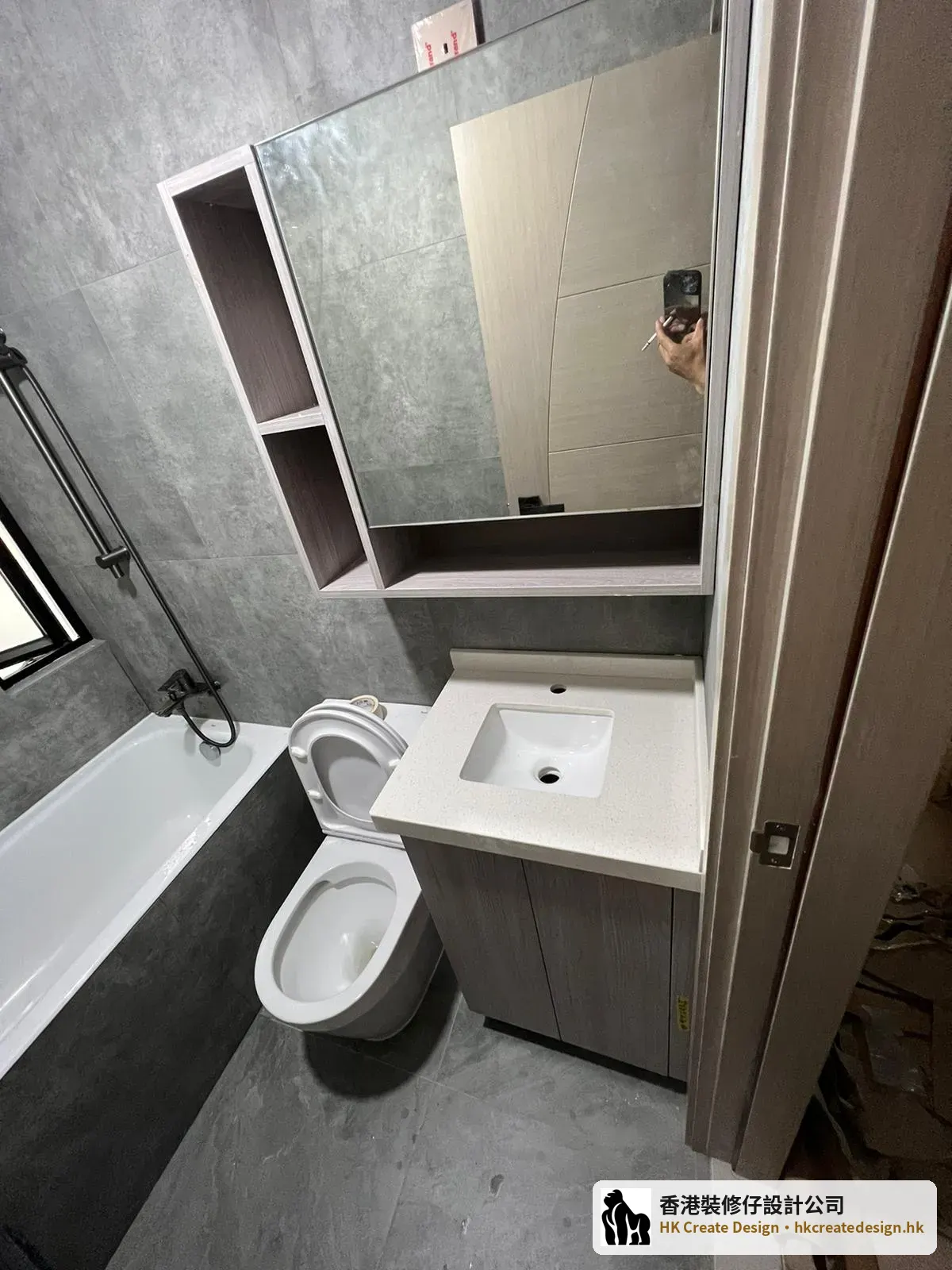
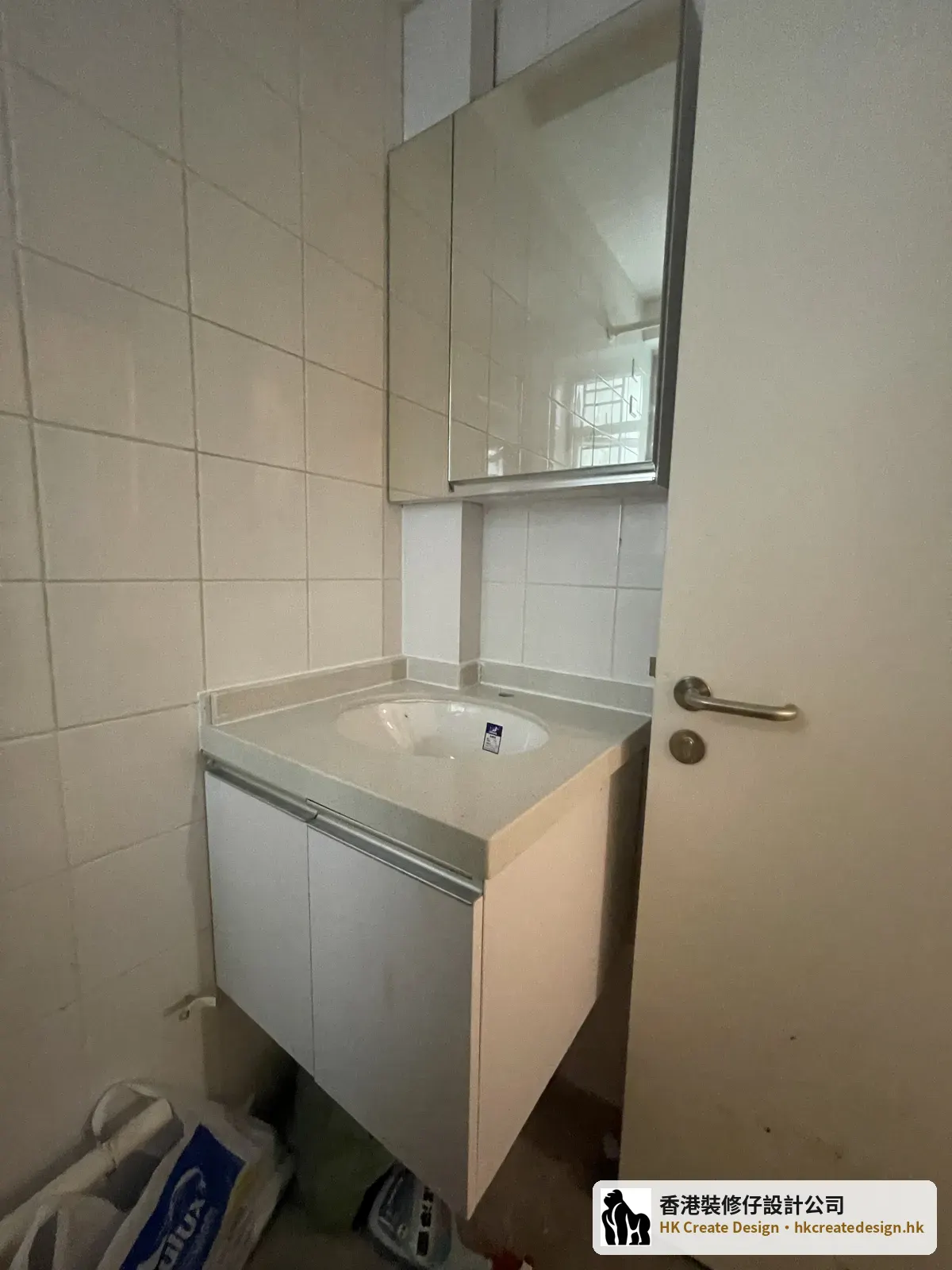
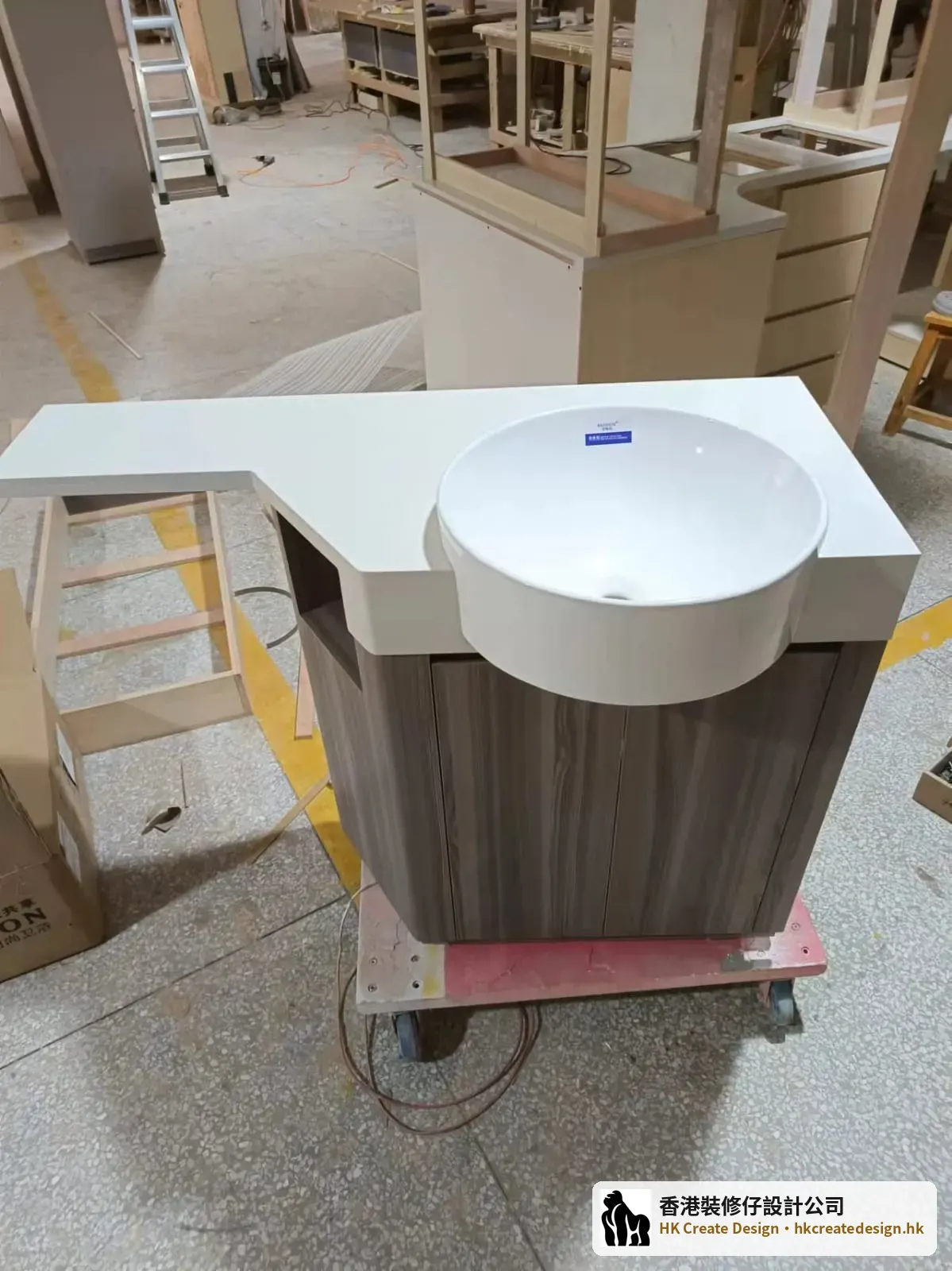
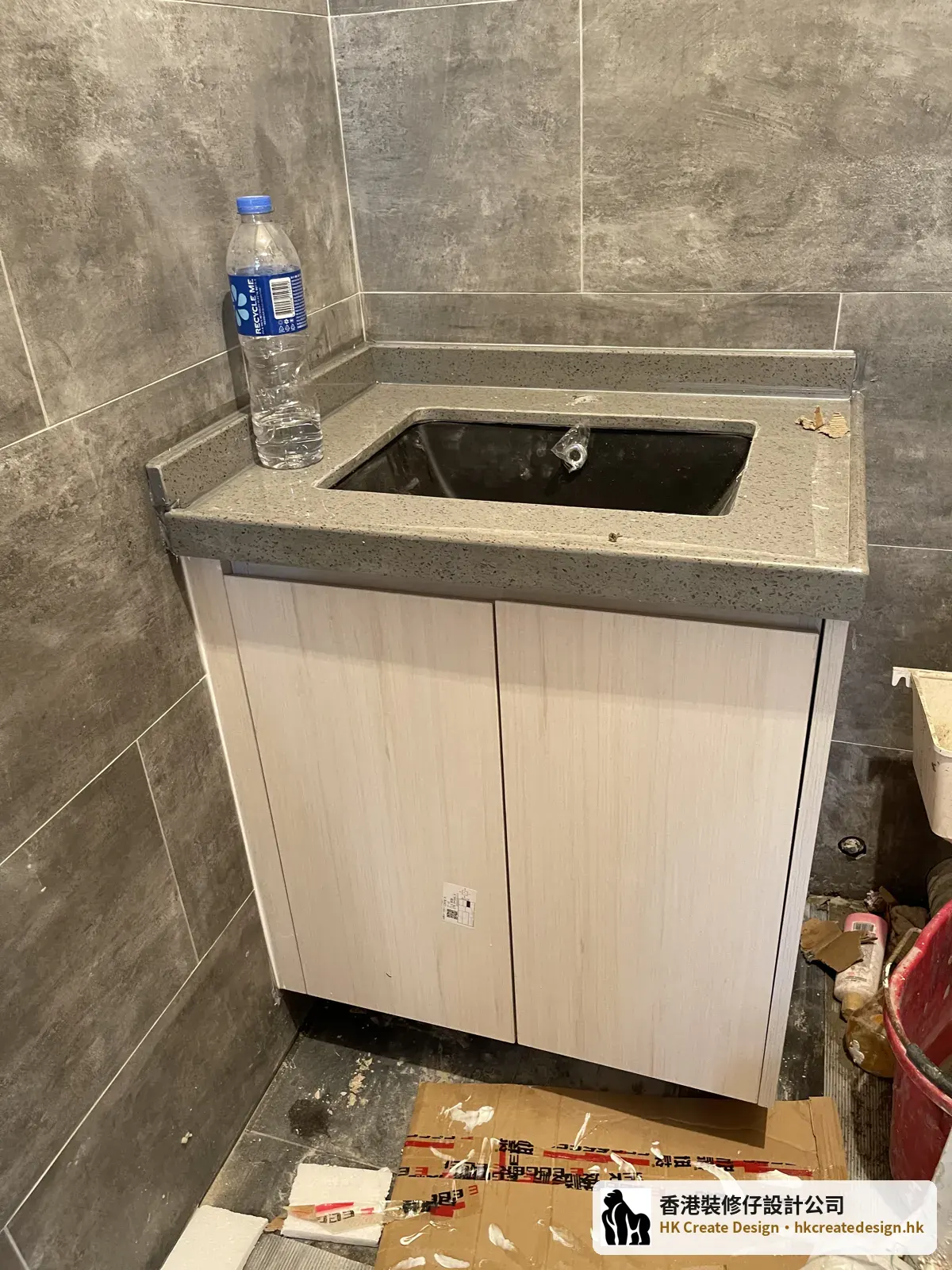
Completed project photosHK Create Design · Bathroom renovation site photo
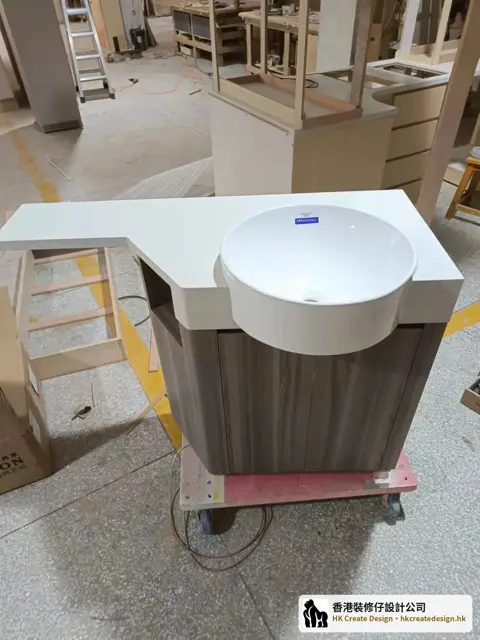
Completed project photosHK Create Design · Bathroom renovation site photo
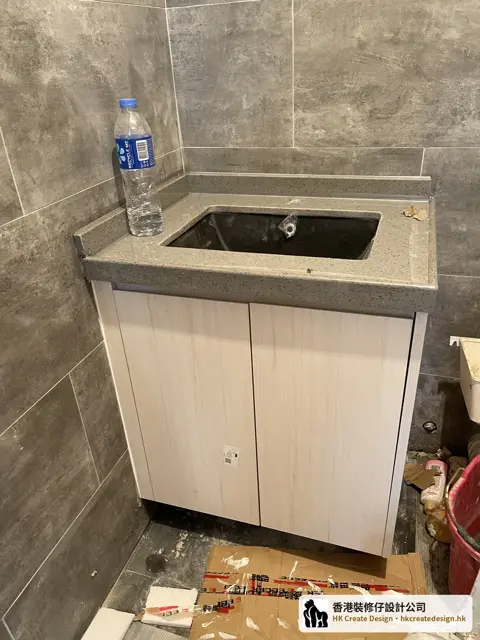
Completed project photosHK Create Design · Bathroom renovation site photo
Completed project photosHK Create Design · Bathroom renovation site photo
Completed project photosHK Create Design · Bathroom renovation site photo
Completed project photosHK Create Design · Bathroom renovation site photo
These renderings illustrate possible finishes and layouts. We will confirm the work for your kitchen after the site survey and provide a written quotation.
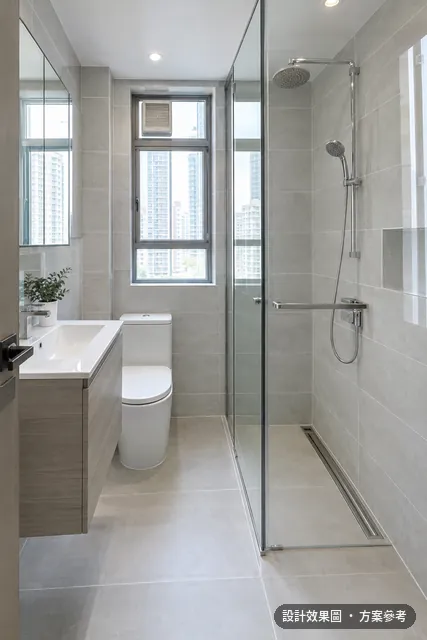
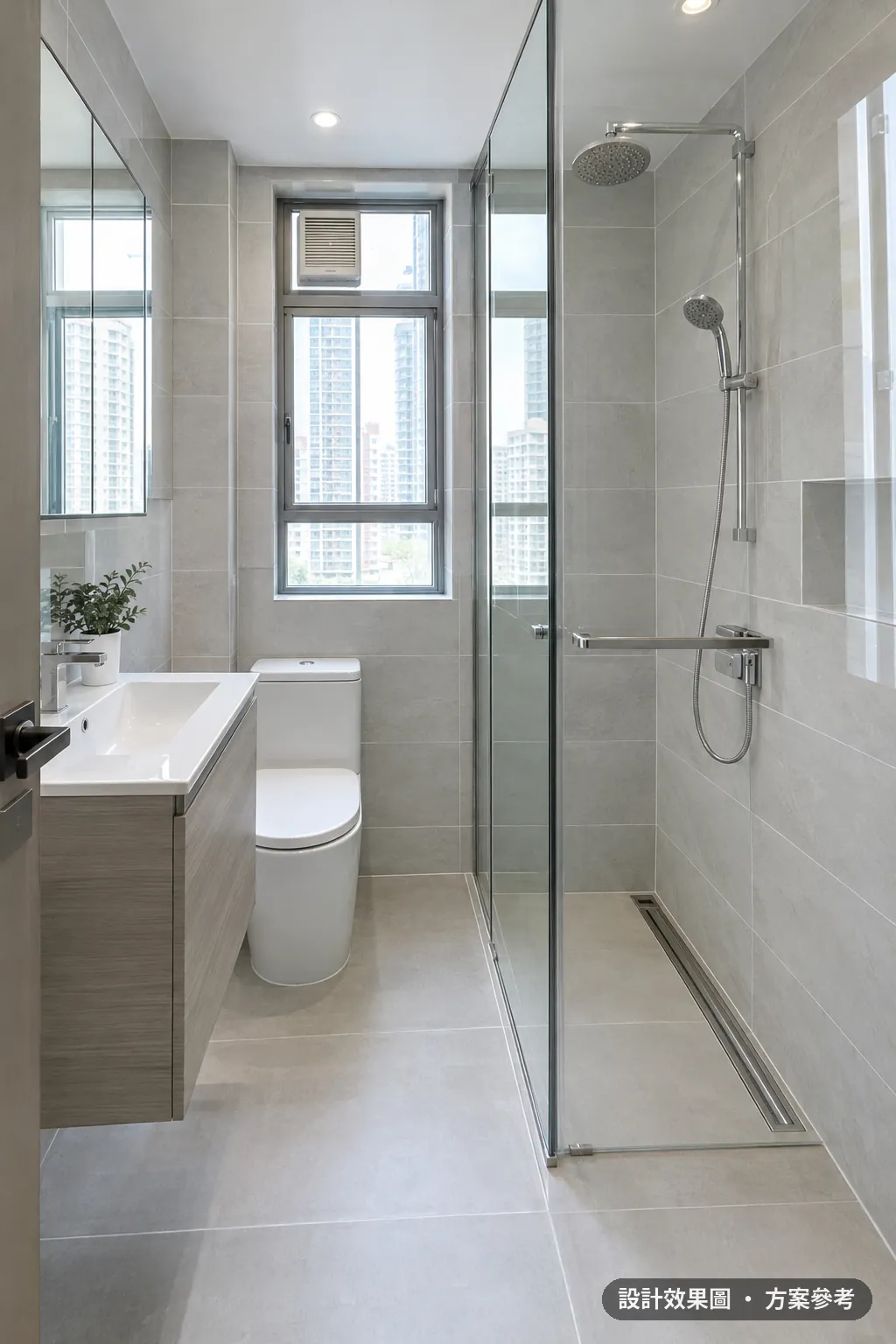
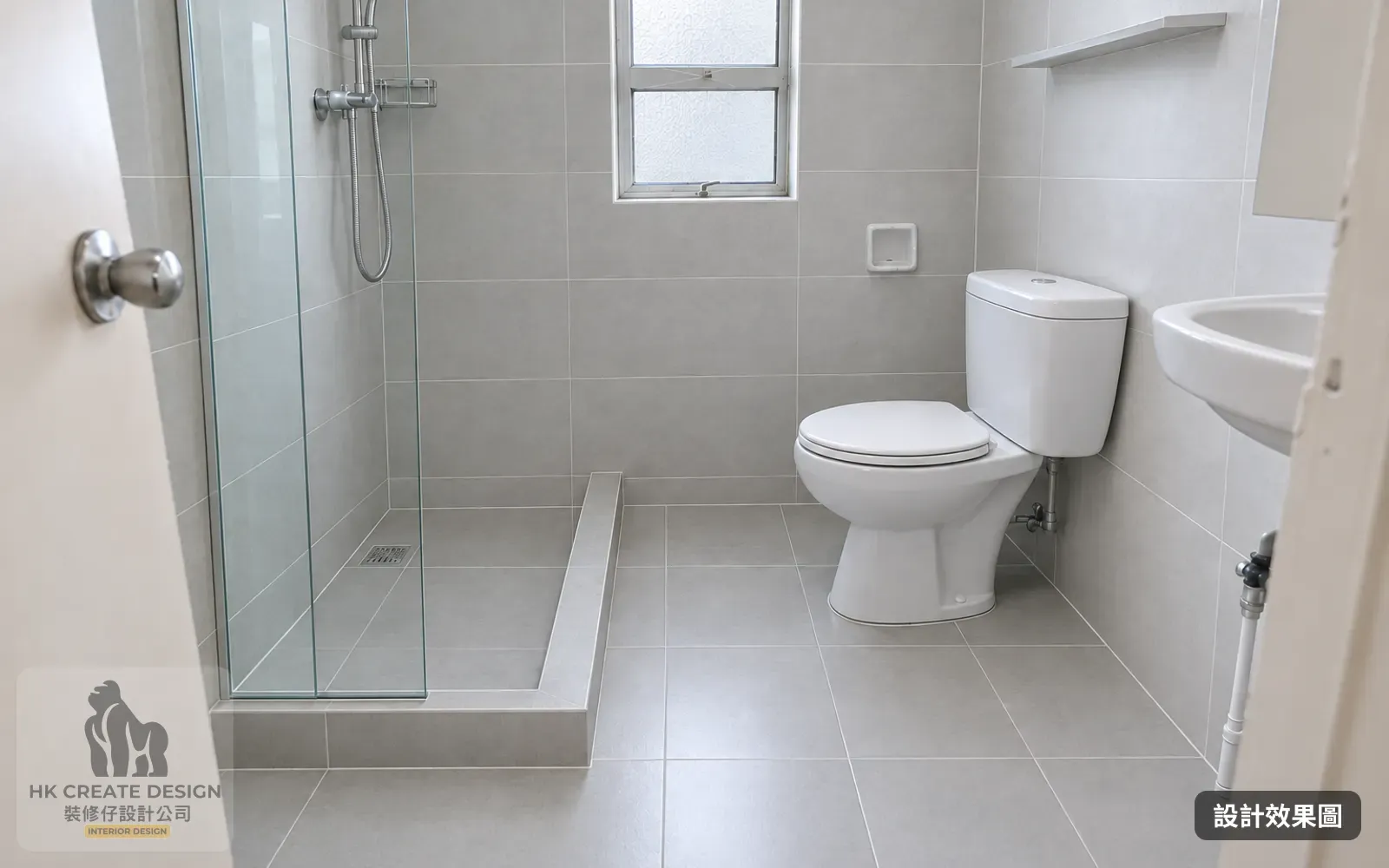
Design rendering · Completed bathroom tiling after waterproofing (design reference)
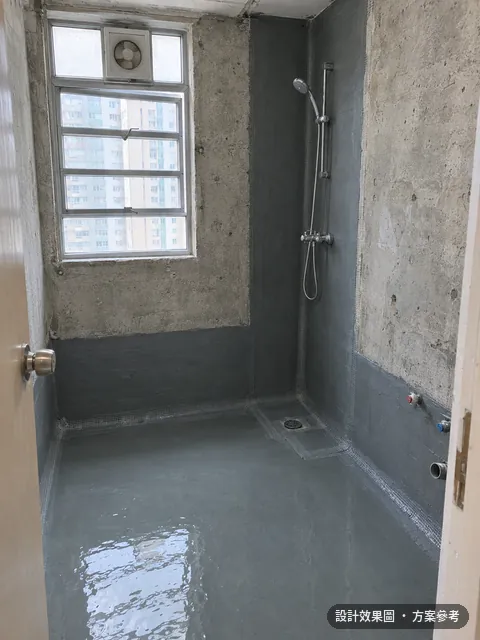
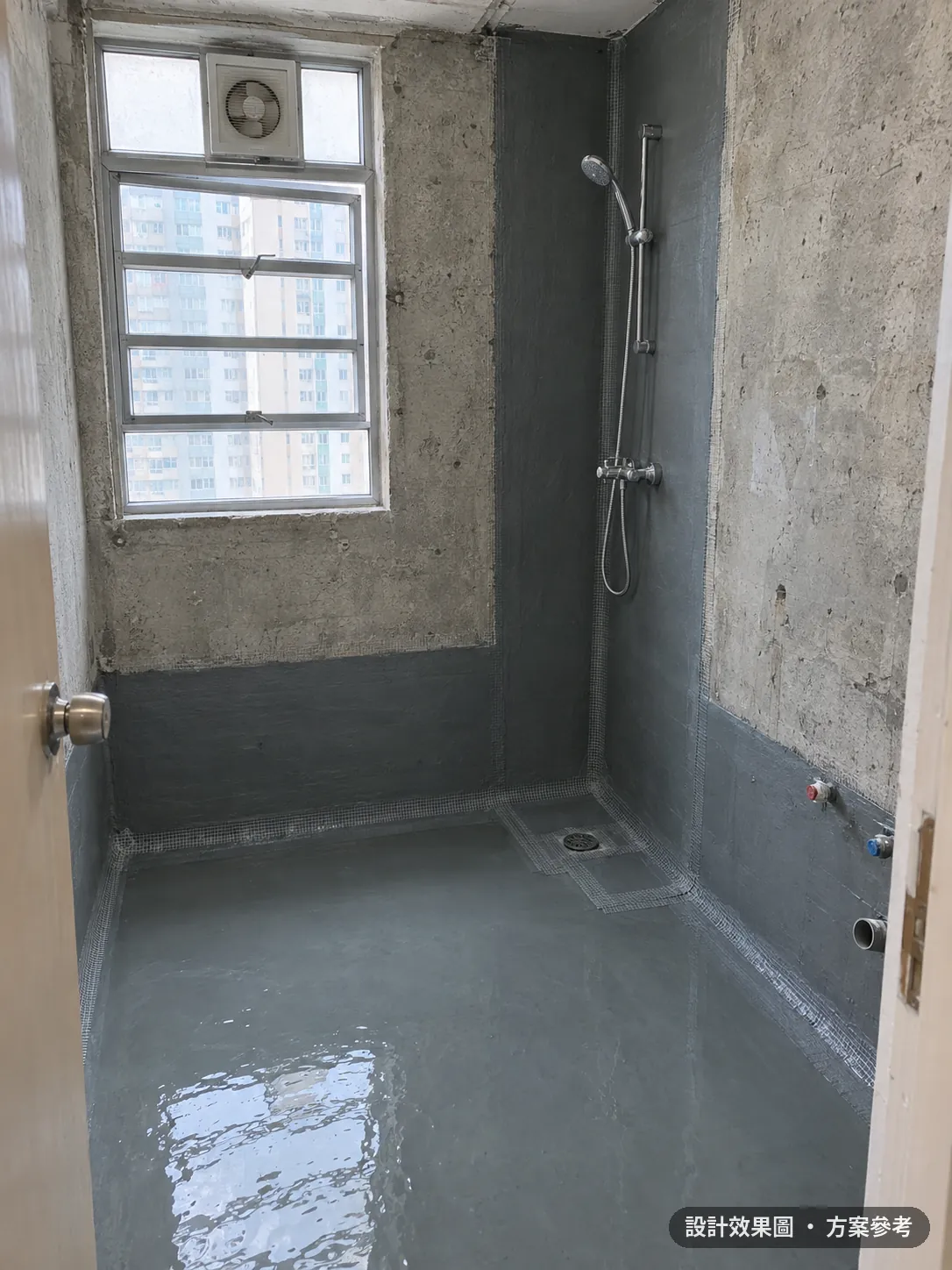
Design rendering · Waterproofing layer and flood test (design reference)
WORKED EXAMPLE
What will waterproofing cost? Use your own measurements
Enter the figures of your organization and see the calculation of each step instantly; the results are for budget reference only, and the official price shall be based on the written quotation after measurement.
Bathroom demolition, redoing, waterproofing, and tiling: Budget tips
A bathroom was demolished and redone with waterproofing, using C05 (HK$13,000/room, including demolition, base repair, two layers of waterproofing, and closed water test)
For tiling D01/D02 600×600mm or below, HK$78/square foot
180 square feet is for demonstration only, which is about the same as a small bathroom with floor and wall to top.
Excluding changes to tile materials, sanitary ware, water pipes and false ceilings
C05 Bathroom including disassembly and redo waterproofingFixed HK$13,000HK$13,000
D01/D02 Tile laying laborArea × HK$78HK$14,040
Reference project fee (excluding tile materials and sanitary ware)HK$27,040
For preliminary reference only. If problems with pipes, floor slabs or drains are found after disassembly, a separate written quotation must be made; ceramic tiles larger than 600mm, wood grain tiles or mosaics are calculated as D03-D06. The final quotation shall be subject to written quotation after on-site measurement. [1]
Waterproofing by area (C01): large bathroom or terrace
It has been removed to the base layer, only the waterproofing process is included.
C01 HK$39/square foot, crossing two floors, reinforced internal corner pipes
Minimum spending HK$2,350
Closed water test C04 HK$1,400/time extra
C01 waterproof two layersArea × HK$39HK$3,120
C04 closed water testFixed HK$1,400HK$1,400
Reference waterproofing engineering feesHK$4,520
If the purchase price is less than the minimum purchase price of HK$2,350, the minimum purchase price will be used; an additional HK$10 per square foot will be charged for the third floor. Removal of bricks (A01/A02) is the same as laying bricks. [1]
Waterproofing a kitchen and bathroom together (C02 + C03)
C02: HK$4,850 for one bathroom of about 30–40 sq ft, including a 24-hour flood test
C03: HK$4,300 to waterproof one kitchen
Bathroom area over 40 sq ft is charged at HK$39 per sq ft under C01
Assumes the substrate is already exposed. Tile removal, tiling, tile supply and sanitaryware are excluded.
C02 waterproofing for one bathroomFixed HK$4,850HK$4,850
C03 waterproofing for one kitchenFixed HK$4,300HK$4,300
C01 additional areaAdditional area × HK$39HK$390
Reference waterproofing engineering feesHK$9,540
The default extra 10 sq ft brings the estimate to HK$9,540. With no additional area it is HK$9,150. A kitchen flood test, if required, is charged separately under C04. The price is confirmed in writing after measurement. [1]
Send the on-site photos, unit area and scope of what you want to do to WhatsApp 5243 7747 (https://wa.me/85252437747). Designers and masters with more than 15 years of renovation experience will share the plan with you for free. They will explain clearly what can be done and what needs to be checked first.
Limited-time free on-site measurement and professional advice
For work that needs an on-site assessment, our tradesperson will measure, inspect and explain the proposed scope. Until 31 December 2026, measurement is free for two or more work items, with no deposit required. After that, the HK$500 fee is credited against your order.
Find the source first, don’t do waterproofing randomly
Designers and craftsmen with more than 15 years of experience will first distinguish between water supply, drainage, waterproofing and rainwater issues. Unless the waterproofing layer is damaged, they will not ask you to dismantle the toilet; the parts that require a licensed plumber or professional will be explained clearly.
Removed to the bottom, two layers of waterproofing, water test witness
The waterproofing of the bathroom and kitchen was removed until the concrete was visible, the internal corner pipes were strengthened, and Sika 107 was installed on two floors. The owners were able to witness the closed water test and lay the tiles first, and all key steps were photographed.
Garbage removal and basic cleaning after completion
After every order is completed, the garbage will be removed, swept, and basic cleaning will be done. If deep cleaning or formaldehyde removal is required, the professional cleaning company will follow up. You do not have to hire another person.
AI quotation assistant with 117 public prices
You can estimate the budget by yourself on the websites /ai-quote and /calculator. All 117 prices are public; however, they are only for preliminary reference. The final price must be based on the written quotation made by the master after on-site measurement.
BEFORE / AFTER
Drag the slider to compare the layouts
Drag the centre line left or right with a finger or mouse. Each image is labelled as a project photo or a design concept.
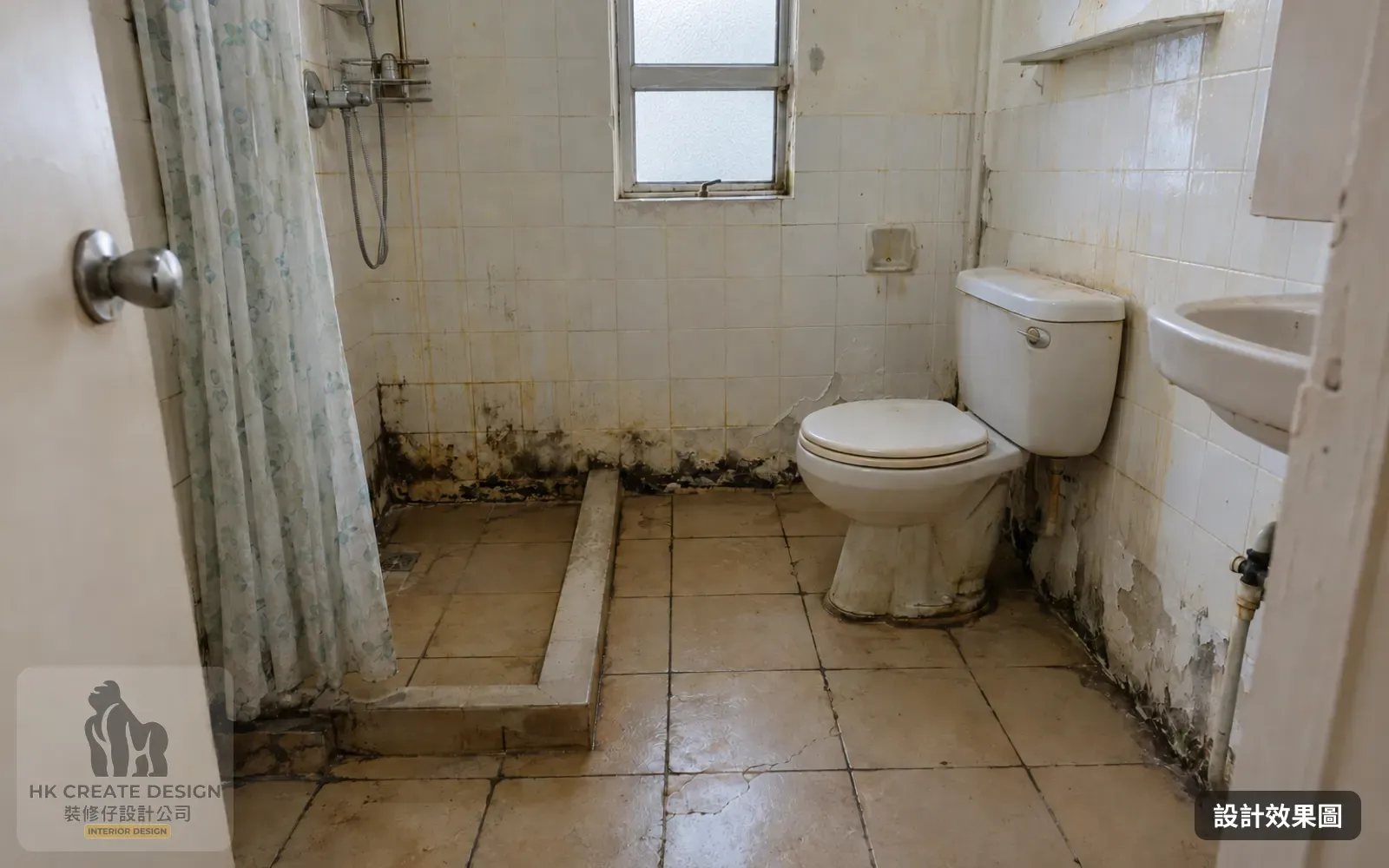
Illustration before workIllustration of the proposed result
‹ ›
Design illustration · Plan reference: Bathroom redone waterproofing and tiling
KEY NUMBERS
Waterproofing: figures to know before work starts
key figures
company public price
HK$4,850/ room
One toilet is waterproof (C02)
The company's public price: about 30-40 sq. ft. toilet with full floor, 6 ft. raised wall, full wall shower, Sika 107 two floors with 24-hour water shut-off for water testing; for rooms over 40 sq. ft., the extra charge is C01 HK$39 per sq. ft.
The Joint Office received complaints about water seepage in buildings in 2024
The Development Bureau responded to the Legislative Council in July 2025: The Joint Office received 39,555, 45,033, and 47,299 complaints about building water seepage in 2022, 2023, and 2024 respectively, an increase of nearly 20% in three years.
Referral to Buildings Department due to building safety or pipe disrepair in 2024
The same reply stated that in 2024, 2,200 cases were referred to the Buildings Department because leaks posed risks to building safety or involved drainage pipes in disrepair; and 1,236 cases involving or suspected leaks in water supply pipes were referred to the Water Supplies Department.
In 2025, cases will be investigated within 90 working days.
The Joint Office announced that 69.5% (or 31,940 cases) of the cases received in 2025 can complete the investigation and notify the whistleblower within 90 working days; that is, about 30% of the cases will have to wait longer.
New procedure from July 2026: Recommended Maintenance Notice
The Joint Office will implement the new procedure in a pilot form starting from July 16, 2026: For simple and direct cases with the cooperation of the owners, it is expected that a "Recommended Maintenance Notice" will be issued to the upper-level owners about 14 working days after receiving the report, requiring self-inspection and completion of repairs within 28 calendar days.
Cases of water seepage or water leakage in rented public housing units in 2025
The Housing Bureau responded to the Legislative Council: From 2023 to 2025, it received 9,164, 9,506 and 9,203 cases respectively; more than 60% of the cases came from old housing estates with a building age of more than 30 years. The sources were mostly bathroom floors or walls. The causes included aging of the waterproof layer, natural loss of materials, or damage to the waterproof layer or pipes by tenants during renovation.
Private residential and mixed-use buildings aged 50 years or above
As of the end of 2025, among the 36,546 private residential and mixed-use buildings in Hong Kong, 9,402 are 50 years old or above, and 6,751 are 40 to 49 years old. The aging of the waterproof layer and pipes of old buildings is the main reason for water seepage.
Buildings Department bathroom waterproofing range reference
The Buildings Department's "Guidelines on Preventing Water Seepage in New Buildings" recommends that waterproofing cover the entire bathroom floor and extend up to 300 mm on each wall, and the walls around bathtubs and shower cubicles are at least 1,800 mm. It is a general reference for new buildings. When renovating, the scope must still be determined according to the site.
Sika Hong Kong technical information: Two-component polymer modified cement waterproof slurry, apply at least 2 layers, and 3 layers may be required for extremely serious water seepage locations; bathrooms and terraces are generally about 1.0 kg/m² per layer, and wait about 3 hours between two layers at 30°C.
Number of reports/complaints about water seepage in buildings received by the Joint Office(Unit: cases)
2010
25,717
2012
27,353
2015
29,617
2017
36,002
2022
39,555
2023
45,033
2024
47,299
The figures come from three government documents in response to the Legislative Council (2013, 2018, and 2025). They reflect the number of reports received by the Joint Office every year. They do not mean that all cases are real water seepage, and they do not include cases in which owners hire their own technicians to handle them and do not report them. In more than ten years, the number of cases increased from about 26,000 to more than 47,000. [5][4][3]
Cases of water seepage or leakage in rented public housing units(Unit: cases)
2023
9,164
2024
9,506
2025
9,203
The Housing Department's figures only include public housing units rented out by the Housing Authority and do not include private buildings. More than 60% of them come from old housing estates that are over 30 years old, and the sources are mostly bathroom floors or walls. [6]
FULL GUIDE
Waterproofing guide: planning, work stages and practical checks
How many people in Hong Kong encounter water seepage problems?
Water seepage is one of the most common problems in Hong Kong's residential buildings, and one of the most likely to cause discord between neighbors. In a reply to the Legislative Council, the government disclosed that the Joint Office for Investigation of Water Seepage Complaints (Joint Office) jointly established by the Food and Environmental Hygiene Department and the Buildings Department received 39,555, 45,033 and 47,299 complaints about water seepage in buildings in 2022, 2023 and 2024 respectively, which is an average of more than 120 cases per day. Looking forward, there were only about 25,700 cases in 2010, and it has reached 36,002 cases in 2017. The trend has been upward.
Public housing is no exception. The Housing Department received 9,203 cases of water seepage or water leakage in rented public housing units in 2025. Officials said that more than 60% came from old housing estates that were more than 30 years old, and the source of leakage was mostly bathroom floors or walls. The causes include aging of the waterproof layer, natural wear and tear of building materials, or tenants who damaged the waterproof layer or pipes during self-renovation. The last point deserves special attention from renovation owners: an accidental drilling into the wall may be the source of water damage to the ceiling downstairs in the future.
The age of the building is also a background factor. As of the end of 2025, there were 9,402 private residential and mixed-use buildings in Hong Kong that were 50 years old or above, and there were 6,751 buildings between 40 and 49 years old. The waterproofing layer, pipes and edge glue all have a lifespan. The older the building, the more necessary it is to do the waterproofing all at once during renovation, rather than waiting for the fire to seep downstairs and put out the fire first.
Principle of waterproofing: How does water move from your house to downstairs?
The concrete floor itself is not completely waterproof. Water will slowly seep down along the pores of the concrete, construction joints, cracks, pipe penetrations and corners at the junction of walls and floors. There is water in bathrooms and kitchens every day. The longer the water accumulates on the floor and the worse the slope, the more likely it is that water will find its way into the weak spot. Therefore, the core of a waterproofing project is not a single material, but a continuous, unbroken waterproofing layer, with a correct drainage slope, a stable base, and complete ceramic tile caulking. All four together are called a system.
Waterproof slurry is generally cement-based and polymer-based. After being applied to the base layer, it will form a dense and somewhat elastic film. He is most afraid of three things: the base layer is loose or oily, making the waterproof layer unreliable; the inner corners, drainage levels, and pipe locations are not strengthened, so the membrane will crack at the most susceptible locations; and the waterproofing layer will be drilled through by other types of work after it is completed. Therefore, when we quote and construct, we will write "base treatment", "detail enhancement", "waterproof layer", "closed water test", and "protective layer and paving bricks" separately. Each level can be affected by the same acceptance.
Another principle that is often overlooked is "water pressure" and "time". The wall of the shower stall has been exposed to water for a long time. Although it is not as water-filled as the floor, the water will enter along the cracks of the bricks. Therefore, the Buildings Department's guidelines recommend that the wall around the shower room be waterproofed to at least 1,800 mm instead of just 300 mm at the base.
Common causes: Find the source first, don’t do waterproofing randomly
The Buildings Department lists four common causes of water seepage: leaks from drainage pipes upstairs, adjacent to or in the unit itself; leaks from water supply pipes; inadequate or damaged floor waterproofing or bathtub edges; and rainwater seeping through building rooftops, platforms, balconies, exterior walls or windows. The treatment methods for the four sources are completely different - if the water supply pipe leaks, the pipe must be replaced, and it has nothing to do with the waterproof layer; if water seeps from the window, the window frame and exterior wall sealing must be treated, and waterproofing slurry indoors is useless.
So our first step must be to “find the source”. Commonly used methods include: turning off the whole house water tap to see if the water meter is reading, and identifying the water supply pipe; draining water at suspected locations or using colored water to test the water; observing water stains after it rains and using regular water; and using a hygrometer to record humidity changes on walls and ceilings. Starting from July 2026, the Joint Office's new procedures will also introduce infrared thermal imaging combined with electronic humidity meters, which can initially determine the source without entering the upper-level unit.
If water damage is on your ceiling and the source is suspected to be upstairs, the responsibility lies with the upstairs owner. The Buildings Department recommends that you first discuss with the tenants upstairs and seek assistance from the management office or corporation before calling the Liaison Office at 1823. We can help you with a preliminary inspection and explanation, but we won't ask you to waterproof your ceiling as a solution - that will just trap the water in the concrete, and the steel bars will continue to rust.
Water stains on the downstairs ceiling appear after taking a shower upstairs: most of them are caused by waterproofing or water removal on the bathroom floor
It is still possible to turn off the water meter: If the water supply pipe is leaking, call a licensed plumber first
When it rains heavily, it penetrates first, and the window corners are the wettest: window frames, exterior walls or rooftops.
There is moisture under the zinc basin in the kitchen: most of them are connected to the water pipe or the zinc basin is waterproof
Bathroom waterproofing: the range and height should be the same as the details
Bathrooms are hardest hit by water seepage. Our standard practice is to make the floor fully waterproof, raise the wall by 6 feet, and cover the entire shower wall. This range is wider than the general wall base of 300 mm and the shower stall of at least 1,800 mm recommended by the Buildings Department’s guidelines. The reason is that many bathrooms in Hong Kong do not have bathtubs, and the entire room is a wet area, and water splashes around when the shower is turned on.
Details are the key to success or failure. To remove the water level on the floor, first seal the gap between the water pipe and the floor with waterproof mortar or water-stopping material, and then add a layer of paint around it; the inner corners at the junction of the wall and the floor must be rounded or meshed; the pipe penetration wall, the water level of the toilet, and the edge of the tank level must be strengthened one by one. After it is done, no one can drill into the waterproof range; if you really want to install bathroom accessories or handrails, you must reserve the space before waterproofing, or make it waterproof again after installation.
The water drainage slope must also be determined before waterproofing. If the slope of the floor itself is not correct and water accumulates in the corners, the waterproof layer will be soaked in water for a long time and its lifespan will be greatly reduced. We will reserve a slope toward the water level when drilling the platform. After waterproofing, we will lay bricks and the brick surface will follow the slope again.
After tiling and grouting, we finish shower kerbs, bath rims, basins, toilet bases and wall junctions with DOWSIL mould-resistant silicone. We use copper for all potable-water pipes rather than galvanised iron. You normally choose your sanitaryware and taps, and we charge for installation. We avoid drilling through waterproofed areas and reinstate the waterproofing immediately if a penetration is necessary.
Kitchen waterproofing: zinc basin and washing machine are connected to the wall and floor
The kitchen floor usually does not accumulate water for a long time like the bathroom, but leaks can still occur under the sink and at the junction of the washing machine and the wall. Many kitchen floors in old buildings are not waterproof. After removing the bricks, it is first discovered that the clay bottom has become loose. We waterproofed the kitchen and painted the entire floor. The wall-to-floor junction was raised by 150 mm, and the water level of the zinc basin and washing machine was strengthened. We also used two layers of Sika 107.
The most common "fake water seepage" in the kitchen is actually caused by the loose connection of the water pipe or the aging of the hose, and the water flows along the floor and into the corners. If you only do waterproofing without replacing the water pipe, the problem will return soon. Therefore, we would recommend checking and replacing the zinc basin and the water outlet of the washing machine at the same time, and the location of the water pipe in the future should be clearly marked on the drawing to facilitate future maintenance.
Water seepage next to classmates’ windows on the rooftop: Rainwater problems must be dealt with outside
The source of water seepage from rooftops, platforms, terraces and exterior walls is rainwater, and the treatment method should start from the outside: on the rooftop, check whether the old waterproof layer has blistered or burst, and whether the water outlet is clogged; on the exterior wall, check whether there are cracks or falling off ceramic tiles; on the windows, check the weather-resistant glue around the window frame, the slope of the window sill, and the corner position of the window frame. Applying waterproof slurry indoors can only temporarily cover water stains, and water will still penetrate the wall.
Be aware of liability issues. Government documents point out that leaks caused by rain through rooftops, terraces, balconies, exterior walls or windows generally do not constitute a public health nuisance, and the Joint Office may not be able to deal with them according to the Public Health and Municipal Services Ordinance. However, if the leaks pose a risk to building safety (such as peeling of ceiling concrete, rusted steel bars) or involve drain pipes in disrepair, they will be referred to the Buildings Department. Rooftops and exterior walls are often public parts of a building and must be arranged by the corporation or management office.
When we deal with water seepage at the window, we will first determine whether it is the window frame itself, the gap between the window frame and the wall, and it must be a crack in the exterior wall. If the window edge glue has failed, you can remove the old glue and apply weather-resistant glue again; if the window frame is deformed or the corners are rotten, you should consider replacing the window (see the aluminum window engineering page for details). If the rooftop or exterior wall involves high-altitude work, public parts or structures, we will first clearly explain the scope and required professionals, and we will not force it.
Standard process: from removing bricks to see the bottom to closing the water to test the water
A complete bathroom is redone for waterproofing. The order is: protection and water interception → remove old bricks and mud bottom until concrete is visible → check floor slabs, pipes and water levels → repair cracks, hollows and loose parts → make slopes on the floor → clean and wet the base → strengthen internal corners, pipe positions and water levels → first layer of waterproof slurry → wait → apply the second layer in a cross direction → maintenance → water test with closed water → certified by the owner → Laying bricks, sweeping doors, and installing sanitary ware.
The waiting time between each layer depends on the product information. Taking SikaTop-107 Seal HK as an example, wait about 3 hours between two layers at 30°C, about 6 hours at 20°C, and about 12 hours at 10°C; if more than 24 hours have passed, gently clean the surface first. Rushing the work and not waiting enough time is a common reason for blistering and peeling of the waterproof layer.
Closing the water to test is the only way to prove whether there is any problem with waterproofing before laying bricks. We will seal the floor drain, fill it with 2 to 3 centimeters of water, observe it for 24 to 48 hours, record the start and end time, water level photos, and arrange to inspect the downstairs ceiling if possible. If the water test fails, the leakage points must be found and repaired and try again. Until the water test is qualified, the bricks can be laid.
Flood testing is the critical inspection before tiling because gaps in the waterproofing are hidden once the tiles go on. Our C02 bathroom rate includes a 24-hour flood test. C04 is HK$1,400 per separate 24–48-hour test. We seal the floor drain, add 2–3 cm of water, monitor the level and the ceiling below, and photograph the results.
Allow the waterproofing to cure before testing. The manufacturer specifies at least 3 days before immersion testing for SikaTop-300 Seal. SikaTop-555 Seal takes about 5–7 days for the initial cure. For SikaTop-107 Seal HK, apply two coats at the specified interval and wait until they are dry. Testing too early can damage the coating and make the result unreliable.
Seal the floor drain and all waste outlets. Fit temporary water barriers at the shower and doorway to keep water inside the room. Add water to a depth of about 2–3 cm so that even the highest part of the floor is covered. Mark the water level on the wall with tape or a pen and photograph the level and start time. Monitor for at least 24 hours, extending to 48 hours if needed. Keep the bathroom out of use during the test.
At the end, compare the water level with the mark and check for a noticeable drop. If possible, arrange with the owner below to check their ceiling and pipework for new water marks. Photograph the end time and water level, and give the owner both sets of photos. Once the checks are satisfactory, drain the water, remove the barriers and prepare for tiling.
If the water level falls noticeably or new marks appear on the ceiling below, drain the water, let the area dry and locate the leak. Typical weak points are drains, pipe penetrations and internal corners. Reinforce the affected areas and repeat the test until it passes before tiling. We keep the test in the programme even on a tight schedule, and you can attend.
1. Check that the waterproofing has cured as specified for the product.
2. Seal the floor drain and outlets and install a temporary water barrier at the doorway.
3. Add 2–3 cm of water, mark the level on the wall and take a starting photo.
4. Monitor for 24–48 hours and keep the bathroom out of use.
5. Compare the water level, inspect the ceiling below and take a final photo.
6. If the test passes, drain the water and start tiling. If it fails, repair and retest.
Waterproof material sorting: rigid and flexible rooftop system
The most commonly used two-component polymer-modified cement waterproof slurry for indoor wet areas is a bag of powder plus a bucket of liquid, stir well and then apply. It has good compatibility with cement base and tile adhesive, and can be used to lay tiles directly after coating. SikaTop-107 Seal HK is a common product in Hong Kong. The manufacturer states that it is suitable for bathrooms, toilets, and terraces, with at least two layers; Optimix also has WP515 universal waterproofing grout and WP568 flexible waterproofing grout to choose from.
If there are slight cracks in the base layer, or there is slight movement in the location (such as the floor of an old building, a balcony), you can consider a flexible waterproof grout with higher elasticity. Taking Sika data as an example, SikaTop-555 Seal indicates that the crack bridging is greater than 1 mm, the elongation at break is 200% or above, and the initial curing time is about 5 to 7 days; SikaTop-300 Seal requires at least 3 days of curing before testing the water. Products with high elasticity usually require longer curing time, so the construction period should be reserved.
The exposed part of the roof must withstand the sun, rain, and temperature differences. Indoor waterproofing slurry may not be suitable. Generally, a coating or roll material system specially designed for exposed roofs is used, and must be combined with thermal insulation and protective layers. The selection is not based on whether the brand is expensive, but based on the location, quality, whether it will be damp, whether it will be exposed, and whether it will follow the factory procedures.
Choosing waterproofing materials from Sika and Optimix
We mainly use Sika, Optimix and Fosroc Nitocote waterproofing products. The choice depends on four things: the location (bathroom, kitchen, balcony or roof), cracks or movement in the substrate, whether the surface will be tiled, and how much time is available for curing.
For a bathroom or kitchen with a stable substrate that will be tiled, a rigid polymer-modified cementitious slurry is generally suitable. Our C01, C02 and C03 rates use SikaTop-107 Seal HK. The manufacturer specifies at least two coats, about 1.0 kg/m² per coat for bathrooms and balconies, and about 3 hours between coats at 30°C. Optimix WP515 general-purpose waterproofing slurry is a similar option. Its data sheet specifies at least two coats of about 1 mm each and a bond strength to concrete of about 2.0 MPa at 28 days.
For older floors with fine cracks or slight movement, a flexible slurry may be more suitable. The manufacturer lists crack bridging above 1 mm and elongation of at least 200% for SikaTop-555 Seal. The data sheet for Optimix WP568 flexible waterproofing slurry lists elongation above 200% at 28 days and recommends two coats of about 0.5 mm each. Flexible products usually need more time to cure, so allow a few extra days before flood testing.
For exposed roofs and podiums, choose a system designed for sustained sunlight. Sika's Sikalastic-560 is made for exposed roofs. The manufacturer specifies 2–3 coats with total consumption of about 0.9–1.4 kg/m², relative humidity no higher than 80% and substrate moisture content no higher than 6%. First check roof ownership and the building's deed of mutual covenant. The owners' corporation handles work on common parts.
Follow the manufacturer's procedure for the product: clean and dampen the substrate as specified, reinforce internal corners and pipe penetrations, and apply two coats in crossing directions. Allow the required time between coats and for curing, then flood-test before tiling. Our quotation identifies the product model, and we provide photos of its packaging and batch number at handover.
Stable substrate to be tiled: SikaTop-107 Seal HK or Optimix WP515
Fine cracks or slight movement: SikaTop-555 Seal or Optimix WP568
Exposed roof: a roofing system such as Sikalastic-560
Tight programme: allow for the longer curing time of flexible products
Click here to get a quote from a waterproofing master
Research by the Consumer Council found that it received 1,205 complaints about home renovation services from 2017 to 2023, and of the preliminary quotations it evaluated, only 38% listed all work details and 28% listed the quantity of each process. Waterproofing is the item that is most likely to be mentioned by the phrase "toilet waterproofing", so when looking at the quotation, you should ask clearly: waterproofing range (how high should the floor and wall be raised, how high should the shower seat be), material brand and model, how many layers should be applied, where the inner corner pipe should be strengthened, whether there is a closed water test, how long the test is, and what to do if it fails.
Also ask clearly to remove it to the side layer. Simply applying waterproofing on the old bricks and then laying them again, or removing them until the concrete is visible and then redoing them, will have completely different effects and prices. Our public prices are listed separately: C01 waterproofing per square foot HK$39, C02 one toilet HK$4,850, C03 one kitchen HK$4,300, C04 one closed water test HK$1,400, C05 bathroom including demolition and redo waterproofing HK$13,000, so you can compare item by item.
Waterproofing price ranges from our C-series price list
Our C-series indicative rate for indoor waterproofing is HK$2,350–HK$13,000 per space, depending on whether the substrate is already exposed or the tiles need stripping. For waterproofing an exposed substrate, C01 costs HK$39 per sq ft with a minimum charge of HK$2,350. A 60 sq ft balcony works out at HK$2,340, so the HK$2,350 minimum applies. For 100 sq ft the price is HK$3,900.
C03 costs HK$4,300 per kitchen, covering the entire floor, a 150 mm upstand around the wall-to-floor junction and reinforcement near the sink. C02 is HK$4,850 for a bathroom of about 30–40 sq ft. It covers the whole floor, the walls to 6 ft, the full shower walls and a 24-hour flood test. Use C01 for any area above 40 sq ft. A 50 sq ft bathroom costs HK$4,850 + 10 sq ft × HK$39 = HK$5,240. The standard kitchen and bathroom items together cost HK$9,150.
For bathroom work that requires stripping back to the substrate, C05 costs HK$13,000 per bathroom. It includes tile removal, substrate repairs, two waterproofing coats and flood testing. Tiling is excluded, and A10, C01, C02 and C04 are not charged again for the same work. A C04 flood test costs HK$1,400 per test and is usually carried out with other waterproofing work. A separate visit for a small job carries a minimum charge of HK$2,000.
These rates exclude tiling, tile supply, sanitaryware and plumbing alterations. If opening up the area reveals problems with the slab, pipes or drainage, we provide a separate written quotation before carrying out that work.
Sample acceptance: Several things you must look at before laying bricks
The waterproofing will not be visible once the tiles are laid, so the inspection must be done before the tiles are laid. At least you should see: the waterproof layer is uniform in color, with no leaks, pinholes or blisters; the height of the wall is the same as the quoted price, which can be measured with a tape measure; the inner corners, water removal levels, and pipe positions are reinforced; photos of the water level and time record of the closed water test; photos of the product packaging and batch number.
After laying the bricks, you should also check: the slope of the floor is relative to the water level. Pour a bucket of water down to see if it will accumulate in the corners; whether the cracks between the bricks are filled; whether there is anti-mold glue at the junction of the sink, bathtub edge, wash basin and wall. If these details are not done well, water will enter through the cracks between the bricks. Even if the waterproof layer is intact, mold will develop if it stays wet for a long time.
Before waterproofing: the base layer is not loose, there is no water accumulation, and the inner corners have been rounded or screened.
After waterproofing: the colors of the two layers are crossed, there is no leakage, and the height is measured.
Test the water: start and end photos, water level mark, ceiling condition downstairs
After laying the bricks: Try pouring water to see if there is any water, the brick joints are filled, and the silicone is continuous
Common Mistake: Many water seepages are caused by humans
The first common mistake is to only build the floor and not the walls. The water from the shower seat flowed along the wall, got into the cement at the foot of the wall, and continued to seep downstairs. The second method is to drill holes to install bathroom accessories, towel racks or modify pipes after the waterproofing is completed. Drilling through the waterproof layer will not make any repairs. In the third department, you can lay bricks without testing the water, or you can pass the test after a few hours.
The fourth step is to rush the work: applying a second layer before the waterproof layer is dry, laying bricks before curing them, or not extending the waiting time in freezing and humid weather. The fifth method is to use the wrong method: if there is water leakage from upstairs, apply waterproofing on your ceiling; if there is water seepage near the window, apply waterproof slurry on the indoor wall; if the water supply pipe leaks, you think it is because the waterproof layer is broken. All of this will only make the problem longer and repair more expensive.
The Housing Department also pointed out that some cases of water seepage in public housing were caused by damage to the waterproof layer or pipes during tenants' self-renovation. Therefore, even if waterproofing is not required, as long as the walls and floors are dug in the bathroom or kitchen, waterproofing repairs and water testing should be carried out in advance.
Maintenance: After the waterproofing is done, it will last a long time.
The waterproof layer itself is embedded under the ceramic tiles. The key point of daily maintenance is to prevent water from getting in: Regularly check whether the cracks of the bricks are loose and black; re-apply the anti-mold glue on the sides of the tub, bathtub, and wash basin if it turns black or cracks; clean the floor drain regularly to avoid water accumulation; do not use strong acid and alkali cleaners to soak the cracks of the bricks for a long time.
If there is water damage on the ceiling downstairs, the sooner you can deal with it, the better. Under the new procedures, the Joint Office can issue a proposed repair notice to the upper-level owner in about 14 working days, requiring self-inspection and completion of repairs within 28 calendar days; the 2025 Amendment Ordinance has also increased the penalties for non-compliance with nuisance notices. Proactive handling saves time and makes it easier to get along with your neighbors than waiting for notification.
When we complete the project, we will hand over photos of the low waterproof range, water test records and material information. If we need to repair or sell the property in the future, all the information can be checked.
Can you identify the source of water seepage? Location, symptoms and treatment direction
source of suspicion
Common symptoms
preliminary inspection
processing direction
Water supply pipes (hot and cold water pipes)
It continues to get wet regardless of whether it is watered or not, and the area of water damage gradually expands.
Turn off the water switch and check if there are any readings on the water meter.
Pipe replacement or repair by a licensed plumber; not related to waterproofing layer
Remove water pipes/floor drains
Wet first with water, such as after taking a shower or washing clothes
For suspected cases, drain water or use colored water to test
Replace the water pipe, redo the floor drain closing and surrounding waterproofing
Bathroom floor waterproof layer
The ceiling downstairs in the bathroom was damaged by water damage and the concrete was peeling off.
Closed water test, hygrometer record
Remove the bricks and redo two layers of waterproofing. If the water test is qualified, lay the bricks first.
Bathtub/tub edge sealing
The walls around the bathtub are moldy and the cracks in the bricks are black
Check whether the silicone and brick joints are continuous
Clean off the old glue and re-apply anti-mildew glue; in serious cases, the tank should be redone to waterproof it
Rooftop/exterior wall/windowside (rainwater)
It seeps out first after it rains, with the corners of windows and ceilings near exterior walls being the wettest.
Compare the rain time and check the window glue and exterior wall cracks
Treatment from the outside: window re-gluing or window replacement, exterior wall or roof repair; common parts through the corporation
Source classification refers to the common causes of water seepage listed by the Buildings Department; there may actually be more than one source. For complex cases, you should seek help from professionals or the joint office. [7]
Comparison of common indoor waterproofing slurries (factory information)
Crack bridging >1mm; elongation at break ≥200%; initial curing 5–7 days
Base layer with slight cracks or slight vibration
The data is based on information published by the manufacturer; the actual dosage is affected by the roughness of the base layer and construction methods, and construction is subject to the latest technical data. Our standard bathroom waterproofing uses Sika 107 two layers. [11][12][13]
The company's waterproof-related public prices: What are the side items included?
Project number
content
unit price
Pay attention to
C01
SikaTop Seal-107 Waterproof by the foot, reinforced inner corner tubes, two layers crossed
HK$39/square foot (minimum HK$2,350)
Additional HK$10/sq.ft. for third floor
C02
One toilet is waterproof (about 30-40 sq ft), the floor is all over, the wall is raised 6 feet, and the shower seat is all over the wall
HK$4,850/room
A 24-hour water shut-off test is included; if it exceeds 40 feet, add C01
C03
One kitchen is waterproof, the floor is all-round, the wall-to-floor junction is raised 150mm, and the zinc basin is reinforced
HK$4,300/room
Brick removal and brick laying are additional charges
C04
Close the water and test the water for 24-48 hours, fill the sealing drain with 2-3cm of water, and take photos and records.
HK$1,400/time
Included in C02 and charged only once. Usually carried out with the waterproofing work. A separate visit for a small job carries a minimum charge of HK$2,000.
C05
The bathroom was completely dismantled and redone waterproofed: the bricks were removed to the bottom, the base was repaired, two layers of waterproofing were made, and the water was closed to test the water.
HK$13,000/room
Tile paving is not included; the same bathroom area as A10, C01, C02, C04 will not be counted repeatedly.
The price comes from the company's 117 public prices; the final price is subject to the written quotation made by the master after on-site measurement. [1]
Sika and Optimix waterproofing slurries compared using manufacturers' data
Site conditions
Sika
Optimix
Pay attention to
Bathroom or kitchen with a stable substrate that will be tiled
SikaTop-107 Seal HK: at least 2 coats. Bathroom coverage is about 1.0 kg/m² per coat, with about 3 hours between coats at 30°C.
WP515 general waterproofing slurry: at least 2 coats of about 1 mm each. Bond strength to concrete is about 2.0 MPa at 28 days.
C01, C02 and C03 use two coats of Sika 107
Older floor with fine cracks or slight movement
SikaTop-555 Seal: crack bridging > 1 mm, elongation ≥ 200% and initial cure in about 5–7 days
WP568 flexible waterproofing slurry: elongation > 200% at 28 days, with 2 coats of about 0.5 mm each
Flexible products take longer to cure. Allow for this before flood testing.
Wet areas requiring high elasticity
SikaTop-300 Seal: allow at least 3 days to cure before immersion testing
Select according to site conditions
Allow the full curing time before testing
Exposed roofs and podiums
Sikalastic-560: 2–3 coats at a total of about 0.9–1.4 kg/m², with humidity ≤ 80%
Indoor waterproofing slurry is unsuitable for prolonged exposure
Work on a communal roof goes through the owners' corporation. The ROOF750 package price requires confirmation.
Figures come from Sika Hong Kong product pages and Optimix technical data sheets. Actual consumption depends on the substrate and application method. Refer to the latest product data sheet. [11][13][12][16][14][15]
Common waterproofing scenarios and prices from our C-series price list
Site conditions
Applicable item
plan
Indicative work cost
Balcony of about 60 sq ft, stripped back to the substrate
C01
60 sq ft × HK$39 = HK$2,340, below the minimum charge
HK$2,350
About 100 sq ft of floor and walls, stripped back to the substrate
C01
100 sq ft × HK$39
HK$3,900
One kitchen
C03
HK$4,300/room
HK$4,300
One bathroom (about 30–40 sq ft)
C02
HK$4,850 per bathroom, including a 24-hour flood test
HK$4,850
Bathroom of about 50 sq ft
C02 + C01
HK$4,850 + 10 sq ft × HK$39
HK$5,240
Kitchen and bathroom waterproofing together
C02 + C03
HK$4,850 + HK$4,300
HK$9,150
Bathroom stripped back to the substrate for new waterproofing
C05
HK$13,000 per bathroom, including strip-out and flood testing. Tiling is excluded.
HK$13,000
Rates exclude tiling, tile supply, sanitaryware and plumbing alterations. A third coat under C01 is an extra HK$10 per sq ft. A C04 flood test costs HK$1,400 per test and is usually carried out with waterproofing work. A separate visit for a small job costs at least HK$2,000. The final price is confirmed in writing after measurement. [1]
SITE SOP
Waterproofing workmanship and handover checklist
The "shutdown checkpoint" requires you or the foreman to look at it and confirm it before proceeding to the next step. You can check items one by one during acceptance.
Company Site Code
Our bathroom/kitchen waterproofing construction process
1. On-site inspection and source tracingshutdown checkpoint
Check the location of the water damage, turn off the water switch, check the water meter, test the water removal, and judge whether it is water supply, water removal, and the waterproof layer determines the rainwater. If the problem is not the waterproof layer, you will not be asked to do waterproofing.
2. Protection, water interception, and notification management office
Protect the elevator lobby and corridors, intercept water, and start work according to the time specified by the management office.
3. Remove the bricks and find the bottomshutdown checkpoint
Remove the old bricks and mud bottom until the concrete is visible, and take photos to record the current conditions of the floor slabs, pipes, and water levels.
4. Repair the base and remove water
Repair cracks, hollows, and loose parts, seal the gaps around the water pipe, and build a drainage slope on the floor.
5. Detail enhancement
The inner corners of the wall and floor, the water removal level, the wall penetration position of the pipe, and the nozzle at the cylinder level should be coated or meshed first.
6. Two layers of waterproof slurry
After cleaning and moistening the base, apply the first layer, and then apply the second layer in the cross direction according to the factory's waiting time; the floor is all over, the wall is raised 6 feet, and the shower space is all over the wall.
7. Close the water and test the watershutdown checkpoint
After curing, fill the floor with 2-3cm of water and observe it for 24-48 hours. Record the water level and the ceiling condition downstairs. The owner can witness it on the spot.
8. Laying bricks, cleaning and gluing
Tile only after the flood test passes. Lay the floor tiles to the drainage fall, fill the grout joints and seal the edges of fittings with DOWSIL mould-resistant silicone.
9. Complete cleaning and handover of materials
Remove the garbage, basically clean the site, and submit photos of the waterproof range, water test records, and material information.
Allow the waterproofing to cure as the product requires. For example, SikaTop-300 Seal requires at least 3 days before testing.
2. Seal the floor drain and waste outlets
Seal the drains and outlets. Install temporary water barriers at the shower and doorway.
3. Add 2–3 cm of water
Cover the highest part of the floor, with a water depth of about 2–3 cm.
4. Mark the water level and take a starting photoshutdown checkpoint
Use tape or a line on the wall to mark the level. Photograph the starting level and time.
5. Monitor for 24–48 hours
Keep the bathroom or kitchen out of use. If possible, arrange to inspect the ceiling of the flat below.
6. Compare the water level and take a final photoshutdown checkpoint
Check for a noticeable fall in water level and any new marks on the ceiling below. Photograph the final water level and time.
7. Drain after a pass, or repair and retest after a failure
When the test passes, drain the water, remove the barriers and prepare for tiling. If it fails, drain the water, allow the area to dry, repair the leak and repeat until it passes.
Mark the floor, wall height, shower position and detail enhancement locations, and check them with you before laying tiles.
Photo records of construction and water testing
Take photos at the same time of removing the bricks to see the bottom, repairing the base layer, two layers of waterproofing, and closing the water to test the water level, which will be submitted when completed.
Written quotations and change orders
List items item by item number with the same unit; if additional problems are found after disassembly, a written quotation will be made first and your confirmation will be done first.
MATERIALS
Related materials: We know how to use them and can also help you with construction
Understand the time, extent and past repairs of water damage
On-site inspection of roof, wall base, drainage and floor conditions
Define the range of materials that need to be dismantled or retained
Write the waterproofing plan, acceptance and maintenance items into the quotation
BEFORE A SITE VISIT
Before the survey, you may wish to prepare these questions.
01
Does the water seep out first when it rains, or does it appear after daily use of water?
02
Are there any upper-level units or public locations that need to be inspected?
03
Does the project include brick removal, removal, drainage and resurfacing?
FAQ
FAQs
What should I send to get a quotation?
Send a wide photo of the work area, a close-up of the issue, approximate dimensions, the property district and your preferred start date. You can enquire before you have measurements. We check what is included and what costs extra against the site conditions. Concealed issues that are still uncertain require separate written confirmation.
Downstairs, there is water seepage and drainage in my house. Do you want to count?
Start by finding the source before stripping out the bathroom. It could be a waste pipe, a supply pipe or the waterproofing layer, and the water may come from outside your flat. Discuss it with us free on WhatsApp and arrange a site check if needed. Until 31 December 2026, on-site measurement is free for two or more work items, with no deposit required. After that, the HK$500 fee is credited against your order. If those involved cannot agree on a way forward, contact the Joint Office via 1823. Under the procedure introduced in July 2026, the office first issues a notice recommending repairs and asks those involved to arrange inspection and repairs within 28 calendar days.
Can it be waterproofed without removing the bricks?
There are methods on the market to apply transparent waterproofing or pouring on the brick surface, but it can only deal with water seepage in some brick joints, and cannot repair the aging or punctured waterproofing layer below. If there is obvious water damage downstairs, most of the time it can be cured by removing the bricks and redoing them first. We will make an on-site judgment and explain to you the difference between the two methods.
How high should the bathroom waterproofing be?
The Buildings Department's new building guidelines recommend 300mm for the entire floor plus each wall, and at least 1,800mm around shower cubicles and bathtubs. Our toilet waterproofing (C02) method is to cover the entire floor, raise the wall 6 feet, and cover the entire shower wall.
How long does it take to test the water with closed water?
There is no legal number of hours in Hong Kong that applies to all bathrooms, and it depends on the maintenance requirements and construction plans of the products used. We generally fill the floor with 2-3 cm of water and observe it for 24-48 hours, record the water level and the ceiling condition downstairs, and lay bricks first if the condition is qualified.
How long does it take to lay waterproofing before laying bricks?
Depends on product. Wait about 3 hours at 30°C between two layers of Sika 107. It must be hardened enough to support enough before laying; the manufacturer of SikaTop-300 Seal requires a minimum curing of 3 days before testing the water; SikaTop-555 Seal requires initial curing of about 5-7 days. We will arrange the construction period according to product information.
How much does it cost to waterproof a toilet?
Public price: HK$4,850 for waterproofing a C02 toilet (approximately 30–40 sq ft), including 24-hour water shut-off and water testing; HK$13,000 for C05 bathroom including demolition and redoing of waterproofing, excluding tiling. Paving tiles 600×600mm or below HK$78/sq. You can first use the website's AI quotation or computer estimate, and the final written quotation with on-site measurements shall prevail.
Does the water seepage system around the window need to be waterproofed?
Water seepage near windows is mostly due to the aging of the weather-resistant glue around the window frame, rotten corners of the window frame, or cracks in the exterior wall. It must be dealt with from the window and exterior wall. Applying waterproofing slurry indoors is of no use. If there is a problem with the window frame itself, you should consider repairing or replacing the window.
Can our unit do the roof leakage ourselves?
Rooftops are often public parts of buildings and must be arranged by the corporation or management office; they also involve high-altitude work and exposed waterproofing systems. If the leakage has caused the ceiling to peel off, the Joint Office will refer it to the Buildings Department for handling. We can help you look at the situation in the unit and explain it, but for public parts of the project, you need to confirm the ownership and responsibilities first.
After the waterproofing is completed, can I install bathroom accessories and towel racks?
Yes, but it is best to decide the location before waterproofing. If the hole is drilled after the waterproofing is completed, the drilled position must be re-waterproofed. We will check the location of all hardware and sanitary ware with you before construction.
Will there be a lot of garbage after completion?
After every order is completed, we will remove the trash, sweep the area, and do basic cleaning. If deep cleaning or formaldehyde removal is required, follow up with a professional cleaning company.
How do I choose between Sika and Optimix waterproofing slurries?
We use both brands. For a stable bathroom or kitchen substrate that will be tiled, a rigid slurry such as SikaTop-107 Seal HK or Optimix WP515 is generally suitable. Both require at least two coats. For an older floor with fine cracks or slight movement, options include SikaTop-555 Seal and Optimix WP568. Their manufacturers list elongation of 200% or more. Flexible products take longer to cure. An exposed roof needs a roof coating system such as Sikalastic-560. Your quotation will identify the model.
What happens if the flood test fails?
We drain and dry the area, locate the leak and repair it. Common weak points include drains, pipe penetrations and internal corners. We repeat the flood test until it passes before tiling. We photograph the starting and final water levels, and you can attend.
Which sealant do you use in bathrooms and kitchens?
We use DOWSIL mould-resistant silicone around shower bases, bath rims, basins, kitchen sinks and their junctions with walls. Silicone finishes the joints. The underlying waterproofing layer is still needed. If the sealant turns black or cracks, remove it before applying a fresh bead.
When comparing bathroom waterproofing prices, check the height, material, number of coats and whether flood testing is included. This guide draws on our published rates, data from Sika, Nitocote and Optimix, and information from the Consumer Council and 1823 to explain pricing, options and inspection.
A kitchen sees less water than a bathroom, but sinks, washing machines and floor washing can still cause leaks into the flat below. Using our published rates and Sika and Optimix product data, this guide explains what kitchen waterproofing covers, when flood testing is needed, how the scope differs from a bathroom and how to budget for a full kitchen renovation.
The value of bathroom waterproofing is difficult to see after tiling, but the decision must be made before covering it. This article breaks down the Buildings Department’s guidelines, product technical information, acceptance records and quotation comparisons to let homeowners know what to ask, what to look for, and when to call a professional for investigation.
750 feet is just the starting point for horizontal area. This article sorts out the determination of rooftop water seepage, the sequence of waterproofing layers and paving bricks, key closures, acceptance evidence, comparison of project scope and quotation questions from the perspective of homeowners’ decision-making, so as to avoid covering up old problems with new bricks.
Five layouts and furniture budgets for a 700 sq ft village house, including multigenerational living, separate rental floors, open-plan kitchens and a ground-floor bedroom for an older resident.
Want to discuss this project? First, bring us the situation of the unit.
You can sort out the approximate area, region, current situation photos and priorities first; the actual scope and arrangements are subject to on-site understanding and written confirmation.
Contact the HK Create Design construction team for a free professional quotation.Other work has a one-year warranty after completion. Demolition is excluded. The written agreement sets out the scope of cover.
Free site measurements until 31 December 2026 for enquiries covering at least two items of work. No deposit is required. After that, the fee is HK$500, credited against your order. Online estimates and enquiries are free.
Browse our project photos or book a meeting at our Wong Tai Sin showroom and bring your plans. Check the written agreement for acceptance and warranty details.
 HK Create Design · Records from our sites
 Tap to enlarge
 Tap to enlarge
 Tap to enlarge
 Tap to enlarge
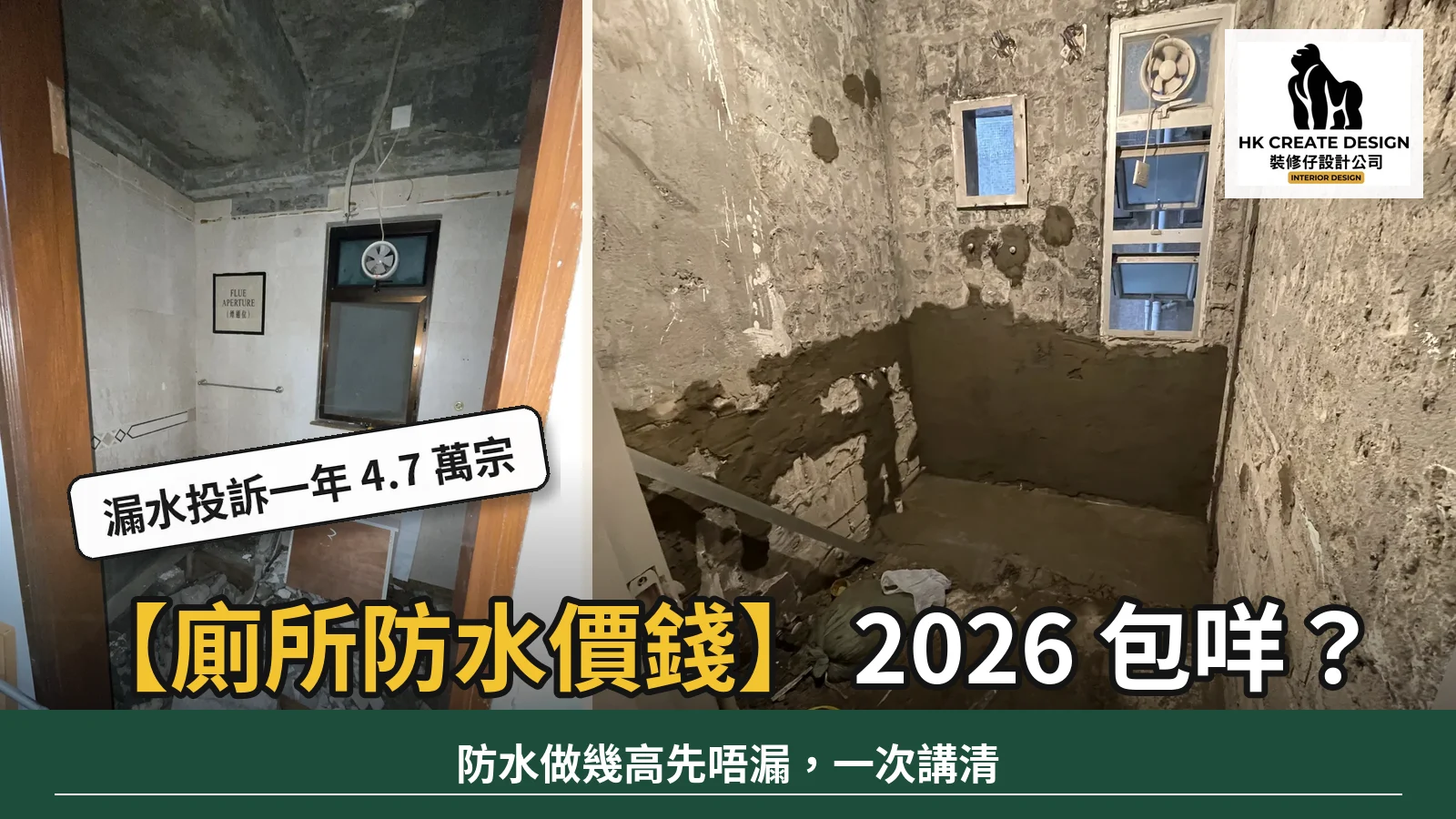 Waterproofing
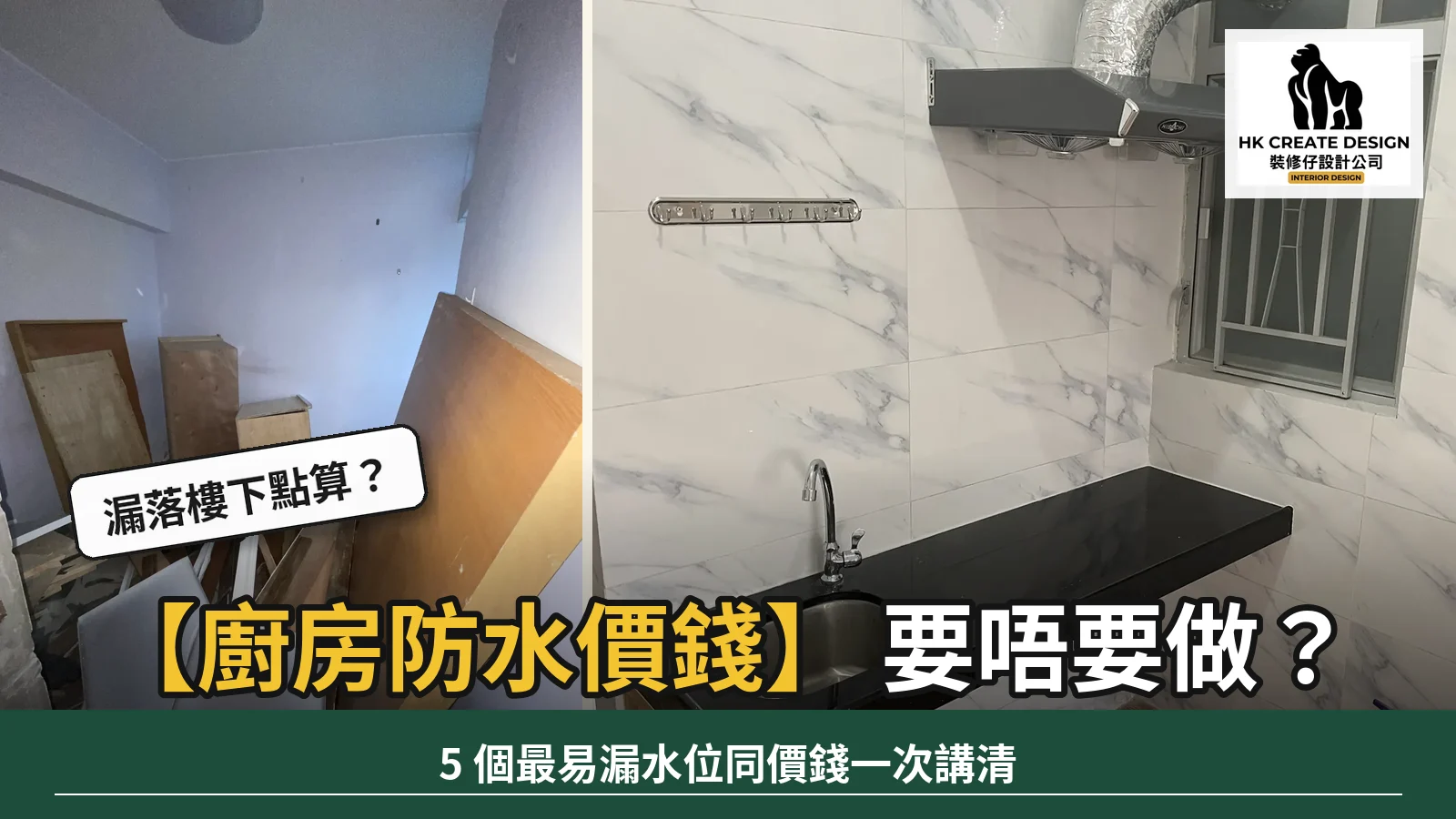 Waterproofing
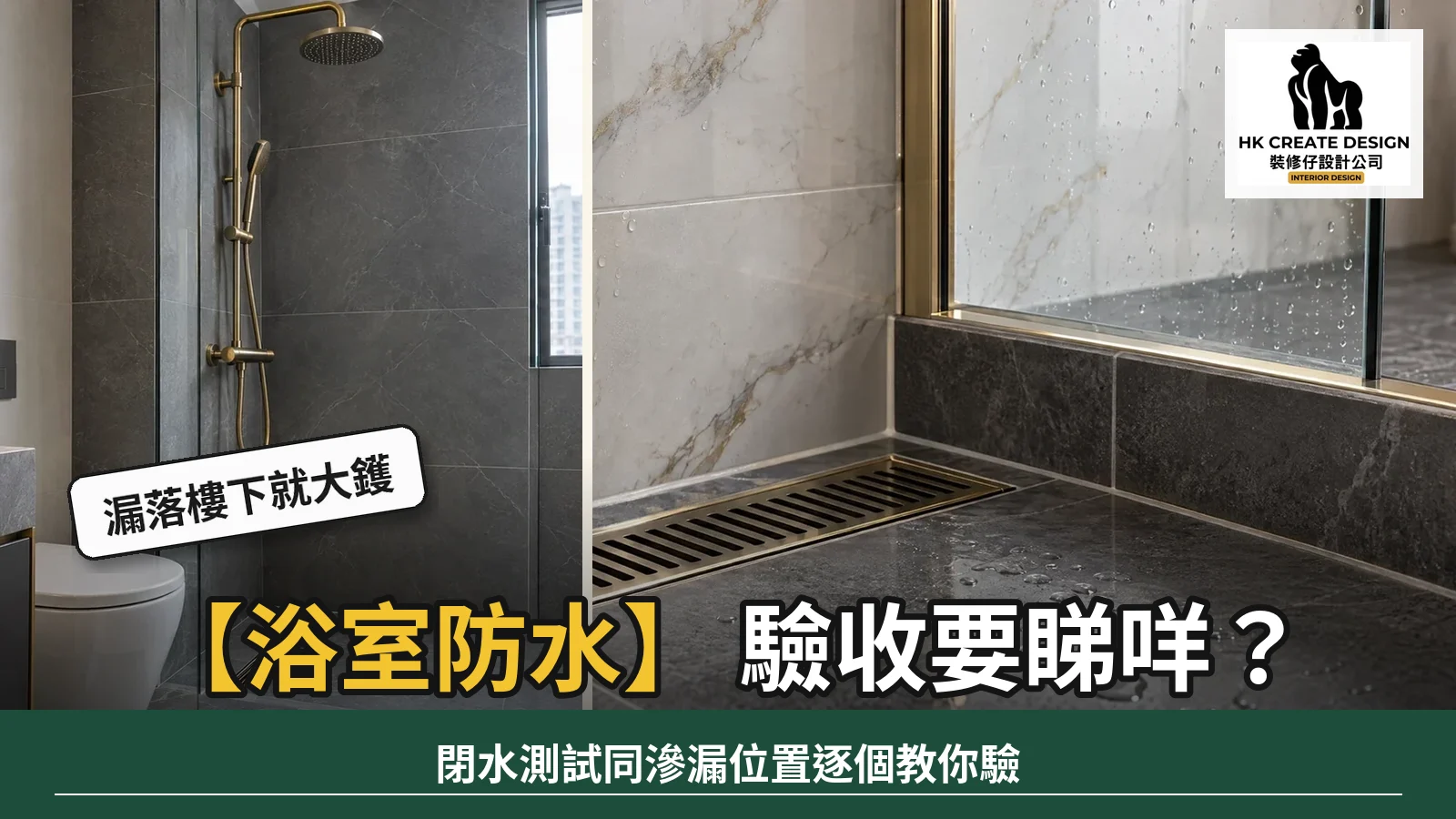 Waterproofing
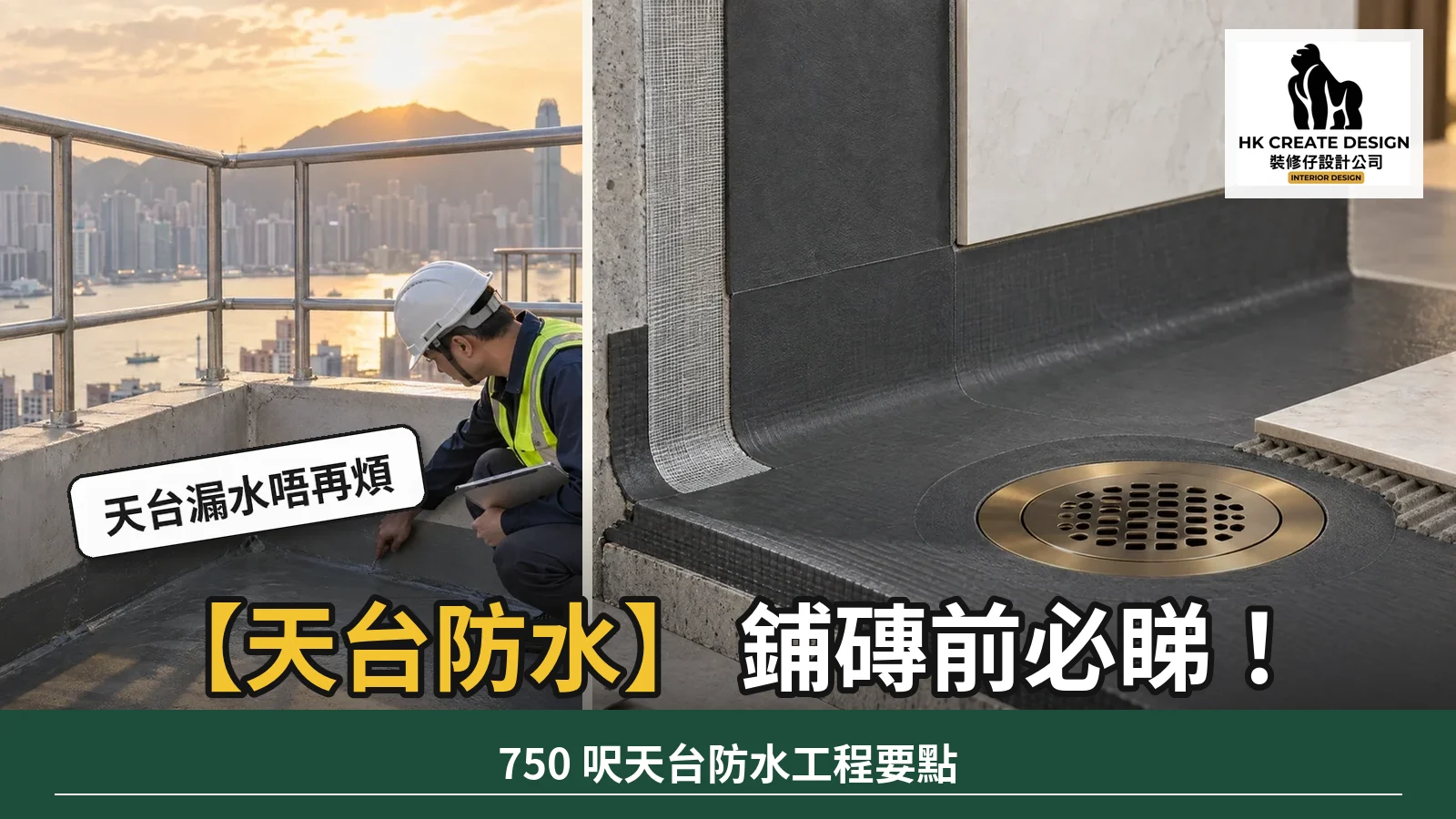 Waterproofing
 Village house renovation
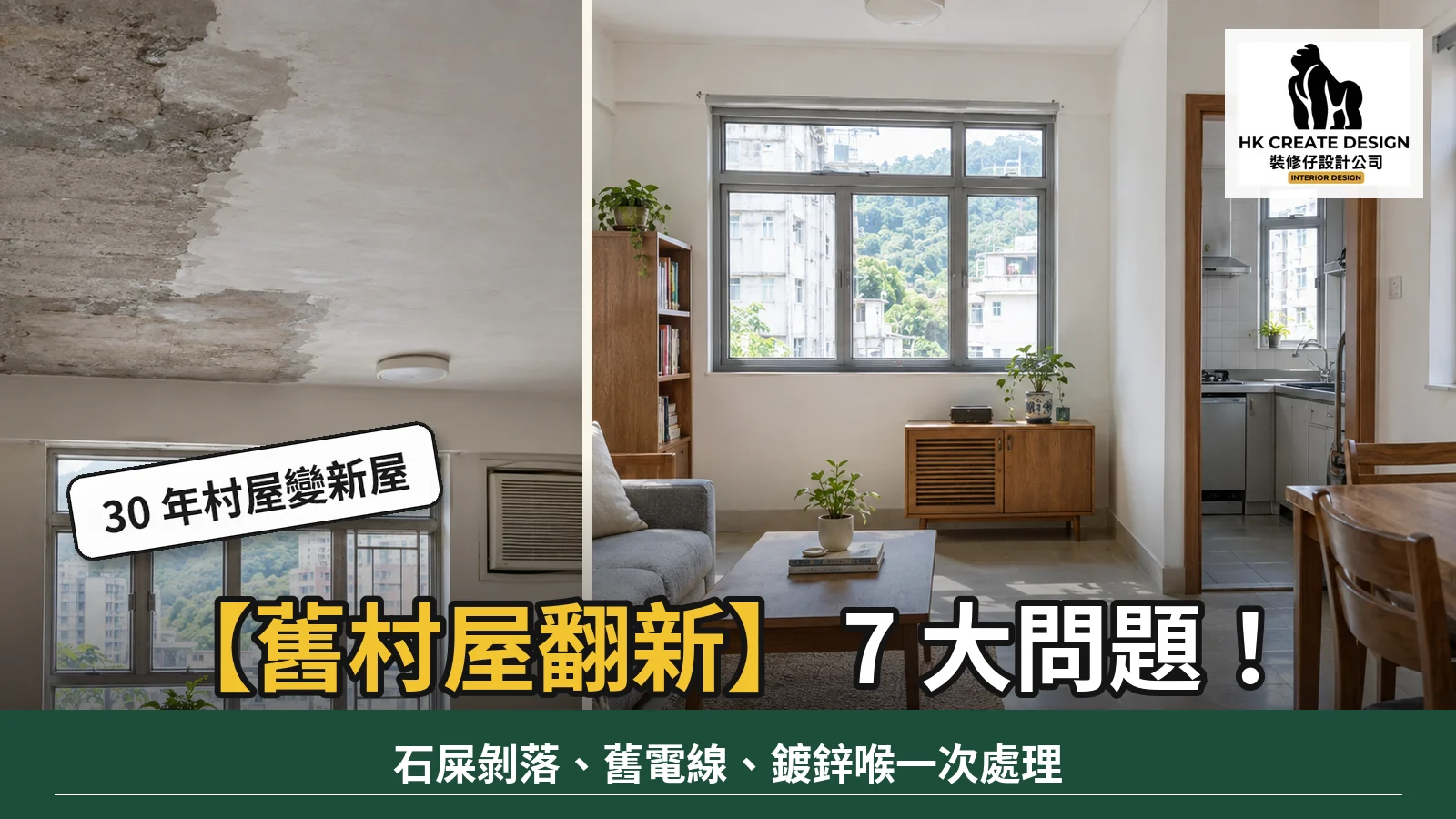 Village house renovation