
01
Masonry inspection: the guide attributes 90% of problems to uneven or misaligned work
Masonry underpins the later finishes and is difficult to change. Poor tiles, walls or drainage affect paint, cabinets and junctions. If faults surface after moving in, completed work may have to be stripped out and rebuilt.
Masonry defects turn up in new flats, HOS and public rental homes, and older buildings aged 30–40 years. The reason is simple.
👉 Rushed work
👉 Variable workmanship
👉 Owners unfamiliar with handover checks
Faulty masonry can leave paintwork looking rippled, gaps beside cabinets where walls are out of plumb, and bathrooms with standing water or drain odours.
Essential masonry inspection points
- Floor tile flatness: walk slowly in shoes and feel for height changes between adjacent tiles.
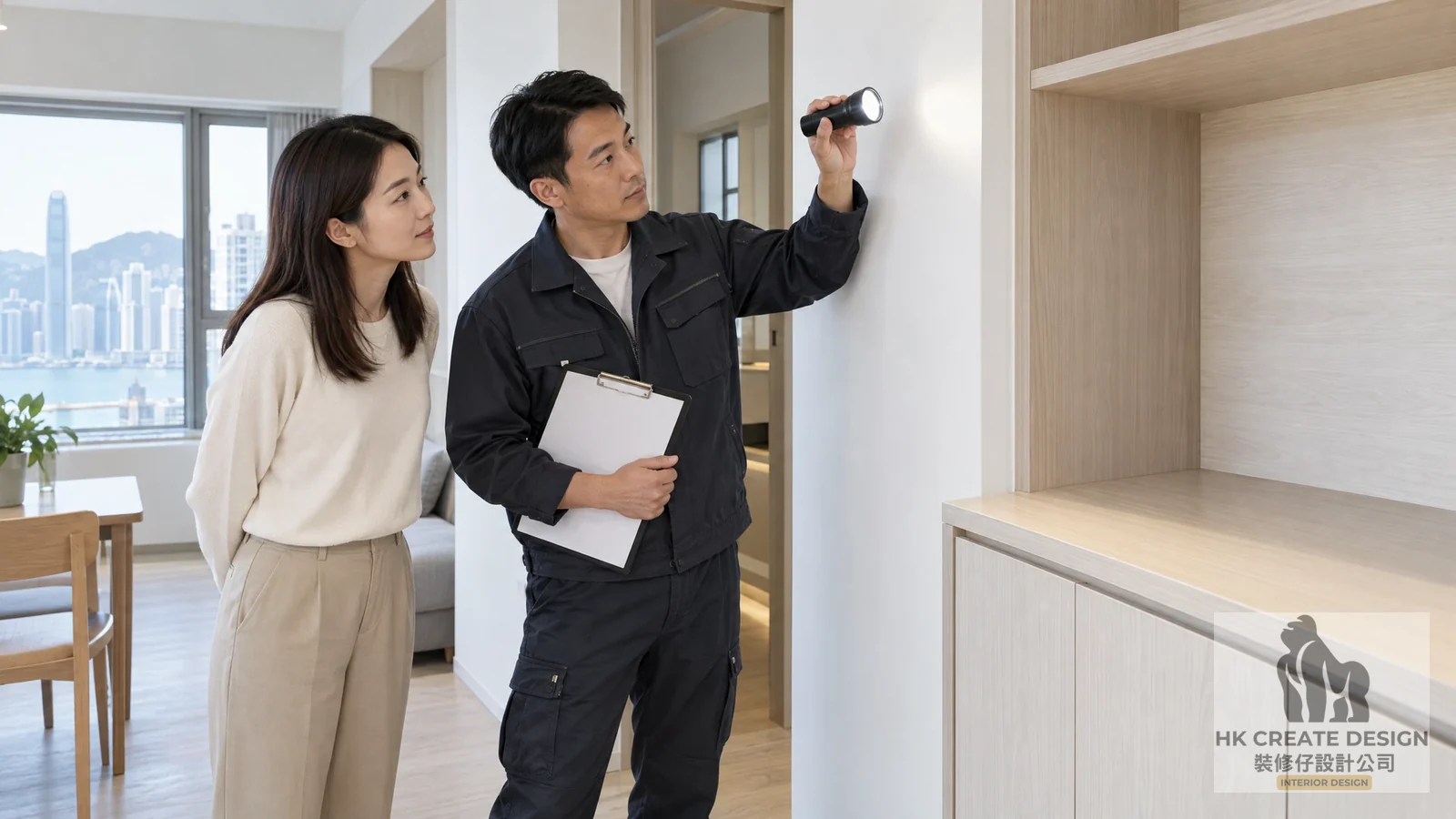
- Check whether wall tiles are plumb: shine light from one side, or use daylight at an angle, to reveal ripples.
- Tile joint spacing: gaps should have an even width, especially at corners and beside door frames.
- Tap test for hollow spots: tap the walls and floor gently and listen for a solid or hollow sound.
- Bathroom drainage test: pour a bucket of water and observe its direction and speed yourself.
- Level at the doorway: an uneven threshold or floor tile can affect the hinges, closing noise and durability.
Common masonry problems observed on renovation sites
| Type of defect | Frequency | Common consequences |
|---|---|---|
| Uneven floor tiles | about 35% | Uncomfortable footing and furniture that will not stand level |
| Inadequate drainage gradient | about 25% | Standing water and persistent damp in the bathroom |
| Hollow spots | about 20% | Tiles may crack or loosen later |
| Misaligned tile joints | about 20% | Unsightly and traps dirt |
Three common masonry inspection mistakes in Hong Kong
1️⃣ Looking without testing anything
2️⃣ Accepting assurances that stiff fittings will loosen with use
3️⃣ Inspect before all the furniture has been installed
Important reminder:
Once the masonry is accepted, later trades have to work with it.
👉 Checking masonry helps protect the quality of your home for the next 10–15 years.
02
Inspect paintwork under different lighting
Paintwork can appear fine from the doorway, then reveal patches, brush marks, ripples or peeling under different lamps or at night after moving in. Inspect more than the colour and look for more than obvious cracks.
The reason is straightforward.Good lighting reveals paint defects that colour alone cannot show. Raking light from spotlights and concealed coves, increasingly used instead of a central light, makes imperfections easier to see.
Paintwork checklist: inspect each wall
- Colour consistency: the same wall should have an even colour, especially around touched-up areas.
- Surface smoothness: run the back of your hand lightly over the wall to feel for grit or uneven patches.
- Brush marks or paint runs: look across the wall at an angle to see brush lines.
- Straightness of internal and external corners: a cabinet against a crooked corner will reveal the misalignment.
- Finish around door and window frames: paint should not overlap the aluminium frame, door hinges or glass.
- Ceiling junctions: check the wall-to-ceiling line for paint overlap and ragged edges.
Common sources of painting complaints in our project experience
| Problem | Share | Impact after moving in |
|---|---|---|
| Uneven colour | about 40% | Untidy finish and visible touch-ups |
| Rough surface | about 30% | Collects dust and is difficult to clean |
| Poor finishing | about 20% | Diminished overall finish |
| Paint peels easily | about 10% | Costly rework |
Common paintwork problems in Hong Kong
1️⃣ Inadequate priming: uneven absorption may cause colour patches to emerge months later.
2️⃣ Recoating before the previous coat has dried: initially smooth paint may later blister.
3️⃣ Touching up paint without sanding smooth: the touched-up patches can show a different shade.
4️⃣ Rushing to meet the handover date: the final coat is particularly susceptible to defects.
How homeowners can inspect paintwork
- Inspect once in natural daylight: assess the overall colour.
- Inspect again at night with all lights on: look for ripples and brush marks.
- Look along the wall from one side: the easiest way to spot unevenness.
- Take a photo and zoom in: enlarged phone photos can reveal details you missed.
Important reminder:
Once the furniture is installed and the pre-move clean is finished, touching up the paint will almost always leave a visible mark.
👉 Inspect paintwork Complete before furniture arrivesbefore it becomes difficult to put right.
03
Plumbing and electrical handover: checks with serious consequences if missed
While masonry and paint affect how the space looks,Plumbing and wiring directly affect safety and long-term use. Plumbing and wiring are often accepted without a practical check. Problems may only emerge after you move in, when repairs are more disruptive and expensive.
As part of a complete Renovation stages , inspect plumbing and electrical work before furniture is installed. Later repairs can mean removing cabinets or opening walls, increasing 2026 whole-home renovation costs in actual expenditure.
Practical checks for plumbing and electrical handover
- Test each socket: try a charger or hairdryer at the sockets and check for power, looseness or unusual heat.
- Test light switch response: operate the switches several times and look for flickering, delay or unusual noise.
- Appliance load test: try typical simultaneous kitchen loads such as the microwave and kettle, and watch for tripping.
- water pressure test: run water in the kitchen and bathroom together and check for a sudden drop in flow.
- Drainage test: pour water and check for ponding, backflow or odours.
- Distribution board check: check for clear labels, orderly wiring and visible signs of overheating.
Professional practice: simulate normal peak use, such as several appliances running while dinner is prepared, to reveal faults.
When plumbing and electrical faults are discovered in practice
| When the defect was found | Proportion | Common situations |
|---|---|---|
| At handover | about 45% | Dead sockets and inadequate water pressure |
| 1–3 months after moving in | about 40% | Tripped breakers, leaks and slow drains |
| More than 3 months | about 15% | Overheating concealed wiring or persistent leaks |
The later a defect is found, the more it costs to repairand may fall outside the original Hong Kong renovation quotation .
Common plumbing and electrical problems in Hong Kong
1️⃣ Insufficient sockets: extension leads end up crossing the floor after move-in.
2️⃣ Loose concealed wiring connections: a connection may work at first but overheat later.
3️⃣ Insufficient fall towards the drain: it may look fine at first, with odours only emerging later.
4️⃣ Insufficient spare capacity in the distribution board: limits later additions such as appliances or smart home fittings.
Why is inspecting plumbing and wiring especially important?
Faults discovered after walls have been closed and cabinets installed can mean renovating those areas again. By comparison,Spending an extra 30–60 minutes testing each item yourself at handover can save tens of thousands of dollars in rework later.
In short,
👉 Test plumbing and electrical systems for safe operation.
Getting this stage right gives later design work a sound foundation.
04
Inspecting fitted furniture and finishing junctions
Throughout the Renovation stages , fitted furniture and finishing junctions usually come last, but they are also has the greatest effect on everyday use and satisfaction where small details count. Installed cabinets may look finished while small defects still affect their appearance and use.
especially Fitted furniture throughout the home. Errors in dimensions, hardware or finishing affect appearance and daily use, can shorten cabinet life and can increase repair costs and 2026 whole-home renovation costs in actual expenditure.
Itemised fitted furniture inspection checklist
- Cabinet door alignment: close the doors and check that gaps and top edges align.
- Smooth opening and closing: open and close cabinet doors and drawers at least 10 times, checking for sticking or unusual sounds.
- Test the full drawer depth: check that the drawer pulls out fully without hitting an obstruction.
- Cabinet stability: push the cabinet gently and check that it does not wobble.
- Check the hardware brands: check that the hinges and runners match Hong Kong renovation quotation match the written specification
- Finish of back and side panels: check for split edges, chipped corners and visible paint touch-ups.
Practical option: try the cabinets in realistic use, for example with clothes hung or kitchenware loaded, to check how the doors and drawers move.
Inspect the junctions: an important, often overlooked check
Finishing junctions include
- Junctions between cabinets and walls
- Gap between the cabinet top and ceiling
- Junction between the skirting and cabinet
- Joint between quartz worktop and cabinet
Poorly finished edges can lead to
❌ Visible gaps collect dust
❌ Uneven sealant can trap mould
❌ A visibly poor finish
Factors most affecting renovation satisfaction in our experience
| Item | Severity of impact |
|---|---|
| Finishing the edges and junctions | ⭐⭐⭐⭐⭐ |
| Align the lines of cabinet doors | ⭐⭐⭐⭐ |
| How the hardware feels in use | ⭐⭐⭐ |
| Consistency of colour | ⭐⭐⭐ |
In other words, even if your 2026 fitted furniture prices can still look well finished on a modest budget if the details are neat.
Why do professional companies inspect fitted furniture closely?
After signing acceptance for fitted furniture, it is harder to request alterations, and this can affect subsequent Painting and cleaning handover. A professional design company usually conducts its own inspection against the design and quotation before asking the owner to accept the work.
In short,
👉 Neat junctions can improve a modest renovation. Poorly finished edges can spoil expensive work.
05
Handover checks for peace of mind after moving in
Inspecting renovation work is a practical way of Protecting the owner's interests and avoiding later problems is essential. Problems after handover may arise because Insufficient checks during handover. Waiting until after move-in can mean missing the best time for remedial work.
With a clear, systematic Renovation handover checklistand work through masonry, paint, plumbing, electrics, furniture and finished edges to reduce common issues such as
- Uneven tiles and slow drainage discovered after moving in
- Ripples and brush marks visible only after the lights go on
- Too few sockets or inconvenient switch positions
- Crooked cabinet doors, sticking drawers and dust-catching edges
Correcting these issues after moving in disrupts daily life and adds repair costs, increasing Whole-home renovation pricesand may even lead to a dispute with the contractor.
In practice,A professionally managed renovation should include a clear inspection stage before handover. A responsible Hong Kong renovation quotationshould also define the standard for each trade so owners have objective acceptance criteria.
From planning and design to construction and handover, we consider daily use to help avoid problems after you move in.
A good home should do more than looks good at handoverbut rather stays comfortable and convenient in everyday use.