01
Preparation before repossession: Documents and tools
Before taking possession of a property, prepare a sales brochure. The "First-hand Residential Properties Sales Ordinance" stipulates that the sales brochure must contain information on the installations, renovation materials and equipment in the development project. When the owner takes over the property, he or she can check each item to see if it matches the description in the brochure.[1] The Consumer Council also recommends that you properly keep the sales brochure and check the unit partitions and the included appliances when taking over the property.[2]
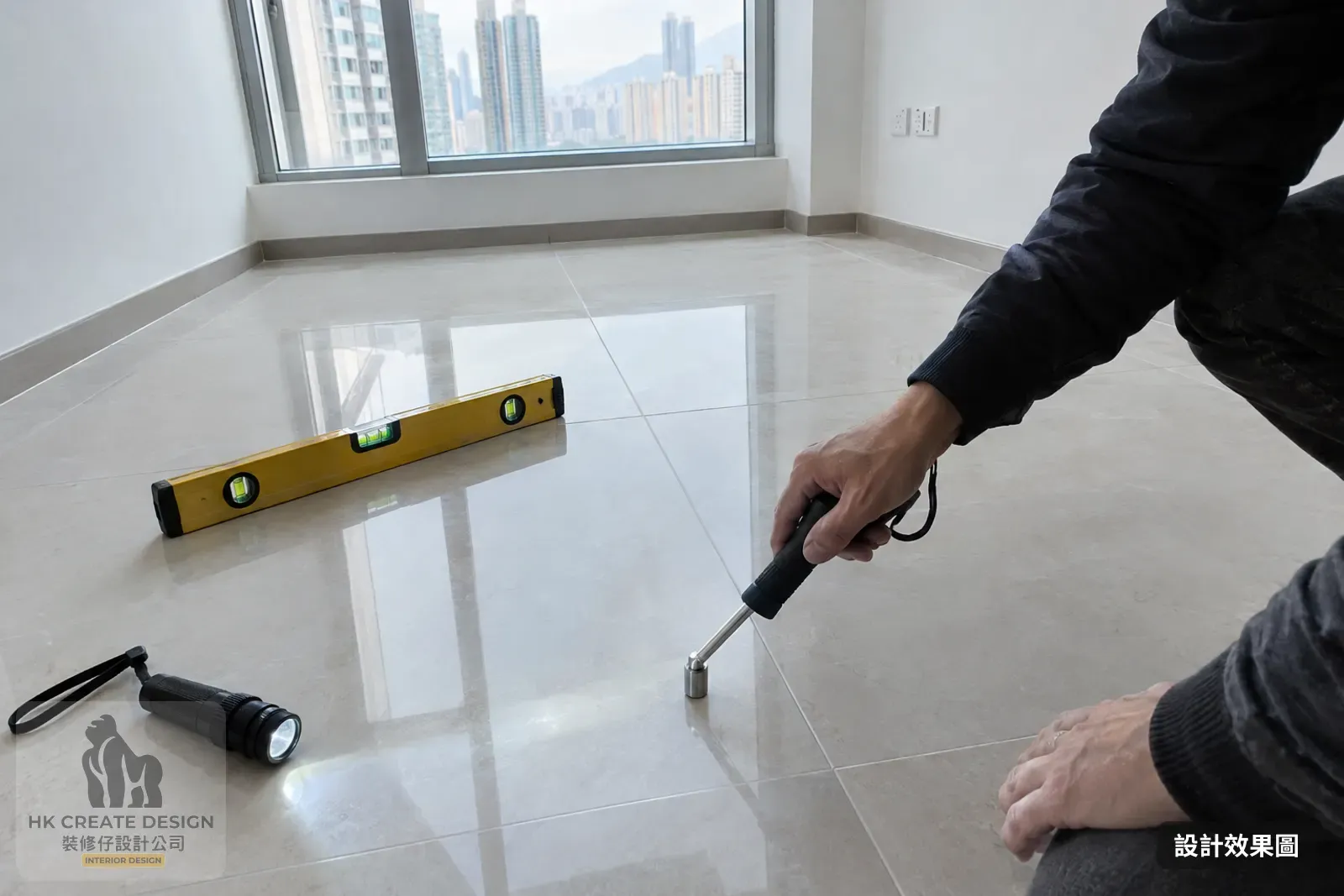
In terms of tools, you can bring: flashlight, socket tester, spirit level, tape and label stickers, tape measure, thin wave or coins (to test the slope of the floor drain), mobile phone charger, pen and list. The label sticker can be placed directly on the problematic area to facilitate follow-up by the photographer.
In terms of time, set aside at least two or three hours so you don’t have to rush. There needs to be enough light, and it is best to go during the day, because the flower marks on the walls and glass are easier to see under natural light.
If you plan to renovate later orBespoke furnitureBoth can be arranged at the same time. On-site measurement is free through 31 December 2026 for two or more work items, with no deposit. After that, the HK$500 fee is credited against the order. A handover inspection and measurement are clearer as separate activities, but they can be scheduled for the same day. Send the floor plan to WhatsApp 5243 7747 beforehand for a free initial consultation.
In addition, remember to bring the sales contract and transaction date information. The deadline is calculated based on the transaction date, not the day when the key is collected; the difference between the two may be several days or even weeks, so remember it clearly to avoid missing the deadline.
- Prepare a copy of the sales brochure
- Bring all building inspection tools
- Allow enough time and pick a day slot
02
Building inspection method: do the inspection yourself and ask someone to inspect it
The Consumer Council stated that consumers can consider hiring professionals with construction or surveying experience to conduct inspections on their behalf, and list the areas that need to be repaired on the building inspection list; if they choose to perform self-inspection, they must clearly and concisely list the repair requirements, take photos as proof, and submit them in writing within the specified deadline.[2]
The advantage of doing your own inspection is that you are familiar with your own house, but the disadvantage is that you may not be able to identify hidden problems, such as hollow bricks and drainage slopes. Asking someone to test it will provide you with professional tools and experience, but you will have to pay extra. Both are possible, the most important thing is to have complete records.
Regardless of the side planting method, check each space from top to bottom: ceiling, walls, doors, windows, floors, and then to equipment and hardware. Poor cleaning is a major problem. Fine flower marks, uneven glue edges, and uneven paint can all be included in the list of leaks.
We are not a building inspection company, but our masters will pay attention to obvious conditions such as walls, floors, windows, etc. when measuring, and will remind you which areas should be included in the inspection, so that you can take care of them before starting the renovation.
If possible, inspect with two people: one checks and describes defects while the other photographs and records them. Include a nearby door or window frame in each photo so the location can be identified.
If you decide to ask a professional to inspect the building, you can ask the other party to provide a written report and photos, and then compile the report contents into a inspection document and submit it to the developer. The report itself was also important evidence in future disputes.
- Decided to have it checked by a professional
- Check space by space from top to bottom
- Details are included in the list
You can swipe left or right on your phone to view the complete table.
| space | To check | Frequently asked questions | Spot test |
|---|---|---|---|
| Doors and entrances | Door locks, door hinges, door frames, door clocks | The door does not close smoothly and there are flower marks on the door frame. | I turned it on and off several times and heard any strange noises? |
| living and dining room | Floor, wall, window, socket | The floor is hollow, the window glue edges are uneven, and the paint is uneven | Knock on the floor, open and close windows, use an outlet tester |
| Bedroom | Wardrobe (if any), window sill, air conditioner | The cabinet door is not flat and the air conditioner is not freezing | Turn on the air conditioner for fifteen minutes and open and close the cabinet door |
| kitchen | Kitchen cabinets, countertops, stoves, range hoods, water purifiers | Flower marks on the countertop, loose cabinet door hinges, slow water removal | Put water in the star basin and turn on the range hood |
| bathroom | Bricks, glass, sanitary ware, water purifiers, hot water heaters | Cracked tiles, hollow bricks, dewatering and water accumulation | Knock bricks, drain water, boil hot water |
| Included equipment | Appliance model, manual, maintenance card | The model number does not match the sales brochure | Compare the sales brochures item by item[1] |
The inspection points are based on the recommendations of the Supervision Bureau and the Consumer Council;[1][2] For details, please refer to the sales brochure and purchase and sale contract. [1][2]

03
Front door, living room and dining room
The door needs to be opened and closed several times. Pay attention to whether there are any abnormal sounds on the door hinges, whether the door lock is smooth, or whether there are scratches on the door frame and the door surface. The entrance floor and wall base are often damaged during transportation, so be careful.
Living room and dining room floors: If the floor is made of wood, walk around and listen for hollow sounds, and check for arching or uneven gaps; if it is made of bricks, tap lightly with a hard object to listen for hollow sounds. In the case of the Consumer Council, the building inspection report pointed out that many hollow bricks and floors were moldy and blackened in large areas.[2]
As for the windows, open and close them one by one to see if the window hinges and buckles are loose, if the glue edges are neat, and if there are scratches on the glass. In another case from the Consumer Council, scratches on the glass in the living room were followed up for nearly 8 months. The developer first stated that it did not constitute a structural safety problem and refused to replace it. After the Consumer Council followed up, it was dealt with first.[2] Therefore, glass scratches should be photographed and recorded on the day the building is taken over.
The sockets and light switches should be tested one by one. Use a socket tester to check that the wiring system is correct. If the lamp position and switch position are different from those in the instructions, also note down.
In terms of paint, you can hold a flashlight against the wall and shine it diagonally to see if there are any bumps, dust marks or oil leaks. The most common paint spots on the corners of ceilings and door frames are uneven. Although this is not a major problem, it is still worthy of being included in the list of leaks.
- Door opens and closes multiple times
- Knock on the floor tiles and listen for the hollow sound
- Immediate photography of glass scratches
04
Kitchen: countertops, cabinets and equipment
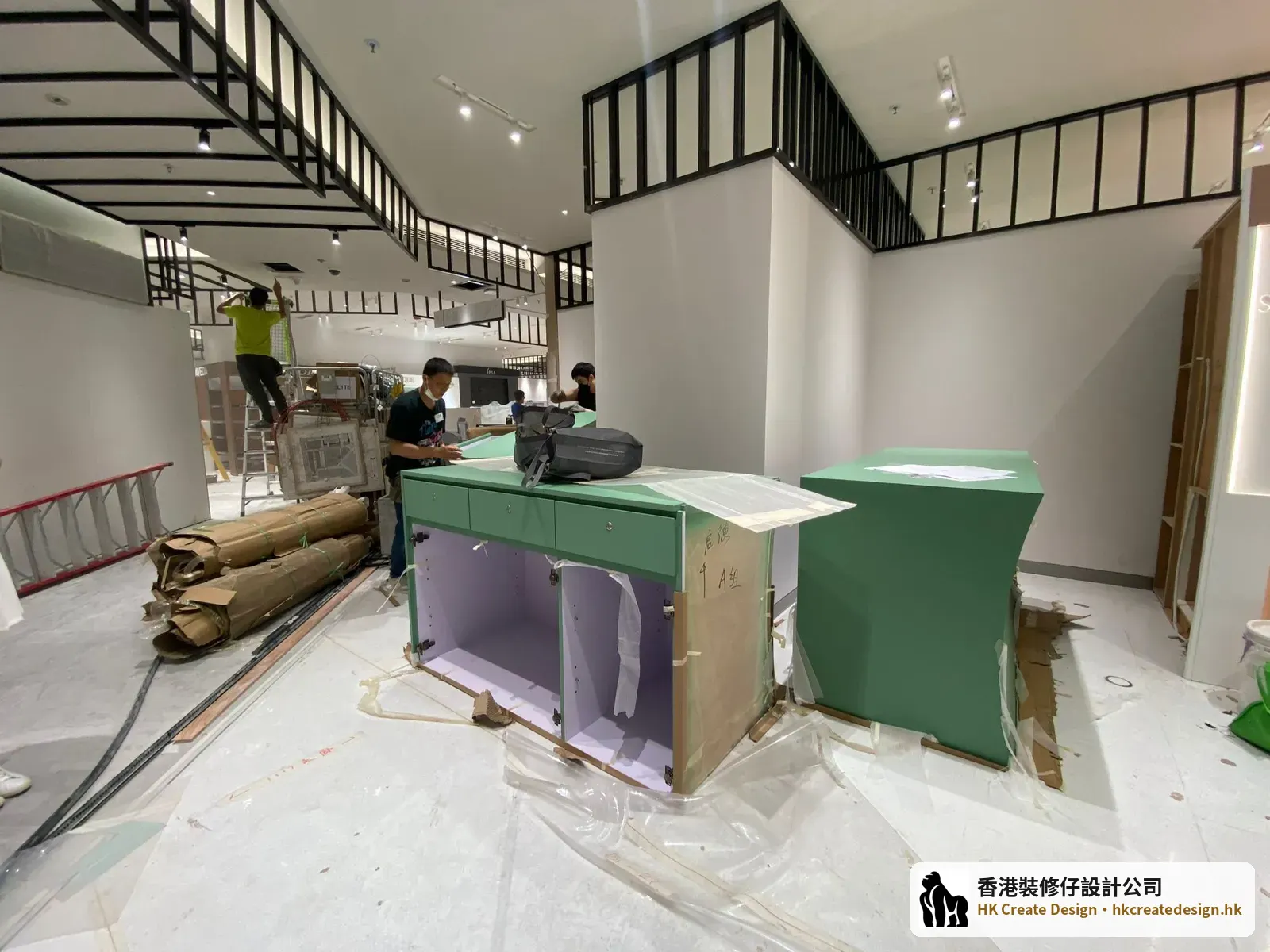
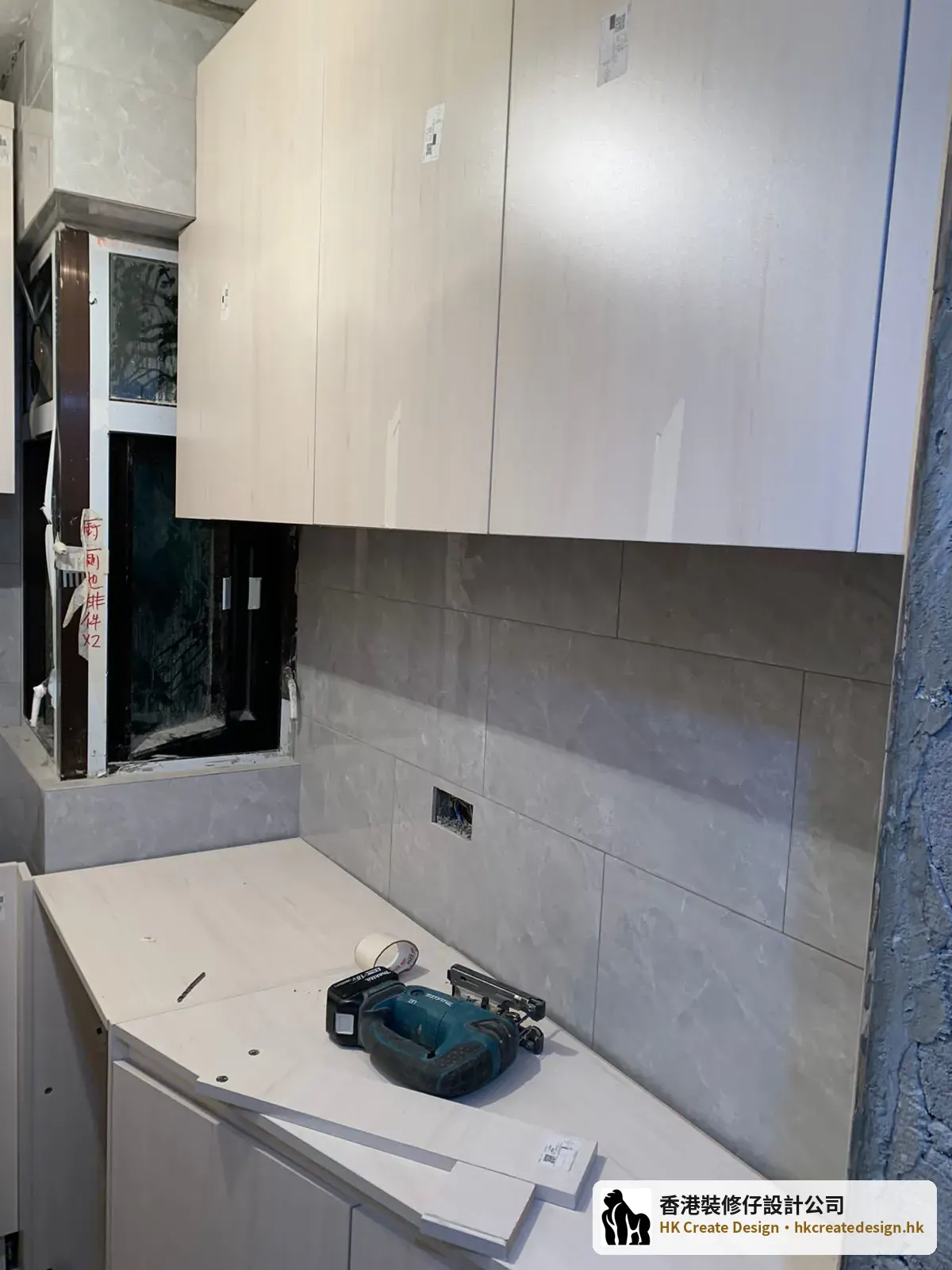
Open and close the kitchen cabinet doors one by one to see if the door hinges are loose and the door panels are not flat; if the drawers are pulled out and pushed in smoothly. In the case of the Supervision Bureau, the owner discovered that there were flower marks on the marble countertop of the kitchen cabinet.[1]
Pour water into the star basin and see if the water drains out quickly and whether there is water seepage at the bottom of the cabinet. Turn on the stove and range hood to try it; ask about the operation and maintenance arrangements for built-in appliances. The Consumer Council recommends that you proactively inquire about the repairer's contact information and maintenance arrangements for built-in or built-in home appliances so that you can follow up after the warranty period.[2]
Check the sales brochure to confirm the brand and model of the included electrical appliances. If it doesn't match, record it immediately.
The kitchen is the area that new building owners most often want to modify, such as adding taller cabinets and changing electrical appliances. It is recommended to wait until the developer has completed the work to avoid changes that may affect maintenance responsibilities.
If there is a gas stove in the kitchen, remember to ask who is responsible for the maintenance of the gas pipe and its location, and the gas company must arrange for the gas to be turned on. Any changes involving gas installations must be handled by a registered gas engineering contractor, so you don’t have to worry about it yourself.
- Cabinet door and drawer testing
- Pour water into the star basin to see if there is any leakage
- Check the appliance model and maintenance information
05
Bathroom: Brick, dewatered and waterproof
Tap the bathroom tiles one by one with a hard object to listen for hollow sounds and check for cracks, discoloration or uneven seams. In the case of the Supervisory Authority, the owner discovered that the tiles on the bathroom wall were cracked in many places.[1]
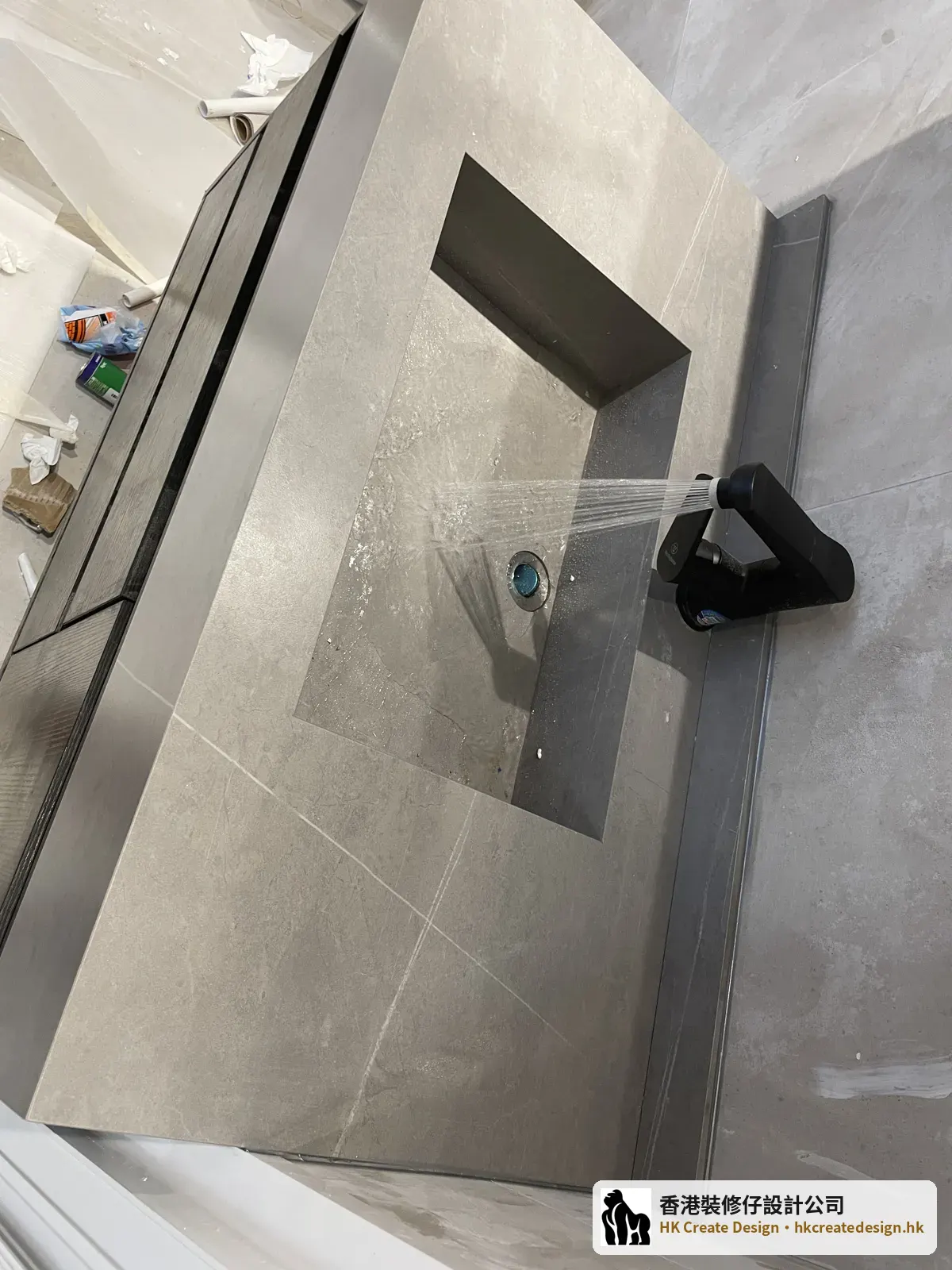
In terms of water drainage, put the water on the floor platform and the tank, and check whether the water system flows smoothly to the water outlet and whether there is any accumulated water level. You can put a small wave on the floor and see if it will roll towards the drain.
Sanitary ware: Toilet flushing, hot and cold water in wash basins and showers, and the speed of water discharge should all be tested. Check whether the glass bath screen switch is loose. Turn on the water heater and see if there is hot water.
Waterproofing problems are usually seen first after moving in, such as complaints of water seepage downstairs. In the first few months of moving in, you should pay attention to whether there are water stains on the exterior wall of the bathroom. If you find any water stains within the 6-month period, you must notify the seller in writing.[1]
The bathroom glass door and mirror cabinet should also be checked: are there any chipped corners of the glass, are there any loose hinges, and will the opening and closing of the glass door not hit other facilities? Test the sockets and lights in the mirror cabinet to make sure they work properly.
- Knocking bricks one by one
- Test the drainage slope of the platform
- Test all sanitary ware and hot water
Example one: calculating the last day of the 6-month defects notification period
Assumptions
- Assume a sale completion date of 20 March 2026 for this example.
- The authority specifies a deadline of 6 months after the date of completion of the sale. [1]
How to calculate quantities
- Six months from 20 March 2026 takes the deadline to around 20 September 2026.
- It is recommended to submit the first enforcement notice within one week after taking over the property.
- Check again on your own two to three months after moving in. For example, look at the window on rainy days or use the air conditioner for a long time to check for dripping water.
- Send a second written notice about a month before the deadline, around mid-August in this example, listing newly discovered defects.
Two written notices can cover problems that arise immediately upon repossession and after moving in.
The exact period must be determined by the terms of the sales contract. If you have any questions, you should seek advice from a lawyer. [1]
06
Bedroom with air conditioning
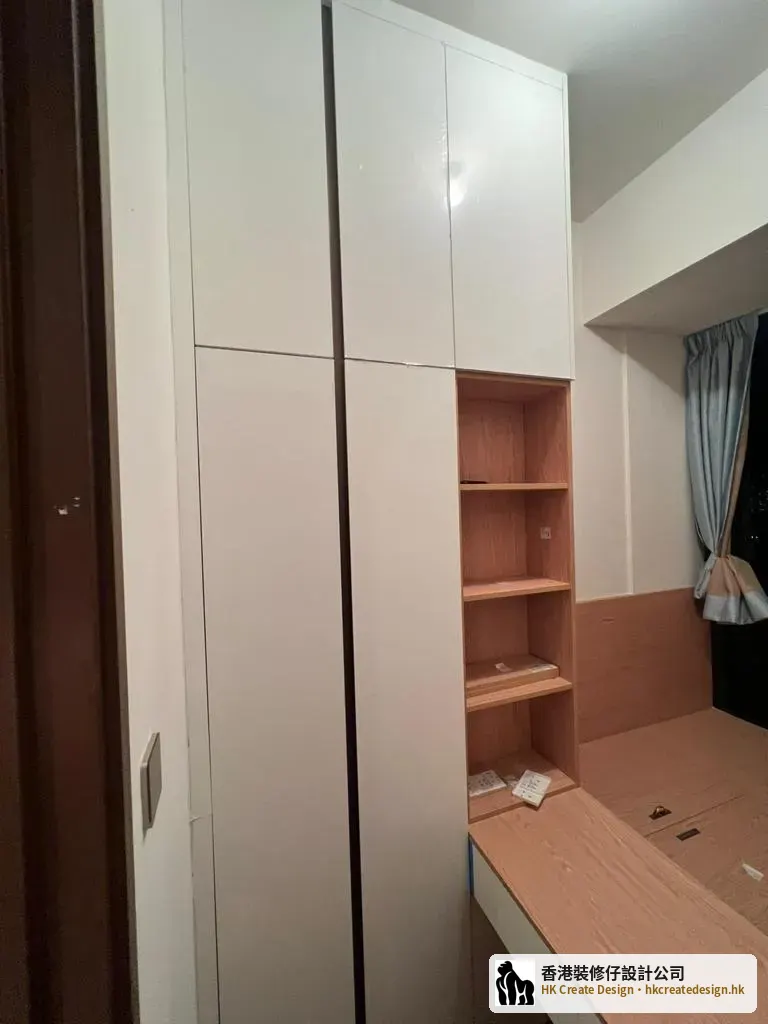
The bedroom inspection is similar to the living room inspection: floors, walls, windows, sockets. If there is a built-in wardrobe, open and close all doors and drawers to see if the panels have expanded or the edges are loose.
Run the air conditioner for at least fifteen minutes to check cooling and dripping. In a Consumer Council case, the units cooled normally in the first summer after handover, but several failed to cool the following April. The developer said the warranty had expired.[2] Therefore, you should ask clearly about the warranty period of the air conditioner and try it frequently during the period.
Also check the location of the air conditioner's water pipe and the outdoor unit to make sure that the water will not drip onto the street or neighbor's window sill.
If you are planningBespoke wardrobeorPlatform beds, measure the bedroom window sill height and positions of the air conditioner and sockets so the furniture will not obstruct them.
You should also pay close attention to the glue edges around the window sill and the air conditioner. The glue edges are broken or uneven, which makes it easy for water to enter when it rains. You can take a photo to record the condition of the window sill, and then compare it when it rains heavily after moving in to determine whether it is a new problem.
- Test the included wardrobe
- Turn on the air conditioner for fifteen minutes
- Remember the low air conditioner warranty period
07
The leaked paper will be valid if it is written first
In the Estate Agents Authority case, the owner made repeated calls over more than two months without a satisfactory response. After the owner submitted a written list of defects, the vendor arranged to repair all the reported items.[1] Therefore, the omission must be written.
For each defect, give the exact location, description, photo reference and requested remedy. For example: left side of the main bedroom sill, glass scratch about 5 cm long, photo number and request to repair or replace.
When submitting, keep a copy and the submission record, such as email and signature. During the implementation period, the Consumer Council recommends that communication between the two parties be recorded and retained in writing.[2]
After the repair is completed, a re-inspection is required, and any issues that have not been resolved will be followed up in writing. If you think the developer has failed to fulfill the terms of the contract or failed to follow up within a reasonable time, you can seek help from the Consumer Council.[2] You can also seek professional and legal advice on the actual situation.[1]
If the developer arranges a time for repairs, make an appointment with the workers in advance. It is best if you or your family members are present to check and accept the work on the spot after the repairs are completed. If a worker says that certain problems are "normal" and "cannot be corrected," please write down the reasons in writing to facilitate future follow-up.
- Write location, questions, photos, requirements for each item
- Keep submission record
- Follow up in writing after re-inspection
You can swipe left or right on your phone to view the complete table.
| time | things to do | evidence | Remarks |
|---|---|---|---|
| Before taking over the building | Collection of sales brochures and preparation tools | Copy of sales brochure | Make an appointment for building inspection |
| The day of closing | Check and take photos space by space | Photos, missing list | List the exact location and defect [2] |
| Within one week after taking over the property | Written submission of leaked documents | Copy, submission record | It’s not good to just rely on the phone[1] |
| During training | Follow up and review | Written communication record | Keep correspondence between the two parties[2] |
| 6 months ago after transaction | Submit newly discovered issues | written notice | The term is calculated based on the transaction date[1] |
This table is only a general recommendation; the time limit and rights are subject to the sales contract and laws. [1][2]
08
Within 6 months: re-inspection after move-in
There are some problems that need to be checked beforehand: for example, water leakage from the window on rainy days, water leakage from downstairs after long-term use of water in the bathroom, water leakage when the air conditioner is turned on for a long time, cabinet doors sagging first after being used in one row. Therefore, two or three months after moving in, you should conduct a self-inspection of the entire house.
The EAA pointed out that the buyer can notify the seller in writing of any deficiencies within 6 months after the date of completion of the transaction.[1] Make a note of the closing date, set a reminder on your phone, and submit a second written notice one month before the deadline.
Please note that the defect must not be caused by the buyer's action or negligence.[1] If you have modified something yourself, such as removing the included wardrobe, the related issues may no longer be the seller's responsibility.
We generally recommend thatNew flat renovationIdeally, wait until the main defects are rectified before starting work. For an earlier move, begin with items that do not affect the original installations, such as freestanding furniture.
During the re-inspection, you can reuse the list from the day you took possession of the property, ticking off the problems that have been dealt with one by one, plus any newly discovered ones. The second release slip produced in this way will be more organized, and it will be more difficult for the seller to evade the "solved" issue.
- Full house review after two or three months of moving in
- Set deadline reminder on mobile phone
- Consider maintenance responsibilities before making changes
09
Building inspection completed: planning of renovation points for new building
New buildings usually do not require extensive demolition and renovation. Most of them require custom-made furniture, adding sockets, lights, false ceilings or changing the floors. The Buildings Department pointed out that plastering, tiling, replacement of sanitary fixtures, etc. are generally exempt from approval, but if structural walls are involved, an authorized person must be appointed and approval must be obtained in advance.[4]
It is generally not recommended to demolish walls in new buildings because the walls of many new building units may be structural walls; even if they are non-structural walls, they must be confirmed first. Be sure to read the plans clearly before demolishing the wall.
The management office usually has renovation rules for the new occupation period, such as worker registration, deposit, and construction time, which must be collected before starting work.
After the handover inspection, we can measure the flat and design fitted furniture to its actual dimensions. The package includes floor plans, services drawings, furniture drawings, VR views and production drawings.
A new flat generally comes with basic finishes. Add storage, lighting and sockets while retaining existing fittings where possible to reduce debris and avoid unnecessary effects on the developer's warranty.
- The modifications to the new building are mainly based on furniture with the same electric potential.
- Verify the structure before demolishing the wall
- Management Office Renovation Code
10
Custom-made furniture: the most common project for new buildings
In a small new flat, fitted wardrobes, platform beds, tall units, shoe cabinets and desks can make better use of space. FUR05 wardrobes with hinged or sliding doors are HK$2,900 per linear ft, minimum 2 linear ft. FUR06 platform beds are HK$340 per sq ft, FUR11 shoe cabinets HK$1,350 per linear ft and FUR08 desks HK$1,850 per linear ft. (see published rates)
Plan furniture with the sockets and lighting, including bedside charging and cabinet lighting. Decide any additional sockets at the same time. H02 lists a new 13A single socket at HK$640 per set. FUR40 lists cabinet strip lighting at HK$150 per linear ft. (see published rates)
During the move-in period of the new building, many units will be renovated at the same time. Reservations are required for lifts and loading and unloading areas, and furniture installation dates must be confirmed with the management office in advance.
The AI quotation and 117 price item calculator can help you estimate the range first, but it is only for preliminary reference. The final quotation shall be based on the written quotation after measurement.
Custom-made furniture takes a while from measuring, designing, confirming the drawings to production and installation. If you have a deadline for moving in, it is best to arrange the measurements as soon as possible after taking over the building. The design and construction work can be carried out simultaneously with the developer, and installation can be done after the construction work is completed.
- Furniture design to match sockets and lamp locations
- Book a lift and loading and unloading time
- Use a computer to estimate the range first
Example two: using published prices for minor changes before moving into a new flat
Assumptions
- After taking over the building, I want to add two 13A sockets in the living room and a two-position socket in the bedroom, and do an electrical check.
- Prices are from public pricing. [hkcd-pricelist]
How to calculate quantities
- H02 Added 13A unit socket: 2 × HK$640 = HK$1,280.
- H03 New two-position socket: 1 × HK$1,200 = HK$1,200.
- H01 Electrical Inspection: 1 × HK$770 = HK$770.
- Total: HK$1,280 + 1,200 + 770 = HK$3,250.
The above minor changes cost approximately HK$3,250.
Before altering a new flat, check the developer's warranty and comply with management's renovation rules. Confirm prices in writing after measurement. (see published rates)
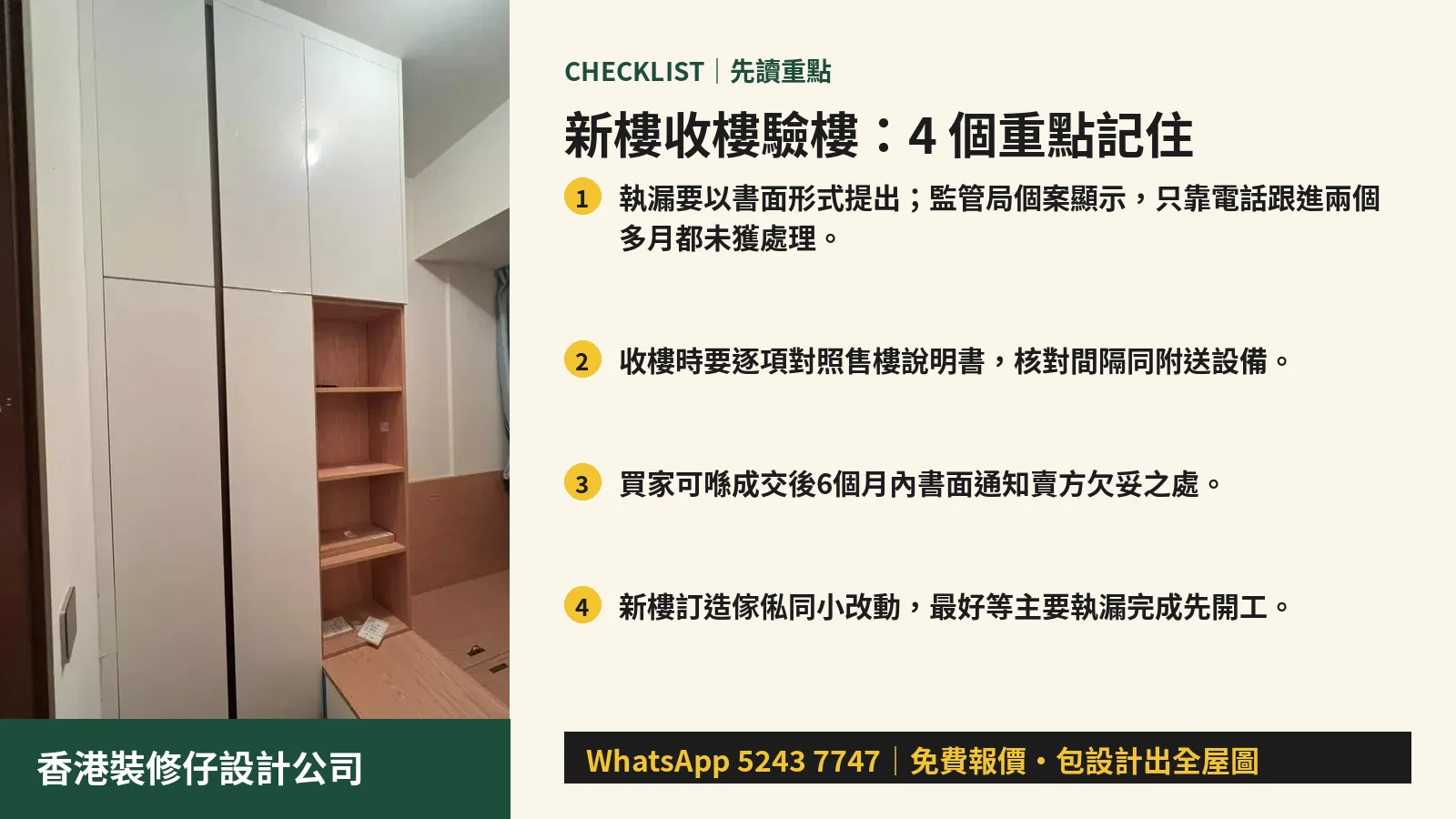
11
Before moving in: Clean and ventilate
New flats contain construction dust, and renovation and new furniture add to it. Clean and ventilate before moving in. At completion we clear rubbish, sweep and do basic cleaning. Our specialist partner can provide deep cleaning or formaldehyde treatment if needed. L01 lists cleaning and formaldehyde treatment at HK$16 per sq ft, minimum HK$2,800. (see published rates)
Open the windows for ventilation before moving in to allow the smell of paint and boards to dissipate.
Before moving, try the whole house equipment again to confirm that the leakage and renovation work are completed.
Keep all maintenance cards, instructions, maintenance records and renovation documents in the same folder for easy follow-up in the future.
If the household includes children,Older residentsor people with allergies, allow extra days for ventilation before moving in. During the initial period, keep windows open when appropriate or use a dehumidifier to help stabilise indoor air and humidity.
- Basic cleaning
- Open windows for ventilation
- Organize all files
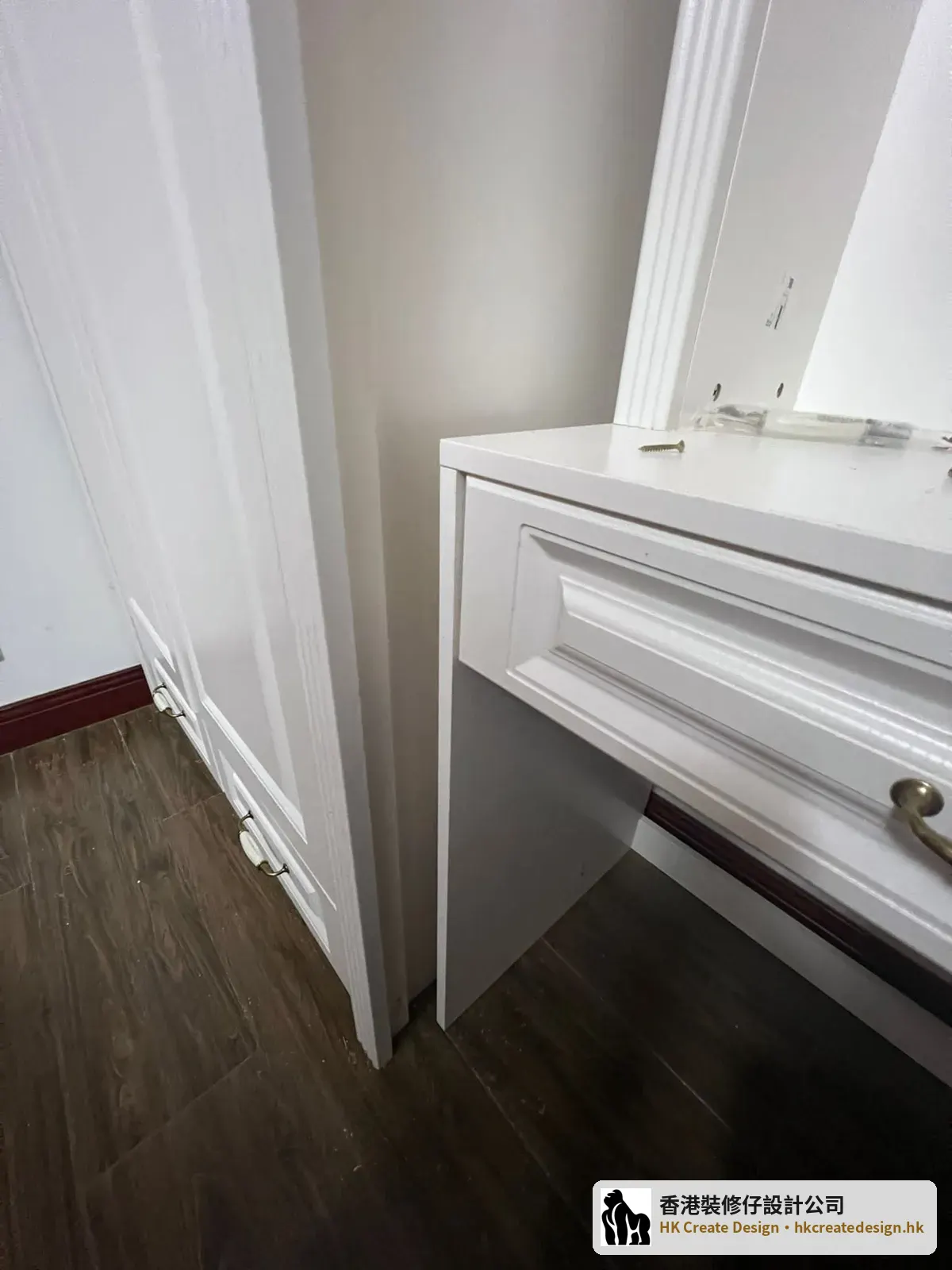
12
Common Mistakes: Many Business Owners Have Made This Mistake
Mistake one: reporting defects only by phone or verbally. The authority's case illustrates the importance of giving written notice.[1]
Mistake two: extensive alterations immediately after handover can give the developer grounds to dispute warranty responsibility. Mistake three: forgetting the completion date and missing the 6-month deadline.[1]
Mistake four: failing to verify supplied appliance models and discovering mismatches later. Mistake five: losing warranty information and being unable to find the service provider after expiry.[2]
To avoid these mistakes, all you need is a list, a camera and a folder. If you need help planning post-property renovations, welcome to WhatsApp 5243 7747 to chat with us for free.
Mistake six: letting defects work, renovation and the move overlap. Schedule inspection, defect rectification, measurement, design, construction, ventilation and moving in sequence, completing each before the next.
- Any omissions must be made in writing
- Record the transaction date
- Check equipment and save maintenance data
FAQ
10 practical questions answered
01How long is the deadline for the new building to be delayed?
The Sales of First-hand Residential Properties Authority stated that buyers can give written notice to the seller of defects not caused by the buyer within 6 months after the date of completion of sale and purchase.[1]
02Does the omission have to be in writing?
Highly recommended. In the case of the Supervision Bureau, the owner made repeated calls over two months but failed to receive proper follow-up. Instead, he used a written notice to repair the problem and the seller completed the repairs first.[1]
03Should I hire a building inspection company?
There are no hard and fast rules. The Consumer Council stated that you can consider hiring professionals with construction or surveying experience; for self-inspection, you should clearly list the requirements and take photos as evidence.[2]
04Is the developer ignoring the calculations?
You can follow up in writing, seek professional and legal advice, or seek help from the Consumer Council;[2] The EAA stated that buyers may consider filing a civil lawsuit against the seller regarding their rights.[1]
05When will the renovation start after the building is taken over?
Complete major defect repairs before substantial alterations to avoid affecting the vendor's warranty responsibilities. Preliminary measurement and furniture design can begin earlier.
06Can walls be demolished in a new building?
You must first confirm whether it is a structural wall. For structural walls, an authorized person must be appointed and approval must be obtained from the Buildings Department in advance.[4]
07How many property complaints does the Consumer Council have?
Under the revised 2026 classification, the “property” category recorded 203 complaints in 2024, 329 in 2025 and 239 from January to September 2026.[3]
08Can you help order furniture for the new building?
Yes. Design and drawings for the whole flat are included. On-site measurement is free through 31 December 2026 for two or more work items, with no deposit. After that, the HK$500 fee is credited against the order. See the published price list for reference rates. (see published rates)
09If a problem is discovered after check-in, is it possible to fix the problem?
Yes, as long as the seller is notified in writing within 6 months after the sale and purchase date, and the problem is not caused by the buyer's act or negligence.[1] It is recommended that the whole house be re-inspected after two or three months of moving in.
10The included electrical appliances are broken. How can I find another one?
Check the warranty period and maintenance schedule first. The Consumer Council recommends that when taking over a property, you should proactively check the contact information and maintenance arrangements of built-in home appliance repairers so that you can follow up after the warranty period.[2]
CHECK THE BASIS
Data and technical basis, sources can be verified
- [1]First-hand Residential Properties Sales Authority: Found any defects after taking possession of the property? what to do? Accessed: 2026-11-01
- [2]Consumer Council: Defects in new flats can drag on. Developers urged to improve rectification and avoid disputes (15 June 2022). Accessed: 2026-11-01
- [3]Consumer Council: Complaint Figures (Complaint Statistics 2024-2026) Accessed: 2026-11-01
- [4]Buildings Department: Frequently Asked Questions on Alteration and Addition Works to Domestic Premises Accessed: 2026-11-01
- PricesHK Create Design 2026 detailed project budget and public price list Accessed: 2026-11-01