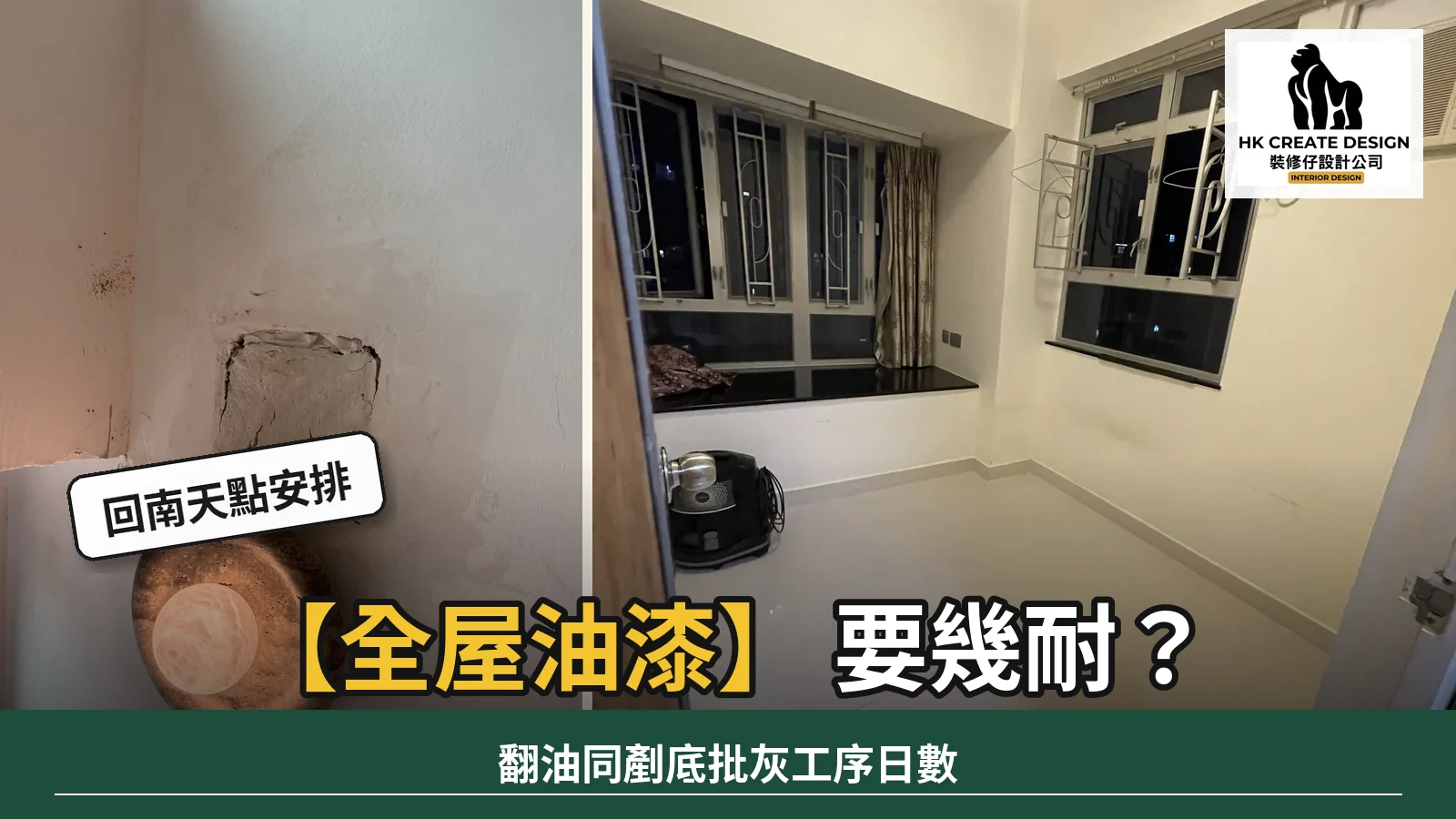
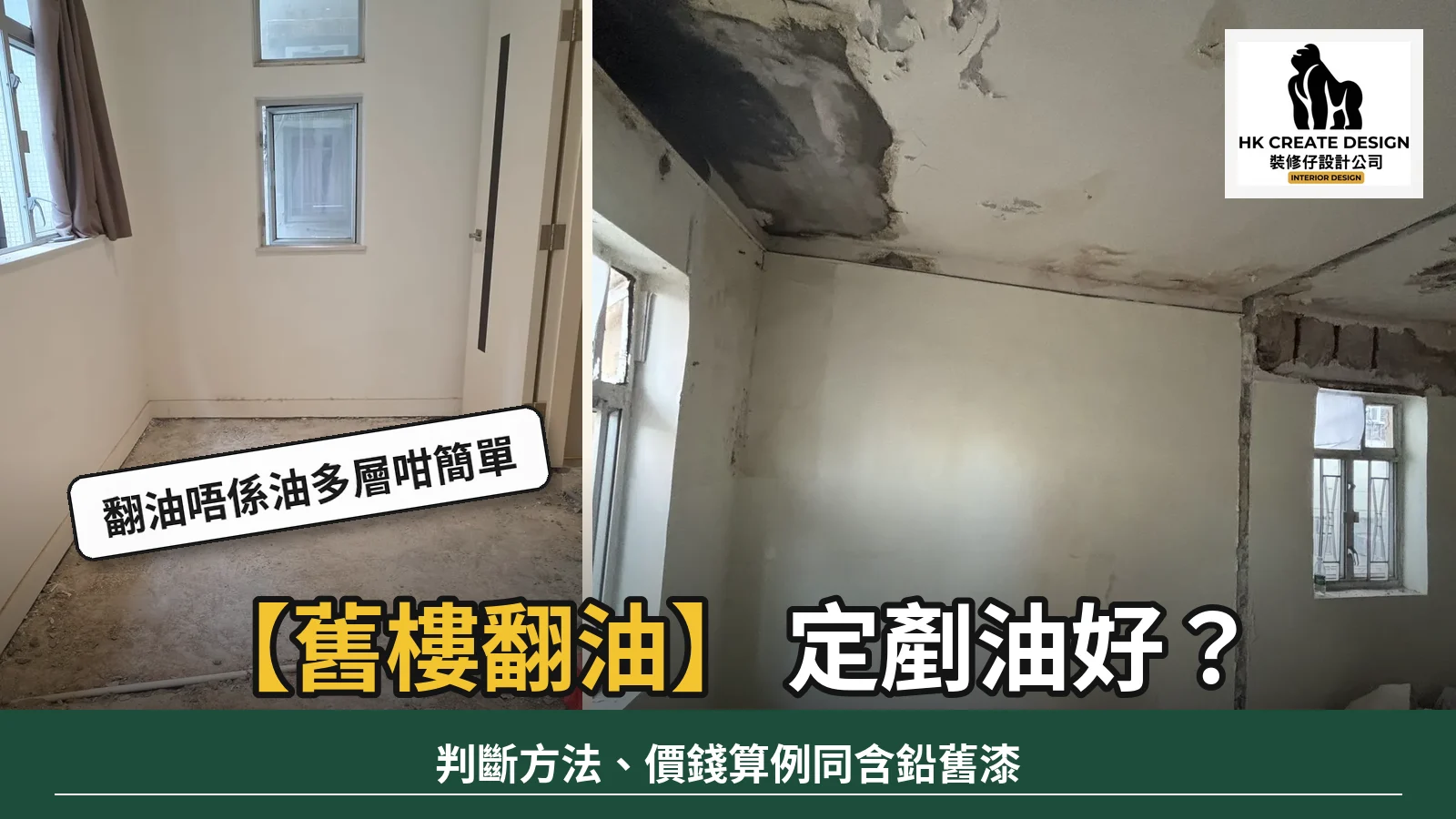
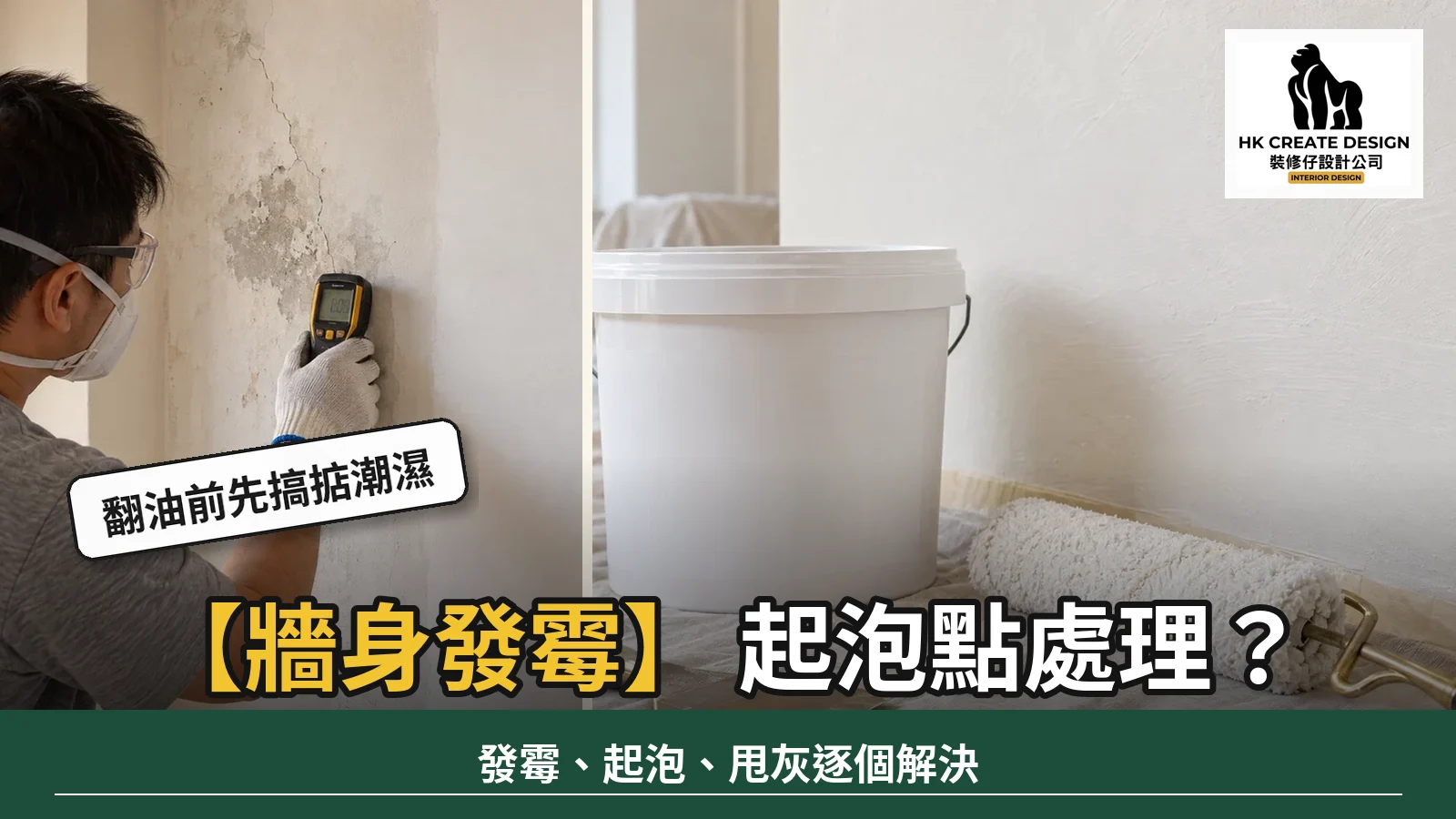
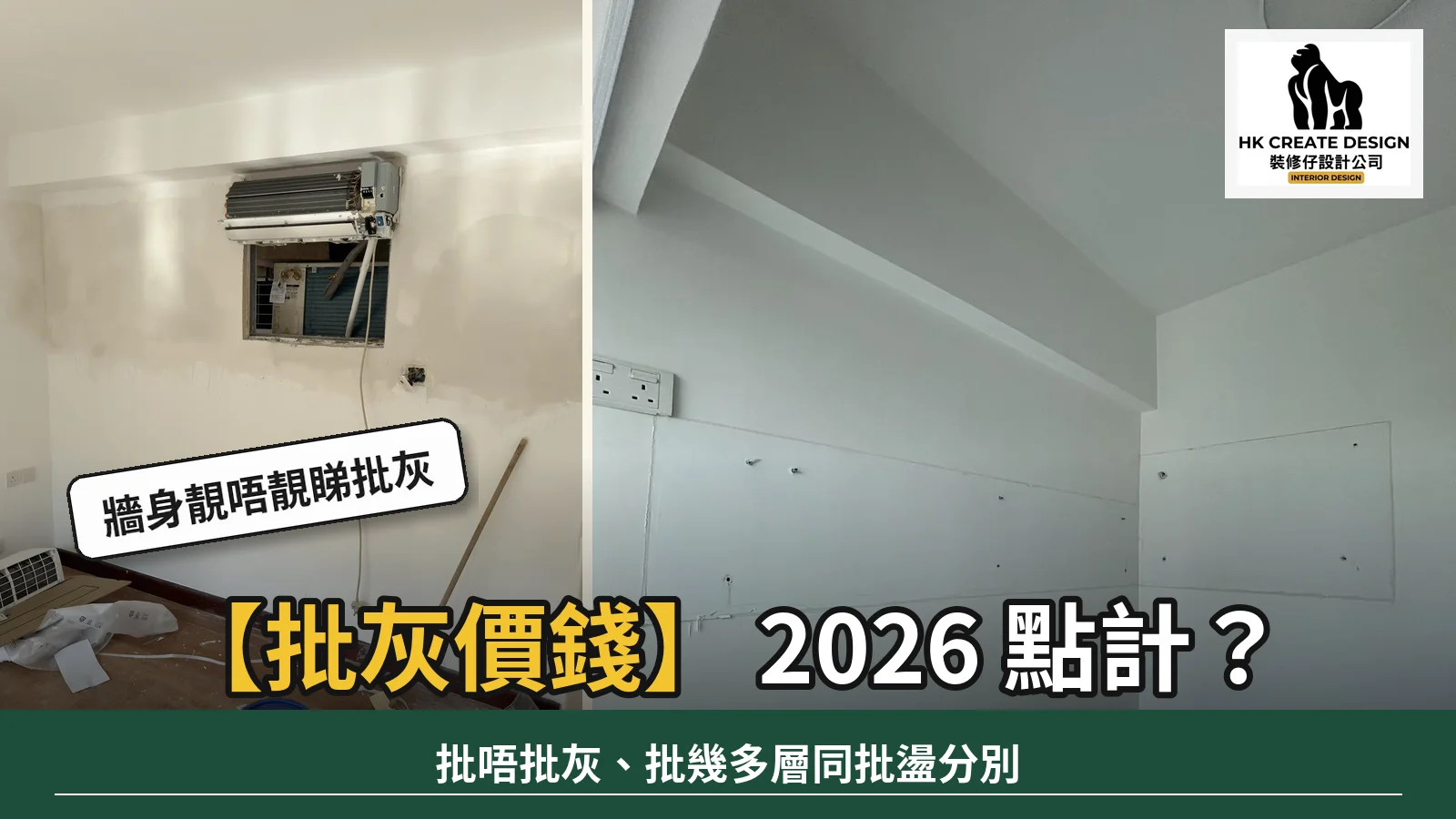
Hong Kong painting quotes for repainting, patching and stripping

How much will repainting your flat cost? Compare four options for different wall conditions, from a simple repaint and patch repairs to partial or full stripping. Prices below use wall and ceiling surface area. Our standard residential finish is Nippon Paint 2nd Generation Super 5-in-1.

Estimate painting costs for your own floor area Send wall photos for a quote

Published Hong Kong residential painting rates |400 sq ft, two-bedroom

Compare four treatments without leaving a phone number. Using 400 Saleable floor area (sq ft) × 3.5 for a rough estimate. The walls and ceilings measure about 1,400 sq ft of painted surface.

Rates and whole-flat budgets for four painting treatments
Painting stagesper sq ft of painted surfaceEstimated work cost
Repaint the existing finishFrom HK$10From HK$14,000
Patch and repaintHK$15–18HK$21,000–25,200
Local stripping, patching and repaintingHK$22–26HK$30,800–36,400
Full strip back to the cement substrateHK$35–40HK$49,000–56,000

Full paint-stripping process:Strip to cement, apply moisture-resistant primer, skim three times and sand level. The finish may be three topcoats or one primer and two topcoats. Confirm the specified system in the quotation.

For a whole two-bedroom flat of around 400 sq ft, use ×3.5 to estimate wall and ceiling area. For other layouts, the calculator’s general residential setting uses ×3. For one room or individual walls, enter the measured surface area directly.

Rooms with different wall conditions can be measured and quoted separately. Furniture moving, leak repairs and extra remedial work need separate confirmation.

View general catalogue rates for other residential work
Get a free painting estimate with photos. Wall condition is optional.

If unsure, send photos and we will assess which method fits.

Send photos on WhatsApp for a painting estimate

You can ask before taking photos. The button prepares a draft. Review it and tap Send in WhatsApp to contact us. We reply within four business hours.
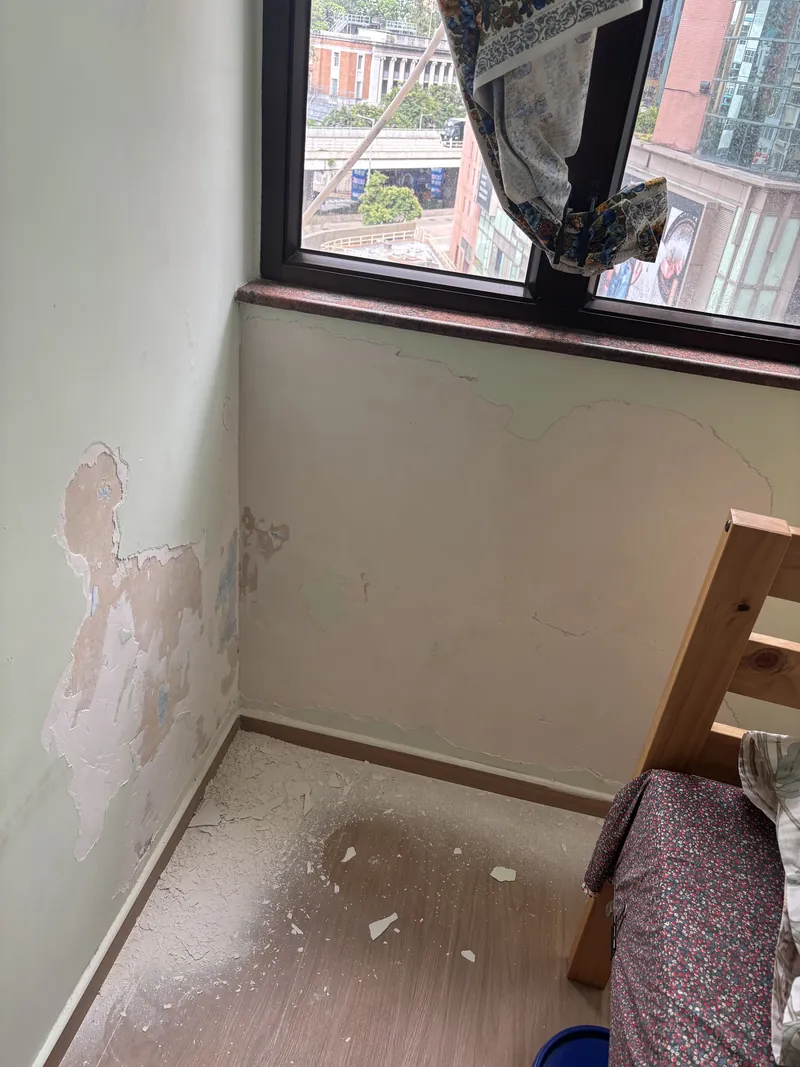
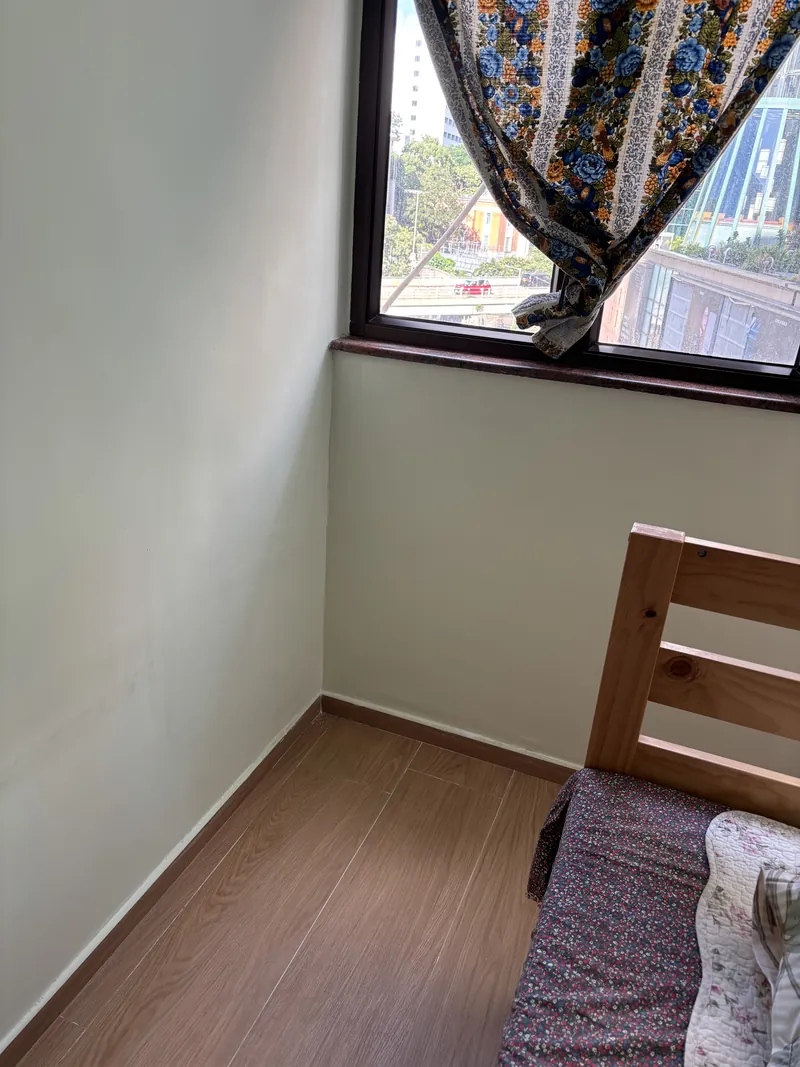
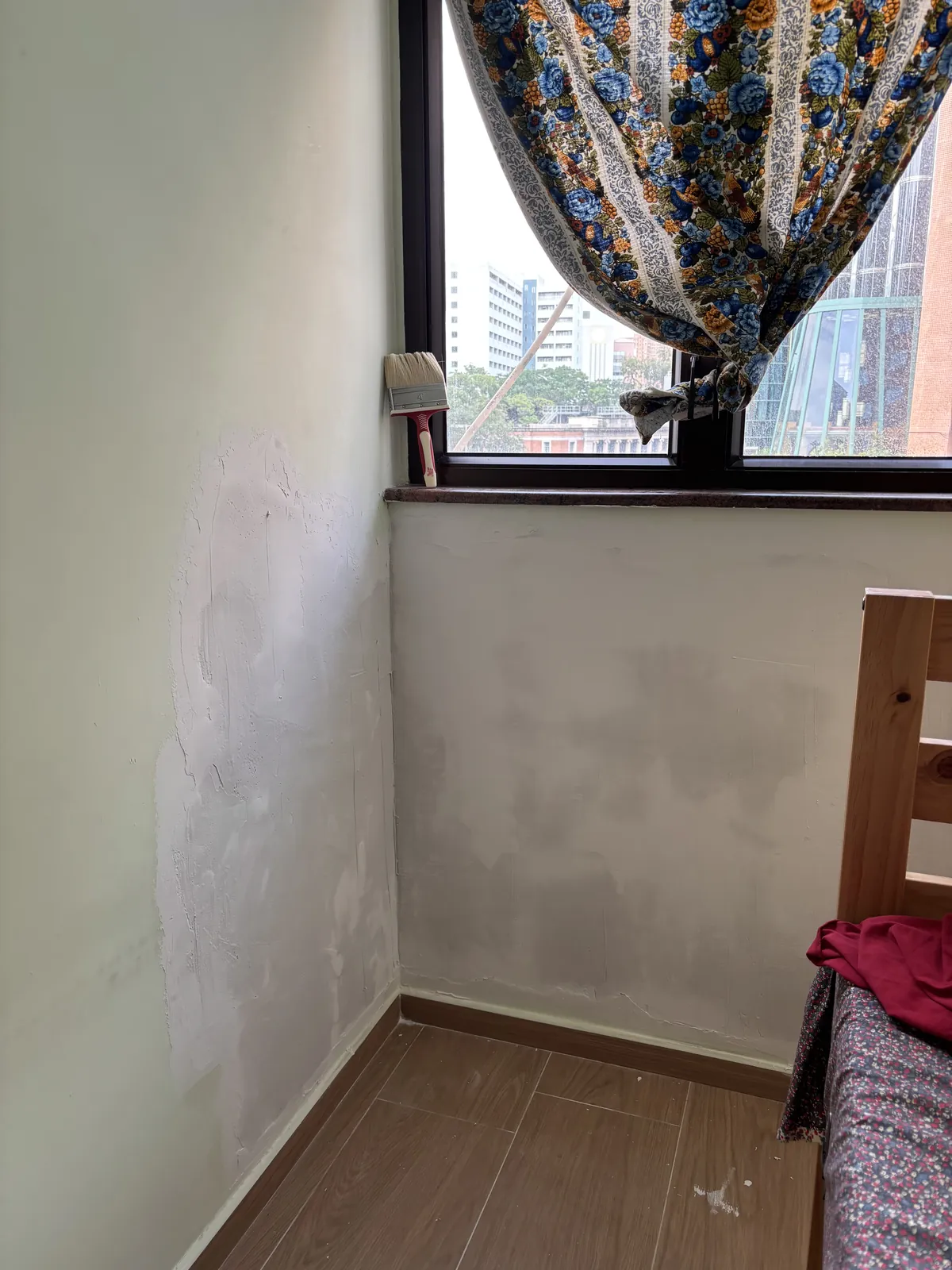
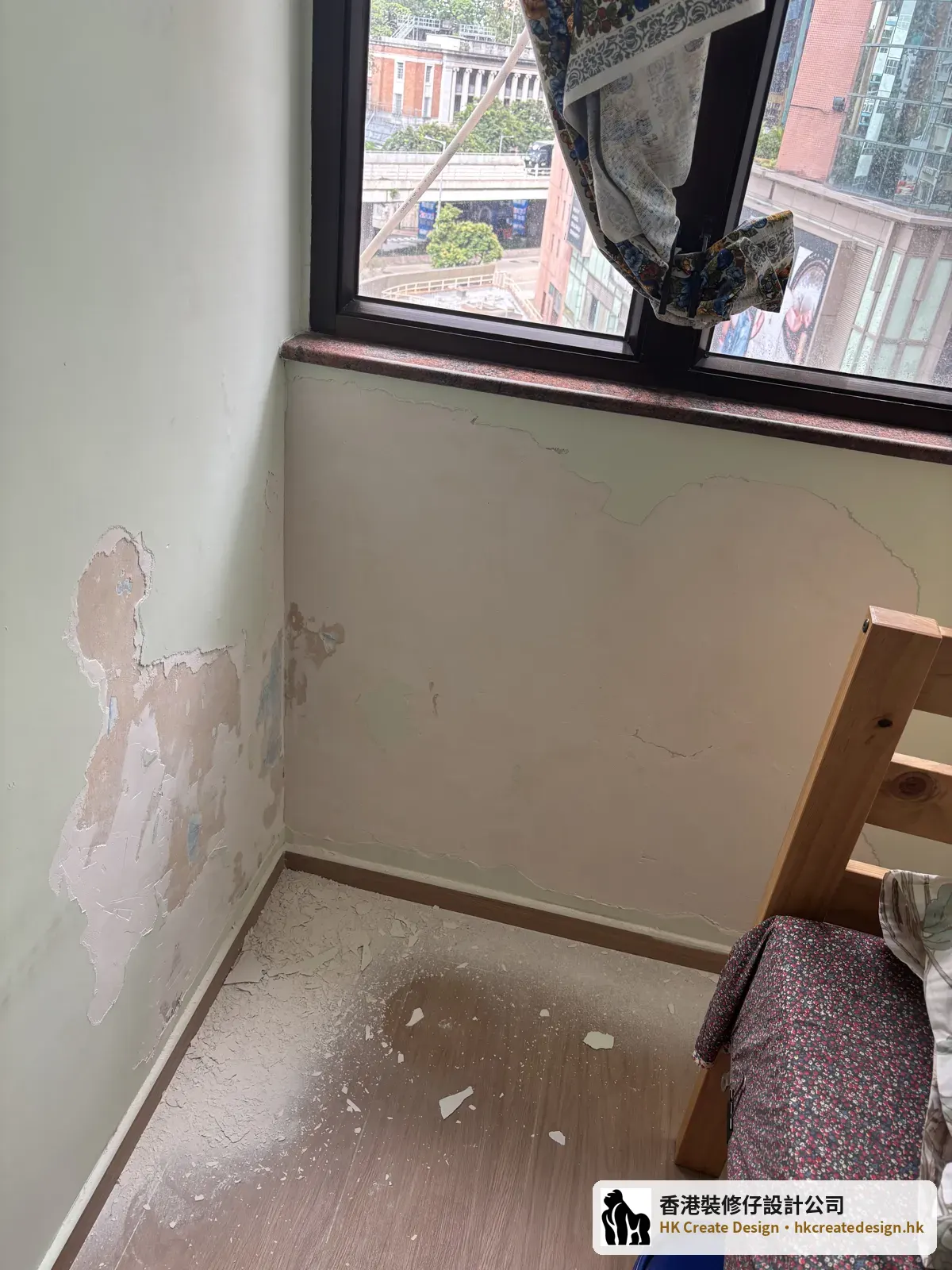
Window-side wall during stripping in Jordan, showing peeling old paint and loose edgesStripping underway
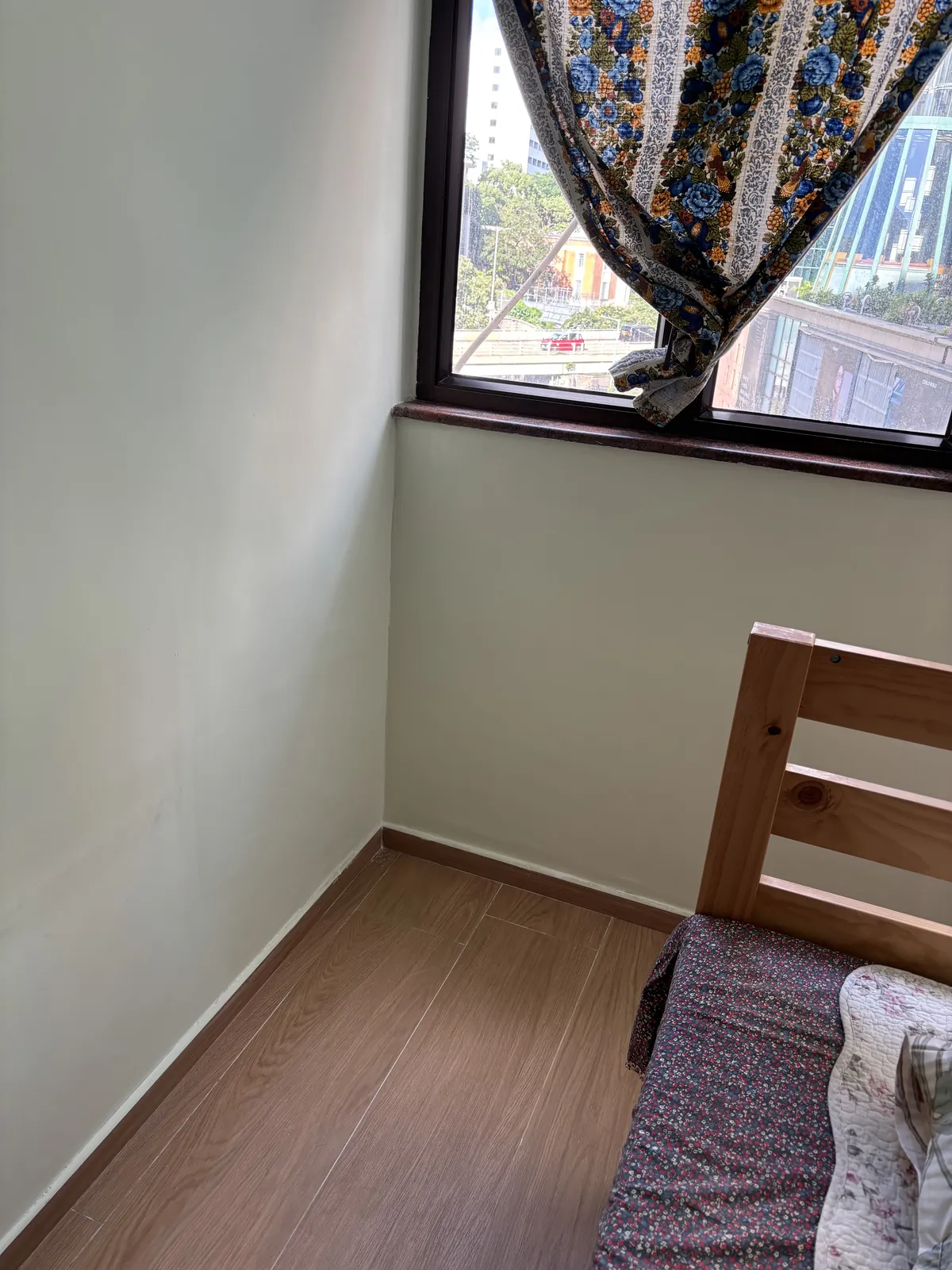
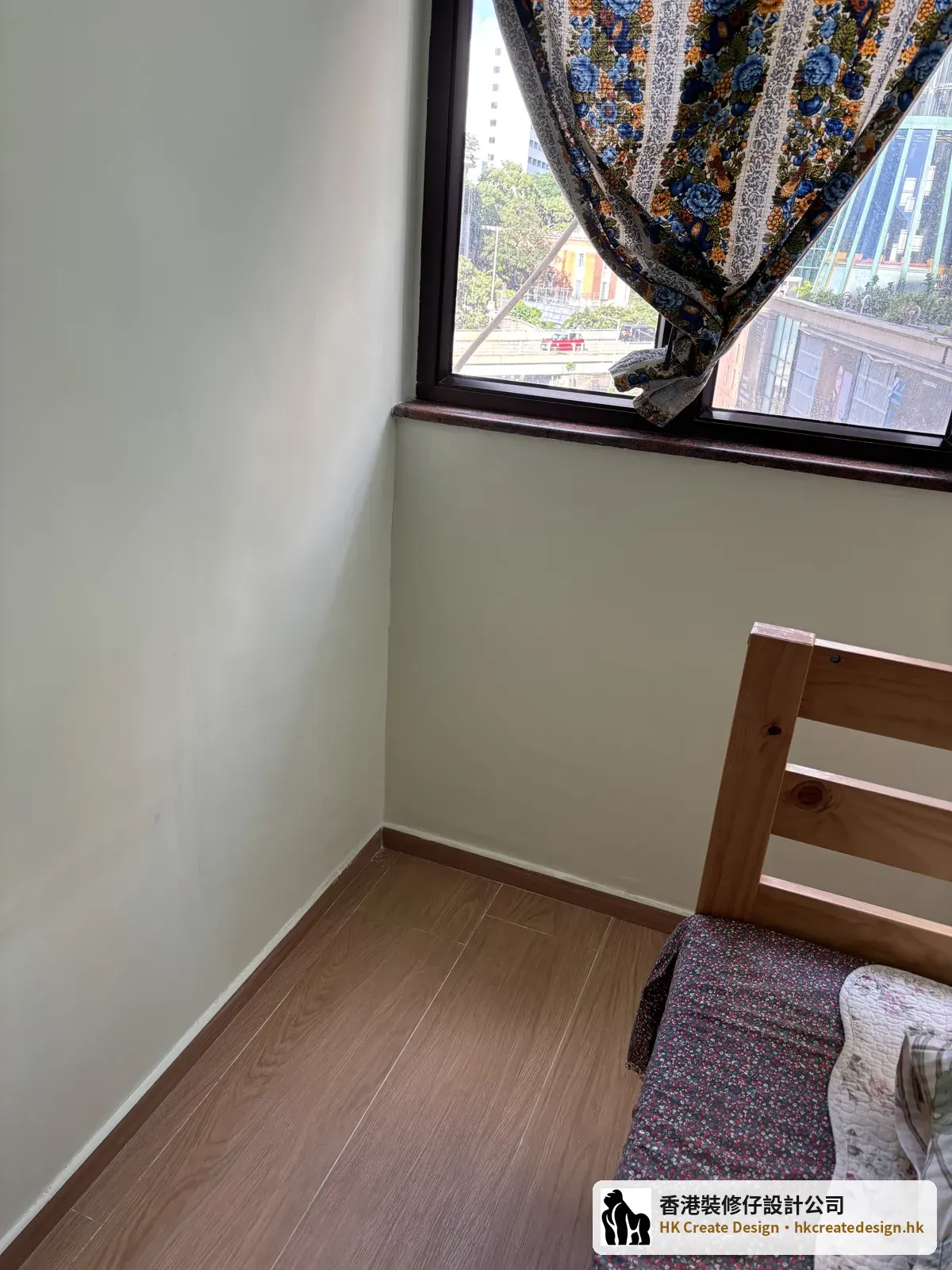
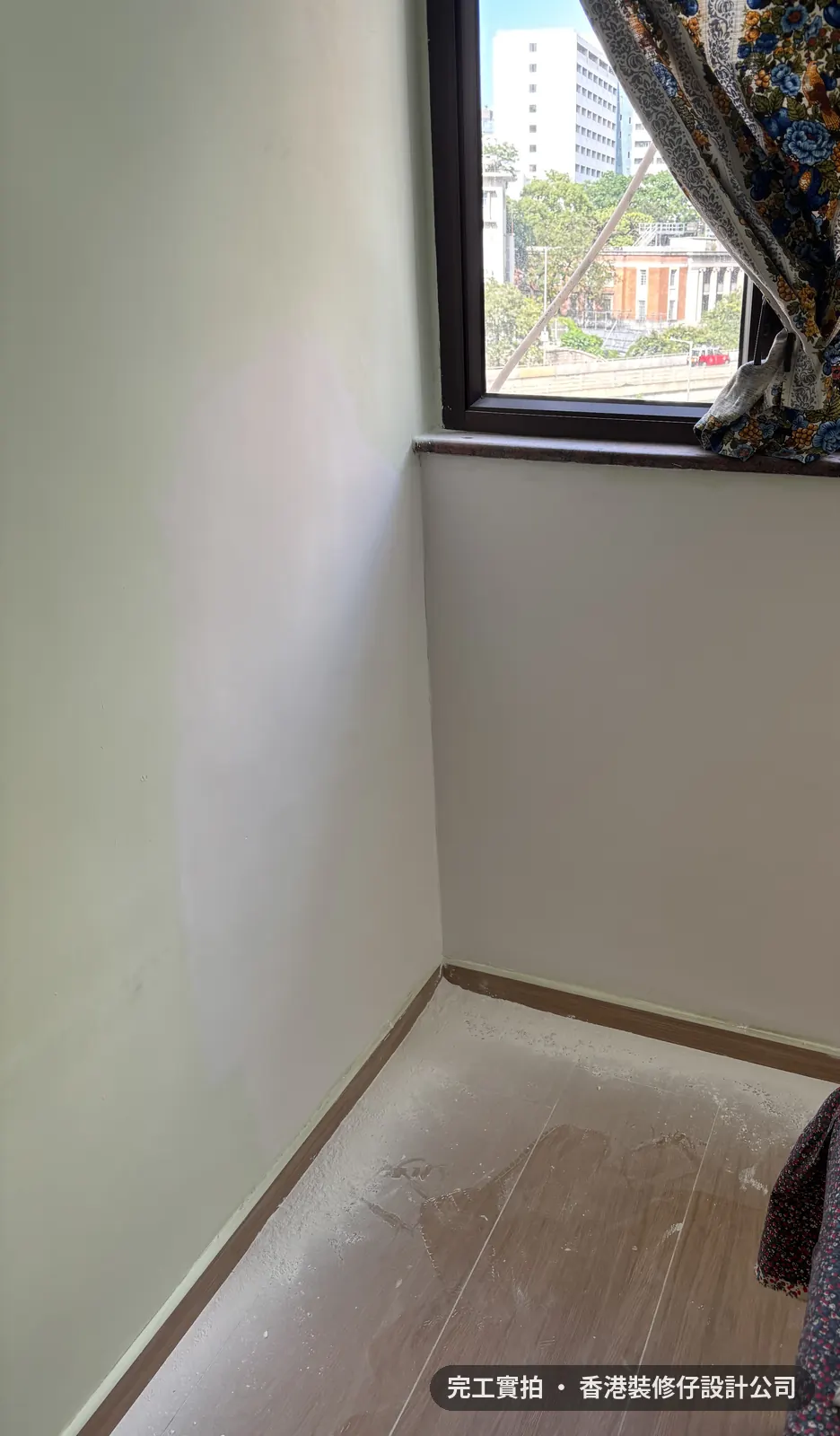
The same Jordan room after painting, with finished walls and skirtingPainting complete
Jordan residential project: photographs of the same roomView the skimming stage

Painting cost calculator

For a two-bedroom flat of about 400 saleable sq ft, estimate the walls and ceilings using saleable floor area × 3.5 as an estimate. You can also enter the measured surface area directly.

The estimate uses standard Nippon 5-in-1 topcoat. Furniture moving, leak repairs and extras are separate. Ask for the upgrade cost for bamboo-charcoal or children's paint for the relevant area. Measurement and the written quotation confirm the final amount.

WhatsApp photos for a free quote

Which Nippon paint should I choose for a whole-flat repaint?

Select topcoats by room. The quote identifies repair, skim and primer needs, then lists each room’s Nippon product, colour code, coat count and upgrade price. This lets you check tins before work and match touch-ups later.
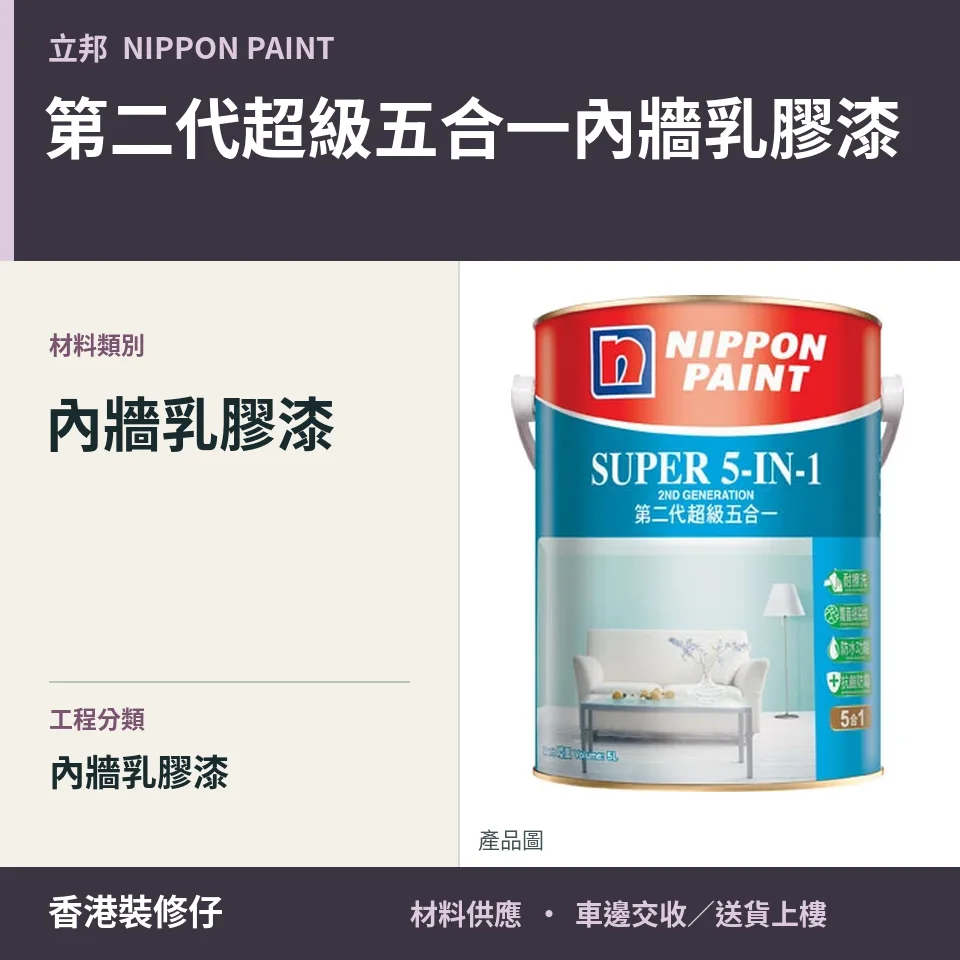
Blue Nippon 2nd Generation Super 5-in-1 interior emulsion tin
Standard materials

2nd Generation Super 5-in-1

Changing the living room colour or frequently wiping corridor walls?

The matt surface is easy to clean. Nippon reports over 12,000 scrub cycles in testing and resistance to alkali and mould.

Choose direct repaint, local repair or stripping and skimming according to each wall’s condition. The standard topcoat is included in the relevant work rate.
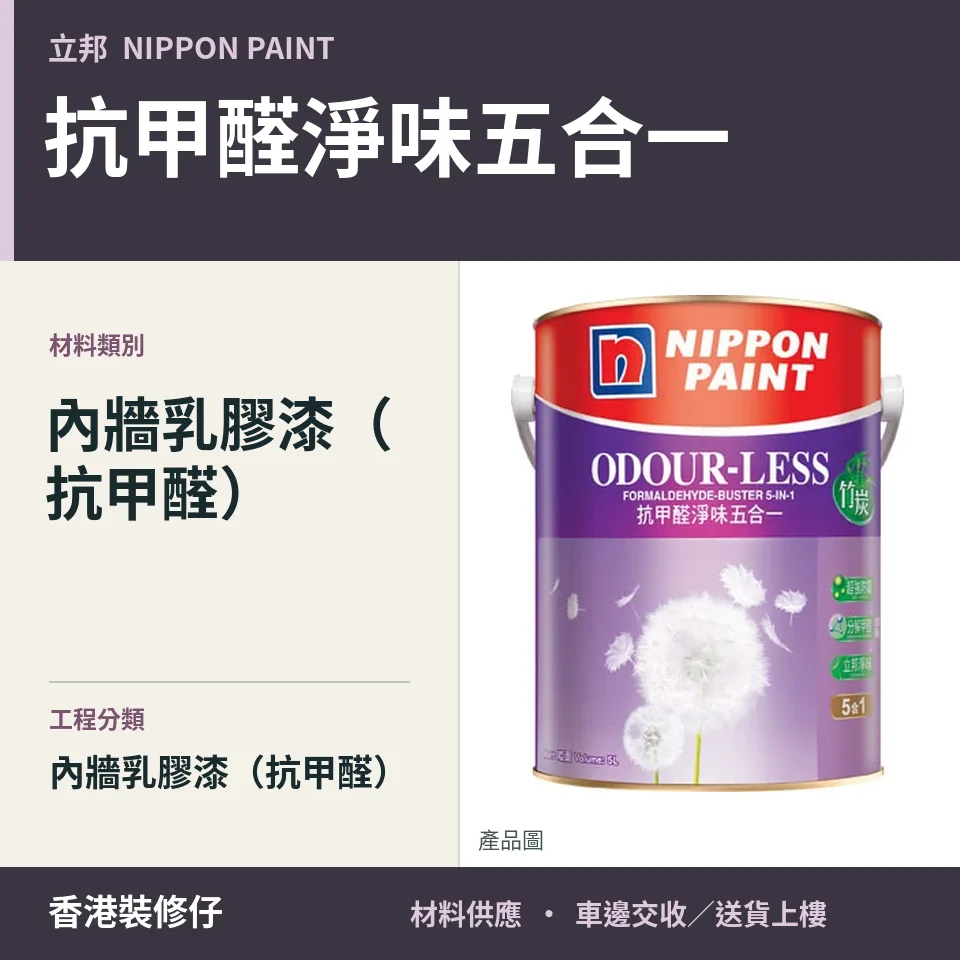
Purple Nippon Formaldehyde-Buster Odour-less 5-in-1 tin with bamboo charcoal formula marking
Material upgrades

Formaldehyde-Buster Odour-less 5-in-1 with bamboo charcoal technology

Have new wardrobes and want a paint formulated to reduce formaldehyde?

Nippon describes the bamboo charcoal formula as low-odour, washable and able to break down free formaldehyde. Ventilate after installing new furniture.

You can upgrade one room. The quotation shows the difference from standard paint for the selected walls and colour.
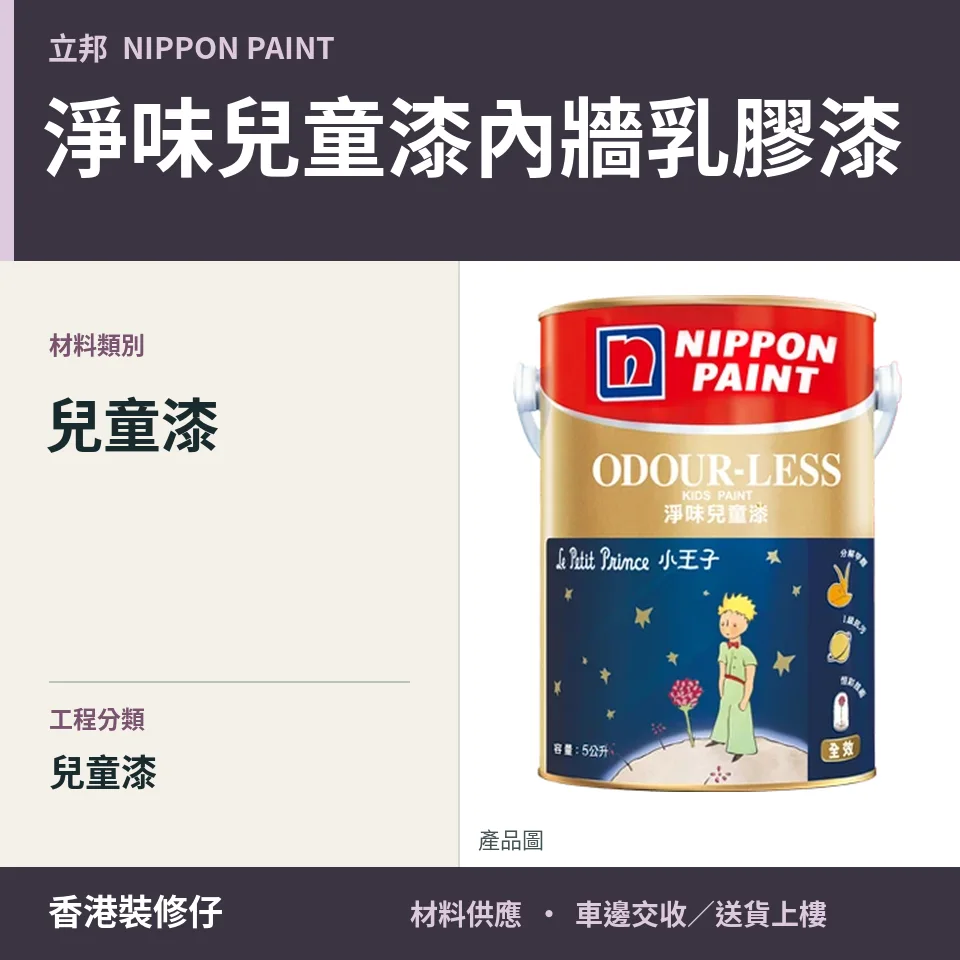
Gold-and-blue Nippon Odour-less Kids Paint tin with Little Prince artwork
Material upgrades

Odour-less Kids Paint, Little Prince series

Do handprints keep showing up on the children’s room walls? Would you like to keep the chosen colour?

Nippon lists Grade I stain resistance, scrub resistance and colour-retention technology for this children’s paint, suited to frequently cleaned bedroom or play surfaces.

A whole-flat upgrade adds HK$4 per sq ft of painted wall and ceiling area. A single room or selected walls are quoted separately once the scope is confirmed.

To request another Nippon model or matching primer, visitNippon product catalogueCheck the specification and confirm it when requesting a quote.

Compare preparation methods and prices

General catalogue rates and minimum charges for other residential projects

The following indicative rates are from our residential E01–E03 schedule and apply to walls and ceilings byTotal paintable surface areato calculate. For a roughly 400 sq ft two-bedroom flat useFour headline unit rates and whole-flat examples.

General residential schedule: three methods and minimum charges
Compare itemsRepaint the existing finishE03Local repairs followed by repaintingE02Strip and skim-coat againE01
Wall conditions to assess firstSound walls without obvious looseness or peelingGenerally sound with local cracks, chipped corners or loose patchesPeeling or chalking substrate. Confirm the moisture source has been resolved first.
Reference unit priceHK$12 / sq ftWork areaHK$21 / sq ftWork areaHK$39 / sq ftWork area
Minimum charge for this itemHK$3,700HK$4,650HK$7,450
Work included in the published rateClean the walls, fill nail holes, sand lightly and apply 2 topcoats. Suitable for sound existing walls. The standard finish is Nippon Paint Super Five-in-One, second generation. An extra coat when changing from a dark to a light colour costs HK$4 per sq ft.Remove loose patches, repair cracks and chips, apply damp-resistant primer, sand and apply 2 topcoats. Suitable for generally sound walls with localised cracks. The standard interior finish is Nippon Paint Super Five-in-One, second generation.Strip old paint back to the plaster, apply damp-resistant primer, skim 2–3 times, sand and apply 2–3 topcoats. Suitable for peeling or mould-affected walls, or walls where the source of seepage has been fixed. The standard interior finish is Nippon Paint Super Five-in-One, second generation.

Swipe horizontally on mobile. Apply one preparation rate per area. The general catalogue uses saleable area × 3 for a rough allowance. Measure walls, ceilings and exclusions for the final quote. Confirm furniture moving, leak repair and extras separately.

Project photographs from Jordan, June 2026

Jordan flat before and after painting: window-side stripping, skimming and finished surface

Original company project photographs

These photos follow peeling paint at the window through local repair to the finished room. Compare the frame, curtains, bed frame and skirting across slightly different angles and lighting. Swipe on mobile or tap a photo to enlarge.
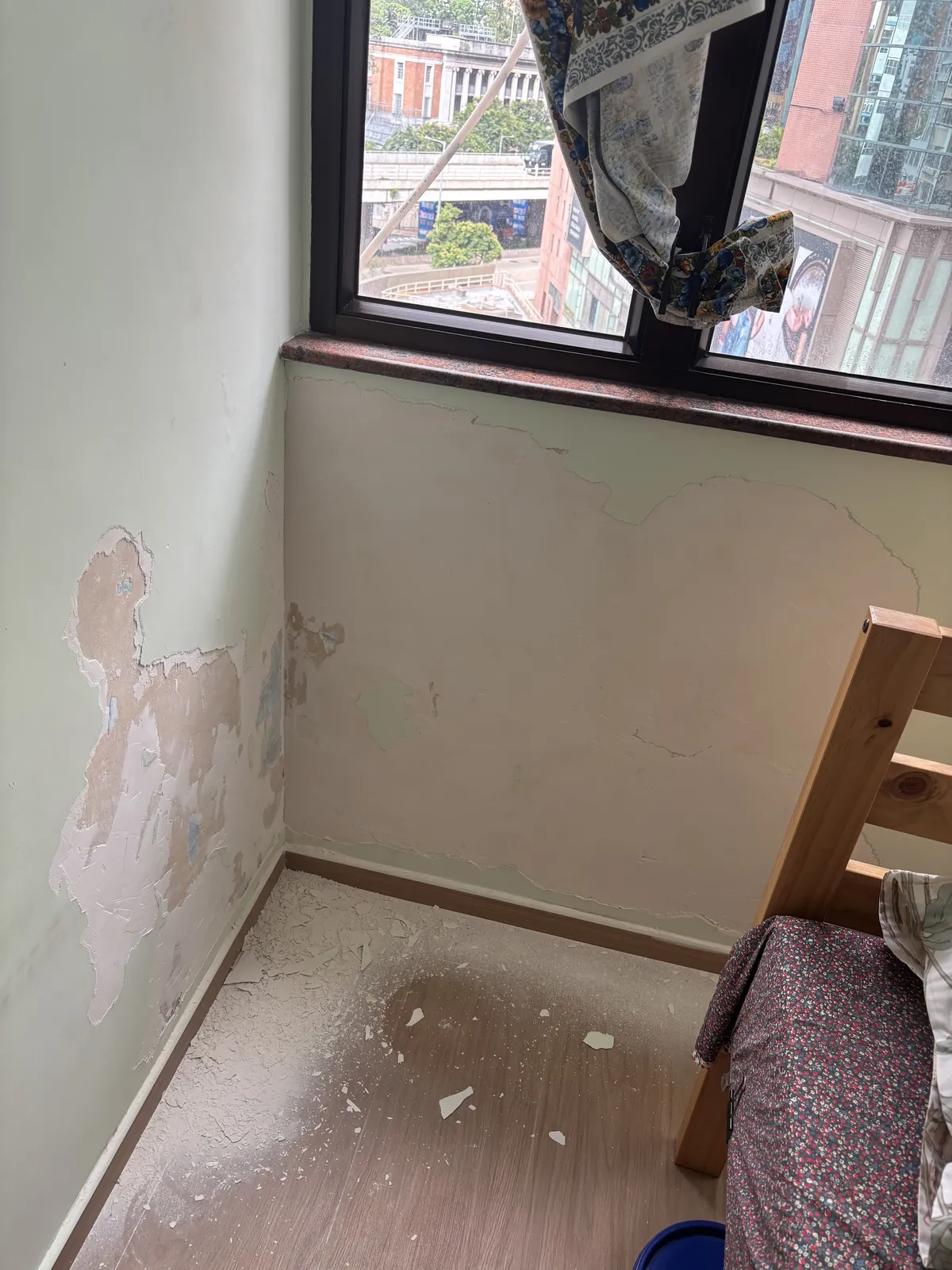
Window-side wall during stripping in Jordan, showing peeling old paint and loose edgesPaint stripping in progress
· The old coating has been partially stripped, exposing loose layers and peeling edges. The photo shows stripping in progress.
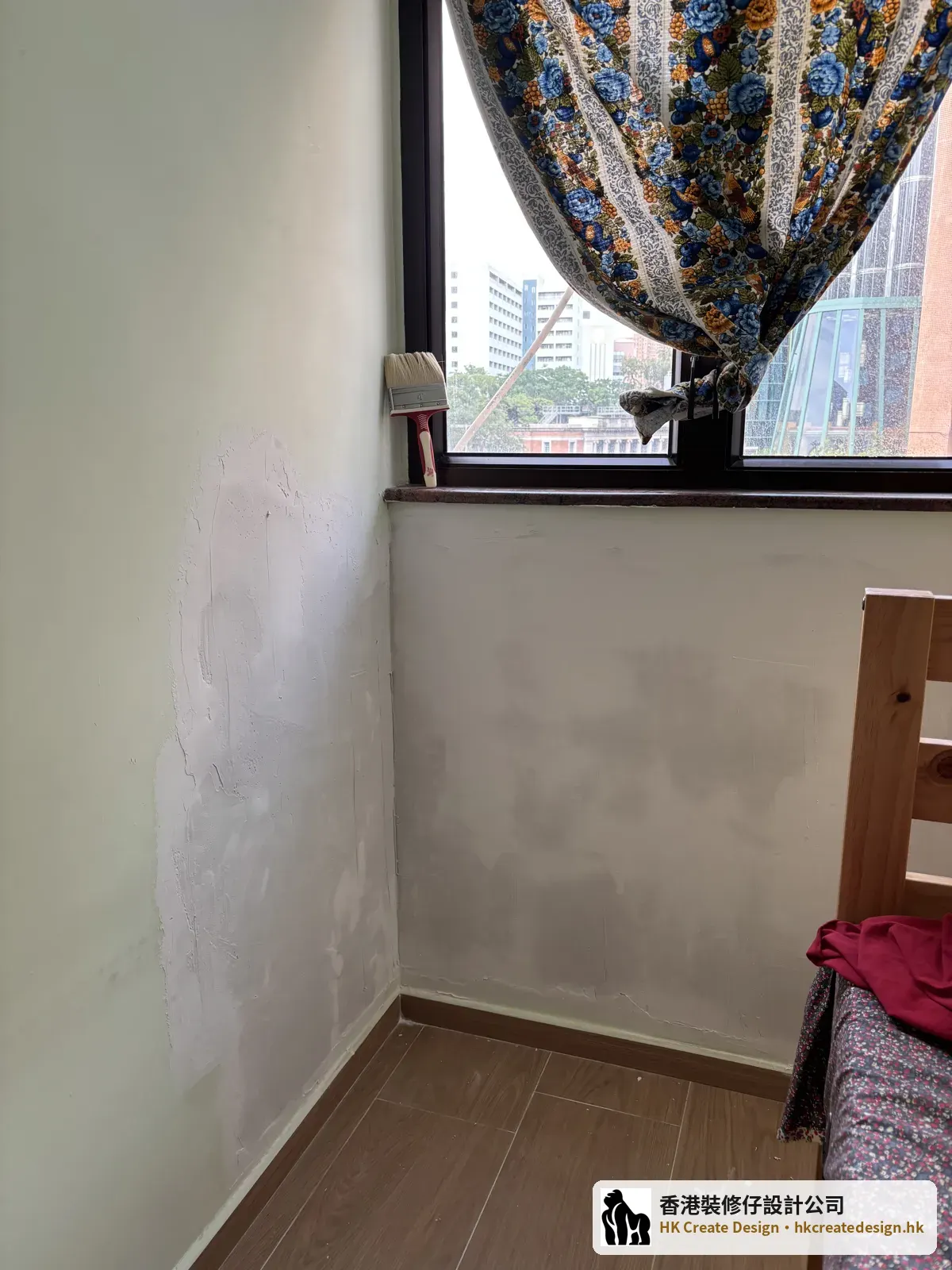
Patch repairs and skimming in the same Jordan roomLocal repairs underway
· Repairs are still visible at the window and side wall. This is an intermediate stage.
The same Jordan room after painting, with finished walls and skirtingPainting complete
· Painting complete. Check colour, junctions and skirting edges.

These site photographs were taken on 19, 20 and 21 June 2026. Images were resized and arranged for display. The project’s total duration, painted area and final price have not been published.

See six painting stages and acceptance checks

Read customer feedback on our services Read public Google Business reviews

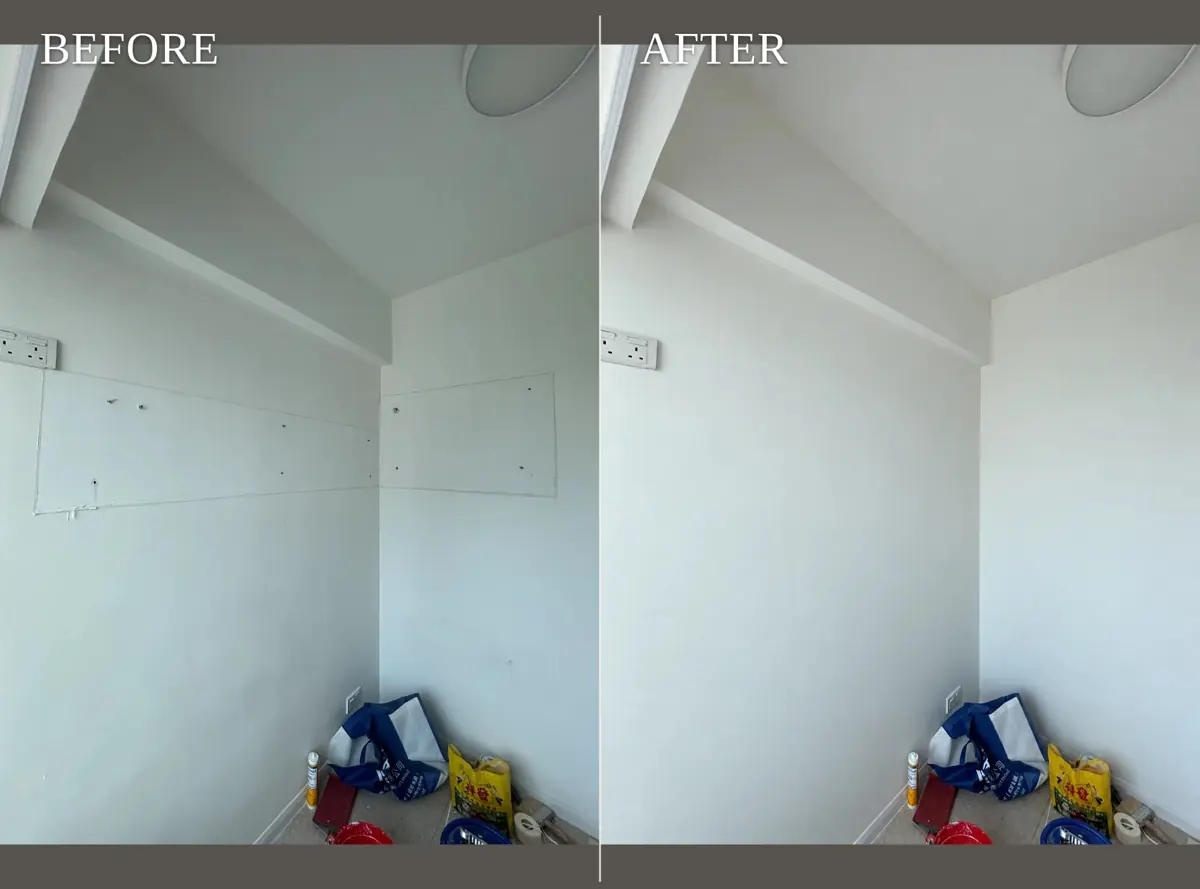
Painting projects before and after

Enlarge the photos to compare the corners, wall bases and joints before and after painting in stairways, on ceilings and in living and dining rooms.
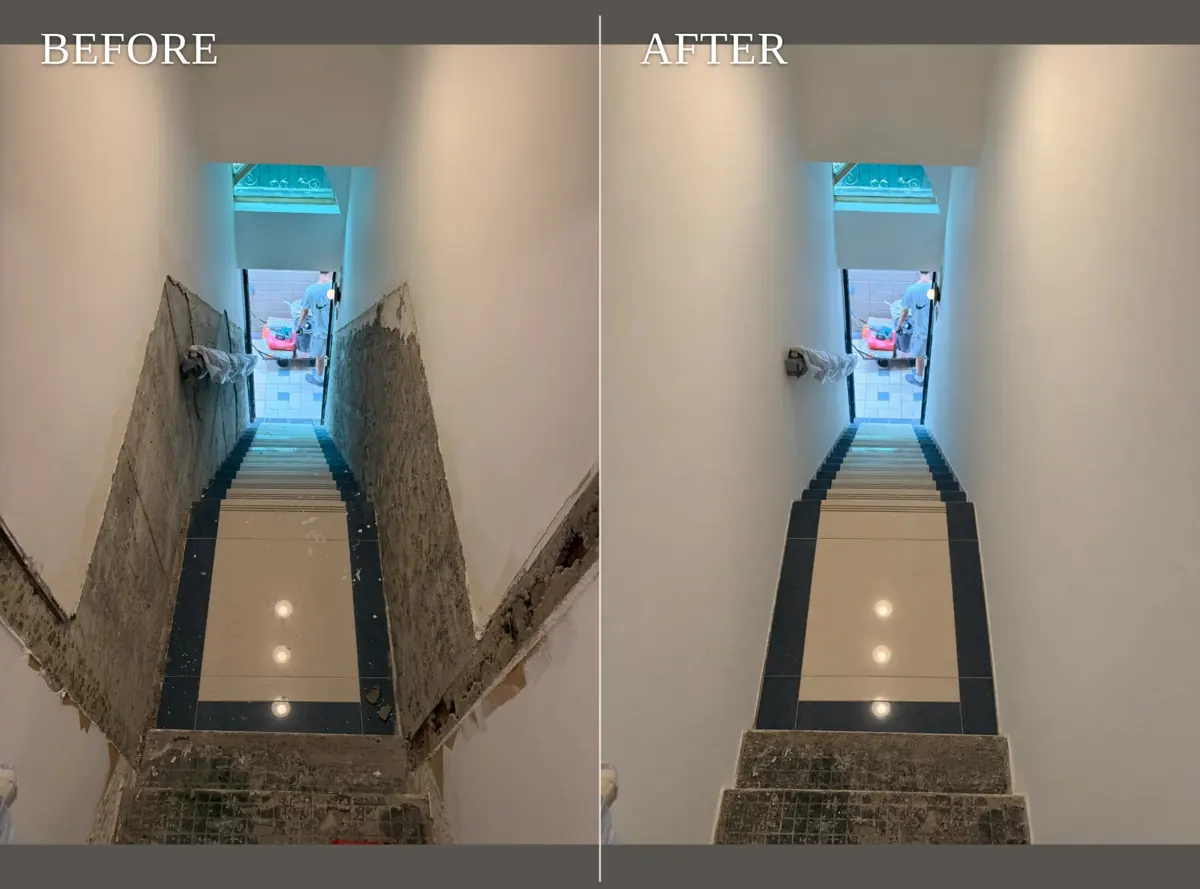
  • Repainting stairway walls – comparison photos
    Repainting stairway walls
  • Repainting a ceiling and wall corners – comparison photos
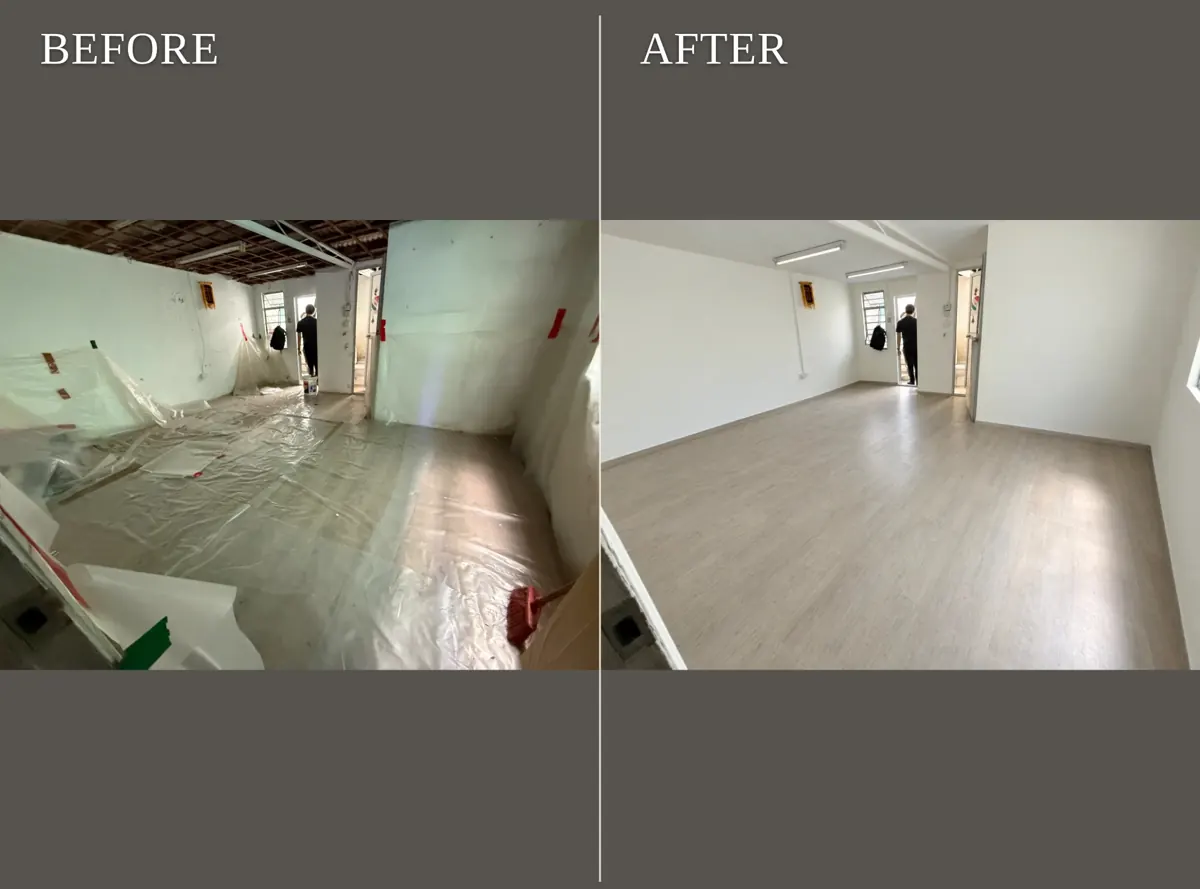
    Repainting a ceiling and wall corners
  • Living and dining room wall and ceiling renovation – comparison photos
    Living and dining room wall and ceiling renovation

View all project comparisons and customer reviews →

Send photos on WhatsApp for a quote on similar work

How long does painting take, and can we stay in the flat?

Agree the scope, start and handover dates when quoting. Allow separately for labour, drying between coats and moving furniture.

  • Change colour onlyAt 25°C, Nippon 2nd Generation Super 5-in-1 interior emulsion has a 2–3 hour recoat interval and takes seven days to cure fully.
  • Strip and skimFor Nippon Odour-less Wall Putty at 25°C, allow at least 12–24 hours between coats. Also allow time for cleaning, sanding and painting.
  • Occupied flat or short handover deadlineTell us the required handover date, which rooms can be cleared and where large furniture stands. We can then plan phased access, protection and ventilation.

These timings are the manufacturer’s figures for the specified products. Programme depends on wall condition, materials, temperature, humidity and access.

View the complete programme and manufacturer references · Choose wall condition to ask about price and availability

REAL PROJECT PHOTOS

Photographs of our completed projects

These photographs were taken on actual HK Create Design projects. Client details have been removed.
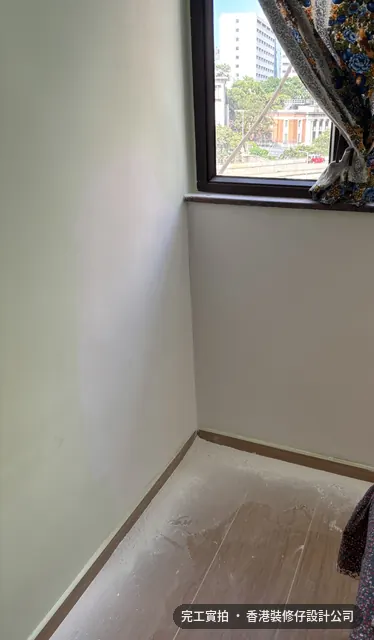
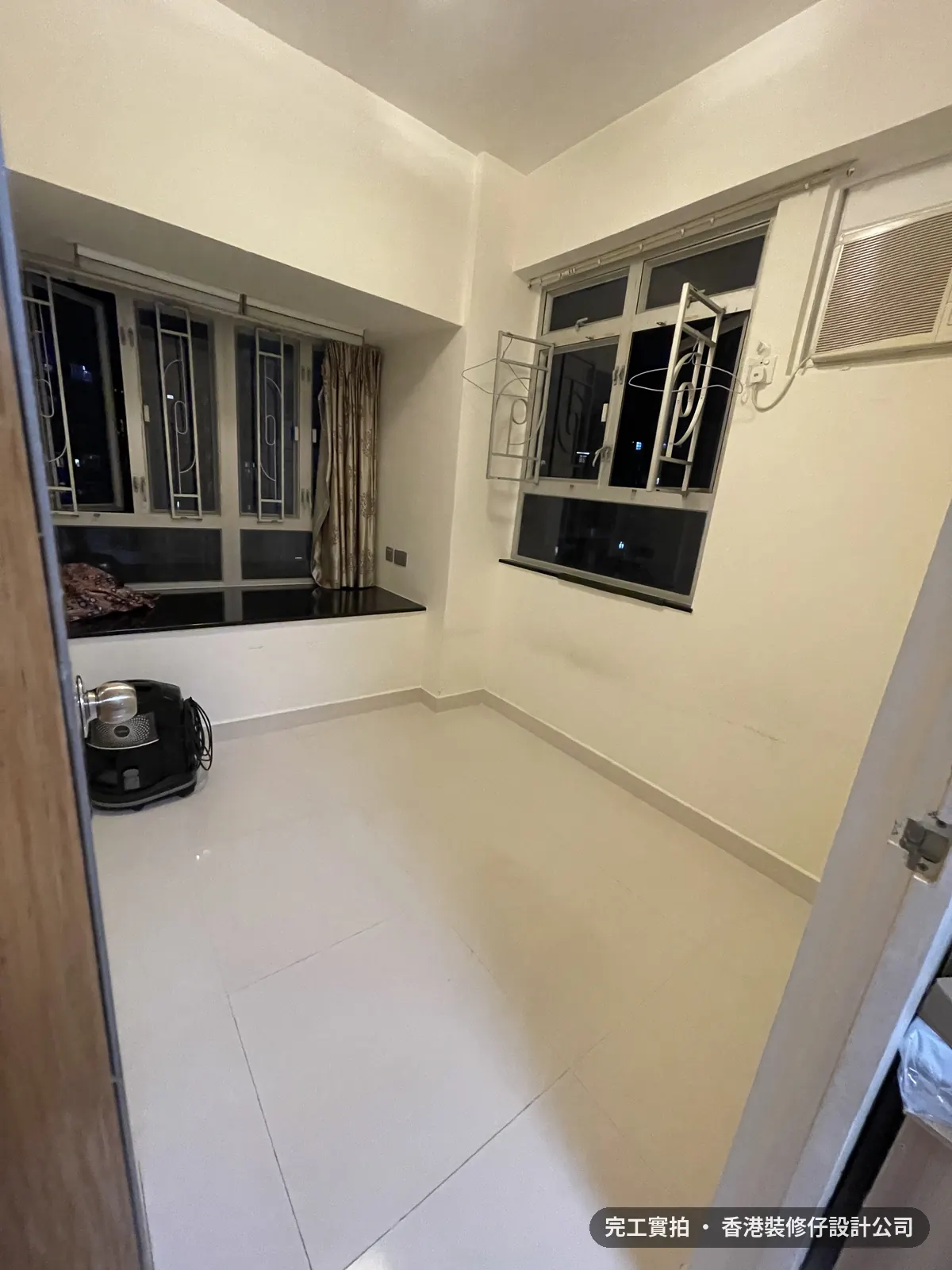
  • Completed skim coating and painting in a Jordan bedroom
    Completed project photosJordan · Painting · June 2026
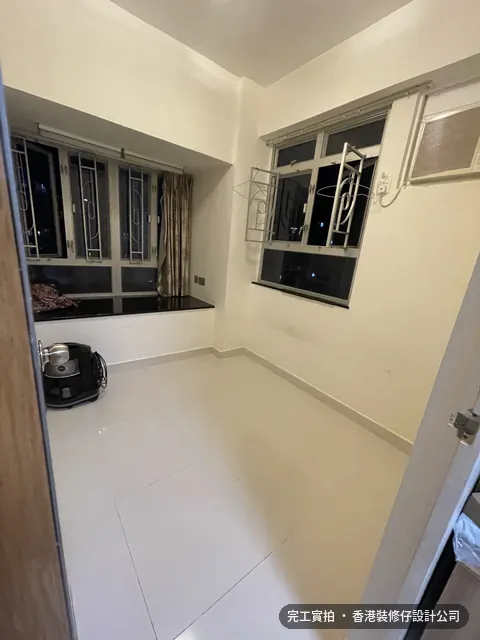
  • Freshly painted bedroom walls and window ledge
    Completed project photosHong Kong · Painting · April 2022
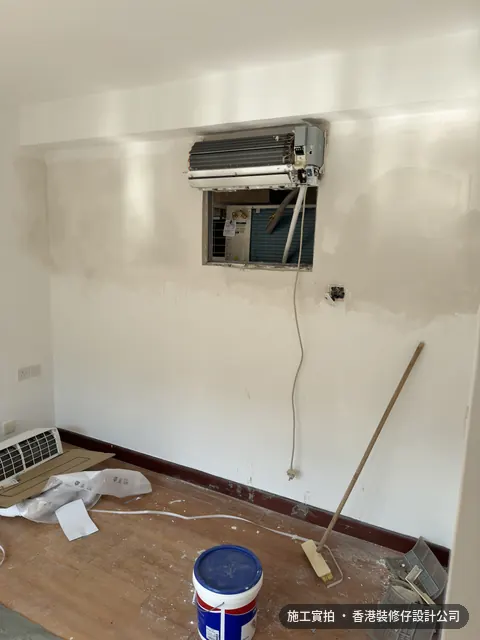
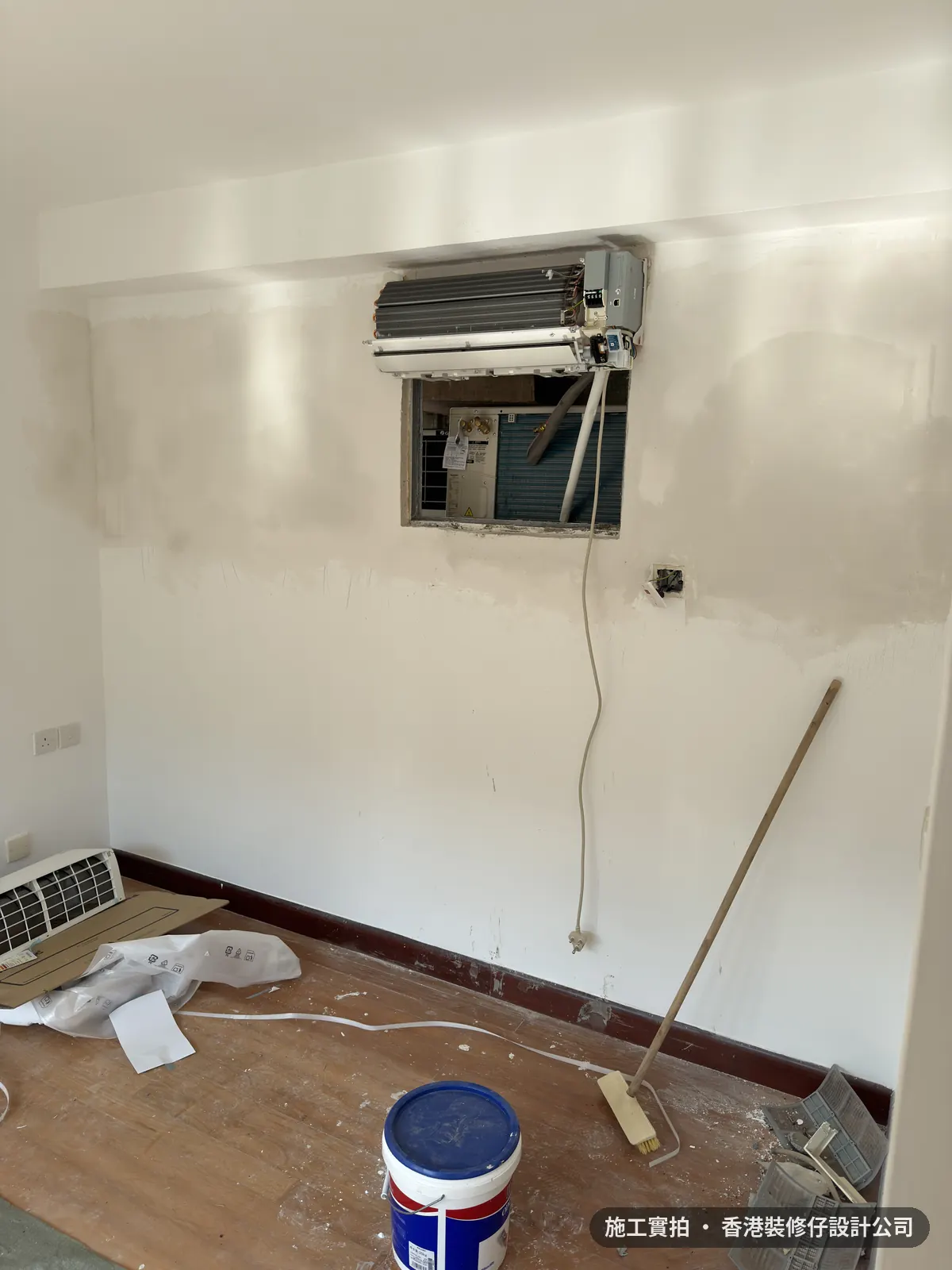
  • Wall skim coating and painting in progress at Mount Parker Lodge
    Site photoMount Parker Lodge, Sai Wan Ho · Painting · July 2026
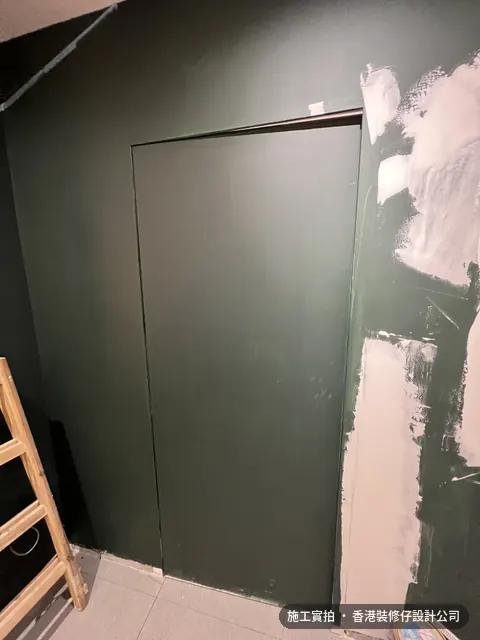
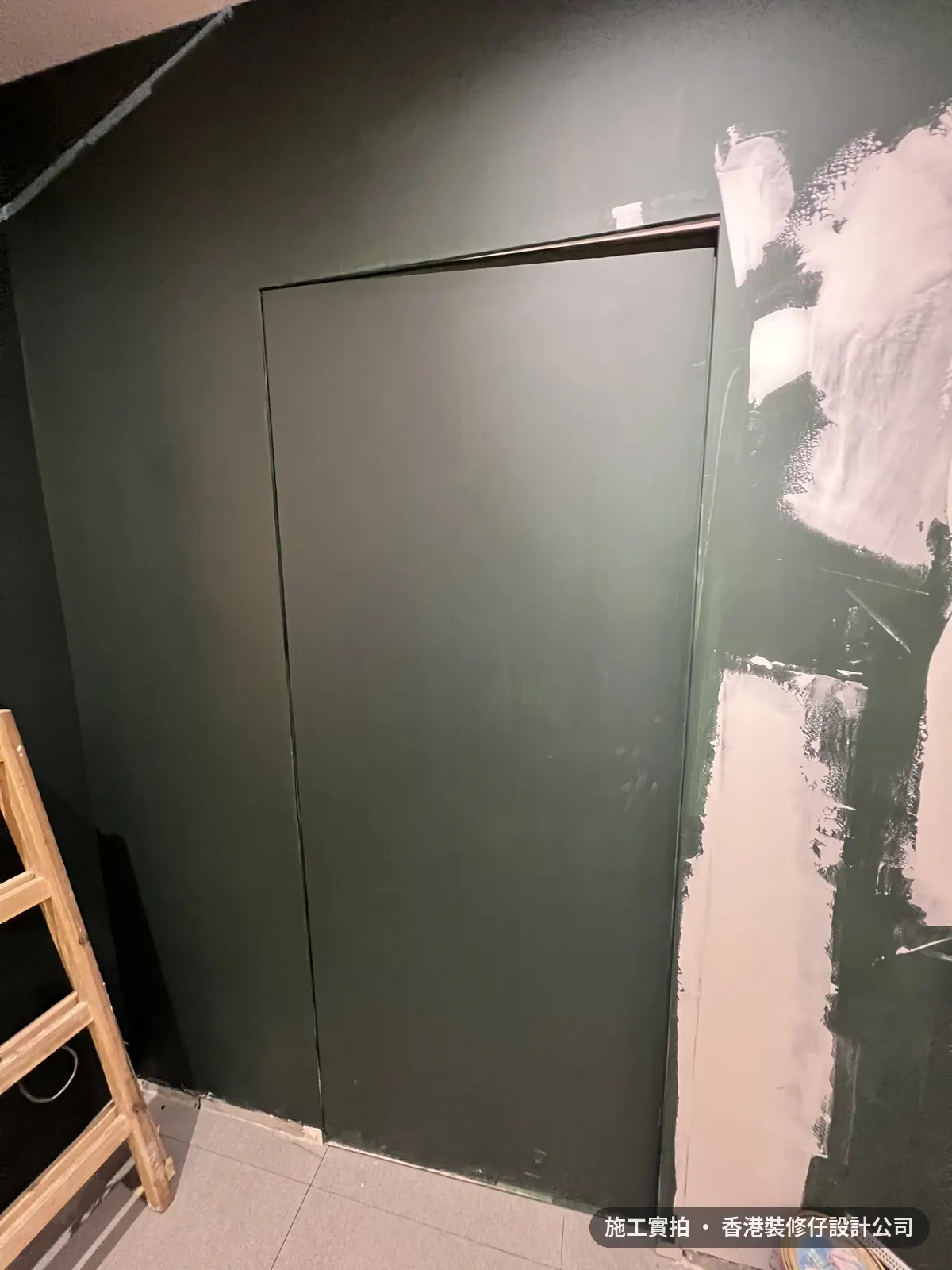
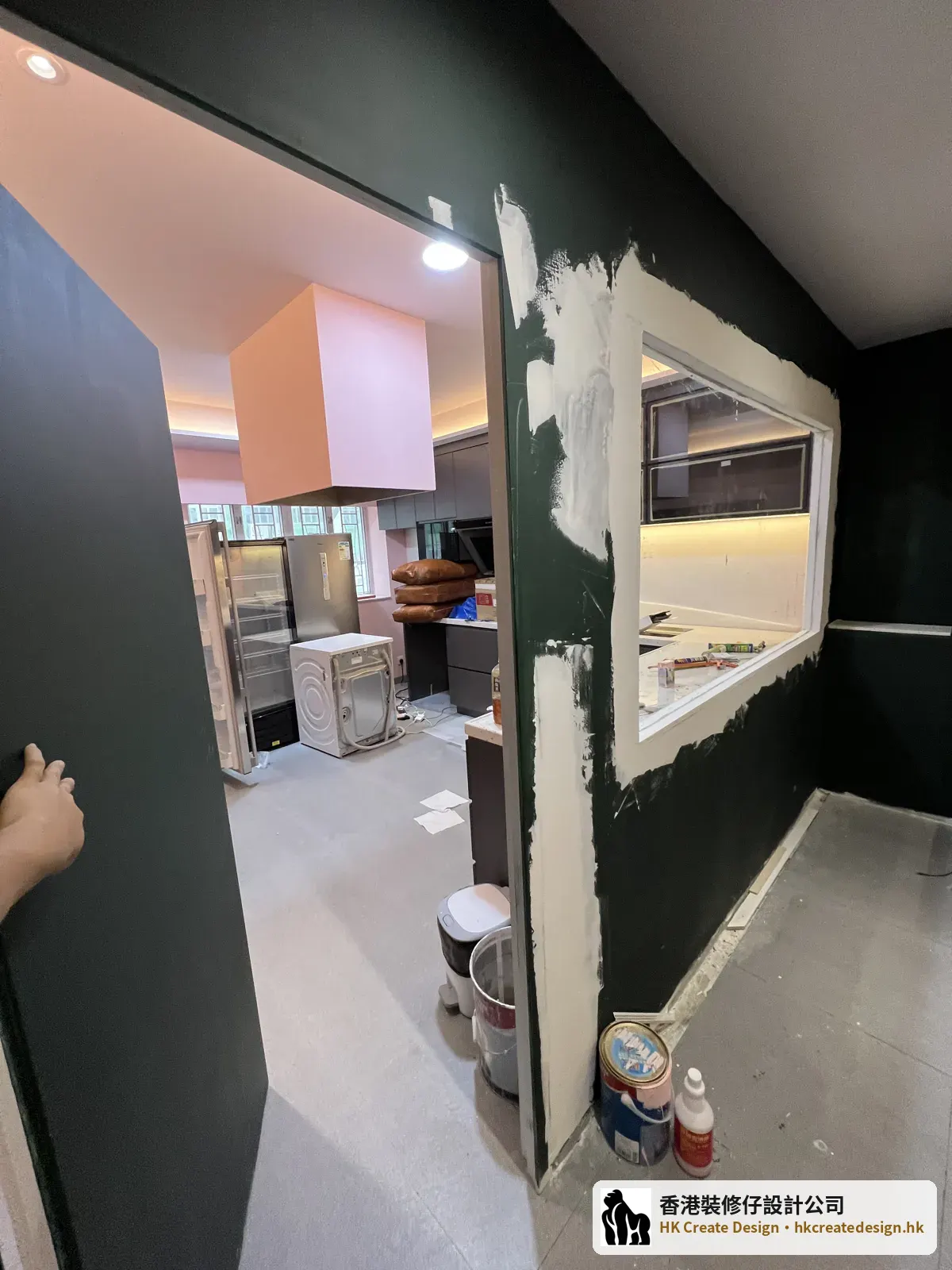
  • Dark green paint being applied to a wall with a concealed door
    Site photoHong Kong · Painting · November 2022
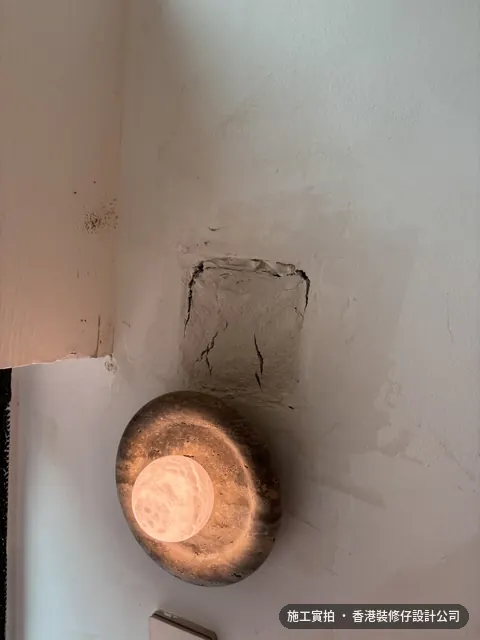
  • Wall repairs and skim coating at Treasure Spot Palace, Tai Po
    Site photoTreasure Spot Palace, Tai Po · Painting · June 2026
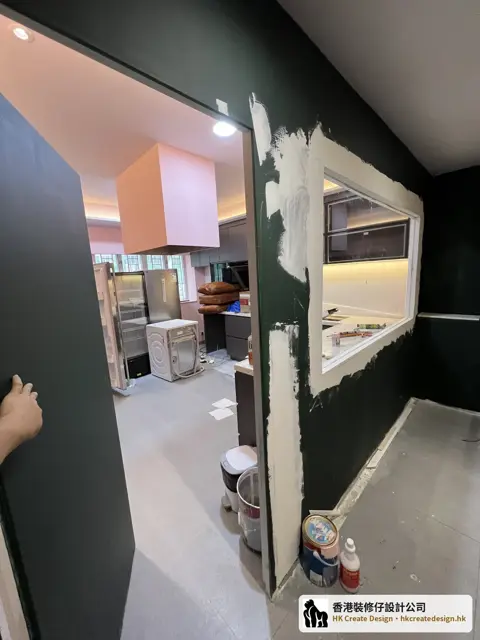
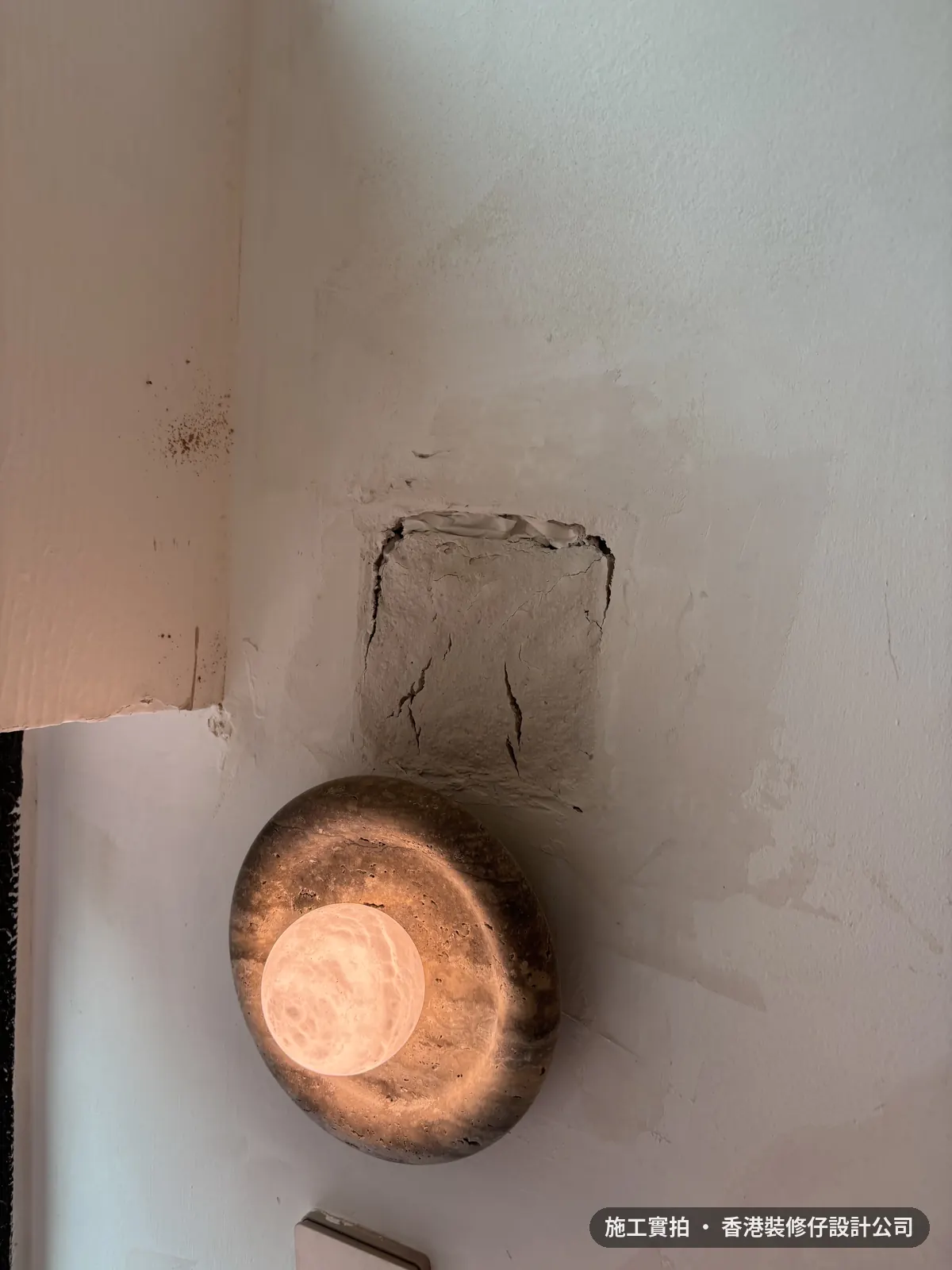
  • Wall condition before painting | HK Create Design
    Site photoHK Create Design painting project photos
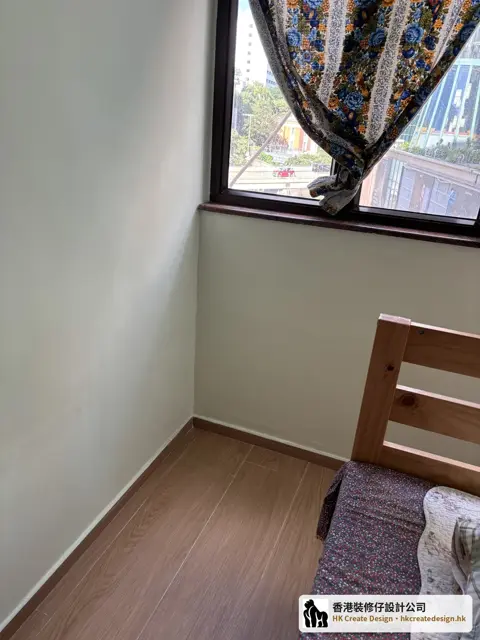
  • Wall condition before painting in Jordan | HK Create Design
    Site photoJordan · Painting · June 2026
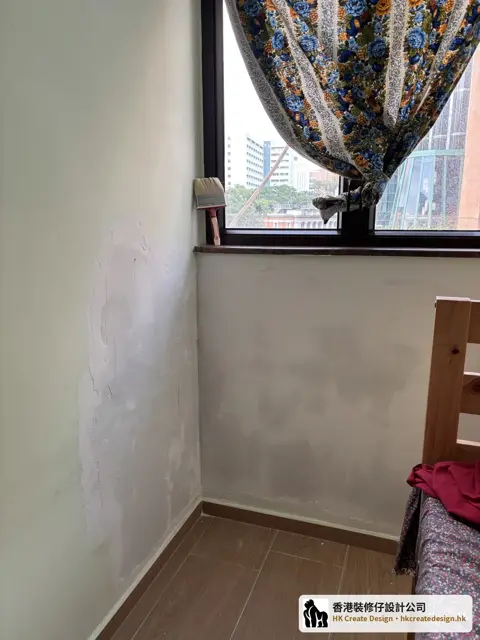
  • Wall skim coating and painting in Jordan | HK Create Design
    Site photoJordan · Painting · June 2026
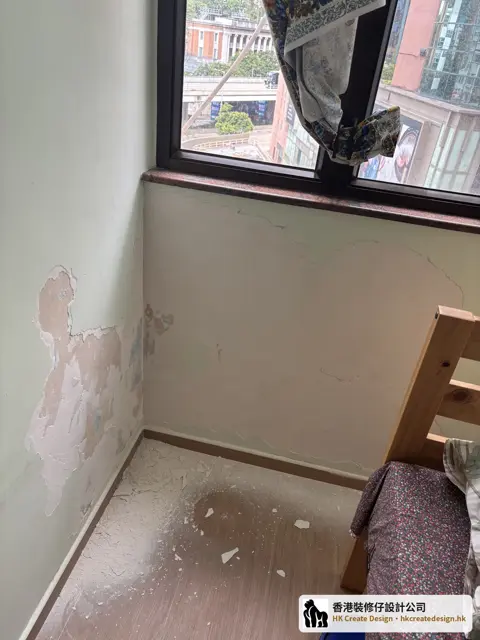
  • Wall condition before painting in Jordan | HK Create Design
    Site photoJordan · Painting · June 2026
See itemised budgets for three different wall conditions

WORKED EXAMPLE

Estimate your painting budget

Enter the figures of your organization and see the calculation of each step instantly; the results are for budget reference only, and the official price shall be based on the written quotation after measurement.

Budget for local wall repairs and repainting throughout a flat (E02)

  • Local repairs to existing walls include a moisture-resistant primer.
  • Use the saleable area × 3 to estimate the surface area of walls and ceilings.
  • E02 costs HK$21 per sq ft of surface treated, with a minimum charge of HK$4,650.
  1. Estimated wall and ceiling areaSaleable area × 31,500 sq. ft.
  2. Works cost calculated by areaExpanded area × HK$21HK$31,500

Reference painting project feeHK$31,500

Ceiling height, partitions and access behind cabinets affect paintable area. Furniture moving, extra coats for dark-to-light changes and leak repairs are separate. [1]

Budget for stripping and skim-coating a mouldy bedroom (E01)

  • This assumes there is no ongoing leak. The work includes stripping, skim coating, moisture treatment, sanding and painting.
  • Prices are based on the actual surface area of walls and ceilings.
  • E01 costs HK$39 per sq ft of surface treated, with a minimum charge of HK$7,450.
  1. Works cost calculated by areaExpanded area × HK$39HK$13,650

Reference painting project feeHK$13,650

If walls remain damp, resolve the seepage source first. Furniture moving and leak repair are separate. [1]

Budget for repainting a whole flat directly over existing paint (E03)

  • This assumes the existing paint is sound and only cleaning, filling nail holes, light sanding and two finish coats are needed.
  • Use the saleable area × 3 to estimate the surface area of walls and ceilings.
  • E03 costs HK$12 per sq ft of surface treated, with a minimum charge of HK$3,700.
  1. Estimated wall and ceiling areaSaleable area × 3900 sq. ft.
  2. Works cost calculated by areaExpanded area × HK$12HK$10,800

Reference painting project feeHK$10,800

A dark-to-light colour change may need an extra topcoat. Reassess preparation and price if old paint is peeling or mouldy. [1]

See whole-flat painting budgets for 300, 500 and 700 sq ft

HOW WE HELP

How can we help you

WhatsApp free consultation

Send the on-site photos, unit area and scope of what you want to do to WhatsApp 5243 7747 (https://wa.me/85252437747). Designers and masters with more than 15 years of renovation experience will share the plan with you for free. They will explain clearly what can be done and what needs to be checked first.

Limited-time free on-site measurement and professional advice

For work that needs an on-site assessment, our tradesperson can meet you to measure, inspect and explain the proposed work. On-site measurement is free through 31 December 2026 for two or more work items, with no deposit. After that, the HK$500 fee is credited against the order.

Specify the preparation and price for each wall.

We inspect the paint film and plaster on each wall and itemise area, repairs, primer and topcoat. Mould or water marks prompt an investigation of the source first.

Designer + follow-up by master with more than 15 years of experience

The designer is responsible for the scope and details, and the masters with more than 15 years of experience are responsible for judging the process and on-site quality. They take on all large and small projects, including demolishing one or two cabinets and building a wall.

Garbage removal and basic cleaning after completion

After every order is completed, the garbage will be removed, swept, and basic cleaning will be done. If deep cleaning or formaldehyde removal is required, the professional cleaning company will follow up. You do not have to hire another person.

AI quotation assistant with 117 public prices

Our 117 list rates are available through /calculator and /ai-quote for a preliminary budget. The final price is the written quotation after site measurement.

Estate Before / After

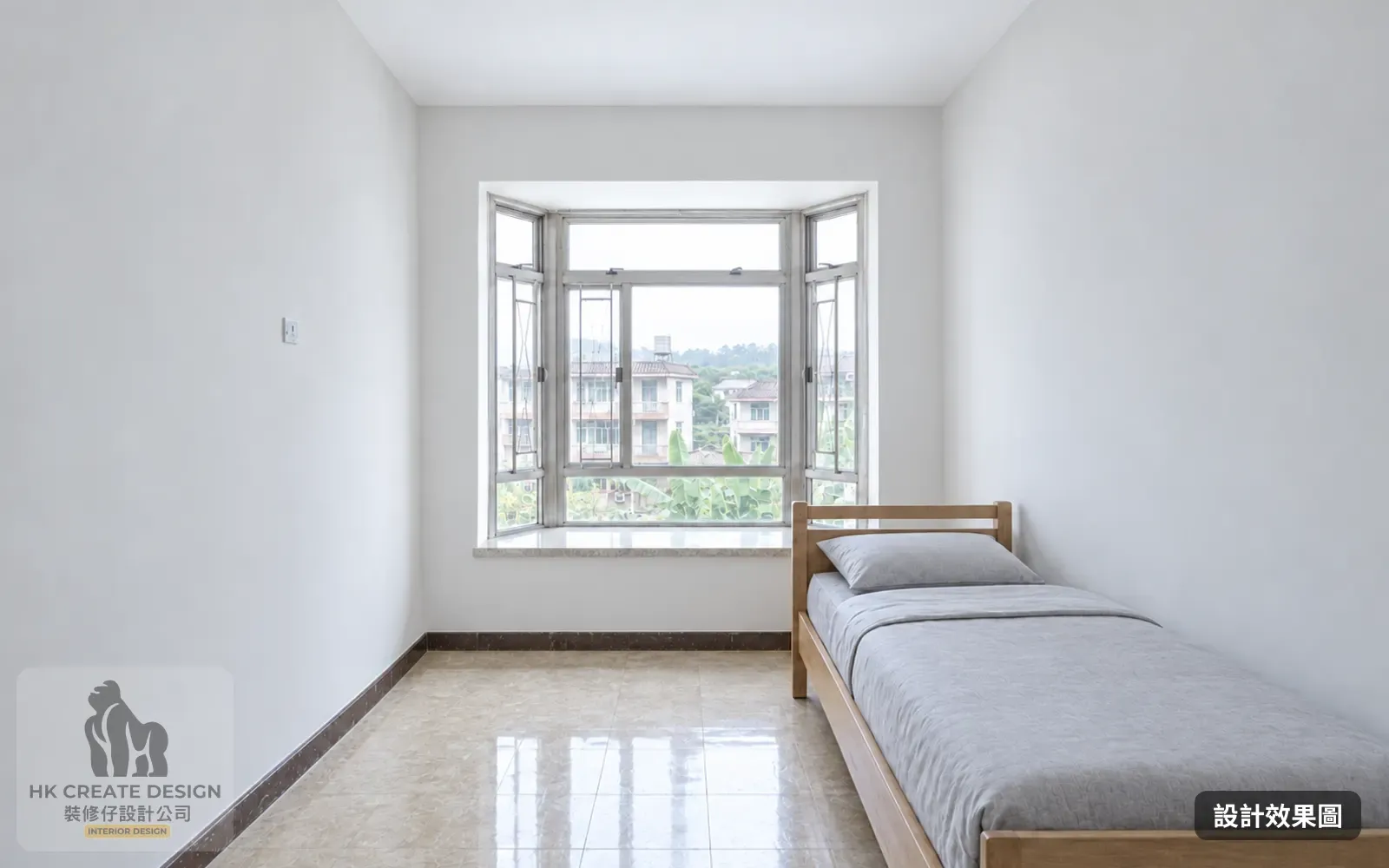
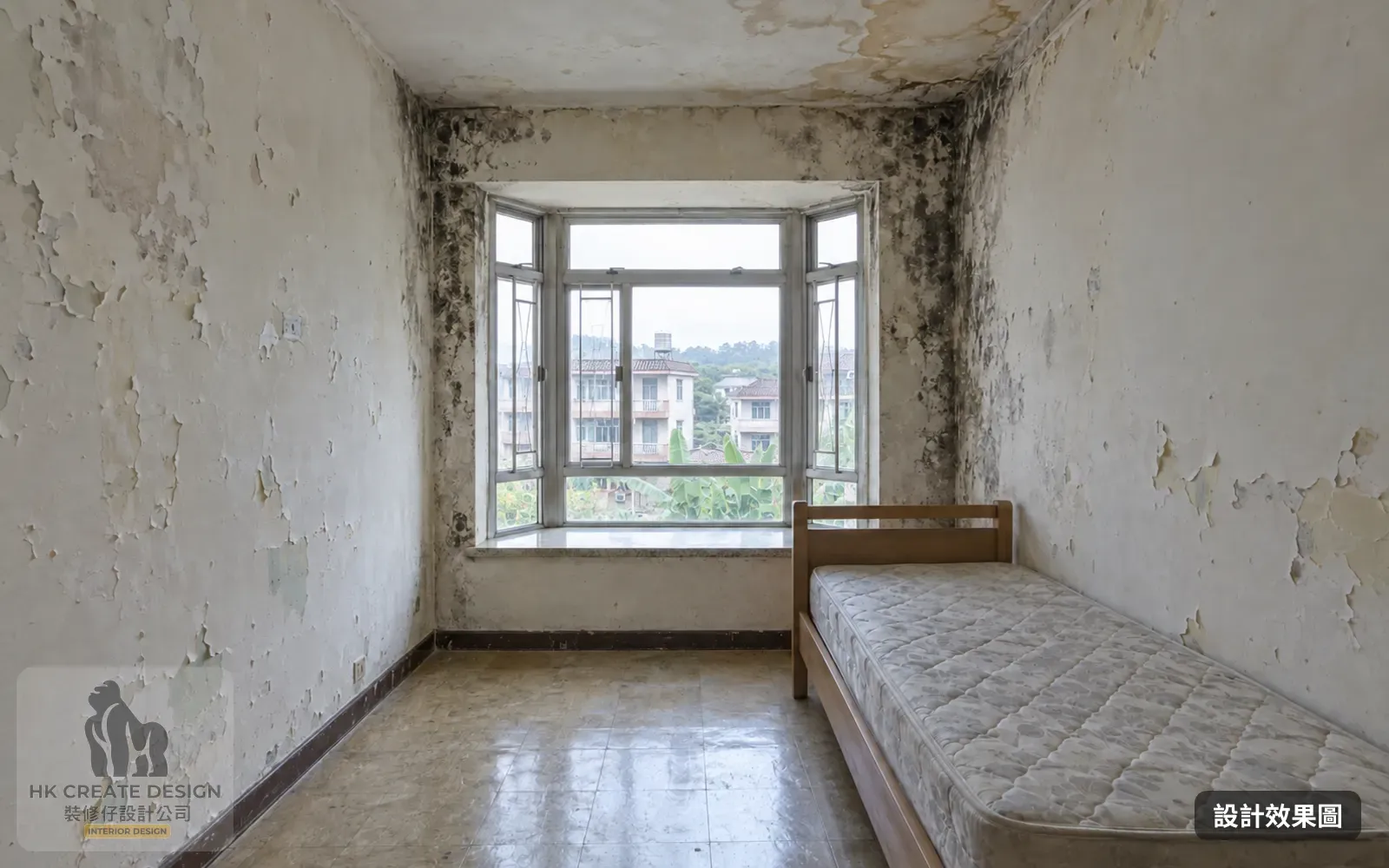
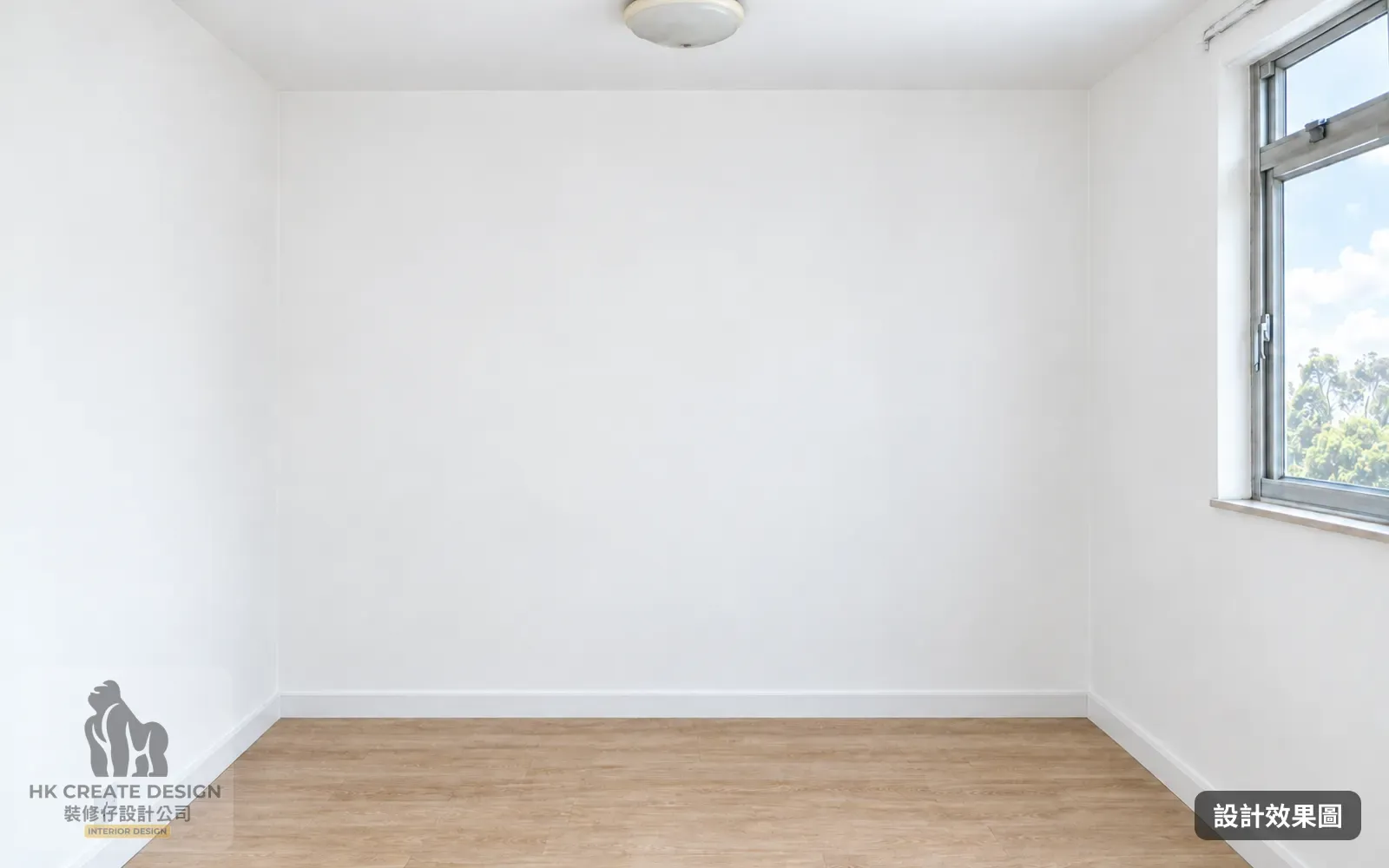
Design illustration of the same bedroom after skim coating and painting, with smooth white wallsIllustration before workIllustration of the proposed result
Design illustration · Design concept for Park Central: repainting, before and after from the same angle.(Park Central, Tseung Kwan O)

New Territories · Tseung Kwan OPaintingDesign concept

Park Central, Tseung Kwan O | painting

This painting example shows the sequence from stripping, skimming and sanding to two topcoats. Address the base first wherever paint peels or mould forms near windows.

  • Strip and skim
  • Moisture-proof primer
  • Two coats of topcoat
What work does this design involve? (6 steps)
  1. Register the painting project with the management office, move or wrap up the furniture, and cover the floor and window sills with protective film
  2. Strip peeling paint around the window back to sound plaster and treat mould before repainting
  3. Cracks and chipping in the wall should be repaired with dust, and then polished to make it smooth.
  4. Apply moisture-proof primer to the entire room, then apply two layers of topcoat, and strengthen the window edges.
  5. After the painting is completed, check the light position, joints and socket panel edges, and tighten the fine positions.
  6. Remove the protective film, remove trash and do basic cleaning
Ask about similar projects
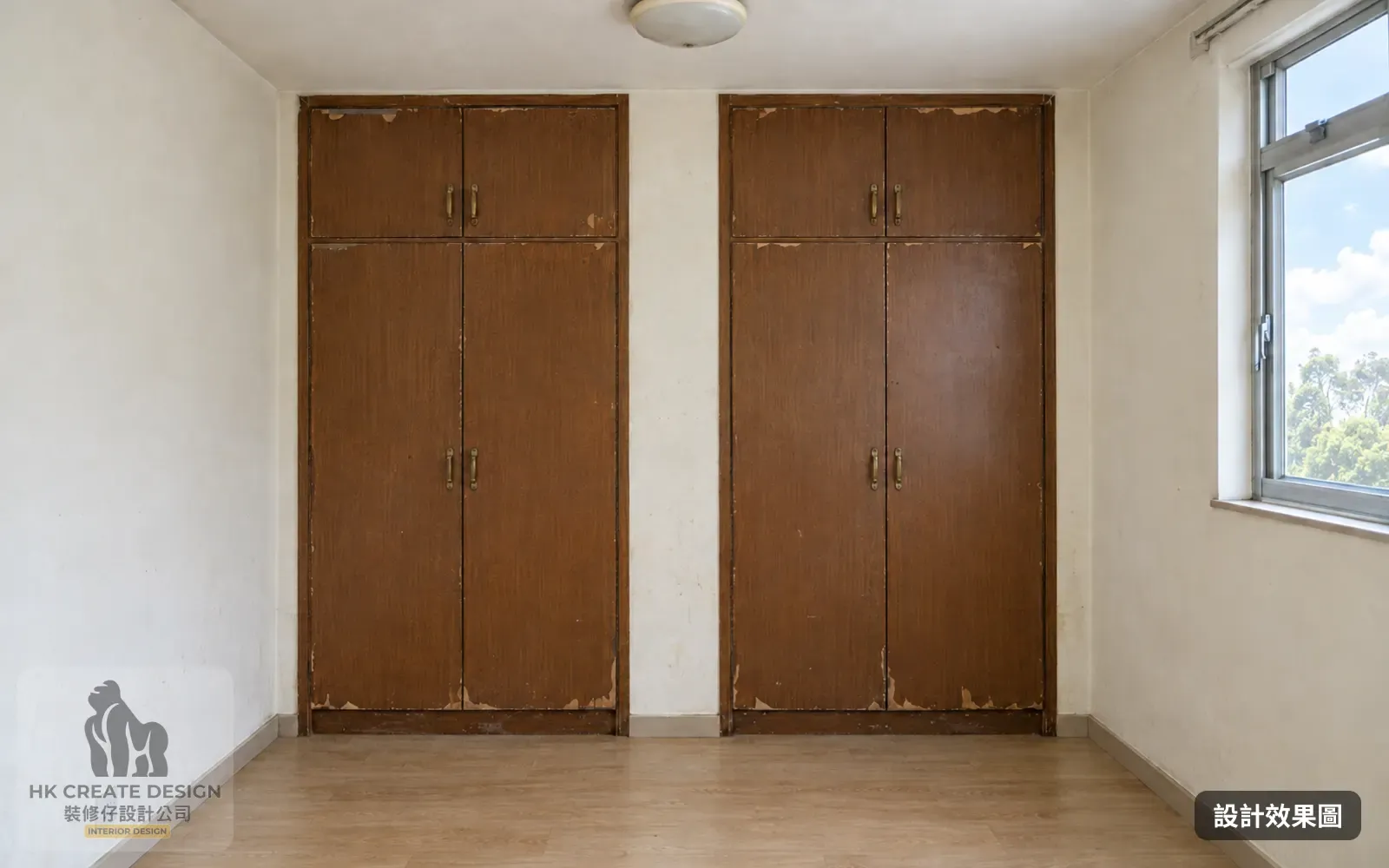
Illustration of the proposed result · After removal: The old wardrobes are gone and the wall has been repaired and repainted.Illustration before workIllustration of the proposed result
Design illustration · Design concept for Telford Gardens: cabinet removal, before and after from the same angle.(Telford Gardens, Kowloon Bay)

Kowloon · Kowloon BayMinor projects and cabinet removalDesign concept

Telford Gardens, Kowloon Bay | small works and cabinet removal

We can do all the detail work: remove one or two old cabinets, repair the walls and then repaint them, or even do the whole house.

  • Cabinet removal
  • wall repair
  • Painting
What work does this design involve? (6 steps)
  1. Come to your home to see clearly the fixing method and wall condition of two old wardrobes
  2. Floor protection, remove cabinet body, back panel and closing opening
  3. After the cabinets are removed, nail holes and chipped areas in the wall are repaired and polished.
  4. Apply moisture-proof primer and two layers of topcoat, consistent with the color of the nearby walls.
  5. New moldings were added, and the old cabinets were taken away with the scraps.
  6. Garbage removal and basic cleaning of the site, as well as detailed work are all covered.
Ask about similar projects
Design illustration of the same bedroom after skim coating and painting, with smooth white wallsIllustration before workIllustration of the proposed result
Design illustration · Design concept for Choi Hung Estate: repainting, before and after from the same angle.(Choi Hung Estate, Choi Hung)

Kowloon · Choi HungPaintingDesign concept

Choi Hung Estate, Choi Hung | painting

This painting example shows the sequence from stripping, skimming and sanding to two topcoats. Address the base first wherever paint peels or mould forms near windows.

  • Strip and skim
  • Moisture-proof primer
  • Two coats of topcoat
What work does this design involve? (6 steps)
  1. Before starting construction, check with the housing estate office to confirm the construction time and protect the corridors and doorways.
  2. Move the furniture to the middle of the room and wrap it with tape, and lay a protective film on the floor
  3. Scoop off the skin and mildew stains at the window and remove the mildew
  4. Catch the dust twice, sand it, apply moisture-proof primer and two layers of topcoat
  5. After completion, check the light position and socket panel edge position.
  6. Demolition protection, garbage removal and basic cleaning
Ask about similar projects
See more housing estate cases

KEY NUMBERS

Painting figures to check before work starts

company public price

HK$12/ sq. ft.

General schedule: direct repaint (E03)

The original paint film is firm: clean, patch holes, light sanding, and top coat 2 times; minimum purchase HK$3,700.

[1]

company public price

HK$21/ sq. ft.

General schedule: patch repairs and moisture-resistant primer (E02)

Local stripping of loose areas, crack and chip repairs, damp-resistant primer, sanding and 2 finish coats. Minimum charge HK$4,650.

[1]

company public price

HK$39/ sq. ft.

General schedule: deep preparation for peeling or mould (E01)

Suitable for peeling, moldy or water seeping walls; the source of water seepage must be dealt with first, otherwise it will recur after heavy oiling.

[1]

Factory technical information

13–15m²/liter/floor

Theoretical coverage of 2nd Generation Super 5-in-1

Nippon Hong Kong publishes theoretical area per litre per coat. Wall texture, porosity and colour changes affect actual consumption.

[9]

government/official

50/150g/liter

VOC upper limit for matte/non-matte paints

Under the Air Pollution Control (Volatile Organic Compounds) Regulations of the Environmental Protection Agency, the VOC content limit is 50 grams per liter for matte paint, 150 grams for non-matte paint; 200 grams for primer, sealing primer and mid-coat, and 250 grams for waterproof sealing primer (ready-to-use condition).

[7]

government/official

150→100g/liter

Government proposes tightening VOC limits for non-matt paints

A May 2026 Legislative Council paper proposed lower VOC limits for 22 regulated architectural paint categories, including non-flat coatings from 150 to 100 g/L and waterproofing sealers from 250 to 100 g/L. The proposed commencement was six months after gazettal.

[8]

government/official

1,205 cases

Consumer Council Complaints on Home Improvement Services 2017–2023

The Consumer Council reported 1,205 home renovation service complaints from 2017 to 2023 involving more than HK$270 million. Of 40 preliminary quotations assessed, only 28% gave quantities for each work item and 20% gave individual unit rates.

[5]

government/official

47,299 cases

The Joint Office received complaints about water seepage in buildings in 2024

Mold and peeling on walls are often related to water seepage. Information from the Development Bureau shows that the Joint Office received 47,299 complaints about building water seepage in 2024 and 39,555 in 2022.

[2]

CHARTS

Painting figures at a glance

Renovation and home maintenance complaints received by the Consumer Council(Unit: cases)
2024
400
2025
347
2026, January–September
352

These are the Consumer Council's published complaint figures by category. The January–September 2026 figure already exceeds the full-year total for 2025. The separate “furniture and furnishings” category recorded 779, 656 and 617 cases over the same periods. The figures cover more than painting and show that renovation disputes persist. [4]

Maximum VOC content of regulated construction paints (current)(Unit:g/liter)
matte paint
50
Faux stone paint or embossing primer
100
Non-matte paint
150
Primer, sealer and mid-coat
200
Waterproof sealing primer
250
Anti-rust coating
400

Current limits published by the Environmental Protection Agency are based on grams of VOC per liter of paint in ready-to-use condition. The government proposes to tighten 22 more categories in 2026, and the gazetted version will eventually prevail. [7]

FULL GUIDE

Painting guide: preparation, application and practical checks

What should be checked when walls blister or show water marks?

Record the wall, whether staining worsens after rain and whether it extends from a window corner to the skirting. At inspection we check loose paint and similar ceiling marks, then determine whether to investigate moisture or proceed with repairs and repainting.

After inspection, ask the painter to identify each stripping area, its size and preparation method. In the Consumer Council’s review of 40 preliminary renovation quotes, only 28% listed quantities for every task and 20% gave individual unit prices. Use those fields when checking your own quote.

[3][5]

Principle of paint: topcoat is only the outermost layer of skin

A painted wall typically comprises a render or concrete base, a levelling skim coat, a sealing or moisture-resistant primer and two or more topcoats. The topcoat provides colour, washability and mould resistance. Primer controls alkalinity and suction, promotes adhesion and evens out the colour. Skim coat fills minor surface defects. Failure in any layer can show through the paint.

So "reoiling" is not the same as "painting work". If the original paint film is strong and only old, yellow, or has nail holes, it can be cleaned, patched, lightly sanded, and then applied with two layers of topcoat. However, if it comes off when you scratch it with your fingers, or if it becomes empty when you tap it, directly applying oil will only cause the new paint to be thrown off along with the old paint. Determining the condition of the base is the first step in quoting a paint quote.

Latex paint is a water-based paint that relies on moisture to evaporate to form a film. If the weather is too humid and the ventilation is insufficient, the drying time will be prolonged. If it is repainted too quickly, it will easily wrinkle or leave marks. Therefore, the recoating time between each layer depends on the product's technical data, not your feelings.

Common causes of peeling, mildew, and bursting of walls

Peeling is mostly caused by water or a powdery layer in the base layer: the gray base under the old paint has loosened, or the wall has been wet for a long time, and the water vapor comes out from the entrance surface, causing the paint film to separate from the base layer. Mold occurs due to long-term high humidity and poor ventilation on the surface. Mold grows on the paint film; it is most common near windows, behind wardrobes, bathroom doorways, and inside exterior walls.

There are two types of cracks: Hairline cracks are mostly caused by applying dust too thickly, applying paint too quickly at one time, or the topcoat is not elastic; wider, directional cracks may be caused by hollow holes in the wall, loose walls, or even concrete problems that cannot be covered by paint alone. Yellow stains and watermarks are usually caused by water seepage or condensation. The source must be found first.

Common causes of water seepage listed by the Buildings Department include leaking pipes upstairs or in the unit itself, damage to the waterproof layer in the bathroom, and rainwater seeping through external walls or windows. If the wall becomes moldy due to water seepage, the source should be treated first (please refer to our waterproofing project page). Otherwise, deep treatment with E01 will only treat the symptoms.

  • Mold and blistering on the wall under the window: Most of them are caused by water seepage or condensation near the window
  • Oil on the wall at the bathroom door: Bathroom waterproofing or water seepage at the threshold
  • A large area of black mold behind the wardrobe: insufficient ventilation and the wall is attached to the exterior wall
  • A circle of yellow stains on the ceiling: water seeping upstairs, you need to find the source first
[3]

Which residential E01–E03 preparation method suits my walls?

The residential schedule has three levels. E03 direct repainting is HK$12 per sq ft, minimum HK$3,700. On sound walls, clean, fill nail holes, lightly sand and apply two finish coats. For dark-to-light colour changes, an additional coat costs HK$4 per sq ft. Suitable for rental handovers, colour changes and refreshing a sound finish.

The second level E02 moisture-proof polishing oil (HK$21/square foot, minimum HK$4,650): partially shovel away loose parts, repair cracks and chips, apply moisture-proof primer, sand and topcoat twice. Most units that are more than ten or twenty years old and have no obvious water seepage fall into this category.

E01 full preparation is HK$39 per sq ft, minimum HK$7,450. Strip old coatings to the plaster, apply moisture-resistant primer, skim two or three times, sand and apply two or three finish coats. It suits peeling, mouldy or previously damp walls. Standard topcoat is Nippon 5-in-1. For isolated mould on one or two walls, E05 costs HK$1,250 per wall face, excluding investigation of the leakage source. Standalone small-work call-outs have a HK$2,000 minimum.

[1]

Standard process: from protection to final topcoat

Before the official start of construction, protection must be done first: the floor should be covered with protective film or paper, furniture should be moved to the middle and wrapped, and switches, socket panels, window frames, and footings should be glued. Whether this step is done well or not will determine whether you want to be patient after it is completed.

Strip loose paint and powdery layers, remove dust, and treat mouldy areas and let them dry. Open suitable non-structural cracks into a V before filling and build up chipped areas in coats. Apply several thin skim coats in alternating directions, letting each dry before the next. A single thick coat can shrink and crack.

After polishing, use a side light to shine on the wall to see the concave and convex positions at a glance, and mark for re-approval. Then apply primer (moisture-proof or sealing primer), and then topcoat for at least two layers, with the factory recoating time between each layer. Finally, remove the paper glue, hold the edges, and clean.

The quotation identifies walls needing sealing, filling and priming. We apply thin coats of Nippon Odour-less Wall Putty to level residential walls, dry, sand and remove dust. Use a Nippon primer compatible with the substrate and topcoat and observe the manufacturer’s recoat times.

  • Protection → Shovel cleaning → Mildew removal → Repairing cracks and chips
  • Apply several thin skim coats, sand and inspect under raking light
  • Primer → First coat of topcoat → Second coat of topcoat
  • Tear off the tape, hold the edges, and clean the area
[12][11][9]

Skimming walls for a flat finish and durable repairs

Skimming determines much of the wall’s final flatness. Topcoats are thin, so unevenness, trowel marks and patches show under raking light after painting. Check the surface at the preparation stage.

After removing loose coatings, fill cracks and chipped edges. A thin first coat fills low spots. Allow to dry, sand and apply a second coat crosswise. Local patching treats only affected areas. After full stripping, the wall’s flatness determines whether a third coat is needed.

Nippon Odour-less Wall Putty is ready to use. The manufacturer recommends two or three thin coats at around 1–1.2 kg per m² per coat and at least 12–24 hours between coats at 25°C. We check each wall with raking light, touch up, sand and clear dust before applying a compatible primer.

Old tiles, hollow plaster and walls with seepage need a substrate inspection. Confirm soundness and dryness before choosing the substrate repair and painting system.

  • Crack repair: open a V-groove, remove dust, fill and dry.
  • First skim coat: fill depressions, allow to dry and coarse-sand.
  • Second skim coat: work crosswise, dry and fine-sand.
  • Apply a third skim coat if the wall needs it, then sand.
  • Inspect in raking light, touch up, remove dust and seal.
[12][11][1]

How to calculate paint area, and why it differs from saleable area

Painting is quoted by the actual wall and ceiling area. For a roughly 400 sq ft two-bedroom flat, saleable area × 3.5 gives about 1,400 sq ft of paintable surface. The general residential E01–E03 schedule uses × 3 for rough estimates. Enter measured wall and ceiling areas directly if available.

Factors that affect the area include: the height of the floor, the number of partitions (the more rooms there are, the more walls), the number of windows and doors, whether the back of the wardrobe and the top of the cabinet need to be painted, and whether there is a false ceiling or light trough on the ceiling. When looking at the quotation, you need to ask clearly about the area and quantity, whether the ceiling, the back of the cabinets, and the door frames are included. Otherwise, the "whole house paint" in the two quotations may not be in the same scope at all. The Consumer Council also recommends that the quotation should list the quantity and unit price of each process.

Under the general residential schedule, a 300 sq ft flat × 3 gives around 900 sq ft of paintable area. E03 direct repaint is about HK$10,800, E02 local repairs HK$18,900 and E01 stripping and skimming HK$35,100. We agree the work for each wall and confirm actual areas in the quotation.

[1][6]

Which topcoat suits living rooms, children’s rooms or rooms with new furniture?

For corridors and dining areas prone to handprints, standard Nippon 5-in-1 combines washability and mould resistance. The matt 2nd Generation Super 5-in-1 suits large walls. Once dry, wipe gently as the manufacturer advises.

For rooms with new cabinets where paint odour and formaldehyde are considerations, Nippon offers Formaldehyde-Buster Odour-less 5-in-1 with bamboo charcoal technology. The manufacturer says the film helps break down free formaldehyde. Maintain ventilation and consider emissions from furniture and building materials.

For handprints and stains near a desk, you can upgrade just the child’s room to Nippon Odour-less Kids Paint, Little Prince edition. The manufacturer reports Grade I stain resistance, useful on regularly cleaned surfaces.

[9][13][10]

What should a room-by-room Nippon quotation and handover cover?

For example, use standard 5-in-1 in living areas, bamboo charcoal Formaldehyde-Buster in a bedroom and Little Prince Kids Paint in a child’s room. Specify whether walls, ceiling or both are included in each room and itemise upgrade costs against the measured area.

Before handover, match product and colour codes on the tins to the quotation. In daylight, check each wall for consistent colour and neatly finished edges. Keep photos of labels and colour codes for touch-ups.

[1][9][13][10]

Choose colors with the same color difference: try the color on the real wall and decide first

The effect of a thin color card is far different from that of a large wall. Lighting, window direction, and floor color will all affect it. It is recommended to select two or three candidate colors, paint a small area of ​​each on the solid wall, and look at them day and night before making a decision. When changing from a dark color to a light color, you need to add an extra layer to cover it first, so the quotation must be written clearly.

There may be slight color differences between different batches of the same color number, so it is best to paint a wall with the same batch of paint in one go; we will keep photos of the empty cans or batch numbers so that the same color can be matched when painting in the future.

Click to see the quote from the painter

A painting quote should separate wall and ceiling areas, define whether work means repainting, local repairs or stripping, and identify the skim coats, primer and topcoat make, model and number of coats. State whether mould treatment, protection and cleaning are included. A single whole-flat painting price leaves room for extras or omitted coats.

Also ask about the treatment of mold and water seepage points. A responsible master will explain: The wall is still damp and the source must be checked first, otherwise there is no guarantee that mold will no longer occur. Our quotation will be listed separately with E01, E02, and E03, and the border wall will be used as the border to make it clear.

[5][1]

Choosing a painter: questions about preparation and application

Comparing only the price per square foot can be misleading. In the same 500 sq ft flat, direct repainting and full stripping and skimming involve different work and can cost several times as much. Ask how the painter assesses each wall, which preparation steps are included and which products are specified.

A painter should scrape and tap-test the wall to find loose paint and hollow plaster and check for residual damp, with a moisture meter where appropriate. For mould, discuss water stains outside periods of humid weather and investigate the source. Ask about walls and ceilings separately because overhead skimming and sanding take more work.

Our sequence is to protect the room, strip and clean, treat mould, repair cracks and chips, apply thin skim coats, sand, inspect in raking light, seal, apply two topcoats, finish edges and clear the room. We allow drying between stages and follow manufacturers’ skim coat and paint recoat times.

A useful quotation records the room area, preparation depth, skim coats, primer and paint models, coat counts, mould treatment and protection. A Consumer Council study found many renovation quotes lacked quantities and unit rates. A single lump sum can make disputes harder to resolve. We assign E01, E02 or E03 to each wall in writing.

Ask how the one-year warranty handles cracking, blistering and peeling, and how deliberate damage and underlying leaks are treated. We leave the product brand, model and colour code at completion for touch-ups.

  • Would this wall need direct repainting, local repair or stripping, and why?
  • How many skim coats, which filler and how long between application and sanding?
  • Which primer and topcoat brands and models will you use? How many topcoats?
  • Will you investigate seepage before treating mould?
  • What does the warranty cover and for how long?
  • Check whether the quote gives area, rate and preparation level for each room.
[5][1]

Sample acceptance: Side light and close inspection

It is best to perform the inspection in the sun or use a portable lamp to illuminate the wall from the side, so that you can first see the knife marks, waves and sandpaper marks. Viewed from the front one meter away, the wall surface should be smooth, evenly colored, and have no obvious joints; the yin and yang angles should be straight, and the boundary between the ceiling and the wall should be clear.

Check the details: whether there is oil on switches, sockets, window frames, and baseboards; whether there is oil leakage at the junction between the door frame and the wall; whether there is any paint on the back of the cabinet or on the side of the window. Check the same color number of the brand against the quotation, and keep photos of empty cans or batch numbers. If there are any problems, they will be marked on-site and will be handled once before completion.

  • There are no obvious knife marks or waves when illuminated by side lights.
  • The yin and yang angles are straight and there is no oil leakage
  • There is no oil on switches, baseboards and windows.
  • The brand color number is consistent with the quoted price, please keep the photo of the empty can

Common mistakes: Save a step and lose a big part

1. Repainting peeling walls leaves the new coating bonded to loose paint, which may peel within months. 2. Mould-resistant paint over untreated mould or moisture can blacken again. 3. One thick skim coat dries slowly and shrinks, making hairline cracks more likely.

4. Skipping primer: fresh cement-and-sand render is alkaline and absorbent. Without a sealer, alkali can mark the paint and the colour may be uneven. 5. Recoating too soon in damp spring weather can leave wrinkles or marks. Allow more drying time and control humidity. 6. Paint advertised to cover fine hairline cracks still needs larger cracks and chips repaired before application.

One-year paint warranty and how to report a defect

The one-year warranty runs from completion and covers cracking, blistering and peeling of wall and ceiling paint. Deliberate damage and underlying leaks or seepage are excluded. The written terms confirm coverage.

Photograph the affected area and send it to WhatsApp 5243 7747, stating the room and when the defect appeared. We review the photos and arrange an inspection and repair. If blistering is accompanied by staining, we also check for seepage before repairing the finish.

The warranty excludes deliberate damage, such as scratches or impact holes, and underlying leaks or seepage such as upstairs water ingress or a burst pipe. We can investigate the source and quote for repairs at a preferential rate. We leave brand, model, colour and batch label photos for future matching. You may also keep some leftover paint.

  • Warranty period: one year from completion
  • Includes cracking, blistering and peeling
  • Condition: deliberate damage excluded
  • Excludes underlying leaks or seepage. Remedial work may be quoted at a preferential rate.
  • Report defects to WhatsApp 5243 7747 with photos, room and affected area.

Maintenance: Spot to make the paint last longer

Avoid rubbing hard for the first one or two weeks after the new paint is finished; after that, just wipe it lightly with a damp cloth. Do not use cleaners containing bleach or strong solvents. In humid seasons, turn on a dehumidifier, maintain ventilation, and leave a small gap between the wardrobe and the wall to reduce mold.

Investigate blisters, water stains or local mould early. E05 covers local mould treatment and repainting, subject to a HK$2,000 minimum for standalone small-work visits. For cracking, blistering or peeling within a year, see the warranty claim instructions above. Washable topcoats suit homes with children or pets. We leave the brand and colour codes for touch-ups.

[1]

COMPARE

Compare painting methods

Three wall conditions: Should we take one step at a time?

wall conditionRecommended treatmentPublished residential unit rates for E01–E03No guarantee/please ask separately
The paint film is firm, only if it is old, yellow, or has nail holesClean, patch holes, lightly sand, and top coat 2 timesE03: HK$12/sq. ft. (minimum HK$3,700)Add a layer when changing from dark to light color; do not cover the bottom or remove mold.
Local cracks, chipping, and a small amount of loosenessPartial shoveling, crack repair, moisture-proof primer, sanding, and topcoat 2 timesE02: HK$21/sq. ft. (minimum HK$4,650)Expansion of the patch scope must be confirmed with a change order
After peeling, mildew, or water seepageDeeper bottoming, anti-mildew treatment, re-batch, primer, topcoatE01: HK$39/sq.ft.Repairs to the source of water seepage, units upstairs, and waterproofing layers are additional.

The unit price is calculated based on the expanded area of the wall plus ceiling; the actual scope is subject to on-site measurements and written quotation. [1][3]

Choosing a Nippon topcoat for residential interiors

Material choicesManufacturer-listed benefitsSuitable locations
Standard: Nippon 5-in-12nd Generation Super 5-in-1 has a washable matt finish with resistance to alkali and mould.Living and dining rooms, corridors and general whole-flat repainting
Upgrade: Formaldehyde-Buster Odour-less 5-in-1 with bamboo charcoal technologyThe manufacturer describes the film as helping break down free formaldehyde, with low odour and scrub resistance.Rooms with new cabinets where paint odour and formaldehyde are considerations
Upgrade: Odour-less Kids Paint, Little Prince editionThe manufacturer lists Grade I stain resistance, scrub resistance and GREENGUARD Gold certification.Children’s rooms, walls beside desks and surfaces prone to handprints

Standard and upgraded products are topcoat choices. Assess preparation separately on each wall for direct repainting, local repairs or stripping and skimming. [9][13][10]

Regulated VOC limits for architectural paints: current vs government recommendations

Paint categoryCurrent limits (g/litre)Recommended limits for 2026 (g/L)Common household uses
matte paint50File does not list changesLiving room, bedroom interior wall paint
Non-matte paint150100Semi-matt, glossy interior walls or wooden doors
Primer, sealer and mid-coat200100; external use 200New batch of bottom seal and moisture-proof primer
Waterproof sealing primer250100Wet area or exterior wall back sealing

See the EPD for current limits and the May 2026 Legislative Council paper for the proposals. The proposed commencement is six months after gazettal. Existing rules apply until amendments take effect. [7][8]

Theoretical coverage of Nippon interior topcoats

Nippon product modelTheoretical coverage per litre per coatRecommended topcoat count
2nd Generation Super 5-in-113–15 m²2 coats
Formaldehyde-Buster Odour-less 5-in-1 with bamboo charcoal technology14 square meters2 coats
Odour-less Kids Paint, Little Prince edition13–14 m²2 coats

These are manufacturer coverage figures. Measure walls and ceilings separately from saleable floor area. Colour changes, texture and absorbency affect paint consumption. [9][13][10]

Residential E01–E03 price examples, saleable area × 3

Saleable areaE03 direct repaint (HK$12 per sq ft)E02 patch, moisture-treat, sand and paint (HK$21 per sq ft)E01 strip, skim, moisture-treat, sand and paint (HK$39 per sq ft)Whole-flat upgrade to the specified Nippon Kids Paint: add HK$4 per paintable sq ft
300 sq ft flat, about 900 sq ft of paintable surfaceHK$10,800HK$18,900HK$35,100+HK$3,600
400 sq ft flat, about 1,200 sq ft of paintable surface at the general residential factor of 3HK$14,400HK$25,200HK$46,800+HK$4,800
500 sq ft flat, about 1,500 sq ft of paintable surfaceHK$18,000HK$31,500HK$58,500+HK$6,000

The table uses general residential E01–E03 rates. For an approximately 400 sq ft two-bedroom flat, select the two-bedroom option to compare four methods using × 3.5. Minimum charges are HK$7,450 for E01, HK$4,650 for E02 and HK$3,700 for E03. Furniture moving, wood door painting (E04 HK$1,650 per set) and seepage repairs are excluded. Ceiling height, partitions and cabinet access affect measured area. The final written quote follows measurement. Upgrading the whole flat to Kids Paint adds HK$4 per paintable sq ft. Single rooms, selected walls and the bamboo charcoal range are quoted by scope. Any extra E03 dark-to-light coat is shown separately. [1]

MATERIAL LIBRARY

Material analysis library

All specifications come from the manufacturer's public technical data; the numbers of different models in the same series may be different. Before placing an order, refer to the technical documents of the actual materials used.

Nippon Paint · interior wall paintStandard Nippon 5-in-1 topcoatThe washable matt finish of 2nd Generation Super 5-in-1 suits large residential wall surfaces.
Manufacturer’s stated features
Washable, alkali- and mould-resistant matt finish

Suitable for:Living and dining rooms, corridors and general whole-flat repainting

Not suitable for:Unrepaired major cracks or walls with ongoing water ingress

[9]
Nippon Paint · Interior topcoat upgradesNippon Formaldehyde-Buster Odour-less 5-in-1 with bamboo charcoal technologyThe manufacturer describes this low-odour interior paint as helping break down free formaldehyde.
Theoretical coverage
14 m² per litre per coat

Suitable for:Rooms with new furniture where a formaldehyde-reducing paint is preferred

Not suitable for:Assessing indoor air quality or replacing ventilation

[13]
Nippon Paint · Interior topcoat upgradesNippon Odour-less Kids Paint interior emulsion, Little Prince editionFor surfaces prone to handprints and stains. The manufacturer lists Grade I stain resistance and GREENGUARD Gold certification.
Wall finish
Matt, washable finish

Suitable for:Children’s rooms, study desks and bedside walls

Not suitable for:Timber furniture surfaces or walls affected by seepage

[10]

SITE SOP

Painting standards and handover checklist

The "shutdown checkpoint" requires you or the foreman to look at it and confirm it before proceeding to the next step. You can check items one by one during acceptance.

Company Site Code

Our paint application process

  1. 1. Determine the wall condition on siteshutdown checkpoint

    Scraping, knocking, and checking with a hygrometer to identify the oil, repair and redo parts of the shovel; if there are water stains, check the source of the water seepage first.

  2. 2. Protection

    Protect the floor, wrap the furniture, and apply glue to the openings and closings of the window frames and footings.

  3. 3. Shovel, clean and remove mold

    Shovel away the loose paint film and powdery layer, and remove mold from moldy areas first and let them dry.

  4. 4. Repair cracks and chips

    Open cracks to a V and fill them flush. Build up repairs to chips in layers and allow them to dry.

  5. 5. Criticize the bad things (praise the thin ones many times)shutdown checkpoint

    Apply thin coats of Nippon Odour-less Wall Putty in crossing directions and allow each layer to dry.

  6. 6. Polishing and side light inspectionshutdown checkpoint

    After polishing with sandpaper, shine a side light on the wall to mark the concave and convex areas for patching.

  7. 7. Two layers of primer + topcoat

    Choose a compatible Nippon primer for the wall and selected finish. Apply two topcoats at the manufacturer’s intervals. Add a coat for a dark-to-light change where quoted.

  8. 8. Guard the perimeter and clean the area

    Tear off paper glue, hold edges, remove garbage and basic cleaning, and hand in brand and color information.

Acceptance Checklist 0/5

[1][12][11]

Company Site Code

Skimming steps for E01 and E02

  1. 1. Shoveling and cleaningshutdown checkpoint

    Remove loose paint and chalking, then clear dust. For mould or water stains, treat the source and let the wall dry completely before preparing the substrate.

  2. 2. Repair cracks and chips

    Open cracks to a V-groove, remove dust and fill flush. Repair chips in layers, allowing each to dry.

  3. 3. First skim coat to fill depressions

    Fill low spots in thin coats. Follow the filler’s specified coat thickness. Standard Nippon Odour-less Wall Putty is applied in two or three thin coats, about 1–1.2 kg per m² per coat.

  4. 4. Allow to dry and coarsely sand

    Let the putty dry fully before sanding away trowel marks and high spots.

  5. 5. Second skim coat in a crosswise direction

    Work crosswise to the first coat to remove waves and joint marks.

  6. 6. Third skim coat for walls in poor condition where needed

    E01 stripped walls usually receive two or three skim coats. E02 fills only local repair areas.

  7. 7. Fine sanding and dust removal

    Use fine abrasive paper and brush or vacuum away the dust so the paint can bond.

  8. 8. Inspect in raking light and fill remaining defectsshutdown checkpoint

    Shine raking light along each wall. Mark uneven areas, fill and sand again.

  9. 9. Seal the prepared surface

    After sanding and dust removal, choose a compatible Nippon primer for the substrate and topcoat. Observe its recoat interval before painting.

Acceptance Checklist 0/5

[1][12][11]

DELIVERABLES

Painting quotation, colour records and warranty

Wall condition and treatment range table

Room by room, list the border wall processing and the same unit price for the area.

Brand color record

After completion, submit photos of the same brand, model, color and batch number, and you will be entitled to a refund if you paint in the future.

One-year warranty

We follow up cracking, blistering or peeling within one year of completion. The written warranty excludes deliberate damage and underlying leaks or seepage.

One wall, five layers of work

From concrete to topcoat, we take it apart layer by layer for you to see.

Many of the problems of "the oil doesn't last and comes off again" are actually caused by the topcoat. Looking down, you can see a wall being built layer by layer from cement, patching, primer, plastering to topcoat.

  1. 1st floor・base levelconcrete structure

    The wall itself. Before starting work, check for cracks, loose spots and traces of water seepage - if the base layer is unstable, the surface layer will be shaken off.

  2. Layer 2・RepairOptimix RM725 lightweight repair mortar (Hong Kong Housing Department Class 25)

    Spalled concrete, broken corners and exposed reinforcement require appropriate repair. Reinstate the surface in layers with repair mortar rather than concealing damage with filler.

    Single layer thickness: vertical ≤50mm; ceiling bottom ≤40mm; general ≥10mm

    Source:OPTIMIX RM725 Repair Mortar (HKHA Class 25) Data Sheet
  3. Layer 3・Back coverNippon Paint primer

    The painter selects a Nippon Paint primer to suit the wall and topcoat, and lists the product in the quote. If the wall still has water marks or active seepage, we first trace and deal with the water source.

  4. Level 4・LevelingCriticizing and leveling the dust

    Batch thinly, wait for drying, batch again, then polish and check with side light. The number of layers to be batched is determined according to the actual condition of the wall.

  5. Layer 5・Top coatNippon Paint 5-in-1 interior wall finish

    We specify Nippon Paint 5-in-1 as standard for internal walls. Living and dining rooms can be upgraded to the bamboo-charcoal anti-formaldehyde range. The Little Prince low-odour children’s paint is an option for children’s rooms. The quotation confirms the product, colour code and number of coats for each room.

    Source:Nippon Paint Hong Kong 5-in-1 product information

MATERIALS

Related materials: We know how to use them and can also help you with construction

  • Check walls, ceilings and furniture that need protection
  • Discuss local repairs or full base treatment
  • Confirm paint brand, product series and process
  • Set out maintenance, cleaning, repair and acceptance arrangements

BEFORE A SITE VISIT

Before the survey, you may wish to prepare these questions.

  1. 01

    Is the quotation based on wall surface area or the flat's saleable area?

  2. 02

    Does the quotation include treatment of old paint, loose plaster and cracks?

  3. 03

    Are materials, primer, topcoat and cleaning divided into items?

FAQ

Frequently asked questions

Why are paint quotations based on measured surfaces rather than saleable area?

Quotes use actual wall and ceiling area. For a roughly 400 sq ft two-bedroom flat, saleable area × 3.5 gives about 1,400 paintable sq ft. General E01–E03 examples use × 3. Ceiling height, layout and access behind cabinets affect the measured area. Confirm the final quotation on site.

If the wall is moldy, can I just apply anti-mold paint?

If it is still damp or has water seepage, it may still recur after surface treatment. The source of water seepage should be identified first. The Buildings Department also has guidelines for dealing with water seepage problems.

Five-in-one paint can cover cracks, but shouldn’t it be repaired?

What the manufacturer talks about is covering minor cracks; obvious cracks and chips still need to be repaired first, otherwise the topcoat will explode again.

How long does it take to paint a whole house?

Duration depends on the area and depth of preparation. Straight repainting is quicker. Stripping and multiple skim coats require drying between coats, especially during humid spring weather. We estimate the programme after inspecting the site.

How long will it take before I can move in?

Ventilate after painting and allow time for the film to dry. Airflow, humidity and new furniture affect move-in arrangements. Tell us your planned date when booking inspection. We show labour, drying and handover times separately.

Does it cost extra to change from dark to light?

want. When changing from dark to light color, you need to add an extra layer to cover it first. E03 can be directly repainted for an additional HK$4 per square foot.

Is it possible not to paint the moving furniture?

You can move the furniture to the middle of the room and wrap it up, but if the back of the cabinet is not painted, the quotation must be written clearly. The back of large built-in cabinets is usually not painted.

How much does the paint quote cost per square foot?

For a two-bedroom flat of about 400 sq ft saleable area, these indicative prices are per square foot of surface worked on. Direct repainting starts at HK$10, patch filling and repainting at HK$15–18, local stripping, patch filling and repainting at HK$22–26, and full stripping back to the cement at HK$35–40. See the general price list for standard residential E01–E03 work, unit rates and minimum charges.

Are there any laws regulating paint?

Yes. Regulated architectural paints in Hong Kong must comply with the Environmental Protection Agency's VOC content limits, such as 50 grams per liter for matte paint and 150 grams per liter for non-matte paint; the government proposes to tighten some categories in 2026.

How do painters charge for 300, 400 and 500 sq ft flats?

A 400 sq ft two-bedroom flat has around 1,400 sq ft of paintable surface. Direct repainting starts at HK$14,000, patching and repainting costs around HK$21,000–25,200, local stripping and patching around HK$30,800–36,400, and stripping all surfaces to cement around HK$49,000–56,000. Under the general E03 rate, direct repainting is about HK$10,800 for a 300 sq ft flat or HK$18,000 for 500 sq ft. The final written quotation reflects measured areas and wall condition.

Which Nippon topcoat is standard, and can I upgrade just one room?

Yes. Standard interior paint is Nippon 5-in-1. Optional upgrades include bamboo charcoal Formaldehyde-Buster and Little Prince Odour-less Kids Paint. Upgrading all painted surfaces under E01, E02 or E03 to the specified Kids Paint adds HK$4 per paintable sq ft. For one room, individual walls or the bamboo charcoal range, we quote by scope and itemise the model and price difference per room.

Is painting covered by a warranty, and what does it include?

Yes. For one year from completion, the written warranty covers cracking, blistering and peeling of wall and ceiling paint. Deliberate damage and underlying leaks or seepage are excluded. WhatsApp photos to 5243 7747 with the room and affected area. If blisters have water stains, we investigate the moisture source.

Which filler and primer do you use?

For residential walls requiring levelling we apply two or three thin coats of Nippon Odour-less Wall Putty as recommended. After sanding and removing dust, we specify a compatible Nippon primer for the substrate. The quote identifies primer, topcoat and number of coats. Resolve any water ingress first.

What would it cost to repaint this wall?

Start with a wide shot of the room and a close-up of peeling, cracks or stains. Without photos, tell us the room and whether walls or ceilings are involved.

We discuss the method that suits your wall condition. The written quotation and agreed terms confirm actual paintable area, cost and warranty.

Send wall photos for a painting estimate Leave your information and make an appointment for follow-up

Free site measurement through 31 December 2026 for two or more work items, with no deposit. After that, the HK$500 fee is credited against an order. Online estimates and enquiries are free.

Sources

  1. CompanyHK Create Design 2026 detailed project budget and public price list · HK Create Design· Accessed 2026-11-01
  2. Official sourceLegislative Council Question 14 on the Joint Office for Investigation of Water Seepage Complaints, 2 July 2025 · Development Bureau (Hong Kong Government Press Release)· Accessed 2026-11-01
  3. Official sourceFrequently Asked Questions about Water Seepage · Buildings Department· Accessed 2026-11-01
  4. Official sourceComplaint numbers · consumer council· Accessed 2026-11-01
  5. Official sourceConsumer Council proposes 4 measures to strengthen regulation of the home renovation industry (21 February 2024) · consumer council· Accessed 2026-11-01
  6. Official sourceThe renovation quotation should be detailed and teach you one by one in the 12 major areas. · consumer council· Accessed 2026-11-01
  7. Official sourceVolatile organic compound content limits for regulated architectural paints · Environmental Protection Department· Accessed 2026-11-01
  8. Official sourceLegislative Council Panel on Environmental Affairs: legislative proposals relating to air quality, 29 May 2026 · Legislative Council· Accessed 2026-11-01
  9. ManufacturerNippon 2nd Generation Super 5-in-1 interior emulsion product page · Nippon Paint Hong Kong· Accessed 2026-11-22
  10. ManufacturerNippon Paint Odour-less Kids Interior Emulsion Paint product page · Nippon Paint Hong Kong· Accessed 2026-11-22
  11. ManufacturerNippon Paint Odour-less Primer (Interior) product page · Nippon Paint Hong Kong· Accessed 2026-11-22
  12. ManufacturerNippon Paint Odour-less Wall Putty · Nippon Paint Hong Kong· Accessed 2026-11-22
  13. ManufacturerNippon Paint Formaldehyde-Buster Odour-less Five-in-One Interior Emulsion (Bamboo Charcoal Formula) · Nippon Paint Hong Kong· Accessed 2026-11-22

Why talk to HK Create Design?

Understand your Painting and wall repairs before you decide.

Start with the current condition

Check the wall condition and any damp first. Compare what each quote covers for stripping, repairs, filling and painting before comparing totals.

Compare the budget line by line

Use online rates and calculators as an initial reference. Confirm site conditions, exclusions and the final price in a written quotation.

View project calculators ↗

Project photos and a local showroom

Browse photos of our projects or book a meeting at our Wong Tai Sin showroom and bring your plans. The written agreement sets out acceptance and warranty terms.

View project photos ↗ Showroom details ↗