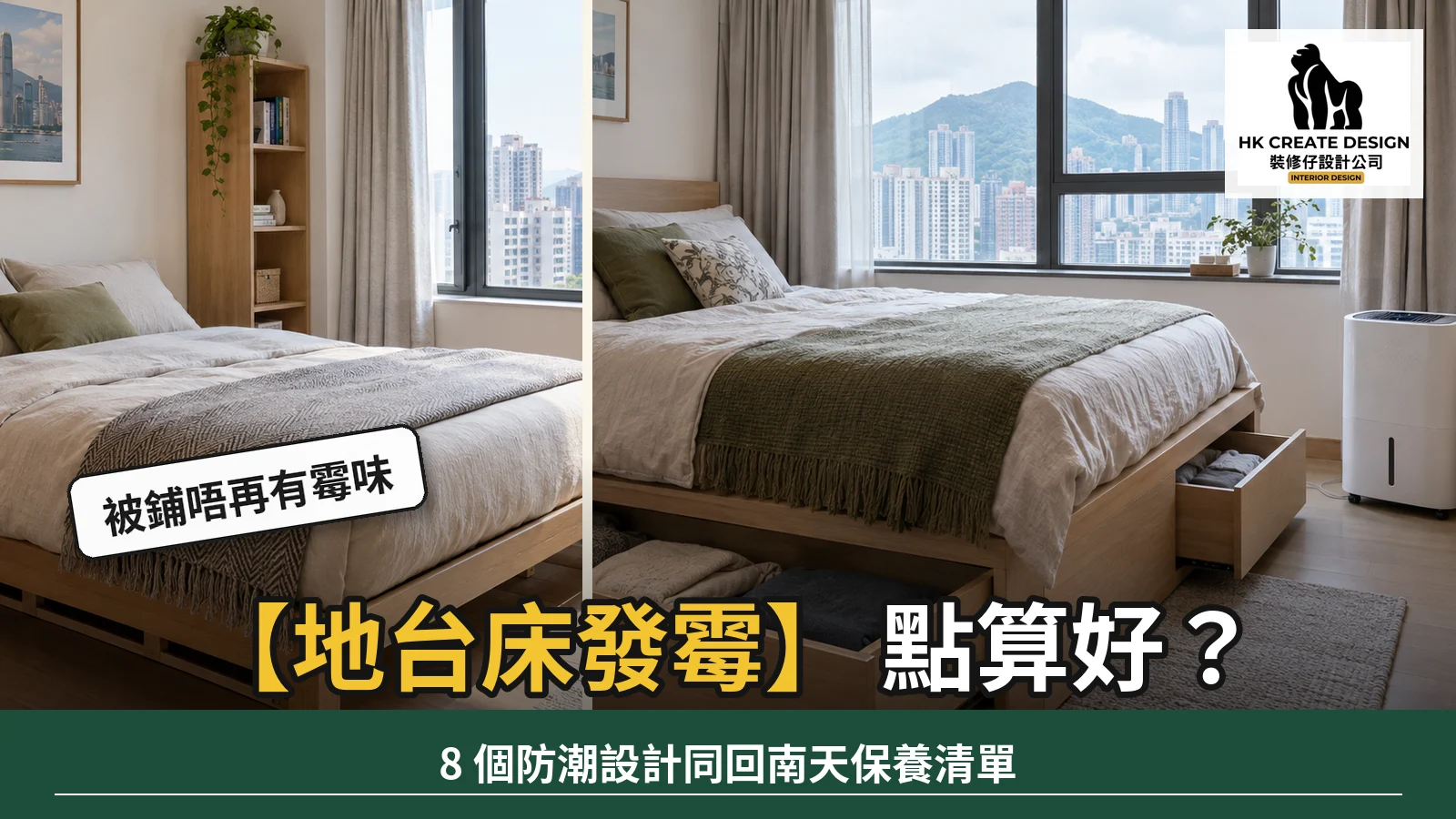
01
Why platform beds are prone to mould
Moisture, nutrients and stagnant air create conditions for mould growth.Platform bedscan have all three conditions: humid indoor air, nutrients in bedding, clothes, cardboard and dust, and limited airflow inside closed compartments.
The second factor is floor proximity. The underside of the platform sits near a cooler surface where humid air can condense. Ground floors, village houses and coastal flats can experience more floor-level moisture.
The third factor is infrequent opening. Wardrobes are opened daily, but a lift-up compartment may stay closed for months. Trapped moisture can cause a musty smell by the time it is reopened.
Aim to reduce moisture and material mould can grow on while improving airflow. These principles inform both design and maintenance.
- Moisture
- Nutrients
- Poor airflow
- Condensation can form close to the floor
- Rarely opened compartments can trap moisture
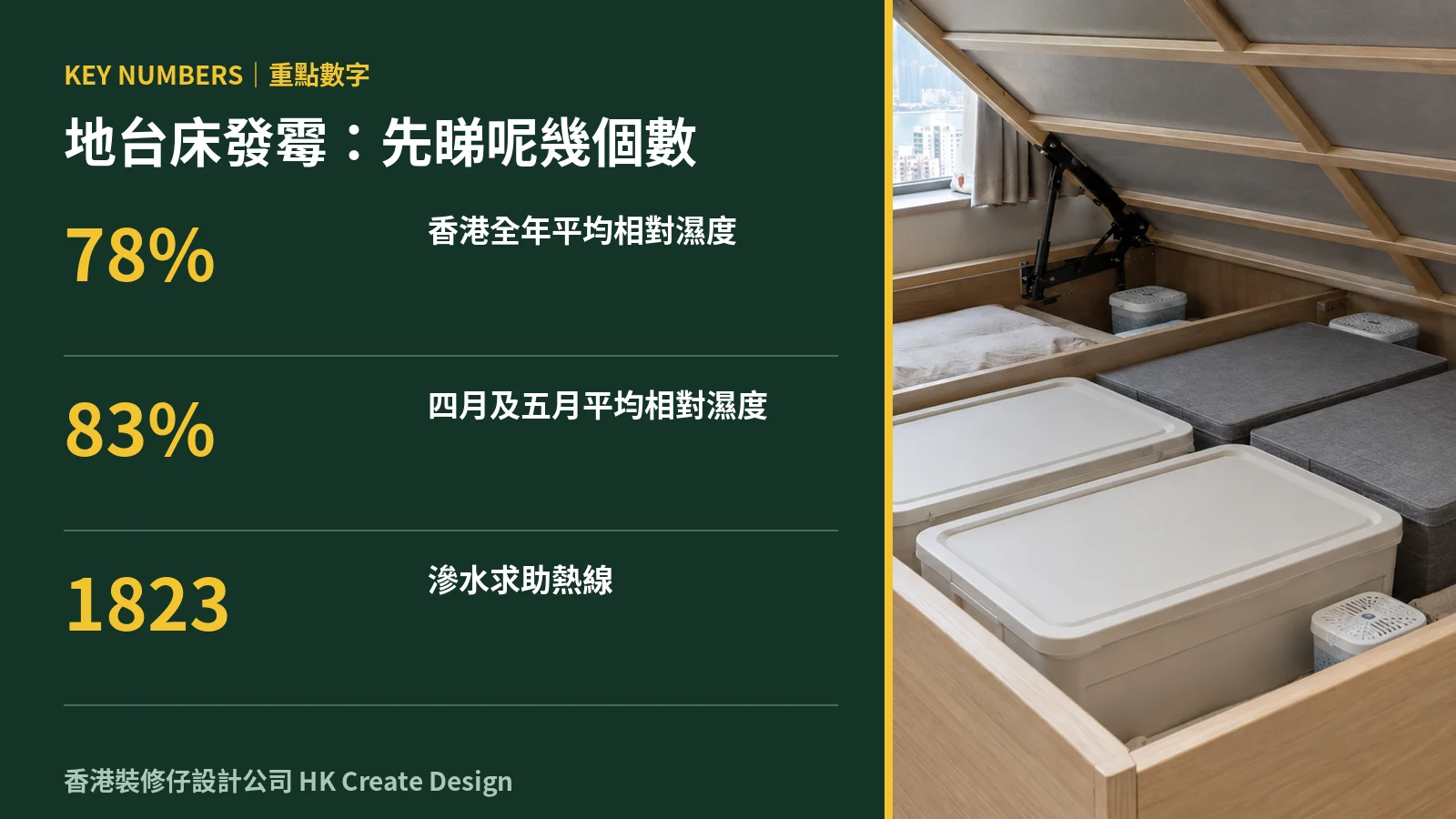
- 78%Year-roundAverage relative humidity
- 83%April and MayAverage relative humidity
Hong Kong Observatory.
02
Hong Kong humidity: which months pose the greatest risk?
Hong Kong Observatory 1991–2020 climate normals give average annual relative humidity of around 78%, rising to 83% in April and May[2]. In humid spring weather, warm moist air condenses on cooler floors and walls. The underside of a platform bed and wall corners are particularly exposed.
Summer is humid, but air conditioning removes some moisture. Damp spring days before residents start using air conditioning can pose a greater mould risk.
Drier autumn and winter weather is suitable for cleaning the compartments and airing bedding. Empty and wipe them out, then leave them to ventilate for a day or two before refilling.
- Annual average: 78%
- 83% in April and May
- Highest risk in humid spring weather
- Autumn and winter are good times for cleaning
03
Design detail 1: panels and edge banding
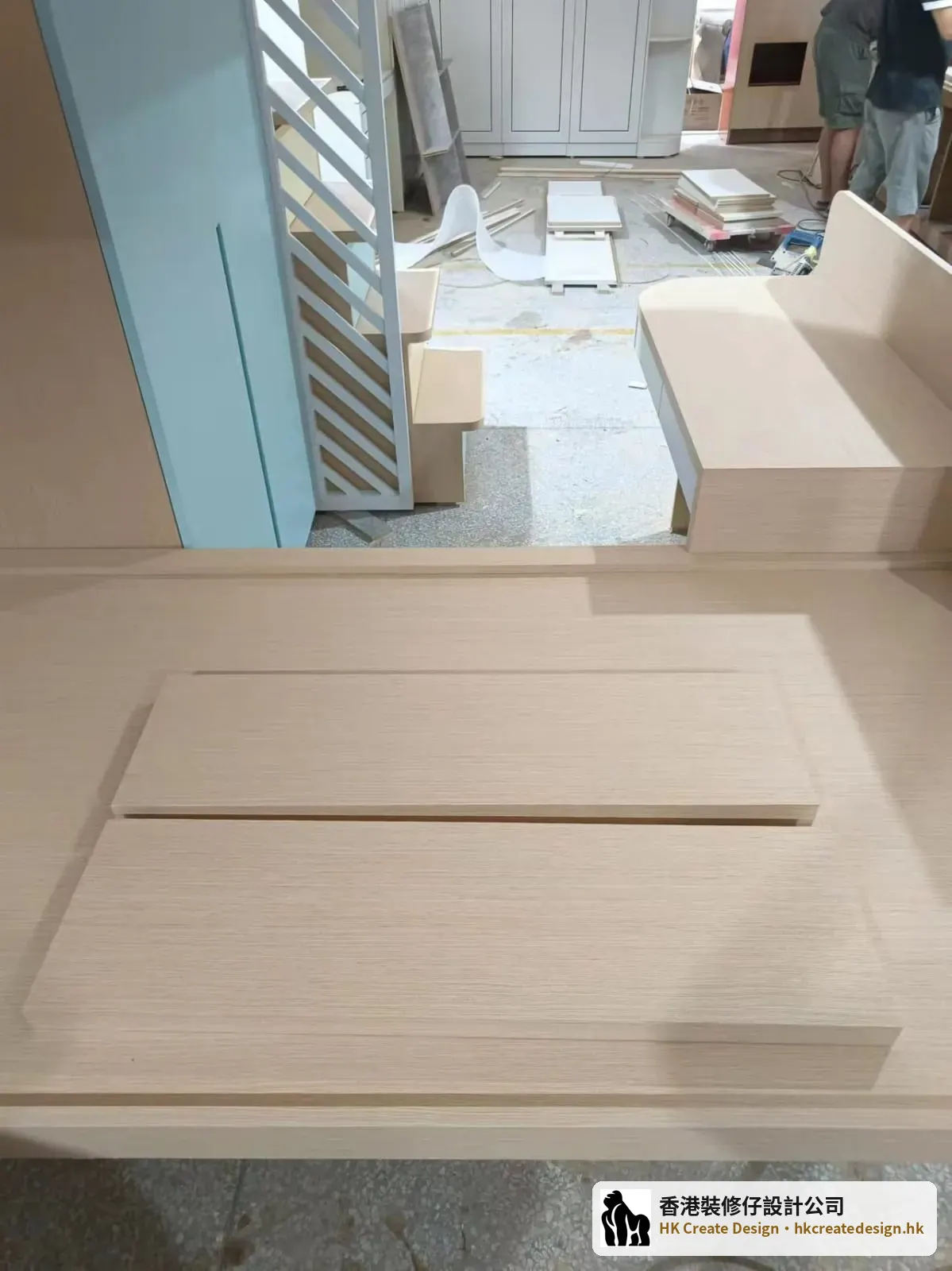
Water entering an unsealed panel edge can swell or deform the core and blister the surface. Band every cut edge, especially the base and rear panels close to the floor.
HK CreateDesign platform beds use 18 mm panels with PVC banding on cut edges[1]. At handover inspect each corner for loose or missing edge banding and address defects promptly.
Panel formaldehyde emissions also matter, as higher humidity can increase emissions from adhesives. Under national standard GB/T 39600-2021 the ENF limit is ≤0.025 mg/m³[5]. HK CreateDesign supplies ENF-grade board as its standard specification.
- Seal all cut edges
- Pay particular attention to the base and back panels
- 18 mm board with PVC edge banding
- ENF-grade boards as standard
You can swipe left or right on your phone to view the complete table.
| Cause | Example | Measures |
|---|---|---|
| Moisture | Humid spring conditions and contact with the floor | Closed-window dehumidification and a raised base |
| Nutrients | Bedding, cardboard and dust | Use storage bags and avoid cardboard |
| Poor airflow | Rarely opened lift-up compartments | Vents, drawers and hydraulic lifts |
| water seepage | External walls or an upstairs bathroom | Trace and repair the source first |
Compiled by HK Create Design. [2]
- MoistureHong Kong has a humid climate.
- NutrientsBedding, cardboard boxes and dust.
- Poor airflowPlatform compartments are seldom opened.
「During measurement I check the wall first. Water stains or blistered paint need investigation. Covering them with furniture lets the problem worsen out of sight.」
04
Design detail 2: provide ventilation openings
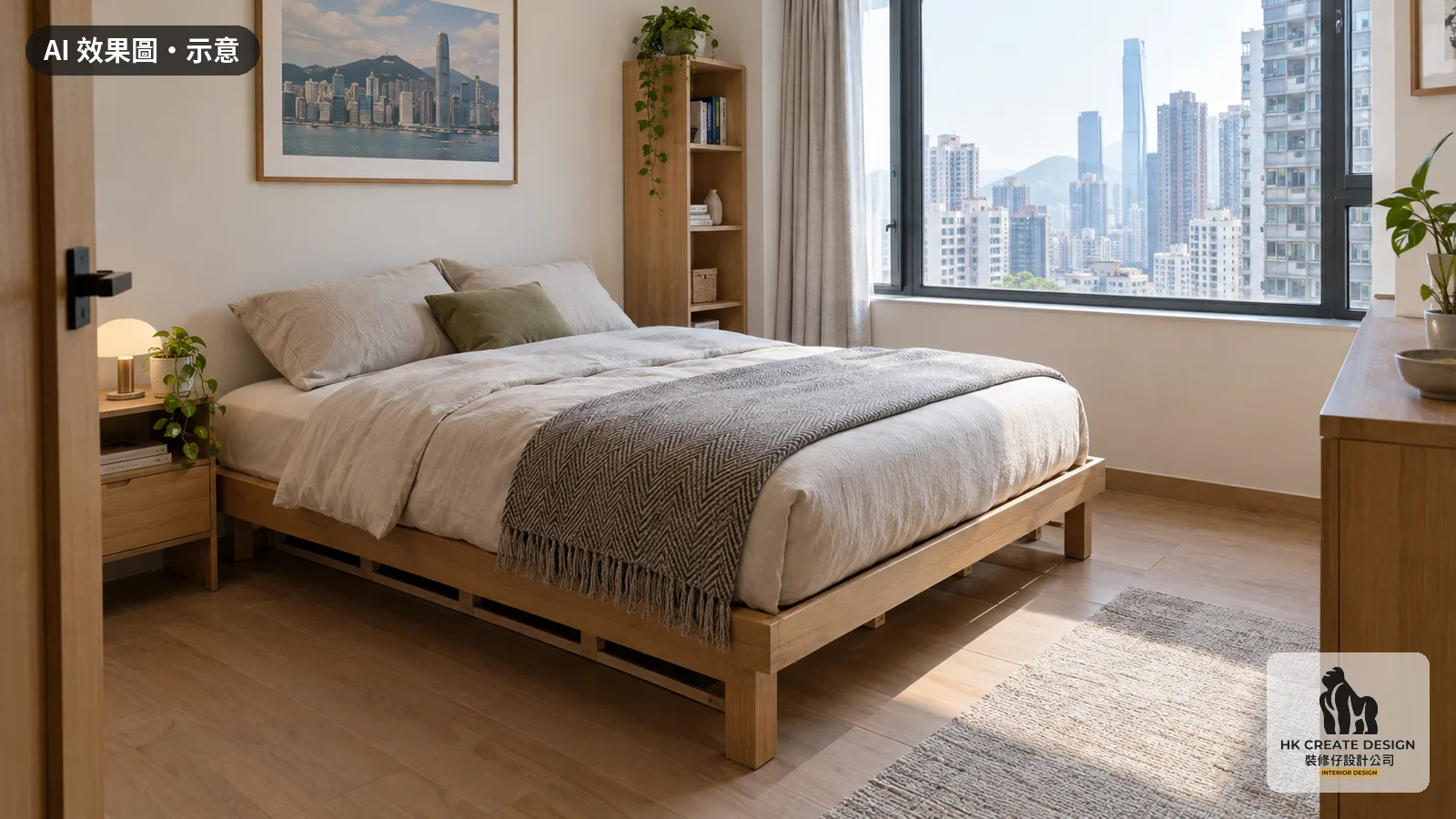
A fully sealed compartment traps moisture. Provide vents in the side or plinth or air passages between compartments to allow some movement.
Vents can be small if they create a path for air to circulate. Keep openings clear of bedding storage and consider small holes to reduce dust and insect entry.
If an air conditioner, fridge or another heat-producing appliance is near the platform storage, allow for heat dissipation and ventilation. Keep appliances and bedding out of the same sealed compartment.
- Avoid sealing it completely
- Ventilation openings in the side or plinth
- Small openings help keep out dust and insects
- Keep clear of heat-producing appliances
- Edge bandingSeal every cut edge.
- BreathableProvide ventilation openings.
- Distance from the wallLeave a gap behind the back panel.
- Height above floor levelKeep the base panel clear of the floor.
05
Design detail 3: leave clearance from a problem external wall
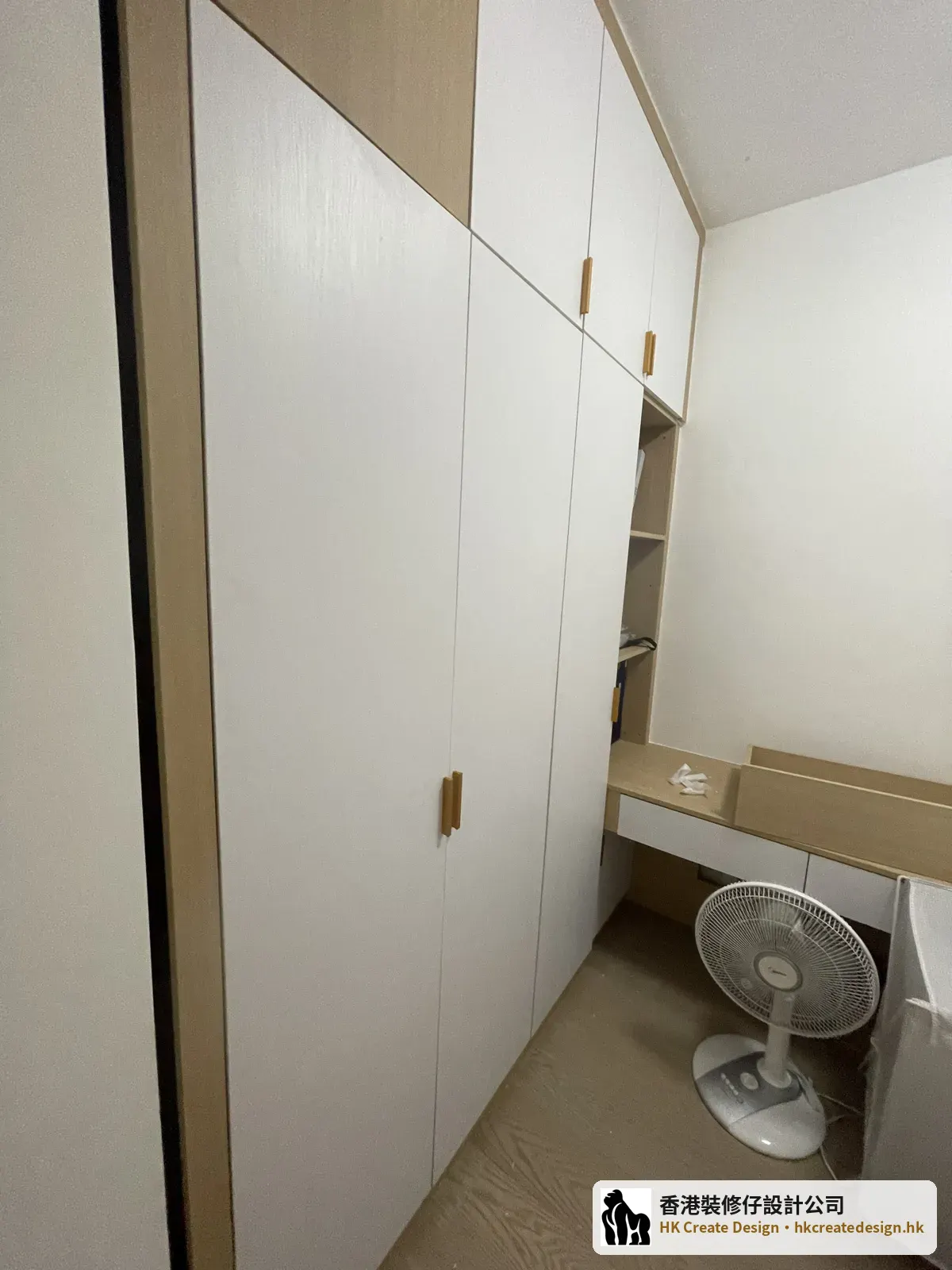
External walls, window sills and walls shared with bathrooms are common seepage locations. Panels fitted directly against them can absorb seepage or condensation.
A small gap between the rear panel and wall allows air movement and makes later inspection easier. During measurement the designer checks for water stains, blistered paint and mould. Resolve any problem before installing furniture.
Check the sill and window perimeter seals. Ageing seals may let rainwater run down the wall onto the platform. Look for signs of seepage before fitting the bed.
- External walls can suffer seepage
- Leave a gap behind the back panel
- Check the walls before measuring
- Ageing window perimeter seals
06
Design detail 4: drawers or lift-up compartments
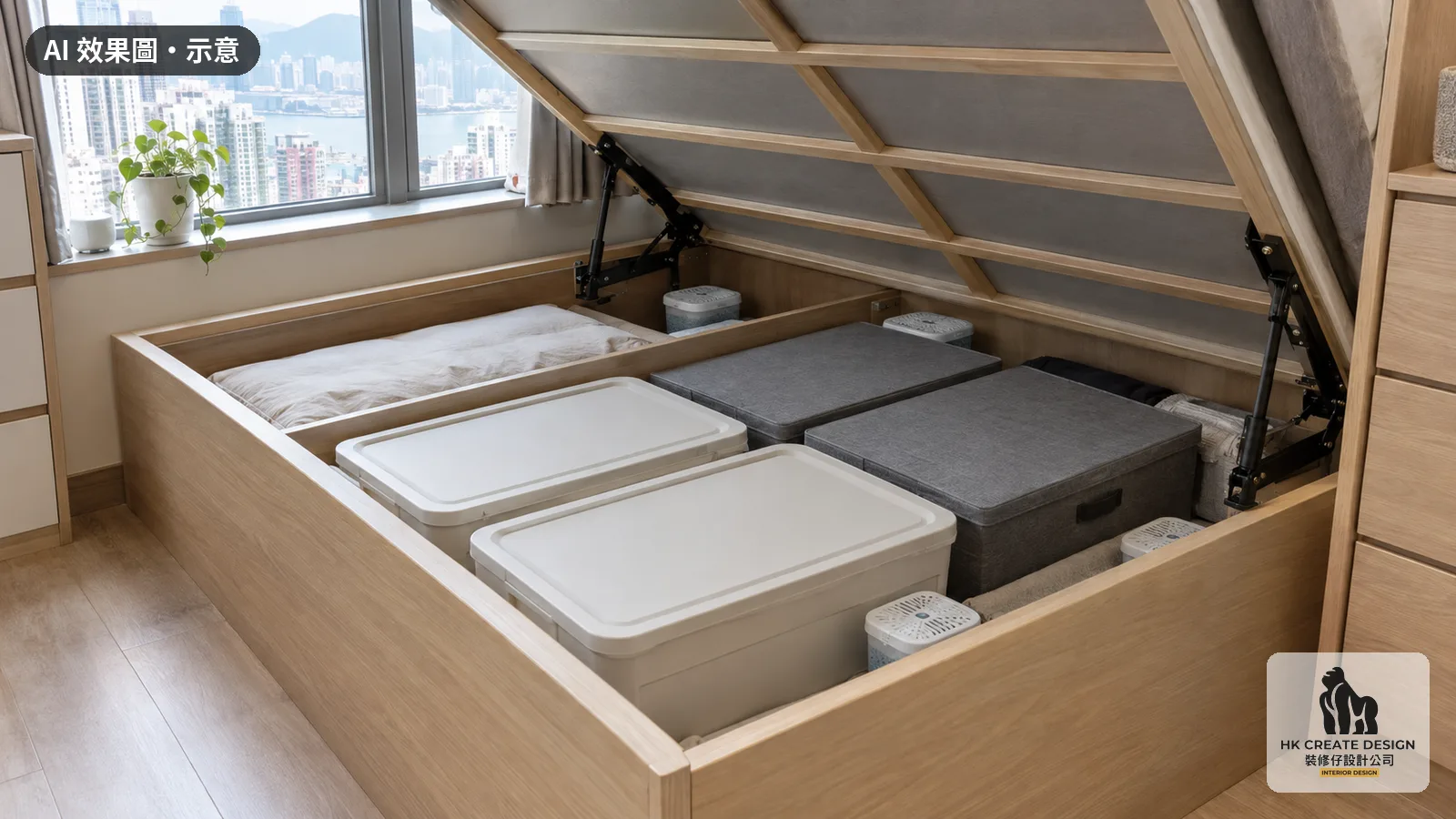
Lift-up compartments offer more capacity, but infrequent opening can trap moisture. Frequently opened drawers allow more air to circulate.
Use drawers for frequently worn clothes and towels. Keep bedding and seasonal clothes in storage or vacuum bags in lift-up compartments. Avoid cardboard and documents beneath the platform because paper readily absorbs moisture.
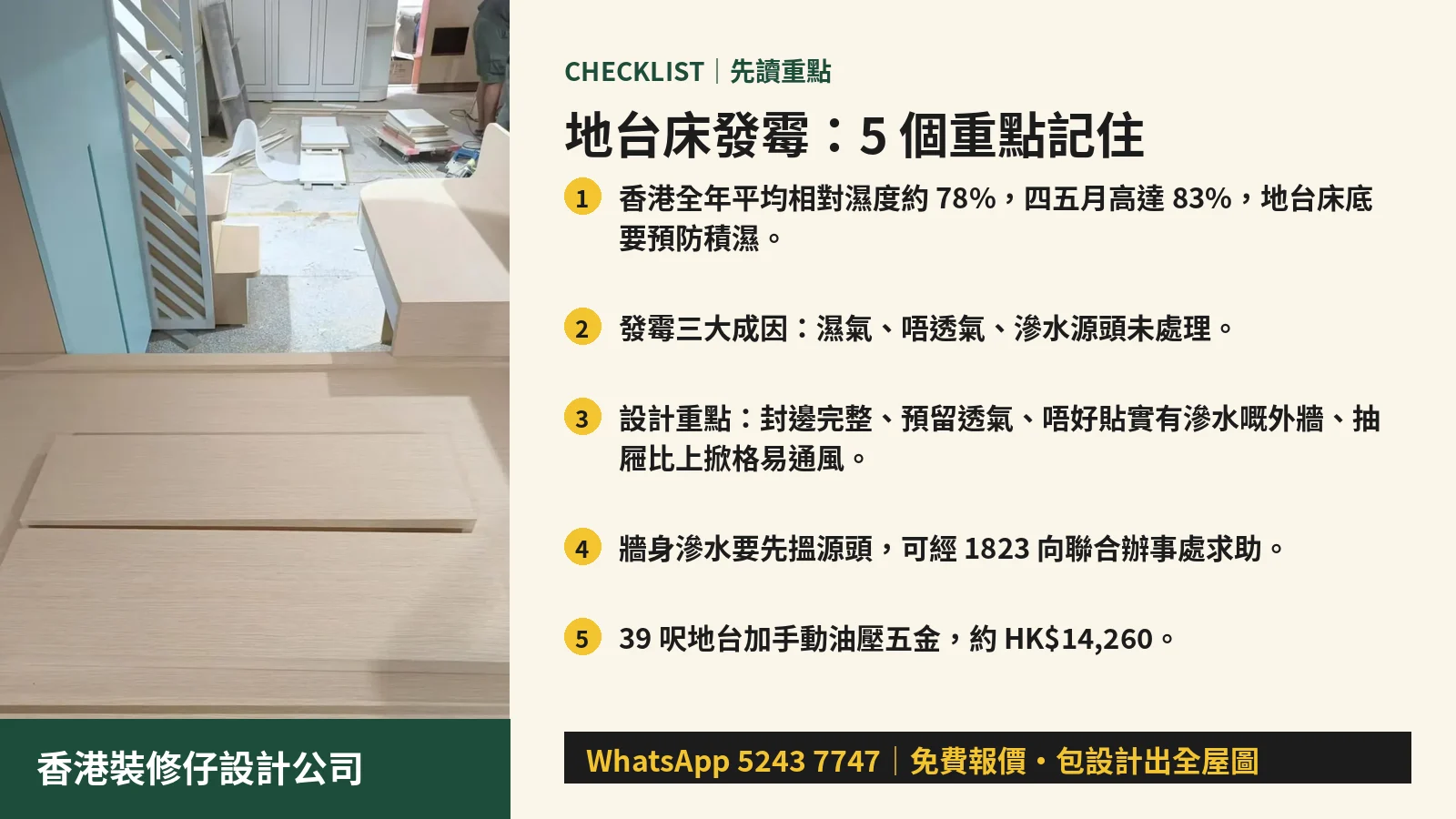
For large storage compartments that are easier to open, consider FUR36 manual hydraulic lift hardware at HK$1,000 per set[1]. The lift assists in raising the bed panel, making it easier to air the compartment frequently. For example, a 39 sq ft platform at HK$13,260 plus one hydraulic lift set totals HK$14,260[1].
- Drawers are easier to air
- Store bedding in bags
- Keep cardboard boxes out of platform storage
- A hydraulic lift makes the compartment easier to air
- 39 sq ft platform with hydraulic lift: HK$14,260
07
Design detail 5: platform height and floor clearance
A base panel directly on the floor can absorb damp. Feet or a plinth can lift it slightly, keeping the board off the floor and allowing some air beneath the platform.
Higher platforms create deeper compartments that are harder to ventilate. FUR06 at HK$340 per sq ft covers heights up to and including 450 mm. Higher platforms are quoted separately[1]. A taller platform gives more storage but can reduce airflow. Balance both when choosing the height.
For ground-floor properties, village houses or flats with past flooding, consider a raised base or a hydraulic bed in place of a full-room platform to make inspection easier.
- Keep the base panel off the floor
- Balance platform height and ventilation
- Up to 450 mm high: HK$340 per sq ft
- Raise the base above ground-floor slabs
08
Design detail 6: keep moisture sources away from the platform
Fish tanks, plants and clothes drying racks can raise humidity beside a platform. Avoid drying laundry in the bedroom, as wet clothing releases considerable moisture.
Avoid building a platform near the bathroom door, where steam can enter the bedroom. An en-suite bathroom needs adequate extraction. After showering, close the door and run the extractor for a while.
Check the air-conditioner condensate drain for leaks. If the unit is above the platform, water from a leaking drain can drip directly onto the surface.
- Avoid drying clothes in the room
- Avoid a platform at the bathroom entrance
- Use the bathroom extractor
- Check the air-conditioner drain
- Trace the sourceInspect pipes and external walls
- Discuss it with the neighbourRequest investigation and repairs
- 1823Joint Office
- Resolve the problem before fitting furnitureAvoid rework
09
How to address wall seepage
If seepage appears at measurement or after installation, find the source before covering the wall. The Buildings Department lists leaking drainage or water supply pipes in the affected, upper or adjoining flat, failed floor waterproofing or bath seals, and wastewater or rainwater entering through a roof or external wall[3].
Owners are responsible for managing and maintaining their property. If the source may be upstairs or next door, speak to the neighbour first. If the issue persists, call 1823 for the Joint Office of the Food and Environmental Hygiene Department and Buildings Department[3].
Avoid fitting a platform bed or wardrobe against the affected wall until seepage is resolved. Damp can quickly swell the panels and cause mould, leading to costly removal and refitting.
- Identify the cause first.
- Common causes of seepage
- Speak with the neighbour first
- 1823 contact centre
- Resolve seepage before fitting furniture
Example: 39 sq ft platform with a manual hydraulic lift
Assumptions
- 39 sq ft platform
- One FUR36 manual hydraulic lift set
How to calculate quantities
- Platform: 39 × HK$340 = HK$13,260
- Hydraulic lift hardware: HK$1,000
- Total: HK$14,260
About HK$14,260.
Delivery is excluded. Final pricing is subject to site measurement and a written quote. [1]
- Open the windowsMore moisture enters the flat
- Close windows and dehumidifyEffectively reduces humidity
10
Humid spring weather maintenance checklist
During humid spring spells, close windows and dehumidify when outdoor air is wetter than indoor air. Use a dehumidifier or the air conditioner’s dry mode.
Before the humid season, remove damp clothes and bedding from storage. Replace moisture absorbers when full. Open the compartments weekly and wipe the interior dry.
Wipe the platform surface with a slightly damp cloth and dry condensation promptly. Avoid wet mopping. Use a breathable mat beneath the mattress or stand the mattress up periodically to air.
The Environmental Protection Department’s Indoor Air Quality Information Centre also advises that ventilation and humidity control help reduce indoor air pollutants[4].
- Close windows and dehumidify
- Use a moisture absorber
- Open and wipe dry weekly
- Use a well-wrung mop
- Stand the mattress upright to air
11
What to do if mould has appeared
For small mould spots, empty the compartment, wipe the affected surface with a cloth or diluted cleaner and let it air-dry thoroughly. Wash and dry bedding and clothes before putting them back.
Swelling or blisters suggest water has entered the panel core. Surface cleaning cannot reverse it. Minor damage may need new edge banding or one replacement panel. More extensive damage requires rebuilding the affected section.
If mould returns soon after cleaning, investigate a continuing source such as wall seepage or damp from the floor. Replacing panels without resolving the source can lead to the same damage again.
Wear gloves and a mask and ventilate when cleaning mould. Household members with nasal allergies or asthma should stay away during cleaning.
- Minor mould spots: wipe away and air-dry
- Swollen board: replace it
- Recurring mould: identify the source
- Wear gloves and a mask when cleaning
12
Considerations for different property types
Public rental flats often have limited space. Housing Authority figures show that 23.9% of its public rental flats measured 20–29.9 m² internally[7], and bedrooms often adjoin an external wall. Check exterior-facing walls and windows for signs of seepage before fitting a platform bed.
Newer private flats generally have newer walls and waterproofing and a lower seepage risk. Airtight construction can still trap moisture, so manage humidity with airflow and dehumidification.
Older buildings have ageing pipes and waterproofing. Check the areas beneath upstairs bathrooms and kitchens before siting a platform bed, and avoid areas affected by seepage.
Village houses and ground-floor flats often experience greater floor-level damp. Consider a raised platform or hydraulic bed and inspect underneath regularly.
- Public housing: inspect external walls
- New buildings: manage humidity
- Older buildings: check the pipes
- Village houses: raised base
You can swipe left or right on your phone to view the complete table.
| Season | Key points |
|---|---|
| Humid spring weather | Close windows, dehumidify and wipe compartments dry weekly |
| Summer | Use the air conditioner’s dry mode and check its condensate drain |
| Autumn and winter | Clean thoroughly and air bedding in the sun |
Compiled by HK Create Design. [2]
13
Checking moisture-control details at handover
Check moisture-control details as well as appearance at handover. The Consumer Council recommends recording requirements in the contract, keeping drawings, listing defects and documenting changes in writing[6].
Feel the cut edges and corners of every panel for missing or lifting edge banding. Check the base clearance or feet against the drawings, then confirm the specified vents are present and unobstructed.
Check the specified gap behind the rear panel and the sealant around the window sill. Look for water entering in rain. Photograph defects, make a written list and give it to the contractor for follow-up.
- Check all edge banding
- Raise the base panel off the floor
- Ventilation openings
- Leave a gap behind the back panel
- Written follow-up
14
How to store items and reduce mould risk
Wash and thoroughly dry bedding before packing in breathable storage bags or vacuum bags. Avoid sealing damp air inside during humid weather. Air cotton and down quilts about once a season.
Wash seasonal clothing before storage. Worn clothes contain sweat and skin flakes that support mould growth. Leather and suede are particularly vulnerable and are better stored elsewhere.
For toys and small items, use plastic boxes in place of cardboard. Leave some ventilation around the lid and consider a moisture absorber inside.
Wipe luggage clean and leave it open to dry before storage. A moisture absorber can be placed inside. Avoid packing other clothes into it during storage.
- Dry bedding before storing it
- Keep worn clothes out of storage
- Use plastic boxes in place of cardboard
- Desiccant
- Dry luggage before storing it
15
Using a dehumidifier and air conditioner
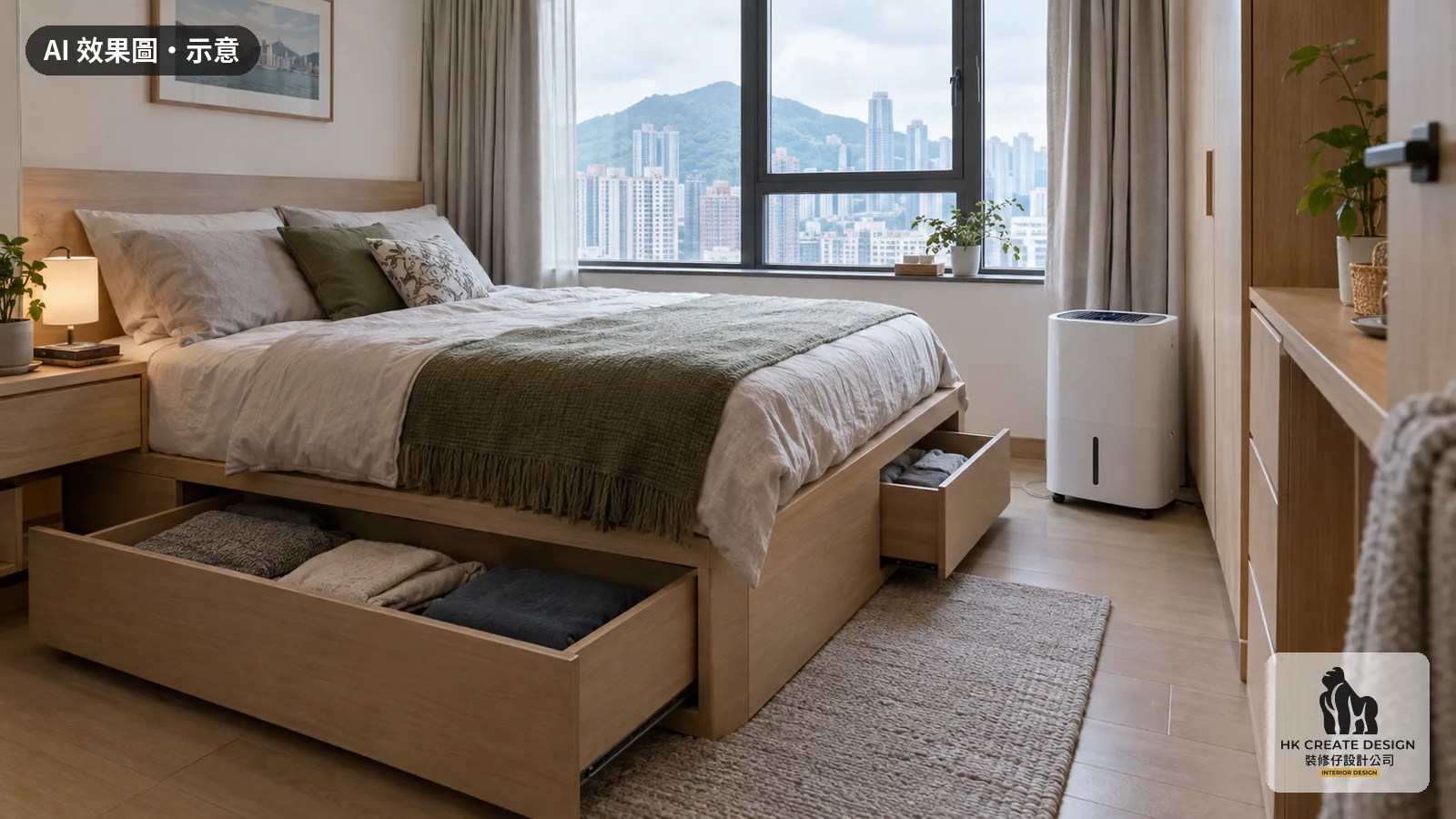
During humid spring weather, run a dehumidifier in the platform-bed room for several hours a day with the windows and doors closed. Empty the tank when full and keep it off the platform to avoid spills.
Air-conditioner dry mode can help during summer. Open platform compartments from time to time while the air conditioner is on so drier air can enter.
If space is tight, use moisture absorbers in the compartments and open them weekly. Absorbers handle limited moisture. Combine them with a dehumidifier or air conditioner in especially humid conditions.
An inexpensive hygrometer shows when dehumidification is needed. If room humidity stays high, increase dehumidification and ventilation as conditions allow.
- Use a dehumidifier in humid weather
- Keep the water tank off the platform
- Air-conditioner dry mode
- Hygrometer
Example: 48 sq ft platform with strip lighting
Assumptions
- 48 sq ft platform
- 8 ft of lighting beneath the platform
How to calculate quantities
- Platform: 48 × HK$340 = HK$16,320
- Strip lighting: 8 × HK$150 = HK$1,200
- Total: HK$17,520
About HK$17,520.
Delivery is excluded. Final pricing is subject to site measurement and a written quote. [1]
16
Common misunderstandings
Myth 1: “A platform bed is bound to get mouldy.” Good edge sealing, ventilation and maintenance can keep it serviceable for years. Myth 2: “Opening windows always lowers humidity.” In very humid spring weather it can bring more moisture indoors.
Myth 3: “ENF board is mould-resistant.” ENF describes formaldehyde emissions[5]. Edge sealing, ventilation and humidity control help prevent mould. Myth 4: “Furniture can hide a leak.” Continued seepage can damage the panels until the furniture has to be removed and rebuilt.
Myth 5: “Moisture absorbers are enough.” They have limited capacity and should be combined with dehumidification during humid spells. Myth 6: “A new flat can’t be damp.” Airtight new flats can also trap moisture without ventilation or dehumidification.
- Good maintenance can prevent mould
- Keep windows closed during humid spring spells
- ENF is an emissions grade; mould resistance is a separate property
- Keep signs of seepage visible
- New flats still need humidity control
17
What to discuss with the designer before ordering
Describe the window position and orientation. North-facing or sunless rooms can be damp. West-facing rooms heat up in the afternoon and window edges can experience condensation in humid spring weather. This helps the designer plan vents and storage zones.
Tell the designer about previous seepage or mould and identify where old furniture was affected. The wall and floor there can then be examined during measurement.
Tell the designer what you will store and how often you need it. Use more drawers for everyday items. Long-term storage needs particular attention to airflow and moisture.
Record vent positions, rear wall clearance and the raised-base arrangement in the drawings and quotation. Use these details to inspect the finished installation[6].
- Room orientation
- Previous seepage records
- Storage habits
- Show it on the design drawings
18
Order a custom design from HK Create Design
Since 2019, HK Create Design has helped Hong Kong families design andBespoke furniture, with the designer and a tradesperson with over 15 years’ experience responsible. They check walls and window edges during measurement and show ventilation and moisture-control details on the drawings.
Our whole-flat design package includes floor plans, ventilation, fire services, plumbing and electrical drawings, furniture designs, VR renderings and production drawings. ENF-grade panels are standard and the furniture carries a one-year warranty. See material samples at Shop 16, G/F, Fu Yau Building, 61 Po Kong Village Road, Wong Tai Sin, Kowloon.
Free site measurement is available for two or more work items until 31 December 2026. Otherwise the measurement fee is HK$500, deductible when you order. WhatsApp 5243 7747. Final pricing follows measurement and a written quotation.
- Since 2019
- Check walls during measurement
- ENF-grade boards as standard
- One-year warranty
- WhatsApp 5243 7747
Advice from our tradespeople
「During measurement I check the wall first. Water stains or blistered paint need investigation. Covering them with furniture lets the problem worsen out of sight.」
「Allow the bed to breathe. Small vents and drawers that open daily for frequently used items help prevent moisture becoming trapped.」
FAQ
17 practical questions answered
01Why can mould develop in a platform bed?
Moisture, nutrients and stagnant air can all be present. Hong Kong’s average annual relative humidity is around 78%[2].
02Should windows be open or closed during humid spring weather?
Close windows and run a dehumidifier when the air outside is more humid. Opening the windows then brings in more moisture.
03Does a platform bed need ventilation openings?
Allow openings for a little air circulation through the platform compartments. Small openings help limit dust and insects.
04Can a platform bed be installed beside a wall with seepage?
We advise against it. Locate the source first. Call 1823 for help from the Joint Office[3].
05Which is more prone to mould: drawers or lift-up compartments?
Infrequently opened lift-up compartments can trap moisture. Use drawers for everyday items and storage bags for bedding.
06Is a hydraulic lift bed less susceptible to mould?
A hydraulic bed is easier to open for inspection and airing. Manual lift hardware for a platform costs HK$1,000 per set[1].
07Do mouldy panels need replacing?
Small surface mould spots can be cleaned. Swollen or blistered panels need replacement or reconstruction of the affected section.
08Can I store cardboard boxes in a platform bed?
Paper readily absorbs moisture and can develop mould. Store documents on an upper wardrobe shelf instead.
09Do moisture absorber boxes help?
They can help, but need regular replacement. Use a dehumidifier as well during humid spring conditions.
10How can I protect a village house platform bed from damp?
For a damp floor, consider a raised design or hydraulic lift bed and inspect beneath the platform regularly.
11Are ENF panels resistant to all mould growth?
ENF is a formaldehyde emission class[5], and does not indicate mould resistance. Edge sealing, airflow and humidity control help prevent mould.
12How should bedding be stored to prevent mould?
Wash and dry bedding fully before storage. Use breathable or vacuum bags and avoid packing it away in humid spring weather.
13What if the room is too small for a dehumidifier?
Use a moisture absorber in the compartments and open them weekly to ventilate. Air-conditioning dehumidification mode can also help during humid spring weather.
14Can a platform bed be built against a window?
Yes. First check the window seals for ageing or seepage and leave a small gap between the platform back panel and the sill.
15Can mould affect health?
Mould may cause discomfort for people with nasal allergies or asthma. Clean visible spots promptly and find the moisture source.
16Can I see board samples at the showroom?
Yes. Visit Shop 16, G/F, Fu Yau Building, 61 Po Kong Village Road, Wong Tai Sin, to see and feel panel samples before choosing a colour.
17How often should I clean the platform storage compartments?
During humid months, open the compartments weekly for ventilation. Give them a thorough clean once in the drier autumn or winter.
CHECK THE BASIS
Data and technical basis, sources can be verified
- [1]HK Create Design published 2026 rates and work item descriptions Accessed: 2026-11-03
- [2]Hong Kong Observatory climatological normals, 1991–2020 Accessed: 2026-11-03
- [3]Buildings Department: water seepage FAQs Accessed: 2026-11-03
- [4]Environmental Protection Department: Indoor Air Quality Information Centre FAQs Accessed: 2026-11-03
- [5]STC: China Market Watch (August 2021) on the new formaldehyde emission grading standard for wood-based panels and finishing products Accessed: 2026-11-03
- [6]Consumer Council, 15 December 2020 — disputes over renovation quality and the value of detailed contracts and regular follow-up Accessed: 2026-11-03
- [7]Housing Bureau: Housing in Figures 2026 Accessed: 2026-11-03