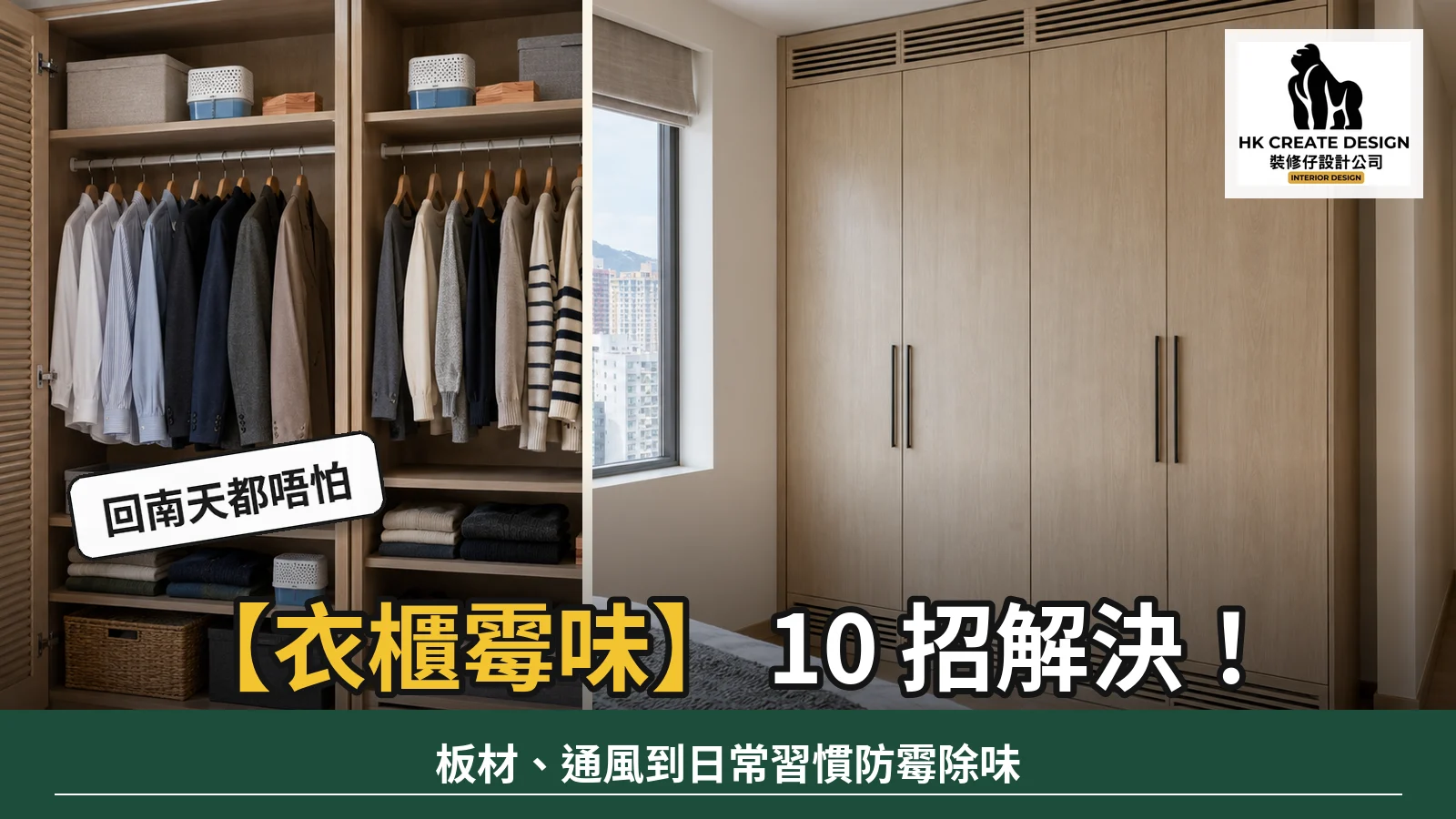
01
Identify the smell: mustiness or new wardrobe odour?
Mustiness can resemble damp towels, old books or soil. It commonly occurs in older wardrobes, in humid spring weather or against external walls. Check clothing for white or black spots and leather bags or shoes for pale mould.
A new wardrobe may have a pungent chemical odour, strongest during the first few weeks and in hot weather. The Consumer Council notes that paints, adhesives, sealants and new furniture can increase indoor formaldehyde levels. Residual odours can be irritating, and occupants may experience itchy skin[7].
Both odours can occur when a new wardrobe is installed in a damp room. Improve ventilation and humidity control to address both.
Identify the source because the remedies differ. Mustiness calls for cleaning and dehumidification. New furniture odour needs time and ventilation. Heavy fragrance can make the underlying problem harder to notice.
- Mustiness: a damp towel smell
- New wardrobe: pungent chemical smell
- Both can occur at the same time
- Address the cause
- Avoid masking odours with fragrance
02
Why do wardrobes develop mould?
Moisture, nutrients and stagnant air encourage mould. Wardrobes can provide all three: humid air, clothing, leather, sweat and dust, and little airflow when closed.
Common triggers include sweat and skin flakes on worn clothes, washed garments stored while damp, humid outdoor air entering through open windows in spring, and a back panel pressed against a cold or leaking wall.
Wardrobe location also matters. Cold external walls can lead to condensation in winter, steam can reach wardrobes near bathrooms, and north-facing rooms with little sun tend to have higher humidity. Wardrobes in the same home can therefore be affected differently.
- Moisture, nutrients and stagnant air
- Keep worn clothes out of storage
- Keep damp clothes out of the wardrobe
- Keep windows closed during humid spring spells
- Condensation risk against external walls
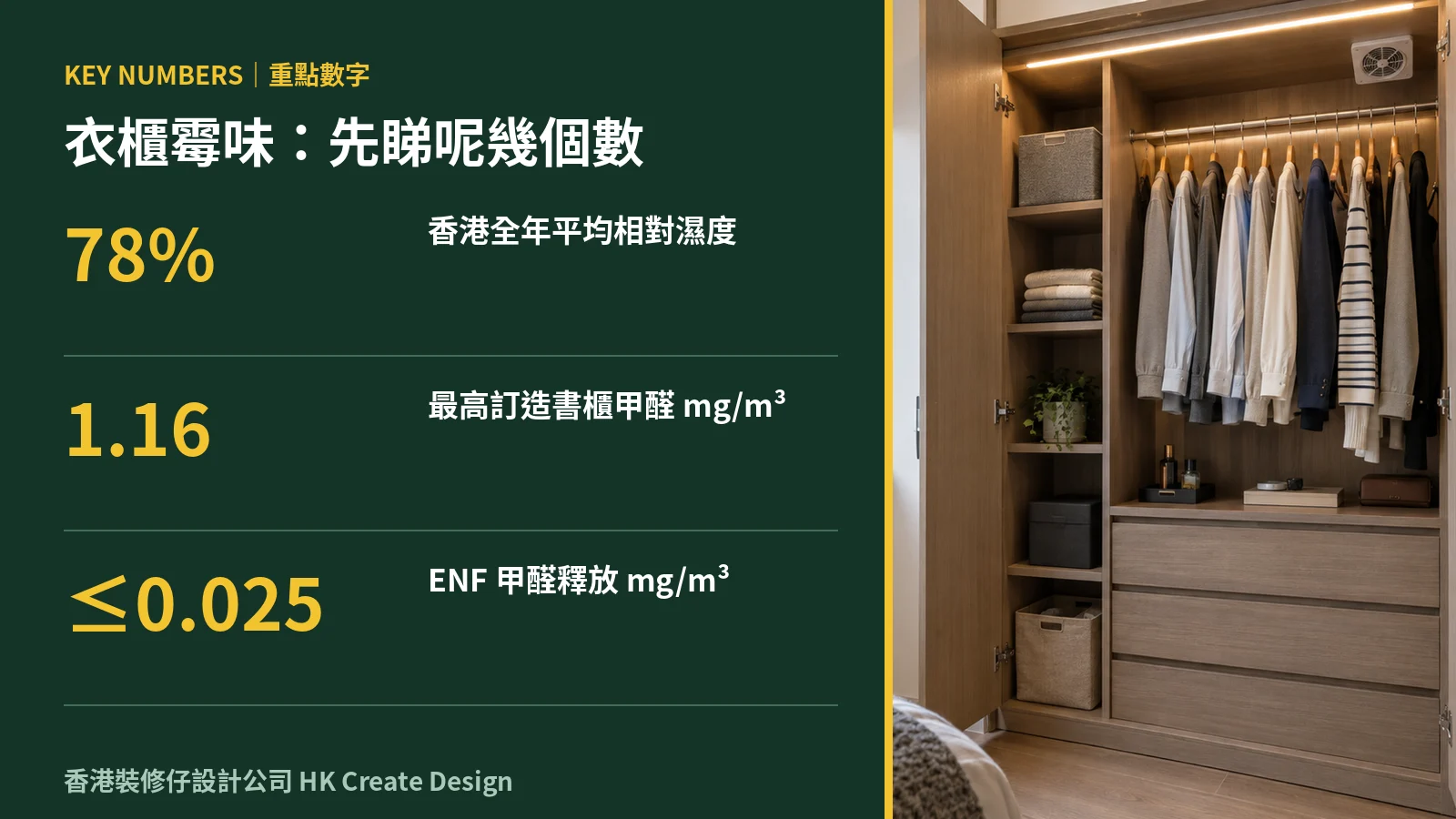
- ≤0.025ENFEmission limit
- ≤0.050E0Emission limit
- 1.16Consumer Council testHighest reading for a custom bookcase
GB/T 39600-2021 and Consumer Council, 2002.
03
What causes a new wardrobe to smell?
Bespoke wardrobeuse engineered boards bonded with adhesives. The Consumer Council tested 20 bookcases in 2002 and identified urea-formaldehyde resin in the boards as the main source. Four of eight custom bookcases exceeded 0.12 mg/m³, with the highest at 1.16 mg/m³[4].
Under national standard GB/T 39600-2021, formaldehyde emission limits for wood-based panels are E1 ≤0.124, E0 ≤0.050 and ENF ≤0.025 mg/m³[5]. GB 18580-2025 took effect on 1 June 2026, tightening requirements for wood-based panels used in interior decoration[6].
Odours may also come from edge-banding glue, paint, hardware lubricants and packaging. Higher temperatures can speed emissions, making new furniture odours more noticeable in summer.
- Adhesives in the panels
- E1 / E0 / ENF
- GB 18580-2025
- Edge banding and paint can also give off odours
- More noticeable in hot weather
You can swipe left or right on your phone to view the complete table.
| Musty smell | New wardrobe odour | |
|---|---|---|
| Odour | Damp towel or earthy smell | Pungent chemical smell |
| Cause | Moisture and mould | Panel adhesives and paint |
| Process | Dehumidify, clean and trace the source | Ventilation, time and choice of panels |
| Prevention | Control humidity and maintain airflow | Choose panels with low formaldehyde emissions |
Compiled by HK Create Design. [7]
- Musty smellDehumidify and clean to address moisture and mould
- New wardrobe odourVentilate to disperse odours from adhesives and paint
「When a client reports a musty wardrobe, I first pull it away from the wall and inspect the back. In my experience, about seven out of ten cases involve the wall rather than the wardrobe itself.」
04
How to address odour in a new wardrobe
First, ventilate. After fitting, open wardrobe doors, drawers and room windows to allow airflow. The Environmental Protection Department’s Indoor Air Quality Information Centre also recommends ventilation to reduce indoor pollutants[3].
Second, leave the new wardrobe empty for a while. Let the smell dissipate before filling it, as clothes can absorb odours.
Third, manage temperature and humidity. A dehumidifier and air conditioner can help keep conditions stable.
Fourth, specify low-emission panels when ordering. HK CreateDesign supplies ENF-grade panels as standard without an upgrade charge.
When comparing formaldehyde treatment services, check the terms. The Consumer Council found that providers often described their methods online but gave little detail on prices, treatment time or conditions of service[7].
- Open wardrobe doors and windows to ventilate
- Leave it empty for a while
- Control temperature and humidity
- Choose ENF panels at the outset
- Compare contract terms for formaldehyde treatment
- Empty the wardrobeSort and inspect the contents
- cleanWipe away mould spots
- Air-dryOne or two days
- Identify the causeCheck the rear panel and wall
- AssessmentReplace swollen panels
05
Dealing with a musty old wardrobe
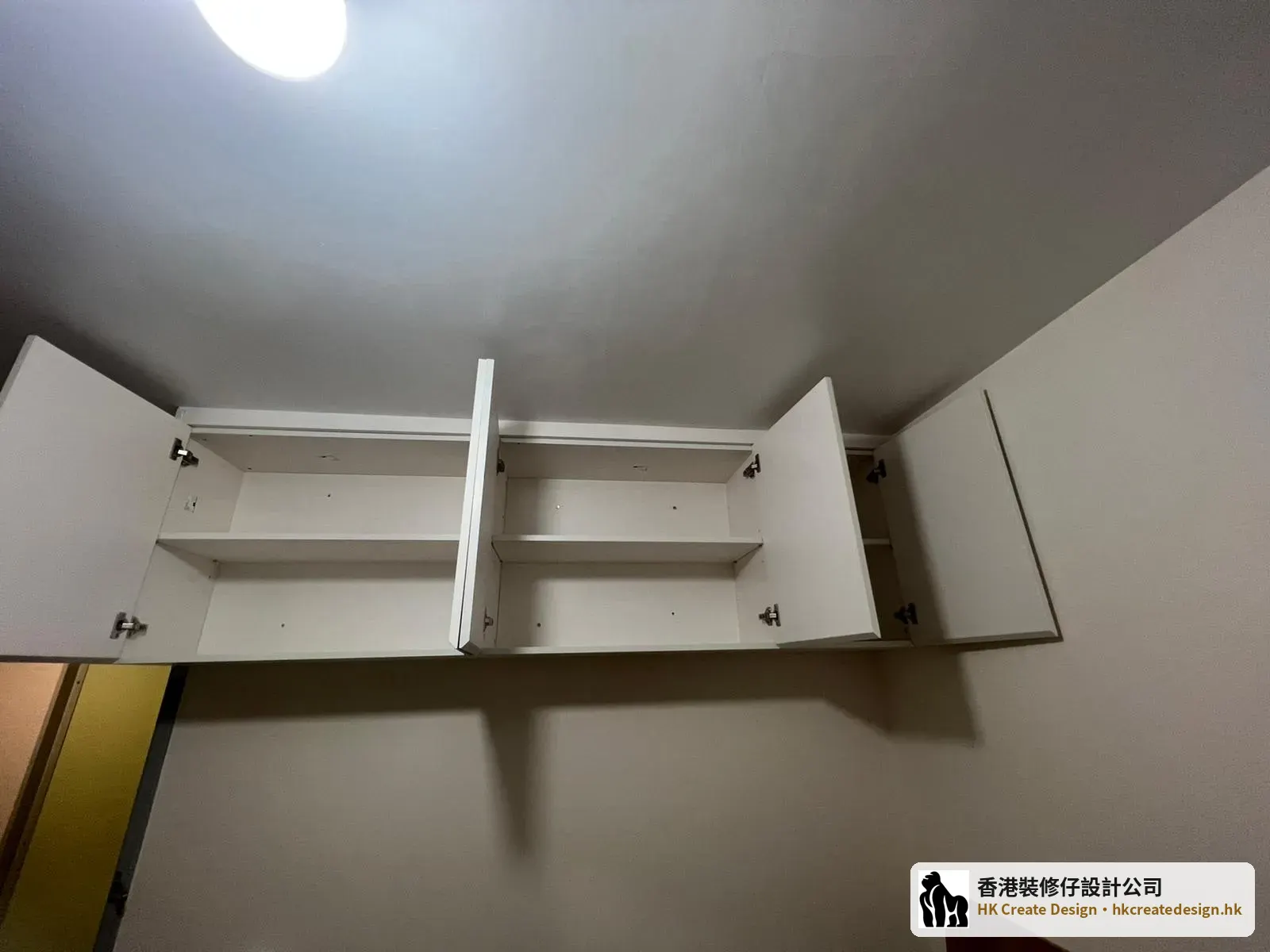
Step 1: empty the wardrobe. Remove clothes, bags and other items, then sort and inspect them. Wash affected clothes, use a suitable cleaner on leather, and air or wash apparently unaffected clothes before returning them.
Step 2: clean the wardrobe. Wipe mould from sides, shelves and drawers with a cloth or diluted cleaner, including rear panels and corners. Wear gloves and a mask and keep the room ventilated.
Step 3: dry thoroughly. Leave the doors open and run a dehumidifier or fan for at least a day or two before putting clothes back. Mould can return quickly if the surfaces remain damp.
Step 4: find the cause. Check for staining on the back panel, seepage on the wall or pooled water at the base. Resolve the source first.
Step 5: decide whether replacement is needed. Swollen, blistered or warped panels suggest water in the core. Surface cleaning cannot reverse this. Consider replacing the damaged panels or wardrobe.
- Empty and sort the contents
- Clean the interior surfaces
- Air-dry thoroughly
- Identify the cause
- Replace swollen panels
- Wash before storingKeep worn clothes out of storage.
- Close windows and dehumidifyHumid spring weather.
- Avoid overfillingLeave space for airflow.
- Regular inspectionRear panel and wall.
06
10 tips for managing wardrobe damp and odours
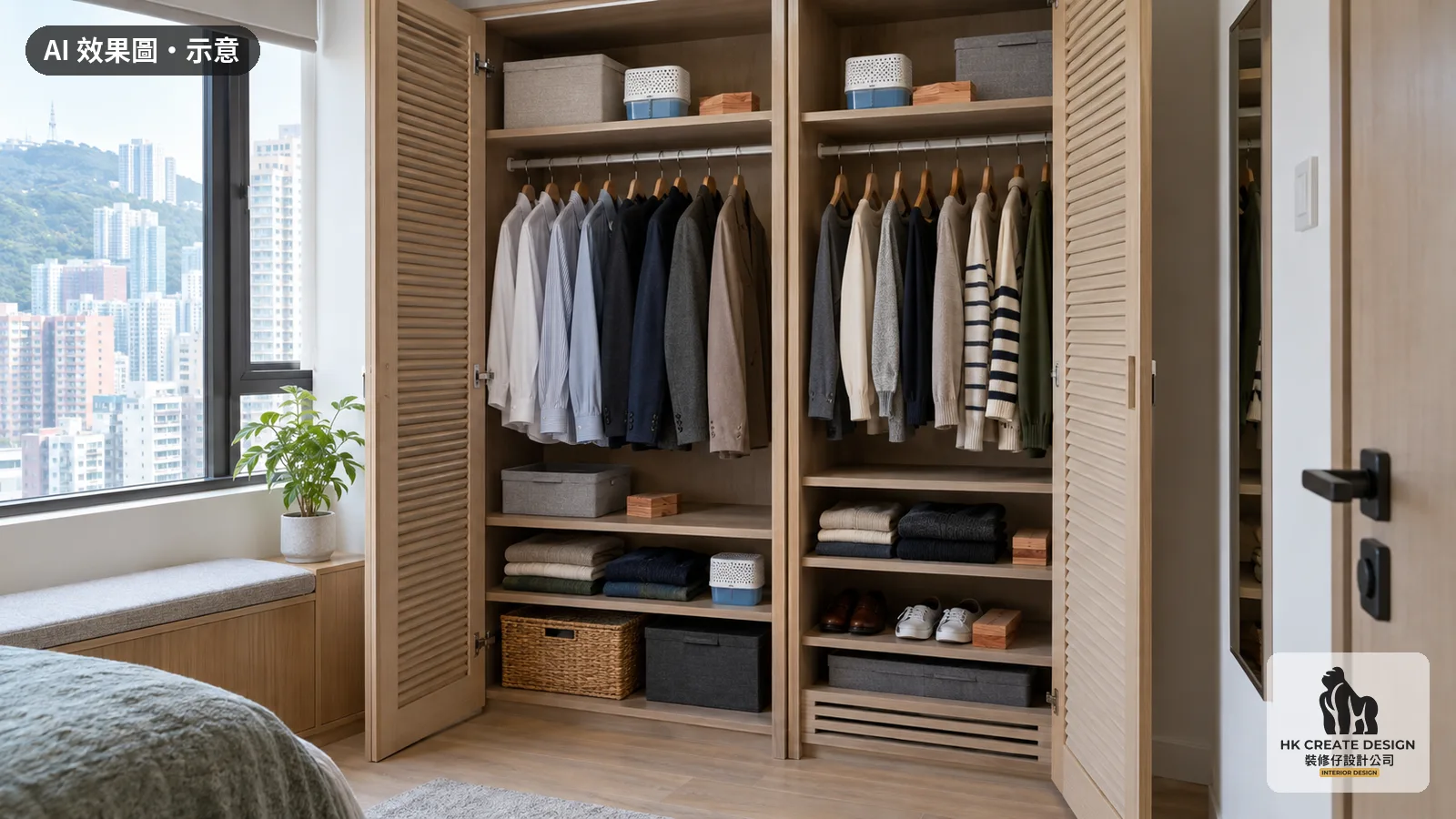
1. Air or wash worn clothes before returning them to the wardrobe. 2. Make sure washed clothes are fully dry, especially thick garments and jeans.
3. Close windows and use a dehumidifier during humid spring spells. 4. Place moisture absorbers inside the wardrobe and replace them regularly.
5. Leave space between garments for air to circulate. 6. Open wardrobe doors weekly to air compartments, especially those seldom used.
7. Store leather, suede and wool in breathable dust covers instead of sealed plastic bags. 8. Use plastic boxes on the bottom shelves in place of cardboard.
9. Sensor lighting helps reveal early mould and water stains in dark corners. 10. Inspect the back panel and wall regularly and deal with stains or mould promptly.
- Wash worn clothes before storing
- Dry thoroughly before storing
- Close the windows in humid spring spells
- Desiccant
- Avoid overfilling
- Air weekly
- Use breathable covers for leather
- Use plastic boxes in place of cardboard
- Inspect the back panel regularly
- ENF-grade boardsLow formaldehyde emissions.
- Edge bandingSeal every cut edge.
- Distance from the wallLeave a gap behind the back panel.
- Height above floor levelKeep the base panel clear of the floor.
07
How to reduce risk when ordering a wardrobe
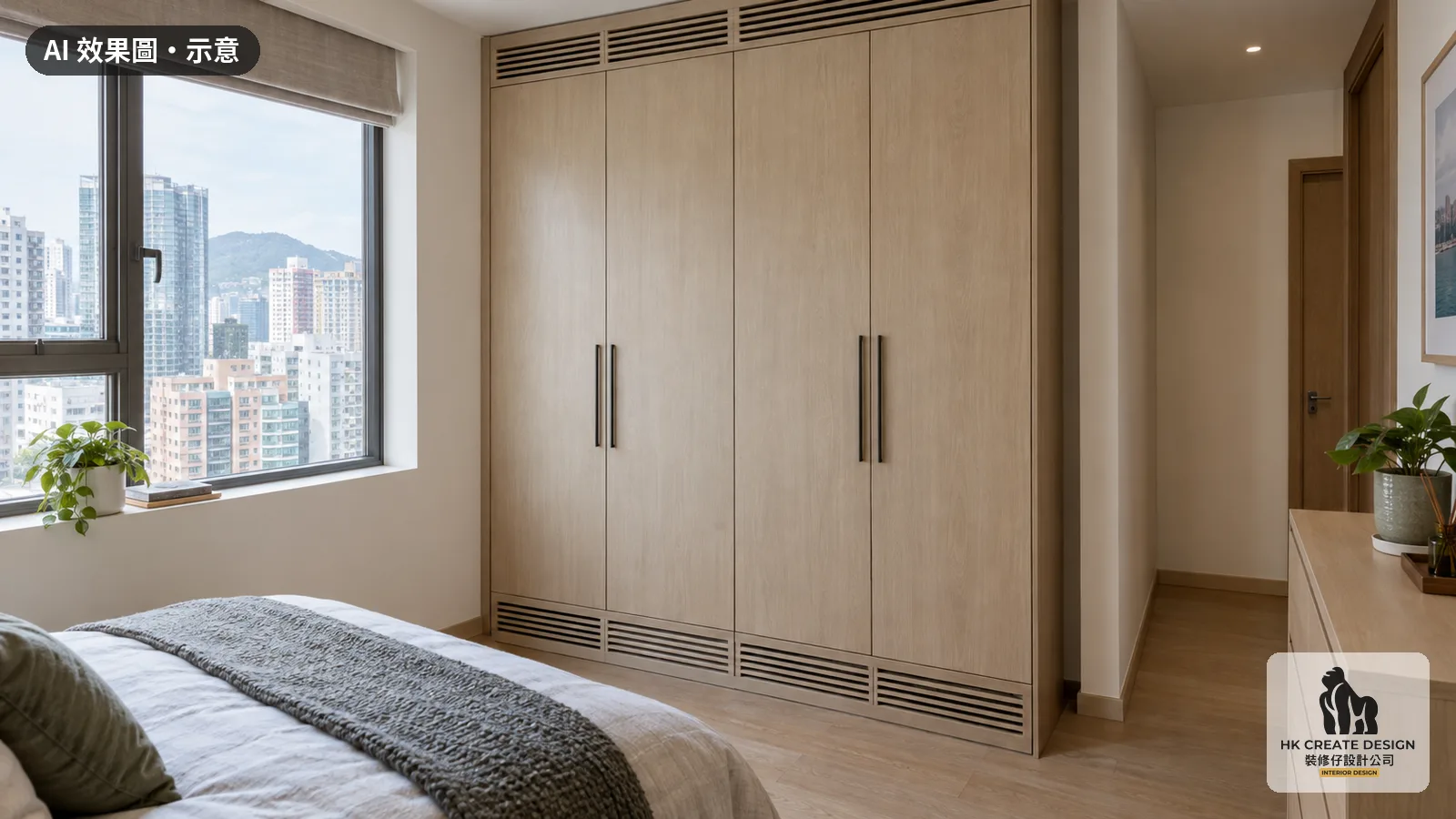
Choose panels with low formaldehyde emissions. ENF has a limit of ≤0.025 mg/m³[5]. Seal every cut edge, especially on the rear and base panels, where moisture can enter the exposed core.
Avoid positioning the wardrobe flush against an external wall or a wall shared with a bathroom. If that location is necessary, leave clearance behind the back panel for airflow.
Provide vents at the top or bottom to create a path for airflow. The openings can be small as long as air can circulate.
Raise the base panel off the floor using feet or a plinth to reduce moisture transfer.
During measurement, explain any history of seepage or mould in the old wardrobe so the designer can check the affected wall.
- Choose ENF-grade board
- Seal all cut edges
- Leave a gap behind the back panel
- Provide ventilation openings
- Raise the base panel off the floor
08
Resolve wall seepage before fitting a wardrobe against it
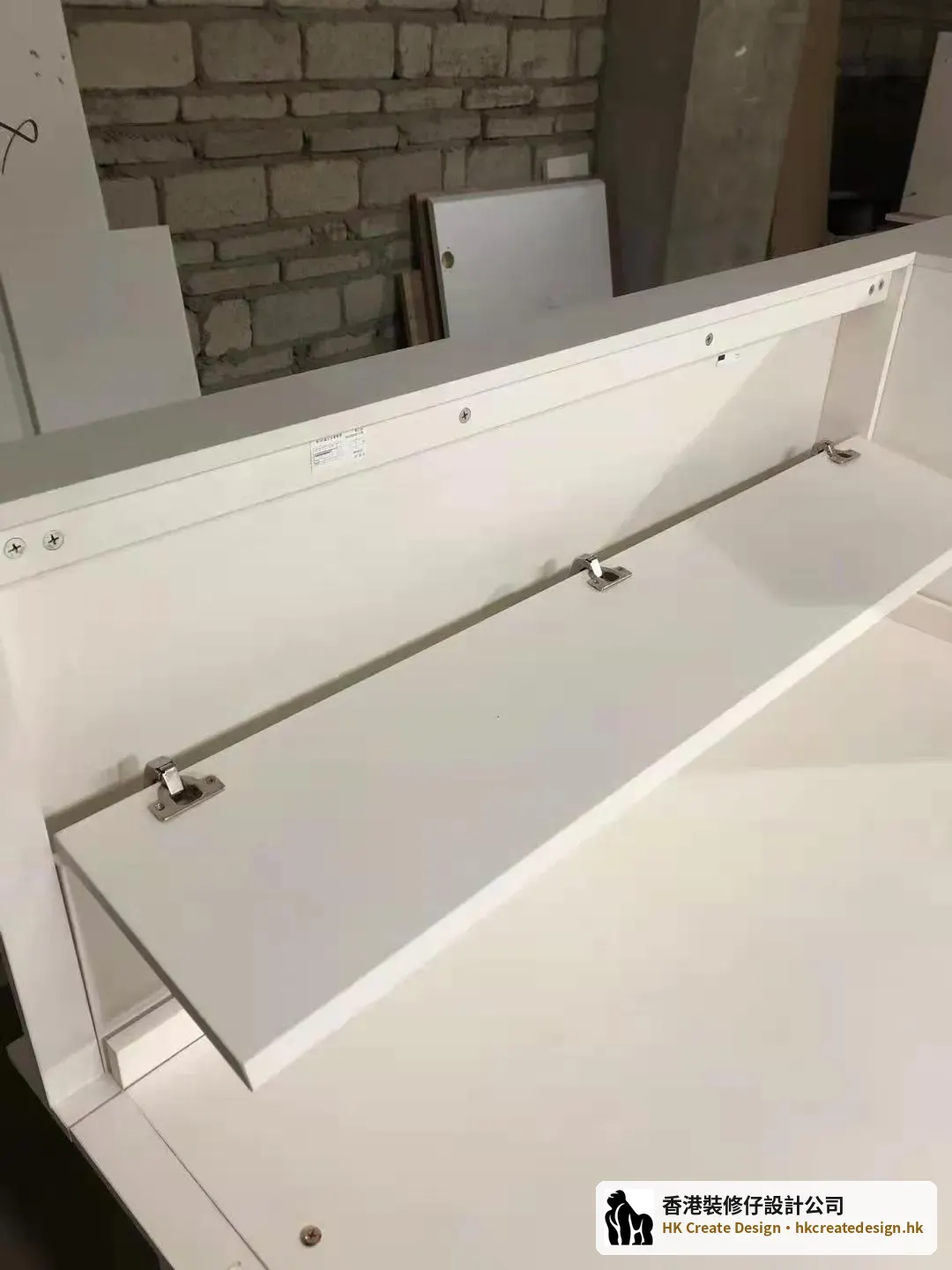
A mouldy wardrobe may signal wall seepage. The Buildings Department lists leaking drainage or supply pipes, damaged floor waterproofing or bath seals, and rain entering through roofs or external walls among the common causes[8].
Owners are responsible for maintaining their property. If the source may be upstairs or next door, speak to the neighbour first. If unresolved, call 1823 for the Joint Office of the Food and Environmental Hygiene Department and Buildings Department[8].
Avoid fitting a wardrobe against a leaking wall until seepage is resolved. Panels can soon swell or develop mould, resulting in removal and replacement.
- Trace the source of seepage first
- Common causes of seepage
- Speak with the neighbour first
- 1823 contact centre
- Resolve the problem before fitting the wardrobe
Example: replacing a mouldy 6 ft wardrobe
Assumptions
- Remove a 6 ft old wardrobe
- New 6 ft wardrobe
- One delivery
How to calculate quantities
- Removal: 6 × HK$170 = HK$1,020
- New wardrobe: 6 × HK$2,900 = HK$17,400
- Delivery: HK$660
- Total: HK$19,080
About HK$19,080.
Excludes wall repairs. Confirm by site measurement and written quotation. [1]
09
When should a wardrobe be replaced?
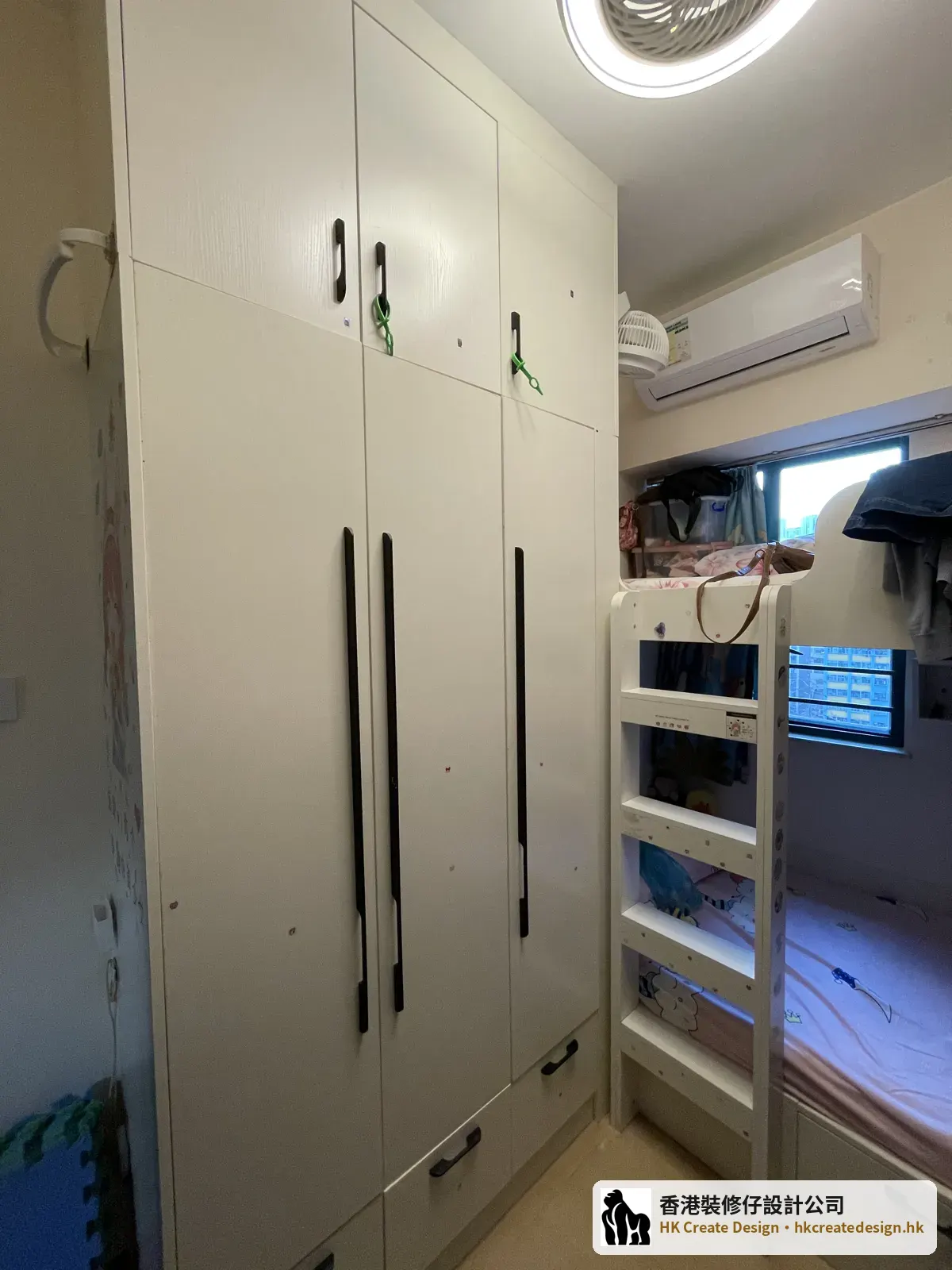
You can keep a structurally sound wardrobe if small surface mould spots do not return after cleaning, the smell subsides with ventilation and the panels show no swelling or distortion.
Consider replacement if panels swell, blister or warp, doors no longer close, or mustiness quickly returns after cleaning. This may also warrant consideration for an old wardrobe of unknown panel grade if there are children orOlder residentsare in the same home.
Example: remove a mouldy 6 ft wardrobe under FUR45 at 6 × HK$170 per linear foot = HK$1,020. New 6 ft FUR05 wardrobe HK$17,400, plus FUR42 delivery HK$660, for a total of HK$19,080[1]. Inspect the wall after removal and repair any seepage before installation.
- Small mould spots can be cleaned
- Replace swollen panels
- Persistent mustiness may call for replacement
- Replace a 6 ft wardrobe: HK$19,080
- Inspect the wall after removal
10
How to choose moisture-resistant products
A dehumidifier is particularly effective in humid spring spells and the wet season. Close the room door while it runs and empty the tank when full.
Absorber tubs and desiccants handle small quantities of moisture in routine use. Replace them regularly and handle full tubs carefully to prevent liquid spilling onto panels or clothes.
Mothballs have a strong smell and are used less often in many homes. Fragranced deodorisers can mask odours without addressing moisture. Check the ingredients and instructions before use.
Activated-carbon sachets can absorb some odours without adding fragrance. Place them in a corner and follow the manufacturer’s guidance on replacement or reactivation in sunlight.
- A dehumidifier is the most effective option
- Replace moisture absorbers regularly
- Deodorisers can mask the smell
- Activated-carbon sachets
You can swipe left or right on your phone to view the complete table.
| Class | Emission rate |
|---|---|
| E1 | ≤0.124 mg/m³ |
| E0 | ≤0.050 mg/m³ |
| ENF | ≤0.025 mg/m³ |
GB/T 39600-2021。 [5]
11
Wardrobe lighting and ventilation fittings
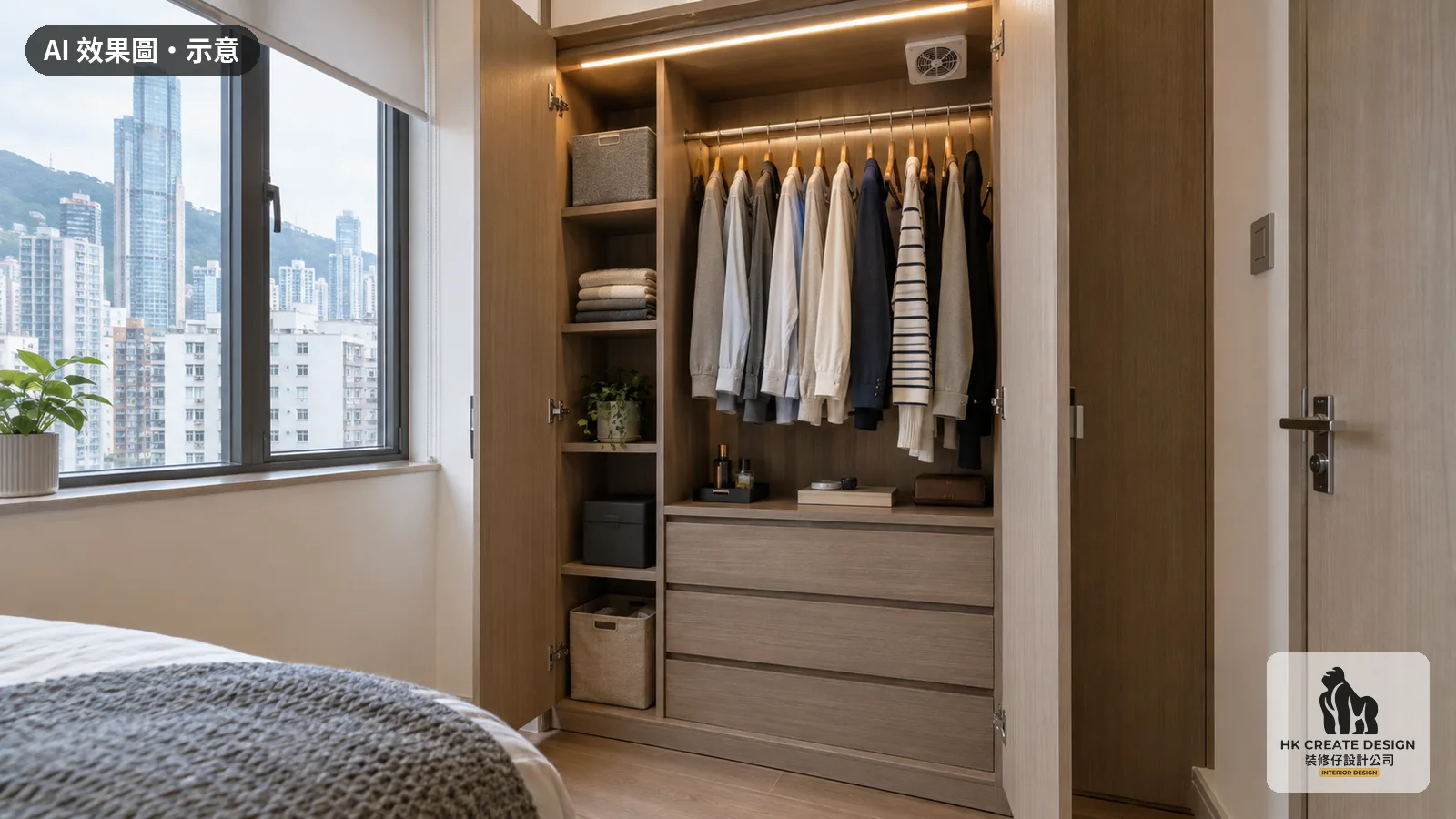
FUR40 sensor strip lighting is HK$150 per linear foot. FUR41 interior spotlights are HK$310 each[1]. Wardrobe lighting helps you choose clothes and see mould spots or water stains in dark corners.
Example: 4 ft wardrobe HK$11,600 plus 4 ft of sensor strip lighting HK$600, for a total of HK$12,200[1]. A 6 ft wardrobe at HK$17,400 plus 6 ft of strip lighting at HK$900 totals HK$18,300[1].
Louvred or vented doors improve airflow but provide less dust protection. Choose according to the room and the clothing being stored.
- LED strip lighting: HK$150 per ft
- Spotlights: HK$310 per fitting
- Easier to spot mould
- 4 ft wardrobe with strip lighting: HK$12,200
- Louvred doors improve airflow
12
Leather, wool and specialist garments
Leather bags and shoes are particularly prone to mould. Keep them in breathable dust bags in a well-ventilated part of the wardrobe, away from the back and floor. Wipe them periodically in humid weather.
Wool and napped fabrics absorb moisture and can attract insects. Clean and dry them fully, then use breathable covers. Follow the instructions on any moth protection product.
Suits and formal wear are easy to overlook because they are worn infrequently. Use breathable garment bags. Plastic dry-cleaning covers can trap moisture during long-term storage.
Baby clothes are best kept in a clean, odour-free compartment. Avoid strongly scented moisture absorbers or deodorisers around infants’ clothes.
- Use breathable covers for leather
- Wash woollens and dry them fully
- Avoid plastic covers for suits
- Keep baby clothes away from strong odours
13
Seasonal wardrobe care
Humid spring weather is a particularly high-risk period. Close windows and run a dehumidifier. Avoid leaving the wardrobe open to damp air for long periods. Check moisture absorbers weekly and replace them when full.
Air conditioning can lower indoor humidity in summer. Open the wardrobe briefly while it runs so drier air can circulate. Wash sweat-soaked clothing before storage.
Autumn’s drier weather suits seasonal sorting and deep cleaning. Wash and dry summer clothes before storage, air winter clothing and wipe wardrobe sides and shelves.
In winter, cold external walls can lead to condensation on an adjacent wardrobe back. Check the rear panel and corners, wipe off droplets and reassess moisture control if needed.
- Close windows and dehumidify during humid spring weather
- Ventilate in summer
- Clean at the autumn change of season
- Check the rear panel for condensation in winter
14
Clothing storage habits
Both design and storage habits affect mustiness. Two important habits are drying washed clothes completely and keeping worn clothes separate.
Feel collars, cuffs, waistbands and pockets before storing clothes. Thick sections dry last. Give jeans and heavy items another day to dry or use a suitable dryer.
If an unwashed garment will be worn again, keep it apart from clean clothing. Hang it overnight on a separate hook or rail before deciding whether to wash or store it.
Keep the wardrobe about 70%–80% full to allow airflow between garments. Overfilling can trap moisture and odours.
Sort clothes at each change of season. Donate or recycle items that have gone unworn for a year to keep the wardrobe from becoming overcrowded.
- Check thick sections are dry before storing
- Hang worn clothes separately
- Keep the wardrobe about 70%–80% full
- Sort clothes at the change of season
15
Precautions for homes with children, older residents or sensitive household members
Choose low-emission panels, especially in homes with children or older residents. HK CreateDesign uses ENF-grade panels as standard, with a formaldehyde emission limit of ≤0.025 mg/m³[5].
Wardrobe mould and dust may aggravate nasal allergies or asthma. Sensitive household members should keep away during cleaning. Avoid heavily scented products inside the wardrobe.
After installation, ventilate a new wardrobe before moving into the room or storing clothes, especially in a nursery or older person’s bedroom.
- Choose ENF-grade board
- Keep sensitive household members away during cleaning
- Avoid strong fragrances
- Air out a new wardrobe first
Example: 4 ft wardrobe with sensor strip lighting
Assumptions
- 4 ft wardrobe
- 4 ft of sensor strip lighting
How to calculate quantities
- Wardrobe: 4 × HK$2,900 = HK$11,600
- Strip lighting: 4 × HK$150 = HK$600
- Total: HK$12,200
About HK$12,200.
Excludes delivery and wiring. Confirm by site measurement and written quotation. [1]
16
Common misunderstandings
Myth 1: “Fragrance solves a musty smell.” It can mask ongoing mould growth and delay detection. Myth 2: “Open the windows in humid spring weather.” If outdoor air is wetter, opening windows brings more moisture indoors.
Myth 3: “ENF panels cannot develop mould.” ENF is a formaldehyde emission class[5]. Mould prevention depends on edge sealing, airflow and moisture control. Myth 4: “An odour-free wardrobe is free of formaldehyde.” Smell is unreliable, so check the panel emission grade.
Myth 5: “One moisture absorber is enough.” A large wardrobe or humid season may require a dehumidifier as well. Myth 6: “Mould only means poor cleaning.” Recurrence often points to a moisture source such as wall seepage that needs repair.
- Fragrance only masks the odour
- Keep windows closed during humid spring spells
- ENF is an emissions grade; mould resistance is a separate property
- Formaldehyde can be present without a noticeable smell
- One moisture absorber may be insufficient
- Investigate the source of recurring mould
17
How to check a new wardrobe at handover
At handover, open each door and drawer and note any odour. Inspect the banding on every cut edge, especially on rear and base panels.
Check the rear wall gap, floor clearance and ventilation openings against the approved design.
Request the panel grade information and compare it with the quotation and drawings. Photograph defects promptly and give the contractor a written record.
- Open the doors and check for odours
- Check the edge banding
- Check the gap behind the back panel
- Request the panel specifications
- Written follow-up
18
Commission a wardrobe from HK Create Design
Since 2019, HK Create Design has helped Hong Kong families design andBespoke furniture, with a designer and a tradesperson with over 15 years’ experience. The wall is checked during measurement, and the design addresses wardrobe position, ventilation and damp.
Our whole-flat design package includes floor plans, ventilation, fire services, plumbing and electrical drawings, furniture designs, VR renderings and production drawings. ENF-grade panels are standard and the furniture carries a one-year warranty. See material samples at Shop 16, G/F, Fu Yau Building, 61 Po Kong Village Road, Wong Tai Sin, Kowloon.
Free site measurement is available for two or more work items until 31 December 2026. Otherwise the measurement fee is HK$500, deductible when you order. WhatsApp 5243 7747. Final pricing follows measurement and a written quotation.
- Since 2019
- Check walls during measurement
- ENF-grade boards as standard
- One-year warranty
- WhatsApp 5243 7747
Advice from our tradespeople
「When a client reports a musty wardrobe, I first pull it away from the wall and inspect the back. In my experience, about seven out of ten cases involve the wall rather than the wardrobe itself.」
「For new furniture odours, choose the panel grade at the outset. We use ENF as standard and advise airing new wardrobes before storing clothes.」
FAQ
18 practical questions answered
01What should I do if a wardrobe smells musty?
Empty, clean and thoroughly air-dry the space, then identify the cause. Consider replacing swollen panels.
02Is a pungent smell from a new wardrobe normal?
New furniture may emit chemicals. The Consumer Council notes that adding furniture can raise indoor formaldehyde levels[7], so ventilation is needed.
03How long should I wait before putting clothes in a new wardrobe?
Leave it empty and ventilated for a period. Put clothes in once the odour has dispersed.
04Are ENF panels odour-free?
ENF formaldehyde emissions ≤0.025 mg/m³[5]. Lower emissions do not guarantee an odour-free product. Ventilate after installation.
05How do I keep a wardrobe dry during humid spring weather?
Close windows and dehumidify in humid spells. Hong Kong’s average relative humidity is 83% in April and May[2].
06Do moisture absorber boxes help?
They can help, but need regular replacement. Use a dehumidifier as well during humid spring conditions.
07Is a formaldehyde-removal service useful?
The Consumer Council recommends comparing service terms carefully. Some providers gave insufficient information on charges and terms[7].
08Can a wardrobe against an external wall develop mould?
Condensation is more likely. Leave a gap behind the cabinet and use a moisture absorber.
09Can a wardrobe be built if the wall has seepage?
We advise against it. Locate the source first. Call 1823 for help from the Joint Office[8].
10How much does replacing a 6 ft wardrobe cost?
About HK$19,080 including removal and delivery[1].
11How should leather bags be stored to prevent mould?
Use a breathable dust bag, store the bag in a ventilated place and wipe it regularly in humid weather.
12How can I tell whether clothes are completely dry?
Feel collars, cuffs, waistbands and pockets. These thicker parts generally dry last.
13How full should I keep my wardrobe?
Keep it about 70–80% full and leave space for air to circulate between garments.
14What should I do about droplets on the wardrobe back panel in winter?
Wipe the moisture away and check whether the wardrobe sits tight against an external wall. Leave a gap behind the back panel where possible.
15Can fragrance remove a musty smell?
No. Fragrance masks the smell while mould can continue to grow. Reduce moisture and clean the affected area.
16Does a wardrobe need louvred doors?
Louvred doors improve ventilation but keep out less dust. Choose according to the room and clothing stored.
17Can I see board samples at the showroom?
Yes. You can view board and colour samples at Shop 16, G/F, Fu Yau Building, 61 Po Kong Village Road, Wong Tai Sin.
18Should I use mothballs?
Mothballs smell strong and many households use them less often. Deodorisers only mask smells and do not resolve damp.
CHECK THE BASIS
Data and technical basis, sources can be verified
- [1]HK Create Design published 2026 rates and work item descriptions Accessed: 2026-11-03
- [2]Hong Kong Observatory climatological normals, 1991–2020 Accessed: 2026-11-03
- [3]Environmental Protection Department: Indoor Air Quality Information Centre FAQs Accessed: 2026-11-03
- [4]Consumer Council: test of formaldehyde emissions from bookcases (15 April 2002) Accessed: 2026-11-03
- [5]STC: China Market Watch (August 2021) on the new formaldehyde emission grading standard for wood-based panels and finishing products Accessed: 2026-11-03
- [6]National Forestry and Grassland Administration: new national standard tightens formaldehyde limits for wood-based panel products Accessed: 2026-11-03
- [7]Consumer Council: questions and answers on measuring and removing formaldehyde after home renovation Accessed: 2026-11-03
- [8]Buildings Department: water seepage FAQs Accessed: 2026-11-03