01
The renovation points of public housing are different from those of private housing
Public housing tenants are tenants. Most of the beams, walls, doors, windows, sanitary ware, pipes, and electrical installations inside the units are fixed installations provided by the Housing Authority. The Housing Authority is also responsible for maintaining these devices, so tenants must understand that some of them are under the management of the Housing Authority before making changes, and they can handle them on their own. The same is true for rental estates under the Housing Society. The Housing Society states that if tenants want to carry out interior renovation, they must first apply to the estate office and obtain written approval. When the tenancy is terminated, the tenant must restore the original installation of the unit at his own expense.[7].
The Annex to the Housing Authority's renovation terms and conditions states that tenants are responsible for future repairs and replacements of fixed fixtures that have been altered with approval; for unapproved alterations, the tenant or the Housing Department (which charges the tenant) will restore them.[1]. In other words, if you do it before approval, not only will you risk deducting points, but you may also have to pay back the money yourself, and you may even be responsible for it if it breaks later.
The other one is for maintenance respectively. Since 2006, the Housing Authority's Comprehensive Maintenance Program has proactively inspected housing estates that are 10 years old or above, once every ten years for buildings between 10 and 30 years old, and once every five years for buildings over 30 years old. It covers the standard facilities provided by the Housing Authority, but does not include painting and renovation projects.[6]. Therefore, you can actually ask the estate office to repair some things first, instead of paying for the renovation yourself.
- Understand that unit fixtures belong to the Housing Authority
- Housing Society estates must first apply for written approval from the estate office
- After approved changes, the responsibility for future maintenance rests with the tenant
- First ask the estate office about the areas nearby that are within the maintenance scope of the Housing Authority.
02
Category A, B, and C fixed devices: a clear look at the table
Category A alterations are prohibited. Items include beams, columns, floors, structural walls, planters, air conditioner hoods, precast internal walls and partitions enclosing kitchens, toilets and bathrooms (A1). They also include fire doors, frames, hardware and door closers at the entrance and kitchen (A2),acoustic windows(A3), soil and waste stacks and floor drains (A6), pipe ducts (A7), fresh and flushing water mains (A8), and supply cables between the electrical room and the consumer unit (A9).[1]. Housing Department will revert unapproved Category A changes and charge tenants[1].
Category B requires prior Housing Authority approval. Items include changes to existing non-structural internal walls outside kitchens, toilets and bathrooms (B2), new brick partitions or floor rendering (B3), non-fire-rated doors (B4), security gates (B5), external window grilles (B6), kitchen, toilet, bathroom and balcony floor tiles (B7), wall tiles (B8), shower trays, baths and toilet pans (B10), washbasins and sinks (B11), cooking benches (B12), drying racks (B13), branch pipes (B14), and consumer units, wiring, switches and sockets (B15).[1].
Category C items require no prior Housing Authority approval. Examples include door locks and handles (C1), window handles and stays (C2), living, dining and bedroom floor finishes (C4), interior paint colours (C5), showerheads, taps, toilet seats, shower curtain rods and grab rails (C8), and kitchen cupboards and base cabinets (C9).[1]. However, the Housing Department will not do interior renovation for tenants[1]. Arrange the painting yourself.
- Structure, kitchen and toilet partition walls, fire doors, soundproof windows = Category A is not allowed to be modified
- Kitchen and toilet tiles, sanitary ware, electrical box sockets, branch pipes = Category B will be approved first
- Living and bedroom floor finishes, interior paint colours and kitchen cabinets: Category C, no approval required
- If you are not sure, just ask the estate office first.
You can swipe left or right on your phone to view the complete table.
| Item | Classification | meaning | Remarks |
|---|---|---|---|
| Beams and columns, structural walls, kitchen, toilet and bathroom partition walls | Jiayi | Not allowed | The Housing Department will restore and charge[1] |
| Doors and kitchen fire doors | Koji | Not allowed | Fire protection requirements |
| Modification of non-structural interior walls (except kitchen, toilet and bathroom) | Otoji | prior approval | Instead of following the schematic diagram, follow the small engineering system [1] |
| Kitchen, bathroom, terrace floor tiles/wall tiles | Yi seven / Yi eight | prior approval | There is a waterproof membrane on the bottom of the brick[1] |
| User electrical boxes, wires, sockets | Yi Fifteen | prior approval | Do not use fuses or leakage equipment |
| Living room dining room bedroom floor countertop final renovation | Bing four | No approval required | Can lay SPC, etc. |
| Interior paint colour | Bingwu | No approval required | Housing Department does not do interior painting |
| Kitchen cabinets, base cabinets | Bingjiu | No approval required | The stove and sink belong to Category B |
Excerpted from the renovation clauses appendix of the Housing Authority's "Guidelines for the Reference List of Renovation Contractors", the actual renovation guidelines of the respective housing estates shall prevail [1]. [1]
03
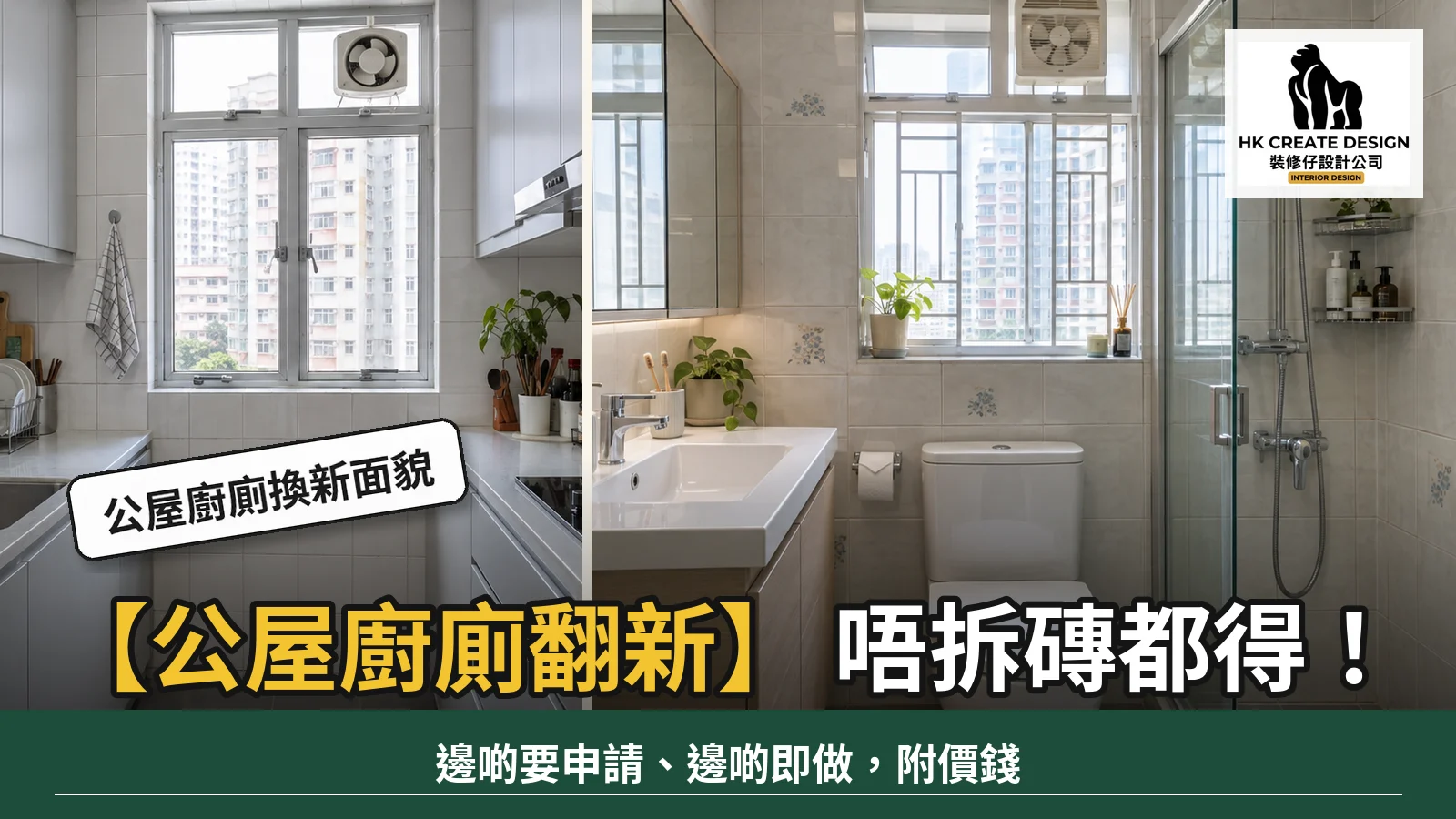
There is a waterproof membrane on the bottom of the kitchen and toilet floor tiles: the most accident-prone place
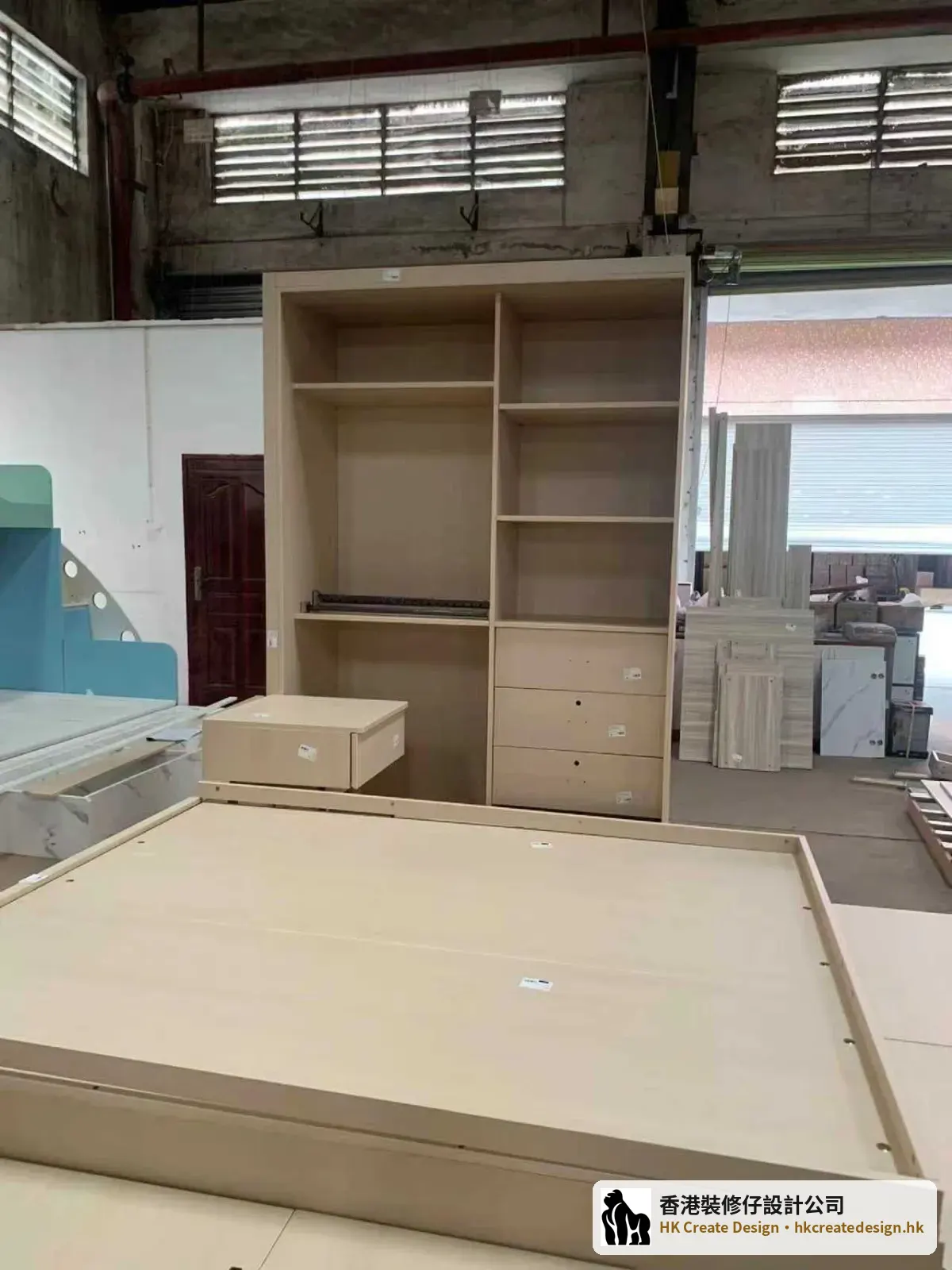
Special reminder from the Housing Authority's renovation regulations: The bottoms of floor tiles in kitchens and bathrooms are covered with waterproof membranes. If the bricks are removed or partition walls are moved, the effectiveness of the waterproof membrane on the floor will be affected, which may cause leakage, damage to interior renovation and equipment, and cause nuisance and losses to residents on the lower floor and adjacent residents. Residents of the unit must pay compensation to the affected residents and/or the Housing Authority.[1].
Therefore, replacing the tiles in the kitchen and toilets of public housing estates is not a matter of "replacing them as you wish". First, kitchen and toilet floor tiles and wall tiles belong to Category B and require prior approval.[1]Secondly, once the bricks are removed, it will involve redoing waterproofing and water testing, and the responsibility also falls on the tenant. The penalty points system also lists "damage to rainwater/sewage pipes, causing water seepage to lower-level units" as a violation that will result in penalty points.[2].
Category C options to refresh the kitchen or bathroom may include a shower head, tap, toilet seat or towel rail. Follow the applicable terms when fixing into tiled bathroom walls: seal penetrations with suitable silicone against water ingress[1].
- Kitchen and toilet tile replacement is Category B, please apply first
- Removal of bricks will affect the waterproof membrane, and the liability for compensation lies with the tenant
- Seal drilled penetrations in tiled walls with silicone
- Priority will be given to renovations within Category C areas
04
Construction rules: gates, corridors, silos and air conditioners
The general terms of the Housing Authority's renovation terms and conditions set out a number of construction rules: During renovation, the door of the unit must be kept closed at all times to prevent noise and dust from disturbing neighbors; renovation work can only be carried out within the unit, and any form of work is strictly prohibited in the corridors and rear stairs to avoid blocking the fire escape; mortar must not be poured into the water level and toilet bowl inside and outside the unit[1].
Other rules include installing a window air conditioner only at a position with a supporting platform. Do not alter glazingAluminium windowsor acoustic windows, or add fixed fittings to frames or external walls. Do not remove or alter miniature circuit breakers or residual current protection in the flat. All gas work downstream of the meter must be undertaken by a registered gas contractor.[1].
The special terms also remind: The structural concrete walls of the unit have dense steel bars. Improper cutting to hide pipes and switches will damage the structural safety; modifications to faucets or pipes must use materials and fittings that meet the requirements of the Water Supplies Department and be undertaken by a registered plumber; no other colors are allowed on the door; changes to clothes drying racks must be approved in writing and must comply with minor works regulations.[1].
- Keep the door closed and do not occupy the stairs behind the corridor
- Keep cement-and-sand mortar out of drains
- Do not modify aluminum windows, soundproof windows, and do not cause leakage of safety switches.
- Do not cut structural walls to hide pipes, do not paint doors
05
Sample application: The process is the same as preparing documents
Applications for Category B modifications are generally submitted to the respective housing estate office (or property services office), explaining the items, locations and practices that you want to modify. The terms stipulate that if brick wall partitions need to be added/renovated, approval must be obtained from the estate property services office; if it is not done according to the non-load-bearing wall partition diagram in the renovation manual, it must be handled according to the minor works supervision system[1].
It is recommended to prepare: unit floor plan or hand-drawn sketch, photos of the modified location, material information (such as brick size, sanitary ware model), construction contractor information and estimated construction period. We can help you organize the project scope and drawings so that you can explain them clearly when you submit your application, thereby reducing the time spent filling in information.
Public housing tenants are not required to use renovation contractors appointed by the Housing Authority. The Housing Authority's guidelines state that public housing tenants/owners of subsidized sale flats can entrust anyone to carry out renovation works, not limited to assigned contractors or contractors on the reference list.[1]. So you can choose the right company based on price, service and communication.
- Check with the estate office for application procedures
- Prepare sketches, photos, materials and information
- Indicate the same construction period of the contractor
- Receive the approval letter and start work first
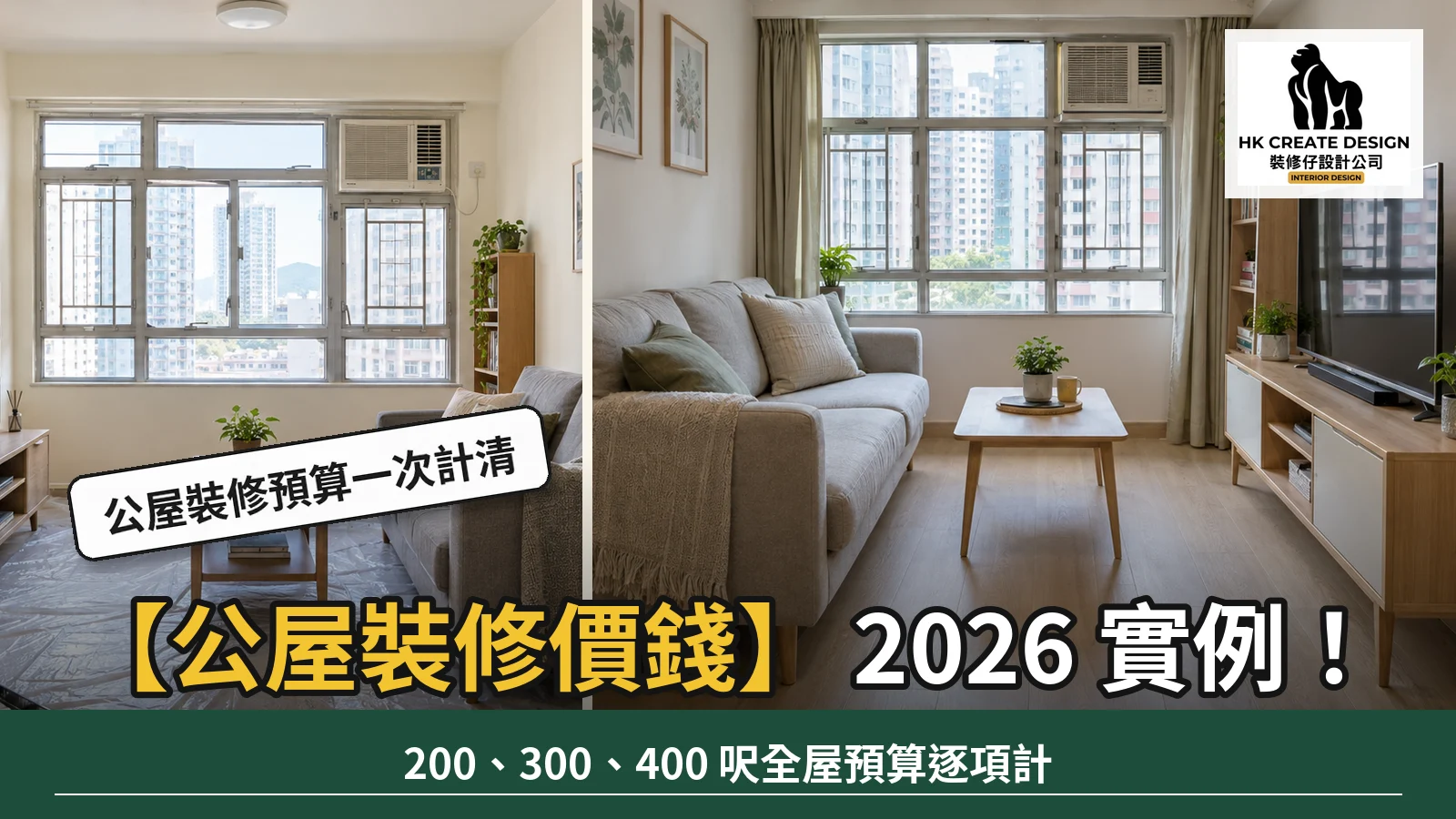
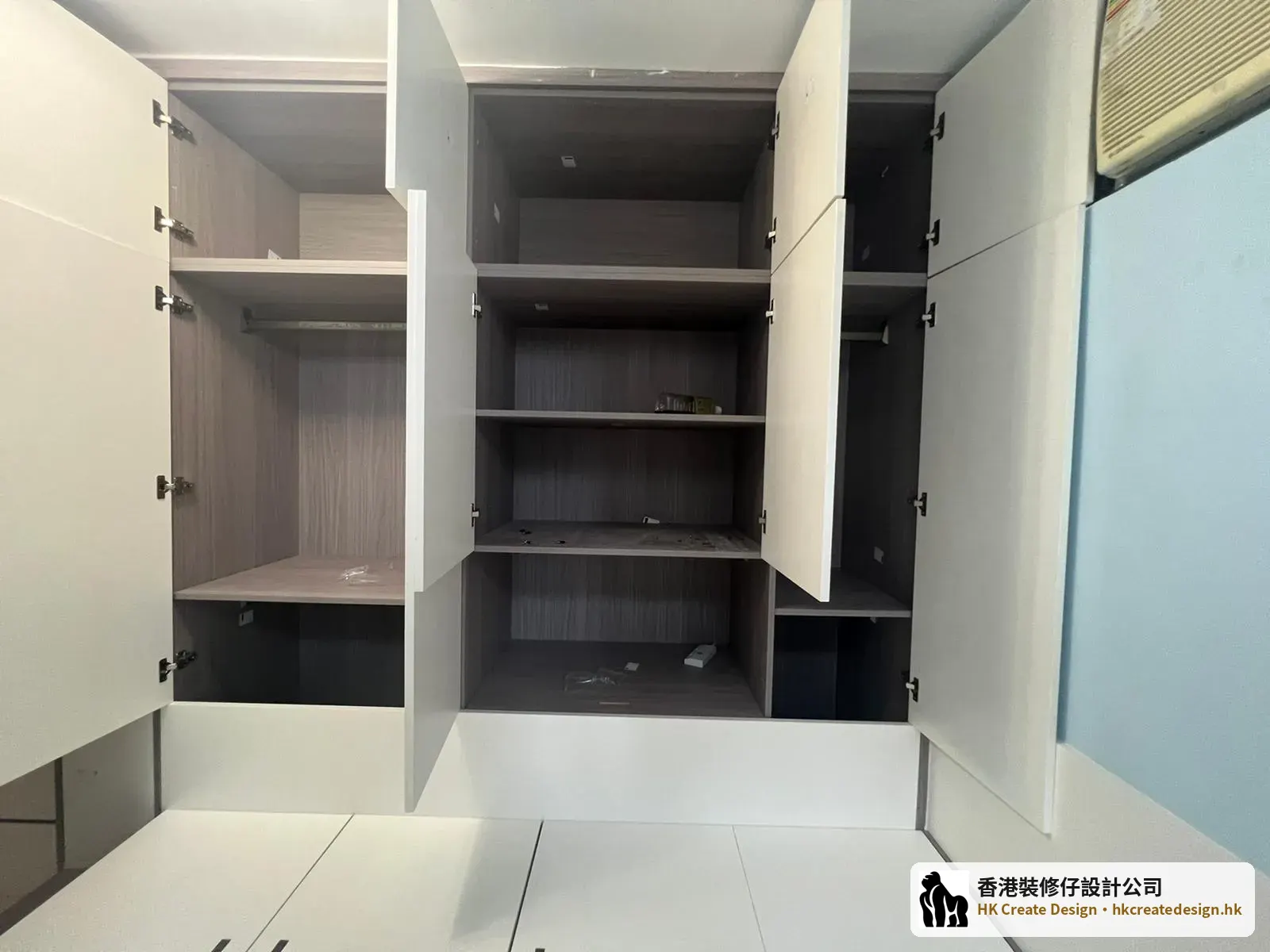
Example one: repainting and SPC flooring before moving into a 400 sq ft public rental flat
Assumptions
- Hypothetical examples, not actual cases or quotes.
- The paint area of the walls and ceiling is about 900 square feet. The walls are in good condition and can be painted directly.
- Allow 220 sq ft of SPC for living room and bedrooms (C4), plus 110 linear ft of skirting.
- Install 3 ceiling lamps (lights provided by customer) and clean and remove formaldehyde in 300 square feet.
How to calculate quantities
- E03 straightforward whole-flat repaint: HK$12 per square foot × 900 = HK$10,800
- "J01" SPC stone plastic flooring package: HK$60/square foot × 220 = HK$13,200
- J04 Skirting: HK$10 per linear ft × 110 = HK$1,100
- "H05" installation of ceiling lamp: HK$670/light × 3 = HK$2,010
- "L01" cleaning and formaldehyde removal after renovation: HK$16/square foot × 300 = HK$4,800
- Subtotal HK$31,910; it is also recommended to reserve 20% planning buffer (non-corporate charges) ≈ HK$6,382.
These items are Category C or do not alter fixed fixtures. The work comes to approximately HK$31,910.
If there is mold or cracks on the wall, E01/E02 treatment must be used instead; the paint area and floor area must be measured on site; if electrical modifications are Category B, an application must be made first. (see published rates)
06
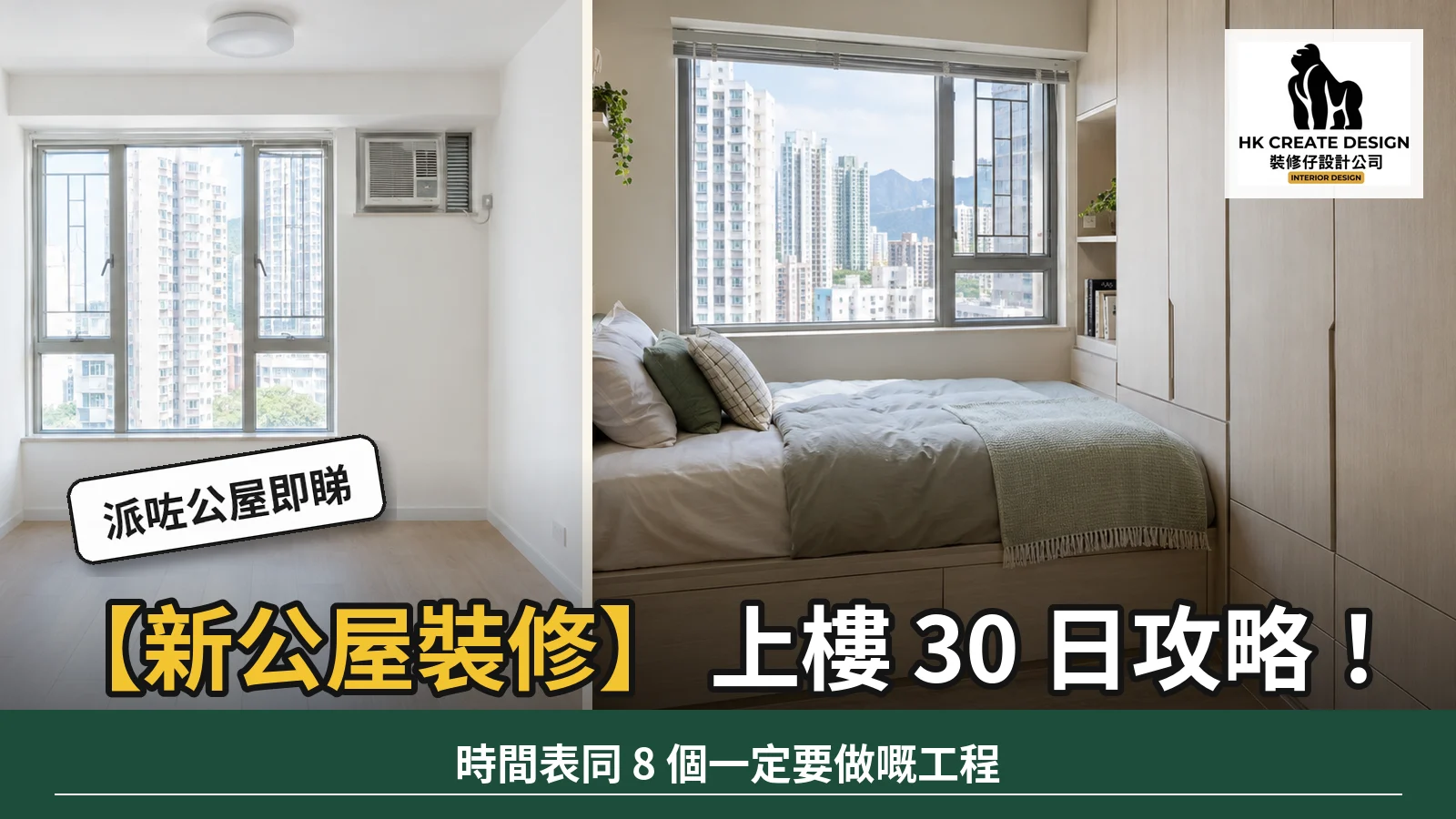
New tenants: 14 days rent-free period
Based on the average time households needed to prepare, the Housing Authority has offered new public rental tenants a 14-day rent-free fit-out period before tenancy commencement since 24 April 1993. A tenant may choose an earlier commencement date if needed.[5]. Residents affected by reconstruction or clearance will have a one-month rent-free period for their old tenancies in addition to the 14-day rent-free period for their new units.[5].
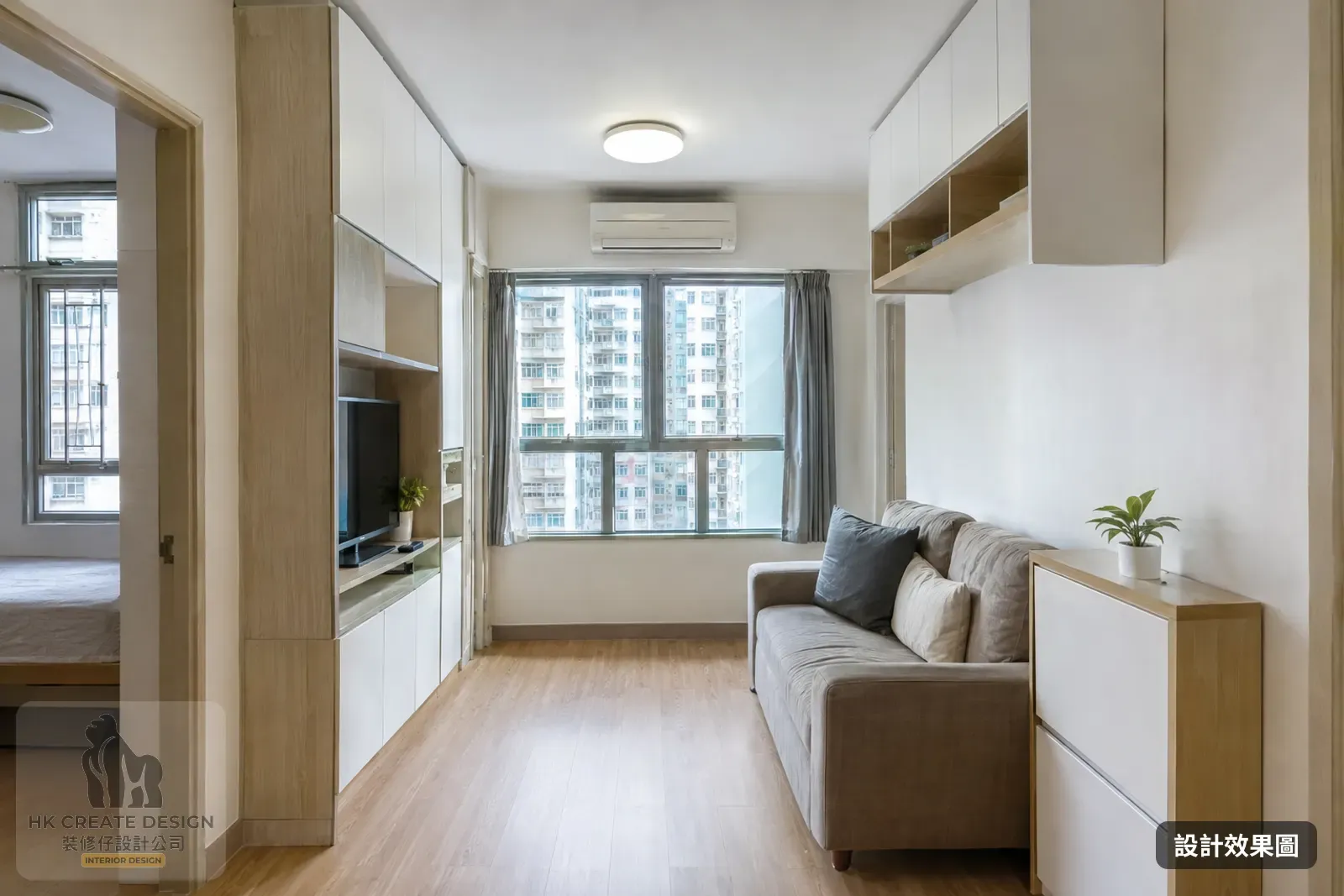
A 14-day period passes quickly, so decide what to do before handover. Prioritise work that is hard after moving in: painting while the flat is empty, living room and bedroom flooring,Bespoke wardrobeand kitchen cabinets. If Category B approval is needed, apply early rather than waiting for handover.
When new public housing units are occupied, the Housing Authority will dispatch one renovation contractor for every 250 residential units. For projects with no more than 500 units, at least two will be dispatched.[1]. The dispatched contractor must complete the project within one month from the date of the construction order, and must perform the work free of charge upon receipt of instructions from the tenant within six months of completion.[1]. If you choose another company, you should ask for the completion date and execution deadline to be stated.
- Determine the project scope and design before taking over the building
- Priority will be given to painting, flooring, and custom-made furniture within 14 days
- Submit Category B applications as early as possible
- Indicate the completion period and execution deadline
07
Point deduction system: some of the easiest things to do when renovating
The Housing Authority's estate management demerit point system covers 30 inappropriate behaviors. Violators will be deducted 3, 5, 7 or 15 points according to the seriousness; if the points accumulate to 16 within two years, the tenancy or temporary permit will be terminated.[2]. Immediate demerit points related to renovation include: careless dumping or disposal of renovation waste at refuse collection points, building premises or other public places; damage to rainwater/sewage pipes causing water seepage to lower-floor units[2].
The applicable items of the warning system are also related to renovation, such as "failure to repair pipes or sanitary equipment that should be maintained by the tenant, or failure to correct unauthorized alteration works as required by the Housing Authority", as well as causing noise nuisance, placing debris and blocking public areas[2]. First-time offenders will be given a written warning, and points will be deducted immediately for subsequent offenses within the two-year warning period.[2].
Housing Authority property management figures show that in June 2026, 25 households received written warnings under the Marking Scheme and 244 households received points.[3]. The most practical approach during the renovation period is: the renovation waste should be removed by the contractor on the same day and not placed in the corridor; noisy work should be avoided during rest periods; and things that have been changed should be dealt with according to the requirements of the Housing Authority.
- Renovation waste will be removed immediately and will not be placed in public places
- Be careful with pipes to avoid water leakage and falling downstairs
- Noise work procedures shall be carried out according to the time specified by the estate.
- Unauthorized changes must be corrected as required
You can swipe left or right on your phone to view the complete table.
| Item | Price number | Unit price | Minimum charge/metering |
|---|---|---|---|
| Directly turn oil on the whole house | E03 | HK$12 per sq ft | Minimum HK$3,700; only applicable if the wall is in good condition |
| SPC stone plastic flooring packaging materials | J01 | HK$60 per sq ft | Minimum 200 sq. ft. |
| Install skirting boards | J04 | HK$10 per linear ft | — |
| kitchen base cabinet | FUR14 | HK$1,300 per linear ft | — |
| Remove old cabinets | FUR45 | HK$170 per linear ft | — |
Figures are from our published price list. The final price is confirmed in a written quotation after an on-site measurement. (see published rates)
08
Repair first, renovation later: Projects the Housing Authority is responsible for
Many public housing problems are actually within the scope of maintenance by the Housing Authority. The Housing Authority's performance commitment states that after receiving maintenance requests from public housing residents, if the project is the responsibility of the Housing Authority, it will start within 12 days after the estate office receives the report; if it takes longer, the residents will be informed of the reasons within 5 days[4].
The comprehensive maintenance plan covers fixed installations provided by the Housing Authority, such as ceilings, floors, walls, windows, drainage facilities, sanitary ware and kitchen fittings, drinking water and flushing water installations, doors, security gates, clothes drying facilities and electrical installations, but does not include painting and renovation[6]. Phase four began in the second quarter of 2023 and covered 158 estates. By the end of April 2025, about 140,000 flats in 58 estates had been surveyed.[6].
In addition, the Housing Authority's guidelines mention that some public housing estates are equipped with bathtubs. The Housing Department will convert the bathtubs into shower stalls and add handrails free of charge for tenants in need. If the estate manager deems there is a real need, he can approve it. No recommendation from medical staff or the Social Welfare Department is required.[1]. For households withOlder residents, ask about this arrangement before deciding.
- If the sanitary ware, pipes, windows and doors are broken, report them to the Housing Authority for repair first.
- Pay attention to the Housing Authority’s commitment to start construction within 12 days
- Comprehensive maintenance not including paint and renovation
- If necessary, you can apply to convert the bathtub into a shower room with handrails
09
Design well within the rules: Category C can be effective
A public rental flat can be comfortable without changing the layout or kitchen and bathroom tiles. Three effective improvements are paint, flooring andBespoke furniture. Interior paint colours fall under Category C.[1], choose light-colored and matte paint to make small units shiny; the finishes of the living room, bedroom, and countertops all belong to Category C[1], you can lay SPC stone plastic flooring on the original floor tiles without removing the tiles.
E03 direct repainting of sound walls is HK$12 per sq ft, minimum HK$3,700. J01 SPC flooring including labour, materials, moisture barrier underlay, click-lock fitting and transition trims is HK$60 per sq ft, minimum 200 sq ft. J04 skirting is HK$10 per linear ft. (see published rates).
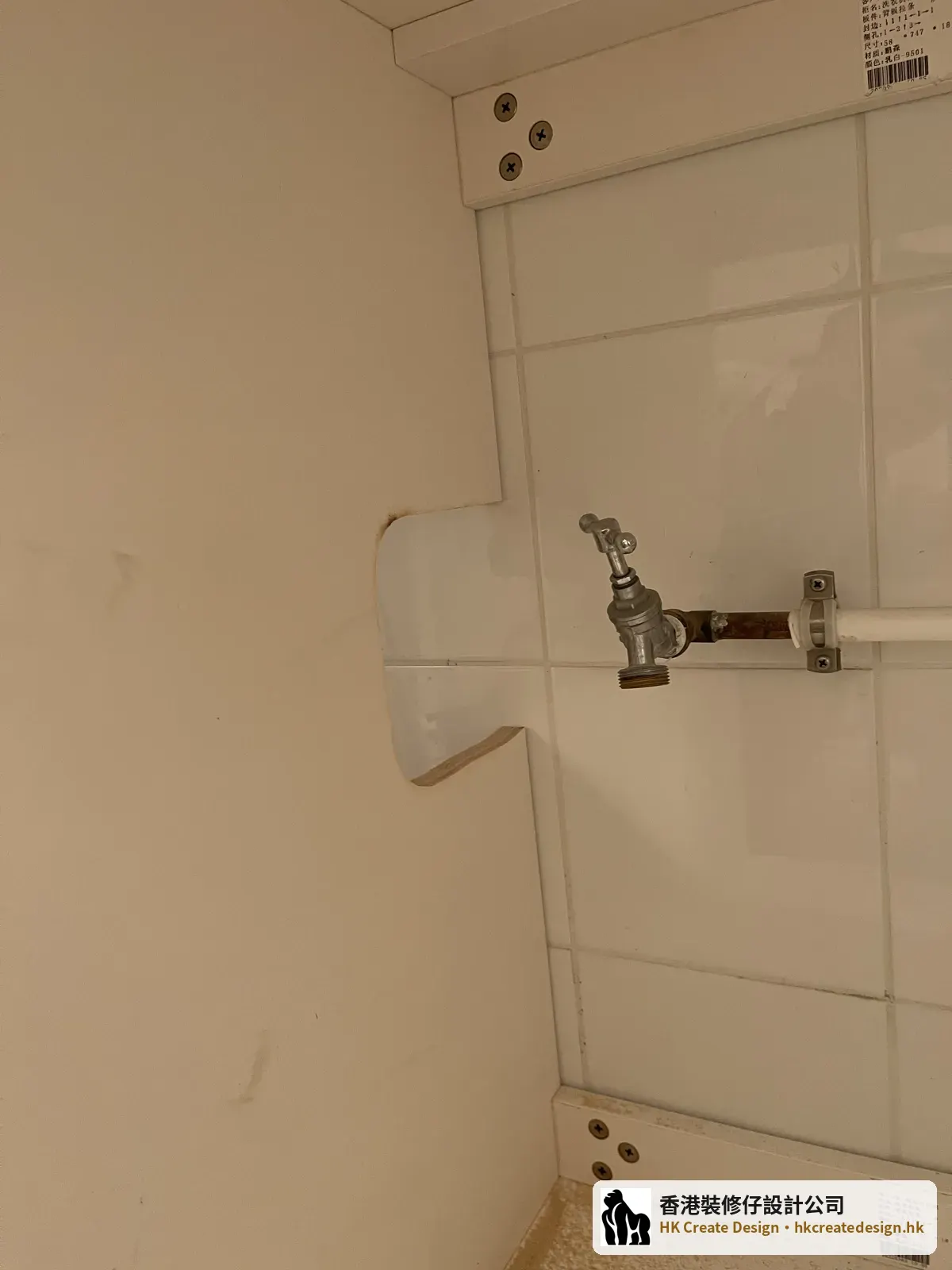
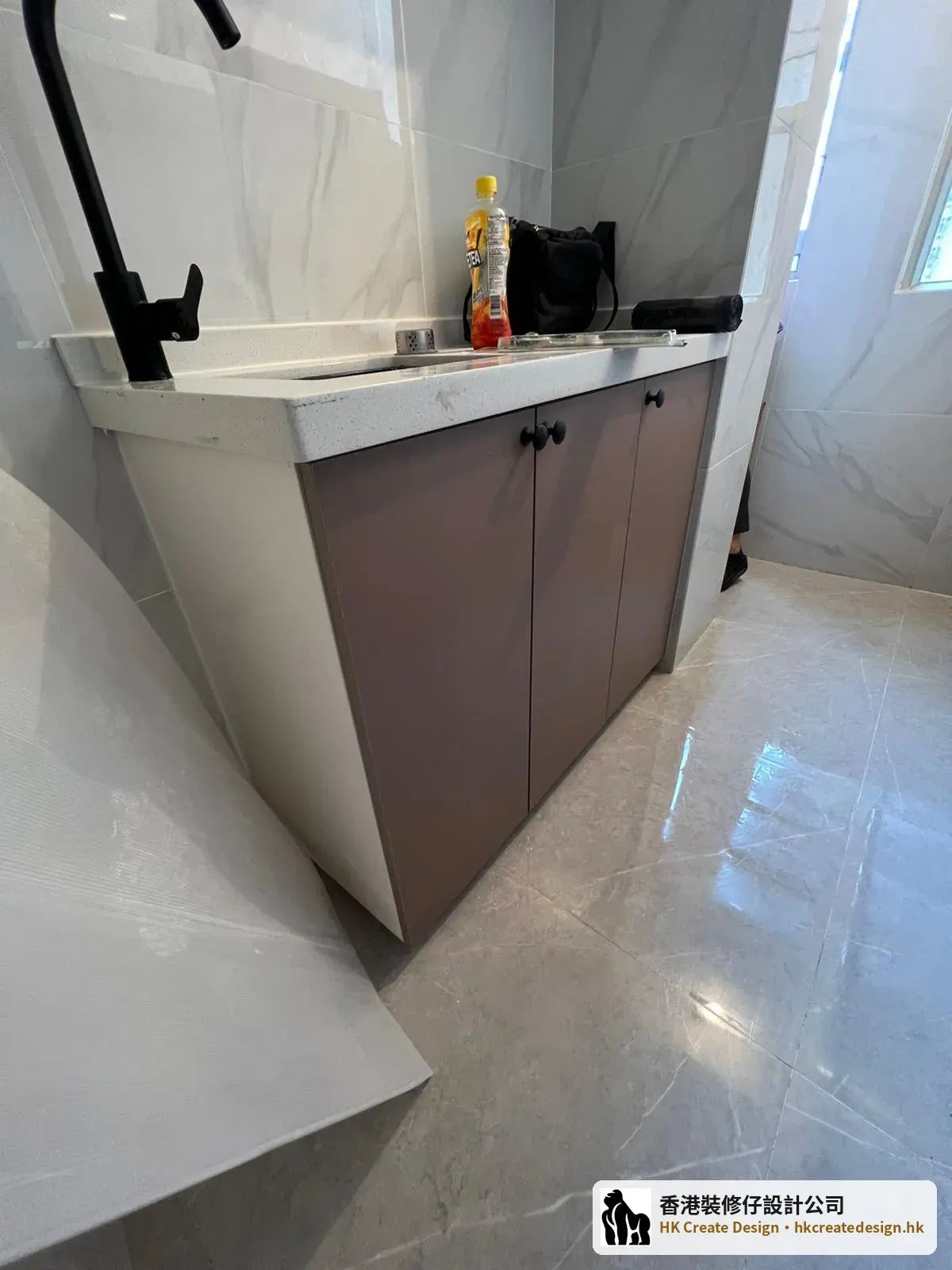
In terms of custom-made furniture, kitchen cabinets and floor cabinets belong to Category C[1]can be replaced. Bedroom wardrobes, bunk beds and sofa beds are usually furniture. Our package includes floor plans, coordinated services and furniture drawings, VR views and production drawings, particularly useful in a compact home. Follow the estate office's prescribed fixing method for prefabricated partitions[1].
- Light matte paint makes small units shiny
- SPC is laid on the original floor tiles without removing the tiles.
- Kitchen cabinets, wardrobes, and bunk beds are custom-made according to the square footage.
- Ask about installation methods before hanging heavy objects on prefabricated walls
10
Budget point allocation for public housing renovation
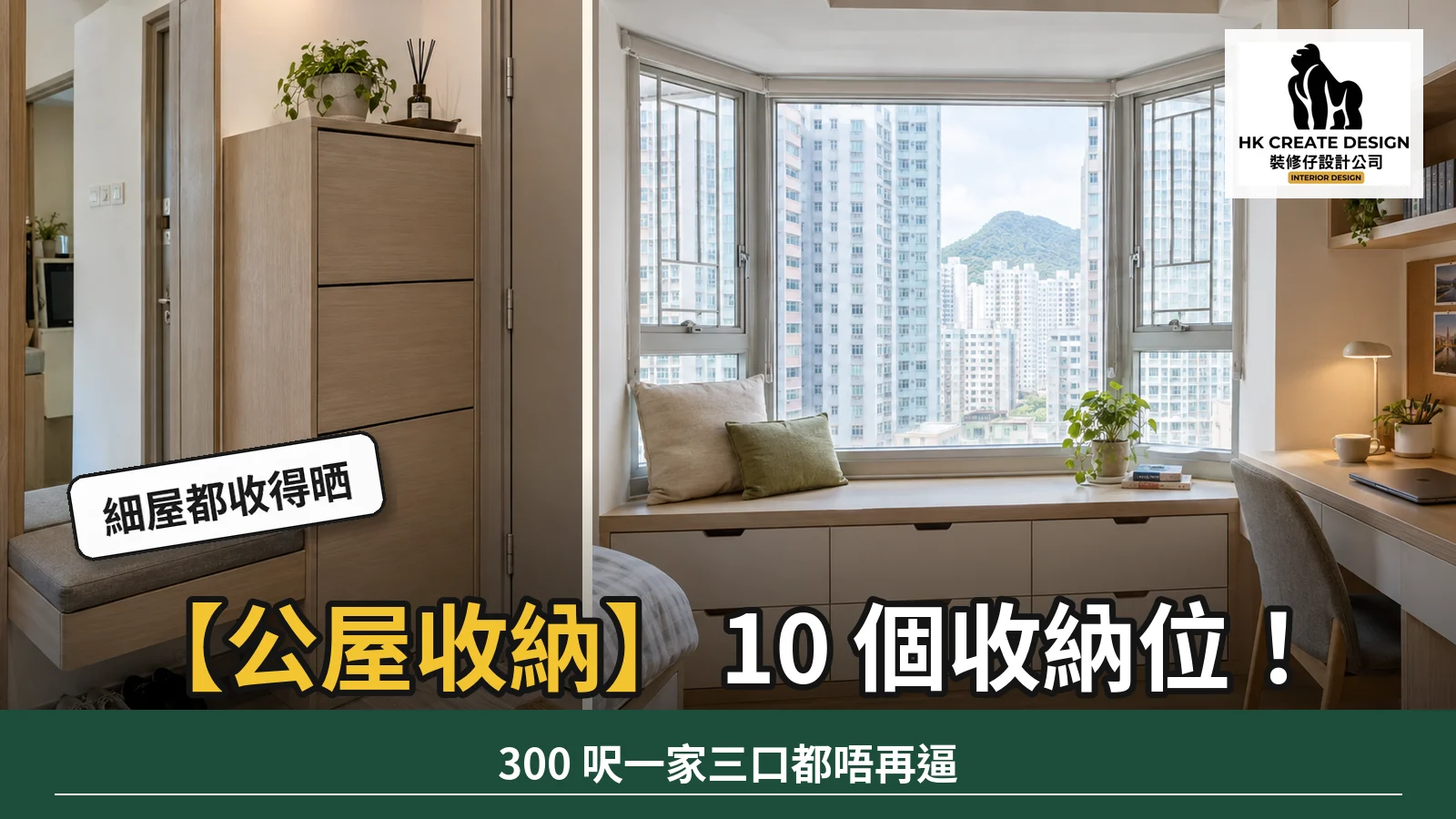
Public housing units are small in size, so it is best to focus your budget on areas that are “used every day and difficult to change in the future.” The first priority is usually storage: custom-made wardrobes, bunk beds, entryway shoe cabinets and kitchen cabinets, because they directly determine whether the unit is comfortable or not. The second is to paint the same floor. It is most convenient to do it before moving in. Do it first after moving in and drying the furniture. Third, add lighting and soft furnishings first. These can be added gradually after moving in.
Keep three amounts separate. Category C work can be priced and arranged directly. List Category B items separately until approval confirms feasibility. Finally allow for issues discovered after work starts, such as mould requiring wall stripping. Our quick estimate commonly suggests the owner set aside 20%, which is not a company fee.
If the budget is limited, you can do it in stages: paint, floor and necessary furniture should be done within 14 days after moving in, and then apply for Category B changes as needed. This way, you won't delay your check-in waiting for approval, and you won't spend your budget all at once.
- Prioritize furniture storage
- Paint and floor before moving in
- Category B projects are separately budgeted
- Do it in stages, leaving a planning buffer
Example two: replacing 6 linear ft of kitchen cabinets and worktop (C9)
Assumptions
- Hypothetical examples, not actual quotes.
- The old base cabinets and wall cabinets were removed and replaced with 6-foot-long base cabinets, 6-foot wall cabinets, and seamless stone countertops.
- The positions of the stove and the sink remain unchanged and there is no obstruction in the pipes.
How to calculate quantities
- FUR45 Remove old cabinets: HK$170 per linear ft × 6 = HK$1,020
- FUR14 Kitchen base cabinets: HK$1,300 per linear ft × 6 = HK$7,800
- FUR15 Wall cabinets: HK$1,250 per linear ft × 6 = HK$7,500
- FUR19 Seamless solid-surface worktop: HK$830 per linear ft × 6 = HK$4,980
- "K04" installation of range hood: HK$860/unit × 1 = HK$860
- Subtotal HK$22,160.
Cabinet replacement comes to about HK$22,160. Kitchen cupboards and base cabinets fall under Category C. [1]
Changing a sink or cooking bench (B11 or B12) requires prior approval. Avoid disturbing kitchen floor tiles because of the waterproofing membrane. [1] (see published rates)[1]
11
Common mistakes in public housing renovation
First, they think they can change by giving money. Fixtures in public housing estates belong to the Housing Authority. Modifications are not allowed for Category A, but approval is required for Category B first.[1]; If you do it before it is approved, you may have to restore it and be responsible for future repairs. Secondly, the tiles in the kitchen and toilet were removed to make "beautiful" ones, but the waterproofing membrane was damaged and water leaked downstairs, requiring compensation.[1], Zhong may be deducted points[2].
Third, cut grooves in structural walls to hide wires. The clause clearly states that structural concrete walls contain dense steel bars and improper cutting will compromise the structural safety.[1]. Additional sockets or wiring alterations (B15) require prior approval and a registered electrical contractor. A registered electrical worker must inspect and test the completed work.[1].
Fourth, placing tools and materials in the corridor or cutting bricks on the back stairs during renovation is a violation of the terms and conditions.[1]. Fifth, there is no clear written contract with the contractor regarding the completion period and performance responsibilities. The Housing Authority’s resident contractor has one month’s terms of completion and six months’ free delivery.[1], every other company you choose should demand the same clear commitment.
- Do not make unauthorized changes to Category A and B
- Do not remove kitchen and toilet tiles unless approved and redone for waterproofing
- Do not cut grooves in structural walls
- There is no material loading or construction on the stairs behind the corridor.
12
Let us help public housing tenants
HK Create Design (HK CREATE DESIGN) takes on jobs big and small: common public housing works such as repainting, SPC flooring, custom wardrobes and kitchen cabinets, replacing sanitary ware, even removing an old cabinet or two. Our designers and tradesmen with over 15 years' experience will discuss plans with you for free and help you work out which works are Class C and can be done directly, and which need prior application.
Send a floor plan and photos of the flat to WhatsApp 5243 7747 for a free consultation. Book a visit for a more accurate assessment. On-site measurement is free through 31 December 2026 for two or more work items, with no deposit. After that, the HK$500 fee is credited against the order. (see published rates). The AI quotation assistant and calculator with 117 published prices can provide a rough starting budget. The written quotation after site measurement confirms the price.
After completion, we will remove the garbage, sweep clean and perform basic cleaning, and will not leave renovation waste in public places. If deep cleaning or formaldehyde removal is required, we can cooperate with a professional cleaning company to follow up.
- WhatsApp 5243 7747 Free consultation
- HK$500 for on-site measurement (rebate upon order placement)
- AI quotation/calculator is for reference only
- Complete removal of waste and basic cleaning
FAQ
7 practical questions answered
01Can I replace the kitchen cabinets in public housing?
Kitchen cabinets and floor cabinets are Category C and do not require prior approval from the Housing Authority.[1]; However, if the stove and sink belong to Category B, they must be approved first.[1]. When changing cabinets, don't worry about the pipes being waterproofed.
02Can the kitchen wall be removed in public housing to create an open plan?
No. The partition wall between the kitchen/toilet/bathroom belongs to Category A and no modification is allowed. The door and the kitchen fire door also belong to Category A.[1].
03Do I need to apply for extra sockets in public housing?
User electrical boxes, wires and switches and sockets belong to Category B and require prior approval from the Housing Authority.[1];The terms also prohibit the removal or modification of small circuit fuses or anti-leakage equipment[1].
04Can public housing have wooden floors or SPC?
The floor finishes in the living room, dining room and bedroom belong to Category C and do not require approval.[1]; Kitchen and toilet floor tiles belong to Category B[1]. J01 SPC flooring is HK$60 per sq ft, minimum 200 sq ft. (see published rates).
05Is it necessary to use a renovation contractor appointed by the Housing Authority?
No. The Housing Authority's guidelines state that tenants can entrust anyone to carry out renovation works, not limited to contractors on the assigned or reference list.[1].
06How long will it take for new public housing to be renovated?
Since 24 April 1993, new public rental tenants have had a 14-day rent-free period to renovate before their tenancy starts.[5].
07Will points be deducted for renovation?
Those who accumulate 16 points within two years of the demerit point system will be subject to termination of the lease; careless disposal of renovation waste, damage to rainwater/sewage pipes causing water seepage to the lower floors are immediate demerit points.[2].
CHECK THE BASIS
Data and technical basis, sources can be verified
- [1]Hong Kong Housing Authority: Guide to the Reference List of Decoration Contractors, June 2022 revision, with schedule of decoration conditions Accessed: 2026-11-01
- [2]Hong Kong Housing Authority: Estate Management Points Deduction System Accessed: 2026-11-01
- [3]Hong Kong Housing Authority: Property Management Accessed: 2026-11-01
- [4]Hong Kong Housing Authority: Performance Pledge Accessed: 2026-11-01
- [5]Legislative Council Panel on Housing: Briefing on Housing Policy Information on Public Housing Accessed: 2026-11-01
- [6]Legislative Council Panel on Housing: Latest progress on comprehensive maintenance plan Accessed: 2026-11-01
- [7]Hong Kong Housing Society: Frequently Asked Questions Accessed: 2026-11-01
- PricesHK Create Design 2026 detailed project budget and public price list Accessed: 2026-11-01