01
Establish how noise enters the room
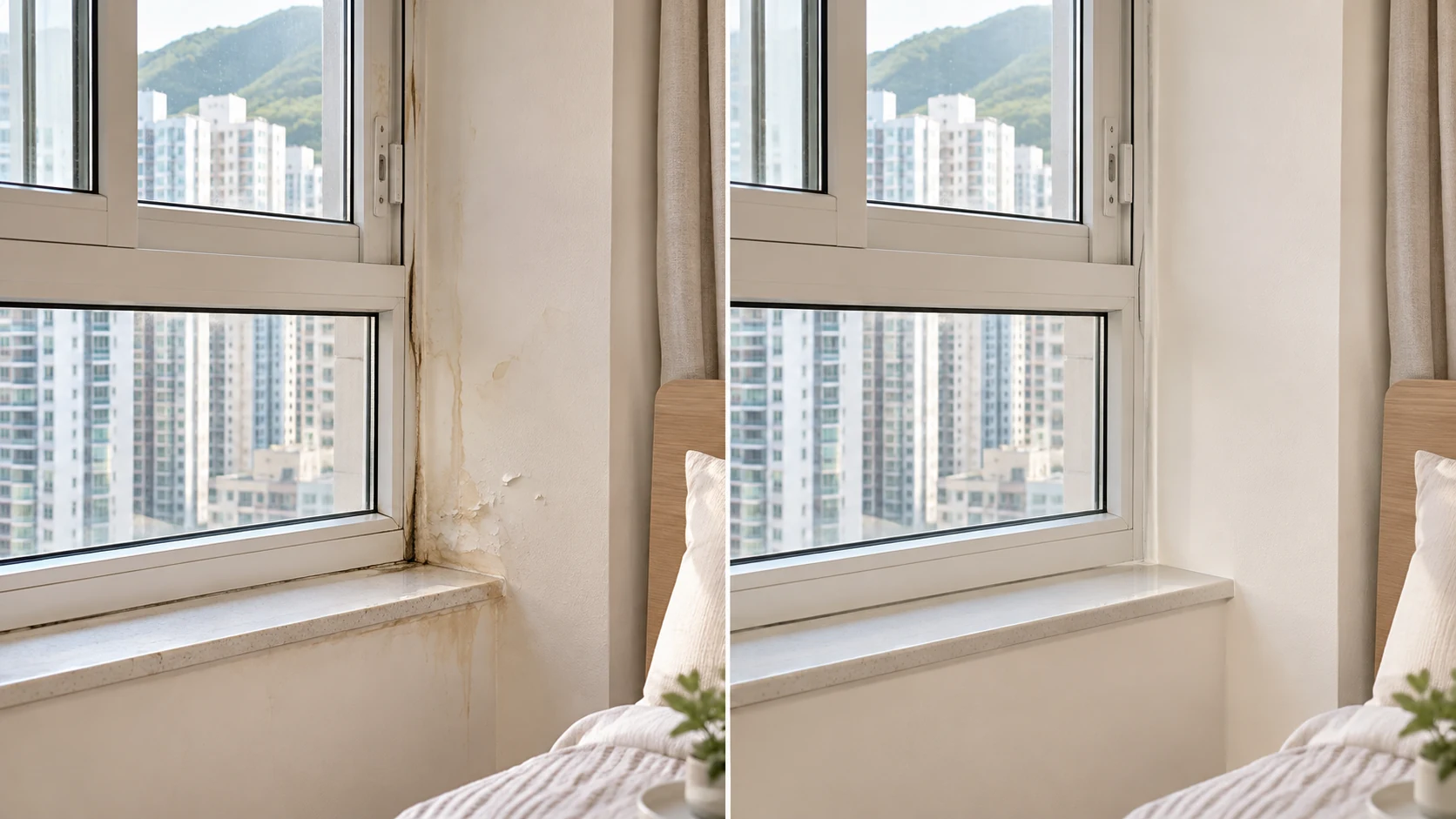
Start by finding the noise paths. Sound can pass through the pane, gaps between sash and frame, frame-to-wall joints and openings around air conditioners or fans. Thick glass alone may disappoint if those gaps remain.
Traffic is a widespread noise source in Hong Kong. EPD estimates it affects about 900,000 people. Unlike industrial, construction and neighbourhood noise, road traffic cannot be comprehensively regulated through the Noise Control Ordinance. Planning roads away from homes is a primary preventive measure.[1] For an existing roadside home, the windows are a principal place to reduce incoming noise.
The Environmental Protection Department also reports that, after years of work, traffic noise at around 90% of newly built residential buildings is now below 70 dB(A) L10(1 hour).[1] but older buildings, roadside walk-ups and homes beside flyovers can still experience substantial noise.Older flat renovationis a common opportunity to improve window sound insulation.
Bus and lorry engines produce low-frequency noise that is harder to attenuate than high-frequency sound. Ask for figures relevant to traffic. Our customers often mention buses and motorbikes at night, so we first establish where and when the noise occurs.
- Identify the noise source: buses, trains, market activity or neighbours
- Note the noisiest times
- Check for draughts around the sash
- Check for gaps around the air conditioner and exhaust fan
You can swipe left or right on your phone to view the complete table.
| Combination | Rw(C;Ctr) | Rw+C | Rw+Ctr, more relevant to road traffic |
|---|---|---|---|
| 6(16Argon)6 insulating glass | 33(-1;-5) dB[2] | 32 dB | 28 dB |
| 6(16Argon)6.8SS acoustic laminated insulating glass | 39(-2;-6) dB[2] | 37 dB | 33 dB |
| 6(16Argon)8.8SS acoustic laminated insulating glass | 42(-2;-7) dB[2] | 40 dB | 35 dB |
Add the manufacturer's C or Ctr correction to Rw to calculate Rw+C or Rw+Ctr. Ctr is relevant to low-frequency-rich noise such as road traffic. These are laboratory results for the glass, and the installed window can perform differently. [2]
02
How to read Rw, C and Ctr
Rw is a weighted sound reduction index in decibels. Higher values indicate greater sound reduction under test. Examples from Saint-Gobain are 33(−1;−5) dB for 6(16Argon)6, 39(−2;−6) dB for 6(16Argon)6.8SS and 42(−2;−7) dB for 6(16Argon)8.8SS.[2]
C and Ctr in brackets adjust Rw for different noise spectra. C suits sources with more mid- and high-frequency sound. Ctr is more representative of urban road traffic. Adding Ctr gives 28 dB for 6(16Argon)6 and 35 dB for 6(16Argon)8.8SS.[2]
Request the complete Rw(C;Ctr) figures. Products with the same headline Rw, such as 42 dB, can have different Ctr corrections and different traffic-noise performance.
Manufacturer ratings often cover the glass build-up in a laboratory. Frames, gaskets, opening style and installation change the performance of a completed window. Ask for whole-window testing where available. Otherwise check the proposed seals and the contractor's installation experience.
- Ask the supplier for Rw(C;Ctr)
- For traffic noise, compare Rw+Ctr
- Distinguish glass and whole-window test results
- Use the same metric for comparisons

03
Choosing acoustic glazing
Single glazing provides limited acoustic insulation. Extra thickness alone may bring only a modest gain. Insulating glass incorporates a cavity, which the Buildings Department's code identifies as beneficial for both noise and thermal control.[4] Equal-thickness panes in ordinary insulating glass can perform poorly at particular frequencies. Acoustic units often use panes of different thicknesses.
Acoustic laminated glass uses a damping interlayer. Saint-Gobain's STADIP SILENCE bonds two clear panes to such an interlayer. In its insulating combinations, Rw rises from 33 dB for ordinary 6(16Argon)6 to 39–42 dB.[2] This is one of the clearest improvements available from the glass alone.
Consider weight and thickness. Laminated insulating units are much heavier than single glass. Check stays and fixings on casements, rollers on sliders, and the available depth of the profile. Older sashes may be unsuitable. For more on specifying the glass, see ourAluminium window glassarticle.
Clear acoustic glazing generally has little effect on appearance, but a low-E coating can change its tint or reflectance. Check estate façade requirements.
- Consider acoustic laminated insulating glass first
- Use panes of different thicknesses
- Confirm the glazing fits the frame profile
- Check the load capacity of stays or rollers
「Frame seals and gaskets matter as much as glass. If the sash leaks air, noise can still pass through after reglazing.」
04
Frames and seals: where noise gets through
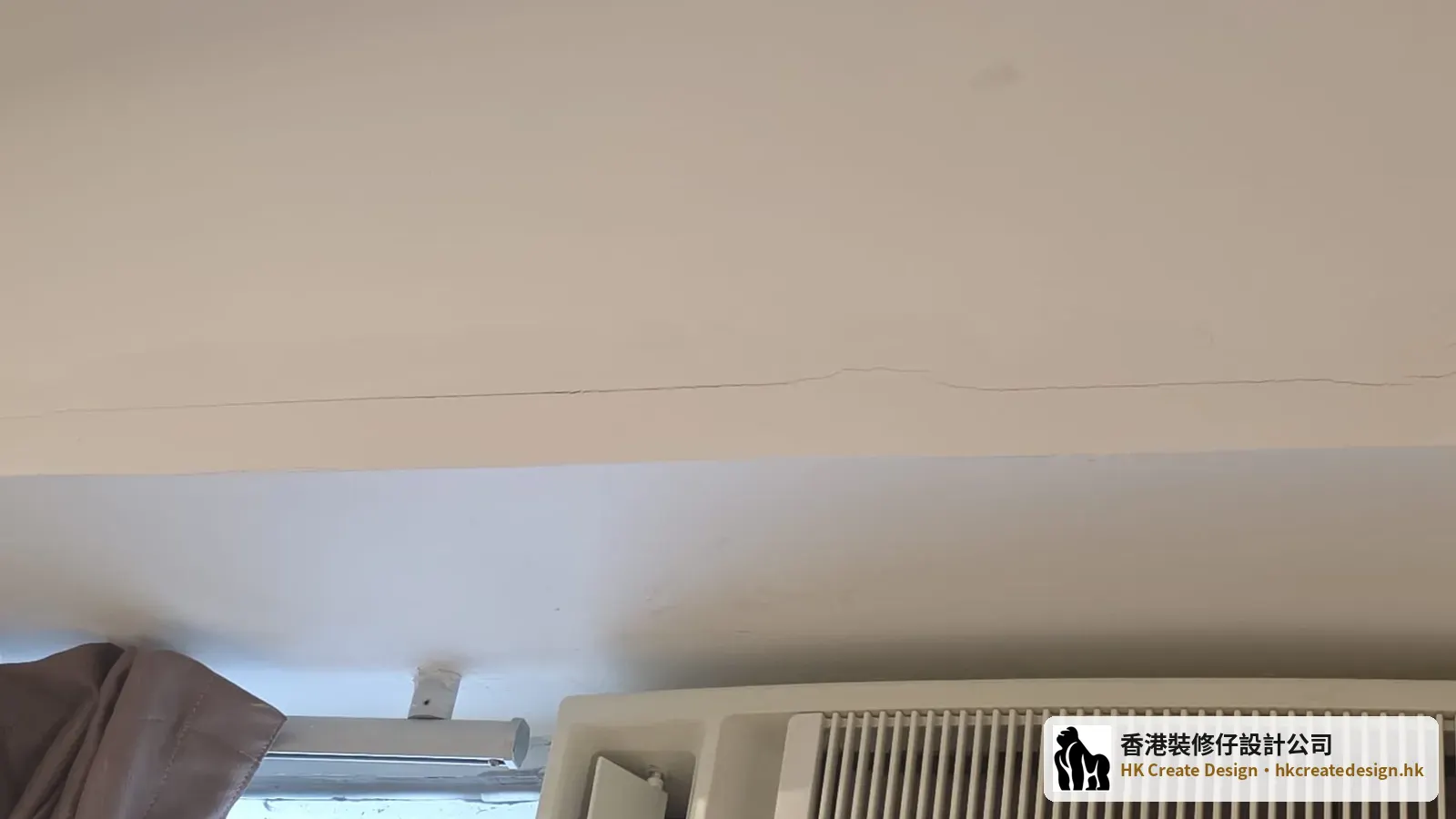
Even a narrow opening can admit sound. Frame seals are therefore as important as the glazing. A closed casement compresses a gasket. Sliders need clearance to move and typically provide a weaker acoustic seal.
Consider well-sealed casements, or fixed lights with an openable vent, in place of a leaky slider. Changes to the opening style must still meet statutory natural-light and ventilation requirements.[5] retain the necessary openable windows.
Choose resilient, durable gaskets, ideally with two seals. Hard or aged gaskets leave gaps. Buildings Department reference costs for replacement are around HK$100–250 per sash,[7] Replacing worn gaskets is a lower-cost first step if a modest improvement is sufficient.
Seal the frame-to-wall joint as well. When fitting a replacement frame, fill gaps with suitable materials, use weather-resistant sealant outside and a suitable mould-resistant product inside. OurAluminium windowsFor example, use a suitable DOWSIL mould-resistant sealant inside and weatherproof DOWSIL 791 or similar outside.Window perimeter sealantsee our guide to perimeter window sealant.
- Casement windows generally seal more tightly than sliders
- Retain the required openable area
- Replace aged gaskets first
- Fill gaps around the frame
Example 1: using Rw(C;Ctr) to calculate a difference for traffic noise
Assumptions
- Option A: 6(16Argon)6, Rw(C;Ctr) = 33(−1;−5). [2]
- Option B: 6(16Argon)8.8SS, Rw(C;Ctr) = 42(−2;−7). [2]
- For a window facing road traffic, compare Rw+Ctr.
How to calculate quantities
- Option A: 33 − 5 = 28 dB.
- Option B: 42 − 7 = 35 dB.
- Difference: 35 − 28 = 7 dB. On Rw alone the difference is 42 − 33 = 9 dB.
For traffic noise the two build-ups differ by about 7 dB, compared with 9 dB on the unadjusted Rw rating.
Laboratory values for the glass build-up. Frames, gaps and installation can reduce the actual improvement. [2]
05
Choosing between the options
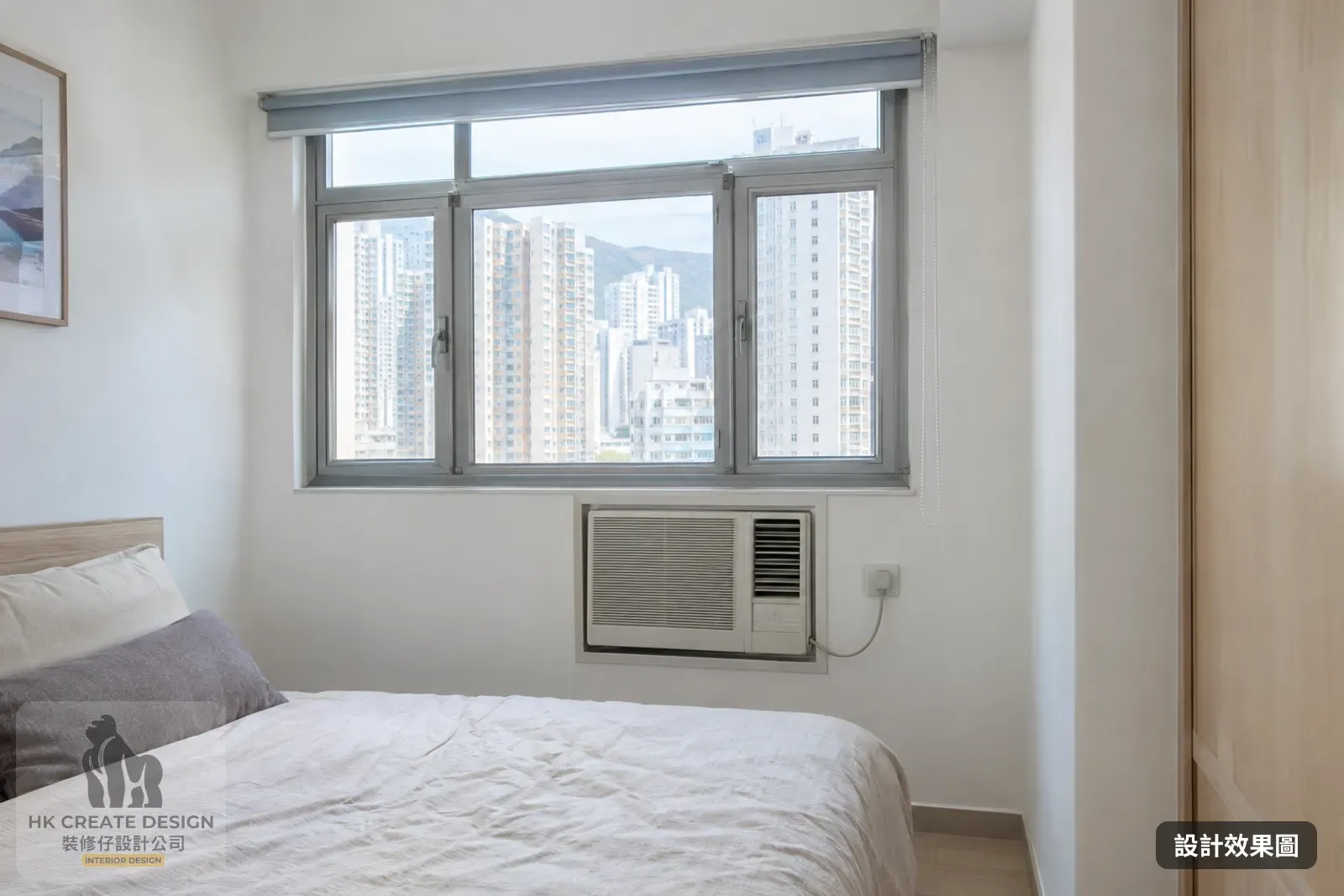
1. Keep a sound frame with a deep enough glazing pocket and replace only the glass. This is cheaper but performance remains limited by the frame seals. 2. Replace the frame, gaskets and glass together to improve sealing and acoustics. Follow the applicable minor works submission procedure.[5]
3. Add a secondary window inside the existing one. The air space can improve sound insulation without altering the external window. A deep enough sill is necessary. Opening and cleaning two layers takes more effort. Ask the supplier for results at the proposed cavity depth and seal detail.
4. EPD's baffled acoustic window uses two layers. An inner sliding panel overlaps the outer opening, interrupting the direct sound path while allowing ventilation. EPD reports average reductions around 4–11 dB(A), reaching 11 dB(A) in the cited example.[3] This arrangement is usually designed into new housing projects.
5. Add a heavy curtain and pelmet. Heavy curtains mainly reduce room reverberation and have limited effect on incoming traffic noise. Listed item F04 is HK$460 per linear foot of pelmet with an eight-foot minimum.[8]
- Sound frame: consider replacing just the glass first
- Failing frame: consider complete replacement
- Deep sill: consider secondary glazing
- Consider heavier curtains in the bedroom
06
Combining noise reduction and ventilation
Closing a window blocks more noise, while opening it supplies fresh air. The Buildings Department requires window works to maintain statutory natural lighting and ventilation,[5] so retain the required openable area and avoid sealing the window permanently.
EPD's innovative designs address ventilation as well as noise. Unlike a conventional closed double-glazed window coupled with air conditioning, a suitable baffled design can reduce exposure while admitting outside air.[3] A baffled acoustic window is one example.
In an existing flat, residents may close bedroom windows during noisy periods and ventilate when quieter. A design with a separate vent allows the main sash to stay shut. Keep the required windows and exhaust fans functioning in bathrooms and kitchens.
If the household includesOlder residentsor children, indoor air quality also needs attention. Long periods with closed windows require a suitable source of fresh air, such as designed mechanical ventilation. The solution depends on the flat.
- Keep required ventilation openings functional
- Consider a separate ventilation light
- Keep kitchens and bathrooms ventilated
- Provide another fresh-air supply if windows stay closed
You can swipe left or right on your phone to view the complete table.
| Plan | practice | Indicative effect | Ventilation | Pay attention to |
|---|---|---|---|---|
| Replace the glass and retain the frame | Replace the glass with laminated or acoustic laminated insulating glass | Glazing Rw can increase from 33 to 39–42 dB [2] | No change | Older profiles may lack depth for thicker glass |
| Complete acoustic window replacement | New frame, gaskets and acoustic glazing | Depends on the complete design; check manufacturer data | No change | Applicable minor works submissions required [5] |
| Secondary glazing inside the existing window | Install a second window inside the original | Depends on the cavity and seals | Both layers must be opened for a clear opening | Allow enough sill depth |
| Acoustic window with a baffle | Two window layers, with the inner slider acting as a baffle | Average reduction around 4–11 dB(A) [3] | Can maintain natural ventilation [3] | Usually incorporated during new-build design |
| Heavy curtains and pelmet | Add sound-absorbing fabrics inside the room | Mainly reduces reverberation indoors | No change | Curtains cannot replace effective window seals |
This table compares options in general terms. Frames, gaps and installation affect the result. [2][5][3]
07
Choose a design for each room and flat
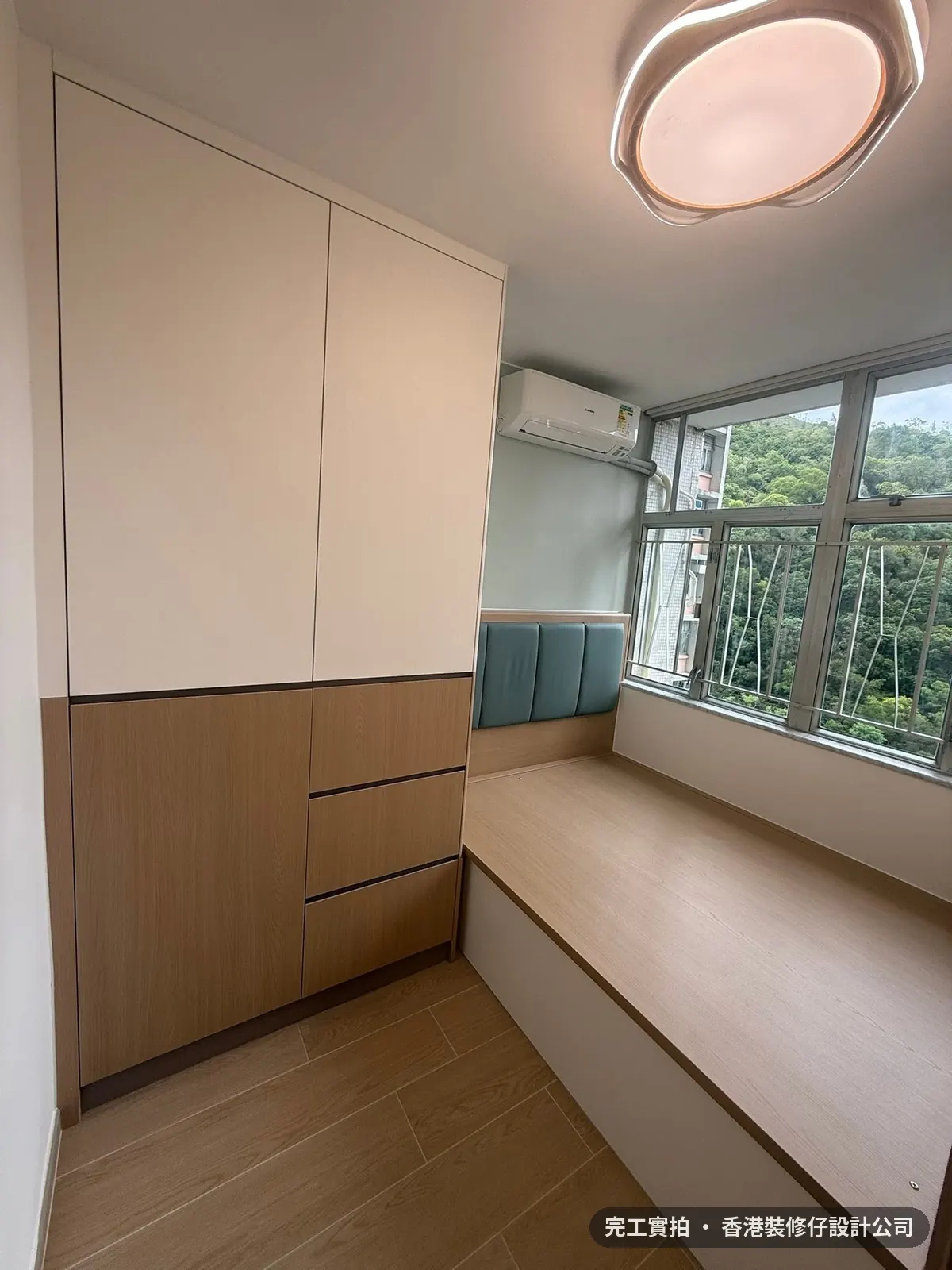
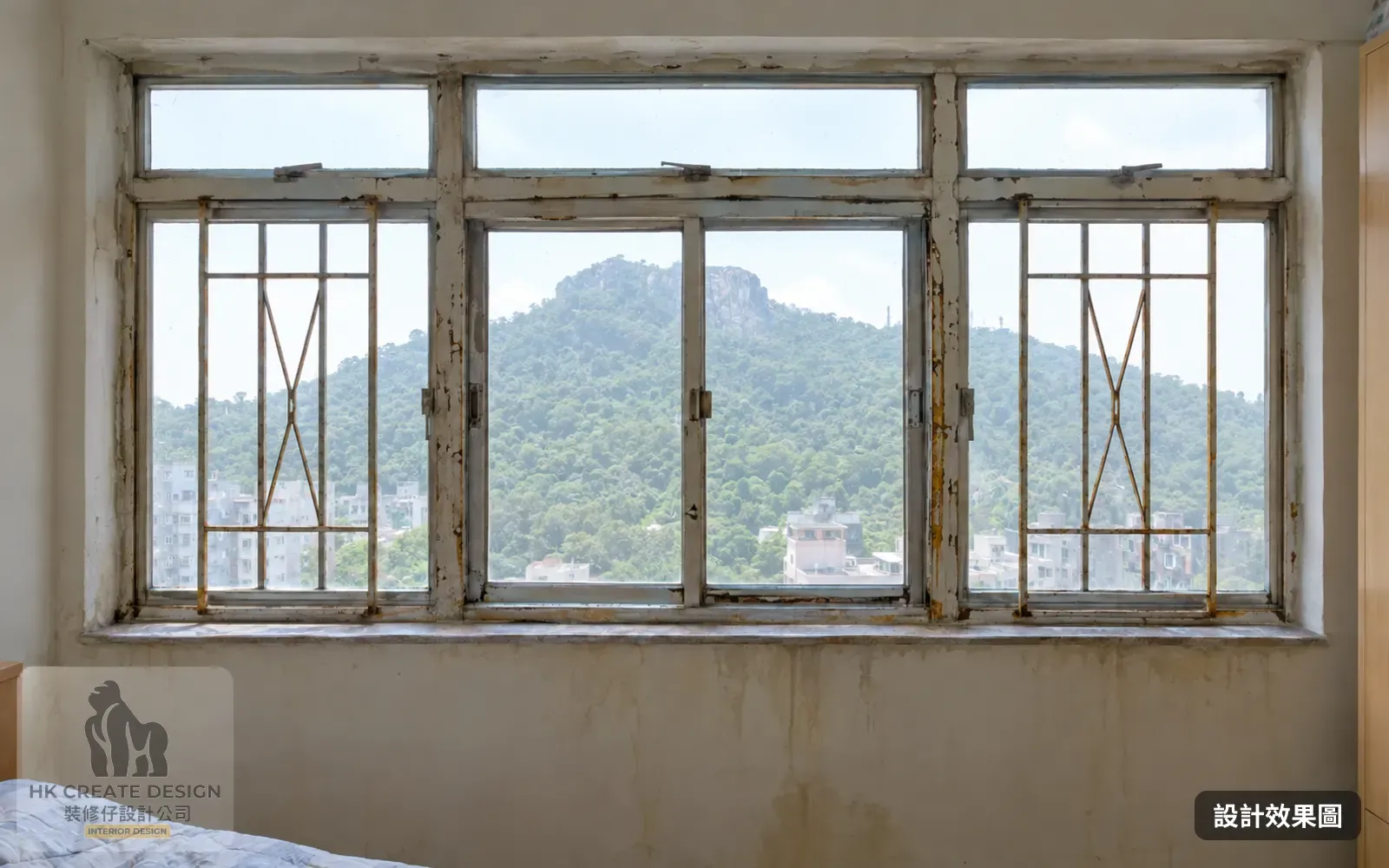
Roadside walk-ups and older flats often have single glazing, ageing frames, hardened gaskets and multiple gaps. Complete replacement may give a more noticeable improvement and can address stays, perimeter leaks andWaterproofing. Tackling these during an older flat's renovation can avoid reopening the area later.
At a mid- or high-level flat beside a flyover or bus stop, low-frequency engines can dominate. Compare Rw+Ctr. Saint-Gobain gives 35 dB for 6(16Argon)8.8SS against 28 dB for ordinary 6(16Argon)6, a 7 dB difference.[2] Acoustic laminated insulating glass is worth considering in this setting.
Near an above-ground railway, trains produce repeated, recognisable noise. For the bedroom consider well-sealed casements and acoustic glass, and choose the living-room specification according to use. If the main source is neighbours or building services, investigate walls and doors as well.
Room requirements differ. Prioritise bedrooms, then the study and living room, with ventilation first in kitchens and bathrooms. Allocate the budget by room instead of specifying the most expensive glazing everywhere. When HK Create Design carries outWhole-flat renovationwe discuss how the owner uses each room before choosing the window specification.
Tenants need the owner's consent for window replacement. Follow the applicable minor works filing procedure.[6] Tenants can try heavy curtains or draught seals without changing the façade, then discuss replacement with the owner.
- Older roadside home: consider full replacement
- Low-frequency noise: compare Rw+Ctr
- Prioritise the bedroom
- Tenants need the owner's agreement
08
Professional and official guidance
The Environmental Protection Department says careful planning that separates roads from homes is the most effective way to address traffic noise. It takes part in planning new residential developments. Traffic noise at around 90% of new residential buildings is now below 70 dB(A) L10(1 hour).[1] In existing buildings, individual owners can often improve the windows.
EPD notes that sound can transmit through window components or reflect through the cavity. Absorbing material on surfaces such as the inner frame or cavity reveals can improve attenuation.[3] The window geometry and absorbing surfaces matter as well as the glass.
The Buildings Department's 2018 glass code describes insulating units as beneficial for sound and thermal insulation. The cavity may be gas filled.[4] Manufacturer Saint-Gobain publishes Rw(C;Ctr) values for individual glazing combinations.[2]
Official and manufacturer guidance points to the whole assembly: glass, cavity, seals and design all affect noise reduction.
- Addressing traffic noise through planning and windows
- Sound-absorbing materials can improve performance
- Insulating glass can improve sound insulation
- Assess the whole window
09
Common misconceptions about acoustic windows
1. Assuming thicker glass alone will solve noise. A thicker single pane gives limited improvement. Saint-Gobain's tested laminated acoustic IGUs show a 6–9 dB Rw advantage over its ordinary IGU.[2]
2. Expecting complete silence. Even a good window cannot remove all outside sound, especially low-frequency traffic. Aim for a meaningful reduction.
3. Ignoring gaps after upgrading the glass. Slider clearances, hard gaskets and unfilled perimeter joints can undermine the result. 4. Sealing a required window permanently can breach ventilation requirements.[5]
5. Ordering without the build-up and Rw(C;Ctr) makes comparisons and verification difficult. 6. Replacing a complete window still requires the applicable minor works documents.[6]
- Consider the build-up as well as thickness
- Realistic expectations
- Seal gaps
- Keep windows openable
- Request acoustic test data
- File the required documents
Example 2: interpreting the Environmental Protection Department's 11 dB(A) figure
Assumptions
- According to the Environmental Protection Department, baffle-type acoustic windows can reduce noise by up to 11 dB(A), equivalent to increasing the distance from the road by a factor of 12.6 or cutting traffic volume by 92%. [3]
- Assume the flat is 20 m from the road, with 1,000 vehicles per hour at peak times.
How to calculate quantities
- Equivalent distance: 20 m × 12.6 = 252 m.
- Equivalent traffic flow: 1,000 × (1 − 92%) = 80 vehicles per hour.
An 11 dB(A) reduction is roughly equivalent to moving the flat 252 m away from the road or reducing traffic from 1,000 to 80 vehicles per hour.
EPD uses this comparison to illustrate the decibel scale. The result at a particular window depends on the design and site. [3]
10
Handover checks for an acoustic window
1. Check the glass specification. Compare overall thickness and markings with the quoted build-up. The IGU cavity should be free from dust and moisture.
2. Close the window and inspect gasket compression and corners on all four sides. Feel for draughts on a windy day and check that perimeter sealant is continuous.
3. Listen from the same position at the same time of day before and after the work. A phone sound-meter app may help with a rough comparison, but a professional measurement needs suitable equipment.
4. Test operation and locking. Heavier casements should move smoothly, remain stable and lock securely. 5. Collect the glass specification, manufacturer's acoustic data, warranty and minor works documents. Completion submissions are due within 14 days after completion.[6]
- Verify the glazing specification
- Check gaskets and corners
- Compare at the same time of day
- Test opening, closing and locking
- Request the documents
You can swipe left or right on your phone to view the complete table.
| Item | The quotation should specify | Usually included? |
|---|---|---|
| Glass build-up | For example, specify the interlayer in a 6(12A)6.38 acoustic laminated unit | What should be included |
| Manufacturer's acoustic data | Glass Rw(C;Ctr) rating | Ask if it has not been supplied |
| Window frame profile | Frame series and opening style (casement or sliding) | What should be included |
| Rubber strip | Gasket material and double seals | What should be included |
| Window perimeter seals | Exterior weather seal, interior mould-resistant sealant and suitable gap filling | May be unspecified |
| Minor works submission | Minor works class and responsible party [6] | should be written clearly |
| Form a curtain pelmet | F04: HK$460 per linear foot, eight-foot minimum [8] | Charged separately |
| Aluminium window rates | Subject to site measurement and a written quotation | — |
Acoustic windows are quoted individually. Related items such as pelmets have published rates. [6][8]
11
Programme and sequence
Acoustic units are made to measure, and laminated IGUs generally take longer than ordinary panes. Identify the noise source, measure, select a design, obtain a written quote, order, file the applicable minor works documents, install, seal, make good and inspect. Class I and II initial submissions are due at least seven days before work starts.[6]
During a whole-flat renovation, replace windows before plastering and painting so that making good can be coordinated withMasonry and tiling, Paintingat the same time. A single bedroom window can also be arranged separately.
Installation involves drilling. Check the estate's working hours and legal noise restrictions; see our guide to renovation noise. Schedule removal away from typhoons and heavy rain because the opening will be exposed temporarily.
Work can be phased. Treat the bedroom window on the noisiest elevation first, assess the result over time and then decide about other rooms.
- Allow a longer fabrication lead time
- Allow time for submissions
- Avoid adverse weather
- Work can be phased

12
What affects the cost?
The cost depends on the glazing, frame series, dimensions and number of sashes. Acoustic laminated IGUs cost more than ordinary glazing, and replacing the whole window costs more than glass alone. We quote after measurement.
For aged seals, start with the gaskets. Buildings Department cost data give around HK$100–250 per sash for replacement,[7] Replacing gaskets mainly cuts air leakage, so the improvement in sound insulation alone may be modest.
Related list prices include F04 pelmets at HK$460 per linear foot, minimum eight feet, and E05 local mould treatment and repainting at HK$1,250 per wall surface.[8] For a cost breakdown, consult ourAluminium window replacement pricesarticle.
Compare the glass build-up and acoustic ratings, frame series, gaskets and seals. A price difference of several thousand dollars may reflect a different glazing specification.
- Confirm the acoustic window price in writing
- New gaskets are a lower-cost starting point
- Associated items at published rates
- Compare the specification as well as the total
Example 3: budgeting for a bedroom acoustic window and associated work
Assumptions
- The acoustic window itself requires site measurement and a written quotation.
- For a bedroom window about 10 ft wide, a pelmet can take heavier curtains. Item F04 is HK$460 per linear foot, with an eight-foot minimum. [8]
How to calculate quantities
- Pelmet: 10 linear ft × HK$460 = HK$4,600, above the eight-foot minimum.
- A six-foot window still attracts the eight-foot minimum: 8 × HK$460 = HK$3,680.
Pelmet example: around HK$3,680–4,600. Acoustic windows are priced separately.
Curtain fabric is extra. Heavy curtains mainly change the room's reverberation and cannot substitute for effective window seals. [8]
13
Follow up with the construction team
HK Create Design opened in 2019. Our team has more than a decade of combined project experience and offers a one-year workmanship warranty. We ask about the noise source and your daily schedule, then agree the glazing and opening style with our window partner and quote in writing.
Measurement arrangements are as follows. On-site measurement is free through 31 December 2026 for two or more work items, with no deposit. After that, the HK$500 fee is credited against the order.
For a free quotation from the HK Create Design team, WhatsApp 5243 7747 or visit our Wong Tai Sin shop, Monday to Saturday, 10:00–18:00.
Before booking, record the sound at its worst, photograph the window and surroundings and send these by WhatsApp to help the contractor assess the options.
- Record a sample of the noise
- Photograph the window and its surroundings
- Identify the noisiest room
- Book a site visit
Advice from our tradespeople
「Frame seals and gaskets matter as much as glass. If the sash leaks air, noise can still pass through after reglazing.」
「A bedroom beside a main road is a prime candidate. In the living room, try heavy curtains and fresh seals before deciding whether to upgrade the glazing.」
「Measure the opening accurately. Fill frame-to-wall gaps and form continuous perimeter seals on all four sides.」
FAQ
14 practical questions answered
01How many decibels can acoustic windows reduce?
It depends on the design. EPD reports average reductions around 4–11 dB(A) for its baffled acoustic windows.[3] Saint-Gobain's acoustic laminated units have Rw ratings 6–9 dB above its ordinary insulating unit in these examples.[2]
02What is Rw?
Rw measures sound reduction, with a higher value indicating better insulation. For road traffic noise, also check Rw+Ctr.[2]
03Does double glazing automatically provide sound insulation?
Insulating glass can improve sound insulation,[4] and asymmetric panes, acoustic interlayers and effective sealing can strengthen the result.
04Which offers better sound insulation, sliding or casement windows?
A casement compresses its gasket when closed and generally seals better. Sliding windows have more gaps and typically offer less sound reduction.
05Can I seal a window shut to block noise?
No. Window work must meet statutory natural lighting and ventilation requirements, according to the Buildings Department.[5]
06Can acoustic windows eliminate all noise?
No, especially for low-frequency traffic noise. A noticeable improvement is a reasonable expectation.
07How many people in Hong Kong are affected by traffic noise?
The Environmental Protection Department estimates that about 900,000 Hong Kong residents are affected by traffic noise.[1]
08Can I add a second window on the inside?
If the sill is deep enough, this may be feasible. The cavity between two windows can improve sound insulation. Refer to the supplier's data for actual performance.
09Do acoustic windows require a minor works submission?
Full window replacement falls under the Minor Works Control System. For Classes I and II, submit documents at least 7 days before starting. All three classes require submission within 14 days after completion.[6]
10How much do HK Create Design acoustic windows cost?
Acoustic windows have no fixed unit rate. After measurement, HK Create Design quotes in writing for the specific glazing and frame.
11Do thick curtains help?
It mainly reduces indoor reverberation and has limited effect on outside noise. A curtain pelmet is an option under F04 at HK$460 per linear ft, minimum 8 linear ft.[8]
12Are acoustic windows worth installing?
If the bedroom faces a major road, flyover or railway and noise affects sleep, prioritise its windows. Replacing windows can do little about noise from neighbours or inside the building. Identify the source first.
13How can I reduce low-frequency bus noise?
For bass-heavy noise, compare Rw+Ctr. Saint-Gobain's 6(16Argon)8.8SS is rated 35 dB on this measure,[2] and address gaps and sash gaskets as well.
14Can replacing the seals reduce noise?
Replacing seals can reduce draughts, though the improvement may be limited. The official reference is about HK$100–250 per window.[7]
CHECK THE BASIS
Data and technical basis, sources can be verified
- [1]Environmental Protection Department: Noise Data and Statistics Accessed: 2026-11-03
- [2]Saint-Gobain Glass:STADIP SILENCE laminated glass Accessed: 2026-11-03
- [3]Environmental Protection Department: Innovative Noise Mitigation Designs, Baffle Type Acoustic Window Accessed: 2026-11-03
- [4]Buildings Department: Code of Practice for Structural Use of Glass 2018 Accessed: 2026-11-03
- [5]Buildings Department: Minor works related to windows Accessed: 2026-11-03
- [6]Buildings Department: Introduction to the Minor Works Control System Accessed: 2026-11-03
- [7]Buildings Department: Mandatory Window Inspection Scheme: Cost Reference (July 2025 to June 2026) Accessed: 2026-11-03
- [8]HK Create Design 2026 detailed project budget and public price list Accessed: 2026-11-03