01
Why window seals deteriorate
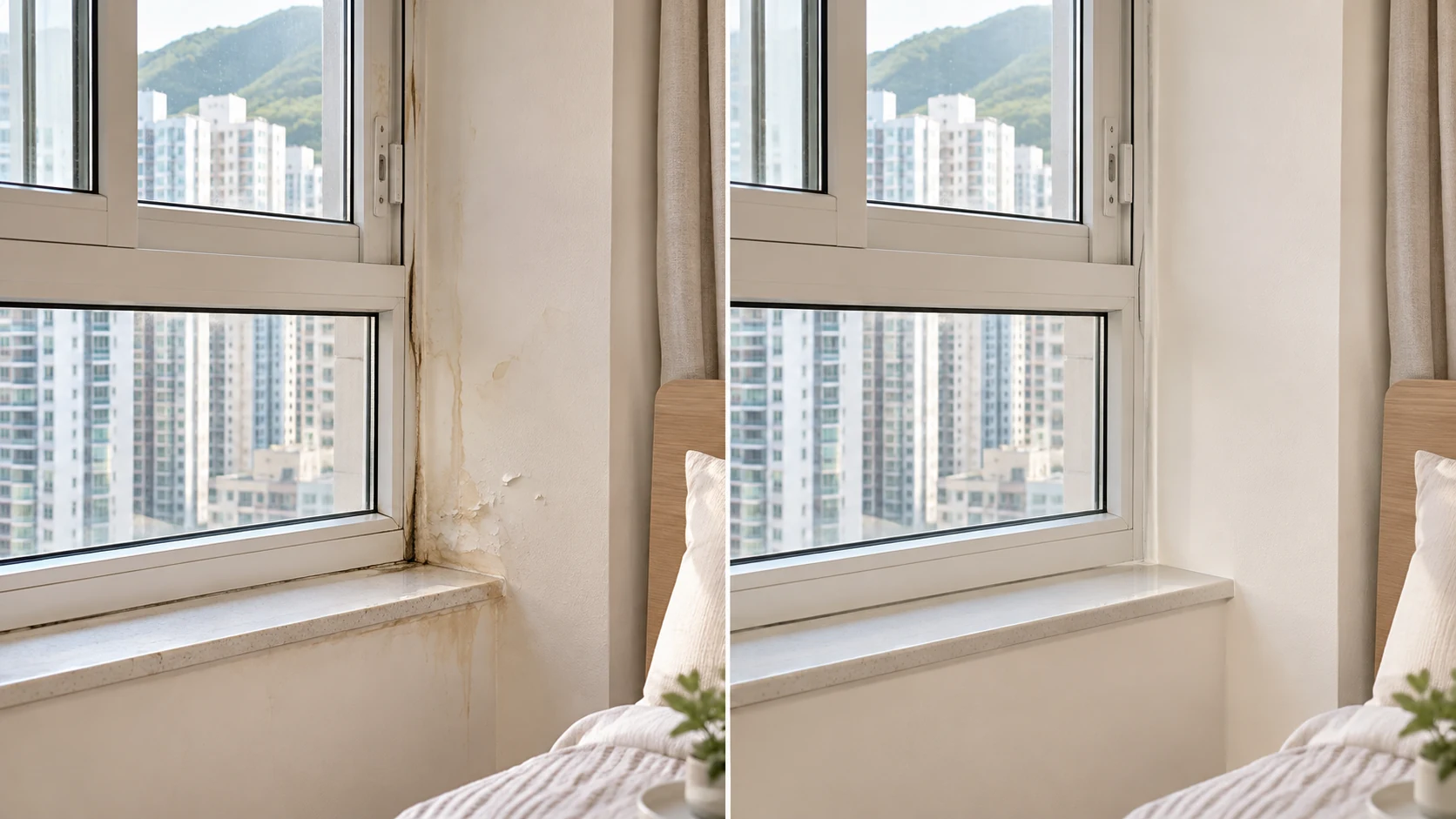
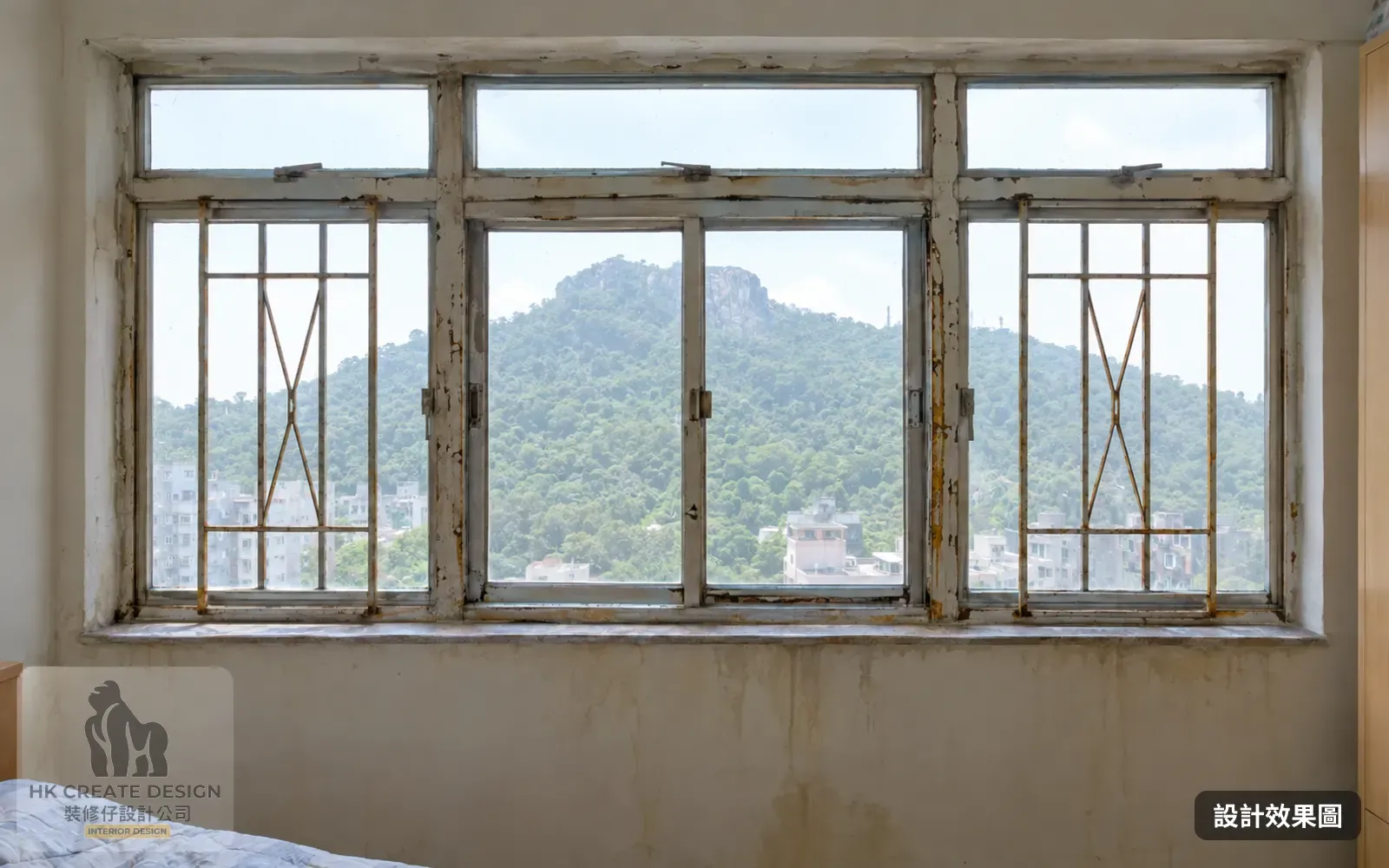
An aluminium frame and adjoining wall move differently with temperature and building movement. A flexible perimeter joint keeps out rain and air. Sun, rain and temperature cycles can harden the seal, crack it or lift it from the frame or wall.
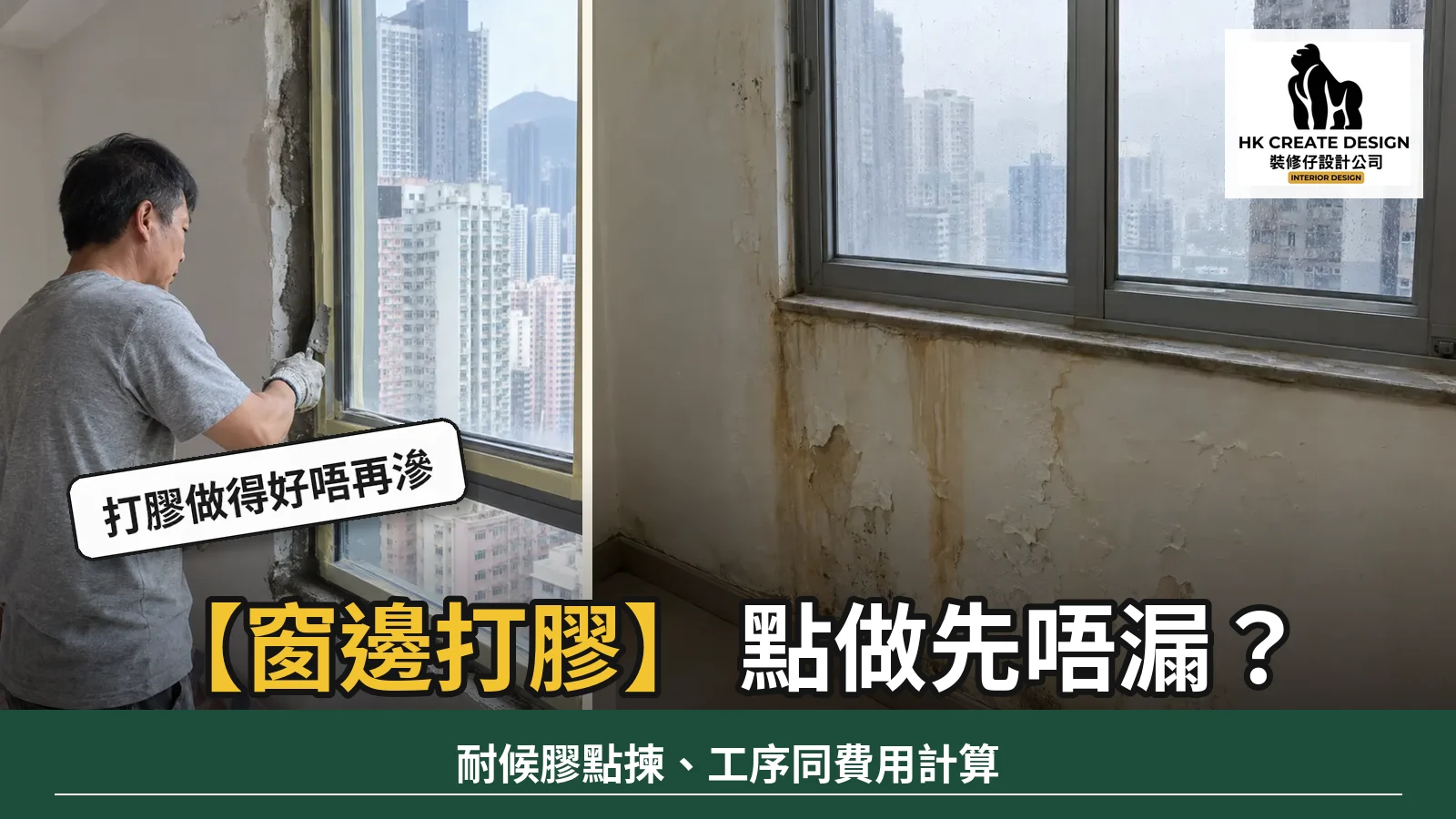
Internally, humidity is a common problem. Bathroom, kitchen and north-facing windows may collect condensation, darkening the sealant even without an exterior leak. Prolonged damp can blister or lift the paint below the sill.
A failed bead may not leak immediately, but it creates a potential entry point. The Buildings Department flags leaks between sash and frame and at the perimeter as defects.[6] Attend to cracked or detached sealant early, before the adjacent wall becomes saturated.
Leaks around windows can come from worn sash gaskets, blocked track drains, failed frame corners or façade cracks. Establish the cause before resealing. For more on diagnosis, see ourAluminium windowswater leakage repairs and our guide to seepage around external walls and windows.
- Check for cracking, detached edges or darkening
- Check for water stains below the sill
- Check the window corners after rain
- Diagnose the source before resealing
You can swipe left or right on your phone to view the complete table.
| Sealant type | Where to use it | Features | Unsuitable |
|---|---|---|---|
| Exterior weather sealant such as DOWSIL 791 | External frame-to-façade joint | Medium-modulus neutral-cure silicone, rated ±50% movement, resistant to sunlight, rain and ozone, with primerless adhesion on suitable substrates [1] | Application to dirty or damp surfaces |
| Interior mould-resistant glazing silicone | Internal frame edges and sill joints | Mould-resistant formula for damp interior joints | As a substitute for exterior weather sealant |
| Ordinary glazing silicone | Ordinary dry indoor areas | Lower cost | External walls or persistently wet areas |
| Expanding foam gap filler | Gap between the frame and the wall | Fill the gap completely | Exposed as the waterproofing layer |
The DOWSIL 791 figures are from the manufacturer's product page. The other descriptions indicate typical uses. Check the data sheet for the actual product. [1]
02
Exterior weather sealant and interior mould-resistant sealant
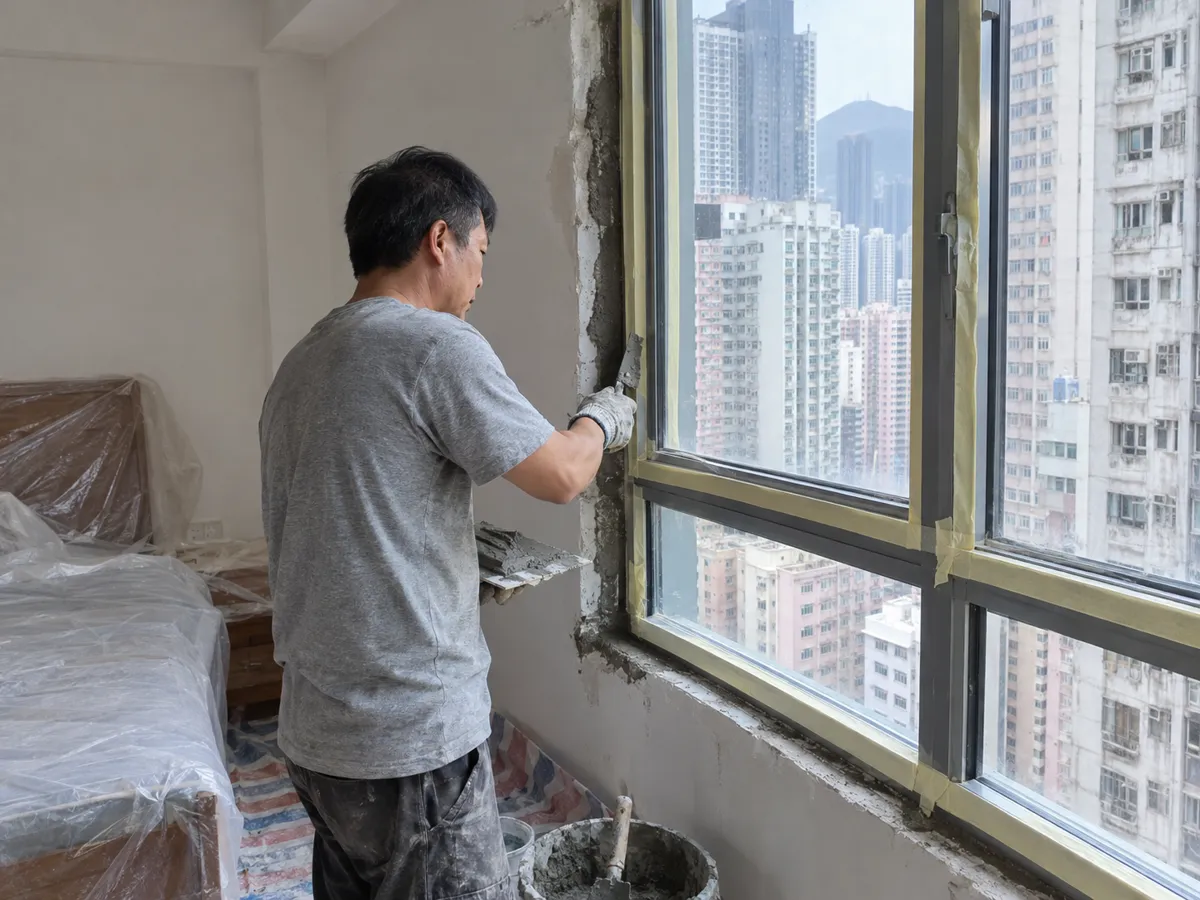
A common error is using ordinary internal silicone on both sides. Exterior joints face sunlight, rain and movement. DOWSIL 791 is one example of a one-part, medium-modulus weatherproofing silicone for glazing, curtain walls, façades, movement joints and perimeter connections.[1]
DOWSIL 791 accommodates ±50% joint movement and resists weathering, with little effect from sunlight, rain or ozone. It has neutral-cure chemistry and can bond without a primer. Surface drying takes about 45 minutes at 50% relative humidity. Working time is about 20 minutes, and curing takes 7 to 14 days at room temperature.[1] Colours include black, bronze, buff, grey, limestone, precast white and white.[1]
Inside we use a suitable mould-resistant DOWSIL sealant. Outside we use a weather-resistant product such as DOWSIL 791. Damp-prone kitchen, bathroom and sill joints benefit from an appropriate interior mould-resistant product.
Interior silicone may lack the movement and UV resistance needed outside and can crack early. An exterior product may lack the mould resistance wanted in a bathroom. Select for the joint width, substrate and location using the product data sheet.
- Use a weather-resistant sealant outside
- Use mould-resistant glazing sealant inside
- Specify the product model in the quotation
- Match the colour to the frame and façade

03
Window resealing sequence
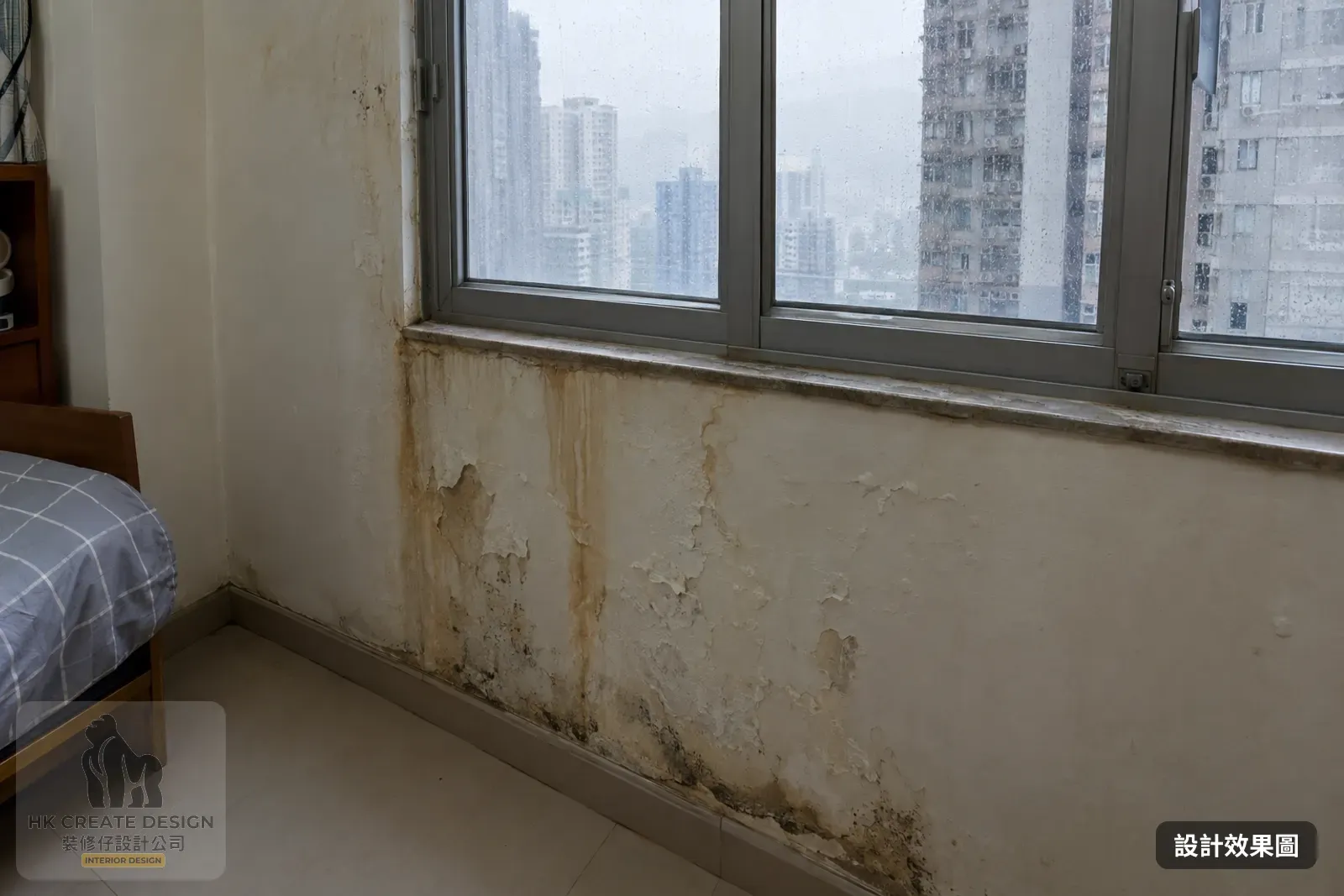
1. Remove old sealant and loose filler to expose sound frame and wall surfaces. A new layer over the old bead may detach. 2. Clean and dry the joint. Postpone exterior sealing after rain or while the wall remains damp.
3. Check the joint depth. Use suitable backing to control an excessively deep joint. A shallow joint may leave too little sealant for movement. 4. Mask both edges. 5. Check primer requirements. DOWSIL 791 offers primerless adhesion to suitable substrates,[1] but follow the manufacturer's advice for the actual substrates.
6. Apply a continuous bead and tool it into full contact with both sides within the working time. DOWSIL 791 gives approximately 20 minutes,[1] Work in manageable lengths and tool the bead promptly. Step 7 is removing the tape, and step 8 is protecting the seal from water and loading as it cures.
Preparation matters. In our team's experience, early peeling often follows incomplete removal of old sealant or application to a damp joint. An expensive product cannot compensate for poor preparation.
- Remove the existing sealant
- Clean and dry the surface
- Control the joint depth
- Apply masking tape
- Apply and tool a continuous bead
- Remove masking tape
- Keep water off the curing bead
「Window seals can age and crack over time. Dark edges, separation or rain on the sill are reasons to inspect the joint and reseal where it has failed.」
04
Safety when sealing the outside of a window
Interior sealing can be done from inside. Exterior access can present a fall hazard. The Labour Department requires appropriate precautions, including a suitable working platform where a fall of 2 m or more is possible. A competent person should assess the work and specify safe access.[7]
The Labour Department's window-installation alert specifies a platform at least 400 mm wide, a top guardrail at 900–1,150 mm, an intermediate guardrail at 450–600 mm and a toe board at least 200 mm high. Where a platform is genuinely impracticable, a suitable harness and secure anchorage or independent lifeline are required.[4] The Labour Department reminds owners that external wall work needs a suitable working platform, such as a truss-out scaffold.[8]
External sealant must not be applied by leaning out of a window. Upper floors or inaccessible external joints may need truss-out scaffolding or coordinated façade maintenance. We assess access and safe working arrangements before proceeding.
For windows adjoining common external walls, the owners' corporation or management office usually coordinates access and repairs. Building rehabilitation assistance may be relevant. See our guide to water ingress at façades and windows.
- External sealing involves work at height
- Provide a suitable platform or fall protection
- Stay inside the window opening
- Owners' corporation coordinates work on common external walls
Example 1: redoing waterproofing and rendering at one internal window sill
Assumptions
- Sill: 5 ft × 1.5 ft = 7.5 sq ft. Two reveals at 4 ft × 0.5 ft = 2 sq ft each, total 4 sq ft.
- Use C01 waterproofing at HK$39/sq ft, minimum HK$2,350, and B01 rendering at HK$43/sq ft, minimum HK$2,350. [9]
- Treat mould and repaint one wall face under the sill with E05, HK$1,250 per face. [9]
How to calculate quantities
- Area: 7.5 + 4 = 11.5 sq ft.
- Waterproofing: 11.5 × HK$39 = HK$448.50. The HK$2,350 minimum applies.
- Rendering: 11.5 × HK$43 = HK$494.50. The minimum charge of HK$2,350 applies.
- Painting: HK$1,250.
- Total: HK$2,350 + HK$2,350 + HK$1,250 = HK$5,950.
Around HK$5,950 using the listed rates. For a small scope compare B06 mason daywork at HK$2,700 per day plus materials at cost.
Resealing and exterior works are extra. Identify the leak source first and confirm a written quotation after measurement. [9]
05
When to rebuild a sill
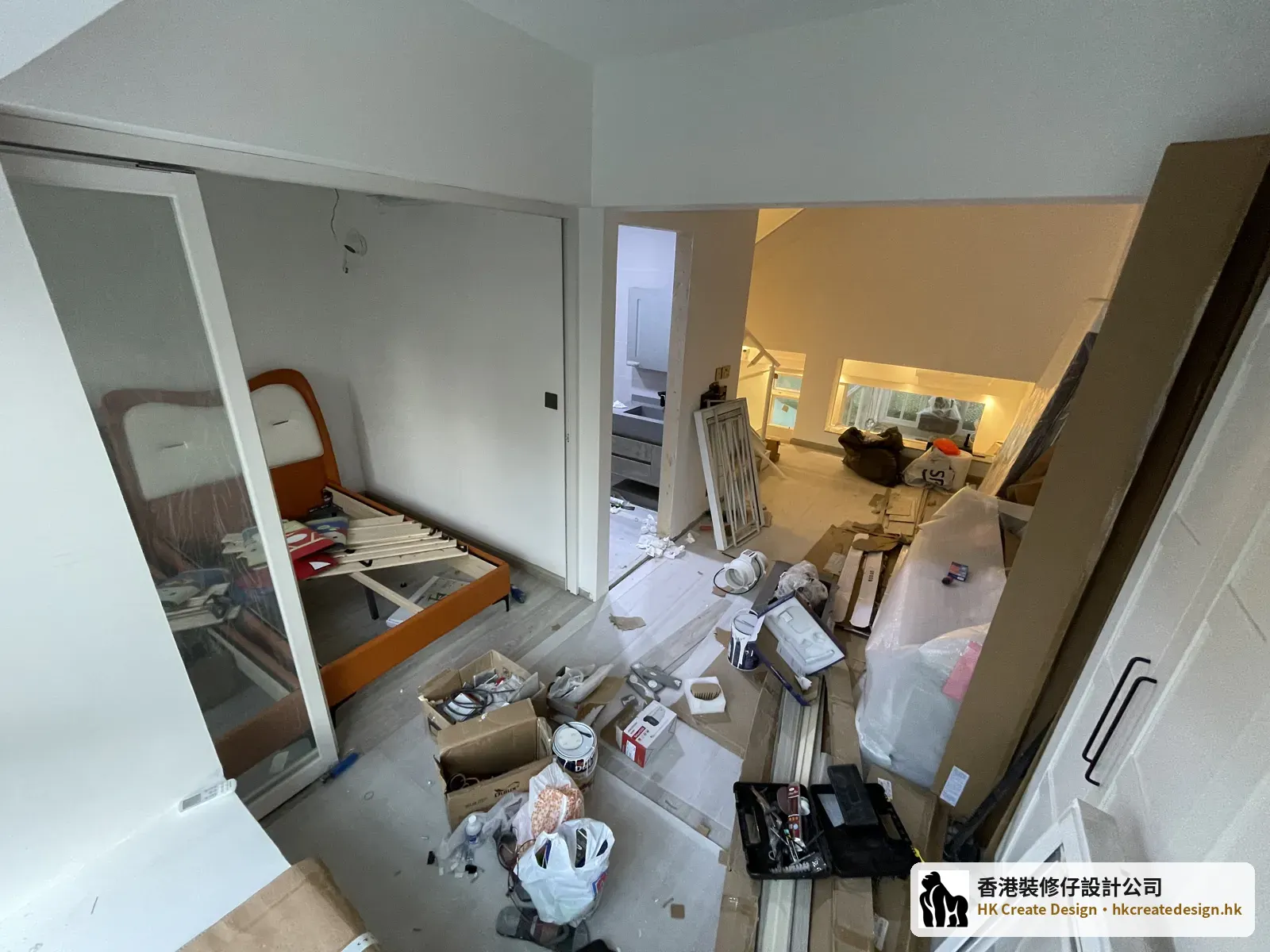
Resealing may suffice if the sill is sound and the joint alone has aged. Consider rebuilding where the render is loose or hollow, the wall below remains wet or blistered, rain pools on a flat sill, or the stone surface has cracked.
To rebuild a sill, remove loose render or stone, repair the base, waterproof and re-render with an outward fall. Allow drying before finishing and sealing. C01 SikaTop Seal-107 is listed at HK$39/sq ft, minimum HK$2,350. It includes surface cleaning and dampening, reinforced internal corners and pipe penetrations, and two crosswise coats.[9]
B01 cement-sand wall render costs HK$43/sq ft, minimum HK$2,350.[9] Small sill areas often trigger the minimum charges. For scattered minor repairs, compare B06 mason daywork at HK$2,700 per day, plus materials at cost.[9] This comes underMasonry and tilingandWaterproofing.
Changing sill height needs assessment. The Buildings Department calls for protective barriers at least 1.1 m high at relevant exterior openings above ground-floor level,[5] Lowering a sill may alter a protective barrier and fall under minor works. Retain the original protective height when rebuilding.
- Replace loose render
- Provide an outward fall on the sill
- Waterproof first, then render
- Retain the sill's protective height
You can swipe left or right on your phone to view the complete table.
| practice | suitable for | Work involved | Company price list reference |
|---|---|---|---|
| Resealing only | Sound sill with aged sealant alone | Remove old sealant, clean and dry the joint, mask and apply | Confirm in the written quotation |
| Waterproof and re-render the sill | Loose sill render and persistent damp below | Remove loose render, apply two waterproof coats, re-render and form an outward fall | C01: HK$39/sq ft, minimum HK$2,350. B01: HK$43/sq ft, minimum HK$2,350. [9] |
| Daywork for a small area | Small or scattered repairs | Mason daywork, materials charged at cost | B06: HK$2,700 per day [9] |
| Window-sill cabinet | Using the sill area for storage | Fit the cabinet after waterproofing and rendering | FUR02: HK$1,350 per linear foot, two-foot minimum [9] |
| Interior painting around the window | Mould and peeling paint below the sill | Treat mould and repaint after fixing the source | E05: HK$1,250 per wall surface [9] |
Changing sill height may affect the protective barrier. Relevant external openings above ground-floor level require at least 1.1 m of protection [5]. Have any proposed change assessed. [9][5]
06
Making good the internal wall around a window
Water ingress can blister paint or cause mould below the sill. Locate and repair the cause, allow the wall to dry fully, then repaint. Paint applied before the repair is likely to fail again.
E05 local mould treatment and repainting is HK$1,250 per wall surface. Leak investigation is priced separately.[9] For a generally sound wall with local cracking, E02 covers spot filling, moisture-resistant treatment, sanding and painting at HK$21/sq ft, minimum HK$4,650.[9]
If prolonged seepage has loosened plaster or paint and stripping is needed, E01 covers stripping, filling, moisture-resistant treatment, sanding and painting at HK$39/sq ft, minimum HK$7,450.[9] This comes underPainting. For mould on the wall, see our guide to wall painting and mould treatment.
If a cabinet or platform conceals the wall below the window, open it up to check for damp. Damp can warp and damage timber. Reinstall the unit after the sill and wall have been repaired.
- Repair the cause first
- Allow the wall to dry thoroughly
- Choose E05, E02 or E01 according to the damage
- Open the sill cabinet for inspection
07
Resealing, mandatory inspection and owners' corporation responsibilities
Many owners assumeMandatory window inspectionautomatically includes the perimeter sealant. The Buildings Department excludes non-safety-related weather sealant and gaskets from the prescribed MWIS inspection and repair.[2] Specify resealing separately and ask for its price.
Buildings Department guidance says rain entering through roofs, flat roofs, balconies, façades or windows normally does not constitute a public-health nuisance actionable by the Joint Office under Cap. 132. It may advise the owners' corporation to inspect and repair the roof or façade.[3]
The Buildings Department notes that owners are responsible for maintaining their buildings, including resolving seepage.[3] Frames usually belong to the individual owner, while external walls are commonly shared. Check the deed of mutual covenant and building arrangements for responsibility for the exterior joint.
If leakage may come from the flat above or next door, discuss it with the occupier and seek help from management or the owners' corporation. If the issue remains unresolved, call 1823 about the Joint Office procedure.[3]
- Non-safety-related resealing falls outside prescribed MWIS work
- Ordinary rainwater ingress is normally outside Joint Office enforcement
- Check the deed for repair responsibilities
- Call 1823 about unresolved seepage involving a neighbour
08
Professional and official guidance
Use manufacturer data to select the product. Dow gives DOWSIL 791 a ±50% movement rating and identifies it as a medium-modulus silicone weather seal for glazing, curtain walls, façades and perimeter joints, with resistance to sunlight, rain and ozone.[1] Select the sealant for the joint width, substrates and manufacturer's recommendations.
The Buildings Department lists leakage between frame and sash or around the perimeter as a sign of a defective window. Arrange assessment by a qualified person and repairs by the appropriate registered contractor.[6] Seepage may point to a defect in the frame as well as staining the finish.
The Buildings Department excludes non-safety-related weather seals and gaskets from the prescribed mandatory window inspection scope,[2] and owners are responsible for repairs where rain enters through façades or windows.[3] Owners should inspect and maintain these weather seals regularly.
The Labour Department identifies external window work as high risk. Use a suitable working platform, such as properly designed truss-out scaffolding.[8] Ask the contractor how they will reach the external joint.
- Choose the sealant from the manufacturer's data
- Seepage around a window is a defect indicator
- Owners maintain the weather seals
- Provide safe external access
Example 2: calculating sealant length and the movement a weather seal can accommodate
Assumptions
- Window opening: 1.8 × 1.5 m. Both internal and external perimeters need sealing.
- The flat has six windows of the same size.
- The exterior joint is 10 mm wide. The sealant has a ±50% movement rating. [1]
How to calculate quantities
- Perimeter of one face: 2 × (1.8 + 1.5) = 6.6 m.
- Both faces: 6.6 × 2 = 13.2 m.
- Six windows: 13.2 × 6 = 79.2 m.
- 10 mm joint × 50% = theoretical movement of approximately ±5 mm.
Six windows total about 79.2 m of internal and external seals. A 10 mm joint with a ±50% movement rating can theoretically accommodate approximately ±5 mm.
Determine joint width and depth on site. A joint that is too narrow has limited movement capacity. [1]
09
Common window resealing mistakes
1. Applying over old sealant leaves a weak interface that can admit water. Remove the old material. 2. Sealing a wet joint can cause early loss of adhesion.
3. Using the same ordinary silicone for both faces. Specify weather resistance outside and mould resistance inside. 4. A bead that is too thin cannot move adequately, while excessive depth slows curing. DOWSIL 791 is rated for ±50% movement,[1] provided the joint is appropriately sized.
5. Resealing without locating the source can leave blocked track drains, aged gaskets or façade cracks untouched. 6. Leaning out to seal an external joint creates a serious fall hazard.[4]
7. Water-testing immediately can damage an uncured bead. DOWSIL 791 typically takes 7–14 days to cure at room temperature.[1]
- Remove the existing sealant
- Allow the joint to dry
- Specify separate interior and exterior products
- Control bead thickness
- Identify the cause first.
- Keep your body inside the window
- Test after curing
You can swipe left or right on your phone to view the complete table.
| Item | The quotation should specify | Usually included? |
|---|---|---|
| range | Which windows, internal or external faces, and total length | What should be included |
| Sealant brand and model | Model of exterior weather sealant and interior mould-resistant sealant | What should be included |
| Remove old sealant | Complete or partial removal | What should be included |
| Backing material | For a deep joint, does the scope include | depending on |
| Method of access and work outside | Working platform, truss-out scaffold or suitable fall protection [4] | should be written clearly |
| Sill waterproofing and rendering | Area and number of coats | Charged separately |
| Interior wall paintwork | Number of wall faces or area | Charged separately |
| Warranty | Warranty period and coverage | should be written clearly |
We price resealing after inspection and confirm it in writing. [4]
10
Handover checks for the sealant and sill
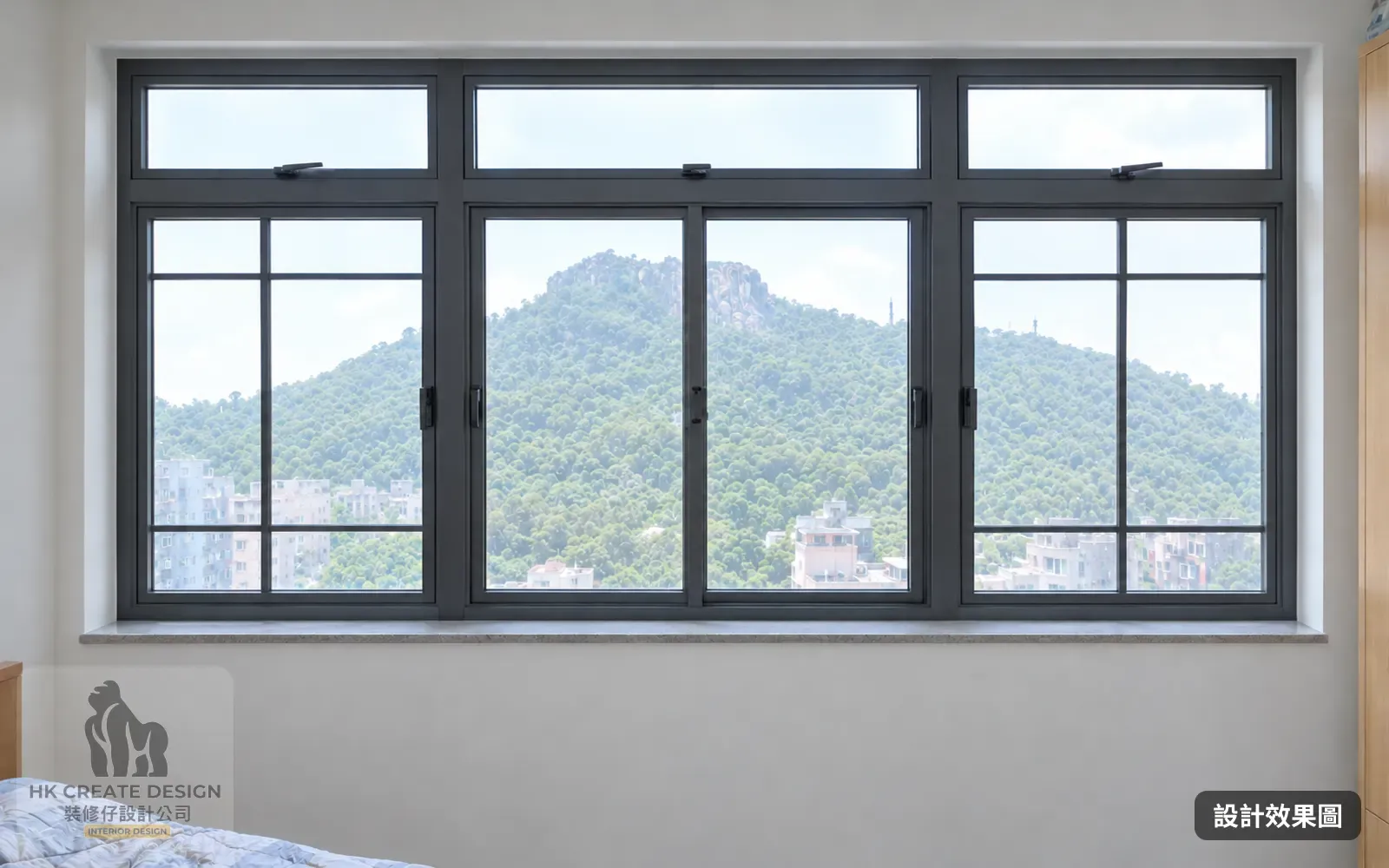
Inspect the finish first. The bead should be continuous, smooth and even, free from gaps, bubbles or pinholes, with clean edges and well-filled corners. The lines should be neat after the masking tape is removed.
2. Once cured, inspect both edges for separation from the frame or wall. 3. Check the sealant colour and model against the quotation. 4. After full cure, around 7–14 days for DOWSIL 791 under the stated conditions,[1] After curing, a contractor can carry out a safe water test or check the corners and sill after heavy rain.
At handover, check that the sill slopes outwards and drains a small amount of water. Inspect the render for cracks or hollow areas and the frame-to-sill seal for continuity. Paint the wall below only once it is dry.
Obtain written warranty terms stating the coverage and duration. Our workmanship warranty lasts one year under its written terms.
- Continuous bead without bubbles
- Clean edges on both sides
- Sound adhesion
- Water-test after curing or inspect after rain
- Sill drains outwards
- Obtain the written warranty

11
Timing and budget
Applying the new bead is usually quick, but removing old material and allowing the joint to dry takes time. External scaffolding also takes time to erect and dismantle. The example sealant takes 7–14 days to cure at room temperature,[1] Protect the joint from water and load while it cures.
For a rebuilt sill, allow the waterproofing and render to dry before finishing and painting. When coordinating withWhole-flat renovation or Older flat renovation, aim to finish the window edges and sill before painting.
Resealing is quoted after a site visit. Related listed items include C01 sill waterproofing at HK$39/sq ft, minimum HK$2,350, B01 rendering at HK$43/sq ft, minimum HK$2,350, and E05 internal wall treatment at HK$1,250 per face. The general small-job minimum is HK$2,000.[9]
If stays, gaskets or the frame are also affected, assess the window as a whole before resealing. See ourWindow hinge repairandAluminium window replacement pricesarticle.
- Allow curing time
- Schedule sill work before painting
- Small jobs can be combined
- Check stays and gaskets at the same time
Example 3: when to water-test after sealing
Assumptions
- Exterior sealing completed on Monday, 9 November 2026.
- DOWSIL 791 is tack-free in around 45 minutes and cures in 7–14 days at room temperature. [1]
How to calculate quantities
- Tack-free: after around 45 minutes that day, the surface no longer feels sticky, but the bead has not fully cured.
- Earliest full cure in the example: 9 November + 7 days = 16 November.
- Longer end of the example: 9 November + 14 days = 23 November.
In this example, plan a water test or seal inspection after curing, around 16–23 November depending on conditions.
Temperature, humidity and bead depth affect curing. Follow the product data sheet. [1]
12
Follow up with the construction team
HK Create Design opened in 2019. Our team has more than a decade of combined project experience and provides a one-year workmanship warranty. We first identify the leak source, then specify the interior and exterior seals. We can also coordinate sill waterproofing, rendering and painting.
Measurement arrangements are as follows. On-site measurement is free through 31 December 2026 for two or more work items, with no deposit. After that, the HK$500 fee is credited against the order.
For a free quotation from the HK Create Design team, WhatsApp 5243 7747 or visit our Wong Tai Sin shop, Monday to Saturday, 10:00–18:00.
Before booking, photograph the perimeter seal, sill and wall below, preferably after rain. This can help the contractor narrow down the cause.
- Photograph the seal and sill
- Photograph the stains after rain
- Specify exterior or interior work
- Book a site visit
Advice from our tradespeople
「Window seals can age and crack over time. Dark edges, separation or rain on the sill are reasons to inspect the joint and reseal where it has failed.」
「Remove all failed sealant and clean the joint before applying new material. A bead over old silicone can detach. Use an exterior-rated weather seal outside.」
「When a sill gets wet, distinguish failed seals from façade cracks. We investigate and water-test where appropriate before choosing the repair.」
FAQ
14 practical questions answered
01Which sealant should be used around a window?
Specify a weatherproof external sealant, e.g. DOWSIL 791 with ±50% movement capability,[1] Use a mould-resistant sealant indoors and specify the external product separately.
02Can new sealant be applied over the old bead?
Avoid that approach. Remove the old sealant so the new material can bond.
03How long does the sealant take to dry?
DOWSIL 791 becomes tack-free in about 45 minutes at 50% relative humidity and fully cures in 7–14 days at room temperature.[1]
04Does mandatory window inspection include sealing?
No. The Buildings Department says weather sealant and gaskets fall outside the prescribed inspection and repair scope.[2]
05Can I contact 1823 about a leak around a window?
Ordinary rainwater seepage through walls or windows is generally outside Joint Office enforcement,[3] For unresolved seepage involving neighbours, contact 1823 after seeking a resolution.[3]
06Can external sealant be applied by reaching out from indoors?
Do not lean out of the window. External wall work is work at height and requires a suitable work platform or fall protection.[4]
07How much does rebuilding a window sill cost?
Published rates include C01 waterproofing at HK$39 per sq ft, minimum HK$2,350, and B01 rendering at HK$43 per sq ft, minimum HK$2,350.[9]
08Which sealant does HK Create Design use?
HK Create Design uses DOWSIL mould-resistant silicone on the inside of aluminium window perimeters and weather sealants such as DOWSIL 791 outside.
09Can the window sill be lowered?
Do not alter it without assessment. External wall openings above ground-floor level require a protective barrier at least 1.1 m high.[5]
10Does blackened sealant need replacement?
Blackening on indoor sealant often indicates mould. The old bead can be removed and replaced with mould-resistant sealant. If edges are lifting or water is leaking, investigate the source first.
11Can sealant fix every leak around a window?
No. Aged gaskets, blocked drainage holes, cracked frame corners or external wall cracks can all cause leaks around a window. Establish the source first.
12How often should window perimeter sealant be renewed?
There is no fixed interval. Arrange an inspection if sealant cracks, lifts, darkens or is accompanied by water stains. The Buildings Department lists window seepage as a sign of a defect.[6]
13Can the damp wall below a window sill be painted straight away?
Avoid painting immediately. Repair the source and let the wall dry fully. Depending on the damage, consider E05 at HK$1,250 per wall, E02 or E01.[9]
14When should the water spray test take place?
Wait until the sealant fully cures. For DOWSIL 791, this is about 7–14 days.[1]
CHECK THE BASIS
Data and technical basis, sources can be verified
- [1]Dow:DOWSIL 791 Weatherproofing Sealant Accessed: 2026-11-03
- [2]Buildings Department: Frequently Asked Questions: Windows Maintenance Accessed: 2026-11-03
- [3]Buildings Department FAQ: Water Seepage Problem Accessed: 2026-11-03
- [4]Labour Department: Work Safety Alert — fall from height while installing a glass window Accessed: 2026-11-03
- [5]Buildings Department: Minor works related to windows Accessed: 2026-11-03
- [6]Buildings Department: Important Notes about Window Safety Accessed: 2026-11-03
- [7]Labour Department: Overview of Safety at Work at Height Accessed: 2026-11-03
- [8]Labour Department: repair, maintenance, alteration and addition works — guidance for owners and tenants Accessed: 2026-11-03
- [9]HK Create Design 2026 detailed project budget and public price list Accessed: 2026-11-03