01
Mark fixed objects when checking measurements
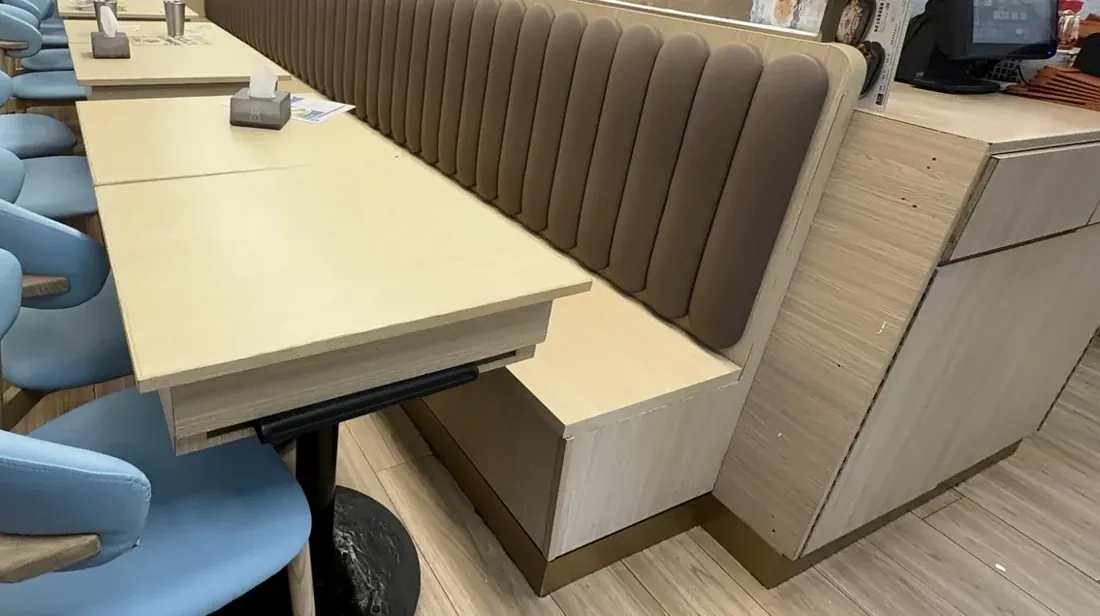
Measure each wall section, window bay, column, skirting and change in floor level. Photograph the front, sides and underside. Mark left and right on the sketch and include the date and responsible person on the final measured order drawing.
02
Try the innermost seat
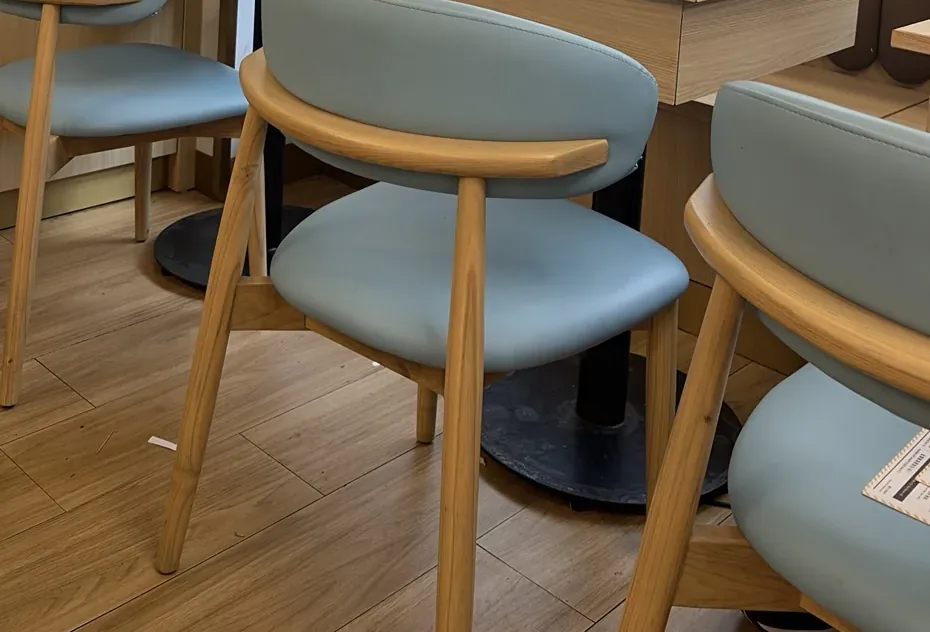
Mock up the chosen tabletop, seat pad and chairs and have two people sit together. Can the inside guest leave without moving the table or making the outer guest stand? Mark knee obstructions and collision points on the sample.
03
Carry plates through the aisle to test staff access
Pull out a movable chair and have another person carry a tray along the main aisle. Mark takeaway queues and dirty-dish return routes. Check proposed changes against the approved drawings and applicable requirements.[2]
A café replacing only the backrests
Assumptions
- Assume the existing seat bases and tabletops are sound.
How to calculate quantities
- Photograph the finishing detail, measure the existing backrest and make one sample first.
- Check that removing the parts will not damage the original board. Test the seat before authorising production.
Retain the usable seat bases and compare backrest and installation costs.
Subject to site measurement and factory confirmation of the construction. [1]
04
How do table-leg positions affect joining tables?
Compare a central pedestal, fixed legs and movable tables. Use the usual trays and menus to test stability and legroom with two tables joined. Confirm who can move them at closing time and record the selected base model.
05
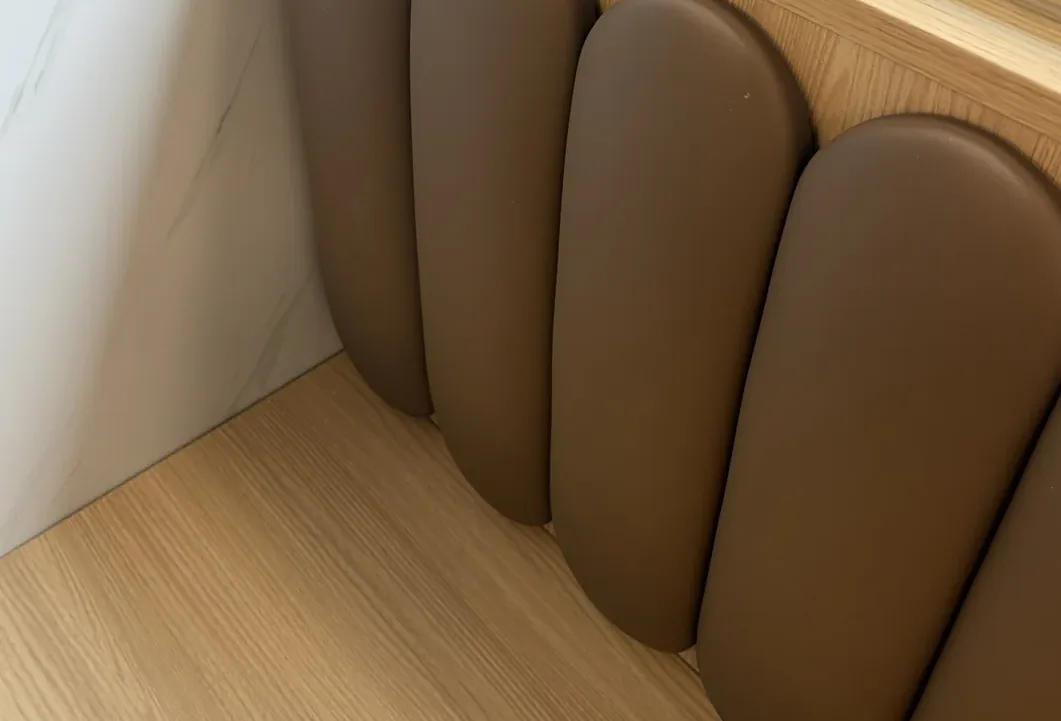
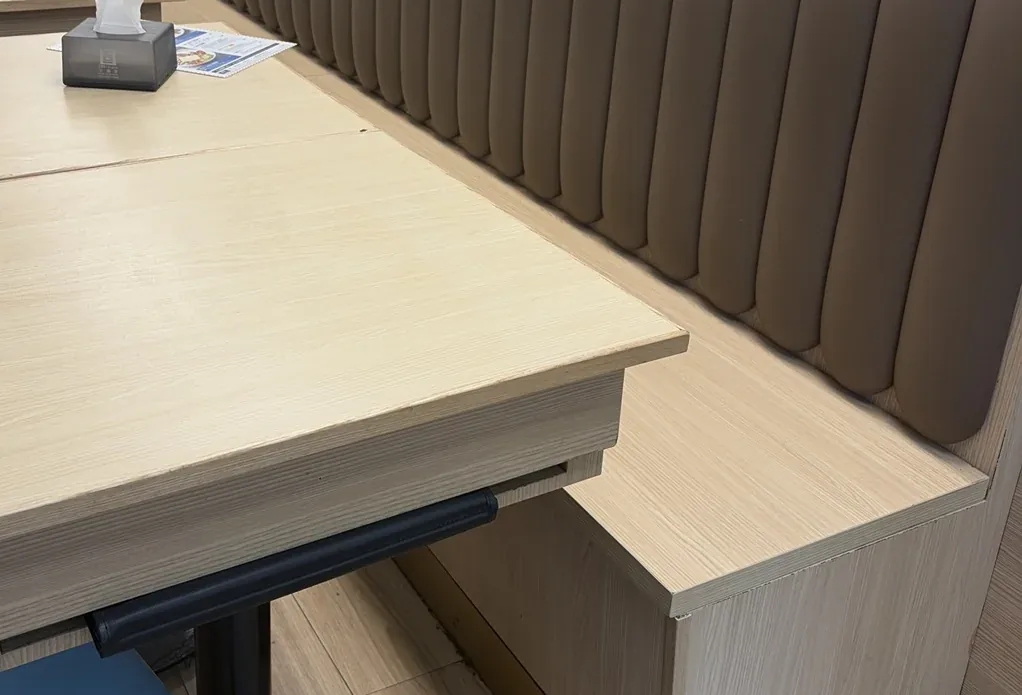
Can upholstery panels be replaced individually?
Ask the factory for construction drawings, upholstery reference, cleaning instructions, samples and spare part terms. Restaurant furniture suppliers offer different table bases, tops and seating. If test documentation is required, check it applies to the exact model and combination ordered.[3]
You can swipe left or right on your phone to view the complete table.
| Item | Fixed continuous seating | Individually replaceable panels |
|---|---|---|
| Day-to-day cleaning | Check whether long seams are easy to wipe | Check for dirt traps between panels |
| Localised damage | Check whether the entire row must be removed | Ask for the price, removal method and lead time for one panel |
| Custom furniture order documents | Dimensions and materials for the entire row | Add module numbers and a replacement diagram |
Check the comparison against the manufacturer's actual design. [1]
06
Check exposure to mop water and dirt-trapping joints
Test your actual cleaning product on an inconspicuous part of the sample. Follow the material instructions and check for colour change or stickiness. Check access around plinths, upholstery seams, booth-to-wall gaps and the bottom edge of glass screens.
Combining tables flexibly during lunch service
Assumptions
- Assume tables for two will serve parties of two and four.
How to calculate quantities
- Use two tables and the actual bases to mock up two seating layouts.
- Practise carrying dishes and leaving the inner seat. Record the narrowest points for professional review.
Use two real layouts to decide table-leg positions and the number of usable seats.
Illustrative scenario. Check the permitted seating and access against the applicable requirements and plans. [2]
07
How does an ex-factory price become a delivered and installed price?
Give both factories the same measured drawing. Ask for sampling, materials, manufacture, transport to Hong Kong, handling, night work, installation and removal. Request prices and lead times for one backrest and one tabletop if damaged or discontinued.[1]
You can swipe left or right on your phone to view the complete table.
| Cost item | Ask the supplier to complete these fields |
|---|---|
| Manufacture | Units, quantities, and board and upholstery references |
| Delivery and installation | Delivery in Hong Kong, carrying upstairs, night work and removal |
| After-sales service | Warranty, individual part price and replenishment lead time |
Request prices from two suppliers against the same specification. [1]
08
Check each unit against the drawing at handover
Record the number of booths and compare finishes and stitching with the signed sample. Check each table base, backrest fixing and space for moving tables. Keep upholstery references, installation dates and the repair contact. See theFront-of-house booth refurbishmentSend photos for a quotation.
FAQ
6 practical questions answered
01Is there one booth size that suits every shop?
Review the shop, table and chair combinations, users and applicable aisle requirements, then confirm with a site mock-up.
02Can the backrests be replaced individually?
Ask how the unit comes apart, from which side and whether the next table must be moved. Request written replacement part prices.
03How should I confirm the colour before ordering?
Keep signed fabric and board samples and mark the brand, colour code and batch.
04How do I compare two factory prices?
Compare delivered totals using the same units, specifications, route and work hours.
05How long must the restaurant close?
Decide whether to phase the work after confirming lead times, work stages, delivery hours and how the work area can be isolated.
06Which photos will help the supplier quote?
Send a front view of the full row, side finishing, underneath the table and a wide shot of the aisle. Include the number of booths and approximate length.
CHECK THE BASIS