01
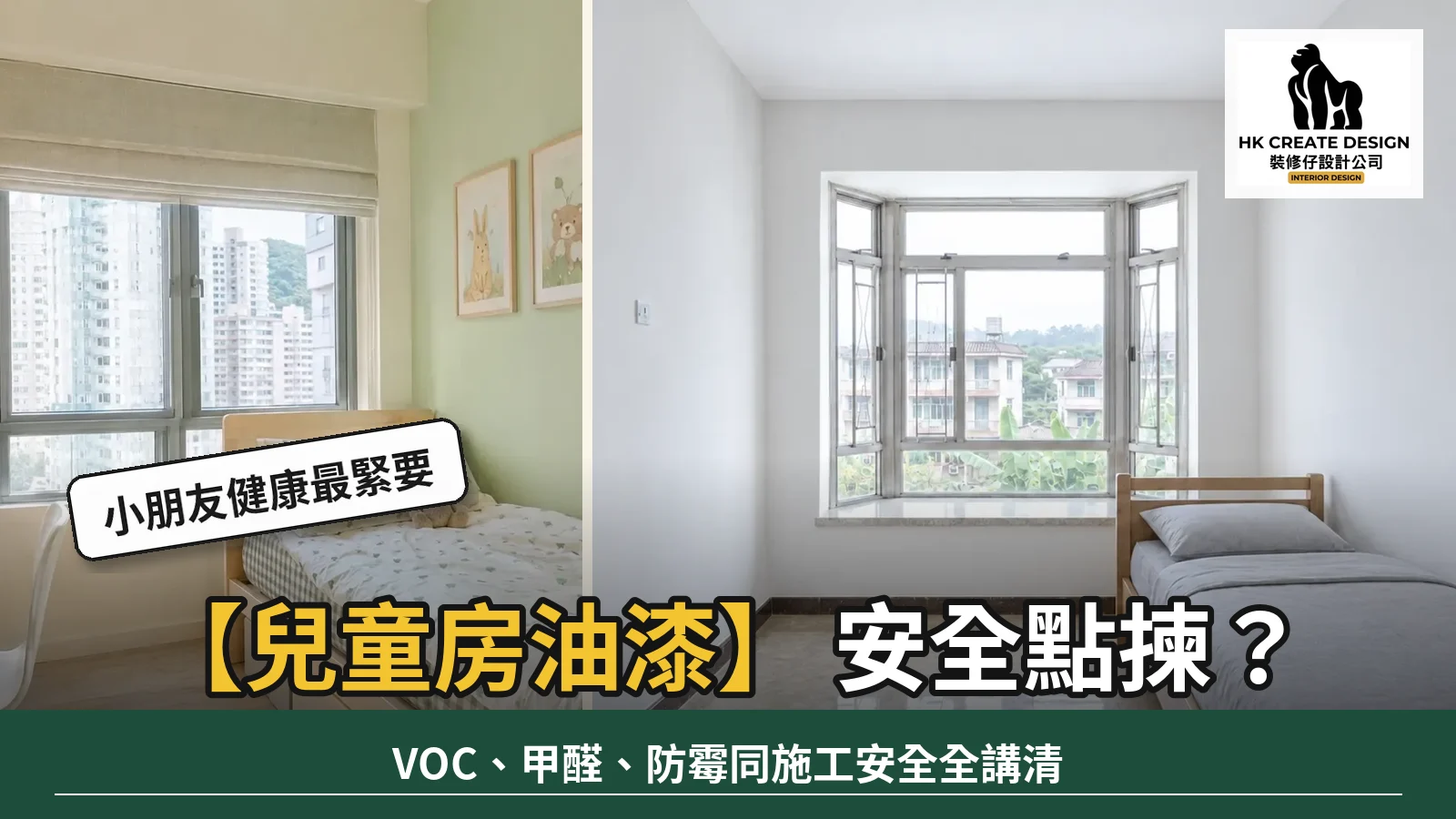
Be careful when painting children’s rooms
The Consumer Council says VOCs can irritate the eyes, nose and throat and may cause headaches, dizziness or nausea. Long-term exposure at high levels can affect the respiratory and nervous systems[3]. Children have a slender body, high respiratory rate, and spend a long time in the room, so parents naturally need to be more careful.
In addition to VOC, the Consumer Council's test also detected formaldehyde and heavy metals. It turned out that 4 latex paint samples of different colors contained trace amounts of lead, ranging from 20 to 38 ppm. The Consumer Council reminded that children are particularly vulnerable to lead poisoning, which may affect healthy growth and intellectual development.[3]. Although these samples all meet the environmental label requirements[3], but it all shows that you can’t just watch advertisements when choosing paint.
The Environmental Protection Agency's indoor air quality data also reminds that formaldehyde is a common indoor air pollutant that can irritate the eyes and respiratory tract. Prolonged exposure may cause allergies and damage to the respiratory system, and is recognized as a human carcinogen. The main sources include pressed wood products, adhesive glue, particle board and medium density fiberboard and other renovation materials.[4]. That is to say, in addition to the paint in the children's room, the furniture panels must also be considered.
Therefore, there are three key points in renovating a children’s room: choosing water-based paint with low VOC, arranging construction and ventilation time, and reducing other sources of formaldehyde. Doing these three things well is more practical than pursuing a certain "non-toxic" propaganda word.
Also keep in mind that VOCs from paint are primarily released during construction and early completion, and then gradually decrease. Therefore, "when to paint" is as important as "how to ventilate after painting" and "what paint to choose". Many parents will start renovating one or two months before the baby is born. If the time is too tight, it is easy to move in before the smell is gone. It is recommended to reserve at least a few weeks of buffer.
02
Hong Kong VOC legal limits: understand the numbers
Hong Kong's Air Pollution Control (Volatile Organic Compounds) Regulation controls VOC content in architectural coatings. The Environmental Protection Department expresses limits as grams per litre of ready-to-use coating. Examples include flat coatings at 50 g/L from 1 January 2009, non-flat coatings at 150 g/L from 2009, and multicoloured coatings at 250 g/L. From 2010, examples include primers, sealers and undercoats at 200 g/L, floor coatings at 250 g/L, waterproofing sealers at 250 g/L and clear wood varnish at 550 g/L.[1].
That is to say, the VOC in the ready-to-use state of interior wall matte latex paint sold legally in Hong Kong cannot exceed 50 grams per liter. All 10 water-based latex paints tested by the Consumer Council met this upper limit, with the lowest 6 being less than 10 grams and the highest being 25 grams.[3]. It can be seen that there are still gaps between compliant products, and it would be better to choose lower ones.
A May 2026 paper to the Legislative Council Panel on Environmental Affairs proposed tighter limits for 22 architectural coating categories. Examples in g/L include non-flat coatings from 150 to 100, primers, sealers and undercoats from 200 to 100 (external use remaining at 200), floor coatings from 250 to 100, and other architectural coatings from 250 to 50.[2]. The document states that 1,032 of the 1,504 products (approximately 68.6%) have met the new limits, and it is recommended that they will take effect 6 months from the date of gazettal[2].
For parents, the meaning of the numbers is: matte paint itself has the lowest limit; primer, wooden door varnish and other ancillary products have higher limits, so it is not good to just ask about topcoat, but also basecoat and wood paint.
The legal content limit concerns the product in its ready-to-use state when sold. Adding solvent or using a product intended for another application can change the result. Ask for the original product mixed to the manufacturer's instructions and retain the labelled container for verification.
To put it simply, the legal upper limit can be regarded as a "passing line" rather than a "safety line". When selecting products, try to choose models with label numbers far below the upper limit. Coupled with good ventilation, you can significantly reduce children's exposure to VOCs.
You can swipe left or right on your phone to view the complete table.
| Paint category | Current limits (g/L) | Recommended limits (g/L) |
|---|---|---|
| matte paint | 50[1] | — |
| Non-matte paint | 150[1] | 100[2] |
| Primer, sealer and mid-coat | 200[1] | 100 (200 for external use)[2] |
| floor coating | 250[1] | 100[2] |
| Other architectural coatings | 250[1] | 50[2] |
Current limits cited are from the Environmental Protection Department. Proposed limits come from a May 2026 Legislative Council paper and are subject to the final gazetted provisions. [1][2] [1][2]
03
Choosing paint for children’s rooms: five key points
First, choose water-based latex paint. The Consumer Council pointed out that water-based latex paint generally contains lower VOCs than oil-based paint, and it is recommended that consumers choose water-based latex paint.[3]. The Environmental Protection Agency also recommends choosing low-VOC content or aqueous paints and paying attention to the VOC content stated on the product label.[5].
Second, choose matte or low-gloss finish. The Environmental Protection Agency says paints with lower gloss will also contain lower VOCs[5], the legal limit is also the lowest for dumb surfaces[1]. For children's rooms, matte paint is generally sufficient. If you are worried about children's graffiti, you can choose matte paint that is marked as washable and wipe-resistant. The Consumer Council also mentioned that areas near doorways, windows and play areas are prone to staining, so you can choose paint that can withstand repeated scrubbing.[3].
Third, pay attention to the need for mildew prevention. Hong Kong is humid in spring. The Consumer Council points out that mold on walls and ceilings is not uncommon. There are anti-mold paints on the market, but the public is also concerned that the products may contain toxic fungicides.[3]. Therefore, it is necessary to read the product information clearly for anti-mildew paint, and more importantly, improve ventilation and deal with water seepage.
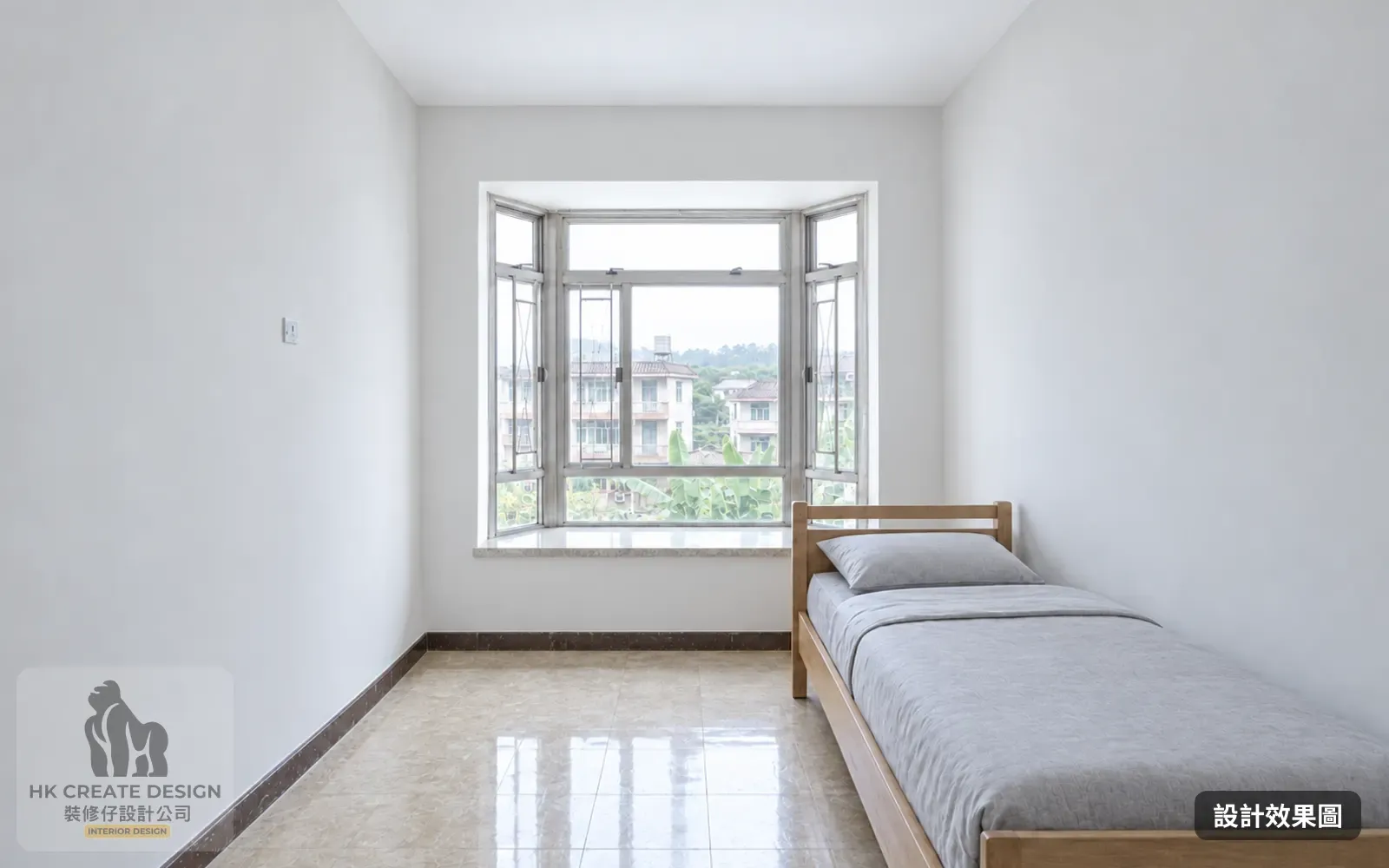
For a child's room, check the label and test data for each specific product, then confirm which primer, topcoat and timber door paint will be used. Stripping and skim coating are itemised under E01. (see published rates). Our standard interior wall paint is Nippon Paint Five-in-One. Parents can request Little Prince Odour-less Children's Paint for the child's room and specify the area in the quotation.[9].
04
Product information highlights: Take the 5-in-1 anti-mildew product as an example
When you find your favorite model, be sure to check the manufacturer’s website for technical information. Taking Dulux's odorless and anti-mildew 5-in-1 latex paint as an example, the manufacturer lists a coating rate of 13 to 16 square meters per liter per layer, a surface drying time of about 0.5 to 1 hour, a recoating time of 2 to 3 hours, and 2 coats recommended. It also lists the functions of being odorless, mildew-proof, alkali-resistant, and covering hairline cracks.[6].
The spread rate can help you estimate the amount to use. For example, a 10-foot-by-10-foot children's room has four walls, excluding doors and windows, about 280 square feet, and a ceiling of 100 square feet, totaling about 380 square feet, or about 35.3 square meters. To paint two layers, based on 13 to 16 square meters per liter, approximately 4.4 to 5.4 liters of surface oil are needed.[6].
Recoating time also affects the construction period. Surface dryness does not mean it is completely dry. Recoating in 2 to 3 hours means you can apply another layer.[6], but the room still needs some time to ventilate before it is suitable for children. You should actually read the product description, weather and ventilation conditions.
"Odorless" does not mean zero emissions. Odorless means the smell is low. Parents should still check the VOC content and arrange ventilation. The product function words are for reference only. The most reliable way is to check that the label numbers are the same as the official limits.
If your child has eczema, nasal allergies or asthma, you should be more conservative when choosing paint. You can discuss the areas that need attention with your doctor first, and give priority to products with the lowest VOC number and the lightest smell. Before starting construction, you can also try out the paint in a small area to observe the smell and children's reaction, and then decide to use the same style in all rooms.
The same brand often has many series, such as general latex paint, anti-fouling, anti-mildew, children's series, etc., with different prices and ingredients. Before choosing, you can compare the technical data sheets of several models to check VOC, coating rate, drying time and functions, and then decide based on the actual needs of the room, rather than blindly pursuing the model with the most functions.
Example one: changing dark paint to a light finish in a 100 sq ft child's room
Assumptions
- Hypothetical examples, not actual quotes.
- The room is 10 feet by 10 feet, the floor is 8 feet, and the doors and windows are about 40 square feet.
- The walls are in good condition and have changed from dark to light.
How to calculate quantities
- Wall area: 4 × 10 × 8 − 40 = 280 square feet; plus ceiling 100, the total is 380 square feet.
- Top oil usage: Approximately 35.3 square meters × 2 layers ÷ 13–16 square meters per liter ≈ 4.4–5.4 liters [6].
- E03 repaint including the HK$4 per square foot dark-to-light supplement: HK$16 per square foot × 380 = HK$6,080
- Subtotal HK$6,080.
Approximately HK$6,080.
If peeling or mildew is found, use E01 or E05 instead; the dosage is subject to the product instructions. (see published rates)[6]
05
When will it be painted and how long will it take to move in first?
It is best to make arrangements in advance and allow enough time before baby is born or the child moves in. After the painting period is completed, the Consumer Council recommends opening doors and windows as much as possible to introduce fresh air, or use fans to maintain air circulation.[3]. The Environmental Protection Department also recommends the use of mechanical ventilation equipment such as fans and hair dryers.[5].
During the construction period, it is best not to leave children and pregnant women in the house, or at least stay away from the construction area. The Environmental Protection Department also reminds that in order to prevent the smell from disturbing neighbors, you should only use windows for ventilation, keep the door closed, and seal the door with tape or wet towels.[5].
After the completion, you can open the windows every day for ventilation. If there is no smell, start using the room for a short time, and then gradually use it normally. If there is new furniture at the same time, especially panel furniture, the overall formaldehyde and VOC sources will be greater, and the ventilation time should be longer.
In the Environmental Protection Agency's Indoor Air Quality Objectives (applicable to offices and public places), the 8-hour average "excellent" level for formaldehyde is 30 micrograms per cubic meter and the "good level" is 100 micrograms; the 8-hour average "excellent level" for total volatile organic compounds is 200 and 600 micrograms per cubic meter.[7]. This set of indicators is not the legal standard for residential buildings, but it can be used as a reference. For example, when asking a cleaning company to test, you will know what the numbers represent.
Ventilation does not even require opening the windows. A more effective way is to create convection. For example, open the door and the living room window at the same time, and then use a fan to blow out the window to push the air out of the room. On rainy days or when the humidity is high, the paint dries slowly. You can use a dehumidifier, but you should occasionally open the window for ventilation during dehumidification.
If there is only one room in the house and the children cannot escape temporarily, it is even more important to arrange the project on days when adults can take the children out, such as holidays or staying at a relative's house for a few days.
06
Preparation before painting: The condition of the wall determines the process
The substrate determines much of the finish. On sound walls with dated colour or minor stains, E03 covers cleaning, filling nail holes, light sanding and 2 topcoats at HK$12 per sq ft, minimum HK$3,700. Changing from dark to light needs an extra coat at HK$4 per sq ft. (see published rates).
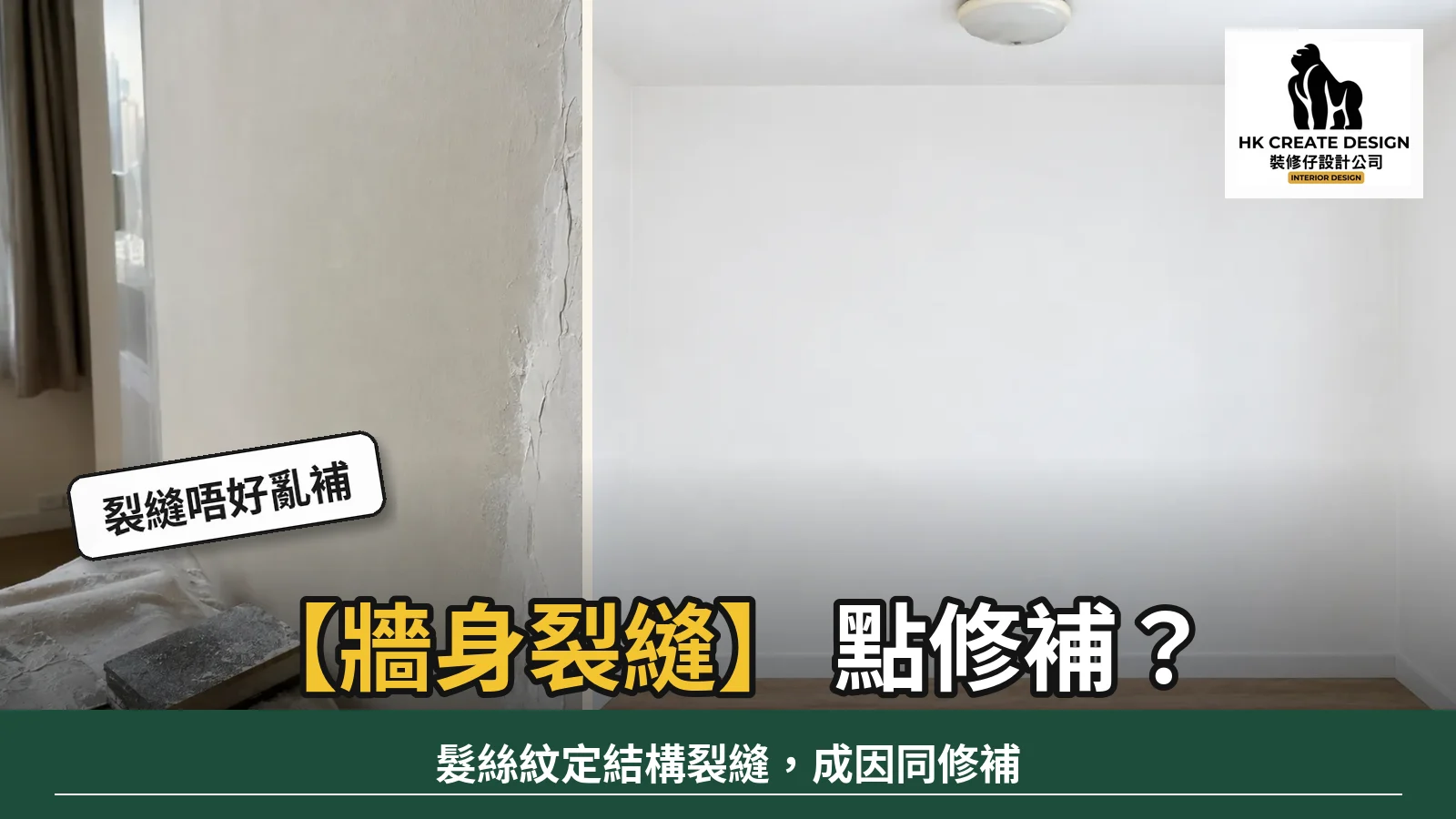
For local cracks or chips, E02 patching, moisture treatment, sanding and painting costs HK$21 per sq ft, minimum HK$4,650. Peeling, mould or previous leaks may call for E01: strip to the skim coat, apply moisture-resistant primer, skim coat 2 to 3 times, sand and apply 2 to 3 finish coats. The rate is HK$39 per sq ft, minimum HK$7,450. (see published rates).
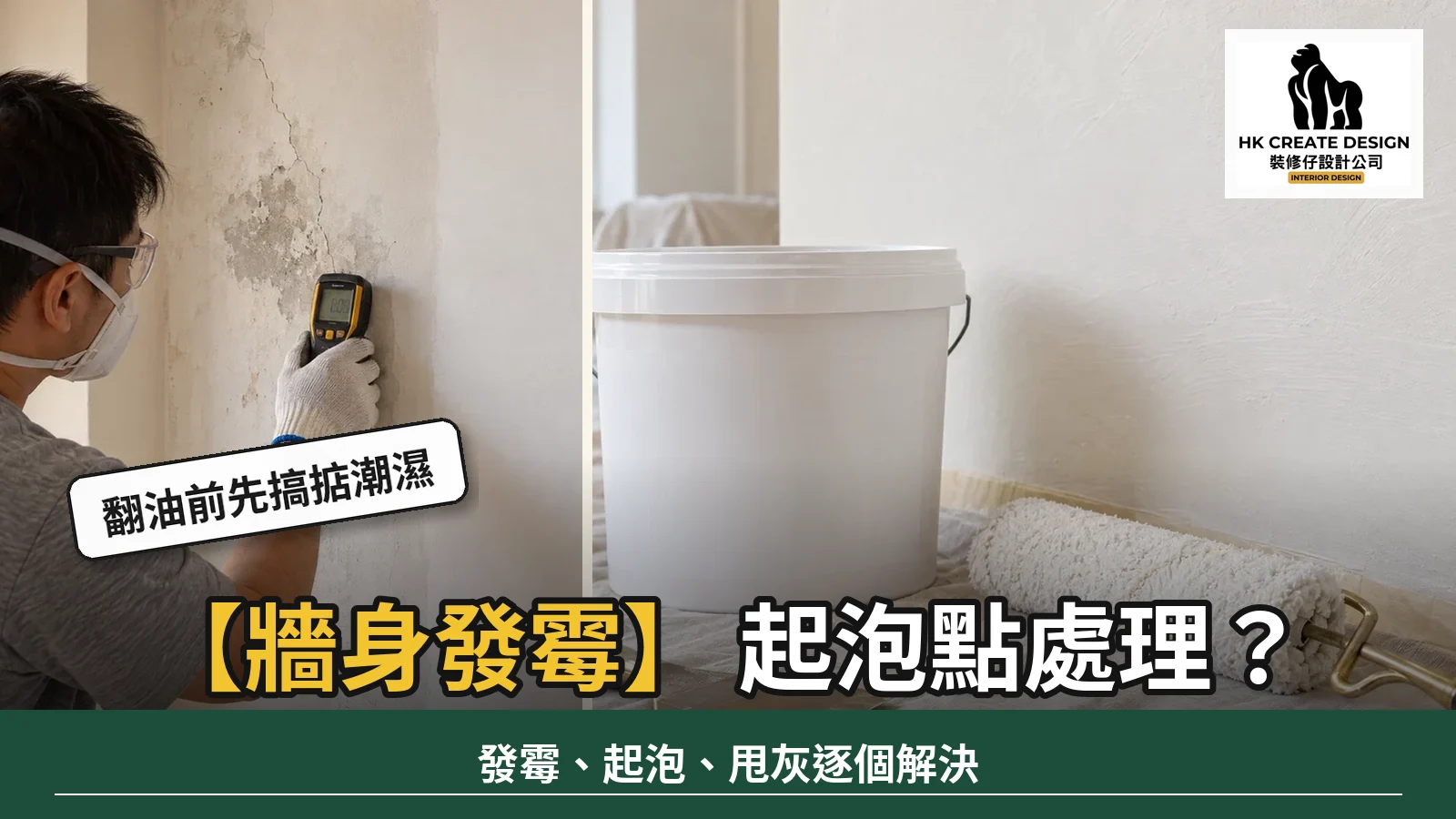
For local mould, E05 includes mould treatment, mould-resistant primer and repainting at HK$1,250 per surface. Investigating the source of leakage is separate. (see published rates). If mould comes from water ingress, it can recur after repainting until the source is dealt with.
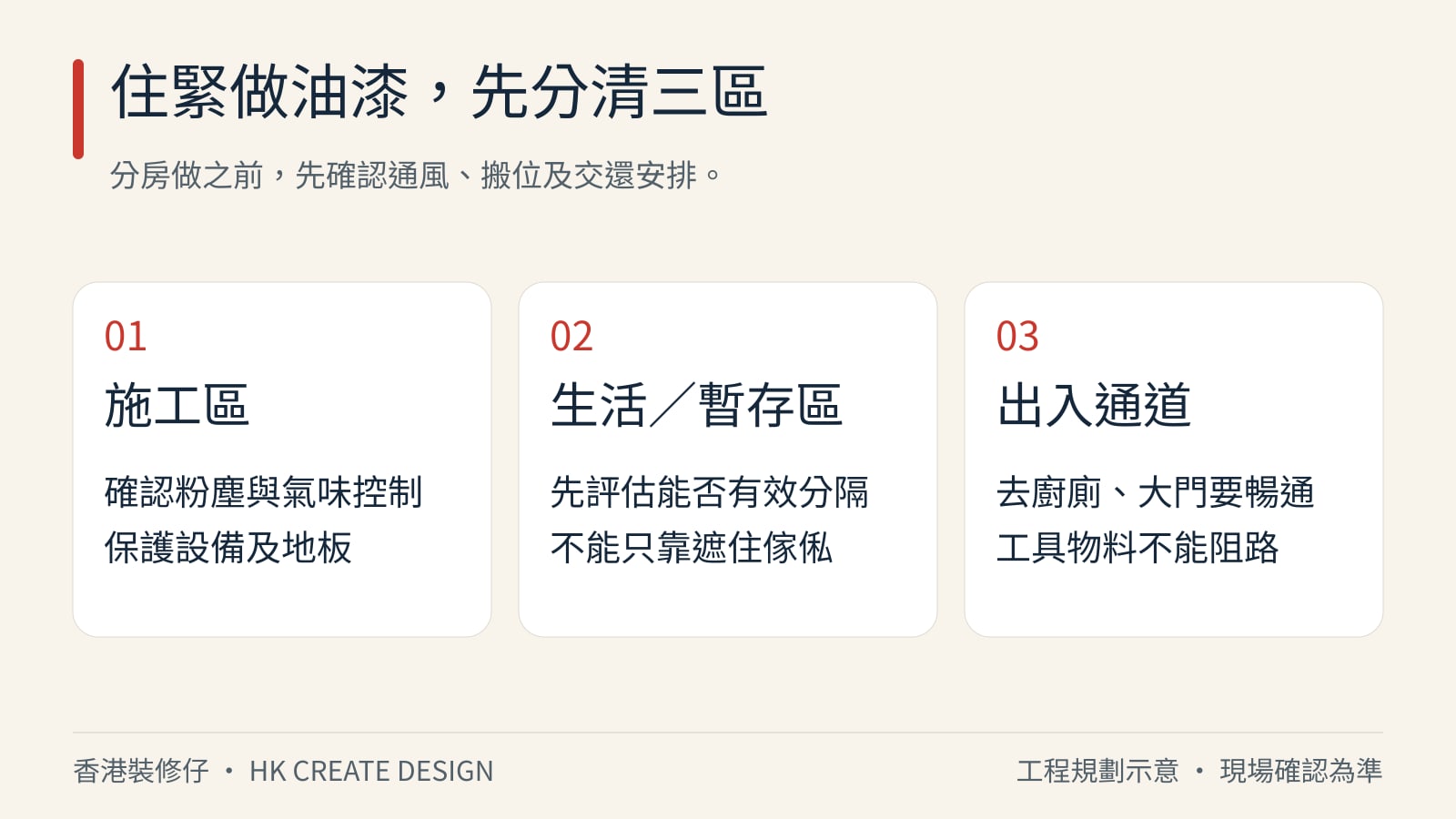
Sanding and skim coating generate dust. Children, especially those with asthma or allergic rhinitis, should stay away from dusty work. The contractor should protect furniture, isolate the work area, remove debris and carry out basic cleaning after completion.
In addition, in children's rooms in old buildings, it is sometimes found that the walls are cracked, swollen or loose. These situations should be dealt with before painting. When our masters come to your home to measure, they will knock and inspect the wall, and then recommend the appropriate process. We will not always use the most expensive shoveling solution, nor will we skip necessary steps to save money.
After stripping and cleaning, the painter repairs the wall as needed and levels it in thin layers with Nippon Paint odourless wall putty. The putty is ready to use without dilution.[8]. After sanding and removing dust, select a primer compatible with the topcoat. The Little Prince odourless children's paint is washable and suitable for surfaces that collect handprints.[9]. If the wall still leaks, address the water source first.
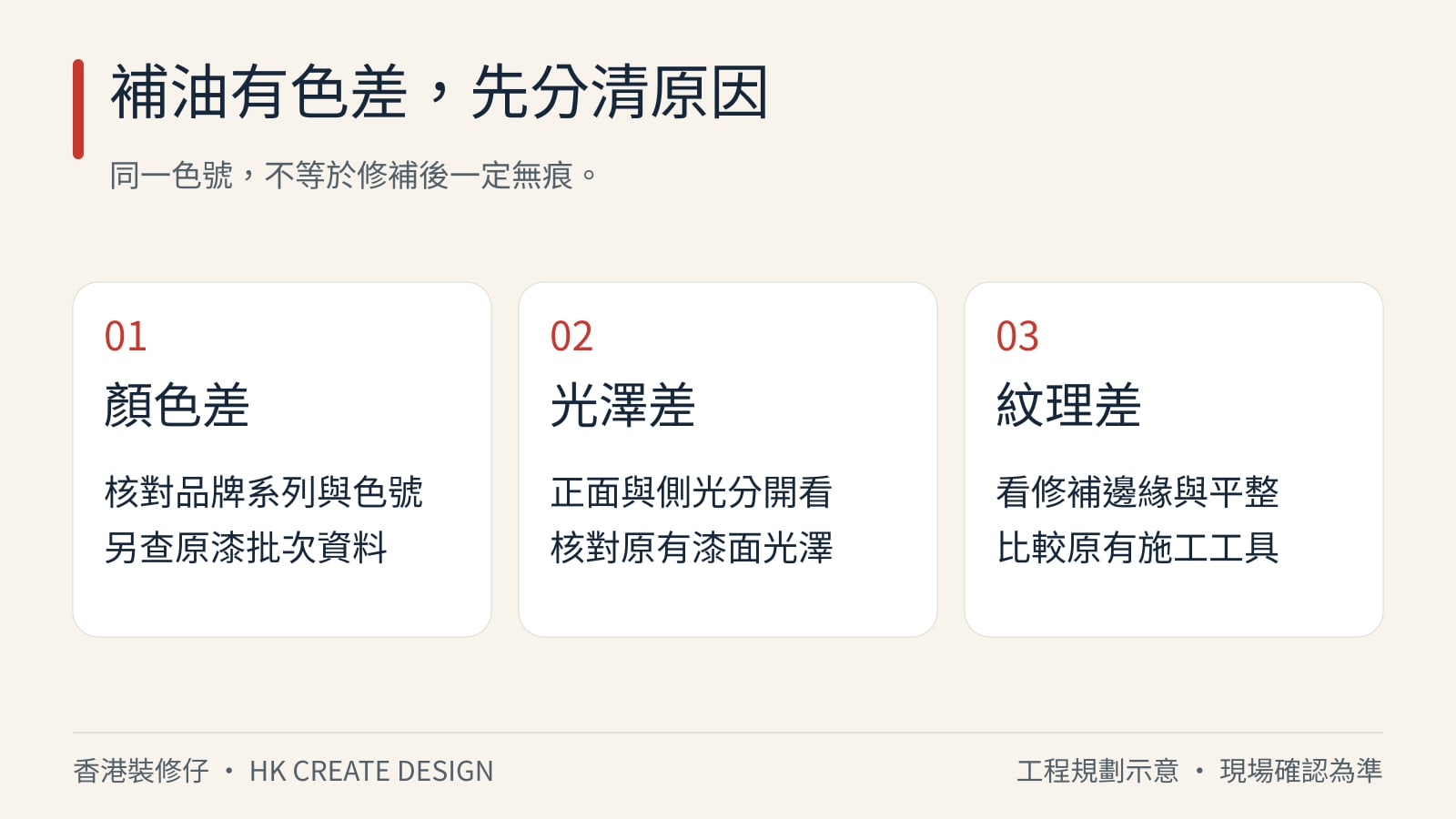
- The wall is in good condition: E03
- Local crack: E02
- Peeling and moldy: E01
- For mold, first check the source of water leakage
07
Children's room furniture: boards and formaldehyde
Many parents choose customPlatform beds, wardrobes and desks. Environmental Protection Department indoor air guidance recommends choosing solid timber furniture with lower formaldehyde and VOC emissions, or furniture using low-emission wood-based boards that meet European E1, China's GB18580-2017 or equivalent standards.[4].
Our Bespoke furnitureincludes design and whole-flat drawings: layouts, coordinated building services drawings, furniture designs, VR renderings and production drawings. Published examples include FUR06 platform beds at HK$340 per sq ft, FUR08 desks at HK$1,850 and FUR05 wardrobes at HK$2,900 per linear ft. (see published rates). Tell our team your board requirements during design.
The Environmental Protection Agency also recommends that old furniture should not be replaced unless necessary[4]. If the existing furniture is in good condition, it can be retained to reduce the source of new formaldehyde. For carpets, mats and floor adhesives, the Environmental Protection Agency recommends choosing products with environmental labels[4].
Paint first, install furniture afterwards, then ventilate the whole room. If needed, our specialist cleaning partner can carry out cleaning and formaldehyde treatment after completion. L01 is HK$16 per sq ft, minimum HK$2,800. (see published rates).
You can swipe left or right on your phone to view the complete table.
| wall condition | Suggested projects | Unit price | Minimum charge |
|---|---|---|---|
| in good condition | E03 Turn oil directly | HK$12 per sq ft | HK$3,700 |
| Local crack collapse | E02 patching, damp treatment and painting | HK$21 per sq ft | HK$4,650 |
| After peeling, mildew, or water seepage | E01 Strip, skim, apply moisture-resistant primer and paint | HK$39 per sq ft | HK$7,450 |
| Local mold | E05 Partial mildew removal with heavy oil | HK$1,250 per wall face | — |
These are published reference prices. The written quotation confirms the price. (see published rates)
08
Colors and designs: the samples are easy to pick and enjoy.
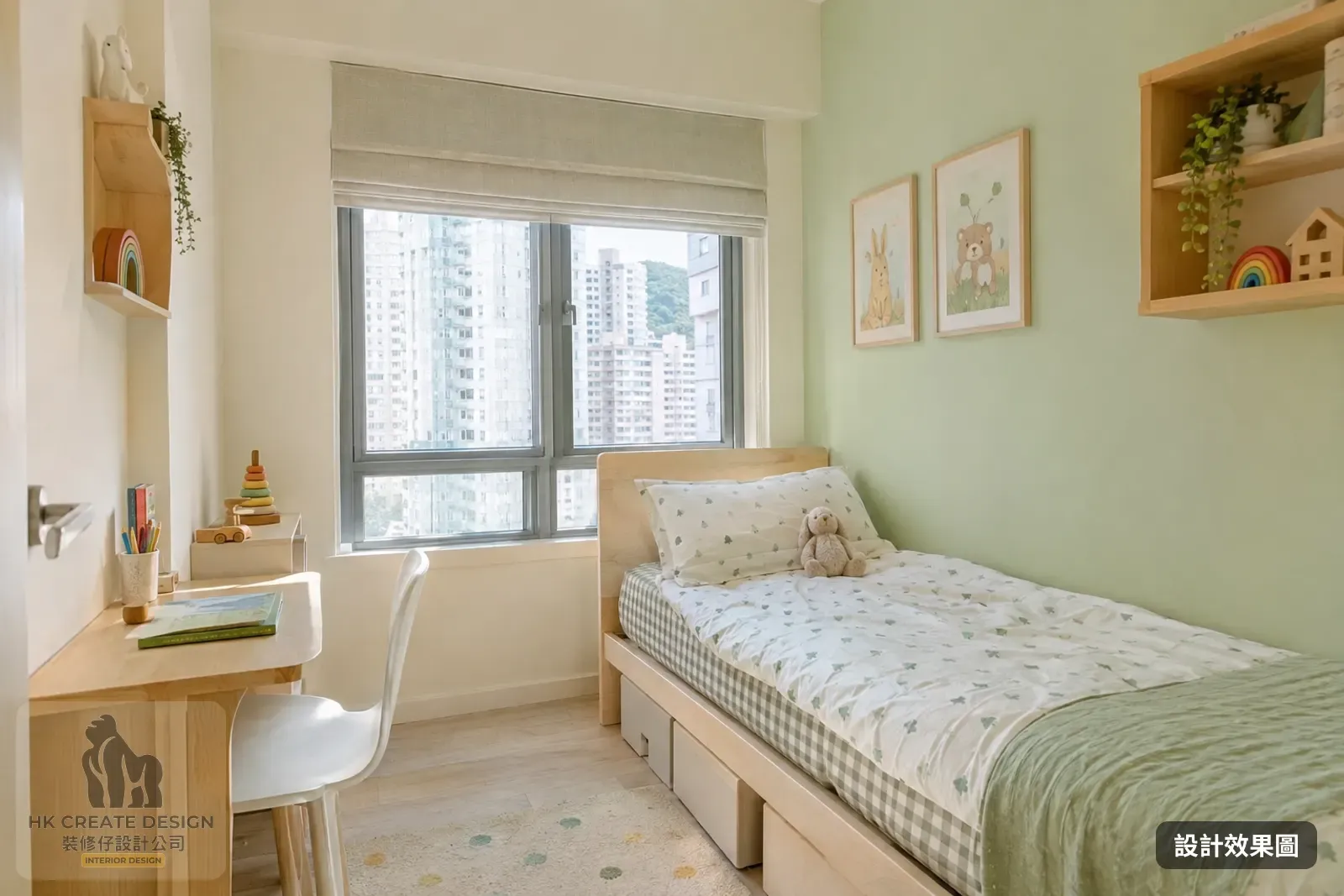
Pale blue, pink and light green are common choices for children's rooms. Light shades can brighten a small room and suit later changes. If the current wall is dark, a lighter finish requires another coat under E03 at an extra HK$4 per sq ft. (see published rates).
If you want to be distinctive, you can only use a brighter color on one theme wall, and use lighter colors on other walls. Children grow up very quickly, and designs that are too cartoony may need to be changed after a few years, so you can use easy-to-change elements such as hanging paintings, stickers, bedding, etc. to bring out the theme and keep the walls simple.
Decorative paint is an option for a feature wall. E06 is HK$110 per sq ft, minimum HK$2,800, including primer, texturing and a protective finish. Material pricing varies by brand. (see published rates). For decorative paint in a child's room, also ask for VOC information for the specified product.
In addition, the walls near the bedside and desk are easy to be touched and stained. You can choose wash-resistant paint.[3], it can be cleaned by wiping it with a damp cloth every day.
Children’s room furniture should also consider safety, such as cabinet doors that are anti-pinch, rounded corners, tall cabinets that are fixed on the wall to prevent them from tipping over, and the height of the desk that can be adjusted as the child grows. These details can be dealt with at the design stage to avoid discovering that it doesn't work after installation.
When selecting colors, you can take the color card home and look at it under daylight and night lights. If the room faces north or has narrow windows, light and warm colors will make the space warmer; if the room faces west, you can choose a slightly cooler light color. The color number should be written low so that it can be returned to the same color when refilling in the future.
If the budget is limited, you can finish the painting and basic storage first, and then add bookcases and display racks according to your interests when the children are older. Doing it in stages can also disperse the sources of formaldehyde in new furniture.
- Mainly light colors, easy to change style
- Bring out the theme with soft furnishings
- Ask about VOC when it comes to art paint
- Bedside desk is washable and durable
09
Dispose of remaining oil at the same waste point
The Consumer Council reminds you not to pour leftover paint into drains or toilets to avoid polluting sea water and harming marine ecology.[3]. The Environmental Protection Department also pointed out that solvents and paints are defined as chemical wastes under the Waste Disposal Ordinance. According to the Water Pollution Control Ordinance, it is an offense to discharge into storm drains or sewers.[5].
The Environmental Protection Agency recommends using leftover paint and solvents as much as possible; dried paint is not chemical waste and can be disposed of as general waste; small amounts of household leftover solvents or paints can be disposed of as household waste[5]. Project contractors should register as chemical waste generators and hire licensed collectors for disposal[5].
The Environmental Protection Agency also recommends that products containing VOC be stored in sealed containers[5]. If you want to keep the remaining paint as oil, cover it and put it in a place out of the reach of children, and write the color number on it to facilitate refilling in the future.
When we are finished, we will remove the garbage and sweep it clean, and we will not dump the remaining oil into the drain. The small amount of paint left for the owner to handle will be sealed and marked with color.
Also pay attention to cleaning tools. After using up the water-based paint with a sweeper and roller, you can first scrape off the excess paint, wipe it dry with newspapers, and then clean it with a small amount of water to avoid pouring a large amount of paint water directly into the drain. Although these details are small, they are all part of protecting the environment.
Example two: stripping, repainting and cleaning a child's room with mould near an external wall
Assumptions
- Hypothetical examples, not actual quotes.
- The same room has a paint area of 380 square feet. One wall was moldy and the source of water seepage has been dealt with.
- After completion, clean and remove formaldehyde.
How to calculate quantities
- E01 Strip, skim, apply moisture-resistant primer and paint: HK$39 per sq ft × 380 = HK$14,820
- "E05" Partial mildew removal with heavy oil: HK$1,250/noodle × 1 = HK$1,250
- "L01" cleaning and formaldehyde removal: HK$16/square foot × 100 = HK$2,800 (based on the minimum charge)
- Subtotal HK$18,870.
Approximately HK$18,870.
E01 is based on the minimum charge; locating the source of water leakage will be charged separately; cleaning and formaldehyde removal will be followed up by a cooperative professional cleaning company. (see published rates)
10
Common Mistakes: What Parents Most Easily Overlook
First, I only asked about the facial oil and not the base oil. The legal VOC limit for primer sealer is 200 grams, which is higher than the 50 grams for matte topcoat[1], so base oil selection is equally important. Second, they think "odorless" means safe and don't look at the VOC numbers. Third, bolt the windows and turn on the air conditioner immediately after painting to trap the smell in the room.
Fourth, ignore the sources of water seepage and mold. If the children's room is close to the bathroom or an exterior wall, and the wall is repeatedly moldy, the problem is usually with the water, not the paint. Fifth, paint and new furniture are put into the house at the same time, without sufficient ventilation time. Sixth, DIY shoveling old paint creates a lot of dust, and children are in the house.
To avoid these mistakes, you can indicate the brands and models of topcoat, primer, plaster and wood paint in the quotation, arrange the construction time so that family members are not at home, and reserve days for ventilation after completion.
A common omission is pricing the walls but forgetting timber doors, window frames and cabinet surfaces. Timber doors generally use a different coating. E04 painting a timber door or frame costs HK$1,650 per set and includes sanding, filling nail holes, primer and topcoat. (see published rates), ask which coating will be used and request its VOC information.
- You have to ask about VOC when it comes to base oils[1]
- I don’t believe it’s “tasteless”
- After painting, open the window for ventilation
- Treat water-infiltrating mold first
- Reserve ventilation time
11
Let us help you arrange children's room painting
HK Create Design (HK CREATE DESIGN) takes on jobs big and small, even painting just one kids' room, and can also design the platform bed, desk and wardrobe together. Our designers and tradesmen with over 15 years' experience will discuss plans with you for free, recommend direct repainting, patching or stripping based on the wall condition, and help you choose low-VOC products.
Send room photos to WhatsApp 5243 7747 for a free consultation. You can book a visit to inspect the walls. On-site measurement is free through 31 December 2026 for two or more work items, with no deposit. After that, the HK$500 fee is credited against the order. (see published rates). The AI quotation assistant and 117-item price calculator provide preliminary estimates only. A written quotation after on-site measurement confirms the final price.
After completion, we will remove the garbage, sweep up and do basic cleaning; if deep cleaning or formaldehyde removal is required, we can have a professional cleaning company follow up.
If you want to finish it before your baby is born, if possible, let us know the expected date of delivery. We will arrange the process in advance and try to allow time for ventilation after completion.
- WhatsApp 5243 7747 Free consultation
- HK$500 (rebate on order)
- AI quotation is for reference only
- Can be designed together with children’s room furniture
FAQ
7 practical questions answered
01What paint is the safest to use in children’s rooms?
It is recommended to choose water-based latex paint, matte or low gloss, and read the label for VOC content[3][5];The legal limit for matte paint in Hong Kong is 50 grams per liter[1], it is better to choose products that are much lower than the upper limit.
02What is the upper limit of VOC for Hong Kong paints?
For example, matte paint 50 g/L, non-matte 150 g/L, primer sealing primer 200 g/L[1];Legislative Council document recommends tightening limits for various categories[2].
03After painting, how long will it take for children to stay?
There is no uniform time, it depends on the product, weather and ventilation. The Consumer Council and the Environmental Protection Department recommend opening windows or using fans for ventilation during and after painting.[3][5], no smell, use it gradually.
04Will latex paint contain lead?
The Consumer Council tested 10 latex paints, and 4 of them contained trace amounts of 20–38 ppm lead in some color samples, but they met the environmental label requirements; children are particularly susceptible to the effects of lead poisoning[3].
05Is there any problem with anti-mildew paint?
Consumer Council mentioned public concern that anti-mold products may contain toxic fungicides[3], read the product information clearly; more importantly, deal with water seepage and improve ventilation.
06Low paint spots left to deal with?
Do not throw it into drains; dry paint can be disposed of as general waste, and a small amount of household oil leftover can be disposed of as household waste.[5].
07How much does it cost to paint a children's room?
For sound walls, E03 direct repainting is HK$12 per sq ft, minimum HK$3,700. (see published rates). Peeling or mould calls for E01. The formal written quotation sets the scope.
CHECK THE BASIS
Data and technical basis, sources can be verified
- [1]Environmental Protection Department: Volatile organic compound content limits for regulated construction paints Accessed: 2026-11-01
- [2]Legislative Council Panel on Environmental Affairs: papers for the meeting of 29 May 2026 Accessed: 2026-11-01
- [3]Consumer Council: Trace amounts of harmful substances detected in latex paint ("Choice" Issue 457) Accessed: 2026-11-01
- [4]Environmental Protection Department Indoor Air Quality Information Website: Frequently Asked Questions Accessed: 2026-11-01
- [5]Environmental Protection Department: Renovation paint pollution problems and solutions Accessed: 2026-11-01
- [6]Dulux Hong Kong:Odourless Anti-mould 5in1 Accessed: 2026-11-01
- [7]Environmental Protection Department: Summary of old and new indoor air quality objectives Accessed: 2026-11-01
- PricesHK Create Design 2026 detailed project budget and public price list Accessed: 2026-11-01
- [8]Nippon Paint Odour-less Wall Putty | Nippon Paint Hong Kong Accessed: 2026-11-02
- [9]Nippon Paint (H.K.) Co., Ltd.: Nippon Odour-less Kids Paint interior emulsion Accessed: 2026-11-22