01
Start by distinguishing local touch-ups from extensive stripping
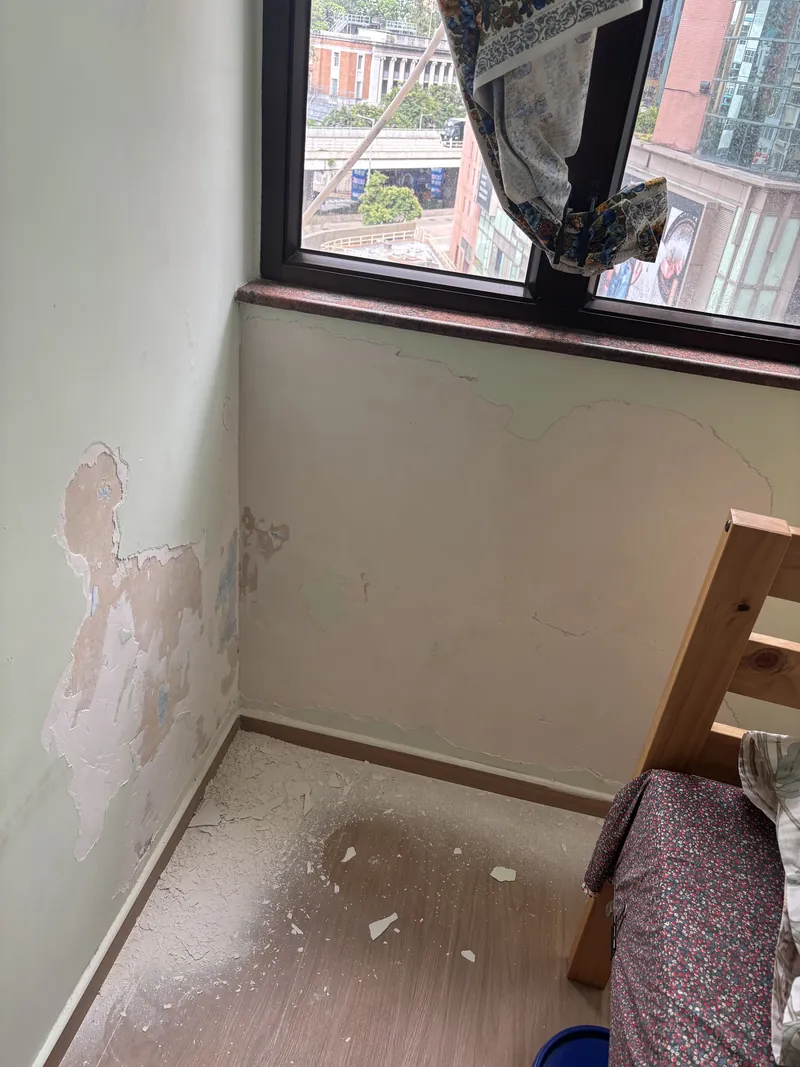
Touching up one wall, repainting a room and stripping the entire flat affect daily life differently. Before requesting a quote, record peeling, chalking, water stains and furniture to be retained in each room. Trace the cause of persistent damp first.PaintingChoose the treatment by substrate condition. Saleable floor area alone is insufficient for a lump-sum quote.
- List rooms and ceilings included
- Separate local repairs from treatment of the whole surface
02
Mark the three zones to see whether room-by-room work is feasible
Use a simple plan to mark the work zone, living or temporary storage zone and access routes. Check whether reaching the kitchen, bathroom or front door means crossing the work. If separation is impractical, discuss moving out temporarily or revising the scope. A zoning sketch supports planning and cannot certify site safety.
- Keep entrances, exits and escape routes clear
- Store tools separately from household items
You can swipe left or right on your phone to view the complete table.
| Arrangements | Check first | Possible effects |
|---|---|---|
| Work room by room | Can the living area be separated while maintaining access? | More moving, protection and phased handovers |
| Some rooms temporarily out of use | Can the remaining space support daily needs? | Bathroom, kitchen and ventilation arrangements |
| Move out temporarily | Moving, safekeeping and conditions for returning | Accommodation and reinstatement arrangements are separate |
Choose following a site assessment. The table cannot establish that a particular option is safe.
03
Specify protection for each piece of furniture. “Protection included” needs further detail.
List large cabinets, beds, TVs, curtains and floors individually. Agree who empties, dismantles, moves, reinstalls and returns each item. Fixed furniture may prevent access. Confirm whether a wardrobe will move before including the wall behind it. Put valuables away and photograph the original condition.
- Record excluded or inaccessible areas
- List protection, moving and dismantling or reassembly separately
Scenario A: repainting just one bedroom in a two-bedroom flat
Assumptions
- This hypothetical example assumes the room can be cleared. Whether the walls need stripping remains to be checked.
Checks to make
- Photograph the room and wall condition. Confirm how the bed and cabinets will be moved.
- Mark the passage outside the room and other living areas.
- Have the team confirm treatment, ventilation and handover arrangements.
Get the full scope for one room before deciding on the others.
Check on site whether residents can stay and how many days the arrangements will require.
04
Plan ventilation and dust control alongside daily living arrangements
The Environmental Protection Department advises ventilating through windows, reducing odours spreading into shared areas and choosing low-VOC or water-based products.[1] Follow the product label and actual site conditions. Low odour alone cannot establish that the room is ready for sleeping. If work affects a living area, stop using that area and make new arrangements.
- Check ventilation to the outdoors first
- Consider more than the strength of the odour

05
Planning the order: which rooms come first?
Start with a room that can be cleared and isolated. Move items back and start the next zone once the team confirms handover conditions. Allow time for painting, drying, moving items and cleaning between phases. Check management working hours and material availability before committing to a move-in date.
- Set the start and handover conditions for each phase
- Allow time for snagging and returning items
You can swipe left or right on your phone to view the complete table.
| Item | Put these details in writing | Acceptance record |
|---|---|---|
| Large furniture | Who empties and moves the item? Is dismantling and reassembly required? | Photos of the original condition and reinstatement |
| Floors and equipment | Protection area, edge details and removal | Any stains or damage? |
| Phased handover | Cleaning tasks and unfinished items | Snagging list and completion sign-off |
Give each bidder the same checklist. Confirm each inclusion explicitly.
06
Compare quotations on the same number of moves and cleaning visits
The Consumer Council recommends specific line items in renovation quotations.[2] For work in phases, check whether protection stays in place or is renewed in each zone, who moves items, what daily cleaning includes and what happens if a loose substrate is found. Agree on options and costs before authorising additional work.
- Specify material ranges, work sequence and repair areas
- Record how variations will be approved
Scenario B: painting the living/dining room and corridor together
Assumptions
- Planning example: the corridor is assumed to be the main route to the kitchen, bathroom and entrance.
Checks to make
- Mark shared routes first. Keep furniture out of the way when separating the areas.
- Discuss phasing or a temporary move, and assign responsibility for handling and protection.
- Record separate dates for work completion, cleaning and handover.
Resolve conflicts between work and daily use before scheduling tasks.
The example cannot replace a site safety, product or work assessment.
07
Returning a room to use: inspect the finish and confirm reoccupation separately
Check the wall colour, patch edges, window edges and skirtings. Confirm removal of floor protection and tools, return of items and outstanding snagging. Surface dryness, readiness to recoat, full curing and suitability for use are separate stages. Check the actual product guidance and site arrangements.
- Photograph outstanding issues and number them
- Confirm when furniture can be placed back against the walls
08
Four types of enquiry photo to reduce follow-up questions
Prepare four types of photos: room overviews, close-ups of problem walls, large furniture positions and access routes. State whether anyone will remain, whether rooms can be cleared, the desired completion date and what you want to keep. Photos provide initial context. The site assessment determines the plan and formal quotation.
- Provide permitted working times
- Keep personal documents and details of private belongings out of photos
FAQ
6 practical questions answered
01If the painter works one room at a time, can I definitely stay?
Not always. Consider dust, odours, ventilation, passageways and separation from living space. Confirm feasibility on site before committing to stay.
02Does all the furniture have to be moved?
It depends on the work and available space. If items cannot be moved or protected safely, or walls cannot be reached, revise the scope or arrange removal.
03Can I sleep in the room the same night if low-odour paint is used?
Low odour alone cannot establish suitability. Check the actual label, ventilation and site assessment before using the room.
04Is the work duration the same as the time before reoccupation?
No. Confirm work, drying, snagging, cleaning and return to use separately.
05Does working room by room cost more?
Repeated protection, moving and phased work may affect cost. Compare written quotes for the same scope as well as the rate per square foot.
06Can water stains just be painted over at the same time?
Identify the damp source before assessing repairs. Covering a stain cannot stop seepage.
CHECK THE BASIS