01
How much does a board replacement cost? Check H09 inclusions.
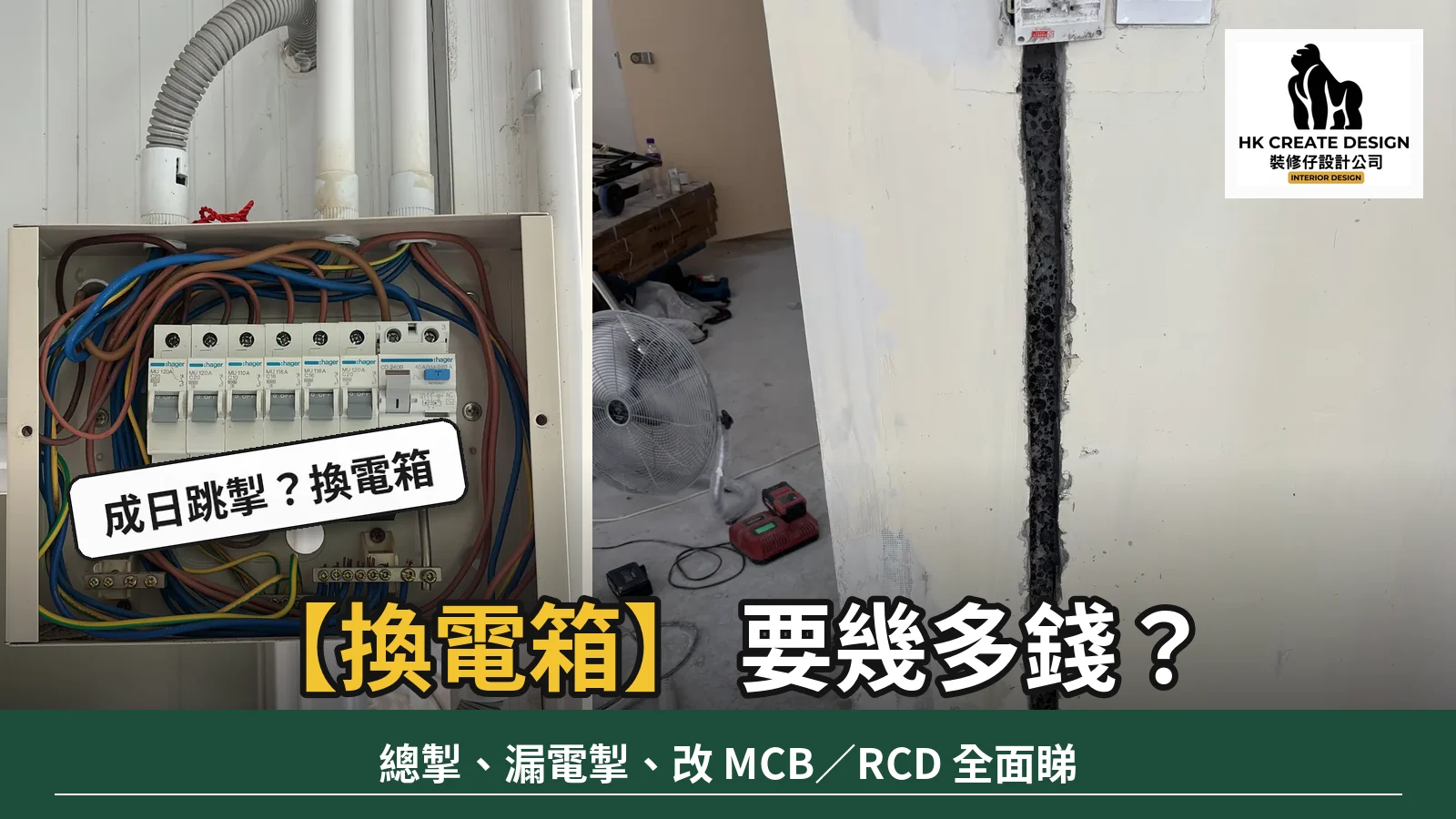
Our published H09 rate is HK$6,800 per distribution board. It includes converting an old fuse box to MCB/RCD protection and labelling each circuit.[1] This price covers replacing the board in an ordinary domestic flat and reconnecting existing circuits.
Additional dedicated circuits are HK$3,350 each under H06. Apply separately to the electricity supplier for increased capacity. The H09 rate also excludes AFDDs.[1][11] If tests show that concealed wiring has deteriorated or insulation is inadequate, rewire the affected circuits. Board replacement alone cannot correct them.
Start with an H01 electrical inspection (HK$770 per visit, HK$1,650 for multiple circuits) to establish wiring condition. Decide whether to replace only the board, replace it with extra circuits, or undertakewhole-home rewiring. [1]
- H09: HK$6,800 per item
- Additional circuits priced separately
- AFDDs and supply capacity upgrades are priced separately.
- Inspect first, then decide.
You can swipe left or right on your phone to view the complete table.
| Item | Already included | Excluded or separately charged |
|---|---|---|
| Distribution board itself | MCB/RCD distribution board | Arc fault detection device |
| Remove existing fittings | Remove the old-style fuse box. | Wall alterations to change the old board's position are priced separately. |
| Connection | Reconnect existing circuits to the new board. | Existing circuits that fail testing need rewiring. |
| Labels | Label each circuit's purpose. | — |
| Additional circuits | — | H06 HK$3,350/circuit |
| Incoming supply capacity | — | Applying to the electricity supplier for more capacity is priced separately. |
Our published rate for H09 is HK$6,800 per board. [1][11] [1][11]
02
How do the main switch, MCB and RCD differ?
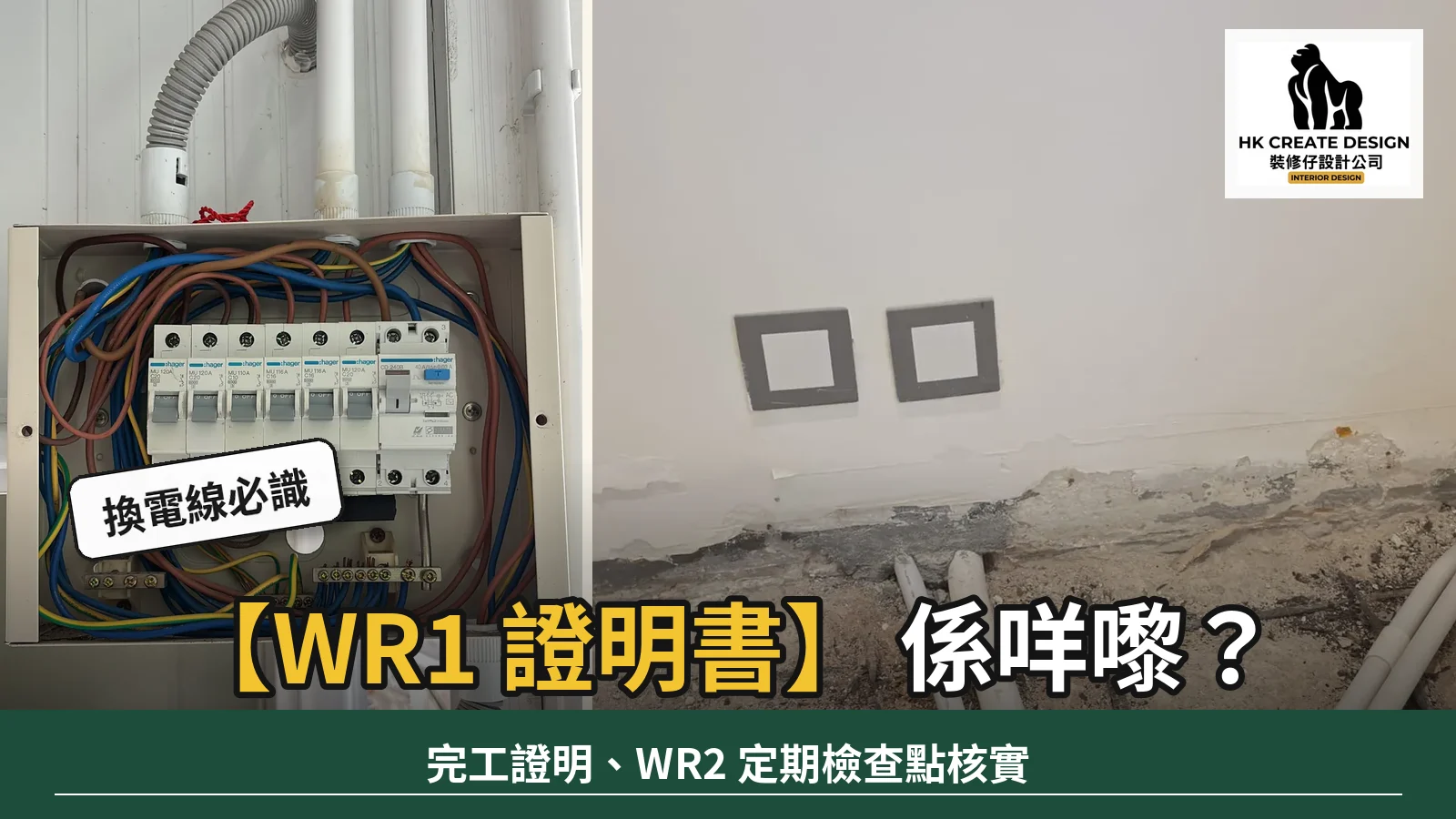
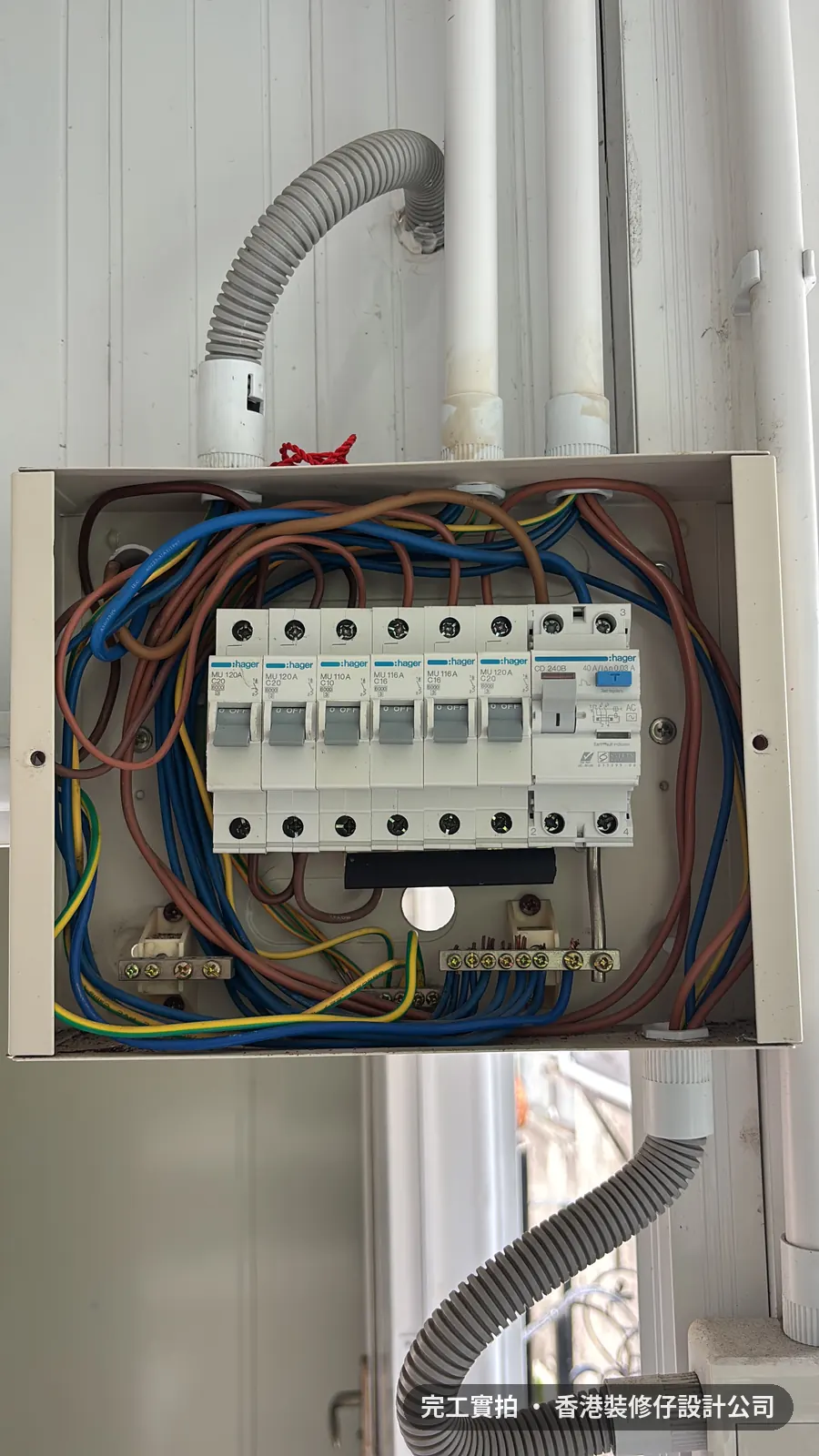
The main switch disconnects the entire flat's supply in an emergency. An MCB (miniature circuit breaker) protects an individual circuit by tripping on overload or short circuit.
A residual current device (RCD) disconnects the supply when it detects earth leakage. EMSD advises that an RCD should have a test button. Operate that button at least once every three months.[6] EMSD's Household Electrical Safety Handbook also requires RCD protection for socket circuits.[2]
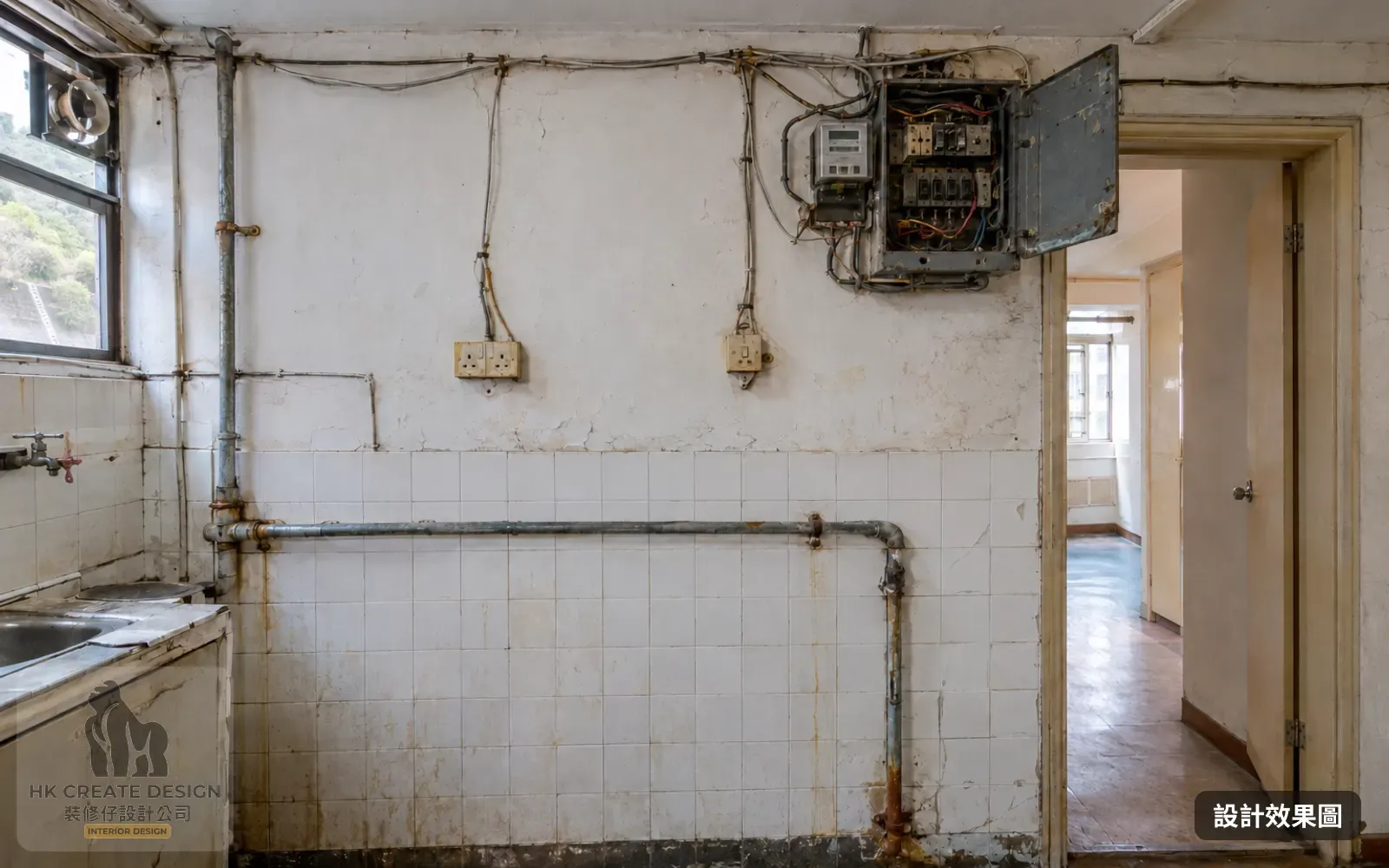
An old fuse box without an RCD lacks automatic earth leakage protection and makes fault identification harder. For this reason,Older flat renovation, replacing a fuse box with MCB/RCD protection is often a priority electrical upgrade.
- Main switch: isolates the whole flat
- MCB: overload and short-circuit protection
- RCD: earth leakage protection
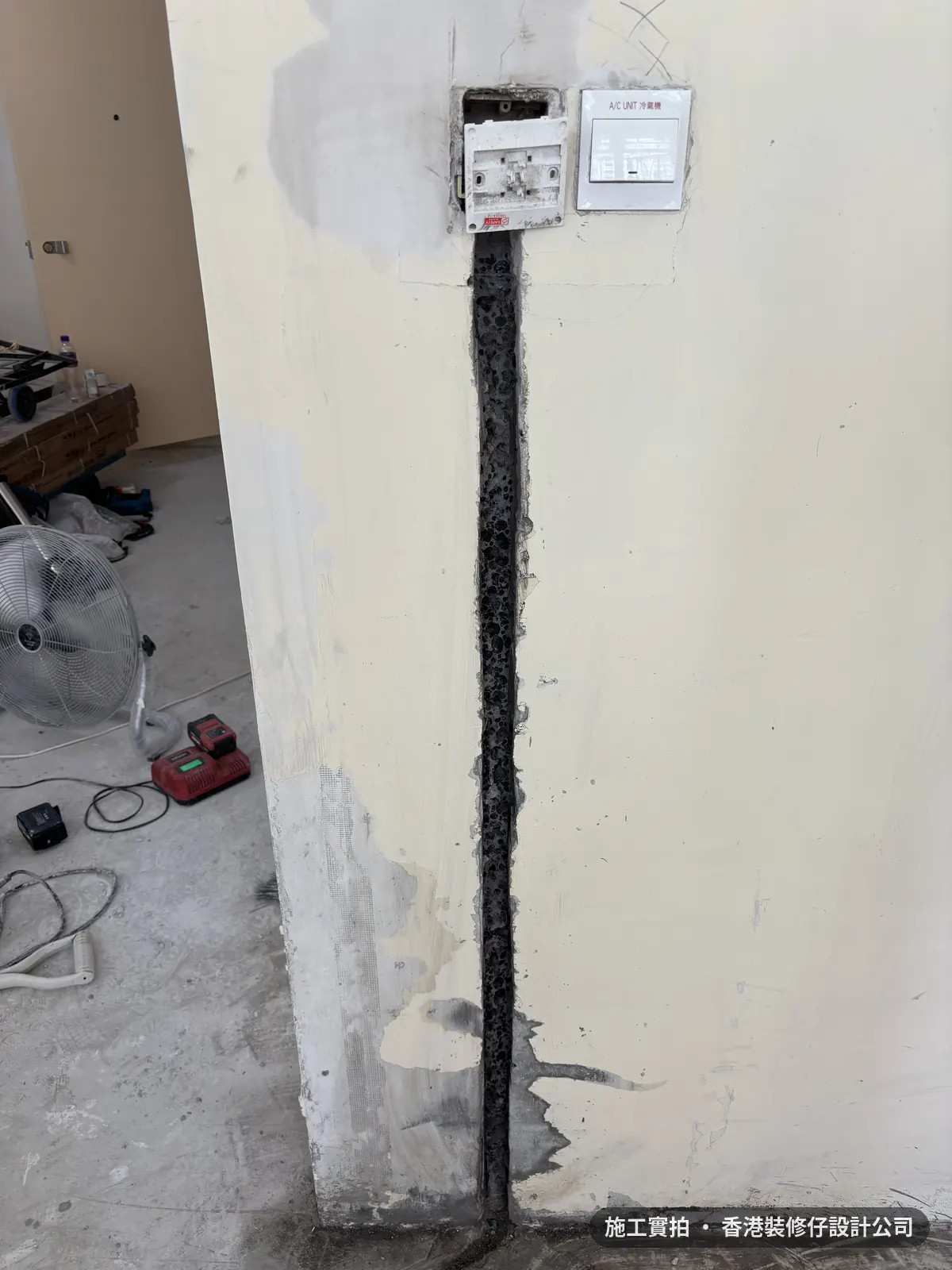
- Old fuse box without an RCD
03
Five signs that a distribution board needs assessment
First, check for an old fuse box. Second, repeated trips warrant prompt inspection by a registered electrical contractor. EMSD advises against installing higher-rated protection yourself.[5] Third, a board without circuit labels makes it hard to know which switch to isolate.
Fourth, existing circuits may be insufficient when adding appliances such as induction hobs, ovens or dryers. Fifth, a burning smell, discolouration, overheating or unusual noise at the board needs prompt action. Switch off the main supply if safe and contact a registered electrical contractor.
EMSD identifies missing earth leakage protection and poor or broken neutral connections as defects in older buildings. A neutral fault can cause voltage imbalance, including abnormally high or low voltage, and damage appliances.[10] Changing the board alone may not resolve these problems. Include them in the inspection.
- Fuse box
- Repeated tripping
- No circuit labels
- Adding major appliances
- Burning smells, discolouration or overheating
「Replacing an unprotected fuse box with MCB and RCD protection is a practical safety upgrade.」
04
New AFDD requirements: allow space when replacing the board now?
Under EMSD's 2025 wiring code, from 1 January 2029 new installations and alterations involving a distribution board must provide arc fault detection devices (AFDDs) on socket-outlet circuits in residential flats.[9]
The 2025 code has a one-year grace period. Installations designed under the 2020 edition must be completed and connected to supply by 31 December 2026.[8] If the board replacement extends into 2027, confirm which edition of the code applies to the design.
Consider a board with enough spare space for a future AFDD, so the board itself need not be replaced again. H09 excludes the AFDD. Discuss your plans before replacement and ask for a separate price if needed.[1]
- From 1 January 2029: check AFDD requirements for new residential installations or alterations involving a board
- If work spans the new year, check which edition of the code applies.
- Select a board with spare space.
Example 1: board replacement only in an older flat
Assumptions
- Old-style fuse box
- Concealed wiring may be retained after inspection.
How to calculate quantities
- H01 comprehensive multi-circuit inspection: HK$1,650. [1]
- H09 distribution board replacement: HK$6,800. [1]
- Total: 1,650 + 6,800 = HK$8,450.
About HK$8,450, including fuse box conversion to MCB/RCD protection and circuit labels.
If inspection identifies circuits for rewiring, these are priced separately. [1]
05
Does replacing the board require an incoming capacity upgrade?
The board distributes and protects circuits, while the utility approves the incoming load. Replacing a board does not increase the supply capacity. If extra appliances exceed the approved load, apply for a change of loading.
CLP advises consulting a registered electrical contractor and stating the required load before applying. Obtain consent from management or the rising mains owner and submit it within one month of the application. CLP proceeds after receiving it.[11]
List major appliances and usage patterns so a registered electrical worker can calculate the load. Within the approved loading, a board and extra circuits may suffice. If demand exceeds it, start the capacity application alongside the works.
- Distribution board capacity and approved incoming loading are different.
- Calculate the load first.
- Apply for a change of loading if demand exceeds the approved capacity.
06
How should the circuits be divided? Decide before replacing the board.
Board replacement is an opportunity to organise circuits as well as changing fuses to MCBs. Good circuit division can limit interruptions to one area and speed fault tracing. With poor division, a single appliance fault can affect the entire flat.
Our teams normally separate lighting and socket circuits and avoid putting the kitchen, bathroom, living room and bedrooms on the same circuit. Major appliances such as hobs, ovens, electric water heaters and dryers are best assessed for dedicated circuits. EMSD advises separate sockets for high-power appliances.[2] Flats with several air conditioners also need a clear circuit allocation plan.
Select a board with enough space for the proposed circuits and any later AFDDs. Discuss plans for the next two or three years, such as an electric water heater, dryer or open kitchen, before fixing the board size and layout.
If you are planning toWhole-flat renovation, design the circuits alongside the layout. Agree furniture and appliance positions first, then sockets and circuits, and finally the board. Choosing the board too soon can leave too little space and require another replacement.
- Separate lighting and socket circuits.
- Separate dedicated circuits for major appliances
- Spare board space
- Allow for future plans.
You can swipe left or right on your phone to view the complete table.
| Components | What is it for? | Pay attention to |
|---|---|---|
| Main switch | Disconnects power to the whole flat | First switch to isolate in an emergency, if safe |
| MCB: miniature circuit breaker | Trips on overload or short circuit to protect the individual circuit. | Do not fit an MCB rated above the original design yourself. |
| RCD: residual current device | Automatically disconnects supply in the event of earth leakage. | Socket circuits need RCD protection. Operate the test button every three months. |
| AFDD: arc fault detection device | Detects arc faults | From 1 January 2029: residential socket circuits in new installations or alterations involving a distribution board |
| Circuit labels | Know which areas each switch controls. | Identify each circuit's purpose at the distribution board. |
Sources: EMSD's Household Electrical Safety Handbook, electrical safety newsletter and summary of wiring code revisions. [2][6][9][5] [2][6][9][5]
07
Choosing between board replacement and whole-flat rewiring
Board replacement or full rewiring depends on inspection. If concealed cable insulation passes, cable sizes are adequate and the problem is an unprotected fuse box or too few circuits, a board replacement with limited circuit additions may suffice. The examples range from HK$8,450 to HK$15,150.[1]
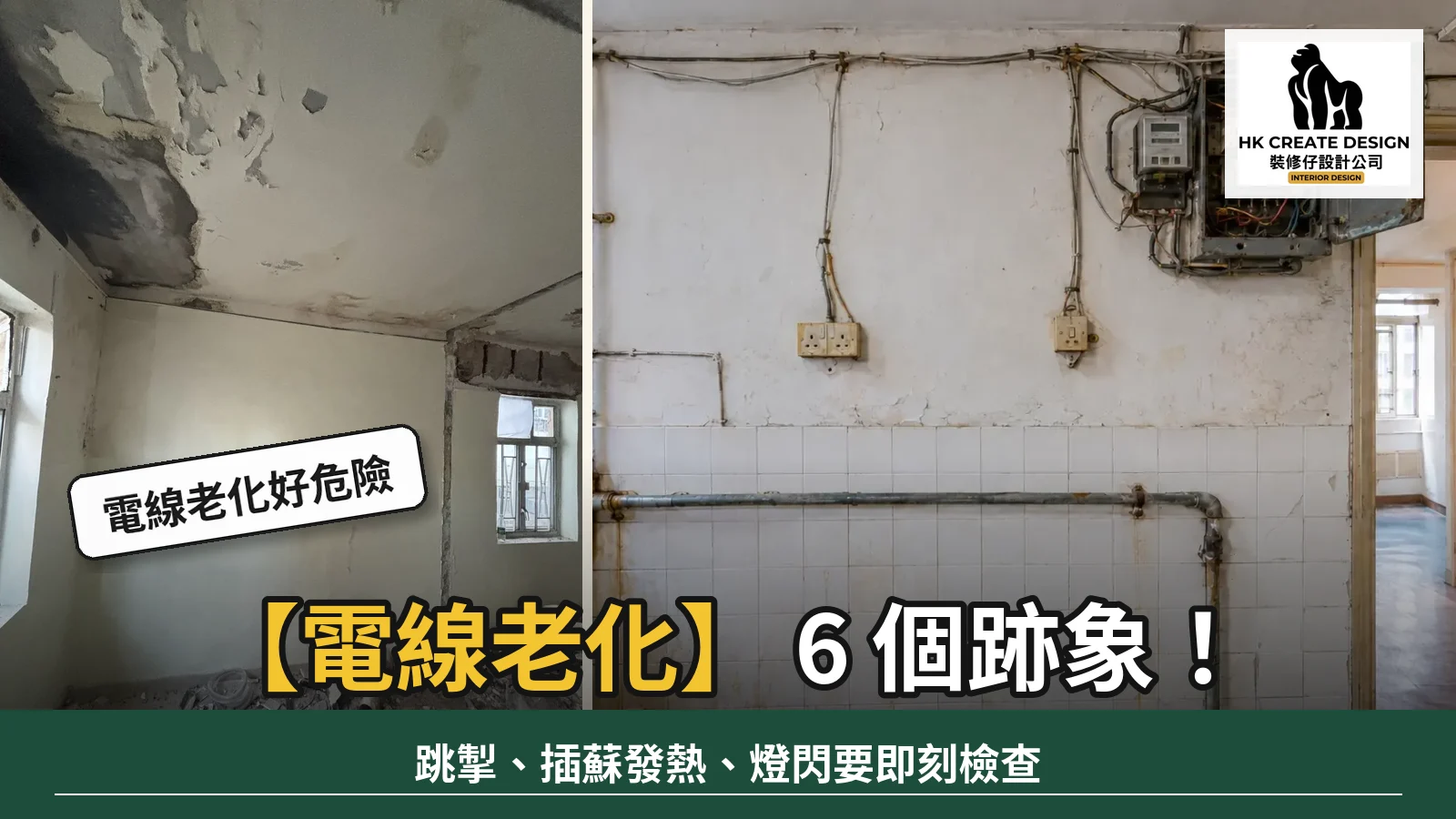
If inspection finds deteriorated insulation, multiply jointed cables or water ingress into conduit, board replacement alone is unsuitable. A new RCD may trip repeatedly and defective wiring remains a hazard. Assess whole-flat rewiring and coordinate it with renovation.
EMSD advises checking earthing, earth leakage protection, neutral connections and signs of burning when inspecting older electrical installations.[10] Determine this by on-site inspection. The age of the building alone is insufficient.
The board provides protection and the cables carry the current. Damaged wiring still requires attention when protection is upgraded.
- Sound wiring: replace the board and add circuits as needed.
- Ageing wiring: consider whole-flat rewiring.
- Decide using the H01 inspection results.
Example 2: board replacement with two dedicated kitchen circuits
Assumptions
- Adding an induction hob and oven in the kitchen
- Incoming supply capacity is adequate.
How to calculate quantities
- H01:HK$1,650;H09:HK$6,800。[1]
- Two H06 circuits: 2 × 3,350 = HK$6,700. [1]
- Total: 1,650 + 6,800 + 6,700 = HK$15,150.
About HK$15,150.
An incoming capacity increase requires an application to the electricity supplier and a separate quotation. [11] [1][11]
08
Replacing boards in public rental, HOS and private flats
In most private and HOS flats, register the renovation with management and check permitted working hours. Obtain consent from the rising mains owner if also increasing incoming supply capacity.[11] Board replacement usually does not alter common installations. Notify management so the outage can be coordinated with other work.
Electrical alterations in a public rental flat require prior approval. We can prepare plumbing and electrical drawings and submit the application on the client's behalf. Allow for approval in the project schedule.
Regardless of flat type, board replacement is an alteration to a fixed installation. A registered electrical worker carries out the work and tests before energisation. At completion, obtain WR1. [3]
- Private and HOS flats: register with building management.
- Public housing: apply before starting. We can submit on your behalf.
- Capacity increase: obtain the consent form
You can swipe left or right on your phone to view the complete table.
| Site conditions | risk | Recommendation |
|---|---|---|
| An old-style fuse box is still in use. | No earth leakage protection | Replace with an MCB/RCD distribution board. |
| Repeated tripping | Overload or a wiring fault | Have a registered electrical contractor inspect first. |
| No circuit labels | Unclear which circuit to isolate in an incident | Label circuits when replacing the board. |
| Adding major appliances during renovation | Insufficient existing circuits | Replace the board and add dedicated circuits. |
| Burning smell or discolouration at the board | Overheating connection | Switch off the main supply if safe and arrange prompt inspection. |
Arrange inspection by a registered electrical contractor if the board trips repeatedly. [5][2] [5][2]
09
Board replacement stages and power interruption arrangements
First check existing circuits. Second, safely isolate the supply. The Labour Department reminds electrical workers to switch off, lock out and post a warning notice.[12] Third, remove the old fuse box, fit the replacement board and reconnect and identify each circuit.
Fourth, a registered electrical worker inspects and tests before energisation. The registered electrical contractor and worker issue WR1 after the alteration is complete.[3] Restore power only after satisfactory testing.
Replacing a board with local rewiring usually takes one to two days. Arrange for fridge contents and network equipment during the interruption. We restore supply before leaving. Combining the work with renovation can reduce the number of outages.
- Isolate, lock out and tag the supply.
- Identify each circuit individually.
- Test before energisation and issue WR1.
- Plan for fridge contents and network equipment in advance.
10
RCD testing: the owner's checks after replacement
Continue checking the RCD after board replacement. EMSD's electrical safety newsletter advises a three-monthly test-button check. Householders can operate the button because the test is not electrical installation work.[6]
Press the marked test button on the RCD. It should trip immediately. Reset the switch to restore the supply. If it fails to trip, contact a registered electrical contractor. EMSD's Electricity News notes that Code 17E calls for a notice reminding users to test at least once every three months.[7]
Tell everyone at home before the test. Tripping cuts power to the affected circuits and may interrupt running appliances or unsaved computer work.
- Press once every three months.
- It should trip immediately.
- If the RCD does not trip, arrange an inspection.
- Notify household members before testing.
Example 3: RCD testing schedule
Assumptions
- Distribution board replacement completed on 15 November 2026
How to calculate quantities
- Press the test button every three months. [6]
- First-year test dates: 15 February, 15 May, 15 August and 15 November 2027.
- 12 ÷ 3 = 4 tests per year.
At least four times a year. Set a reminder on your phone.
If the RCD does not trip when the test button is pressed, contact a registered electrical contractor promptly. [6]
11
EMSD guidance
EMSD's Household Electrical Safety Handbook calls for circuit labels on the board, RCD protection on socket circuits and proper earthing.[2] New and altered portions must meet current statutory safety requirements. A registered electrical worker inspects and tests before energisation.[3]
EMSD advises engaging a registered electrical contractor before additions or alterations to assess whether the existing installation can support the extra load.[4] This assessment is needed when replacing the board and adding circuits.
We select cable brands with product certifications such as 3C, install to the EMSD wiring code and provide WR1 on completion. We commonly use Schneider Electric switches and sockets, and Hilly or ei8ht cable as standard.
- Circuit labels
- RCD protection on socket circuits
- Start with a feasibility assessment.
- WR1 at completion
You can swipe left or right on your phone to view the complete table.
| stage | What is it for? | Indicative time |
|---|---|---|
| Inspection | H01 inspection of existing circuits | One site visit |
| Isolate the electrical supply. | Switch off, lock out and display a warning notice. | Before work begins |
| Remove old equipment and install the replacement. | Remove the fuse box, fit the new board and reconnect the circuits. | About one to two days including local rewiring. |
| Test | Inspect and test before energisation and issue WR1. | At completion |
Durations reflect our experience. See Labour Department guidance on safe isolation. [12][3] [12][3]
12
Five common problems to avoid when replacing a board
First, replacing the board without testing the wiring may leave deteriorated insulation undetected. Second, never fit a higher-rated MCB yourself to stop it tripping. Tripping is a protective action and changing its rating can defeat that protection.[5]
Third, avoid unlabelled circuits. Specify in the quotation that each circuit will be labelled with its purpose.[2] Fourth, before replacing the board, ask the registered electrical contractor whether it will have enough spare space for a future AFDD.[9]
Fifth, obtain WR1. Replacing a distribution board is an alteration requiring inspection, testing and a completion certificate.[3]
- Inspect the wiring first.
- Do not fit a higher-rated MCB yourself.
- Require circuit labels.
- Allow space for an AFDD.
- Obtain WR1.
13
What to check when the new board is handed over
Check the circuit labels and which points they serve. Operate the RCD test button and confirm it trips. Test sockets and switches. Obtain the original WR1 and check it identifies the distribution board replacement.
Fifth, ask whether spare board space remains. Sixth, retain the contractor's photographs of the board and circuit labels for future maintenance.
Our works have a one-year warranty after completion, excluding deliberate damage.
- Circuit labels
- RCD testing
- Test each point.
- Obtain WR1.
- Photograph the distribution board.
You can swipe left or right on your phone to view the complete table.
| compare | Board replacement with a small number of extra circuits | whole-home rewiring |
|---|---|---|
| suitable for | Concealed wiring passes testing, but protection or circuit capacity is insufficient. | Ageing wiring, previous water ingress or multiple joints |
| Main items | H01+H09+H06 | Replace the board and rewire circuits, light switches and sockets. |
| Worked examples in this article | About HK$8,450 to HK$15,150 | See the worked rewiring cost example. |
| Duration | About one to two days | Coordinate with chasing, filling and painting. |
| Best time to do the work | At any time | Before moving in or during a whole-flat renovation |
Prices calculated using our published rates. [1] [1]
14
Book an inspection or board replacement.
For a free quotation from the HK Create Design team, WhatsApp 5243 7747 or visit our Wong Tai Sin shop, Monday to Saturday, 10:00–18:00.
A visit can be booked for distribution board replacement combined with other work. On-site measurement is free through 31 December 2026 for two or more work items, with no deposit. After that, the HK$500 fee is credited against the order. For a distribution board replacement on its own, send a photo of the board on WhatsApp for an initial quotation.
The quotation specifies the board type, circuit count, labels, exclusions and WR1 arrangements.
- Send a distribution board photo on WhatsApp.
- List major appliances.
- Specify WR1 in the quotation.
Advice from our tradespeople
「Replacing an unprotected fuse box with MCB and RCD protection is a practical safety upgrade.」
「Select the main switch and circuit count for the actual demand. Consider dedicated circuits for kitchen appliances, air conditioning and water heaters.」
「Board replacement involves a power interruption of several hours. We agree the time in advance and test the individual circuits before handover.」
FAQ
12 practical questions answered
01How much does it cost to replace a distribution board?
H09 is HK$6,800 per board, including conversion of a fuse box to MCB/RCD protection and circuit labels.[1]
02Does replacing the board include extra circuits?
No. New dedicated circuits are HK$3,350 each under H06.[1]
03How long does board replacement take?
About one to two days including local rewiring. The flat loses power during the work, with supply restored before the team leaves.
04What if the RCD keeps tripping?
Do not increase the rating of a protective device yourself. Engage a registered electrical contractor to inspect.[5]
05How often should the RCD be tested?
Press the test button at least once every three months. The householder can carry out this test.[6]
06Do I need an AFDD?
From 1 January 2029, residential socket-outlet circuits require AFDDs in new installations or alterations involving a distribution board. Consider reserving space when replacing a board now.[9]
07Does replacing the board require an incoming capacity upgrade?
Not necessarily. Calculate the load first. Apply to the electricity supplier if it will exceed the approved loading.[11]
08Do I receive WR1 after board replacement?
Yes. Board replacement is an alteration requiring inspection and testing before energisation and a WR1 completion certificate.[3]
09Can an existing fuse box still be used?
Where earth leakage protection is absent, consider an MCB/RCD board. Socket circuits require RCD protection.[2]
10Can I replace the board myself?
No. A registered electrical contractor must arrange a registered electrical worker to carry out work on fixed installations.[4]
11Does HK Create Design warranty board replacement?
All works have a one-year warranty after completion, excluding deliberate damage.
12How can I make an appointment?
On-site measurement is free through 31 December 2026 for two or more work items, with no deposit. After that, the HK$500 fee is credited against the order. WhatsApp 5243 7747.
CHECK THE BASIS
Data and technical basis, sources can be verified
- [1]HK Create Design 2026 published rates: electrical work H01–H09 Accessed: 2026-11-03
- [2]EMSD Household Electrical Safety Handbook: general tips for electrical installations Accessed: 2026-11-03
- [3]Electrical and Mechanical Services Department: Household Electrical Safety Handbook, new installations, additions and alterations Accessed: 2026-11-03
- [4]Electrical and Mechanical Services Department: new electrical installations, additions and alterations Accessed: 2026-11-03
- [5]Electrical and Mechanical Services Department: safe use and maintenance of electrical installations Accessed: 2026-11-03
- [6]EMSD, E&M Safety Newsletter issue 31: RCD test-button checks Accessed: 2026-11-03
- [7]Electrical and Mechanical Services Department: Electricity News, issue 38 (October 2025) Accessed: 2026-11-03
- [8]EMSD: Code of Practice for the Electricity (Wiring) Regulations, 2020 and 2025 editions Accessed: 2026-11-03
- [9]EMSD: summary of revisions to the Code of Practice for the Electricity (Wiring) Regulations, 2025 edition Accessed: 2026-11-03
- [10]EMSD: maintenance and repair of electrical systems in older buildings (briefing information) Accessed: 2026-11-03
- [11]CLP Power: changing the approved loading for residential customers Accessed: 2026-11-03
- [12]Labour Department: safety tips for owners and tenants on renovation, maintenance, alteration and addition works Accessed: 2026-11-03