01
How the scope affects a rewiring schedule
Clients often ask, “whole-home rewiringtake?” A single figure rarely captures the job. Rewiring can involve the board, circuits, switches, outlets, concealed conduits and finishes. The scope determines the programme.
In our team's experience, adding one or more outlets generally takes up to one day. ADistribution board replacementwith local wiring alterations generally takes one to two days. A full rewire needs to be coordinated with chasing, plastering, painting and the overall renovation schedule.
An H01 electrical inspection helps establish the scope and programme. It costs HK$770 per visit, or HK$1,650 for a comprehensive inspection of multiple circuits or an open kitchen. The findings show which wiring can stay and how much needs replacing.[1]
Start by distinguishing a full rewire, partial replacement and extra outlets. Give contractors the same list of circuits and electrical points to get comparable prices and schedules. For a budget, seeRewiring pricesCheck each item in the programme. The date cables are installed can be well before plastering, painting and final handover.
- Establish whether you need local work or a full rewire
- Start with an H01 inspection
- Coordinate electrical work with the other trades
You can swipe left or right on your phone to view the complete table.
| Project scope | Main items | Indicative programme | Can you stay in the flat? |
|---|---|---|---|
| Add one or more socket outlets | H02 / H03 wall chasing, pulling cable and making good plaster | Usually within one day | Yes, with only the affected circuit isolated |
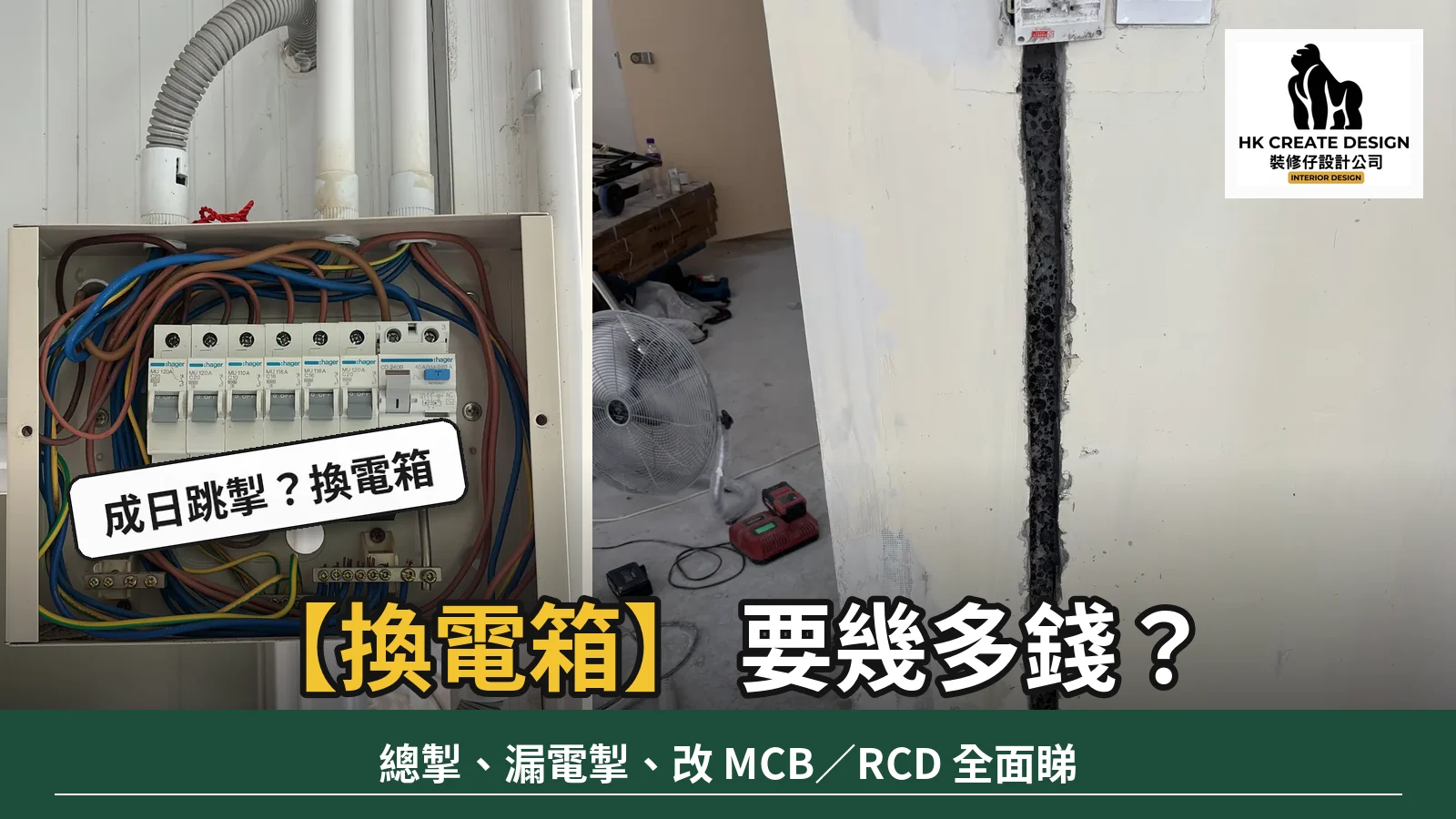
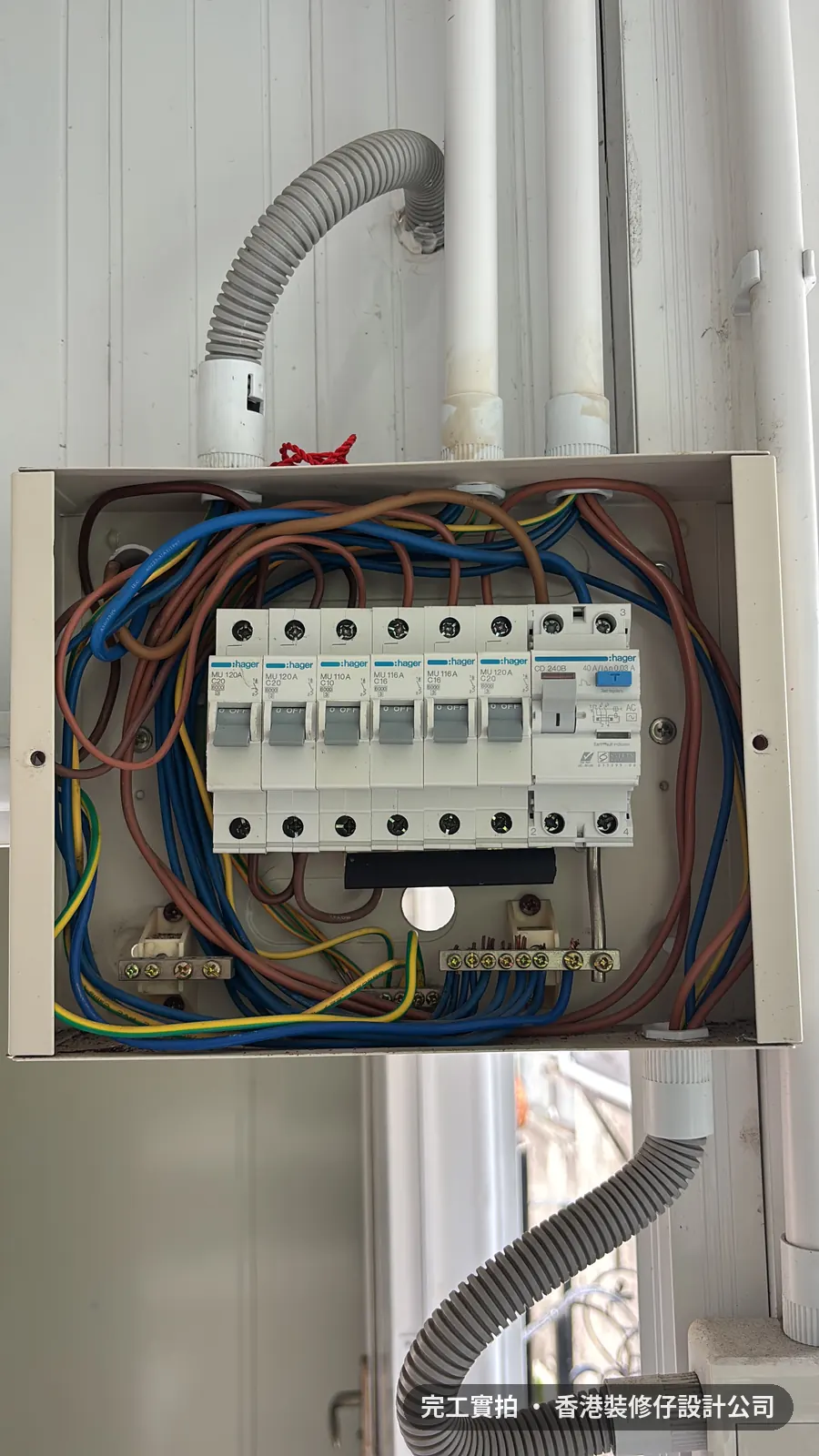
| Distribution board replacement | H09 replacement of a fuse box with MCB and RCD protection and labelled circuits | About one to two days including local rewiring. | Yes, but the whole flat loses power during a board change |
| Add a dedicated circuit | H06 dedicated circuit for an induction hob, oven or water heater | Depends on the cable route and amount of chasing | Yes, with work in stages |
| whole-home rewiring | Replace the board and rewire circuits, light switches and sockets. | Coordinate chasing, plastering and painting with the overall renovation | Best avoided because of power cuts, dust and noise |
| An increase in incoming supply capacity is required | Apply to the electricity supplier for a change of load | Allow time for CLP's application process | Depends on the scope above |
Timings reflect HK Create Design's experience. The written quotation confirms the actual schedule. See CLP for the electricity supplier's process. [1][6] [1][6]
02
What happens at each of the seven stages?
Start with an electrical inspection covering the circuits, earth leakage and distribution board. Then mark out sockets, switches and dedicated circuits room by room. Confirm furniture and large appliance positions now to avoid cutting new chases later.
The third stage covers management registration and, if extra supply capacity is needed, an application to the electricity supplier. Fourth comes safe isolation. The Labour Department calls for a qualified registered electrical worker and a supply that is switched off, locked out and marked with a warning notice.[4]
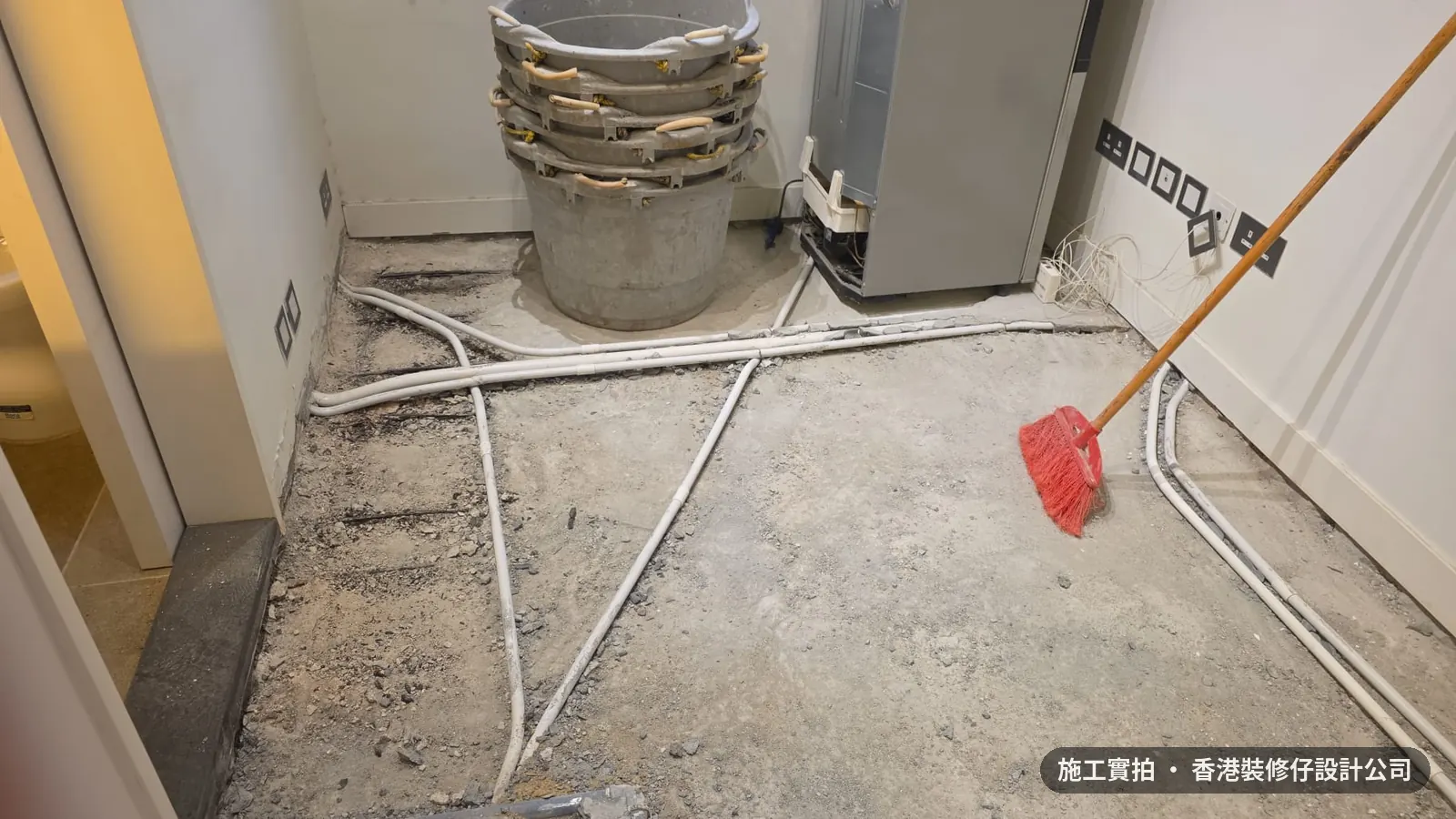
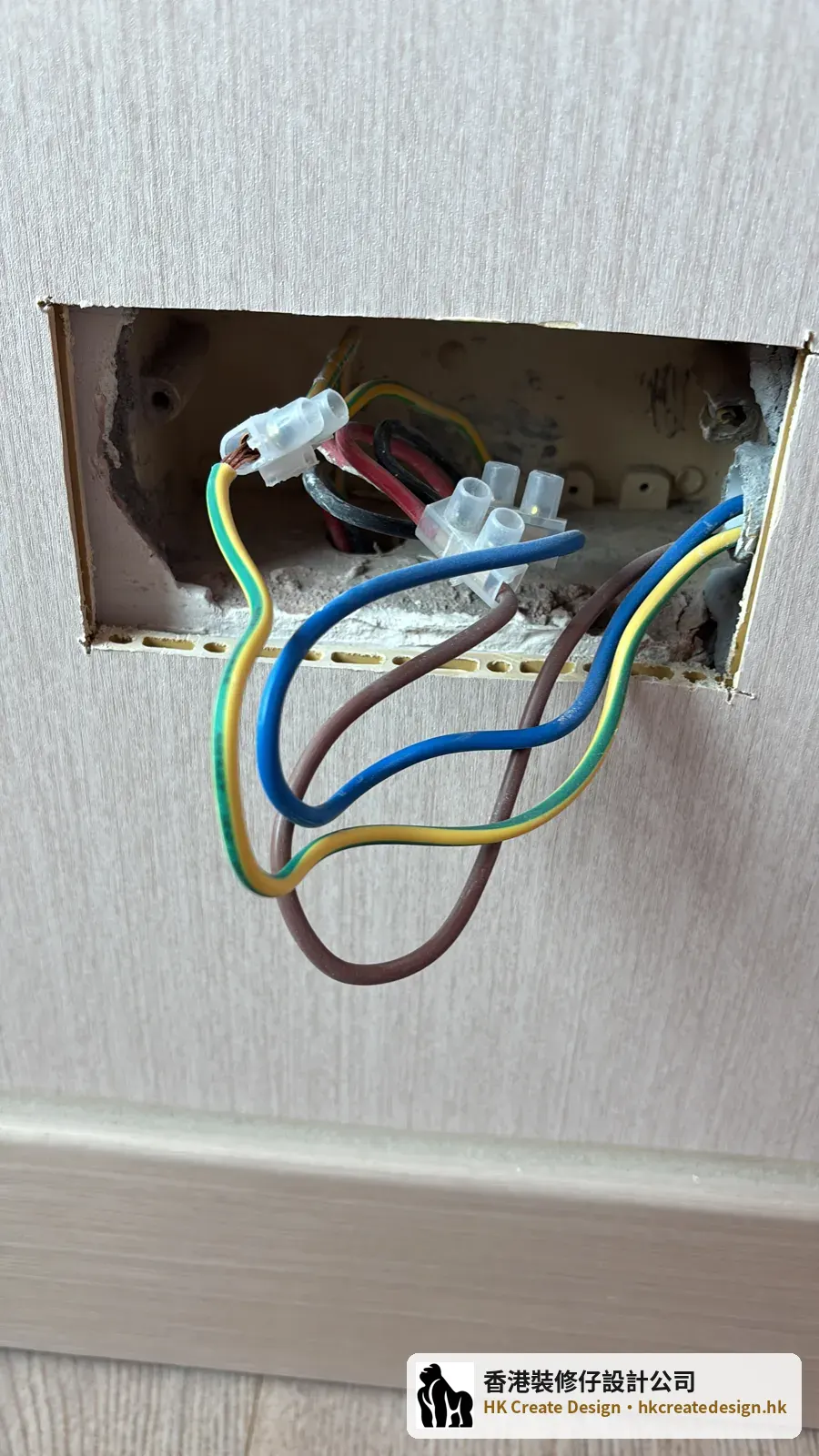
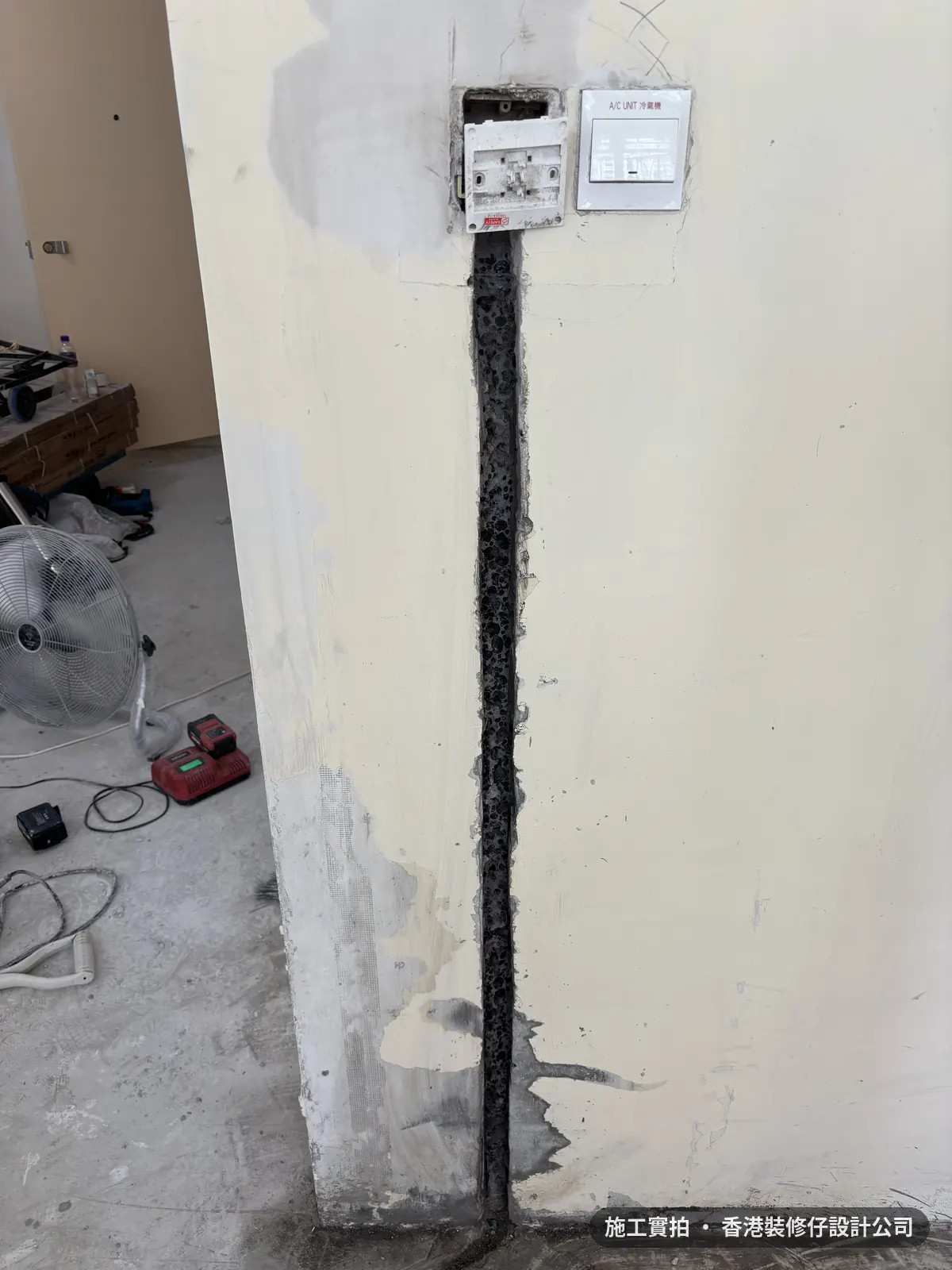
The fifth stage covers chasing, fitting conduits and pulling cable. Concealed wiring needs protection, and power cables are routed separately from telephone, television and data cables.[7] The sixth stage is board replacement and connection. Circuits must be labelled by use and socket outlet circuits must have RCD protection.[7]
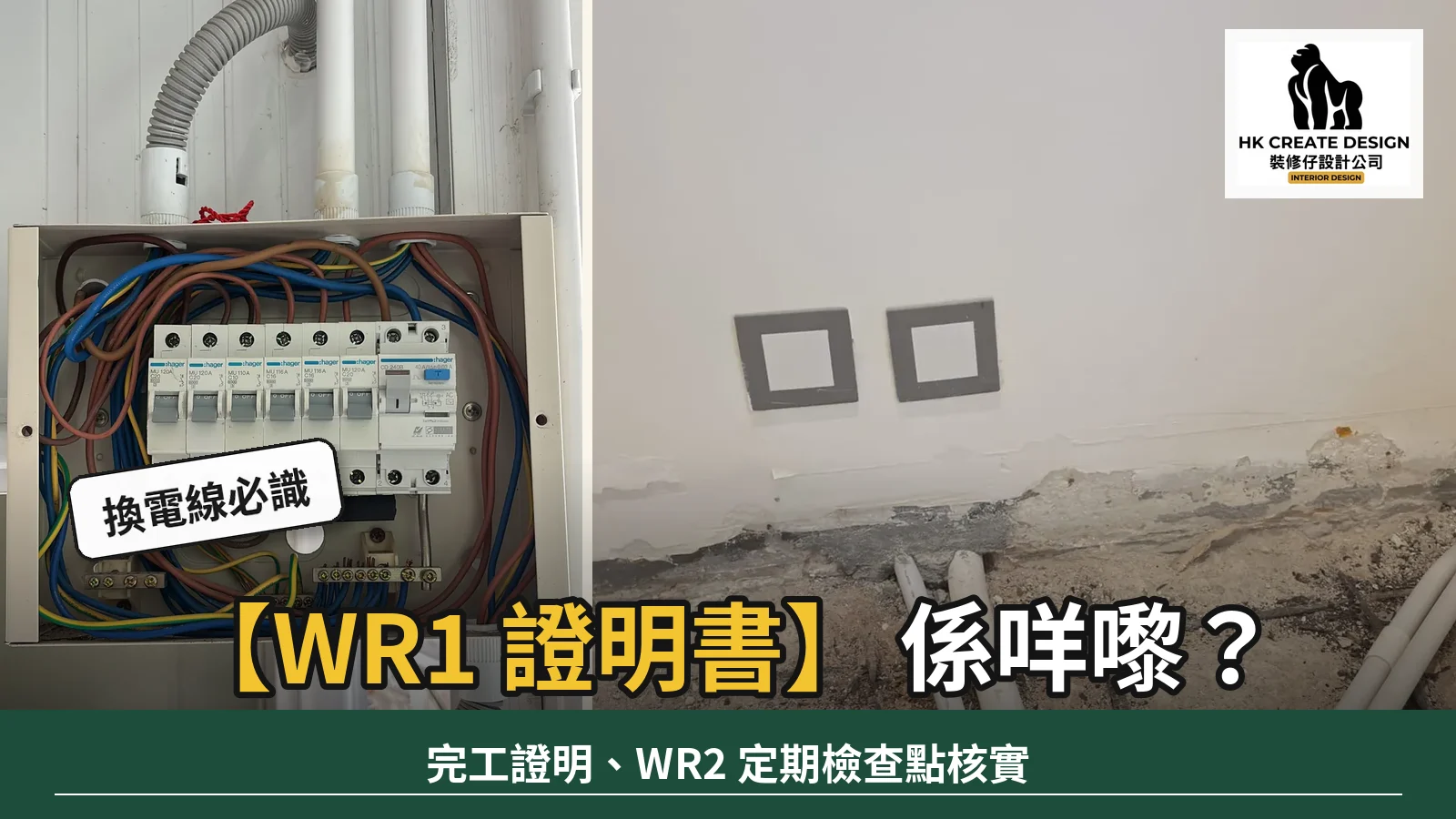
The seventh stage is testing and issuing the WR1 and making good. EMSD requires a registered electrical worker to inspect and test the completed installation before energising it. The work completion certificate is Form WR1.[2] After testing, make good and paint the chases. Check each point at handover.
- Agree point locations before work starts
- Before work, isolate the supply, lock it out and display a warning notice
- Photograph cable routes before the chases are filled
- Test before energisation and issue WR1.
03
What is most likely to extend the programme?
First, consider the wall finish. Chases in a painted plaster wall are relatively quick to make good. A tiled wall needs replacement tiles and a tiler, so coordinate with retiling where possible. Second, standalone rewiring may require an extra painting visit.
Third, consider the incoming supply. A CLP change-of-load application requires a rising mains agreement from the building management office or rising mains owner. CLP processes the application after receiving the agreement.[6] If management needs time to issue the agreement, the flat may still be waiting for power after the internal work finishes.
Fourth, moving outlets after chasing means fresh cutting and repairs. Fifth, an occupied flat adds time for working by area and clearing up daily. Sixth, management restrictions on noisy work can reduce how much chasing can be done in a day.
- Coordinate tiled areas with the tiler
- Apply for a load increase early
- Confirm the layout before starting
- Check permitted working hours with building management
「For a 400–500 sq ft flat, a full rewire generally takes one to two weeks, including cutting chases, pulling cable, making good plaster and testing.」
04
Can you stay during the work?
Yes, for local work. We can work area by area and restore some circuits before leaving so you have lighting and refrigeration at night. Wall chasing creates dust and noise, and there will be power cuts during the day.
It is usually possible to stay during local socket or board work. A board replacement cuts power to the whole flat for a time, so plan for refrigerated food and internet equipment. A full rewire is easier in an empty flat because moving and protecting furniture and cleaning each day can prolong the work.
The best time is before moving in or during a full renovation. Open walls, ceilings and floors allow chasing and making good to be coordinated with other trades and spare your household the daily dust and outages.
- You can stay during local work
- Plan for refrigeration and internet before the board change
- Schedule a full rewire before moving in where possible
Example 1 — scheduling a supply capacity increase
Assumptions
- Change-of-load application submitted to CLP on 9 November 2026
- Rising mains agreement from building management
How to calculate quantities
- CLP says postal confirmation takes about one week. For a 9 November application, this would be around 16 November. [6]
- The agreement is due within one month of applying, around 9 December in this example. [6]
- In this example, speak to management in early November so the agreement is ready in time.
- Internal rewiring can proceed in parallel, but the electricity supplier schedules the final connection at the increased capacity.
In this example, submit the agreement by around 9 December. If renovation is due for completion in mid-December, arrange the paperwork early so you are not left waiting for the upgraded supply.
Actual CLP processing times vary. This example uses the timings published on its website. [6]
05
Where rewiring fits into a full renovation
In a full renovation, concealed electrical work must be completed before walls, ceilings and floors are closed. Strip-out is followed by plumbing and electrical chases, conduits and cables, then tiling and waterproofing, ceilings, joinery and painting. Light fittings and switch and socket faceplates go on last.
Plan electrical points with the design before work begins. Discovering a missing point after painting means opening the wall again and redoing part of the finish.
The completed electrical work is inspected, tested and certified before the installation is energised.[2] Once the faceplates and lights are in, check each point at handover and confirm that the circuits and quantities match the quotation.
- Schedule concealed wiring early
- Finish pulling the cables before closing the walls
- Fit the faceplates last
You can swipe left or right on your phone to view the complete table.
| Sequence | Application stage | What is it for? | What to check |
|---|---|---|---|
| 1 | Electrical inspection | H01 inspection of circuits, earth leakage and the distribution board | Decide which circuits can stay and which need rewiring |
| 2 | Mark out electrical points and prepare the quotation | List sockets, light switches and circuits room by room | Confirm the furniture layout and appliance list first |
| 3 | Procedure | Register with management and apply for extra supply capacity if needed | Rising mains agreement due within one month |
| 4 | Isolate the electrical supply. | Switch off, lock out and display a warning notice. | The Labour Department's safety guidance calls for |
| 5 | Cut chases, fit conduits and draw in cables | Conduits concealed in walls with cables drawn through them | Take photos of the cable routes before closing the chases |
| 6 | Distribution board replacement and connections | Install MCB and RCD protection and label the circuits | RCD protection for socket outlet circuits |
| 7 | Testing, WR1 and making good | Inspect and test before energising, issue the WR1, then make good and paint | Keep the original WR1 |
Typical sequence. See the Labour Department and EMSD guidance for electrical safety requirements. [4][2][7] [4][2][7]
06
Planning a supply upgrade to avoid waiting for power
An induction hob, oven, tumble dryer, electric water heater and several air conditioners may exceed the existing supply capacity. CLP asks applicants to consult a registered electrical contractor and specify the required load.[6]
CLP says the confirmation letter should arrive by post in about one week. Submit the rising mains owner's agreement within one month of the application.[6] Establish whether a capacity increase is needed at the design stage and discuss the agreement with building management.
The H06 dedicated-circuit rate excludes work and procedures to increase the incoming supply capacity. That scope needs a separate assessment.[1] Have a registered electrical contractor calculate the load before deciding whether to apply. This helps spot inadequate capacity before work finishes.
- List high-load appliances to calculate demand
- Determine capacity requirements at the design stage
- Submit the rising mains agreement within one month
07
Rewiring times in older buildings, newer flats and public rental housing
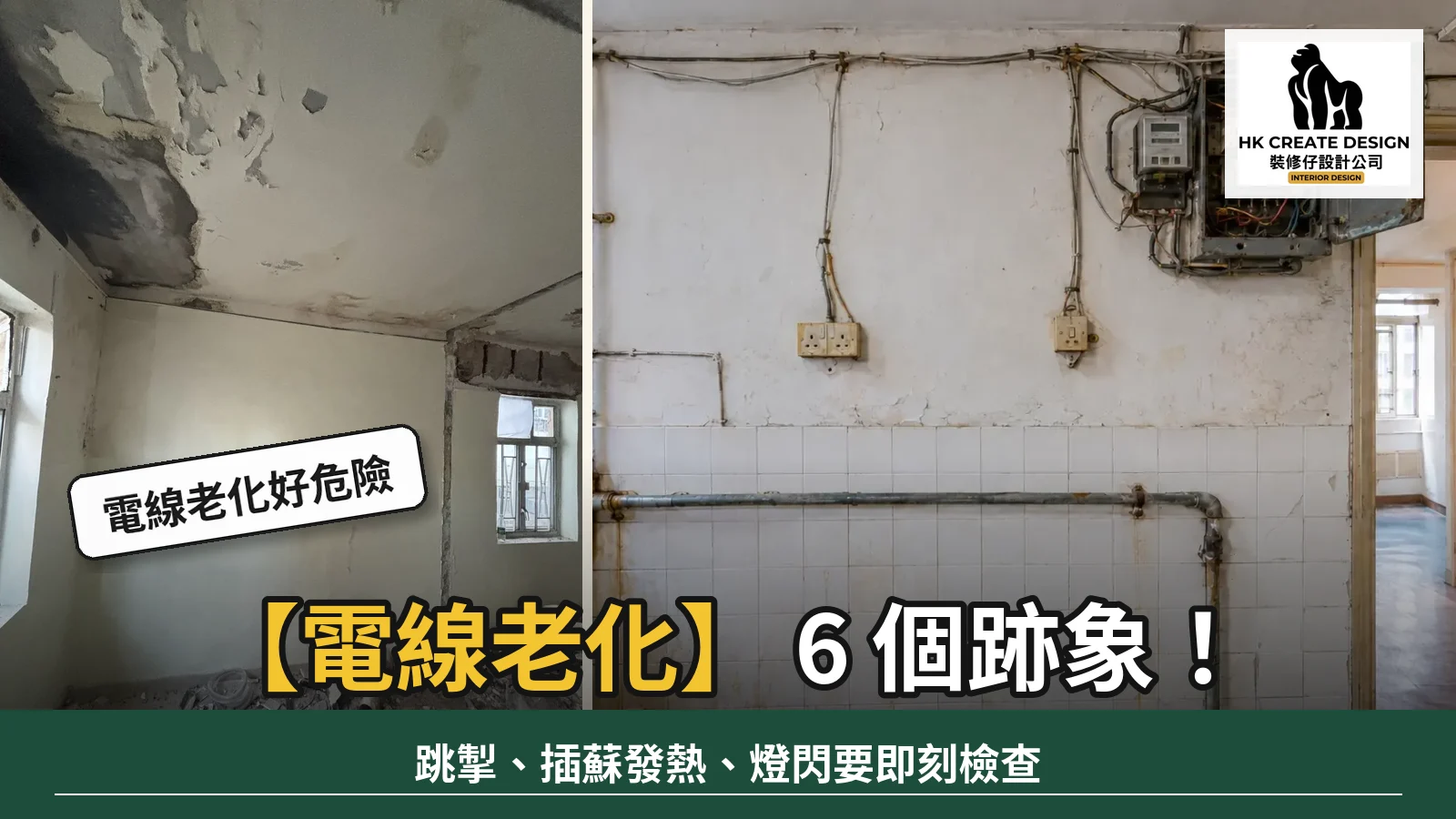
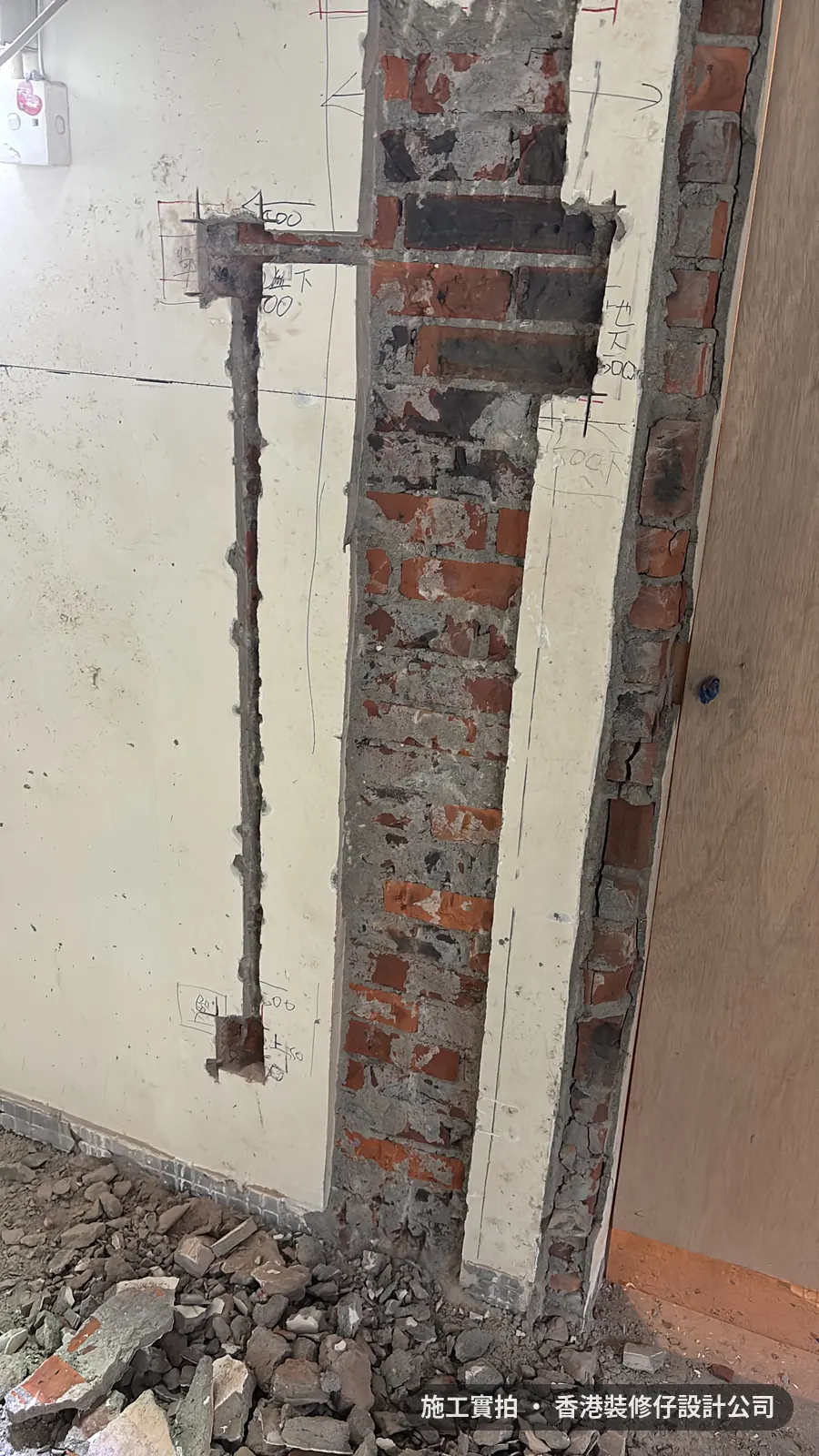
Flats in older buildings often havewall renderingthicker walls and may have surface wiring, old metal trunking or connections added over the years. Allow extra time for strip-out and assessment. An original fuse box often needs replacing and the circuits may need rearranging. Coordinate this work withOlder flat renovationtogether so that wall chasing, making good and painting can be done in one visit.
In a newer flat, the electrician may be able to pull new cables through existing concealed conduits, reducing chasing and shortening the job. Moving kitchen appliances or adding network points to a study may require extra circuits and outlets, so allow time for each new position.
Electrical alterations in public rental housing can require prior approval. Allow time before work starts. We can submit an application and prepare plumbing and electrical drawings. In private flats and Home Ownership Scheme flats, check management rules on working hours and contractor registration because these affect daily progress.
An open kitchen or a flat with several high-load appliances needs a load calculation and a plan for dedicated circuits. Each dedicated circuit costs HK$3,350 including connection at the board. Apply for a supply upgrade if the resulting demand exceeds the approved load.[1][6]
- Older buildings — allow time for strip-out and sorting existing wiring
- Newer flats — existing concealed conduits may be reusable
- Public rental housing — allow time for prior approval
- Many high-load appliances — check demand at the same time
Example 2 — budgeting to repaint after chasing
Assumptions
- Rewiring separately from whole-flat painting
- In one example chasing affects 180 sq ft of wall. The alternative assumes 400 sq ft.
How to calculate quantities
- E02 making good, applying a moisture-resistant treatment, sanding and painting — HK$21 per sq ft, minimum HK$4,650. [1]
- 180 sq ft × HK$21 = HK$3,780. The HK$4,650 minimum charge applies.
- 400 sq ft × HK$21 = HK$8,400. This exceeds the minimum charge, so the total is HK$8,400.
Painting after a standalone rewire costs around HK$4,650–HK$8,400 in these examples. Doing it with whole-flat painting avoids another visit.
Areas are illustrative. Repairs to tiled walls are priced separately. [1]
08
How the end of the Code transition in 2026 affects scheduling
EMSD published the 2025 Code of Practice for the Electricity (Wiring) Regulations with a one-year transition. Installations complying with the 2020 edition qualify if completed and connected by 31 December 2026. Beyond that deadline, new work follows the 2025 edition and any specific transition provisions.[5]
If work will be completed in 2027, check which edition of the code applies. From 1 January 2029, residential socket-outlet circuits require AFDDs in new installations or alterations involving a distribution board. Consider reserving space when replacing the board.[11]
We use cable brands with product certification such as CCC, follow EMSD's Code of Practice for the Electricity (Wiring) Regulations and provide a WR1 on completion. If work crosses the transition date, we explain which edition applies and how it affects the board design.
- Check which Code applies if the work spans the year end
- Ask about AFDD provision when replacing the board
- Collect the WR1 on completion
You can swipe left or right on your phone to view the complete table.
| Factors | How this adds time | How to address it |
|---|---|---|
| Wall material | Chasing a tiled wall requires replacement tiles and a tiler's visit | Alongside tile replacement |
| Concurrent works | A separate job needs a separate painting visit | Coordinate with the full renovation |
| Increase the approved load | Allow time for the electricity supplier | Arrange the application and rising mains agreement at the outset |
| Outlet positions still undecided | Moving points during the works means cutting new chases | Confirm furniture and appliance positions before work starts |
| Living in the flat | Work by area and restore the flat at the end of each day | Preferably before moving in |
| Building management requirements | Restricted working hours | Check building renovation rules before work begins |
See CLP's website for the change-of-load procedure. [6] [6]
09
Official guidance on safety steps that apply even on a tight schedule
EMSD's Household Electrical Safety Handbook requires a registered electrical contractor to arrange new installations, additions and alterations. A registered electrical worker inspects and tests the work before energising it. The contractor and worker certify it on Form WR1. Keep the form for your records. Routine submission of the WR1 to EMSD is unnecessary.[2][3]
EMSD's Electricity News reminds owners that the Electricity Ordinance requires a registered electrical contractor for work on fixed installations. You can ask workers to show their registration certificates.[10] Hong Kong registered electrical workers have grades A, B, C, H and R. Each registration covers a different scope of work.[9]
The Labour Department calls for safe isolation of the electrical supply during electrical work, including switching off, locking out and displaying a warning notice.[4] The 2026–27 Estimates record 595 electrical accidents investigated by EMSD in 2024, with a revised estimate of 590 for 2025.[8] These safety steps take a relatively small part of the programme. A quotation that promises to omit them to save time warrants checking.
- Hire a registered electrical contractor
- Ask to see the registration certificate.
- Inspection and testing before energising
- Isolate, lock out and tag the supply.
Example 3 — one visit or two?
Assumptions
- Add three 13A outlets during the full renovation
- Alternative — add the same three outlets after moving in
How to calculate quantities
- During the renovation, 3 × HK$640 = HK$1,920, included in the overall job. [1]
- After moving in, the HK$1,920 subtotal falls below the HK$2,000 minimum job charge, so HK$2,000 applies. A separate day's work and clean-up are also needed. [1]
- The difference is HK$2,000 − HK$1,920 = HK$80, plus a separate power cut, more wall chasing and another clean-up.
The price difference is small, but doing the work together avoids another visit, another power cut and another clean-up.
Repainting the wall chases after move-in is charged separately under E02. [1]
10
Common problems with promised completion dates
First, a quotation may promise a three-day rewire without saying whether it includes making good and painting. The cables may be in after three days, with finishes still outstanding. Second, if the schedule overlooks the electricity supplier's process, the renovated flat may still lack the capacity to run its appliances.
Third, moving outlets after work begins means cutting new chases each time. Fourth, agree how an occupied flat will be supplied during the works. Longer power cuts can disrupt refrigeration and internet access.
Fifth, check the quotation includes testing and the WR1. Both are part of completing the electrical work.[3] Before signing, ask for the stages, exclusions and schedule in writing so the completion date has a clear basis.
- Allow time for making good and painting
- Allow for the electricity supplier's process
- Mark out the electrical points before work starts
- Record arrangements for an occupied flat
- Specify WR1.
11
Six checks on handover day
First, check that each socket and light switch works. Second, read the circuit labels on the front of the distribution board.[7] Third, use the RCD test button to verify that it trips. Fourth, collect the original WR1 and check the address and scope of work.
Fifth, collect photos of the cable routes before the chases are closed, for future drilling or cabinet work. Sixth, check that the plaster and paint finish is even.
Our work carries a one-year warranty from completion, excluding deliberate damage. Send photos on WhatsApp if an outlet, switch plate or connection develops a problem during that period.
- Test each point.
- Circuit identification on the distribution board
- RCD testing
- Obtain WR1.
- Obtain cable route photographs.
- Check the finish of the repaired areas
You can swipe left or right on your phone to view the complete table.
| compare | Stay in the flat while work proceeds by area | Work before moving in or while the flat is empty |
|---|---|---|
| Power interruption | Power cuts during the day, with some circuits restored each evening | The contractor can isolate power as each task requires |
| Dust and noise | Chasing creates dust and noise and requires daily cleaning | Coordinate the work and clean once at the end |
| Duration | Allow more time for clearing up and protecting furniture | Easier to coordinate successive trades |
| Refrigeration and internet equipment | Arrange temporary power and protection | Less disruption |
| suitable for | Local work only, with limited time available | Full rewire and full renovation |
Based on HK Create Design's project experience. The site conditions and quotation determine the arrangements. [12]
12
Book a site survey and agree the programme
For a free quotation from the HK Create Design team, WhatsApp 5243 7747 or visit our Wong Tai Sin shop, Monday to Saturday, 10:00–18:00.
Book a visit for whole-flat rewiring or rewiring combined with other work. On-site measurement is free through 31 December 2026 for two or more work items, with no deposit. After that, the HK$500 fee is credited against the order. For one or two extra outlets, send photos on WhatsApp for an initial quotation. The minimum charge for small jobs is HK$2,000.[1]
The quotation sets out stages, exclusions and dates. If the supply needs upgrading, we also flag the document deadlines so you can plan your move-in date.
- WhatsApp 5243 7747
- Prepare the flat's floor area and appliance list.
- Confirm the move-in date
Advice from our tradespeople
「For a 400–500 sq ft flat, a full rewire generally takes one to two weeks, including cutting chases, pulling cable, making good plaster and testing.」
「Some power cuts are needed. Staying is possible but disruptive. Households with older people or young children may prefer temporary accommodation for a few days.」
「We coordinate with the plasterers and painters so chases can be cut and made good in sequence without a long wait between visits.」
FAQ
12 practical questions answered
01How long does a full rewire take?
There is no fixed duration for a full rewire. Coordinate chasing, plastering and painting with the full renovation. Adding sockets usually takes up to one day. A board replacement with local rewiring takes around one to two days.
02How long is the power cut during a board replacement?
Expect a power cut throughout the flat during the change. A board replacement with local rewiring generally takes one to two days. We aim to restore circuits by the end of the day where possible. H09 costs HK$6,800 per board.[1]
03Can I stay in the flat during rewiring?
For local work, the contractor can work in stages and restore some circuits each day. A full rewire brings repeated outages, dust and noise and is easier before moving in or during a full renovation.
04How long does it take to increase supply capacity?
CLP says to expect confirmation by post in about a week and to submit the rising mains agreement within one month of applying. CLP processes the application after receiving that agreement.[6]
05At what stage of a renovation should rewiring take place?
After strip-out and before the walls and ceiling are closed. The cables are concealed. Faceplates and lights go on last.
06Can the cables go in now and the painting wait?
Yes. The chases must be made good first. A separate E02 painting visit is HK$21 per sq ft, minimum HK$4,650.[1]
07When is the WR1 issued?
After completion and before energising, a registered electrical worker inspects and tests the work. The contractor and worker certify it on the WR1, which the owner should keep.[2]
08What if the work finishes in 2027?
Installations complying with the 2020 Code must be completed and connected by 31 December 2026 to qualify under the transition. For a job crossing year end, check which edition the design and quotation follow.[5]
09How can I shorten a rewiring project?
Agree point locations before work begins, coordinate with the full renovation and tiling, and apply early for any supply capacity increase.
10Which cable brands are used?
Our standard wiring commonly uses Hilly and ei8ht. Higher-specification options include Prysmian and Nexans, with Belden available for network cables and Schneider for switches and sockets. We use cable brands with product certification such as 3C, install them in line with the Electrical and Mechanical Services Department's Code of Practice for the Electricity (Wiring) Regulations, and issue form WR1 on completion.
11Is there a warranty after completion?
HK Create Design provides a one-year warranty after completion, excluding deliberate damage.
12How can I make an appointment?
On-site measurement is free through 31 December 2026 for two or more work items, with no deposit. After that, the HK$500 fee is credited against the order. WhatsApp 5243 7747.
CHECK THE BASIS
Data and technical basis, sources can be verified
- [1]HK Create Design 2026 published rates: electrical work H01–H09 Accessed: 2026-11-03
- [2]Electrical and Mechanical Services Department: Household Electrical Safety Handbook, new installations, additions and alterations Accessed: 2026-11-03
- [3]Electrical and Mechanical Services Department: new electrical installations, additions and alterations Accessed: 2026-11-03
- [4]Labour Department: safety tips for owners and tenants on renovation, maintenance, alteration and addition works Accessed: 2026-11-03
- [5]EMSD: Code of Practice for the Electricity (Wiring) Regulations, 2020 and 2025 editions Accessed: 2026-11-03
- [6]CLP Power: changing the approved loading for residential customers Accessed: 2026-11-03
- [7]EMSD Household Electrical Safety Handbook: general tips for electrical installations Accessed: 2026-11-03
- [8]Hong Kong SAR Government, 2026–27 Estimates, Head 42, Electrical and Mechanical Services Department (electrical incident and periodic test certificate indicators) Accessed: 2026-11-03
- [9]Electrical and Mechanical Services Department: registration as an electrical worker Accessed: 2026-11-03
- [10]Electrical and Mechanical Services Department: Electricity News, issue 38 (October 2025) Accessed: 2026-11-03
- [11]EMSD: summary of revisions to the Code of Practice for the Electricity (Wiring) Regulations, 2025 edition Accessed: 2026-11-03
- [12]HK Create Design rewiring service — stages and timings Accessed: 2026-11-03
Photos from our projects
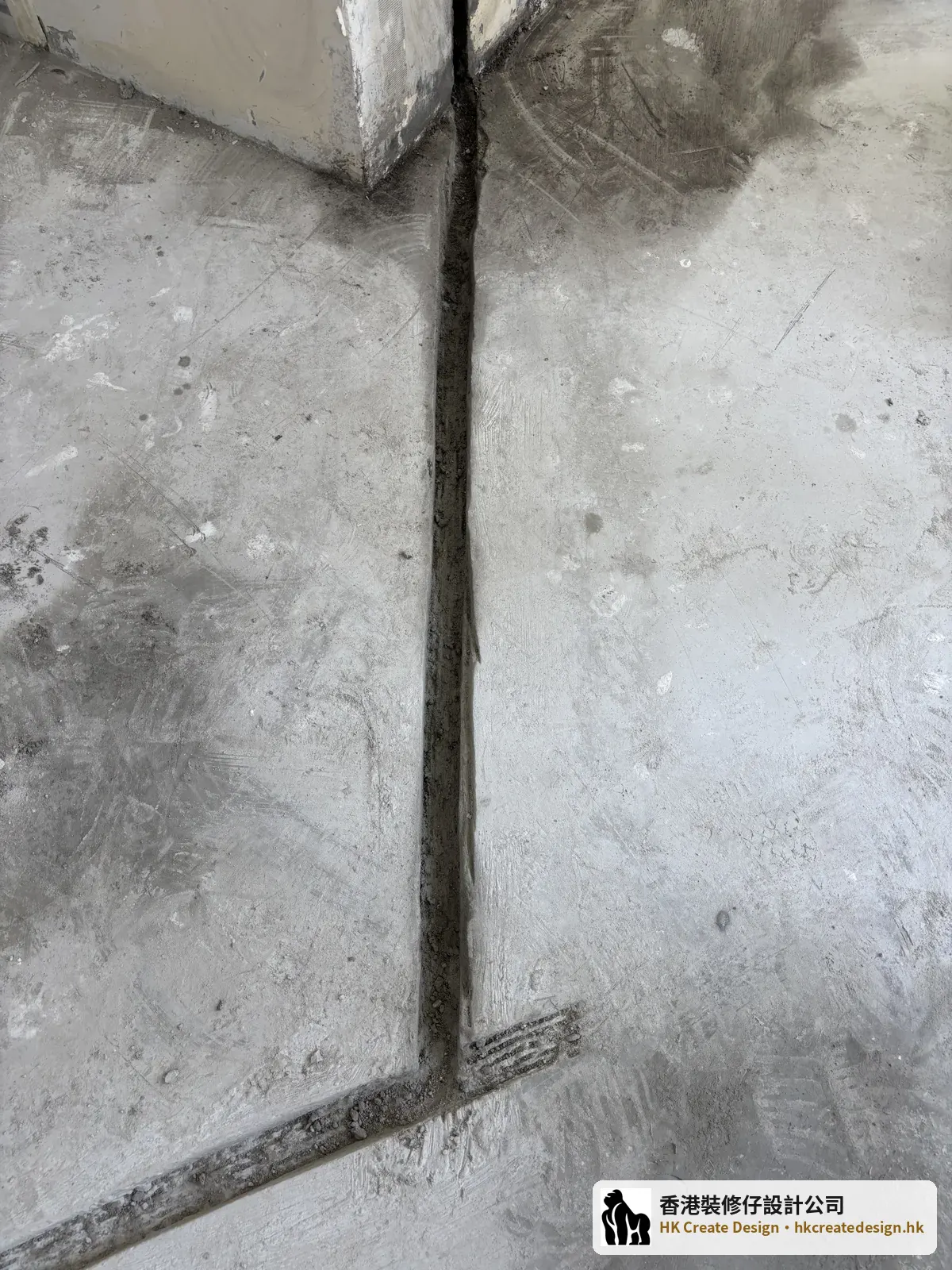
Tai Kok Tsui · Plumbing and electrical project photograph
Photograph of wall chasing and conduit installation. It does not document completed electrical testing or acceptance.