01
2026 rendering rates and what each item covers
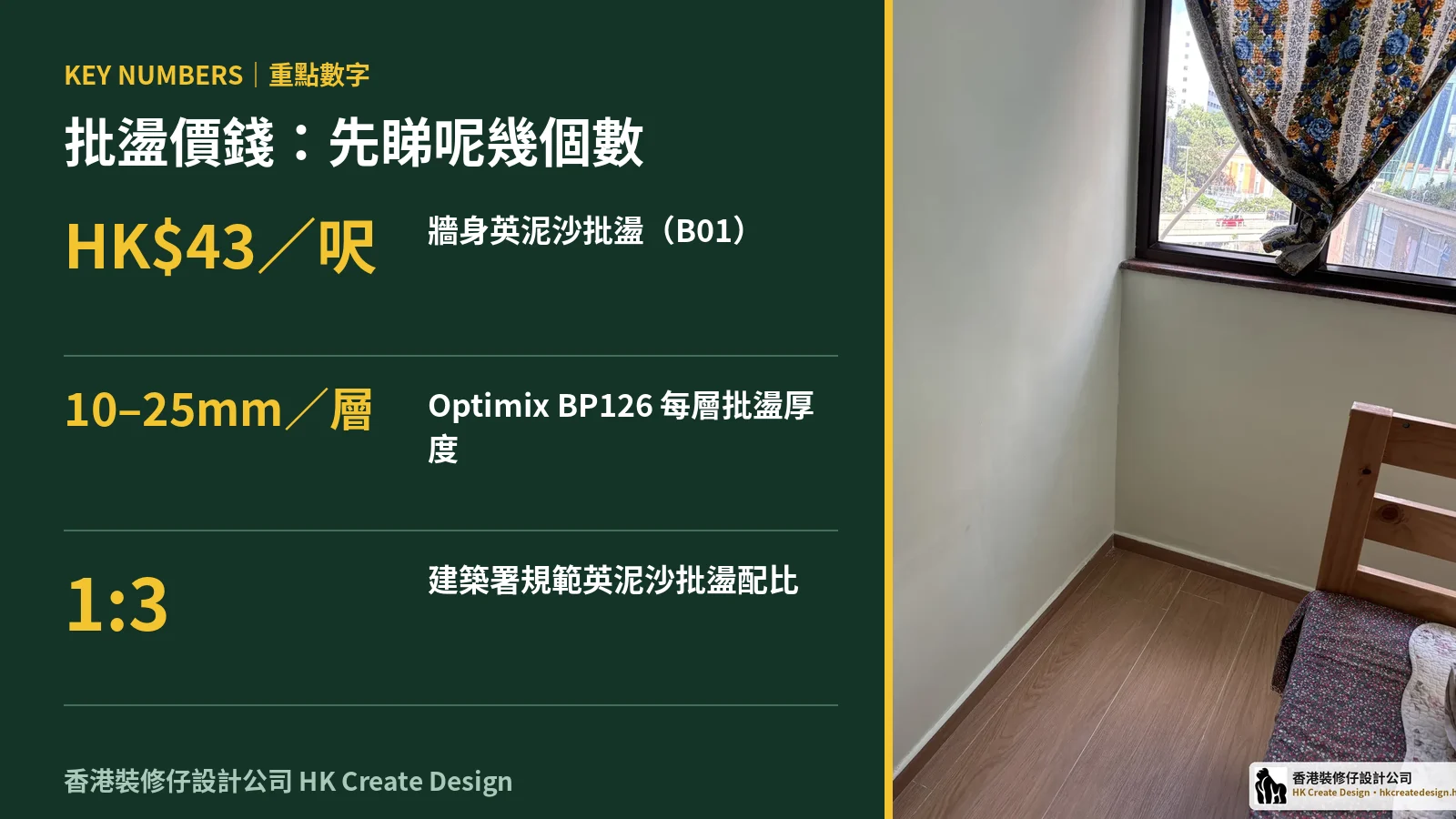
HK Create Design charges HK$43 per sq ft, minimum HK$2,350, to clean the substrate, set out the wall, apply cement-and-sand render and level it. Masonry rates cover labour and base materials such as cement and sand or ready-mixed render. Paint and facing tiles are priced separately.
Rendering prices cover different situations. A wall stripped of tiles may need fresh render. A failing painted wall may need stripping back to concrete first. Switching from paint to tiles requires a render base, while switching from tiles to paint requires a different finish. Each sequence has a different price.
We price the work separately: stripping paint back to concrete costs HK$18 per sq ft, preparing a painted wall for a rendered tile base HK$26, preparing a tiled wall for painting HK$31, and wall rendering itself HK$43 per sq ft. Check which items are cumulative and which are included.
In its survey of renovation quotations, the Consumer Council noted thatMasonry and tilingWall construction, bricklaying, waterproofing, rendering and tiling are generally priced per square foot and can account for a sizeable share of the works budget.[3] It is worth measuring the actual area before budgeting for render.
- Confirm whether the rate includes labour and base materials
- Price stripping and rendering as separate items
- Ask whether painting and wall tiles are included or priced separately
02
The difference between rendering and skim coating
Rendering and skim coating are often confused. A mason applies cement-and-sand mortar or ready-mixed render to concrete or brick to level and protect the wall. Thickness is measured in millimetres. OPTIMIX specifies 10–25 mm per coat for BP126, with multiple coats needed for thicknesses above 25 mm.[1]
Skim coating comes underPaintingand uses one or two thin coats of wall putty to fill fine lines and pinholes for a smoother paint finish. Skim coat cannot level a wall that is several millimetres out or stabilise loose render underneath. Paint can soon peel again.
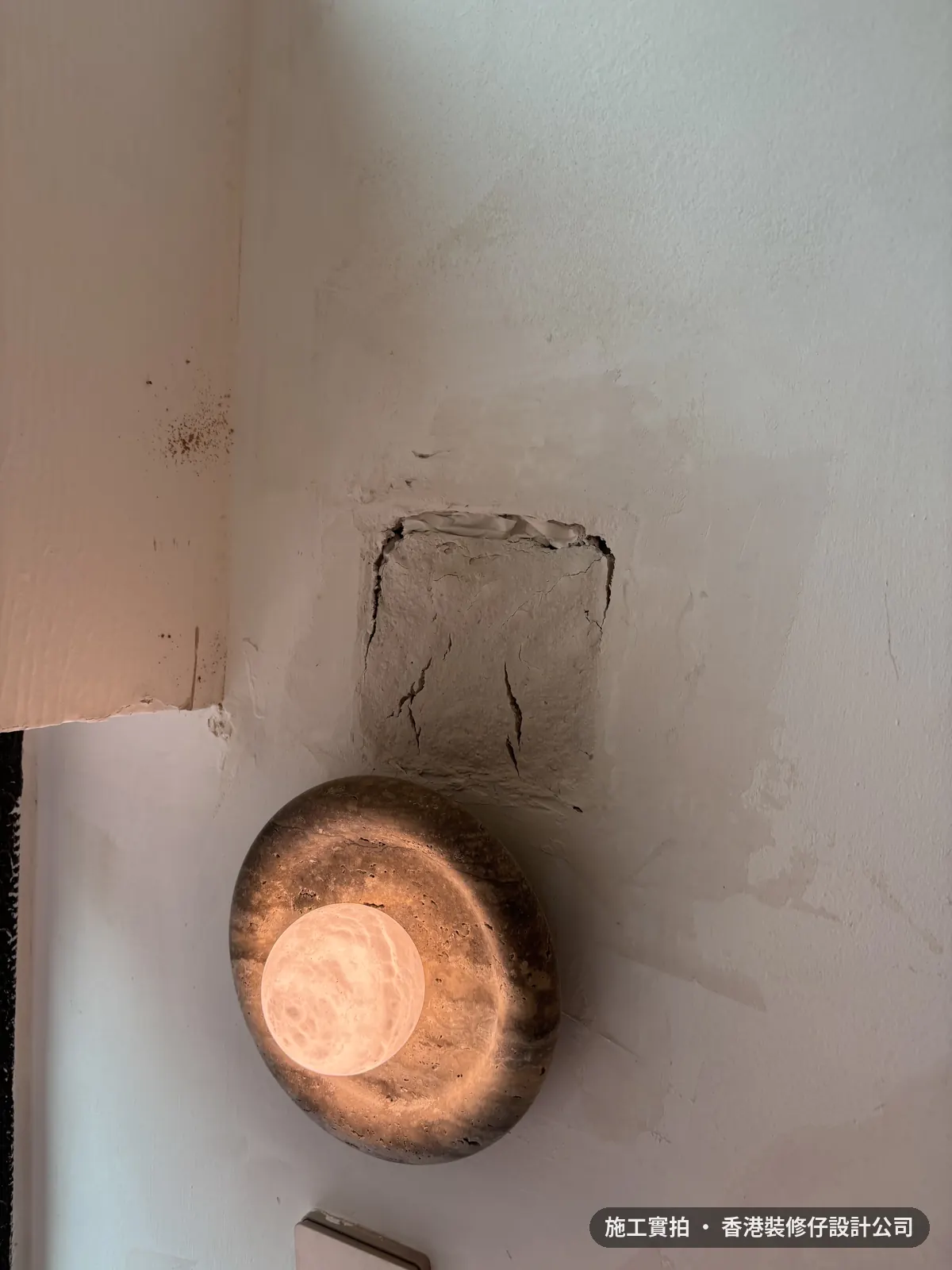
Render corrects uneven or unsound wall bases. A skim coat smooths the surface. Fine cracks and faded paint alone may only require painting work. A hollow sound or render coming away in sheets suggests re-rendering may be necessary. Our wall crack repair guide covers the treatment options.
The Architectural Services Department's General Specification for Building covers cement-and-sand mix ratios and coat thicknesses. A common ratio is 1:3, with the undercoat generally at least 10 mm.[2] Residential renovations need not follow the government works specification word for word, but it offers a useful reference when comparing quoted work methods.
- Walls that are out of plumb or have an unsound base may need rendering
- Fine cracks or discolouration may only need painting work
- Use render for levelling and skim coat for finishing
You can swipe left or right on your phone to view the complete table.
| Item | Unit price | Minimum charge | include | Not included |
|---|---|---|---|---|
| B01 Apply cement–sand render to walls | HK$43 per sq ft | HK$2,350 | Clean the substrate, set out lines, render and level | Painting, facing tiles and removal of old finishes |
| A03 Strip painted walls back to concrete | HK$18 per sq ft | — | Strip old paint and skim coat back to the concrete | Re-rendering, separately under B01 |
| B04 Convert a painted wall to a rendered finish | HK$26 per sq ft | — | Strip the existing finish and apply cement-sand render to prepare the wall for tiling | Tiling, separately under D02 |
| B05 Convert a tiled wall to a painted finish | HK$31 per sq ft | — | Remove tiles and level with render ready for painting | Painting, separately under section E |
| A01 Remove wall tiles | HK$30 per sq ft | — | Remove old tiles down to the cement base, with basic protection | An additional HK$10/sq.ft. will be charged for digging until concrete is visible. |
| B06 Mason’s day rate | HK$2,700 per day | Minimum HK$2,000 for a small job | Scattered minor repairs | Materials charged at cost against receipts |
Masonry rates cover labour and base materials. Refer to the written quotation after site measurement. [7]
03
Estimating quantities using OPTIMIX BP126 manufacturer data
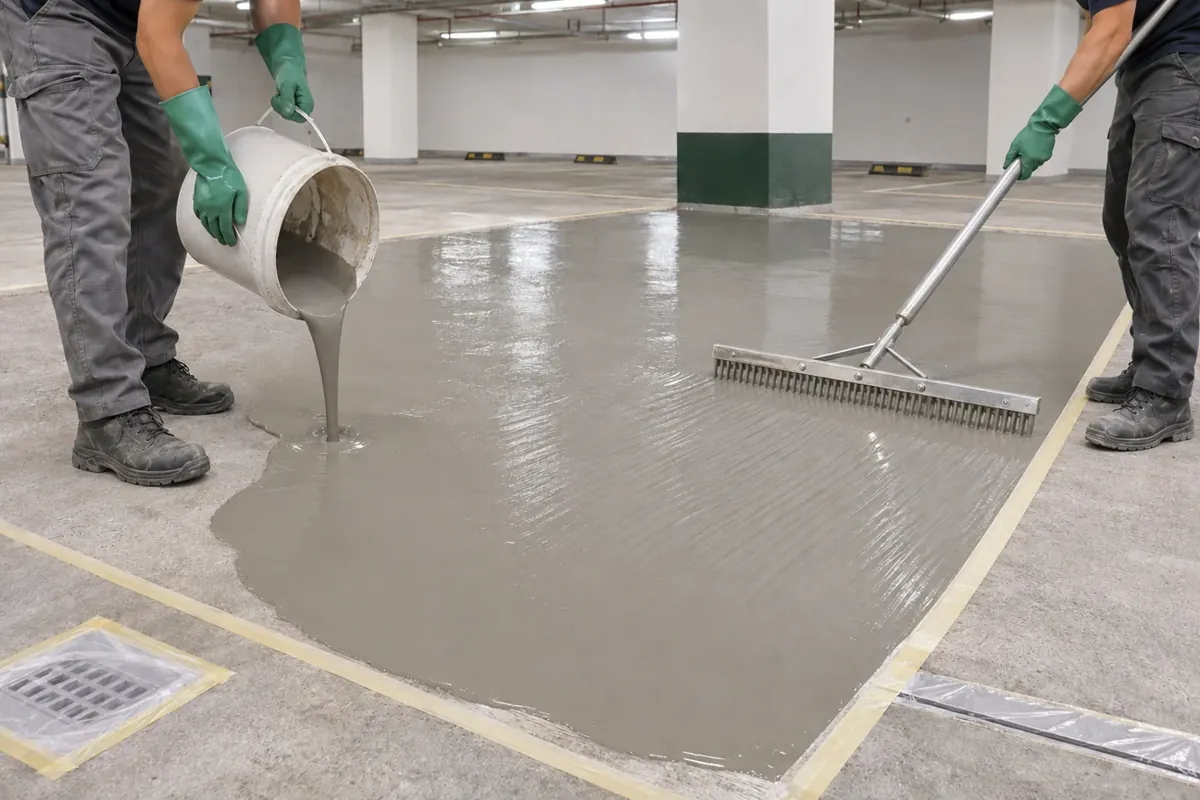
Optimix BP126 is a premixed rendering mortar. The manufacturer's data gives approximate consumption of 1.5 kg/mm/m², about 6.5–7.5 litres of water per 40 kg bag, and compressive strength above 15 MPa.[1] Use this factor for an initial material estimate.
An 80 sq ft wall is about 7.43 m². At an average thickness of 15 mm, allow 7.43 × 15 × 1.5 ≈ 167 kg, or around 4.2 bags. Uneven areas deeper than 25 mm take more mortar and need multiple coats. Allow the preceding coat to develop adequate strength.
This calculation explains variations in materials costs: at the same area, increasing the thickness from 10 mm to 20 mm doubles the quantity. If labour is charged by the day and materials at cost, use it as a rough cross-check on receipts.
This theoretical quantity excludes wastage, uneven surfaces and corner finishing. The mason determines the actual thickness after setting out the wall.
- Estimate materials at 1.5 kg/mm/m²
- Doubling the thickness doubles material use
- Apply thicknesses above 25 mm in coats
04
Site-mixed cement and sand or ready-mixed render
Traditionally, cement and sand are proportioned and mixed with water on site. The mix can be adjusted to suit the work, but its consistency depends on the mason. Architectural Services Department specifications give cement-to-sand ratios, commonly 1:3.[2]
Ready-mixed render such as OPTIMIX BP126 is factory-blended dry powder. Add the specified water on site. The manufacturer gives about 6.5–7.5 litres per 40 kg bag, 10–25 mm per coat and compressive strength above 15 MPa.[1] The formulation is consistent and the published technical data can be checked. Allow for the higher price per bag and the cost of carrying the material.
The choice depends on the scale, handling arrangements and finish required. HK Create Design often uses ready-mixed materials such as OPTIMIX or traditional site-mixed cement and sand where appropriate. The quote should identify which you are buying.
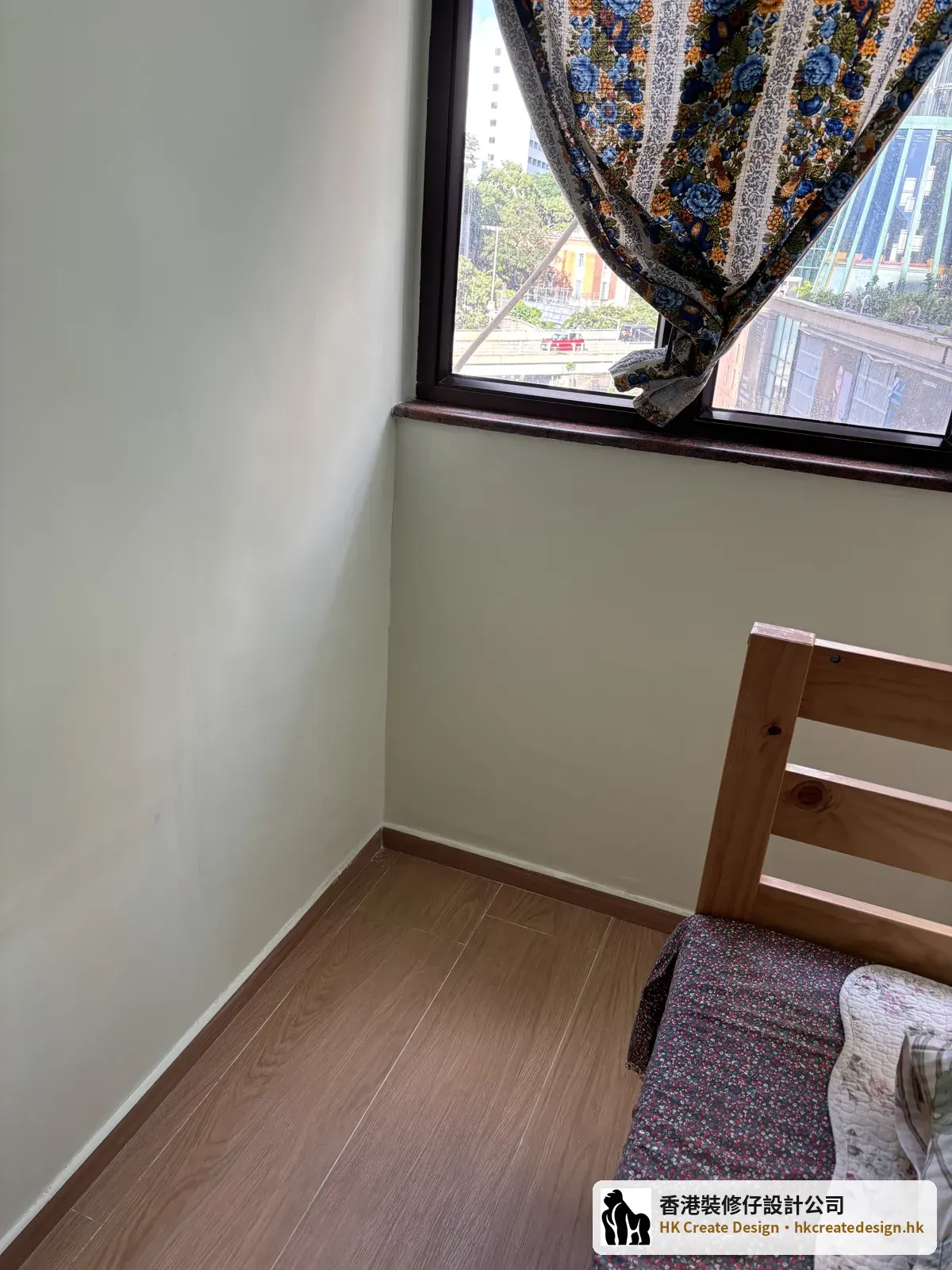
A wall to be tiled needs a slightly textured render surface to helpTile adhesiveadhesion. For painting, a smoother finish reduces skimming. Tell the mason which finish will follow so the render can be finished accordingly.
- Ask whether the mortar is mixed on site or supplied ready-mixed
- Check the manufacturer's water and thickness limits
- Finish the render to suit the next coating
05
What explains differences in rendering rates?
Differences in rendering quotes usually come from the following cost factors.
1. Stripping the substrate. Applying render over loose old paint can cause both layers to come away together. HK Create Design prices stripping separately under A03 at HK$18 per sq ft. If the quote omits this step, ask whether it is included or will be skipped.
2. Thickness and setting out. A string line or laser establishes the plumb and plane of the wall. The deepest point determines the required render thickness. Following the existing uneven surface saves time and mortar but leaves gaps when cabinets or tiles are fitted.
3. Materials. Site-mixed cement-and-sand mortar and proprietary ready-mixed render have different costs. Bagged mortar has a consistent formulation and published coverage and strength data.[1] For site-mixed mortar, the mason controls the proportions. The Architectural Services Department specification also sets out mix requirements.[2]
4. Internal and external corners, window reveals and door frames take time to finish. Check the scope. 5. Haulage and rubble. In walk-up buildings, cement and sand must be carried upstairs and old render taken out. The Environmental Protection Department charges construction waste disposal fees by weight.[4] 6. Curing and programme. Rushing the curing stage increases the risk of shrinkage cracking.
7. Dust control. Stripping and sanding produce dust. Labour Department guidance recommends controlling dust at source, for example by wet methods and extraction, supplemented by suitable respiratory protection where these controls are insufficient.[5] Allow time and cost for dust control and protection in the quotation.
- Ask whether stripping is included
- Ask whether the wall will be set out to line and plumb
- Ask which render will be used
- Ask how edge finishing and rubble disposal are charged
Example 1: re-rendering an 80 sq ft bedroom wall
Assumptions
- Suppose extensive loose render has already been removed under a separate item and the substrate is ready for rendering.
- 80 sq ft under B01.
How to calculate quantities
- 80 × HK$43 = HK$3,440。
- The amount exceeds the HK$2,350 minimum, so the measured price applies.
- Painting is extra.
Rendering: HK$3,440 including labour and base materials.
If the paint must first be stripped back to concrete, add A03: 80 × HK$18 = HK$1,440. [7]
06
Official guidance, regulations and specifications
The following references are publicly available documents from government departments, public bodies and material manufacturers.
The Buildings Department identifies plastering and tiling as work generally exempt from prior approval. The work must still comply with the Buildings Ordinance.[6] Although internal plastering generally needs no application, it must meet structural, fire safety and other statutory requirements. Do not independently add render thickness to an external wall or common area.
The Architectural Services Department's General Specification for Building sets out render mix proportions, coat thicknesses and application sequences as a reference.[2]
OPTIMIX specifies BP126 at 10–25 mm per coat. Thicknesses above 25 mm require multiple coats. Approximate consumption is 1.5 kg/mm/m².[1]
Consumer Council: a quote should itemise the work, materials and pricing method and distinguish base materials from finishes.[3]
Our team often finds that an old wall has simply been skimmed and painted over a loose base. It can look sound until sheets fall off when scraped. We tap-test before quoting and open a trial area if needed to decide between patch repairs and re-rendering.
- Rendering is generally exempt from prior approval and must comply with the regulations
- Refer to the Architectural Services Department's mix proportions
- Observe the manufacturer's thickness limit for each coat
You can swipe left or right on your phone to view the complete table.
| compare | English sediment batch | Skim coating before painting |
|---|---|---|
| Falls under | Masonry and tiling | Painting |
| Thickness | Measured in mm, typically 10–25 mm per coat for BP126 | A thin coat to fill fine lines and pinholes |
| Purpose | Level the wall as a base for tiles or paint | Gives paint a smoother base |
| Common materials | Cement and sand or a ready-mixed render such as OPTIMIX BP126 | Wall putty, such as Nippon Paint low-odour wall putty |
| When the work is needed | Loose old render, walls stripped of tiles or walls out of plumb | Depending on the condition of the wall before each repaint |
Coat thicknesses follow the manufacturer's data for OPTIMIX BP126. [1] [1]
07
Option A or B: patch repairs or re-rendering the entire wall
Patch repairs suit a few small, scattered hollow areas where the surrounding render sounds solid. Several spots can be treated together at HK$2,700 per day, plus materials at cost. This limits expense, but new-to-old joints may need skimming before painting to hide the line.
Re-render the whole wall if more than half sounds hollow, the wall is markedly out of plumb or large cabinets or tiles are planned. Stripping the entire wall allows it to be set out afresh. For 200 sq ft, stripping and re-rendering total HK$12,200, excluding painting and rubble removal.
Tap the wall at roughly one-foot intervals and mark hollow-sounding areas. If the marks form one continuous area, fresh patches may be followed by failures next to them. Consider re-rendering the entire wall.
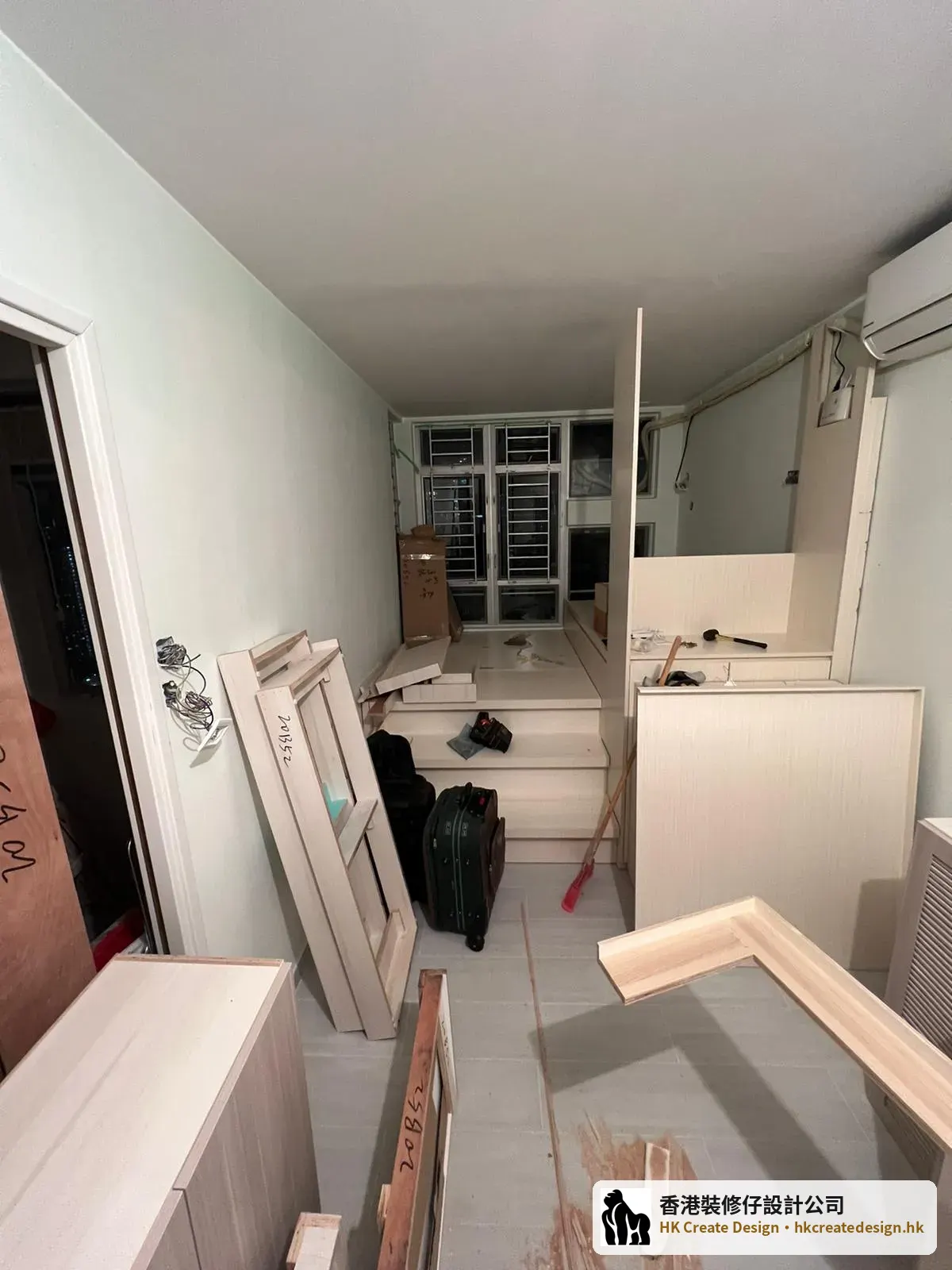
The intended finish also matters. For a painted wall to be tiled, B04 prepares a render base at HK$26 per sq ft. For a wall to be painted, B01 levels the surface. Select the item for the intended finish.
- Tap-test the wall and mark hollow areas
- Patch render in a small area
- Re-render the entire wall where damage is extensive
- Choose the item for the intended finish
08
Common pitfalls in rendering quotations
Pitfall 1: A quote that only says “rendering” leaves the area, stripping and thickness unclear. At a minimum, record the measured area, work stages and whether stripping is included so the finished work can be checked.
Pitfall 2: An undisclosed minimum charge. At our area rate 30 sq ft comes to HK$1,290, but the HK$2,350 minimum applies. Agree this upfront to avoid a dispute after completion.
Pitfall 3: painting costs extra and the quote does not say so. A rendered wall is still cement-coloured and needs painting for a finished appearance. If the quote only covers rendering, allow a separate budget for painting.
Pitfall 4: Painting before the render dries. Residual moisture can cause blisters and mould. Follow the manufacturer's drying guidance before painting.
Pitfall 5: Treating external and common-area work as an ordinary inside job. External rendering can affect common parts and entail work at height. Consult building management and follow the applicable requirements before starting.
- State the area and work stages in the quote
- Ask about the minimum charge
- Allow for painting
- Let the render dry thoroughly before painting
- Leave external wall work to qualified professionals
Example 2: rendering a small 30 sq ft wall
Assumptions
- Suppose only a 30 sq ft wall beside a window needs re-rendering.
How to calculate quantities
- 30 × HK$43 = HK$1,290。
- The calculation falls below HK$2,350, so the minimum charge applies.
- Several small repairs can be grouped under a HK$2,700 day rate, with materials charged at cost.
The HK$2,350 minimum applies.
Small areas can trigger the minimum charge. Compare the area rate with a day rate. [7]
09
Handover checklist for completed rendering
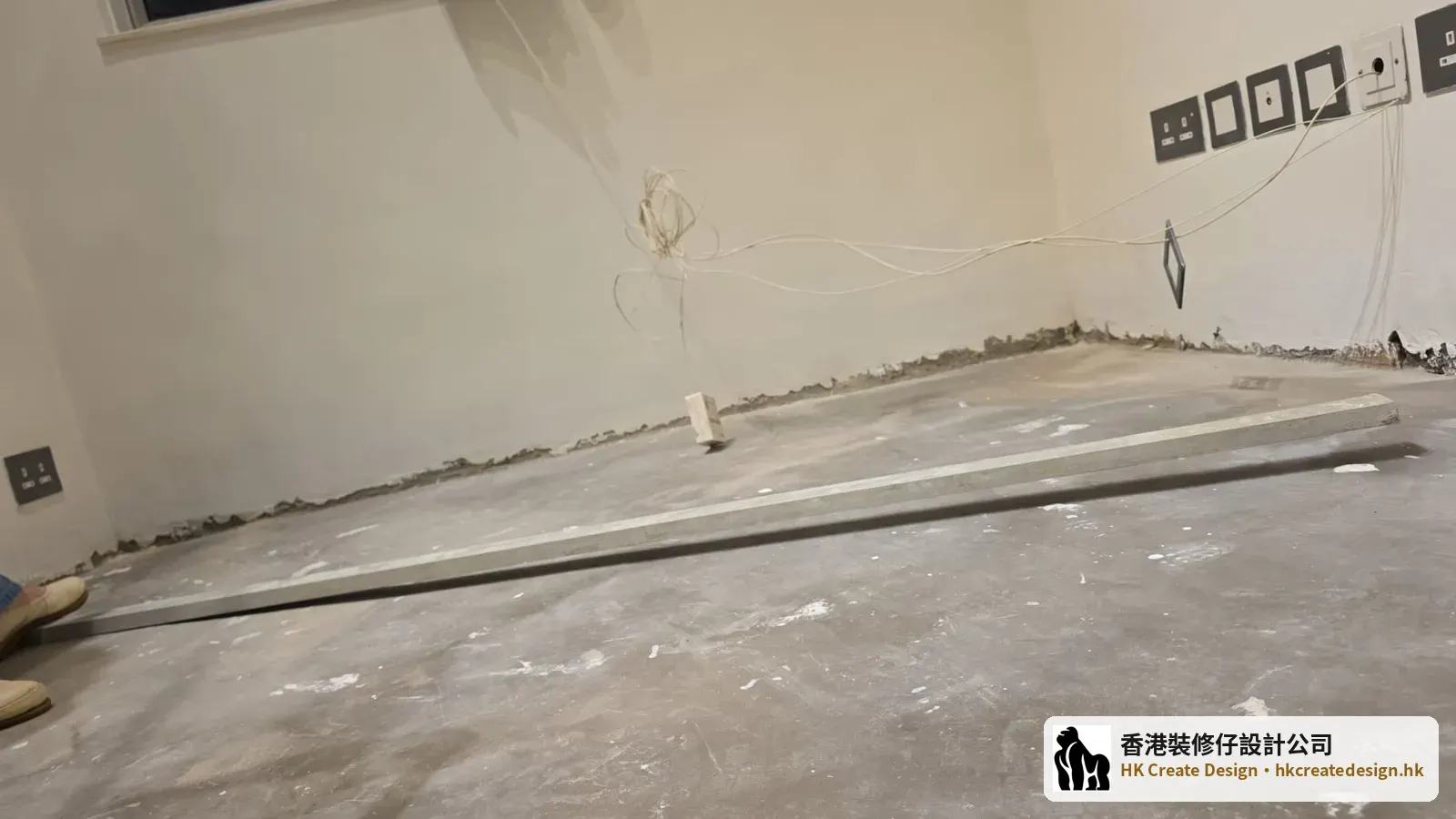
Flatness: hold a long straightedge against the wall to check for obvious gaps. A torch held at a low angle helps reveal high and low spots. Walls for large-format tiles or fitted cabinets require a flatter finish.
Tap the wall lightly with a hard object. Sound render gives a solid response. A hollow sound can indicate poor adhesion to the substrate.
Fine hairline cracks may be due to shrinkage. Ask for the cause to be checked if a crack is wide, long or follows a regular pattern.
Inside and outside corners should be straight, with no chips on exposed edges. Check the finish around windows and door frames.
Fully dry render should look fairly uniform. A persistent dark patch or water mark may indicate residual moisture or seepage. Investigate before painting.
Check that floors, window sills and drains are free of cement residue. Keep completion photos. HK Create Design offers a one-year workmanship warranty.
- Check flatness with a straightedge
- Listen for hollow render
- Inspect for cracks
- Check inside and outside corners
- Check cleanliness
You can swipe left or right on your phone to view the complete table.
| Area | Thickness | Calculate | Estimated material quantity | Estimated number of 40 kg bags |
|---|---|---|---|---|
| 30 sq ft (about 2.79 m²) | 15mm | 2.79 × 15 × 1.5 | About 63 kg | About 1.6 bags |
| 80 sq ft (about 7.43 m²) | 15mm | 7.43 × 15 × 1.5 | About 167 kg | About 4.2 bags |
| 200 sq ft (about 18.58 m²) | 20mm | 18.58 × 20 × 1.5 | About 557 kg | About 14 bags |
1 sq ft ≈ 0.0929 m². The manufacturer's coverage figure is 1.5 kg per mm of thickness per m². Allow extra for uneven surfaces and wastage. [1] [1]
10
Scheduling wall rendering
The usual sequence is to remove tiles or paint, cut chases and install services, fill the chases, set out lines, render, cure, then paint or tile. Complete concealed plumbing and electrical work before rendering to avoid cutting new chases and leaving visible repairs.Pipe replacementand rewiring should also be completed at this stage.
Rendering time depends on area and thickness. Allow for curing and for time between coats on thicker work. Check the tile adhesive manufacturer's requirements before tiling. For paint, wait until the render has dried thoroughly.
Whole-flat renovation or Older flat renovation, the same masonry team can usually coordinate rendering, floor levelling and tiling, reducing mobilisation days and rubble collections.
- Finish concealed services before rendering
- Apply thick render in coats
- Allow time for curing
- Coordinate with the floor works
11
Rendering requirements by room
Bathrooms: most walls are tiled. A level render base allows an even bed of tile adhesive. Coordinate waterproofing with rendering and document the required upstand height and full-height protection in the shower in theWaterproofingquotation. Follow the waterproofing manufacturer's instructions on the sequence of rendering and waterproofing and allow time for each stage.
Kitchen walls are usually tiled. A sound base is particularly important near the hob, where heat exposure is prolonged. If you want painted walls, consider using paint away from the hob while retaining tiles or another easily cleaned splashback behind it.
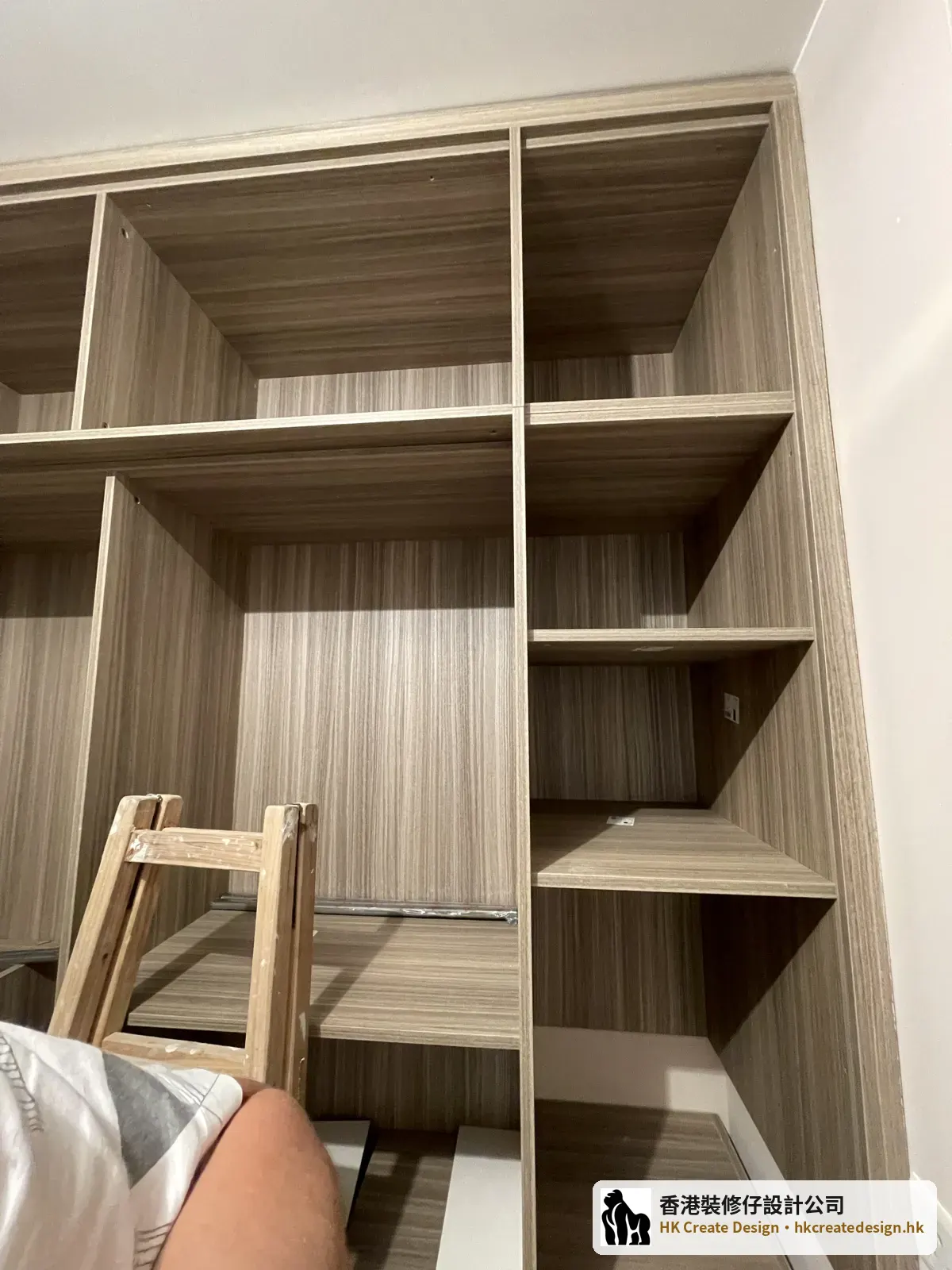
Bedrooms and living rooms: painted walls need straight, sound render. Fitted wardrobes, TV walls and timber panelling need an especially flat base because wide gaps are difficult to finish neatly. Set out the entire wall to line and plumb before rendering.
Window surrounds and sills are prone to water ingress. Pay attention to the joint with the frame and the falls. Investigate existing seepage before rendering over the area.
- Render for bathroom and kitchen tiling
- Follow the manufacturer's sequence for rendering and waterproofing
- Set out the full wall before fitting cabinets
- Check for seepage around windows first
Example 3: stripping 200 sq ft of old wall back to concrete and re-rendering
Assumptions
- Suppose repeated repainting has left loose paint and skim coat on a living-room wall.
- Area: 200 sq ft.
How to calculate quantities
- A03 Strip paint back to concrete: 200 × HK$18 = HK$3,600.
- B01 Re-render: 200 × HK$43 = HK$8,600.
- Total: HK$3,600 + HK$8,600 = HK$12,200.
- For more than a small quantity of rubble, add A11 at HK$4,200 per truckload.
HK$12,200, excluding painting and rubble removal.
If stripping exposes spalled concrete or reinforcement, structural repairs must precede rendering. They are priced separately. [7]
12
Rendering in older buildings, public rental flats and Home Ownership Scheme flats
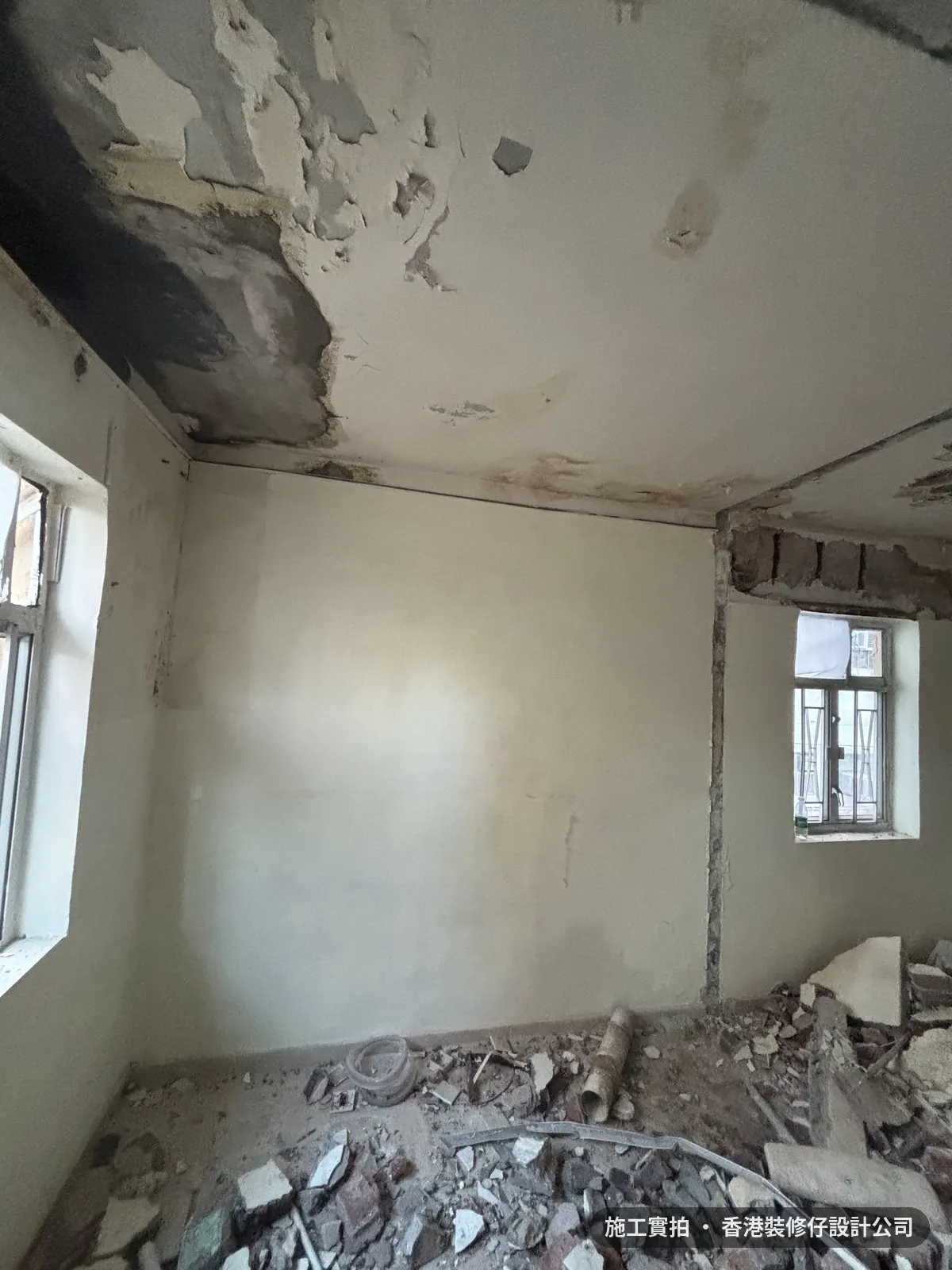
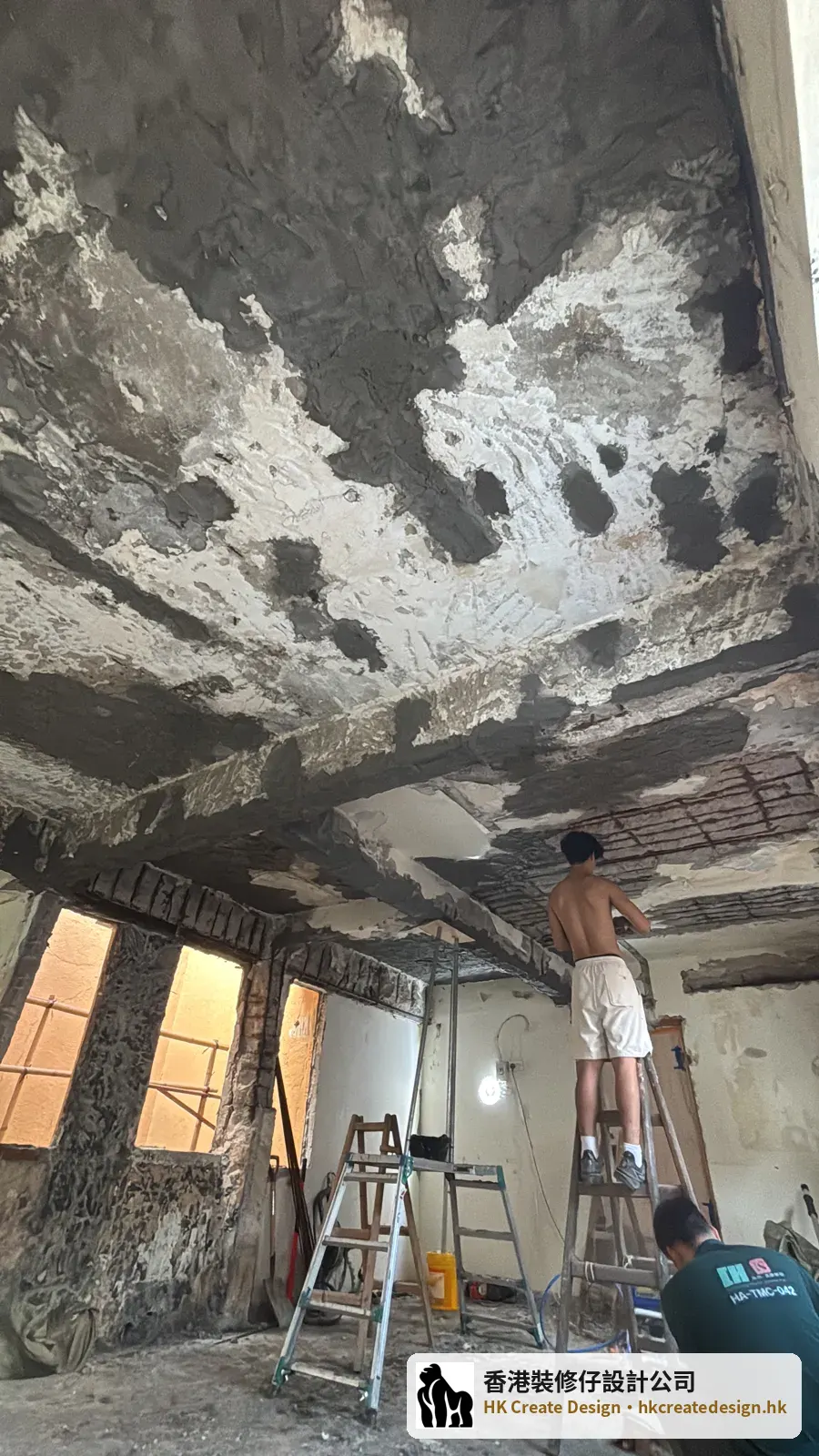
Older walls may carry several layers of paint and skim coat, with cracking or blistering at the surface. Another coat of paint can soon peel. Strip back to the concrete where necessary and inspect the base before re-rendering. Spalling or exposed reinforcement requires concrete repair first.
Public rental flat renovation, internal patching generally counts as routine maintenance. Ask the estate office before altering original fixtures or partitions.Home Ownership Scheme flat renovationCheck the deed of mutual covenant and the management office's rules on working hours, delivery routes and rubble disposal.
Stripping and hacking are noisy. Buildings usually set permitted renovation hours. We check these with management and schedule noisy work within those periods.
- Strip back to concrete first in older buildings
- Repair exposed reinforcement before re-rendering
- Check with the estate office before altering a public rental flat
- Check management rules for Home Ownership Scheme flats
You can swipe left or right on your phone to view the complete table.
| Wall condition | Recommended practices | HK Create Design price list |
|---|---|---|
| Fine cracks and nail holes | Skim coat and paint (painting works) | Refer to painting rates |
| Wall out of plumb and due to be tiled | English sediment batch | HK$43 per sq ft |
| Converting a painted wall to tiles | Strip and re-render | HK$26 per sq ft |
| Converting a tiled wall to paint | Remove tiles and level with render | HK$31 per sq ft |
| Spalled concrete with exposed reinforcement | Remove loose concrete, treat corrosion, apply repair mortar and then render | Site assessment |
| Peeling old paint | Strip back to exposed concrete | HK$18 per sq ft |
Rates are from HK Create Design’s published 2026 price list [7]. Repair mortar thicknesses are from the manufacturer's data sheet [9]. [7][9]
13
Worked budget: estimating render for a whole flat
A flat's wall area differs from its saleable floor area. For a rough estimate, the total wall face area may be two to three times the floor area. Deduct windows, doors and areas occupied by wardrobes, then verify on site.
Suppose a measured 400 sq ft flat has 600 sq ft of walls to re-render, of which 300 sq ft need paint stripped back to concrete. A03 stripping costs 300 × HK$18 = HK$5,400. B01 rendering costs 600 × HK$43 = HK$25,800. Total HK$31,200, excluding painting and rubble removal.
If tapping finds hollow render on only one or two walls and the others just have aged paint, limit re-rendering to the damaged walls. Local stripping and repainting elsewhere can reduce the budget considerably. Tap-test before committing to a whole-flat job.
Budget for the subsequent finish. For walls to be tiled, B04 is HK$26 per sq ft. For painting, allow for B01 plus the painting work. A whole-flat quote should list these separately so you can compare them.
- Measure the actual wall area
- Tap-test the wall before defining the repair area
- Itemise stripping and rendering separately
- Budget for painting and tiling alongside the render
14
Site measurement, quotations and appointments
A site measurement and tap test give the most reliable rendering quote. Photos allow a preliminary assessment. The extent of hollow render, plumb of the wall and condition of the base need checking on site.
Our quote identifies the area, stripping limits, rendering stages, minimum charge and exclusions so you can compare it item by item.
Before booking, gather overall and close-up photos of each wall, approximate sizes, intended paint or tile finish, cabinet plans and any building working-hour restrictions. This helps us identify what needs checking at the site visit. Mention floor levelling, tiling or waterproofing too so they can be measured and priced together.
For a free quotation from a construction team, contact HK Create Design on WhatsApp 5243 7747. The Wong Tai Sin showroom opens Monday to Saturday, 10:00–18:00. On-site measurement is free through 31 December 2026 for two or more work items, with no deposit. After that, the HK$500 fee is credited against the order.
- On-site tap test of walls
- Itemise the quotation
Example 4: preparing 120 sq ft of tiled kitchen wall for paint
Assumptions
- Suppose you want to paint the kitchen walls instead of retiling them.
- 120 sq ft under B05.
How to calculate quantities
- B05: 120 × HK$31 = HK$3,720 to remove tiles and level the wall with render.
- Painting is priced separately under section E. Its own minimum charge may apply depending on the scope.
HK$3,720 for the masonry work. Painting is extra.
Walls near a kitchen hob are exposed to heat and grease. Consider cleaning and durability before switching to paint. [7]
15
Rendering in older buildings: repair spalled concrete first
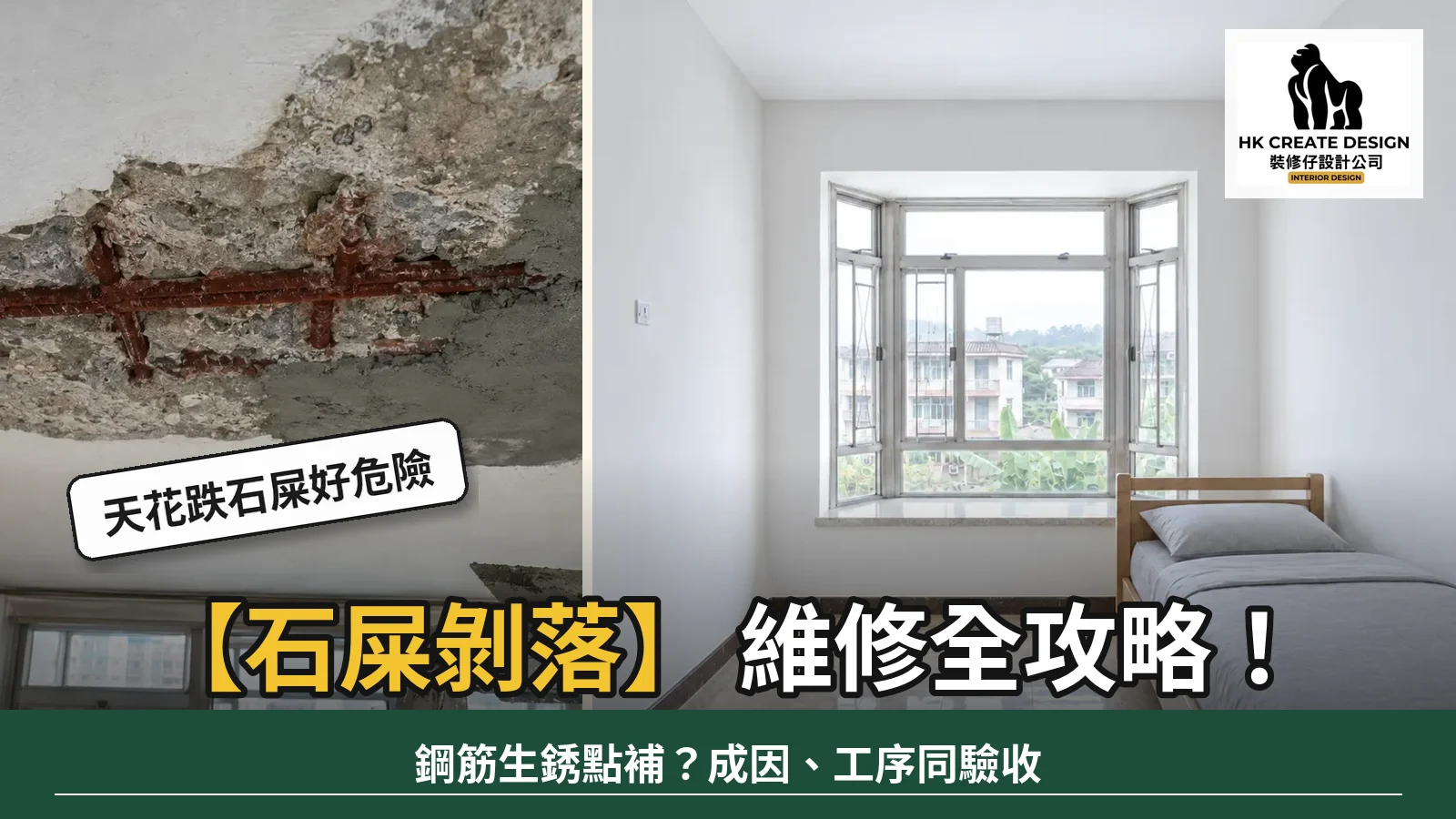
Hong Kong has 9,402 private residential buildings aged 50 or above[10], and the Buildings Department issued 476 repair orders in 2025[10]. If stripping the render in an older building exposes corroding reinforcement, loose material and corrosion must be removed and the concrete repaired with a suitable mortar before re-rendering.
For example, RM725 repair mortar can be applied up to 50 mm per coat on a vertical face and 40 mm overhead.[9]. Apply greater thicknesses in coats. Schedule powered wall hacking during permitted daytime hours[11].
- Treat corrosion on exposed reinforcement before covering it
- Apply repair mortar in coats
- Schedule wall hacking during permitted daytime hours
Example 2: preparing a tiled kitchen wall for paint
Assumptions
- Illustrative example.
- Wall area: 120 sq ft.
How to calculate quantities
- Prepare tiled walls for paint: 120 × HK$31 = HK$3,720. [7]
- Painting is priced separately at the published painting rates
About HK$3,720 for the rendering work
Unusually well-bonded tiles or hacking back to bare concrete cost extra. [7] [7]
16
Does rendering require an application?
The Buildings Department states that ordinary interior decoration, such as painting and internal plastering, is exempted work under the Buildings Ordinance and requires no prior approval and consent from the department[8].
Where rendering is part of building a new brick wall, removing a wall or changing the structure, check separately whether the associated work falls under the Minor Works Control System. We will review it with you before starting.
- Ordinary internal plastering is exempted work
- Check separately when building or removing walls
17
Why choose HK Create Design for rendering?
Our online calculator publishes each HK Create Design rendering rate, with inclusions, exclusions and minimum charges available before work starts.[7] HK Create Design’s quotations list materials, work stages and acceptance checks so you can compare other quotations line by line.
HK Create Design offers a one-year warranty after completion under the terms of the written quotation. On-site measurement is free through 31 December 2026 for two or more work items, with no deposit. After that, the HK$500 fee is credited against the order.
For a project estimate, send photos and the approximate area to HK Create Design on WhatsApp 5243 7747. You can also see samples and discuss options at our Wong Tai Sin shop, Monday to Saturday, 10:00–18:00.
- Published, itemised prices
- List inclusions and exclusions in the written quotation
- One-year workmanship warranty
- Send photos to WhatsApp 5243 7747 for a quotation
FAQ
14 practical questions answered
01How much does wall rendering cost?
HK Create Design charges HK$43 per sq ft, minimum HK$2,350, for cement-and-sand wall render including labour and base materials. Paint and facing tiles cost extra.
02Is stripping a painted wall charged separately?
Yes. A03 strips paint back to concrete for HK$18 per sq ft, priced separately from rendering.
03How much does it cost to prepare a tiled wall for paint?
B05 costs HK$31 per sq ft to remove tiles and level the wall with render. Painting is priced separately under section E.
04What is the difference between rendering and skim coating?
Rendering is masonry work. Cement-and-sand mortar or ready-mixed render levels the wall in coats measured in mm. The thin skim coat that fills surface imperfections before painting falls under painting works.
05How thick can each coat of render be?
For example, OPTIMIX BP126 is applied at 10–25 mm per coat. Thicknesses above 25 mm require multiple coats.[1]
06Does rendering need Buildings Department approval?
Internal plastering is exempt from prior approval but must comply with the Buildings Ordinance.[6]
07How can I tell whether a wall needs re-rendering?
Consider re-rendering if the wall sounds hollow when tapped, render comes away in sheets when scraped, or the wall is visibly out of plumb.
08How soon after rendering can you paint?
Wait until the render is thoroughly dry. Follow the manufacturer's guidance and account for site humidity. Painting too early can cause blistering.
09How are small rendering jobs priced?
Pricing by area triggers the HK$2,350 minimum. For several scattered repairs, compare the HK$2,700 day rate plus materials at cost.
10Does rendering create much dust?
Stripping and sanding generate dust. Labour Department guidance recommends source controls such as wet methods and extraction.[5]
11Is there a warranty on rendering?
The work carries a one-year warranty after completion, subject to the terms of the written quotation.
12How smooth should the finished render be?
The finish depends on what follows. Render for tiles should have a light texture for adhesion. Render for paint should be smooth enough to reduce the number of skim coats.
13Do wall cracks always require re-rendering?
Not always. Fine hairline cracks can often be filled during preparation for painting. Investigate wide or long cracks, hollow areas and seepage before deciding between patching and re-rendering.
14How do I book a site measurement?
WhatsApp 5243 7747. On-site measurement is free through 31 December 2026 for two or more work items, with no deposit. After that, the HK$500 fee is credited against the order.
CHECK THE BASIS
Data and technical basis, sources can be verified
- [1]OPTIMIX BP126 Base Plaster technical data Accessed: 2026-11-03
- [2]Architectural Services Department, General Specification for Building, 2022 edition Accessed: 2026-11-03
- [3]Consumer Council, CHOICE issue 529: how to read a renovation quotation across 12 categories Accessed: 2026-11-03
- [4]Environmental Protection Department: Construction Waste Disposal Charging Scheme Accessed: 2026-11-03
- [5]Labour Department guidance on preventing silicosis among quarry and construction workers Accessed: 2026-11-03
- [6]Buildings Department: Frequently Asked Questions on Alteration and Addition Works to Domestic Premises Accessed: 2026-11-03
- [7]HK Create Design’s published 2026 prices: masonry, waterproofing, demolition and miscellaneous work Accessed: 2026-11-03
- [8]Buildings Department: Designated exempted projects Accessed: 2026-11-03
- [9]OPTIMIX RM725 Repair Mortar (HKHA Class 25) data sheet Accessed: 2026-11-03
- [10]Buildings Department / Development Bureau: Controlling Officers' Replies on the 2026–27 Estimates, covering private building ages and repair orders Accessed: 2026-11-03
- [11]Environmental Protection Department: FAQs on noise from renovation in residential premises Accessed: 2026-11-03