
01
Why masonry matters in a home renovation
In Hong Kong renovation work, cement-based building and finishing work is usually calledmasonry and tiling. Behind the joinery and paintwork, masonry gives a home its shape. The trade covers everything from rendering walls and levelling floors after strip-out to waterproofing kitchens and bathrooms and laying tiles throughout the flat.
Homeowners sometimes prioritise fitted furniture or smart appliances and overlook concealed masonry. Within two years of moving in, problems can includebathroom leaks affecting the flat below, mould caused by wall seepage, and hollow or cracked floor tiles. Fixing these problems can mean stripping out finished work and paying for it again.
This guide explains the main stages of masonry, how to assess workmanship and what to look for in a quotation.
REAL PROJECT PHOTOS
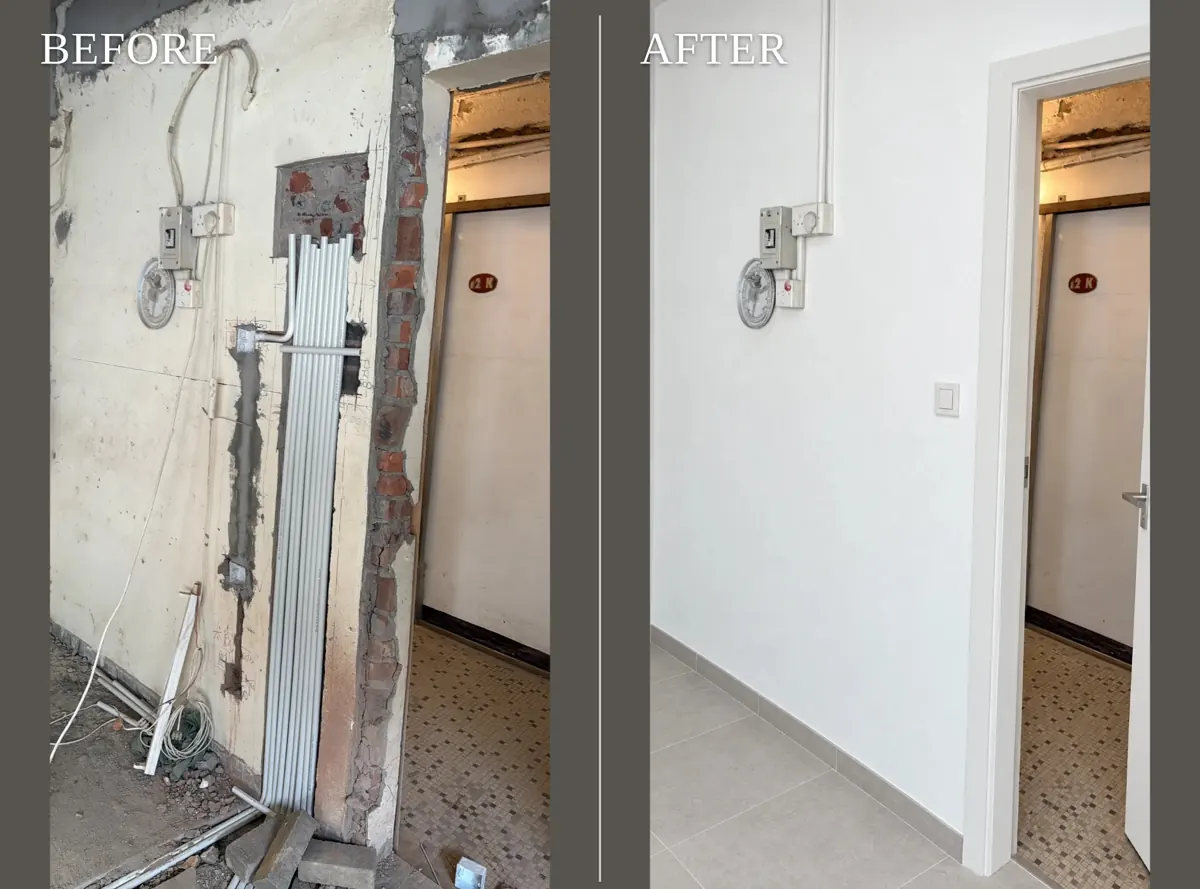
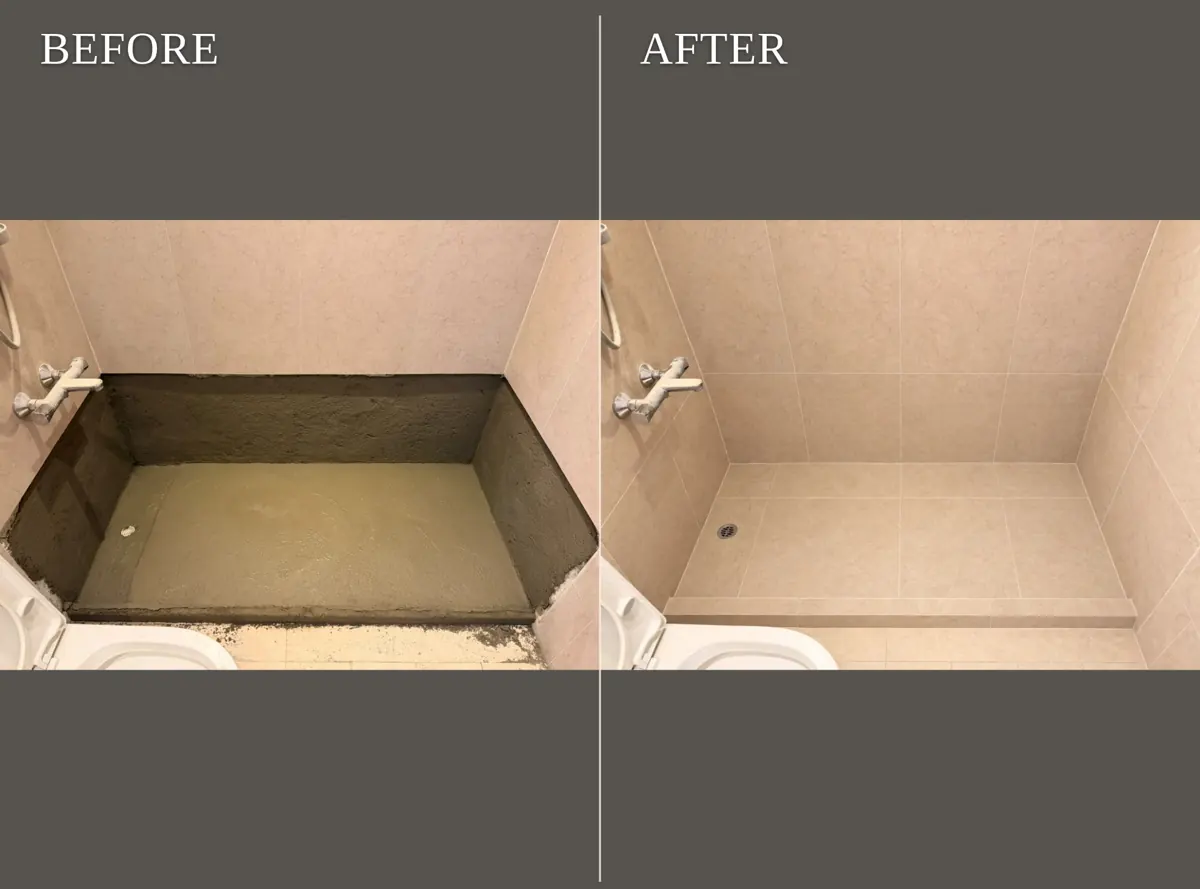
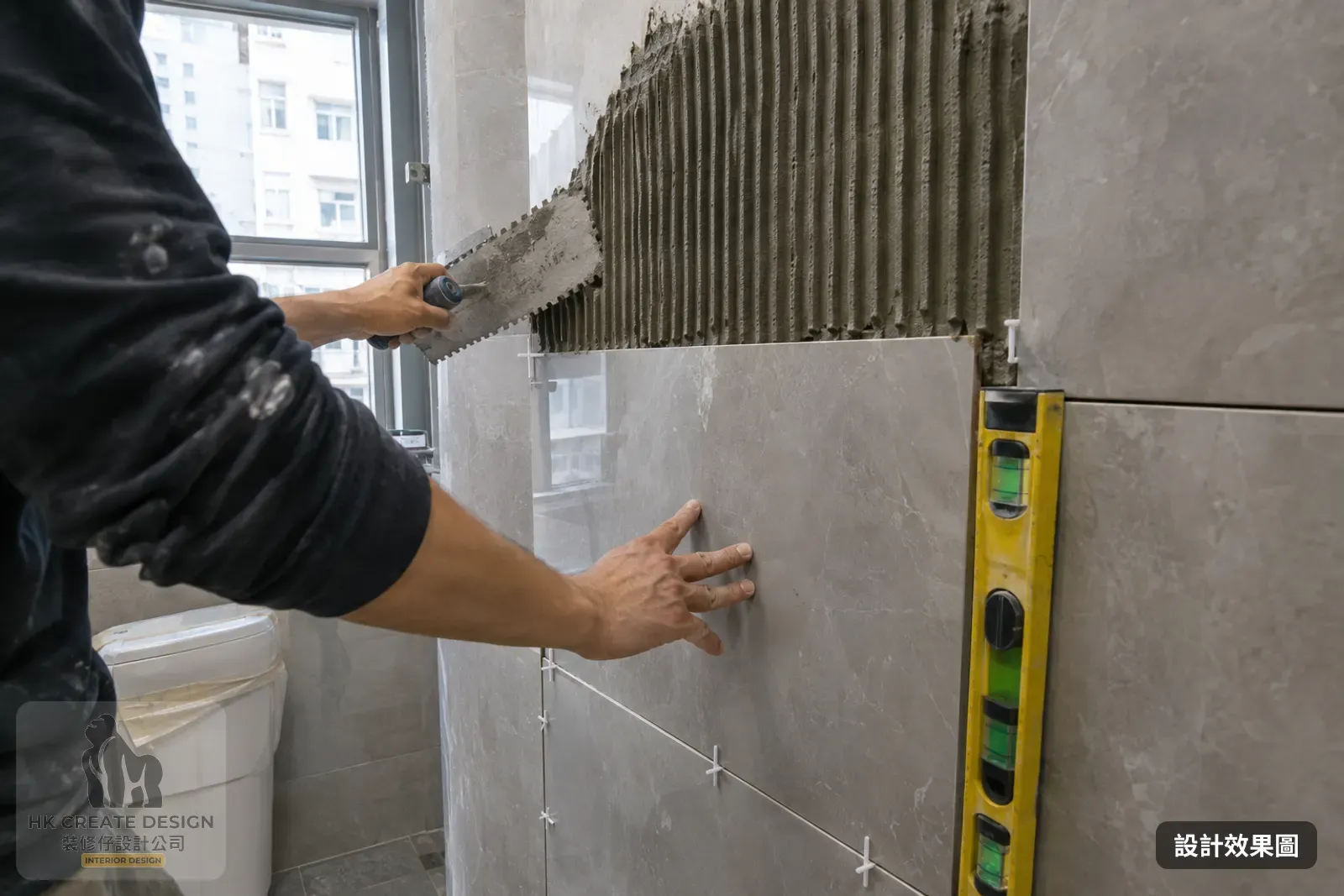
Masonry and tiling work in progress and completion photos
These photographs were taken on actual HK Create Design projects. Client details have been removed.
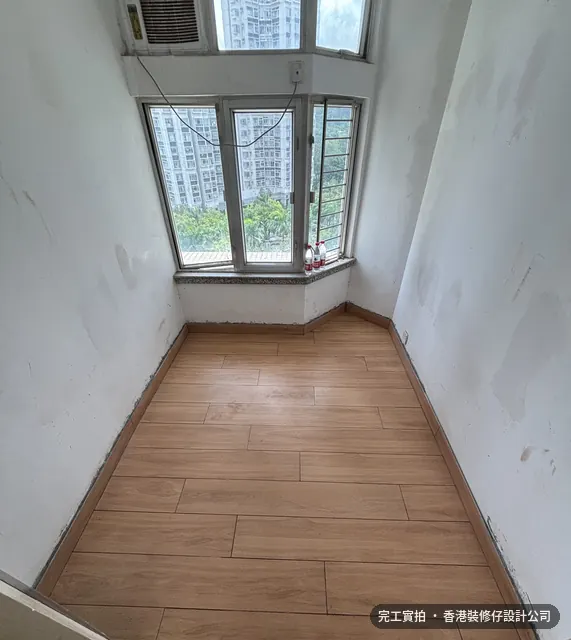
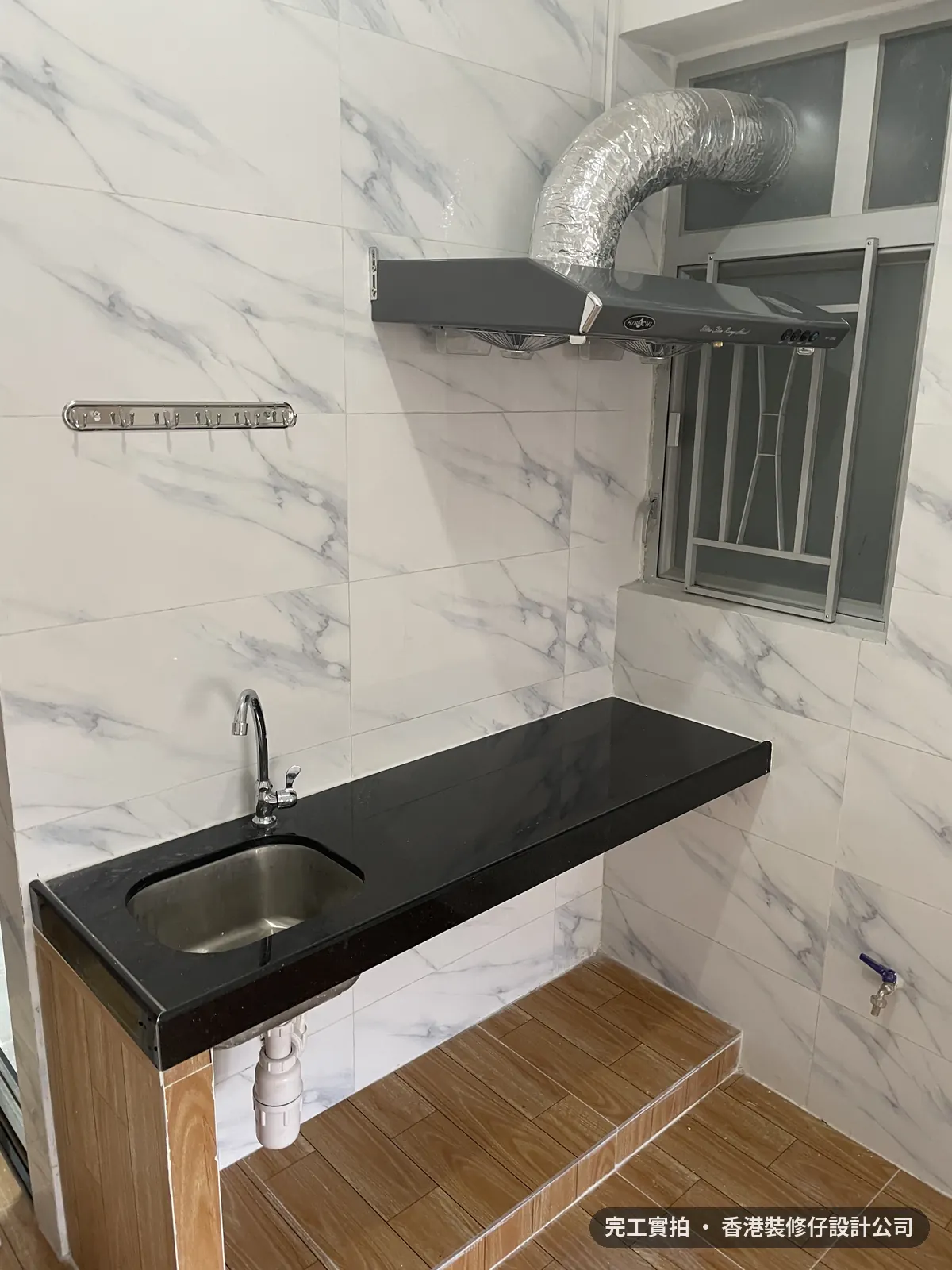
Completed project photosKingswood Villas, Tin Shui Wai · Tiling · July 2026 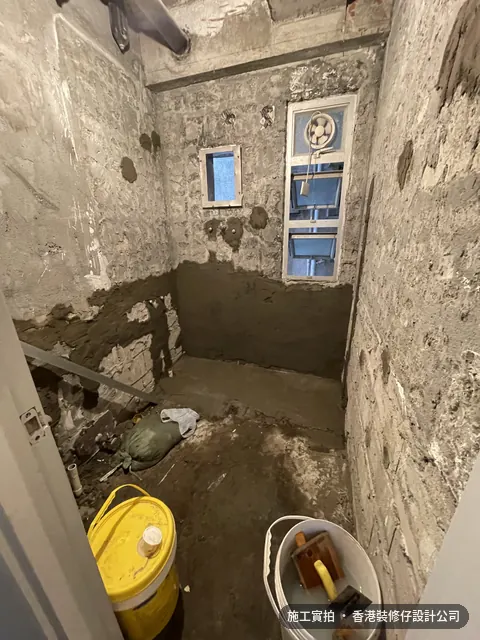
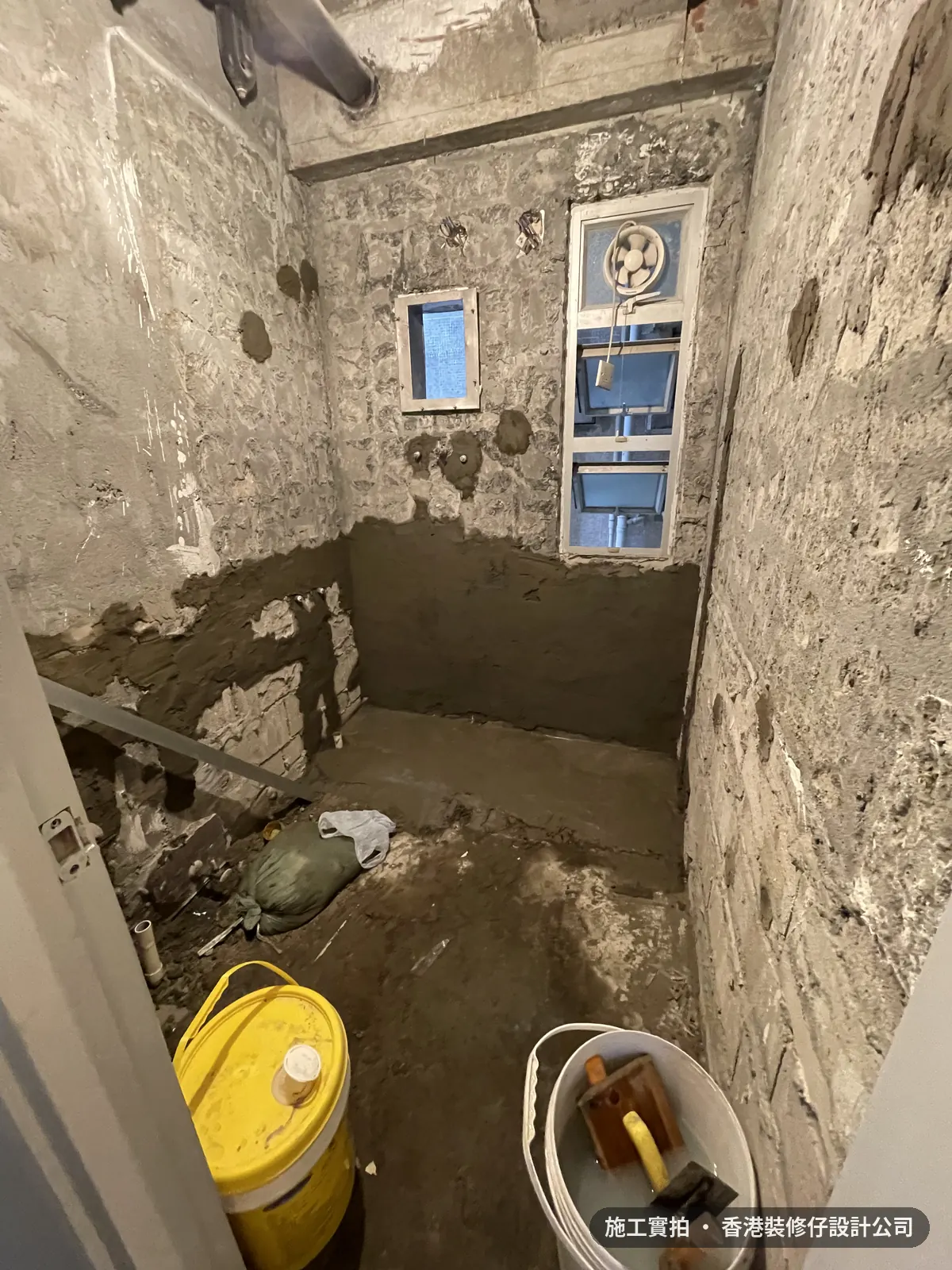
Site photoHong Kong · Plastering, screeding and tiling · April 2022 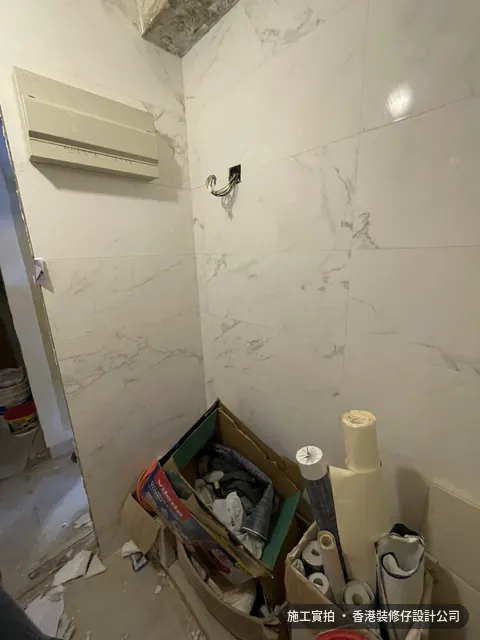
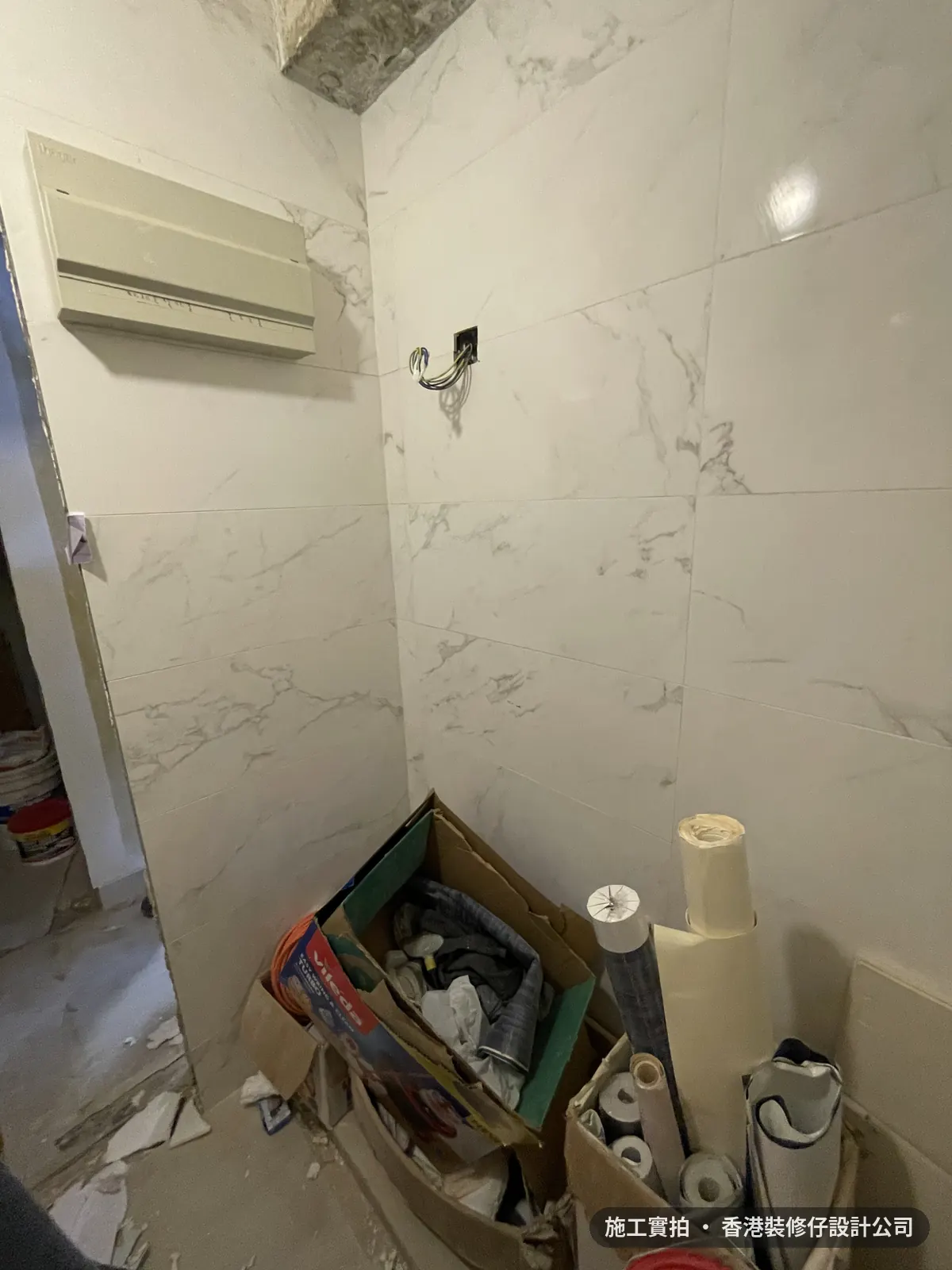
Site photoHong Kong · Tiling · May 2021 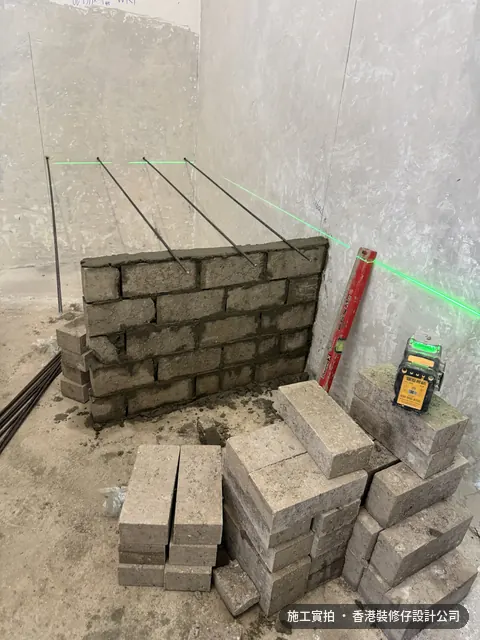
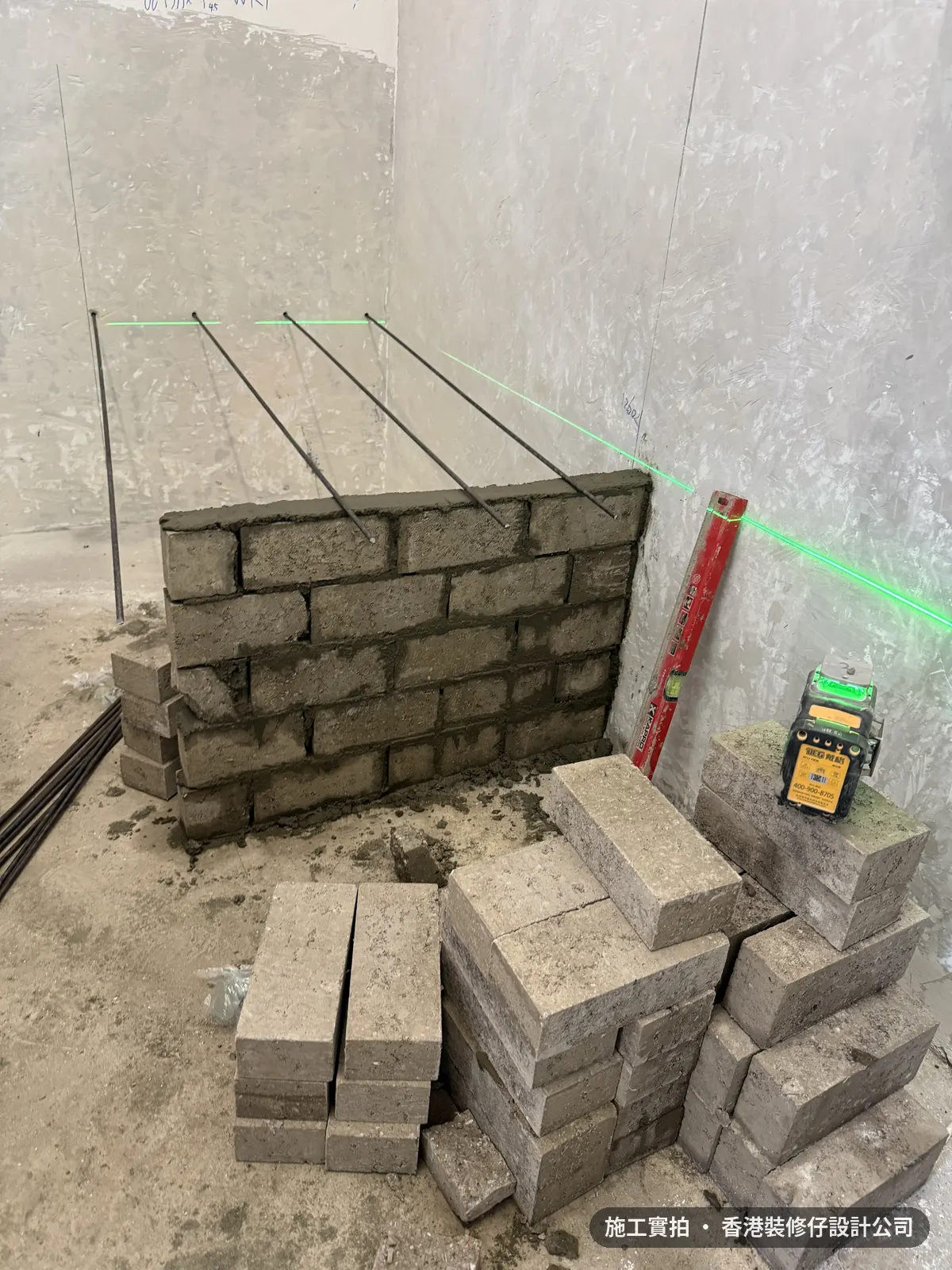
Site photoHong Kong · Plastering, screeding and tiling · October 2025 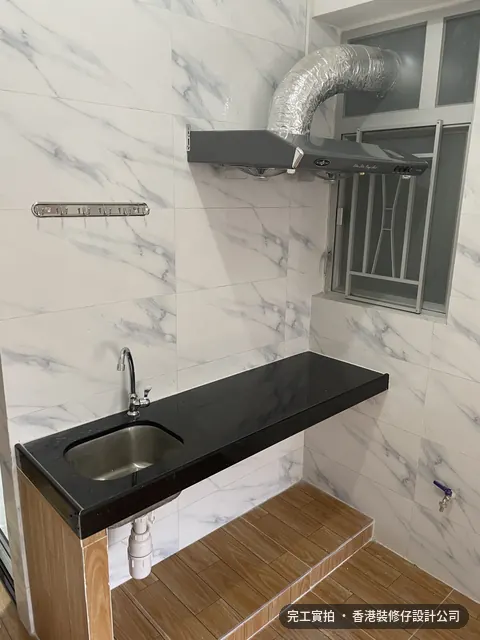
Completed project photosHong Kong · Tiling · July 2021 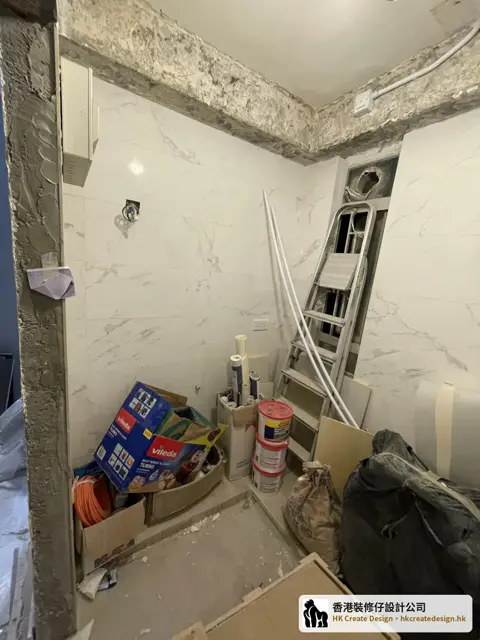
Site photoHK Create Design masonry project photos 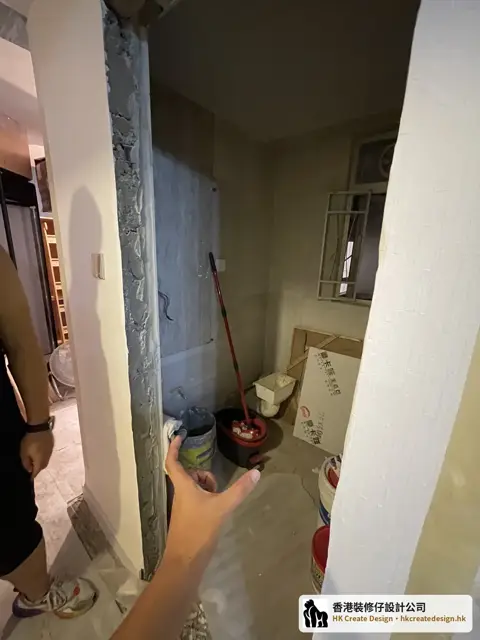
Site photoHK Create Design masonry project photos 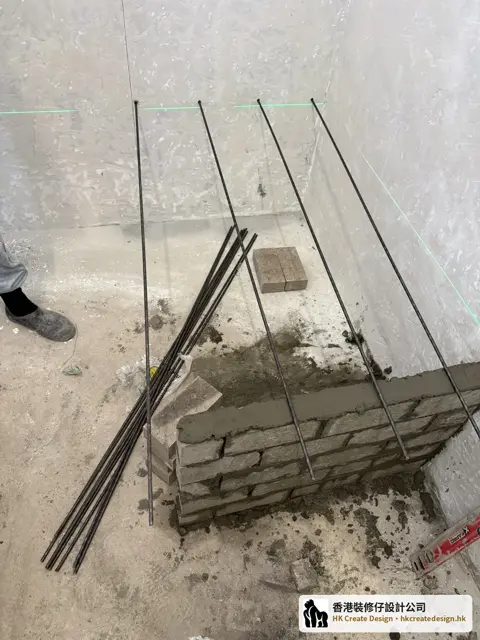
Site photoHK Create Design masonry project photos
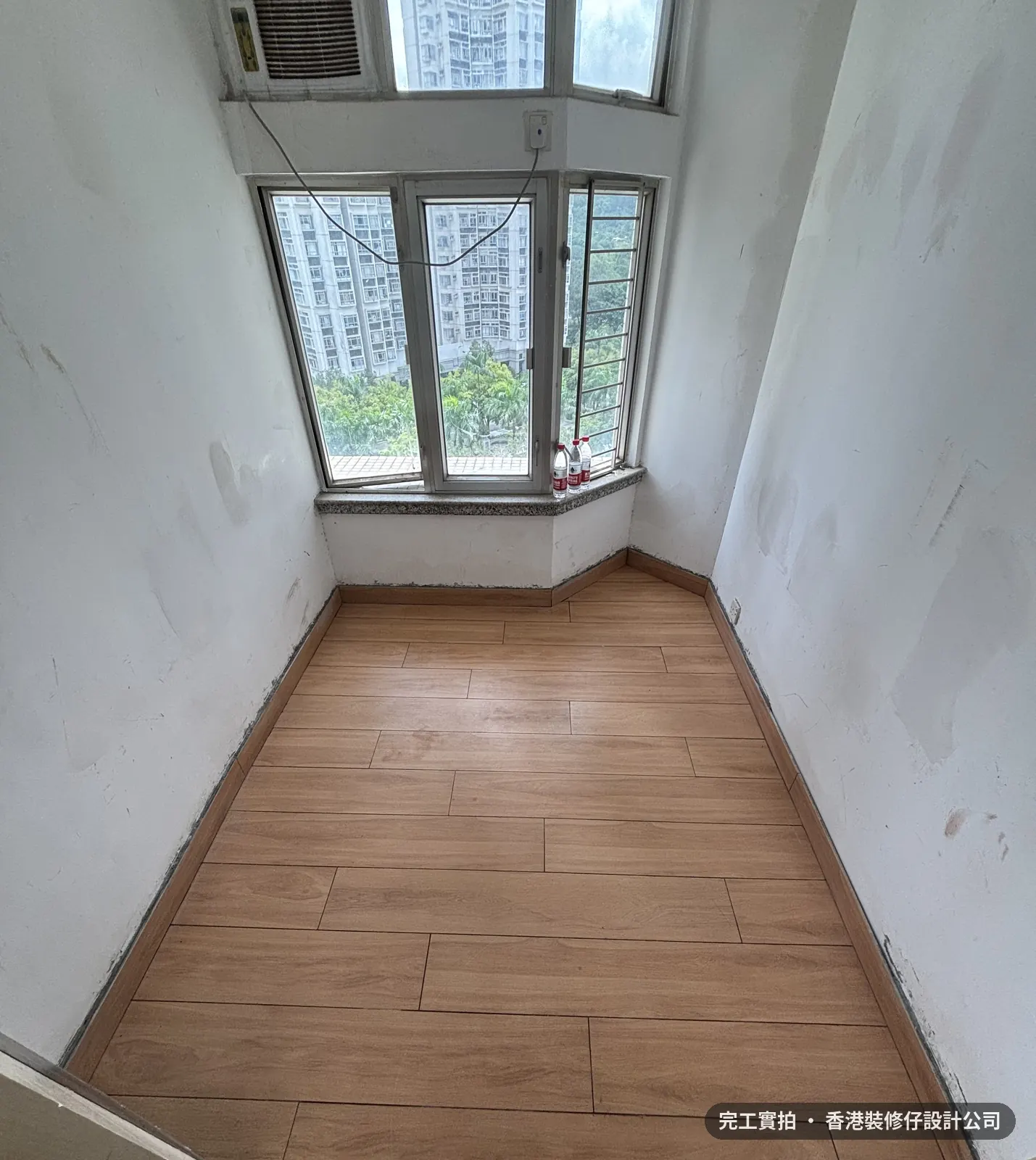
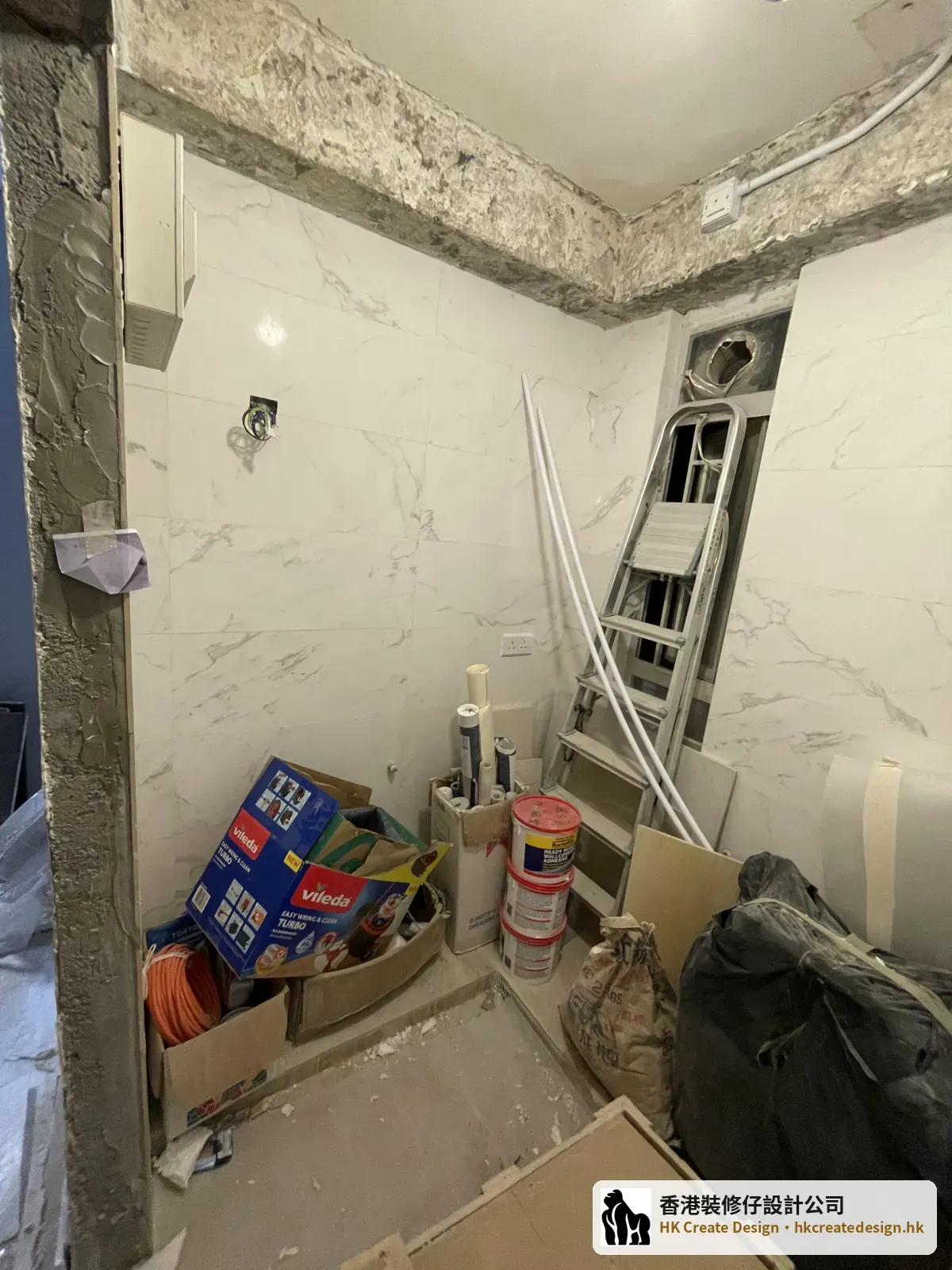
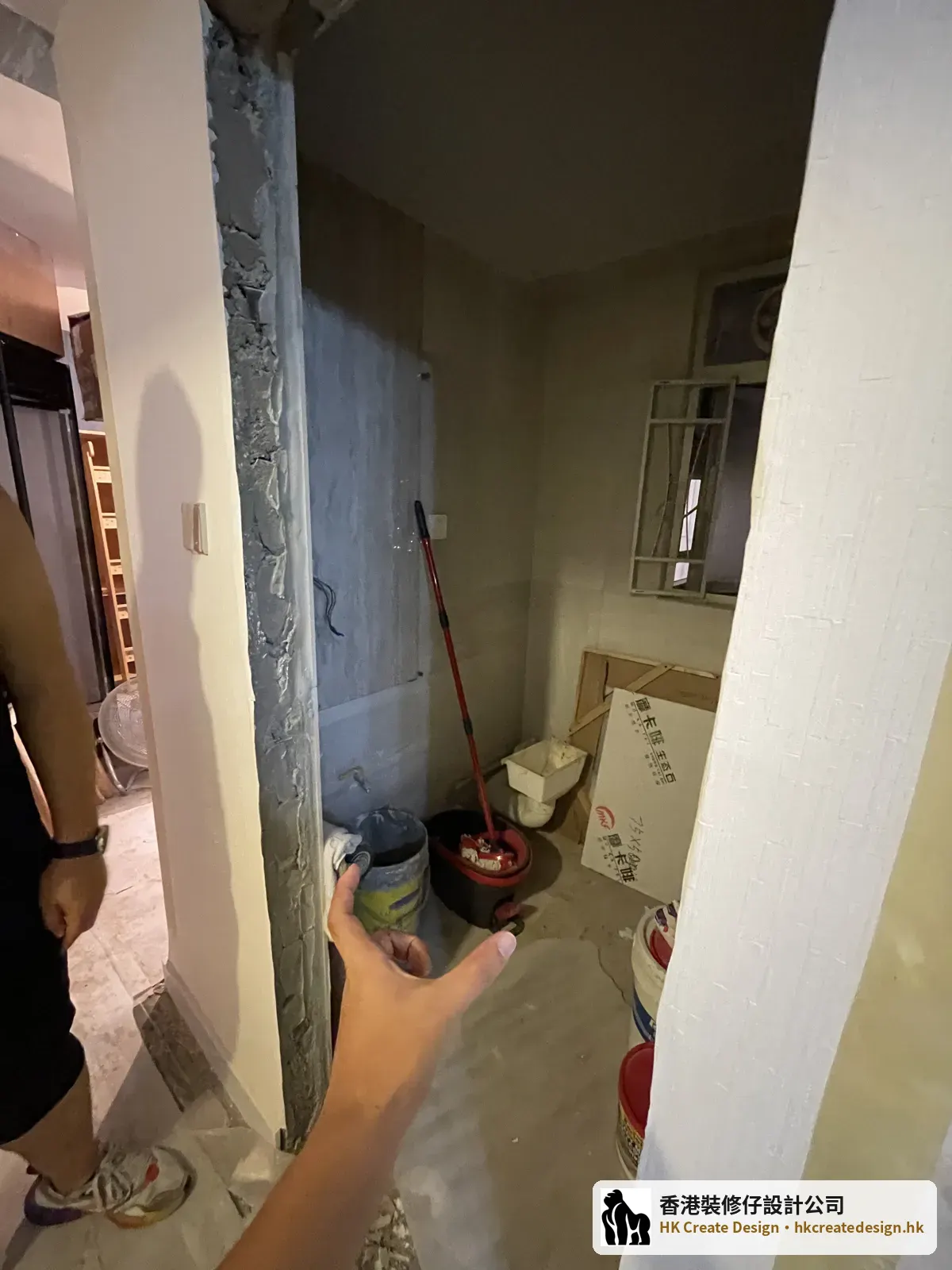
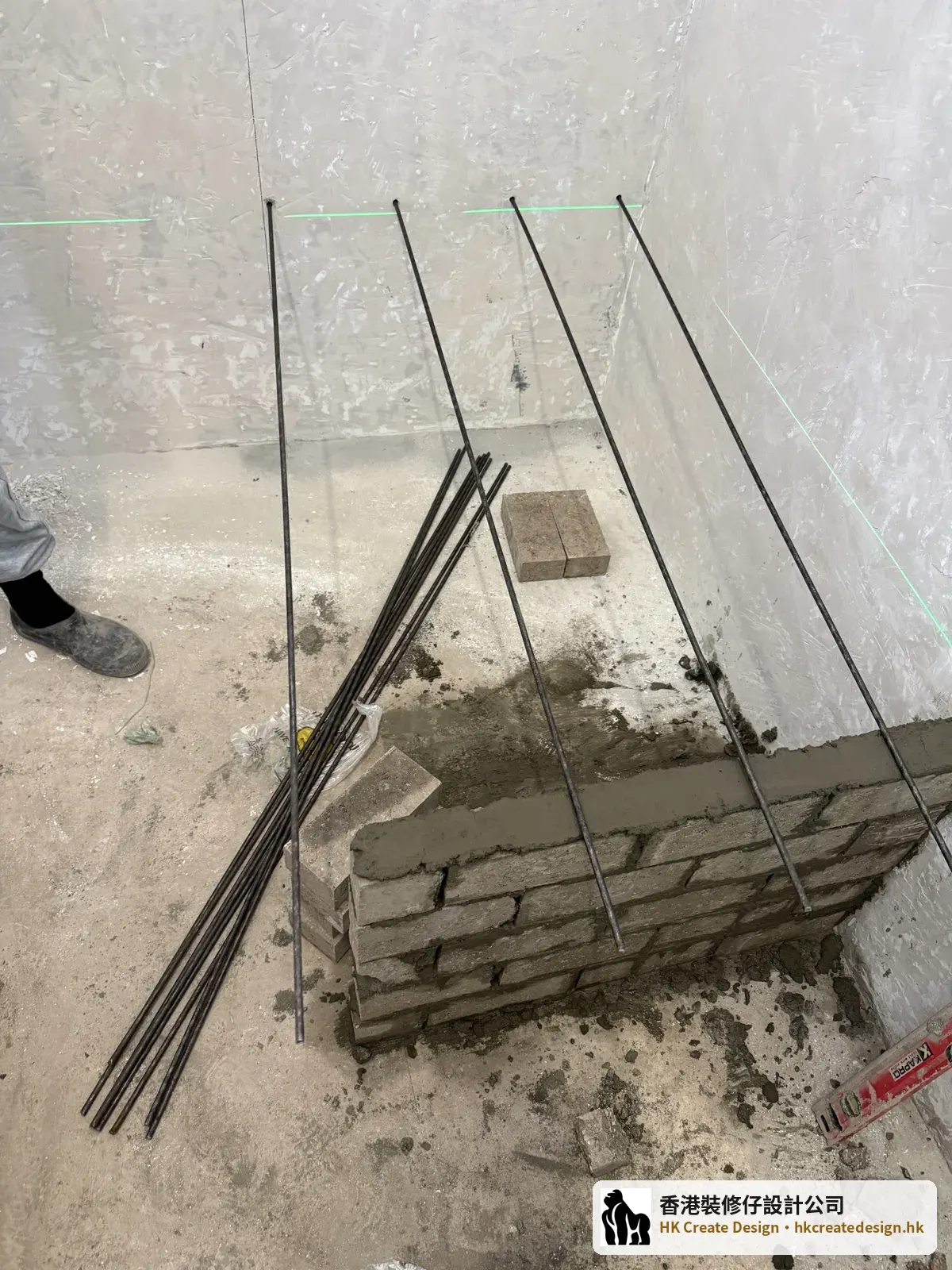
View all 11 imagesMasonry and tiling project photos Send photos on WhatsApp for a free quote
02
Four main stages of masonry work
Masonry needs time for each stage. The standard sequence is:
Rendering walls and levelling floors
Strip-out often exposes uneven brick or concrete. The installer re-renders the walls with cement-and-sand mortar and screeds the floor level before painting or laying timber flooring. An uneven base can leave floorboards noisy or unstable.
Building brick partitions
Tradespeople use lightweight blocks or red bricks to build new partitions. Lightweight blocks reduce loading and provide some sound insulation. Red bricks are still used in moisture-sensitive details such as the base of a shower.
Waterproofing
Use a suitable waterproofing system in kitchens, bathrooms and on balconies, for example a system from Sika or Fosroc. The method described uses at least two coats applied in crossing directions to avoid gaps, with coverage to 1.8 metres or full height in the shower.
Wall and floor tiling
For floor and wall tiling, check that joints align, corners are neatly mitred at 45 degrees or finished with trims, and grout joints allow for movement that could otherwise cause tiles to lift.
03
Cement-and-sand mortar or tile adhesive: how to choose
Hong Kong masonry quotations often distinguish cement-and-sand mortar from tile adhesive. Choosing the right bonding material reduces the risk of tiles coming loose.
- Traditional cement-and-sand mortar is mixed on site with water. Its lower cost suits floor levelling and small, absorbent tiles such as mosaics and ordinary ceramic tiles. It has lower bond strength, and errors in the site mix can leave hollow spots.
- Specialist tile adhesive
Tile adhesive is a factory-mixed, polymer-modified cement-based material.High bond strength and good flexibility. Large-format floor tiles such as 600x1200mm and low-absorption vitrified tiles are popular.A suitable tile adhesive is strongly recommended, especially when fixing wall tiles, to keep them securely bonded.
Homeowner tip: allow for a flood test
After waterproofing the bathroom and before laying floor tiles, carry outa flood test (ponding test). Block the bathroom drain, fill the floor with a few centimetres of water and leave it for 24 to 48 hours. Check the ceiling in the flat below and the external wall at the same level for signs of moisture. Confirm there are no leaks before tiling.
04
How to check masonry workmanship yourself
Homeowners can make the following preliminary checks after completion without specialist equipment.
1. Tap the tiles to check for hollow spots
Tap the four corners and centre of a tile gently with a hollow-spot testing rod, a coin or a key. A hollow sound can indicate a void under the tile. This guide uses 5% of the tile area as a guide for small edge voids. Ask for tiles with a hollow centre or extensive voids to be lifted and relaid, as they can crack or trap moisture.
2. Pour water to check the fall towards the drain
Pour a basin of water onto the shower or bathroom floor. It should run promptly towards the drain without pooling around it. The fall should work even where it is barely visible.
3. Inspect joint alignment and grout
Check that joints are straight and evenly spaced, that grout fills them smoothly without holes, and that finished edges are level and free of sharp corners.
05
Summary
Much of the masonry will be hidden by flooring and paint. Its quality affects how the home performs. Allow for proper waterproofing and suitable bonding materials. Ask the contractor how high the waterproofing will extend, whether a flood test is included and which tile adhesive will be used.
2026 PRICE LIST
2026 masonry and waterproofing rates for popular items
HK$22/ft from
Minimum charge: HK$1,850
Level the floor with cement-sand screed and form falls to the drain in wet areas. Differences over 30 mm are assessed separately.
HK$93/ft from
Minimum charge: HK$3,700
Build a lightweight-block or red-brick partition with wall ties and render both faces.
HK$4,850/ room from
Two coats of Sika 107 across the whole floor, up the walls to 6 ft and to full height in the shower. Includes a 24-hour flood test. Area above 40 sq ft is charged under C01.
The same work is charged once: C04 flood test (24–48 hours)
HK$78/ft from
Minimum charge: HK$3,250
Set out the tile layout, bed the tiles with adhesive or adhesive mortar, grout the joints and finish the edges.
HK$120/ft from
Minimum charge: HK$3,700
Apply adhesive to the substrate and tile backs, use levelling clips and allow for two-person handling.
HK$13,000/ room from
Strip the tiles back to the substrate, repair it, apply two waterproofing coats and flood-test. Tiling is excluded. C01, C02, C04 and A10 are not charged again for the same bathroom work.
The same work is charged once: C01 SikaTop® Seal-107 waterproofing per sq ft, C02 waterproofing one bathroom of about 30–40 sq ft, C04 flood testing for 24–48 hours, and A10 strip-out and clearance of one bathroom
Rates are from our 2026 price list. Select only the items you need. A process already included in a package is charged once. We confirm final prices in writing after site measurement.Calculate each item
FAQ
Masonry and tilingFrequently asked questions
01What does masonry work usually include?
Typical items include rendering and levelling stripped walls and floors, building brick partitions, waterproofing beneath kitchen and bathroom finishes, laying wall and floor tiles, sealing around window frames and installing marble thresholds.
02How high should bathroom waterproofing extend?
This guide recommends waterproofing shower walls to at least 1.8 metres, preferably up to the suspended ceiling at around 2 metres. It gives 0.3 to 0.6 metres for other bathroom walls and 0.3 metres for kitchen walls.
03What is a hollow tile, and what should you do if you find one?
A hollow spot is an air gap where a tile has not fully bonded to the mortar or adhesive. Minor edge voids may be acceptable. Large voids or a hollow centre make cracking under load or temperature changes more likely. Ask the tiler to lift and relay affected tiles.
04How long should a flood test last?
This guide recommends at least 24 hours and preferably a 48-hour flood test. Agree access with the downstairs owner beforehand, then inspect their ceiling together for water stains.
05Is it safe to put large floor tiles on a wall, and what material should be used?
Yes, and it is increasingly common. Floor tiles are usually heavy and absorb very little water.Do not fix these tiles to walls with traditional cement-and-sand mortar, as they can fall and injure someone. Use an appropriate specialist tile adhesive and, where specified, coat the backs of the tiles as well.
06Can I save money by tiling over old tiles?
Tiling over existing tiles is technically possible with a specialist adhesive. We generally advise against it in Hong Kong. It reduces interior space, and an existing hollow bed or failed waterproofing can lead to both layers coming loose. Removing the old finish allows the base to be checked and rebuilt.
07What is the difference between a linear foot and a square foot on a masonry quote?
A square foot measures area (length × width) and is used for floor screeding and tiling. A linear foot measures length and is used for skirting, stone window sills and shower kerbs. Confirm the unit and calculation before signing.
08Why does masonry often take the longest?
Many masonry stages need time to dry. Render must set, the first waterproofing coat must dry before the second, and the finished waterproofing may require a 48-hour flood test. Rushing can compromise stability.
09Does a supply-and-install renovation quotation include tiles?
In most masonry quotations, a supply-and-install price includes base materials such as cement, sand, waterproofing products and grout.Homeowners usually buy and pay for the finishing tiles separately at a tile supplier. The quotation should define this clearly.
10Are hairline cracks in finished wall tiles caused by the tiles or the installation?
Either is possible. A web of fine cracks in the glaze can be associated with expansion and contraction of the tile. A large crack through the tile may indicate insufficient joint spacing or movement in the wall.