01
Why choose copper for drinking-water pipes?
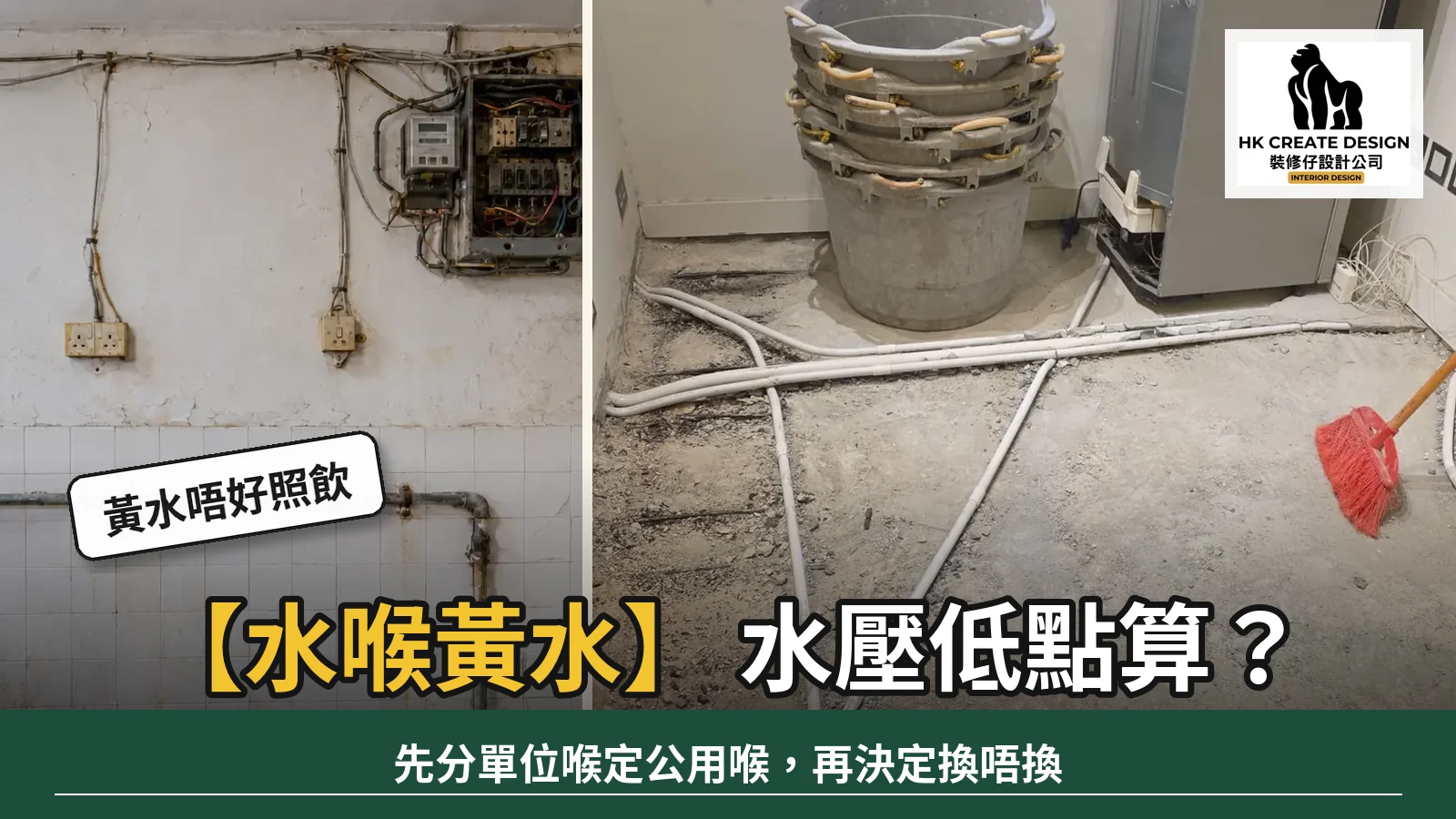
Older unlined galvanised steel pipework can cause yellow water. WSD notes that corrosion can start after several years and discolour water left standing in the pipe. Their use in new installations was prohibited from 23 December 1995.[8]
WSD's technical requirements list copper as suitable for hot and cold fresh water.[2] Suitable copper pipe and fittings can serve both domestic cold and hot water. Our standard is copper for drinking-water pipework rather than unlined galvanised steel.
Choosing copper is only the first step. Pipe size, wall thickness, compatible fittings and jointing method all affect performance.
- Identify the existing pipe material
- Copper for drinking-water pipework
- Avoid unlined galvanised steel drinking-water pipes
02
Check the brand, standard and dimensions marked on the pipe
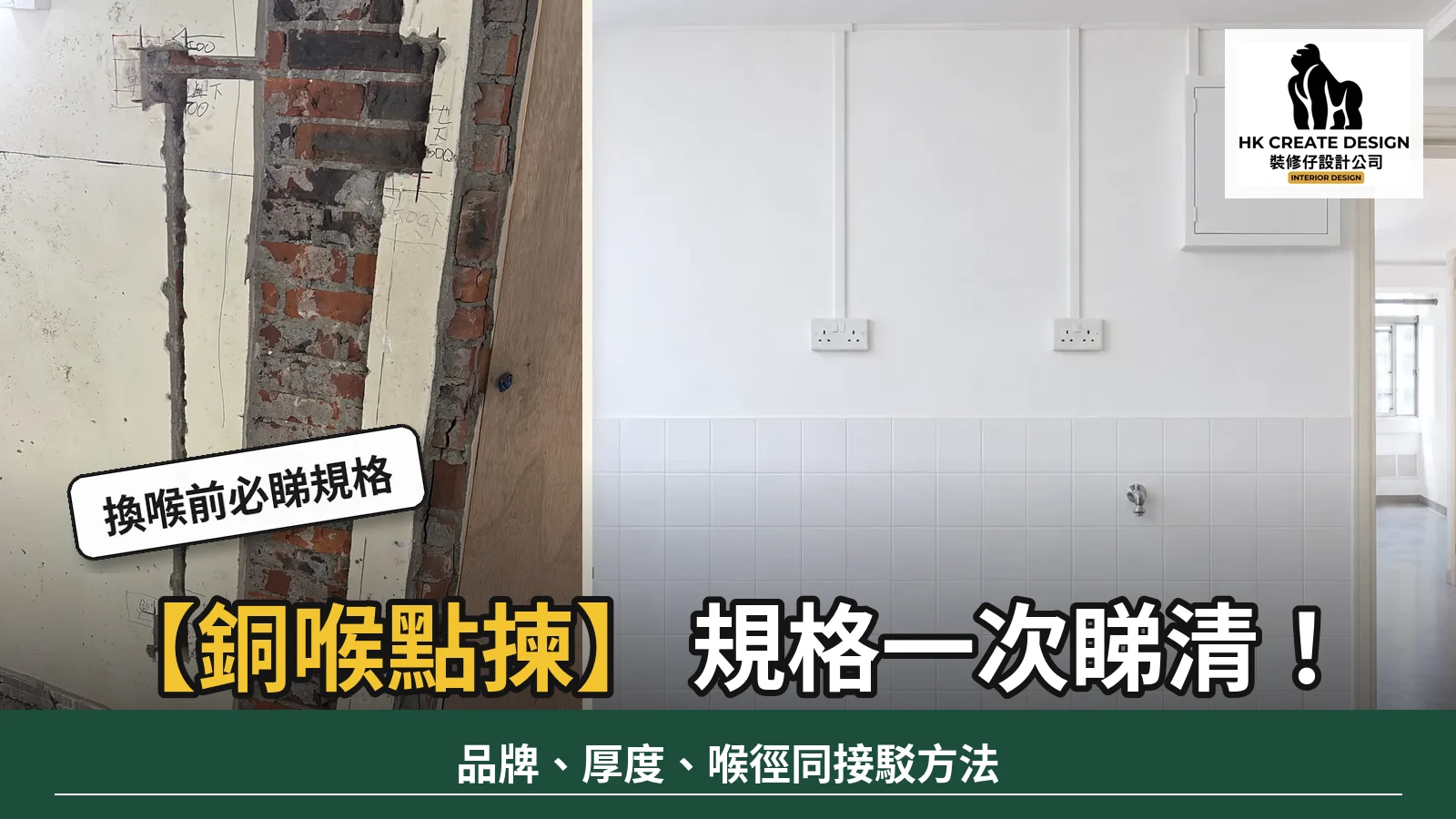
WSD's GA technical requirements specify markings on pipes and fitting bodies, including manufacturer's mark or brand, the applicable standard such as BS EN 1057, and nominal size. Some fittings also need a flow direction mark.[2]
Schedule 2 to the Waterworks Regulations lists applicable pipe and fitting standards, including BS EN 1057 for copper tube, the BS EN 1254 series for copper fittings, BS EN 12449 for copper and copper-alloy products, BS EN ISO 9453 for soft solder and BS EN ISO 17672 for brazing filler.[4]
Ask to see and photograph the pipe markings before work starts. The manufacturer, standard and size should match the quote.
- Manufacturer's mark on the pipe
- Applicable standard marked, such as BS EN 1057
- Dimensions match the quote
- Keep a photographic record
You can swipe left or right on your phone to view the complete table.
| Jointing method | Applicable fitting standard | Features | Permission and inspection considerations |
|---|---|---|---|
| Push-fit connector | BS EN 1254-6[2] | Quick installation without an open flame | Check that the exact fittings have General Acceptance |
| Compression fitting | BS EN 1254-2[2] | Demountable, commonly used at taps and angle valves | Tighten correctly and pressure-test |
| Press-fit joint | BS 8537[2] | Crimp using the specified tool | Use tools compatible with the fittings |
| Silver brazing | BS EN 1254-5 fittings and BS EN ISO 17672 brazing filler [2][4] | High joint strength | Brazing filler cadmium content ≤0.01%. [2] |
| Soft soldering (tin-based solder) | BS EN 1254-1 fittings and BS EN ISO 9453 soft solder [2][4] | Traditional method | Outside the minor-nature category. Prior permission is needed and lead testing may apply. [5][3] |
Standard numbers come from WSD technical documents. The licensed plumber selects the jointing method for the site and the applicable permission requirements. [2][3][4][5]
03
Understanding copper tube wall thickness and diameter
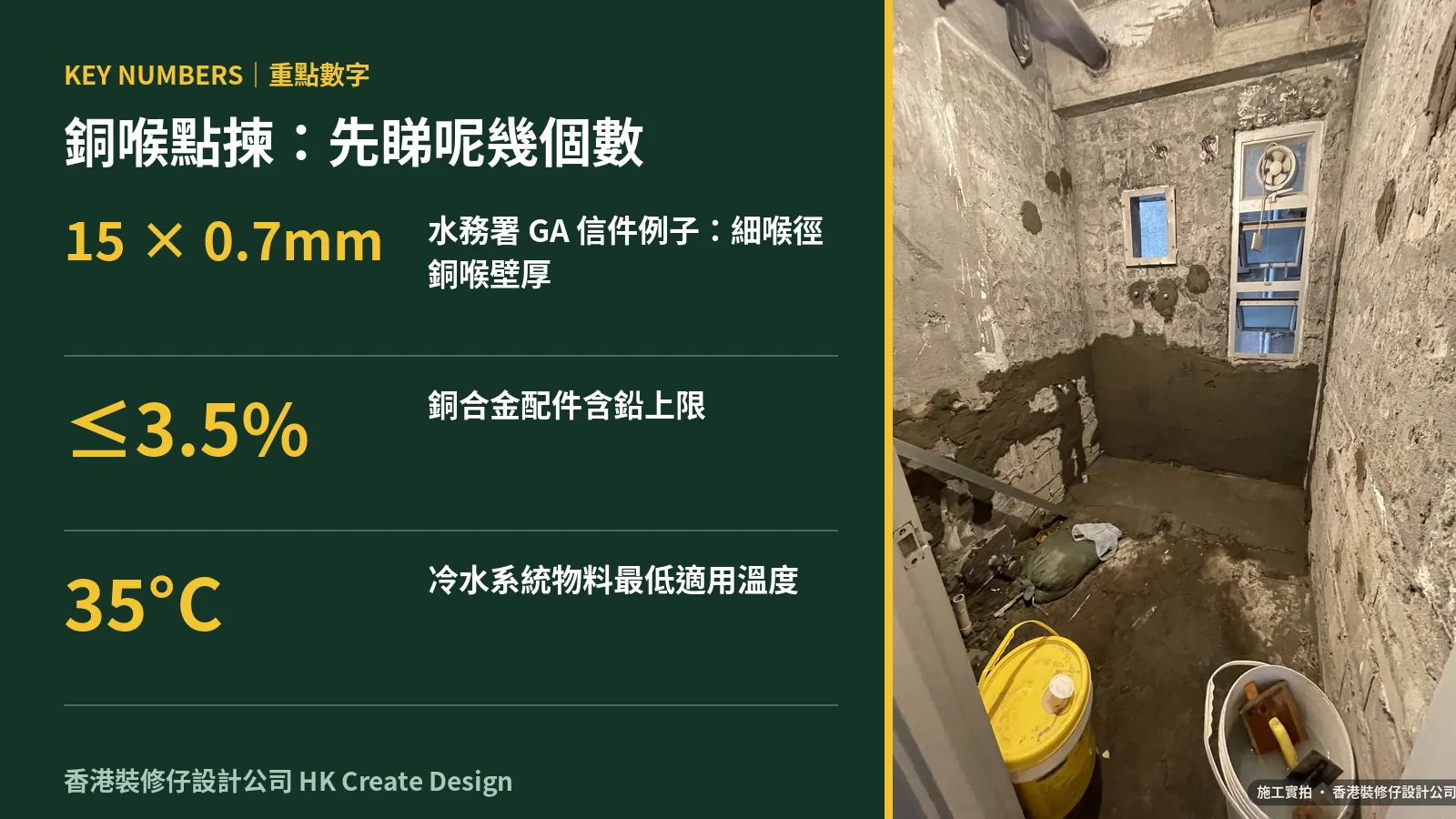
Copper tube dimensions are commonly stated as outside diameter × wall thickness. One WSD GA letter for Class X tube lists 15 × 0.7 mm, 22 × 0.9 mm, 28 × 0.9 mm and, at a larger size, 35 × 1.2 mm.[1] These dimensions describe this particular product. Other manufacturers or classes may differ. Check the product's own GA letter.
WSD's application guide generally specifies pipes of at least 20 mm. A branch serving one draw-off point and no longer than 3 m may be 15 mm.[7] Using the smallest pipe throughout can restrict simultaneous flow. An undersized main may give poor flow when two taps run together.
WSD notes that lower floors may experience higher pressure, increasing the risk of damage or bursts. Its guidance also calls for pressure below 6 bar at any draw-off point.[9][7] The licensed plumber will consider pressure reduction where needed.
- Check outside diameter and wall thickness
- Size the main adequately
- The 15 mm branch exception requires one outlet and a maximum run of 3 m
- Check water pressure in lower-floor flats
「Use pipes and fittings meeting WSD requirements and the appropriate lead-free solder. Check certificates and markings so the products can be traced.」
04
Copper pipe brands we commonly use
Our commonly used copper pipe brands include Wednesbury, Kembla (Kempress), LAWTON, OTTO and OPAL. Fittings include Pegler (Pegler Yorkshire), with Tectite/ENDEX for push-fit and brazed connections as applicable. We use fittings accepted for the intended WSD application.
Check compatibility within the system. A push-fit connector must match the tube outside diameter and surface condition, while press fittings require the correct tooling. Use components tested for use together.
Look up the exact product in WSD's General Acceptance directory. The Water Authority issues a GA letter for an accepted product.[6]
- Match the pipe and fittings
- Use compatible system components
- Look the product up in the GA directory
05
Comparing push-fit, press-fit, brazed and soft-soldered joints
Push-fit connectors are covered by BS EN 1254-6, compression fittings by BS EN 1254-2, press fittings under the cited BS 8537, capillary fittings by BS EN 1254-1 and short brazing fittings by BS EN 1254-5.[2]
Soft soldering uses a tin-based solder conforming to BS EN ISO 9453 with no more than 0.07% lead. Brazing, often called silver brazing, uses filler conforming to BS EN ISO 17672 with no more than 0.01% cadmium.[2][4]
One important difference is permission. WSD's minor-nature criteria for this work exclude soft-soldered copper joints.[5] The English application guide also specifies prior Water Authority approval for soldered copper pipework where applicable.[7] The guide also addresses non-destructive lead testing of soft-soldered joints and the exemption for the specified integral solder-ring fittings.[3]
State the jointing method in the quote. Push-fit and soft-soldered joints on the same pipe route can entail different permission and inspection procedures.
- Specify the jointing method in the quote
- Soft soldering requires prior permission
- Solder must comply with the lead limit
- The licensed plumber selects the method
06
Copper pipe routing, penetrations and fitting pretreatment
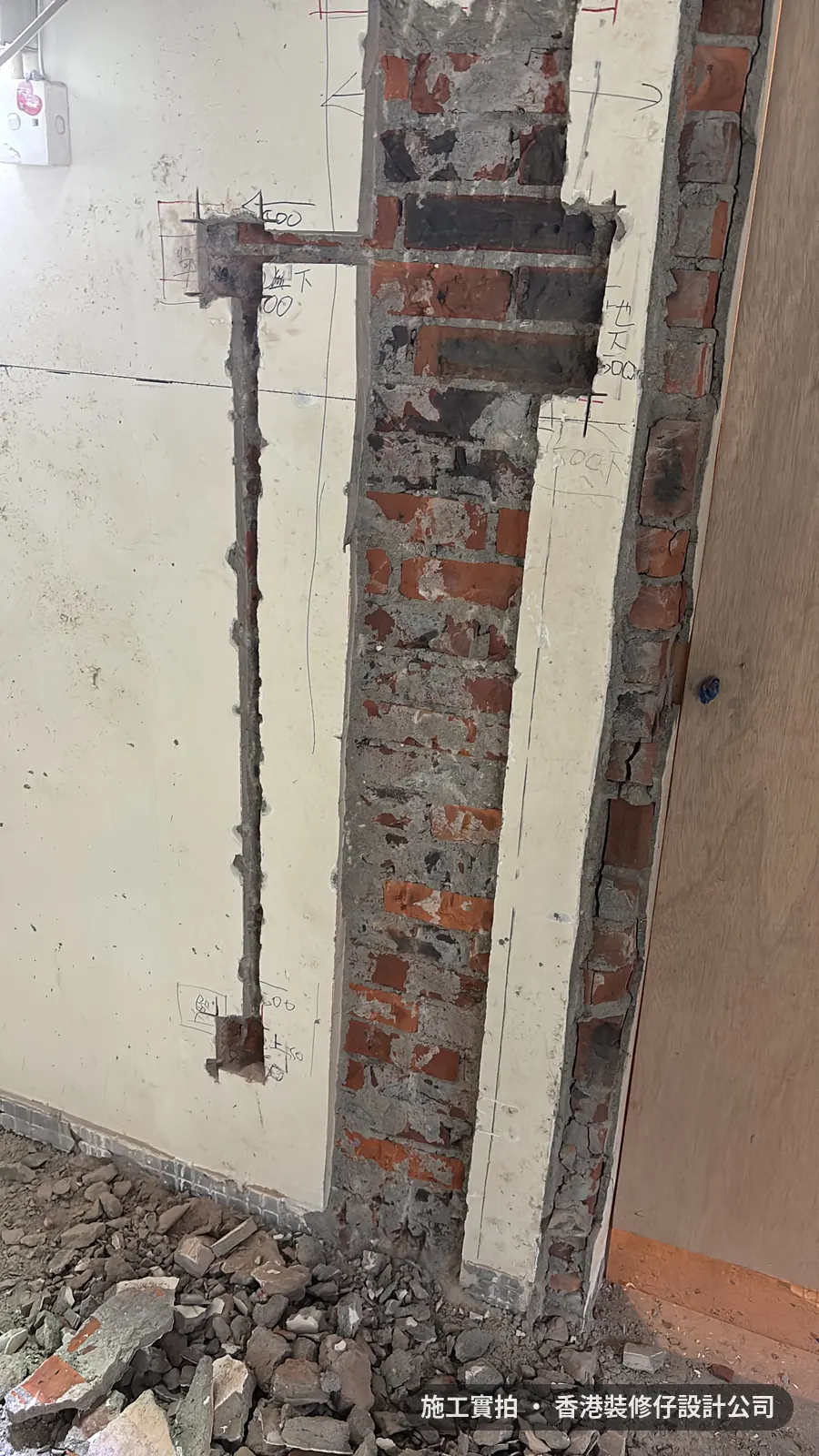
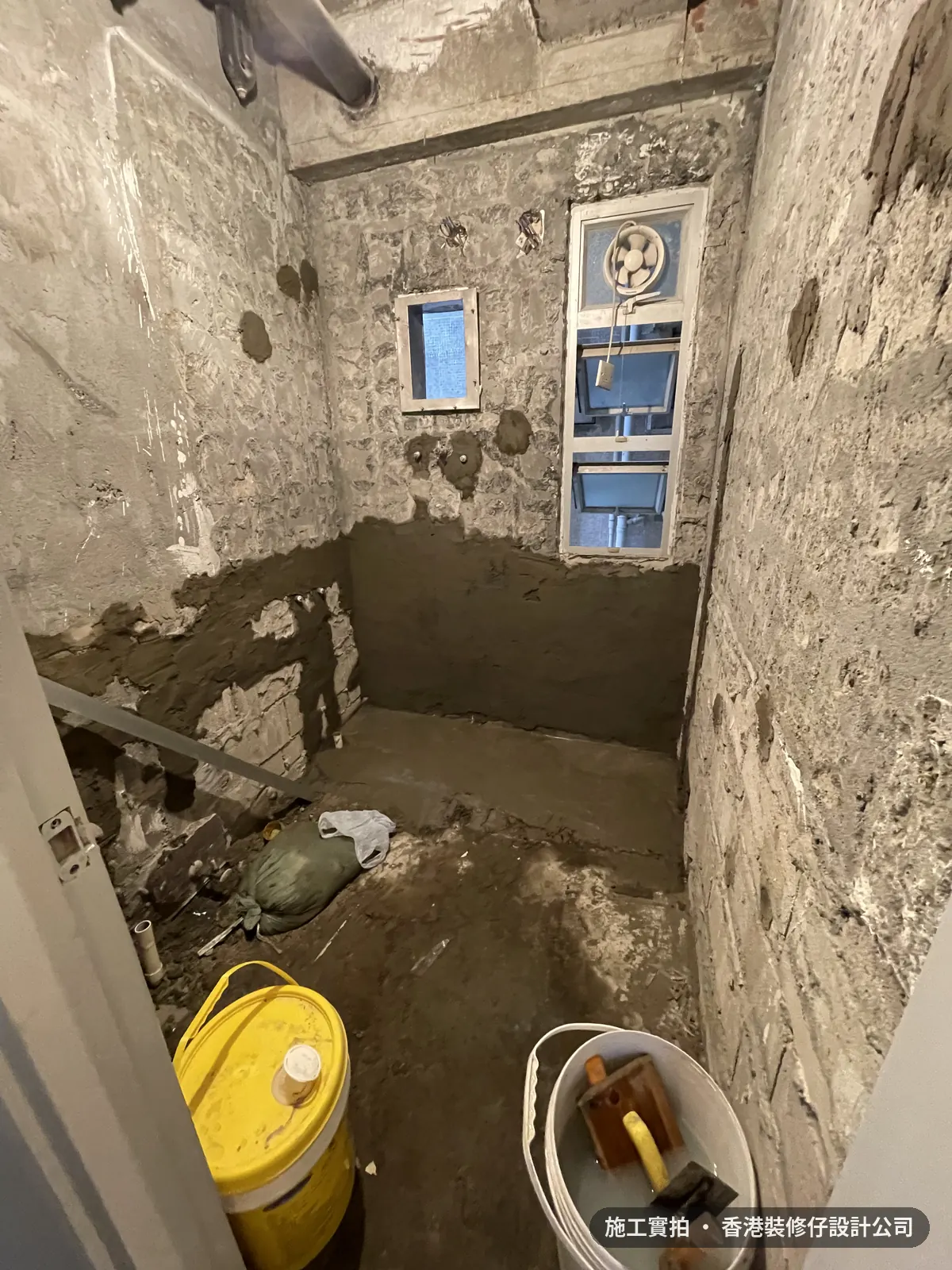
The English application guide prohibits embedding pipe routes lengthwise in structural walls, columns or beams. They may run in render or screed. Permitted penetrations through floors, beams or walls require sleeves.[7] Allow for chase depth without cutting into structural elements to conceal pipes.
The guide specifies five days of immersion for the relevant copper-alloy fittings before installation, with daily water changes and a covered container to reduce metal leaching.[3] After installation, the plumber disinfects the system under the applicable WSD procedure. The cited method uses at least 30 ppm free residual chlorine and at least 30 minutes of contact, followed by flushing.[3]
We mark the route before chasing, identify structural walls and use the render layer wherever appropriate. We photograph routes before enclosure and give the photos to the owner so future drilling can avoid the pipes.
- Keep longitudinal pipe runs out of structural members
- Sleeve pipe penetrations through walls and floors
- Pretreating fittings
- Photograph pipe routes before closing walls
Example 1: 15 mm or 20 mm for a bathroom branch pipe?
Assumptions
- The bathroom has two outlets, a basin and a shower.
- A 2.5 m branch runs from the main to a basin and serves that basin only.
- The branch from the main to the shower is 4 m long.
How to calculate quantities
- WSD guidance generally requires 20 mm or more. A branch no longer than 3 m supplying one draw-off point may be 15 mm. [7]
- Basin branch: at 2.5 m, it is within 3 m and serves one outlet. A 15 mm branch may be suitable.
- Shower branch: 4 m exceeds the 3 m limit for the 15 mm exception. Use the applicable size of at least 20 mm.
- A main serving two outlets is outside the single-outlet exception. Use the applicable size of 20 mm or more.
A bathroom may require different sizes for short branches, longer branches and mains. Show each size in the quote.
The licensed plumber selects the actual size and corresponding copper tube outside diameter for the specification and pressure. This example illustrates the rule. [7]
07
Common pitfalls when replacing copper pipework
1. A quote saying only “copper pipe” leaves no brand or size to trace. 2. Partial replacement may retain the source of discolouration. WSD identifies corroding pipework and unclean tanks as common causes of yellow water.[10]
3. Incompatible fittings or insufficient push-fit insertion can cause failure. 4. Pressure-test before closing the wall. Our G items include testing and recording as directed by the licensed plumber.[13] 5. Assuming soft soldering can proceed without an application on the same basis as an otherwise qualifying push-fit repair.[5]
6. Choosing taps for appearance alone. Taps and angle valves must also meet WSD requirements. Clients choose their taps and sanitaryware and we check compliance before installation.
- Record brand and dimensions in the quote
- Avoid retaining corroded old pipe in a new run
- Compatible fittings
- Pressure testing before wall closure
- Taps also need to meet applicable requirements
08
Copper pipe replacement handover checklist
At handover, check photos of the pipe markings and the pressure-test record. Run every outlet to check flow and leaks. If the work needed permission, obtain the WSD documents from the licensed plumber.
For work requiring permission, WSD conducts a final inspection. For repiping occupied buildings, water samples are taken after at least 30 minutes of stagnation, with metal samples taken first. Criteria include lead ≤10 µg/L, copper ≤2,000 µg/L, nickel ≤70 µg/L, turbidity ≤3.0 NTU and colour ≤5 Hazen.[3]
Owners need not carry out their own water tests. Request the applicable inspection and test records rather than relying on the absence of a visible leak.
- Photograph of pipe markings
- Pressure test records
- Run each outlet
- WSD documents
You can swipe left or right on your phone to view the complete table.
| What to check | WSD requirements and information | How owners can check |
|---|---|---|
| Pipe markings | Manufacturer's mark or brand, applicable standard such as BS EN 1057 and nominal size required [2] | Photograph the markings before work starts |
| Size × wall thickness | The GA letter example uses size × wall thickness, such as 22 × 0.9 mm. [1] | Match pipe size against the quote |
| General Acceptance (GA) | Pipes and fittings must meet the Water Authority's requirements. Check the GA directory. [6] | Check the fitting model |
| Pipe diameter | Generally at least 20 mm. A branch up to 3 m long serving one draw-off point may be 15 mm. [7] | Confirm with the licensed plumber |
| Pressure at the draw-off point | Pressure at any draw-off point should stay below 6 bar. [7] | Lower-floor flats require particular attention |
These are requirements or examples from public documents. For a specific product, check its GA letter and the licensed plumber's assessment. [1][2][6][7]
09
WSD requirements for copper pipes and fittings
Since August 2015, WSD has strengthened controls on inside services, including testing soft-soldered joints and drinking water for lead and requiring acceptance of pipes and fittings.[11] The GA technical requirements also address lead content in copper alloys, solder composition and product markings.[2]
Check three things: correctly marked pipes and fittings meeting the applicable standards, qualified installers using a compatible jointing system, and the required inspections for work needing permission. These checks matter alongside the brand.
Verify each product's General Acceptance in the WSD directory and its own GA letter. A brand name alone does not establish acceptance.[6]
- Marked and compliant with the applicable standard
- Work undertaken by qualified personnel
- Arrange inspection where an application is required
10
How copper pipework is priced
Our published rates: G02 hot or cold point relocation HK$1,700 per point (chasing, new copper pipe, pressure test and render reinstatement), G03/G04 complete kitchen or bathroom HK$13,300 each, G05 combined kitchen and bathroom supply and drainage replacement HK$22,300.[13]
Our quote identifies the actual specification and price difference between brands. Rebuilding concealed runs or cutting a new route is quoted separately after site measurement.
For detailed price comparisons and worked examples, seePipe replacement pricesguide. For the service scope, seePipe replacementservice page.
- G02 HK$1,700/person
- G05 HK$22,300
- Put material specifications in the quote
Example 2: budget for kitchen copper pipe replacement and a water heater connection
Assumptions
- Kitchen renovation with full hot and cold pipe replacement, including supply and drainage for the sink and washing machine.
- One additional hot and cold point relocation for the water heater.
- Water heater, gas pipework, kitchen cabinets and wall tiles are extra.
How to calculate quantities
- G03 Complete kitchen hot and cold pipework: HK$13,300. [13]
- G02 Changing the hot and cold water pipe locations: 1 × HK$1,700 = HK$1,700.
- Total: HK$13,300 + HK$1,700 = HK$15,000.
Indicative plumbing cost for kitchen copper replacement and a relocated water-heater point: about HK$15,000.
If required, add A09 kitchen strip-out at HK$9,950, C03 waterproofing at HK$4,300 or separate concealed pipe reconstruction. Refer to the written quote after measurement. [13] [13]
11
Can copper be used for both hot and cold water?
WSD's GA technical requirements specify materials suitable for 35°C in cold-water systems. Copper is suitable for hot and cold fresh water and unsuitable for salt water.[2] Copper can be specified for both cold and hot fresh water in homes.
Plan hot and cold routes separately. Hot water runs from the heater to the kitchen or bathroom outlets. Cold water comes from the incoming stop valve. Keep parallel runs apart so heat from the hot pipe does not warm the cold supply.
Decide the water heater position before replacing pipes. A longer run means a longer wait for hot water and more water wasted before it arrives. The water heater itself is a separate item covered by our replacement guide.
Flushing water and drinking water use separate systems. Many Hong Kong buildings use seawater for flushing. Copper is unsuitable for salt water, so the material requirements differ.[2]
- Copper suits hot and cold fresh water
- Route hot and cold pipes separately
- Decide the water heater position before repiping
- Treat seawater flushing pipes separately
12
Everyday care of copper pipework
Copper pipework still needs proper use. After several hours of stagnation or an overnight absence, WSD recommends flushing for at least two minutes before drawing water for drinking or cooking.[8]
2. WSD advises against using water from the hot tap for drinking or cooking.[8] 3. Lower floors may have higher pressure and greater risk of pipe damage. Check joints for leaks.[9]
4. Avoid drilling where pipe routes are unknown. We give owners photos taken before the wall is closed for future TVs or shelving. 5. Inspect exposed angle valves and flexible tap hoses periodically: these fittings can age sooner than concealed copper pipes.
If a water bill rises unexpectedly, WSD recommends closing the taps and observing the meter for about 30 minutes. Movement in the last digit may indicate leakage. For the full method, seeleaking pipesarticle.
- Flush after a period without use
- Use cold tap water for cooking
- Keep photos of the pipe routes
- Check angle valves and flexible hoses regularly
You can swipe left or right on your phone to view the complete table.
| Category | Brands we commonly use | Description |
|---|---|---|
| Copper pipework | Wednesbury、Kembla(Kempress)、LAWTON、OTTO、OPAL | We use copper instead of galvanised iron for fresh-water supply. |
| Fittings | Pegler(Pegler Yorkshire) | Choose a suitable joint for the site |
| Push-fit and silver-brazed fittings | Tectite/ENDEX | Push-fit and brazed fittings |
| Taps and sanitaryware | Selected by the client | We charge installation labour, for example HK$1,150 under K02 for a basin and tap. [13] |
Brand depends on availability and site conditions. Fittings must be accepted for the intended use under WSD requirements. Refer to the written quote. [13]
13
Copper and older galvanised steel pipes: what to check before replacement
Many older buildings still have galvanised steel pipework. WSD notes that these pipes may corrode after several years, discolouring standing water. Corrosion can also restrict flow and reduce pressure.[8][10] Unlined galvanised steel pipes have been prohibited in new installations since 23 December 1995.[8]
Replacing galvanised steel with copper usually requires reviewing routes, sizes and joint types. Reusing the old route without checking may be unsuitable.
Retaining a length of corroded galvanised steel can leave the original source of discolouration or restricted flow after copper is installed. If the budget is limited, discuss renewing the incoming main and key outlet runs together.
- Galvanised steel pipe can corrode and become restricted
- Plan the new copper pipe routes
- Check transitions between old and new pipe
14
Common copper replacement issues and how the plumber deals with them
Older walls may conceal water pipes alongside electrical conduits or through beams and columns. Plan new routes without embedding copper pipe lengthwise in structural members. The guide allows pipes in render or screed and calls for sleeves at permitted floor, beam or wall penetrations.[7]
Check the transition between old and new pipes. Full replacement can start at the stop valve downstream of the meter to avoid retaining a short section of old pipe. For local repairs, specify the suitable transition fitting in the quote.
For exposed pipe routes inside cabinets or at ceiling level, allow for appearance and protection. Exposed pipes are easier to maintain but need proper supports and clips. Confirm the detail after inspecting the site.
- Keep longitudinal pipe runs out of structural members
- Start replacement downstream of the main stop valve
- Use a suitable fitting at transitions
- Secure exposed pipework
Example 3: how long to allow for conditioning copper-alloy fittings
Assumptions
- Prepare copper-alloy fittings in accordance with the applicable WSD application guide.
- Begin soaking the fittings on Monday morning.
How to calculate quantities
- The guide requires the specified copper-alloy fittings to be immersed for five days, with daily water changes and a covered container. [3]
- Start on Monday and change the water daily on Tuesday, Wednesday, Thursday and Friday.
- The five-day pretreatment ends on Saturday, when installation can be scheduled.
If pretreatment starts only on delivery, allow at least five days before installing the affected fittings. Order early.
The licensed plumber should confirm whether this procedure applies and follow the applicable WSD requirements. [3]
15
Five questions to ask the plumber about copper pipework
1. Which brand, size and wall thickness? Ask for a specific answer such as 22 mm copper tube. 2. Does the exact fitting have General Acceptance? Check the WSD directory.[6]
3. Which jointing method is proposed: push-fit, press-fit, brazing or soft soldering? Soft soldering requires the applicable permission.[5] 4. Which licensed plumber is responsible? Verify the name in the register.[12] 5. Are pressure testing and wall repairs included? All our G items include pressure testing. G02 also covers render reinstatement.[13]
Clear answers to these five questions tell you more about the installation than the brand alone.
- Brand, size and wall thickness
- General Acceptance (GA)
- Jointing method
- licensed plumber
- Pressure testing and reinstatement
16
Arrange copper pipe replacement with HK Create Design
HK Create Design opened in 2019 and the team has 15 years of project experience. Our licensed plumbing partners carry out drinking-water pipe replacement and we coordinate WSD applications. A one-year workmanship warranty excludes deliberate damage.
For a free quotation from a construction team, contact HK Create Design on WhatsApp 5243 7747. The Wong Tai Sin showroom opens Monday to Saturday, 10:00–18:00. On-site measurement is free through 31 December 2026 for two or more work items, with no deposit. After that, the HK$500 fee is credited against the order.
- WhatsApp 5243 7747
- Book a site measurement
Advice from our tradespeople
「Use pipes and fittings meeting WSD requirements and the appropriate lead-free solder. Check certificates and markings so the products can be traced.」
「Insulate hot-water pipes to reduce heat loss. Address condensation separately on cold surfaces where it occurs.」
「Pressure-test and photograph the routes before walls are closed. Keep the photos to avoid the pipes when hanging pictures or fitting cabinets.」
FAQ
11 practical questions answered
01How do copper and galvanised steel pipes differ?
WSD notes that unlined galvanised steel pipes can rust after several years and turn standing water yellow. Their use in new installations was prohibited from 23 December 1995.[8] Copper is suitable for hot and cold fresh water.[2]
02Which copper pipe brands does HK Create Design use?
Common brands include Wednesbury, Kembla (Kempress), LAWTON, OTTO and OPAL. Fittings include Pegler (Pegler Yorkshire) and Tectite/ENDEX.
03What copper pipe wall thickness do I need?
Check the product specification. One WSD GA letter lists 15 × 0.7 mm, 22 × 0.9 mm and 28 × 0.9 mm.[1] Refer to the specific product's GA letter.
04Can 15 mm copper pipe be used throughout the flat?
Not always. The guidance generally calls for at least 20 mm. A branch serving a single draw-off point and no more than 3 m long may be 15 mm.[7]
05Are push-fit connectors reliable?
Push-fit connectors are covered by BS EN 1254-6.[2] A common method when the fitting is accepted, compatible with the tube, inserted to the specified depth and pressure-tested.
06How do silver brazing and tin-based soft soldering differ?
Tin-based soft soldering of copper pipe is outside the minor-nature category, requires prior permission and can involve lead testing.[5][3] Silver brazing uses brazing filler, which must meet requirements including cadmium content ≤0.01%.[2]
07How can I check whether a copper pipe has General Acceptance?
Check the markings on the tube against the WSD General Acceptance directory.[6]
08Can copper pipe be embedded in a structural wall?
The guide permits pipes in plaster or screed but prohibits embedding pipe runs lengthwise in structural elements. Sleeve penetrations through walls and slabs.[7]
09Does copper pipe replacement require a Water Supplies Department application?
It depends on the work. Altering an inside service generally requires written permission, applied for by a licensed plumber. HK Create Design coordinates the application.[12]
10How much does moving one copper pipe connection cost?
G02 hot or cold water point relocation costs HK$1,700 per point, including chasing, new copper pipe, pressure testing and render reinstatement. A separate small-job visit has a HK$2,000 minimum.[13]
11Can I buy my own taps?
Yes. Clients choose their taps and sanitaryware and we charge for installation. Select products meeting WSD requirements.
CHECK THE BASIS
Data and technical basis, sources can be verified
- [1]Water Supplies Department: General Acceptance Letter ZC20250469, example copper tube sizes Accessed: 2026-11-03
- [2]Water Supplies Department: Enhanced Technical Requirements for General Acceptance 2.0 Accessed: 2026-11-03
- [3]Water Supplies Department: Guide to Application for Water Supply (October 2026 edition) Accessed: 2026-11-03
- [4]Water Supplies Department: Standards for Pipes and Fittings, Schedule 2 to the Waterworks Regulations Accessed: 2026-11-03
- [5]Water Supplies Department: Minor works Accessed: 2026-11-03
- [6]Water Supplies Department: Make Smart Choices of Pipes and Fittings (General Acceptance, GA) Accessed: 2026-11-03
- [7]Water Supplies Department: Guide to Application for Water Supply (January 2025) Accessed: 2026-11-03
- [8]Water Supplies Department: Water Facts Accessed: 2026-11-03
- [9]Water Supplies Department: How inside-service water supply systems work Accessed: 2026-11-03
- [10]Water Supplies Department: water supply problems in private estates and buildings and maintenance of inside service systems Accessed: 2026-11-03
- [11]Water Supplies Department: enhanced control of inside services Accessed: 2026-11-03
- [12]Water Supplies Department: Employing a Licensed Plumber Accessed: 2026-11-03
- [13]HK Create Design 2026 detailed project budget and public price list Accessed: 2026-11-03