01
First response to a leaking water pipe
If water is spraying or pooling, isolate the supply before taking photos. WSD advises closing the stop valve beside the meter and engaging a licensed plumber.[1] Meters are commonly outside the flat, in a rear staircase or in a meter room. Locate yours in advance.
Keep away from wet switches, sockets and distribution boards. Isolate the electricity only if you can do so safely from a dry location. Otherwise, contact building management and a registered electrical contractor. Once the leak has stopped and the electrical hazard is cleared, remove standing water and photograph the damage, recording the time and extent.
Old stop valves may corrode, seize or fail to close. Do not force a stiff valve with tools: it may break. Contact management and, if needed, a licensed plumber.
- Locate the meter and stop valve
- Isolate the supply when a leak is found
- Keep away from wet electrical equipment. Isolate the power only from a safe, dry location.
- Take photos for the record
02
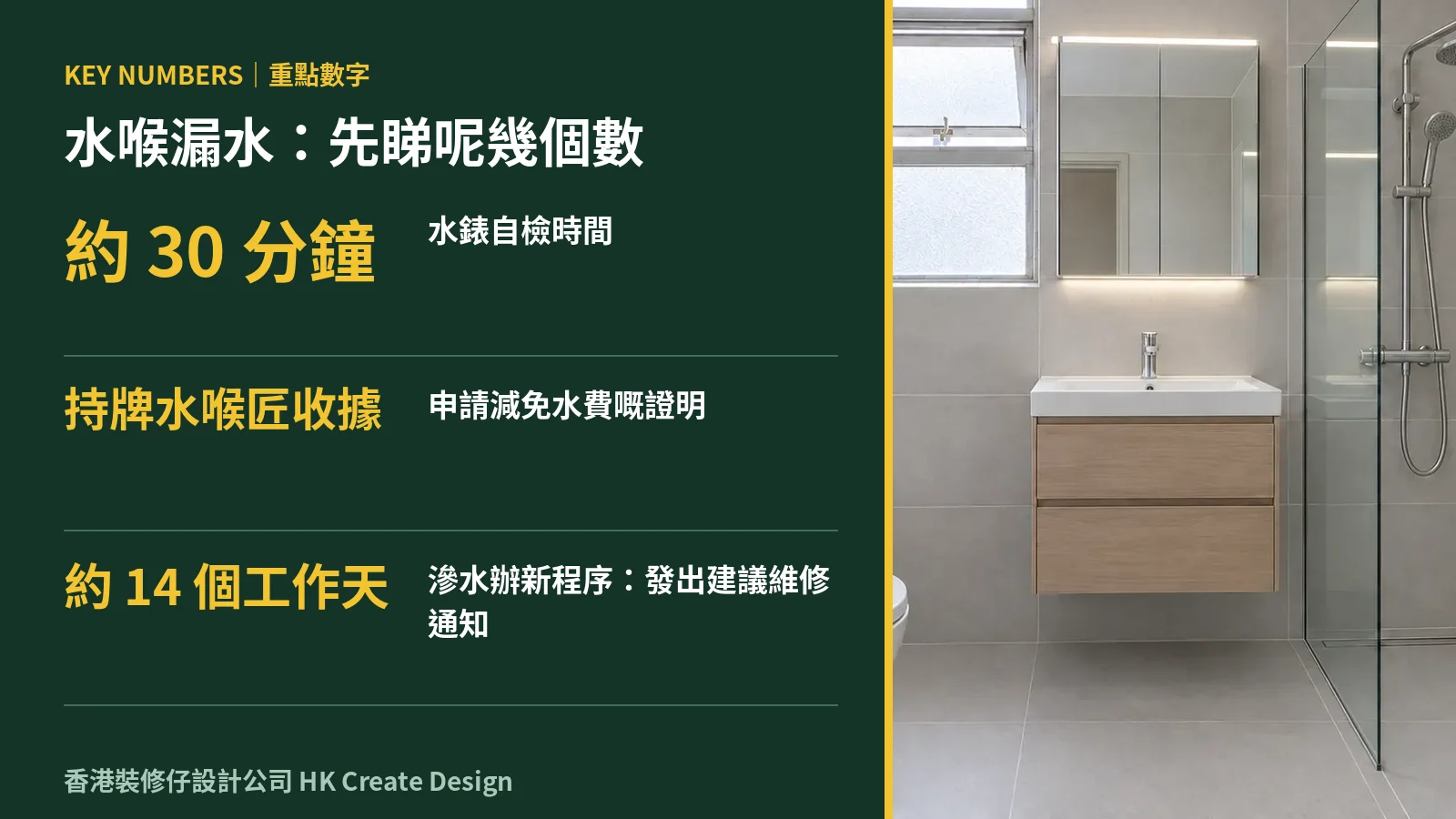
How to carry out a 30-minute water meter check
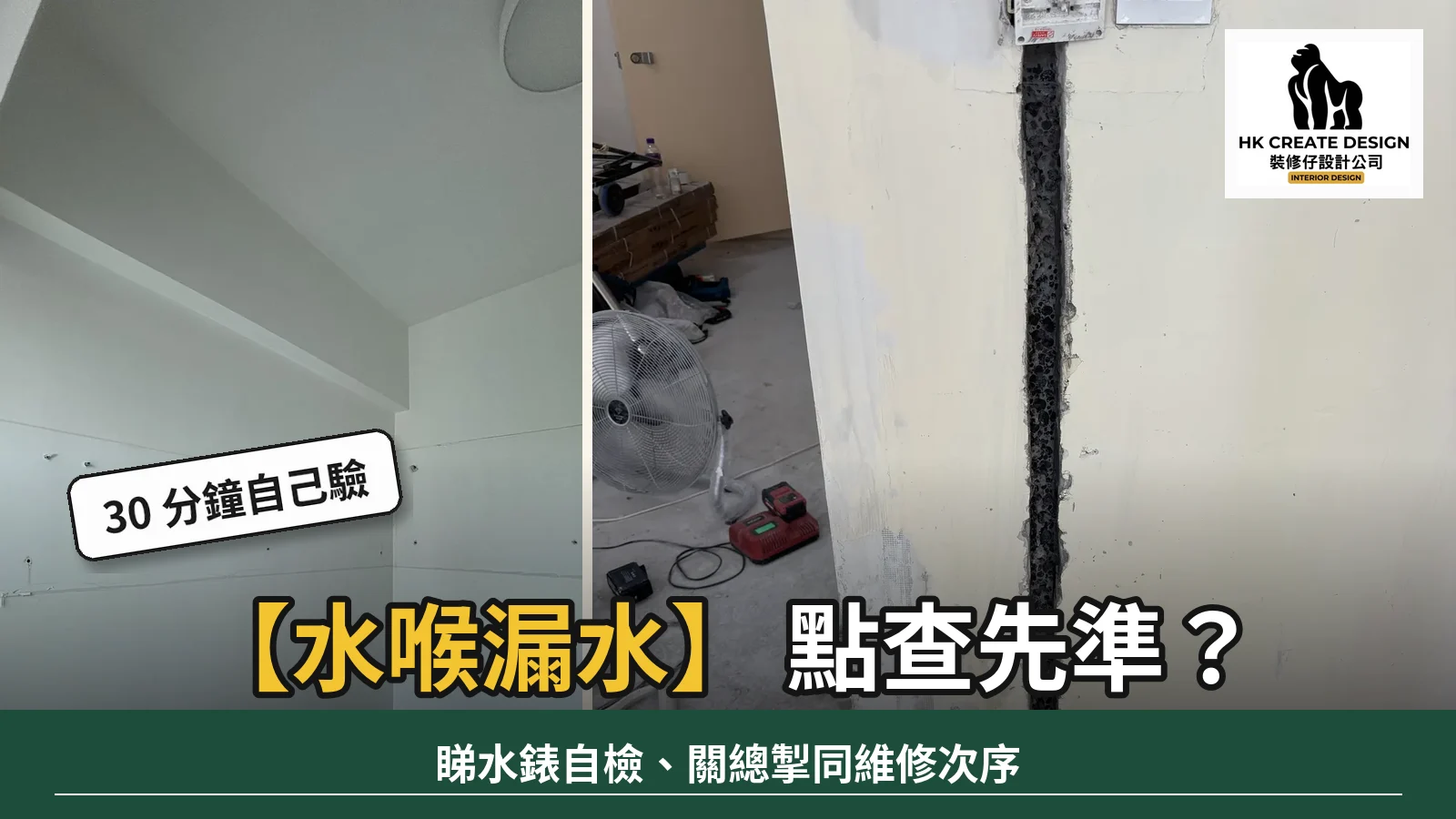
A concealed leak may show up only as a higher water bill. WSD recommends turning off all taps and observing the meter for about 30 minutes. Movement in the last digit indicates a possible leak.[1]
Before checking, make sure nobody is using water and the washing machine, water heater and filter are idle. Check for a continuously running cistern. Put a little food colouring into the cistern and wait without flushing. Colour appearing in the bowl indicates a cistern leak.
The meter check is preliminary. If it moves, ask a licensed plumber to investigate section by section. A still meter alongside water staining may point to drainage, waterproofing or seepage from upstairs instead of a pressurised supply leak.
- Turn off all taps
- Stop all water-using appliances
- Rule out water continuously passing into the WC bowl
- Record both meter readings
You can swipe left or right on your phone to view the complete table.
| location | person in charge | What the owner should do |
|---|---|---|
| Supply pipe before the lot boundary | Water Supplies Department [4] | Call WSD on 2824 5000. [5] |
| Communal water pipes, pumps and tanks | Building management office, owners' corporation or registered agent [4] | Ask management to arrange an inspection |
| Inside pipes serving only your flat | Individual consumer [4] | Engage a licensed plumber to inspect and repair |
| Water meter | Maintained by WSD and protected by the consumer. [4] | Report a damaged water meter to WSD |
| Seepage from upstairs into the ceiling | Upstairs owner; contact the Joint Office if the issue remains unresolved. [4][2] | Speak to the upstairs occupant first, then contact 1823 |
Responsibilities follow WSD's published guidance. Check the building's deed of mutual covenant and confirm any specific arrangements with management. [2][4][5]
03
Who handles private pipes, communal pipes and seepage from upstairs?
WSD maintains supply pipes before the lot boundary. The building management or registered agent maintains communal pipes, pumps and tanks. The consumer maintains inside pipes serving only their flat. WSD maintains the meter, while the consumer must protect it.[4]
When a problem appears, ask neighbours and management whether other flats are affected. WSD advises contacting the registered agent if the problem may be communal. If only your flat is affected, engage a licensed plumber to inspect its inside service.[6]
WSD notes that ceiling seepage can come from drainage upstairs, a bath edge or an external wall. Contact the upstairs occupant and ask for a licensed plumber's inspection. If unresolved, contact the Buildings Department / Food and Environmental Hygiene Department Joint Office or call 1823.[4]
- Ask neighbours
- Ask building management
- Contact the upstairs occupant first about ceiling seepage
- Then contact 1823 for assistance
「When a leak is suspected, turn off all taps and check the meter for 30 minutes. Continued movement may indicate a leak. Rule out other water use before opening walls.」
04
How a licensed plumber traces a leak
Section 15 of the Waterworks Ordinance reserves specified plumbing work to designated persons such as licensed plumbers and registered plumbing workers, subject to provisions for works of a minor nature.[7] WSD's troubleshooting leaflet notes that a leak in the inside service can cause weak pressure or loss of supply. Engage a designated person to investigate.[5]
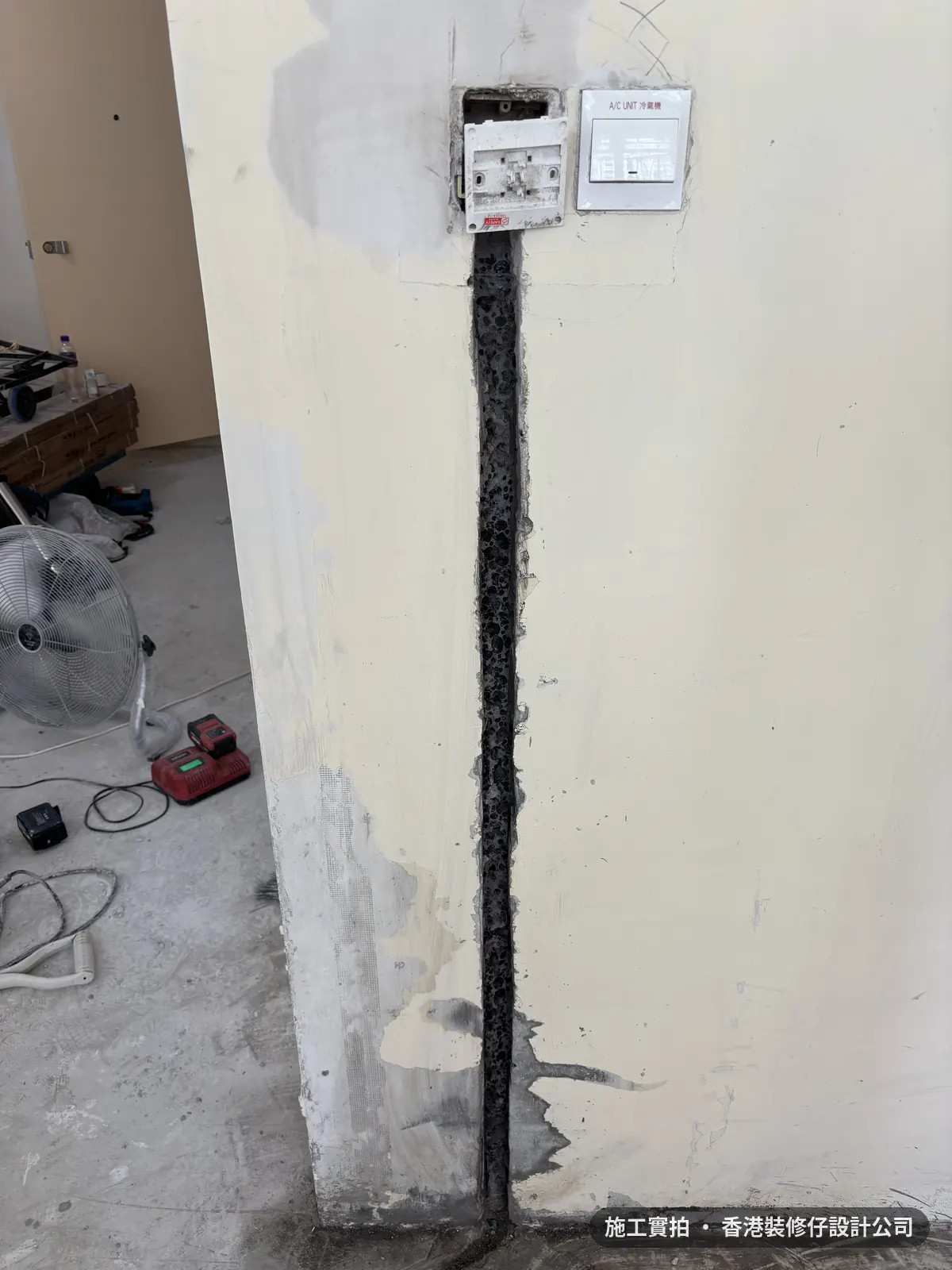
Start with visible pipes, angle valves, taps and water-heater connections. Isolate sections and observe the meter before opening walls. Our team narrows down the likely source, then uses G01 to investigate a specific point.
G01 exploratory opening costs HK$930 per item, including a photo report and patching the opening.[11] Photos let owners see pipe material, joints and corrosion before deciding between a local repair and wider replacement.
- Inspect exposed fittings before concealed pipes
- Isolate sections in turn
- Narrow down the source before opening walls
- Request a photographic report
05
Deciding between repair and replacement
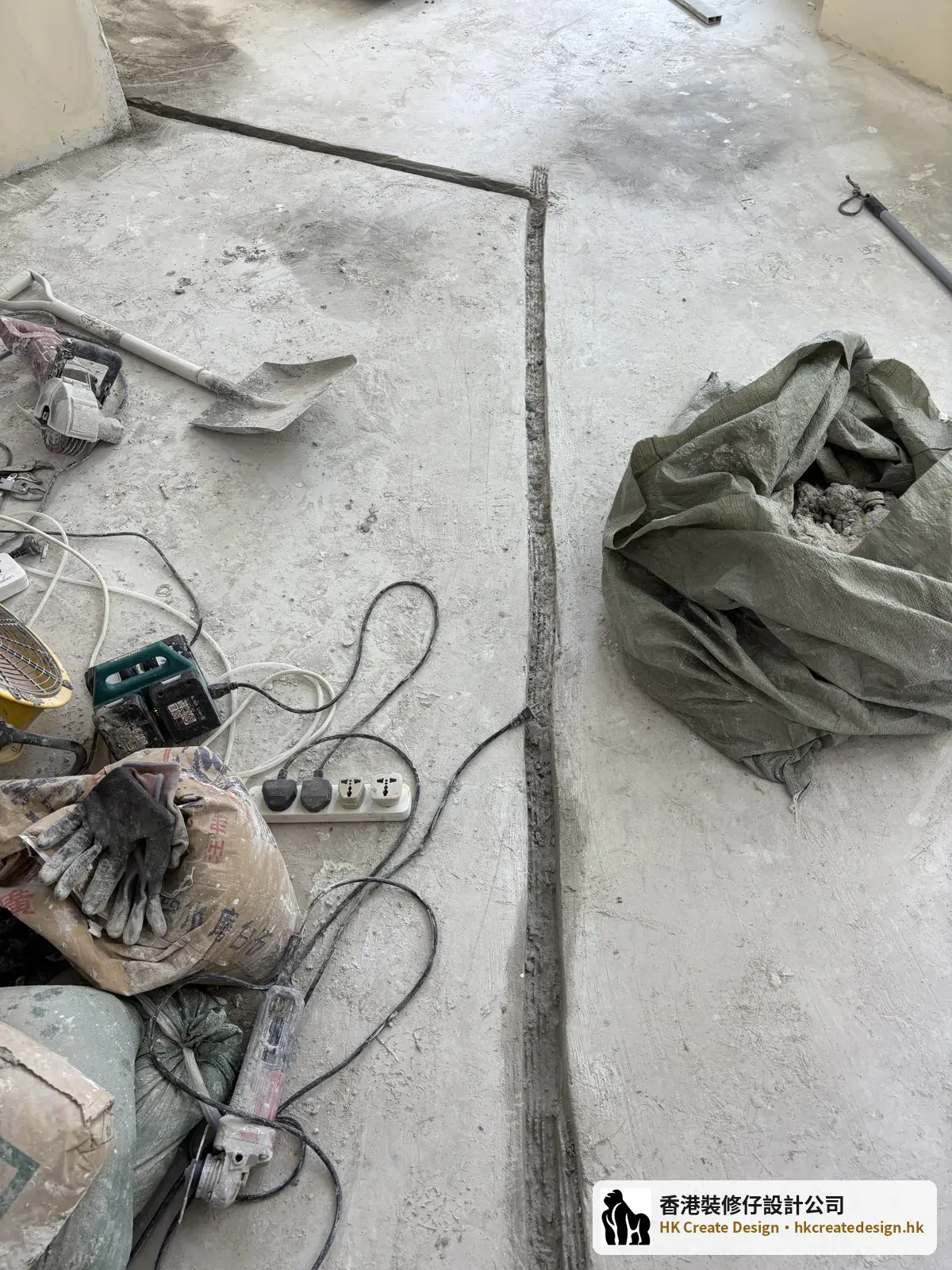
A leaking angle valve, tap or single connection may only need a new fitting or local relocation. G02 at HK$1,700 per hot or cold point includes chasing, new copper pipe, pressure testing and render patching.[11]
If the exposed pipe is old unlined galvanised steel with widespread corrosion, a local repair deals with only one spot. WSD says these pipes, formerly common in Hong Kong, can corrode after a few years. Their use in new installations was prohibited from 23 December 1995.[8] In such cases, whole-flatCopper pipe replacementreplacement under G05 at HK$22,300 may be more dependable than repeated repairs.[11]
We also undertake small repairs. Send photos by WhatsApp for an initial quote. For whole-flat repiping, see our pipe replacement service page andPipe replacement pricesarticle.
- Isolated leak: local repair
- Widespread corrosion in old galvanised pipes: consider whole-flat replacement
- Send photos for an initial assessment
06
The Joint Office procedure for ceiling seepage
Repiping your own flat cannot cure seepage from upstairs. According to 1823, under the Joint Office procedure effective 16 July 2026, a reasonably suspected upstairs source may receive a Notification Letter in about 14 working days. The owner has 28 calendar days for inspection and repair. Later stages may run concurrently, including colour-water and specialist tests.[2]
FEHD's announcement adds infrared thermography at stage one and provides for recovery of investigation costs of at least HK$17,000 from a non-compliant upstairs owner where applicable.[3]
For the downstairs owner, keep dated photos, note changes in the affected area and retain communications with the upstairs occupant. Repair ceiling render and paint after the seepage stops to avoid recurring stains.
- Keep dated photos of seepage
- Keep a record of contact with the upstairs occupant
- Report through 1823
- Repair the ceiling after the seepage stops
Example 1: estimating leakage from meter readings using hypothetical figures
Assumptions
- Assume all taps are off in the evening and the meter reads 1,234.560 m³.
- Assume the reading after 30 minutes is 1,234.575 m³.
- Nobody used water during this period.
How to calculate quantities
- Difference over 30 minutes: 1,234.575 − 1,234.560 = 0.015 m³, or 15 litres.
- Per hour: 15 × 2 = 30 litres.
- Per day: 30 × 24 = 720 litres, or 0.72 m³.
- Over 30 days: 0.72 × 30 = 21.6 m³.
WSD says movement of the last meter digit may indicate leakage. Using the assumed readings, the additional volume over a month could be about 21.6 m³. [1]
Figures are illustrative. The WSD bill governs actual water charges. A running cistern can also move a meter on the same supply, so exclude other uses individually. [1]
07
Common mistakes when dealing with a leaking pipe
1. Opening a large area before locating the leak increases reinstatement costs. 2. Tape or waterproof adhesive may briefly slow a leak but leave the fault unresolved. 3. Use a designated person for specified plumbing work. A licensed plumber can be checked against WSD's register.[7]
4. Discarding the receipt. A licensed plumber's receipt stating the leak location, work and date can support an application to WSD for reduced excess water charges.[1] 5. Closing a wall immediately after repairs. Pressure-test as directed by the licensed plumber and record the result before reinstatement.
6. Confusing supply leaks with drainage or waterproofing faults. A floor leak may require a flood test to assess the waterproofing. Our C04 test is HK$1,400.[11]
- Locate the likely source before opening up
- A tape wrap alone is insufficient
- Verify the licensed plumber
- Keep the receipts
- Close the wall only after pressure testing
08
What to collect at handover after repairs
After repairs, check three things. First, repeat the meter check: turn off all taps and observe for about 30 minutes to confirm the meter stays still.[1] 2. Check the pressure-test record and photos taken before the wall was closed. 3. Keep receipts showing the leak location, work carried out and date.
If WSD permission is required, our licensed plumbing partner handles the application.[7] Ask which work qualifies as minor in nature and which needs an application.[9]
Our repair work carries a one-year warranty excluding deliberate damage. If the same point starts leaking during the warranty period, send us photos on WhatsApp for follow-up.
- Repeat the water meter check
- Pressure-test records and photographs
- Keep a fully itemised receipt
- One-year warranty
You can swipe left or right on your phone to view the complete table.
| Sequence | What is it for? | Purpose |
|---|---|---|
| 1 | Close the stop valve beside the water meter. [1] | Isolate the water to limit damage |
| 2 | Turn off the taps and observe the meter for about 30 minutes. [1] | Check whether the supply pipe is leaking |
| 3 | Ask neighbours and building management. [6] | Identify private or communal pipework |
| 4 | Engage a licensed plumber for inspection. [1] | Locate the leak |
| 5 | Open up for inspection and take photographs | Inspect the pipes before choosing local or whole-flat replacement |
| 6 | Repair, pressure-test and reinstate | Pressure-test and record the result as directed by the licensed plumber |
| 7 | Keep receipts. [1] | Apply for a reduction in water charges |
For a serious leak, shut the main water valve if safe. If water is near electrical equipment, keep clear. Isolate the power only if you can do so safely from a dry location. Otherwise, contact building management and a registered electrical contractor. [1][6]
09
Water Supplies Department guidance on leaks
WSD advises checking the meter for a possible leak, isolating the supply where a leak is found, engaging a licensed plumber and keeping the receipt for a possible water charge reduction.[1] WSD's troubleshooting leaflet advises checking with management and neighbours before calling the WSD hotline on 2824 5000.[5]
WSD states that the individual consumer maintains inside pipes serving only their flat.[4] The owner or consumer is responsible for maintaining ageing pipes serving only the flat.
We help owners investigate, quote for repairs, arrange a licensed plumbing partner and handle required WSD submissions. The Joint Office follows its own process when investigating seepage sources.
- Close the main stop valve
- Engage a licensed plumber
- Hotline 2824 5000
- Keep the receipts
Example 2: budget for a local repair to a concealed kitchen wall pipe
Assumptions
- The leak has been traced to a concealed pipe in the kitchen wall.
- Painted wall with no tile removal required.
- The remaining pipes appear sound.
How to calculate quantities
- G01 Open up to inspect supply or drainage pipework: HK$930. [11]
- G02 Relocate a hot or cold point including new copper pipe, pressure testing and render reinstatement: HK$1,700.
- Total: HK$930 + HK$1,700 = HK$2,630, above the HK$2,000 minimum small-job charge.
Indicative cost to repair one concealed pipe section: about HK$2,630.
Removing and replacing affected wall tiles is extra. If inspection finds widespread corrosion, consider G05 whole-flat replacement at HK$22,300. The written quote governs. [11]
10
Reducing the risk of domestic pipe leaks
Check the water meter periodically, especially if the bill rises unexpectedly.[1] Consider closing the main stop valve before an extended absence. On return, flush the tap before use. WSD recommends running water for at least two minutes after several hours of stagnation or overnight before using it for drinking or cooking.[8]
Avoid drilling where pipe routes are unknown. Photograph routes before closing the wall so shelves or TVs can later be fitted clear of them. Lower-floor units may experience higher pressure. Inspect joints for signs of damage.[10]
If older pipes require repairs every year, consider coordinating copper replacement with kitchen and bathroom renovation.
- Check the meter periodically
- Close the stop valve before a prolonged absence
- Photograph pipe routes before closing the walls
- Coordinate repiping with renovation
11
Leaks in kitchens, bathrooms and around water heaters
Common visible kitchen leak points include the angle valves under the sink, flexible tap hoses and washing-machine inlet. Check for damp or mould inside the cabinet. A concealed leak may first stain the wall base or cabinet back.
Bathroom leaks may involve supply pipes, drains or waterproofing. A pressurised supply leak can continue with all taps off and show on the meter. Drainage or waterproofing defects tend to appear during use and may need a separate flood test. Our C04 flood test is HK$1,400.[11]
Water near a heater may come from a connection, relief valve or the appliance. For more on appliance faults, see the water heater replacement guide. Do not touch a wet heater or switch. Arrange for a registered electrical or gas contractor, as appropriate to the heater, to isolate the supply safely and inspect the installation.
Leaks on a balcony or near a washing machine often involve the inlet hose or drain. G06 replaces the cold-water connection and drain at HK$1,550.[11]
- Kitchens: angle valves and flexible hoses
- Bathrooms: distinguish supply, drainage and waterproofing
- Water heater: switch off the appliance first
- Washing-machine point: inlet and drain
You can swipe left or right on your phone to view the complete table.
| Symptoms | Possible cause | Next |
|---|---|---|
| Unexpected rise in the water bill | Concealed pipe leak or continuously running cistern | Check the meter. [1] |
| Water stains near the pipe route | Seepage at a concealed pipe joint | G01 Exploratory opening: HK$930. [11] |
| Water dripping from the ceiling | Drainage upstairs, bath edges, external walls or supply pipes [4] | Contact the upstairs occupant, then 1823 if needed. [2] |
| Sudden drop in water pressure | Stop valve partly closed or internal pipework leaking [5] | Check valve positions, then engage a designated person |
| Drips at an angle valve or tap | Ageing fittings | Replacement fitting as a repair item |
Symptoms guide the initial assessment. Inspect the site to establish the source. [1][2][4][5][11]
12
Making good walls and ceilings after a leak
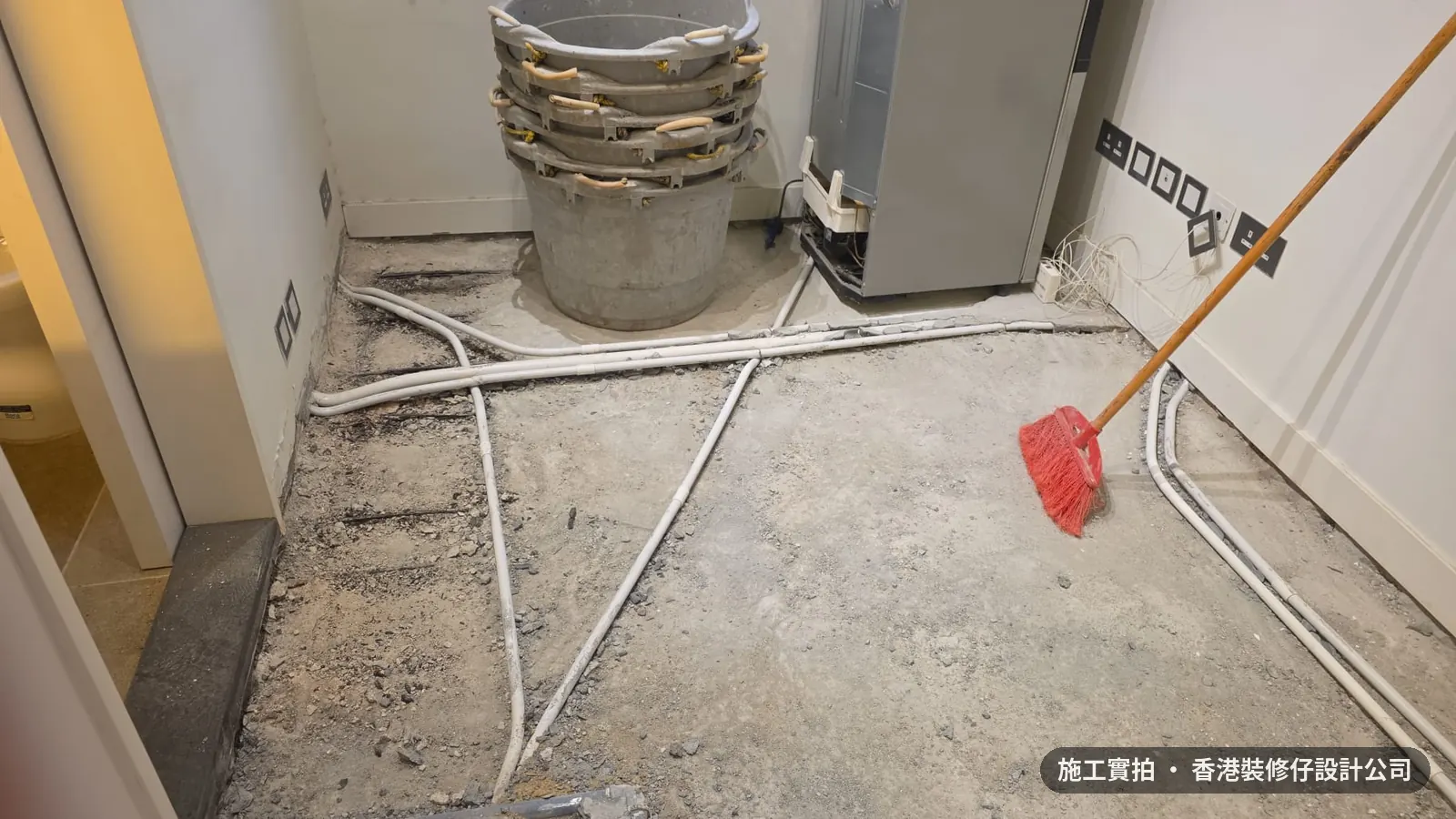
Even after fixing a leak, the wall or ceiling may be too damp to paint. Ventilate and allow the render to dry. Remove loose material, patch the render and paint when ready. Painting too soon can cause blistering or mould.
G02 relocation of a hot or cold water point already includes making good the render. If the leak affects a larger area,wall renderingIf the area needs re-rendering, B01 is HK$43 per sq ft, minimum HK$2,350.[11] On a tiled wall, check whether tiles sound hollow or are loose and remove and re-lay them where necessary.
Repair the ceiling after the source above has been dealt with. Otherwise staining can recur. Take dated photos before redecorating for discussions with the upstairs occupant or the Joint Office.[2]
- Allow the render to dry thoroughly
- Remove loose render
- Repair the ceiling after the upstairs source is resolved
- Take photos for the record
13
Water charges after leakage: evidence for a reduction application
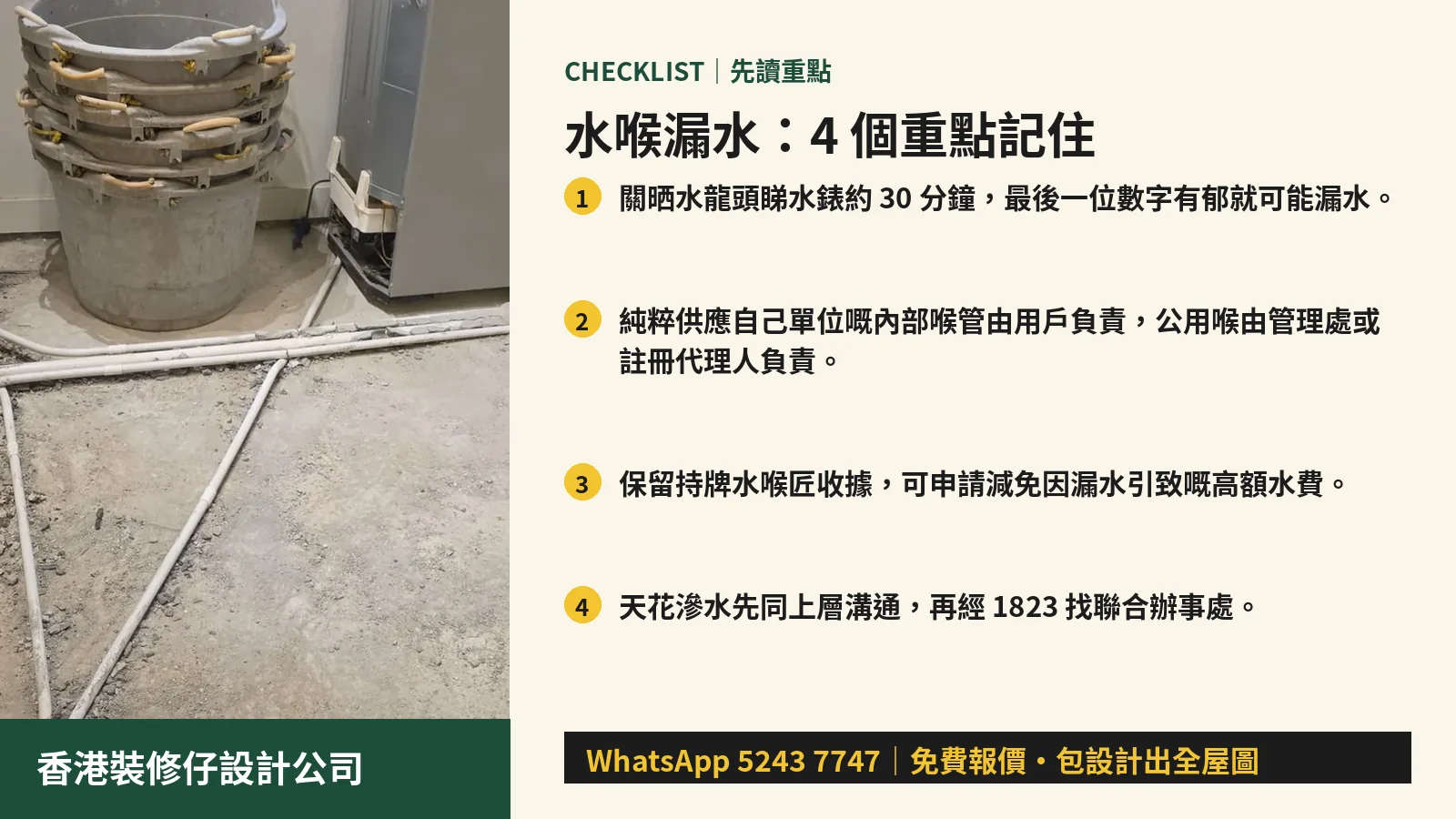
For a water charge reduction after leakage, the receipt should identify the leak location, work and date. Submit the licensed plumber's receipt with the application.[1]
Confirm the licensed plumber responsible and request an itemised receipt. Check the name in WSD's licensed plumber register.[7]
Keep the licensed plumber's receipt, photos of the meter before and after repair, photos of the leak and the water bill. WSD decides whether a reduction is granted and the amount.
- State the location, work and date on the receipt
- Identify the licensed plumber
- Keep photos of the meter readings
- Keep the water bill
Example 3: timeline of a ceiling seepage complaint using official figures
Assumptions
- The downstairs ceiling is damp and contact with the upstairs occupant has not resolved the issue.
- Under the Joint Office procedure in effect from 16 July 2026.
How to calculate quantities
- Report the seepage to the Joint Office through 1823. [2]
- Where the upstairs flat is reasonably suspected, the Joint Office sends a Notification Letter in about 14 working days. [2]
- The upstairs owner has 28 calendar days for inspection and repair. [2]
- If the notice is not acted on, stages two and three, including colour-water and specialist tests, may proceed together. [2]
For planning, allow about 14 working days for a qualifying notification and another 28 calendar days for the upstairs owner to inspect and repair.
Actual timings depend on the case. The Joint Office process concerns building seepage and differs from an in-flat supply pipe repair. [2]
14
Insurance and responsibility when a leak affects the flat below
If a leak from your flat affects the one below, the owner or consumer responsible for the source may need to arrange repairs. Close the stop valve, notify the downstairs occupant and management, and arrange repairs promptly. WSD says the consumer maintains inside pipes serving only that flat.[4]
Home insurance coverage depends on the policy. Our L02 works insurance is HK$6,700. Small jobs include insurance under the stated arrangements.[11] The policy wording determines insurance coverage.
Keep photos, repair receipts and a dated record of contact with the downstairs occupant to support any subsequent claim.
- Close the main stop valve immediately
- Notify the downstairs occupant and management
- Check your insurance policy
- Keep evidence
15
Arrange assistance from HK Create Design
HK Create Design opened in 2019 and the team has 15 years' project experience. Our licensed plumbing partners use copper for drinking-water pipe replacement and we handle required WSD submissions.
For a free quotation from a construction team, contact HK Create Design on WhatsApp 5243 7747. The Wong Tai Sin showroom opens Monday to Saturday, 10:00–18:00. On-site measurement is free through 31 December 2026 for two or more work items, with no deposit. After that, the HK$500 fee is credited against the order.
- Send photos via WhatsApp.
- Book a site visit
Advice from our tradespeople
「When a leak is suspected, turn off all taps and check the meter for 30 minutes. Continued movement may indicate a leak. Rule out other water use before opening walls.」
「A leak into the ceiling below could come from bathroom waterproofing or drainage as well as a pipe. Investigate the possibilities before deciding where to open up.」
「We use photos and test results to explain the suspected source and quote before opening up or starting repairs.」
FAQ
11 practical questions answered
01How can I check whether a pipe in my flat is leaking?
Turn off all taps and observe the meter for roughly 30 minutes. A change in the last digit suggests possible leakage.[1]
02What should I do first when I find a leaking pipe?
Close the stop valve beside the meter and engage a licensed plumber to repair the leak.[1]
03Can I apply for a reduction in water charges after a leak?
WSD says a licensed plumber's receipt can support an application to reduce excess water charges after a leak. Include the location, work and date.[1]
04Who is responsible for a leaking communal pipe?
Building management or the registered agent handles communal pipes, pumps and tanks. The consumer maintains inside pipes serving only their flat.[4]
05What should I do if water is seeping from upstairs?
Speak to the upstairs occupant first. If unresolved, contact the Joint Office via 1823. Where the upstairs flat is reasonably suspected, the new process provides for notification in about 14 working days and allows the owner 28 calendar days to inspect and repair.[2]
06How much does it cost to investigate a leaking pipe?
HK Create Design's G01 exploratory opening for supply or drainage inspection is HK$930 per item, with a photo report and patch repair.[11]
07How much does it cost to repair one leak?
The price depends on location. G02 hot or cold point relocation is HK$1,700 per point with a HK$2,000 minimum for a separate small job. Refer to the written quote.[11]
08The meter is still but the wall is wet. Could it be a pipe leak?
Not necessarily. The source may be drainage, waterproofing or the flat above. A flood test may help. C04 is HK$1,400.[11]
09Can I repair my own plumbing?
Minor repairs such as changing a tap washer may be permissible. Specified plumbing work must be carried out by designated persons such as licensed plumbers unless a statutory exception applies.[7]
10How do I verify a licensed plumber?
Check the Water Supplies Department's register of licensed plumbers.[7]
11Does HK Create Design repair leaking pipes?
Yes. We also handle repairs. Send photos to 5243 7747 on WhatsApp for an initial estimate.
CHECK THE BASIS
Data and technical basis, sources can be verified
- [1]Water Supplies Department: Advice on unusually high water consumption Accessed: 2026-11-03
- [2]1823: how to deal with water seepage in residential flats Accessed: 2026-11-03
- [3]Food and Environmental Hygiene Department: press release on new water seepage investigation procedures, 16 July 2026 Accessed: 2026-11-03
- [4]Water Supplies Department: water supply problems in private estates and buildings and maintenance of inside service systems Accessed: 2026-11-03
- [5]Water Supplies Department: leaflet on technical water supply complaints Accessed: 2026-11-03
- [6]Water Supplies Department: fresh water plumbing system Accessed: 2026-11-03
- [7]Water Supplies Department: Employing a Licensed Plumber Accessed: 2026-11-03
- [8]Water Supplies Department: Water Facts Accessed: 2026-11-03
- [9]Water Supplies Department: Minor works Accessed: 2026-11-03
- [10]Water Supplies Department: How inside-service water supply systems work Accessed: 2026-11-03
- [11]HK Create Design 2026 detailed project budget and public price list Accessed: 2026-11-03