01
Why village houses are prone to seepage and mould
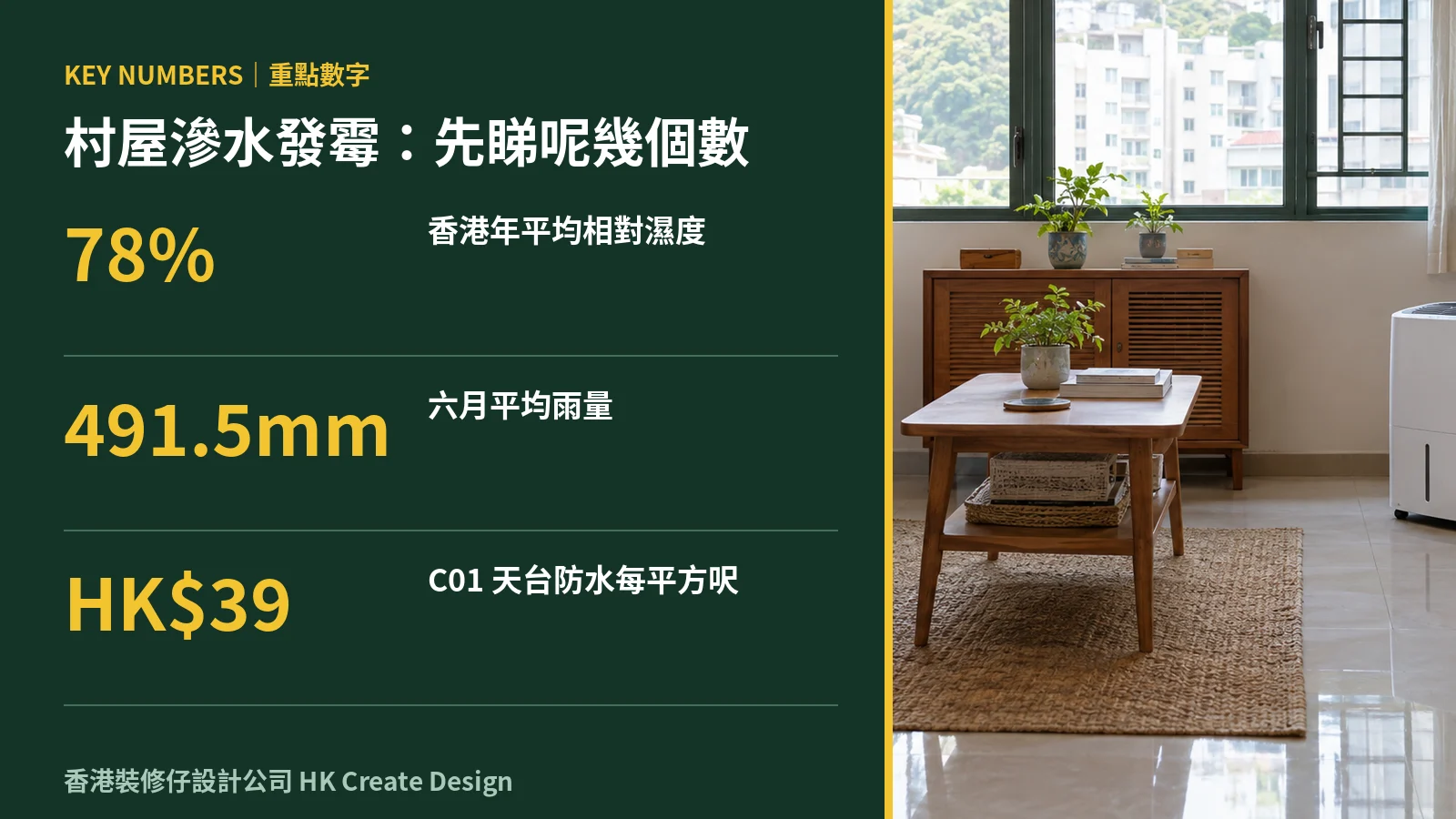
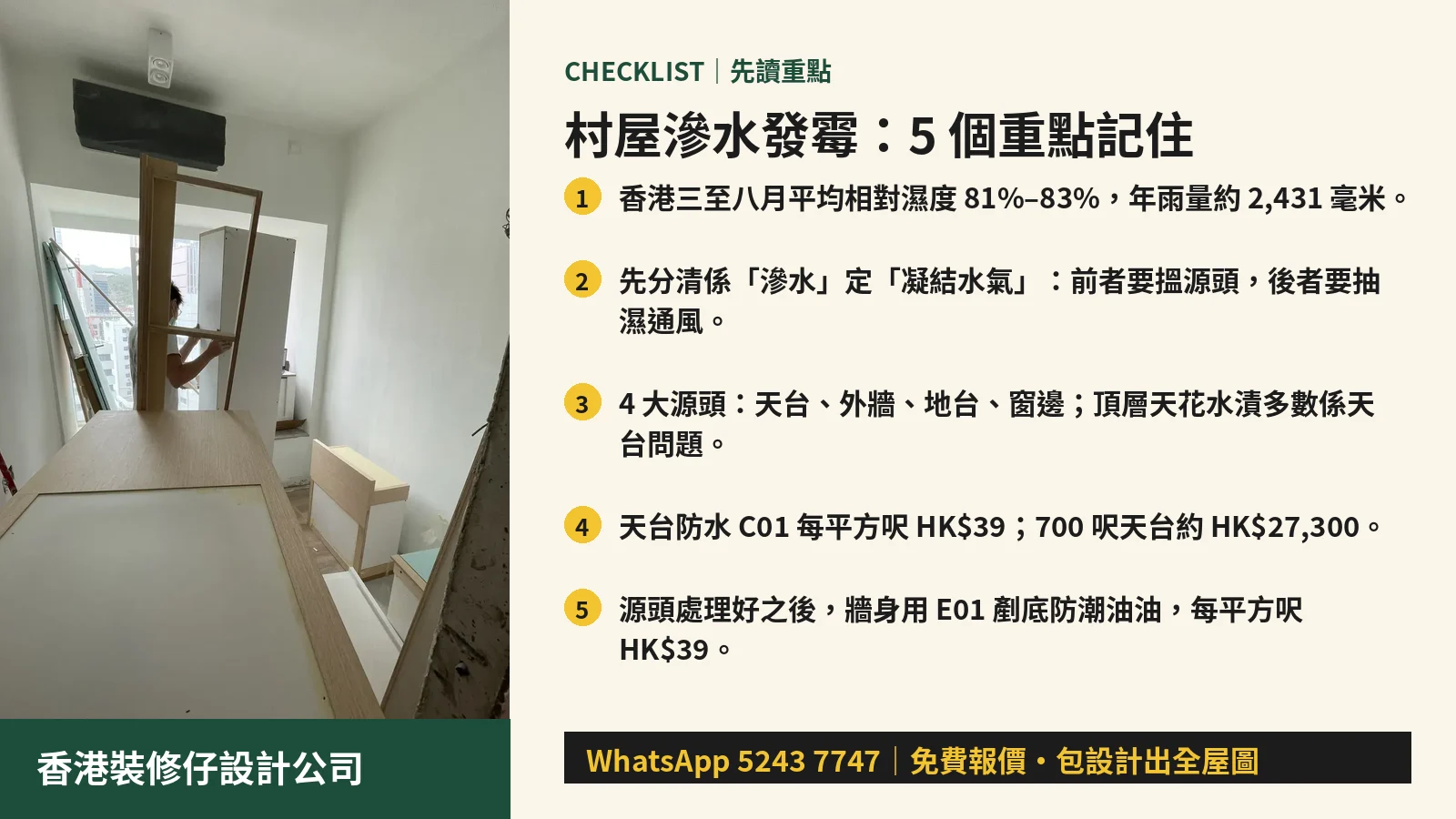
1. Climate. Hong Kong Observatory figures give annual average relative humidity of 78%, rising to 81%–83% from March through August. Annual rainfall is 2,431.2 mm, most of it falling from May to September[2]. In humid months, moisture readily condenses on walls and furniture, creating conditions for mould.
2. Form of construction. Detached or attached low-rise village houses have roofs exposed to sun and rain and sometimes three or four exposed elevations. New Territories Exempted Houses can have a roofed-over area of up to 65.03 m² per floor[4], leaving a large exposed roof and façade area where cracks may develop.
3. Maintenance. Private apartment buildings often have management and an owners’ corporation to arrange roof and façade repairs. Village house owners generally make their own arrangements. On houses that have gone 20 or 30 years without roof waterproofing renewal, aged membranes can crack and admit rain.
4. Ground conditions. Moisture can travel through ground floors and rise at the foot of the walls. Damp is especially noticeable during humid spells.
- March to August humidity of 81%–83%
- Large exposed roof and wall areas face wind and rain
- No management office carrying out regular maintenance
- Ground moisture on the lowest floor
- water seepageA fixed patch that worsens after rain
- CondensationAppears in several rooms and clears in dry weather
02
Step 1. Distinguish seepage from condensation
A damp wall can result from condensation. Moist air condenses into droplets on cool walls and glass, especially during humid spells. Condensation often appears in several places at once and clears when the air dries.
Seepage tends to leave a patch in a fixed location, such as a ceiling corner, window, wall base or bathroom wall. Rain-related patches grow after rain and dry slowly, leaving a yellow stain or white salt deposits.
Record when the stain appears and what the weather was like. A patch appearing one or two days after heavy rain suggests ingress. Widespread damp during a humid spell suggests condensation. The Buildings Department advises tracing the cause of seepage before repairing the surface[3].
Seepage calls for repair at the source. Condensation calls for humidity control and ventilation. Extensive waterproofing will not resolve condensation during humid weather.
- Condensation appears in several rooms and clears in dry weather
- Seepage stays in one place and worsens after rain
- Record the time and weather
- The two conditions need different treatment
You can swipe left or right on your phone to view the complete table.
| Source | Common locations | Typical signs | How to address it |
|---|---|---|---|
| Rooftop | Corner of a top-floor ceiling | Worsens after heavy rain | Clear the outlet and apply C01 waterproofing |
| exterior wall | Below the window or mid-wall | Worse after a typhoon, with salt deposits | External wall repairs assessed separately |
| Floor | Base of ground-floor walls | Wet surfaces during humid weather | C01 waterproofing and B02 screeding |
| Around the window | Under the sill | Damp under the window after rain | Renew the sealant and clear drain holes |
Based on HK Create Design’s site experience. Confirm the scope and price at the survey. [3]
03
Source 1. Roof
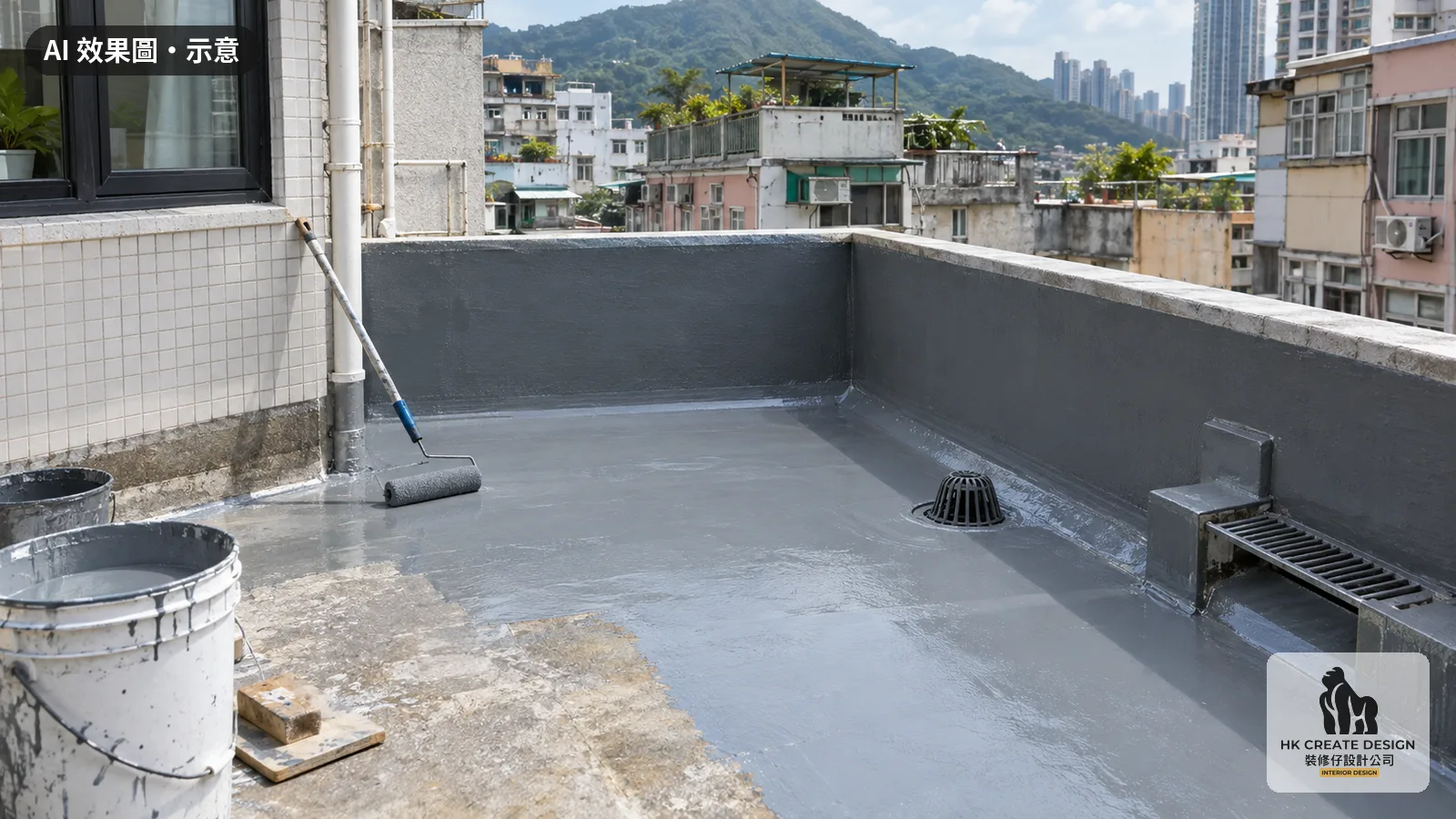
In our experience, about nine in ten cases of top-floor ceiling stains, blistering or dripping point to the roof. Check the membrane for cracks, blocked drains, the junctions between the parapet and roof, pipe penetrations and screw holes at solar panel or antenna supports.
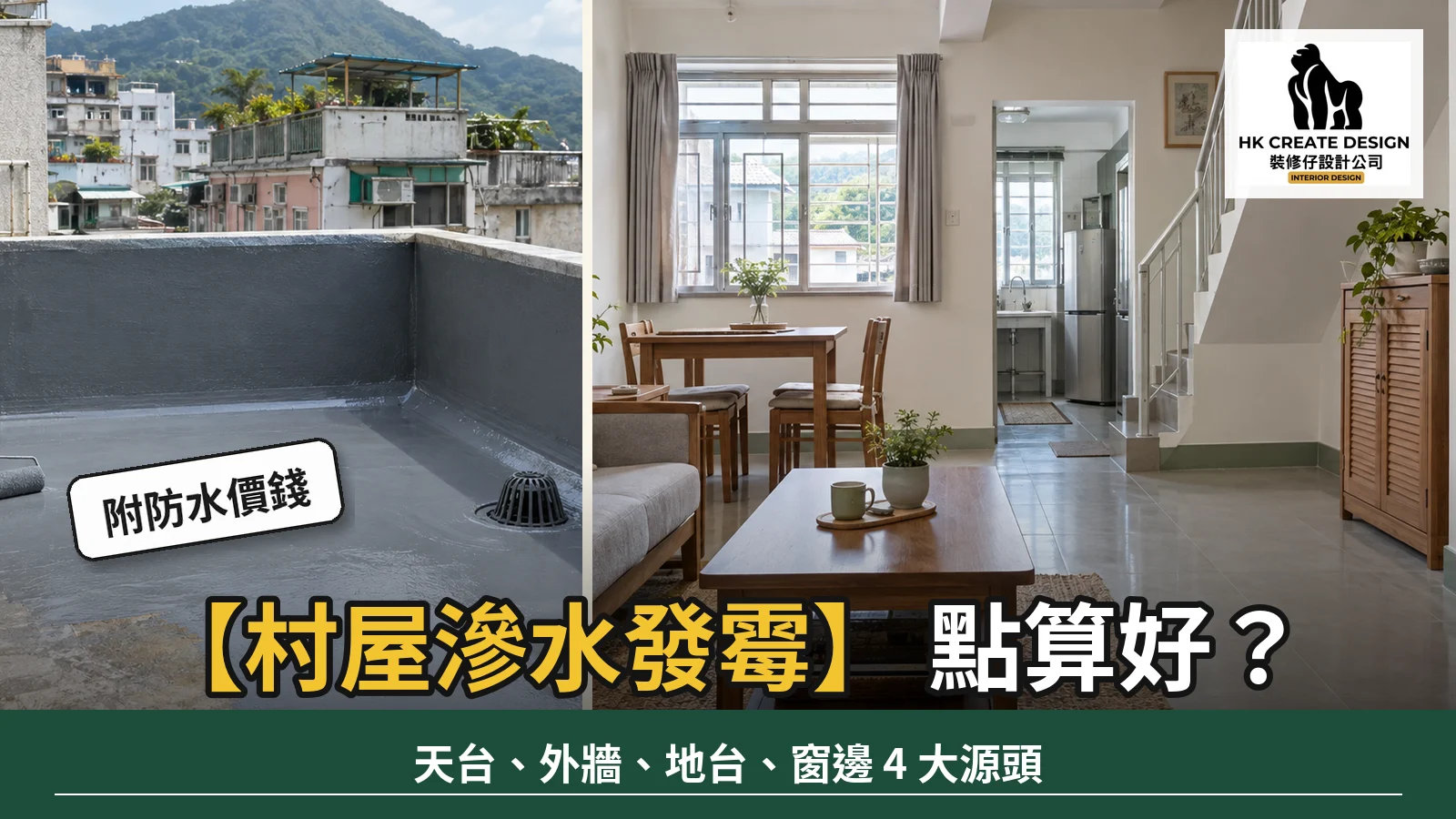
After heavy rain, arrange a safe roof inspection for ponding, blistered or peeling waterproofing and leaves or silt in the outlets. Water standing for more than a day can indicate poor falls or a blocked drain. Prolonged ponding increases the risk of leakage.
Remove blistered and loose membrane, repair cracks and reinforce inside corners and pipe penetrations. Apply two coats of SikaTop Seal-107 in crossing directions. HK Create Design’s C01 rate is HK$39 per sq ft, with a third coat at an additional HK$10 per sq ft[1]. For a 700 sq ft roof, allow about HK$27,300 for two coats or HK$34,300 for three.
Existing roof tiles must be removed first. A01 floor tile removal costs HK$30 per sq ft[1]. Where the roof does not drain adequately, B02 screeding at HK$22 per sq ft can restore a fall to the outlets[1].
- Top-floor ceiling stains often point to the roof
- Check ponding, blistering and drains
- C01 two coats at HK$39 per sq ft
- Use B02 screeding to restore inadequate falls
- RooftopStain on a top-floor ceiling.
- exterior wallSalt deposits below the window.
- FloorDamp at the foot of the wall.
- Around the windowDamp under the sill.
「When a village house ceiling has a stain, the first place I check is the roof outlet. Clearing leaves often makes a considerable difference.」
04
Source 2. External walls
Façade leaks can appear mid-wall or beneath windows as blistered paint, loose filler or white salt deposits. Cracks, missing mosaic tiles or loose render can allow rain to enter.
Typhoons and heavy rain drive water against façades under greater pressure than normal. Small cracks that stay dry in ordinary rain may admit water during a storm.
External wall repairs are work at height and may require scaffolding or a suspended working platform. Access is assessed and quoted separately. Local cracks may be suitable for an exterior coating or flexible sealant. Extensive hollow or loose render needs removal and reinstatement.
When rain enters through an external wall, coating the inside can trap water in the wall and divert it elsewhere. Trace and repair the entry point from the outside.
- Blisters and salt deposits below windows or mid-wall
- Especially noticeable during typhoons and heavy rain
- External wall repairs require a separate assessment
- An interior coating cannot replace repair of a leaking façade
05
Source 3. Ground moisture
In ground-floor rooms in contact with the ground, moisture can rise through concrete by capillary action. Signs include dark tile joints, lifted timber floors, peeling paint up to roughly 30 to 50 cm above floor level and mould on furniture feet.
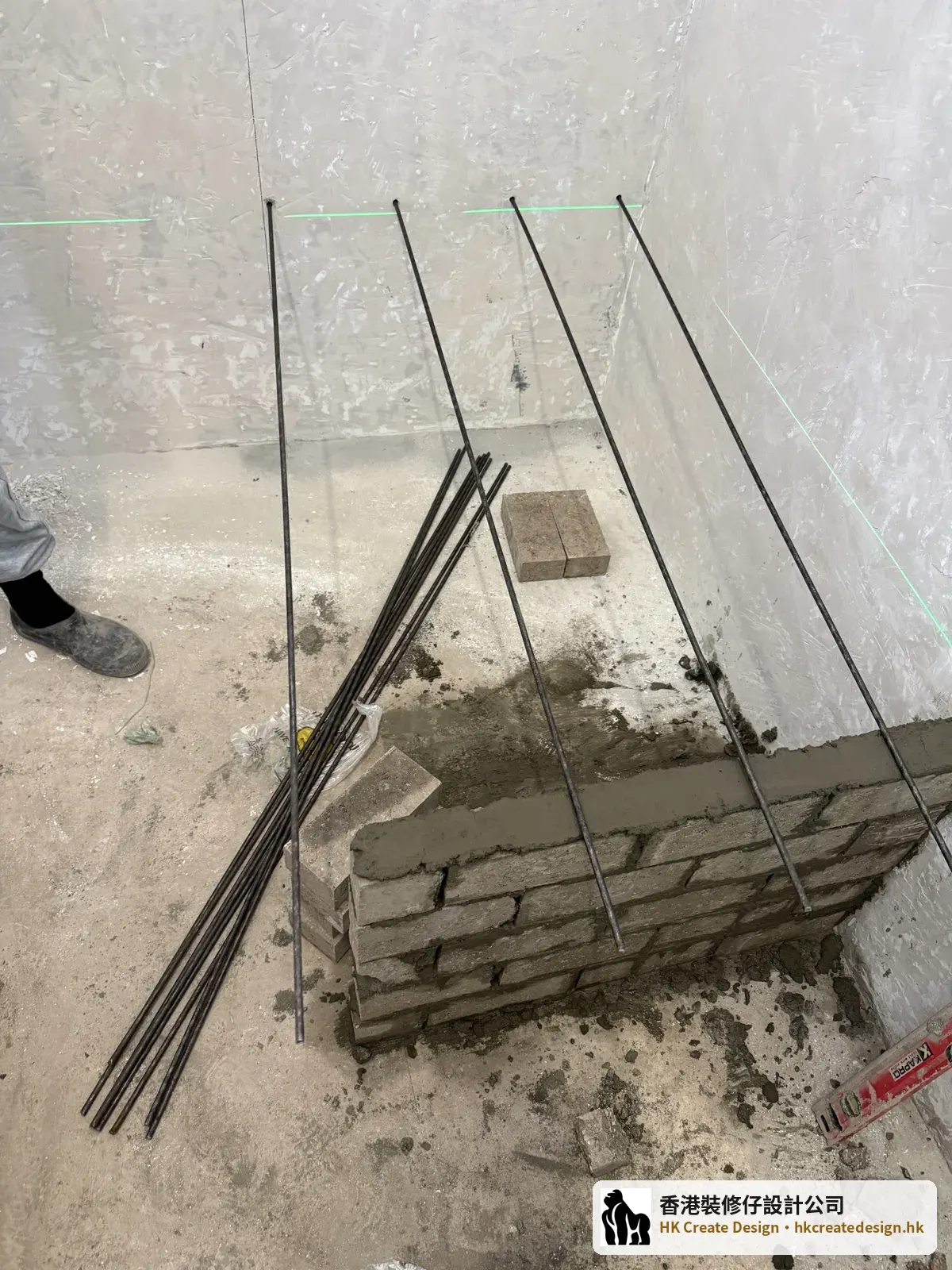
For mild ground moisture, C01 floor waterproofing and B02 screeding may be appropriate before laying tile or SPC flooring. The repair depends on the severity[1]. Remove loose material from the foot of the wall and refinish with moisture-resistant primer and the E01 paint system[1].
For serious ground moisture, the existing flooring and screed may need removal down to the concrete. A02 floor and tile removal costs HK$52 per sq ft. Reinstate the waterproofing and screed afterwards[1]. This is a larger job, so allow time in the programme.
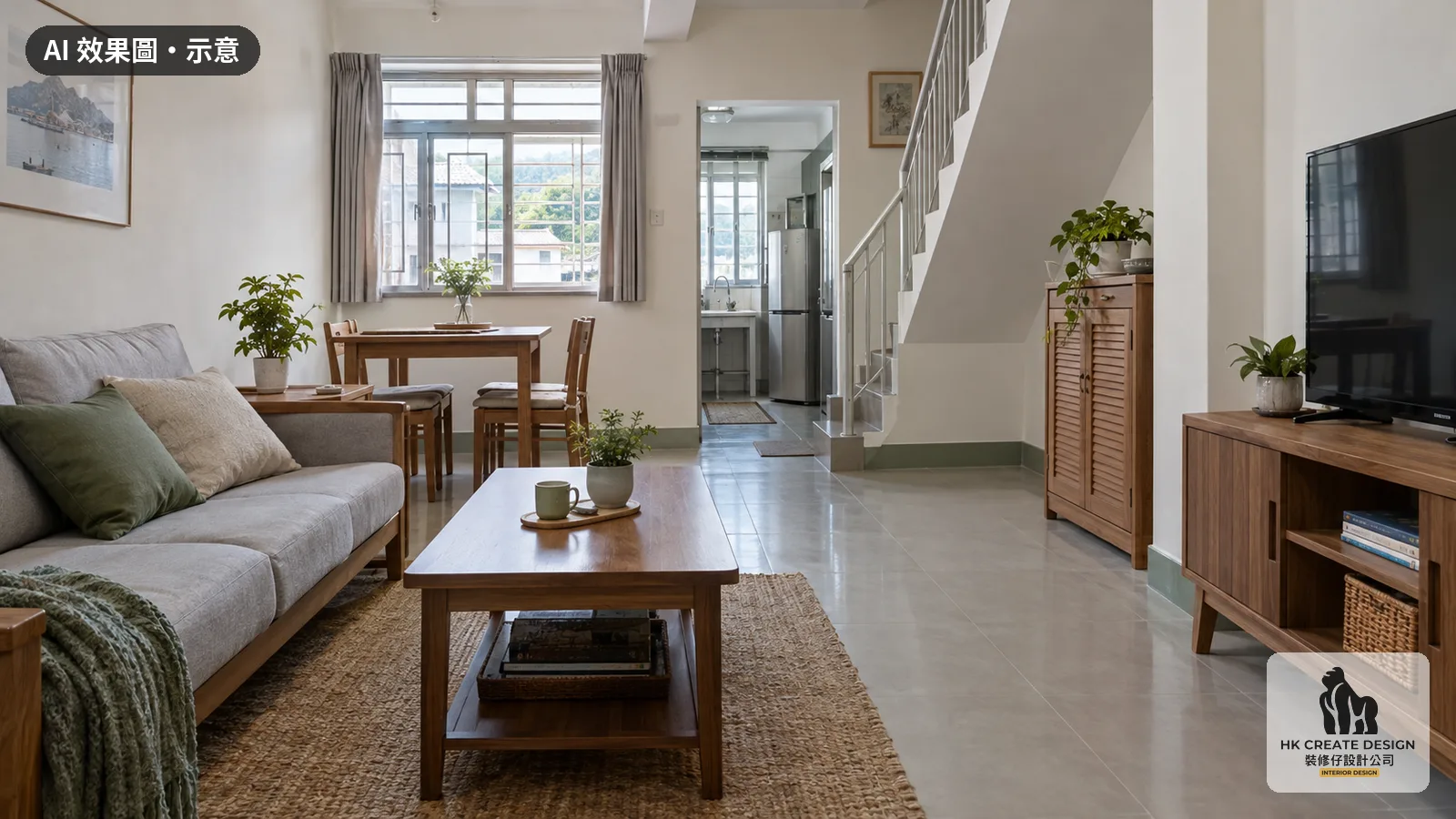
SPC flooring resists water, but persistent moisture underneath can cause mould in the underlay. Tiles tolerate damp and are easier to clean. For damp ground floors, HK Create Design generally recommends D01 floor tiling at HK$78 per sq ft[1].
- Peeling paint 30–50 cm up from the floor
- Mild damp: C01 waterproofing and B02 screeding
- Severe damp: A02 removal and reconstruction
- Consider floor tiles for damp ground floors
06
Source 4. Windows
Water ingress around a window is common, particularly with olderAluminium windows. Perished frame seals, blocked drain holes or an inward-sloping sill can admit rain. Damp plaster below the window and bubbling paint under the sill are common signs.
Local repairs can include removing failed sealant, applying exterior-grade sealant, clearing frame drains and waterproofing the outside sill. B06 wet-trade labour costs HK$2,700 per day with materials charged at cost[1].
If aluminium window frames are distorted or hinges are corroded, consider replacement. Keep the dimensions and external appearance of village house openings in mind and consult a building professional before any structural change.
Condensation can also form on the inside of cool glass in winter or in an air-conditioned room and run onto the sill. Wiping the glass and dehumidifying can help. Double glazing is another option.
- Aged frame sealant or blocked drain holes
- Renew the sealant and clear drain holes
- Consider replacing a distorted aluminium window
- Condensation and water ingress have different causes
Example: roof waterproofing and restoration of a top-floor main bedroom
Assumptions
- 700 sq ft roof
- Cracked waterproofing membrane
- About 400 sq ft across the main bedroom ceiling and two walls
How to calculate quantities
- C01:700 × HK$39 = HK$27,300
- Confirm the repair through a rainy season
- E01:400 × HK$39 = HK$15,600
- Total: HK$42,900
Example total of about HK$42,900.
If the old membrane must be stripped completely or existing roof tiles removed, allow an additional HK$30 per sq ft under A01. [1]
07
Bathrooms and pipes as sources of indoor leaks
Village houses can also leak internally. The Buildings Department identifies pipework and bathroom waterproofing among common sources of water seepage[3]. If a bathroom upstairs is directly above the ground-floor living room,Bathroom waterproofingPoor waterproofing can leave water marks on the living room ceiling below.
For a bathroom pond test, close the floor outlet and add 2 to 3 cm of water. Monitor the ceiling below for 24 to 48 hours. HK Create Design’s C04 test costs HK$1,400 per visit and includes a photographic record[1].
If the bathroom membrane is the source, C05 strip-out and waterproofing costs HK$13,000. It includes taking tiles back to the substrate, repairs, two coats and a pond test. Tiling is excluded[1]. For a suspected pipe fault, G01 opening-up inspection costs HK$930. The findings show whether to replace a local section or the whole run[1].
For a suspected concealed supply leak, close all taps and stop all water use while keeping the main valve open. Movement of the water meter suggests a possible leak.
- Both plumbing and bathroom waterproofing can cause leaks
- C04 pond test, HK$1,400
- C05 renew waterproofing, HK$13,000
- Close all taps, stop water use and watch the meter
08
How to repair the wall after treating the source
After repairing the source, let the wall dry fully. This can take several weeks to a month or two, depending on the depth of wetting and the weather. Painting too soon can trap moisture and cause fresh blistering.
Remove blistered, mouldy or loose paint back to a sound base. Apply moisture-resistant primer, two or three coats of filler, sand, then apply two or three finishing coats. HK Create Design’s E01 preparation and moisture-resistant paint system is HK$39 per sq ft, using Nippon Paint or Dulux as specified[1].
For localised mould on a sound wall, E05 local mould treatment and repainting costs HK$1,250 per wall[1]. Where loose plaster exposes the brickwork, reinstate the base with B01 cement-and-sand render at HK$43 per sq ft before painting[1].
Treat ceiling stains after the source is repaired. For a top-floor ceiling, complete the roof waterproofing and check it through heavy rain before repainting.
- Allow the wall to dry thoroughly before repair
- E01 moisture-resistant painting, HK$39 per sq ft
- E05 local mould treatment, HK$1,250 per wall
- Repair loose plaster with B01 render first
You can swipe left or right on your phone to view the complete table.
| No. | Item | Unit price | Remarks |
|---|---|---|---|
| C01 | SikaTop Seal-107 waterproofing | HK$39 per sq ft | Third coat adds HK$10 per sq ft |
| C04 | Flood testing | HK$1,400 per test | 24–48 hours |
| C05 | Strip out a bathroom and renew the waterproofing | HK$13,000 per room | Tiling excluded |
| E01 | Strip, skim, apply moisture-resistant primer and paint | HK$39 per sq ft | Nippon Paint or Dulux |
| E05 | Treat localised mould and repaint | HK$1,250 per wall face | Tracing the source is charged separately |
| B02 | Lay a levelling screed | HK$22 per sq ft | Form a fall to the drain |
HK Create Design’s published prices for 2026. [1]
- 78%Annual average relative humidity1991–2020
- 83%Most humid monthsApril–May
- 2,431Annual rainfallmm
Hong Kong Observatory climate normals.
09
Everyday humidity control with dehumidifiers, ventilation and furniture placement
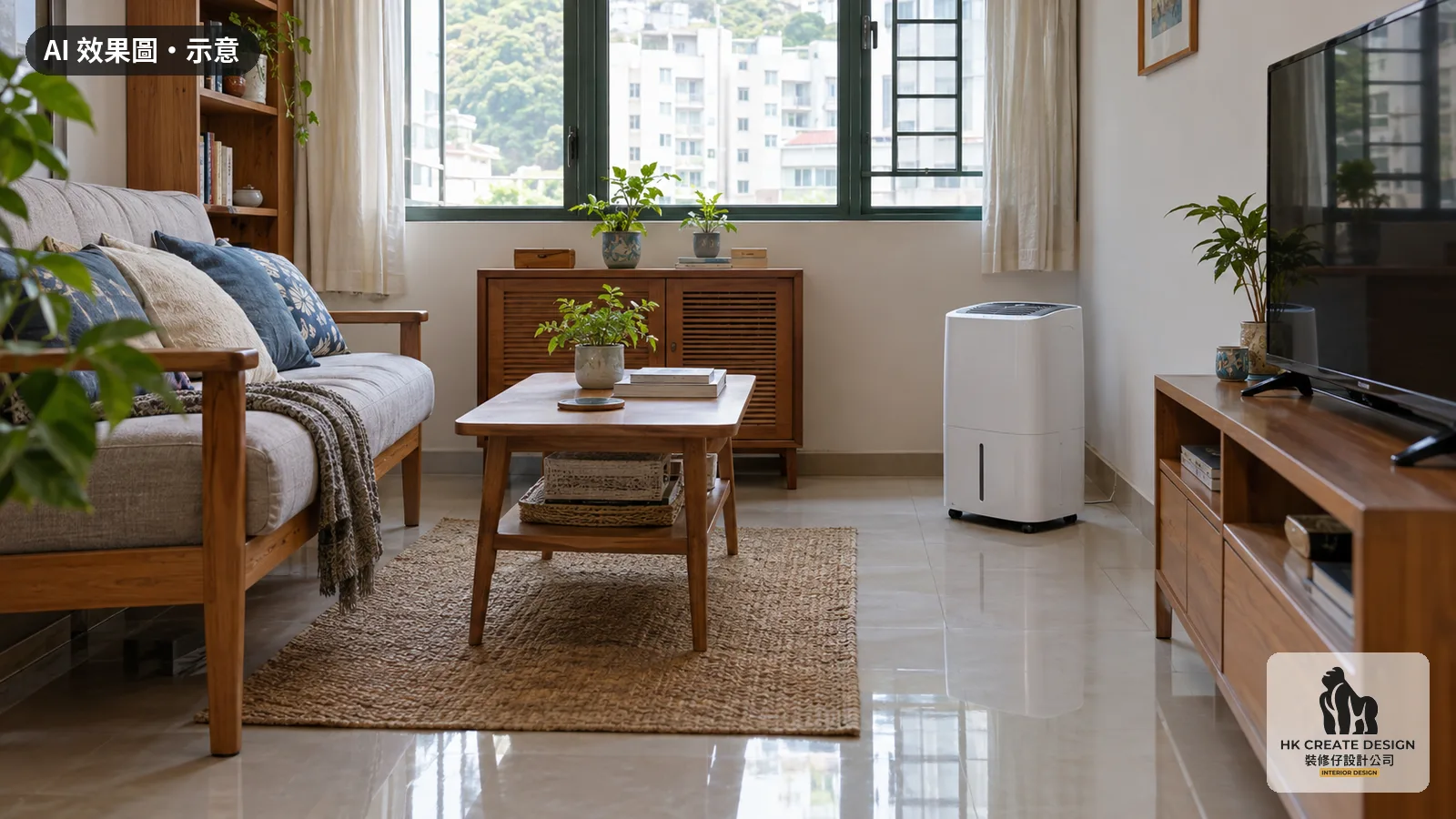
Even without seepage, village houses need humidity control. Allow convenient sockets for dehumidifiers in each room. H02 installation of a single 13 A socket costs HK$640 per point[1]. Electrical work must be handled by a registered electrical contractor[7].
During a humid spell, close windows and use a dehumidifier when outside air is wetter. Open windows for ventilation when outdoor conditions are drier.
Bespoke furnitureplacement, leave an air gap behind cabinets against external walls or protect the rear panel from damp. HK Create Design specifies ENF-grade board as standard, but prolonged contact with a wet wall can affect even good-quality board. Wardrobes andPlatform bedsVentilation openings can help reduce musty smells.
The Environmental Protection Department notes that excessive indoor humidity encourages mould and affects indoor air quality[6]. Fit extract fans in bathrooms and kitchens. Run the bathroom fan for at least half an hour after a shower.
- Allow a socket for a dehumidifier in each room
- Close windows and dehumidify during humid spells
- Leave an air gap behind cabinets and add ventilation openings
- Allow sufficient run time for kitchen and bathroom extract fans
10
Air conditioners and roof equipment: easily overlooked leak points
External air-conditioner supports, rooftop solar water heaters and antennas are potential leak points. If a fixing penetrates the wall or roof membrane and is poorly sealed, rain can track along the screw into the structure.
Under Buildings Department guidance for these village houses, an external metal air-conditioner support must include a means of preventing drips and project no more than 750 mm from the wall[5]. Air-conditioner condensate dripping onto a sill or façade can disturb neighbours and keep the external wall wet, accelerating deterioration.
For qualifying solar equipment and small antennas on the main roof of a New Territories Exempted House, the Buildings Department specifies a maximum average imposed load of 150 kg/m² and prohibits installation on a canopy[5]. Waterproof pads and compatible sealant can protect support bases. Avoid unsealed penetrations through the membrane.
With roof equipment already in place, pay particular attention to supports, internal corners and pipe penetrations. C01 waterproofing includes reinforcement around internal corners and penetrations[1]. If equipment has to be temporarily removed to provide access, this is priced separately.
Check the air-conditioner condensate drain regularly. A loose or blocked drain can send water back indoors and stain the wall below the unit. The stain is easily mistaken for rain entering through the façade.
- Seal fixing holes properly
- Provide proper drainage to prevent air-conditioner drips
- Fit waterproof pads at equipment supports
- Check the air-conditioner condensate drain
- Roof and external wallsWork from the outside in
- Kitchen and bathroom pipesWork from the top down
- Wait through the rainy seasonConfirm there is no seepage
- Paintwork and furnitureRefinish surfaces last
11
In what order should waterproofing work be done?
Work from the outside in and from the top down. Repair the source before surfaces. Start with the roof and façade, then bathroom waterproofing and pipes. Leave internal redecoration, flooring and furniture until last.
Doing the work in the wrong order can increase costs. Rain may spoil new paint before the roof is repaired, or mould may develop behind a new wardrobe before the external leak is fixed.
Choose dry weather for roof and façade waterproofing. Hong Kong Observatory figures put average monthly rainfall at or below 120 mm from October to January, falling to around 30 to 40 mm in November and December[2], making it a suitable period for exterior waterproofing.
Monthly rainfall in the wet season, May to September, can reach 290 to 491 mm[2]. Rain can delay external work but is also a good test of a repair. Completing waterproofing in autumn or winter and monitoring it through the wet season before redecorating gives time for leaks to show.
- Work from the outside in and from the top down
- Repair the source before refinishing surfaces
- External waterproofing in autumn and winter
- Check performance during the rainy season before internal finishes
12
What to look for in a waterproofing quote
The Consumer Council recommends specifying the scope, materials, quantities and warranty in the quotation[8]. A waterproofing quote should specify the product and brand, number of coats, reinforcement at internal corners and pipe penetrations, pond testing and warranty period.
A waterproofing quote can mean a single painted coat or removal of old layers, crack repairs, reinforcement of internal corners, two or three coats and testing. Those differences can change both the price and the result severalfold.
HK Create Design publishes its waterproofing prices online[1]. C01 uses SikaTop Seal-107 on a clean, dampened substrate, reinforces corners and pipe penetrations and applies two coats in crossing directions. C02 bathroom waterproofing includes a 24-hour pond test. Work carries a one-year warranty.
NoteWaterproofingwarranties usually cover the treated area. A repaired roof warranty will not cover water entering through an untreated external wall. Identifying the source at the survey is therefore essential.
- Specify brand, number of coats and reinforcement locations
- Does the quote include a pond test?
- Prices published online
- Warranty applies to the treated area
Example: damp at the base of a ground-floor living room wall
Assumptions
- Around 150 sq ft of peeling paint at the foot of the walls
- Slight ground-floor dampness
- Add two sockets for dehumidifiers
How to calculate quantities
- E01:150 × HK$39 = HK$5,850
- H02:2 × HK$640 = HK$1,280
- Total: HK$7,130
Illustrative total of about HK$7,130, combined with keeping windows closed and dehumidifying during humid spells.
Severe ground moisture may call for reinstating the floor waterproofing. Confirm after a site survey. [1]
13
Three village house waterproofing examples
Example 1. A damp patch in a top-floor bedroom ceiling corner grew after heavy rain. Leaves had blocked the roof outlet, and the nearby membrane was cracked. After clearing the drain and repairing cracks, two C01 coats on the 700 sq ft roof cost HK$27,300. Following checks through a rainy season, E01 redecoration of about 400 sq ft of ceiling and walls cost HK$15,600[1].
Example 2. Paint peeled at the foot of the ground-floor living room walls and the floor was wet in humid weather. The diagnosis was ground moisture and condensation. E01 preparation and painting across about 150 sq ft cost HK$5,850. Two sockets for dehumidifiers cost HK$1,280. The owner was advised to close windows and dehumidify during very humid weather[1].
Example 3. Water dripped onto the ground-floor kitchen ceiling beneath an upstairs bathroom. A C04 pond test identified the bathroom membrane as the source. C05 strip-out and waterproofing cost HK$13,000, with wall and floor tiling afterwards[1].
In all three examples, finding and treating the source costs less than waterproofing the whole house indiscriminately.
- Blocked roof outlet
- Ground moisture and condensation
- Failure of bathroom waterproofing
- Find the source before choosing the repair
14
Contact HK Create Design about village house seepage
HK Create Design has served Hong Kong households since 2019. Our team includes designers and tradespeople with over 15 years’ experience and has repaired seepage affecting many village house roofs, bathrooms and walls. Our prices are published online[1].
A limited offer provides free site measurement for two or more work items until 31 December 2026. We inspect the roof, external walls, kitchen and bathrooms and identify priorities. Work carries a one-year warranty. The minimum charge is HK$2,000.
Shop 16, G/F, Fu Yau Building, 61 Po Kong Village Road, Wong Tai Sin, Kowloon. WhatsApp 5243 7747 with photos of the stains and roof for an initial assessment. Include close-ups and wider views and note when the stain appeared and whether it grows after rain.
- Serving customers since 2019
- Inspect the roof, external walls, kitchen and bathrooms
- One-year warranty
- WhatsApp 5243 7747
Advice from our tradespeople
「When a village house ceiling has a stain, the first place I check is the roof outlet. Clearing leaves often makes a considerable difference.」
「Widespread condensation in humid weather needs moisture control. Two extra sockets for dehumidifiers may be a more effective purchase than waterproofing.」
FAQ
10 practical questions answered
01What should I do about water stains on a village house ceiling?
On the top floor, check roof drains and the membrane first. On intermediate floors, the source may be a bathroom or pipe above. A pond test can help check the bathroom membrane[3][1].
02What does village house roof waterproofing cost?
C01 two coats of SikaTop Seal-107 at HK$39 per sq ft, about HK$27,300 for 700 sq ft. Add HK$10 per sq ft for a third coat.[1].
03Does a damp wall during humid spring weather mean there is seepage?
If many surfaces become damp at once and dry when the weather changes, condensation is likely. Close the windows and dehumidify. Damp recurring at one spot after rain suggests seepage.
04Can a mouldy wall be painted directly?
Repair the source first, allow the wall to dry thoroughly and then apply E01 preparation and moisture-resistant painting at HK$39 per sq ft[1].
05How should damp rising through a ground floor be addressed?
For mild damp, consider C01 waterproofing and B02 screeding before tiling. Severe damp may require A02 strip-out to the concrete and rebuilding[1].
06When is the best time to waterproof the roof?
October to January is generally drier and often suitable for external waterproofing. Check performance through wet weather before redecorating inside.[2].
07How can I tell whether my bathroom is leaking into the flat below?
For the specified pond test, close the outlet, add 2–3 cm of water and monitor the ceiling below for 24–48 hours. C04 costs HK$1,400 per test[1].
08Does damp on the wall below an air conditioner mean external wall seepage?
A loose or blocked air-conditioner drain can cause condensate to back up. Check the drain first and ensure the installation prevents drips[5].
09Is village house waterproofing covered by a warranty?
HK Create Design’s one-year warranty covers the areas worked on. Identifying the correct source at the survey is therefore important[1].
10What should I do about a musty wardrobe in a village house?
Leave the cabinet back clear of the external wall, add ventilation holes and use a room dehumidifier. HK Create Design uses ENF panels in custom furniture.
CHECK THE BASIS
Data and technical basis, sources can be verified
- [1]HK Create Design published 2026 rates and work item descriptions Accessed: 2026-11-03
- [2]Hong Kong Observatory climatological normals, 1991–2020 Accessed: 2026-11-03
- [3]Buildings Department: water seepage FAQs Accessed: 2026-11-03
- [4]Buildings Department: New Territories Exempted Houses Accessed: 2026-11-03
- [5]Buildings Department, Green and Amenity Facilities in New Territories Exempted Houses Accessed: 2026-11-03
- [6]Environmental Protection Department: Indoor Air Quality Information Centre FAQs Accessed: 2026-11-03
- [7]Electrical and Mechanical Services Department: Household Electrical Safety Handbook, new installations, additions and alterations Accessed: 2026-11-03
- [8]Consumer Council: Renovation quotations should be detailed and teach you one by one in 12 major areas Accessed: 2026-11-03