01
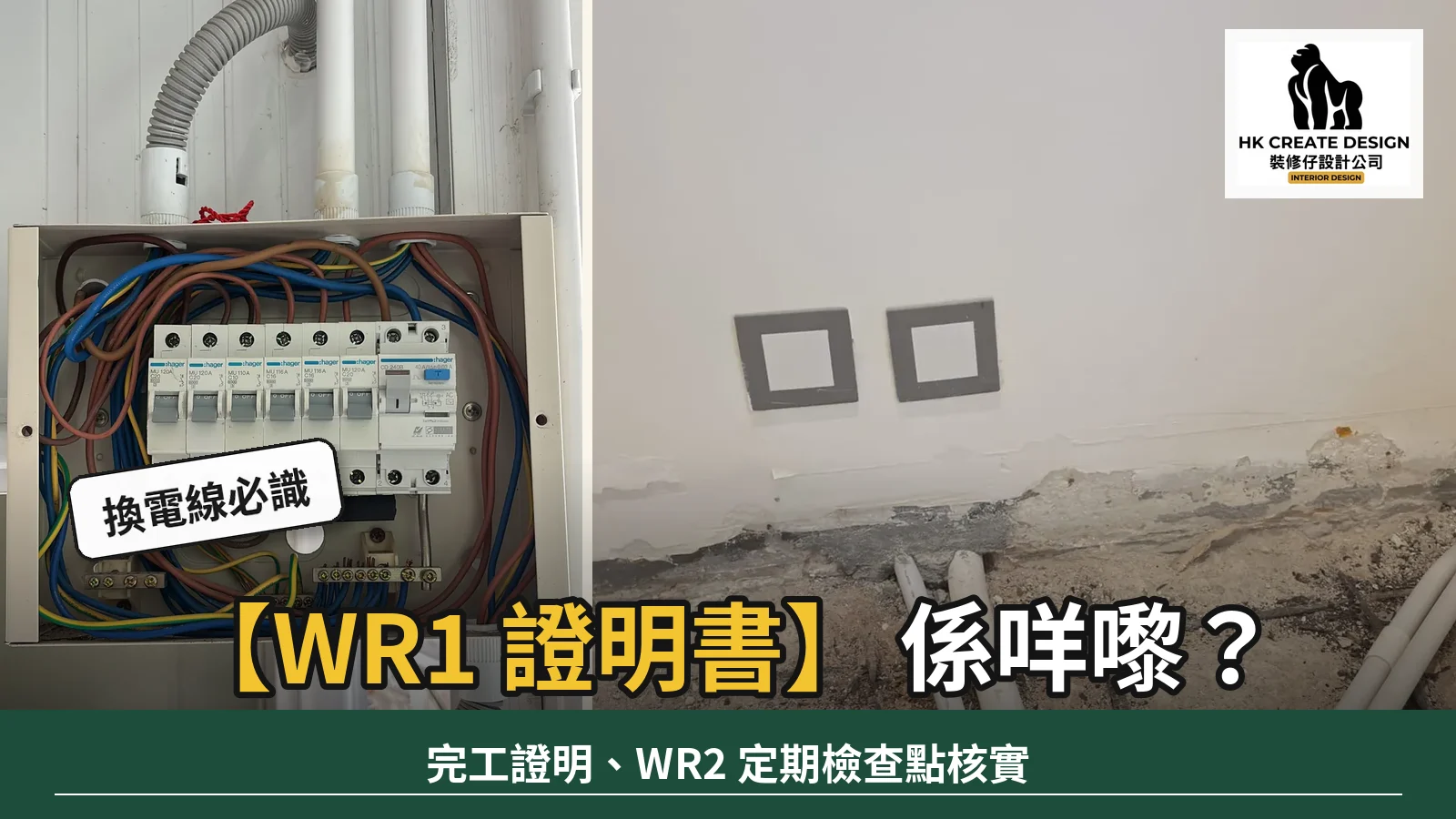
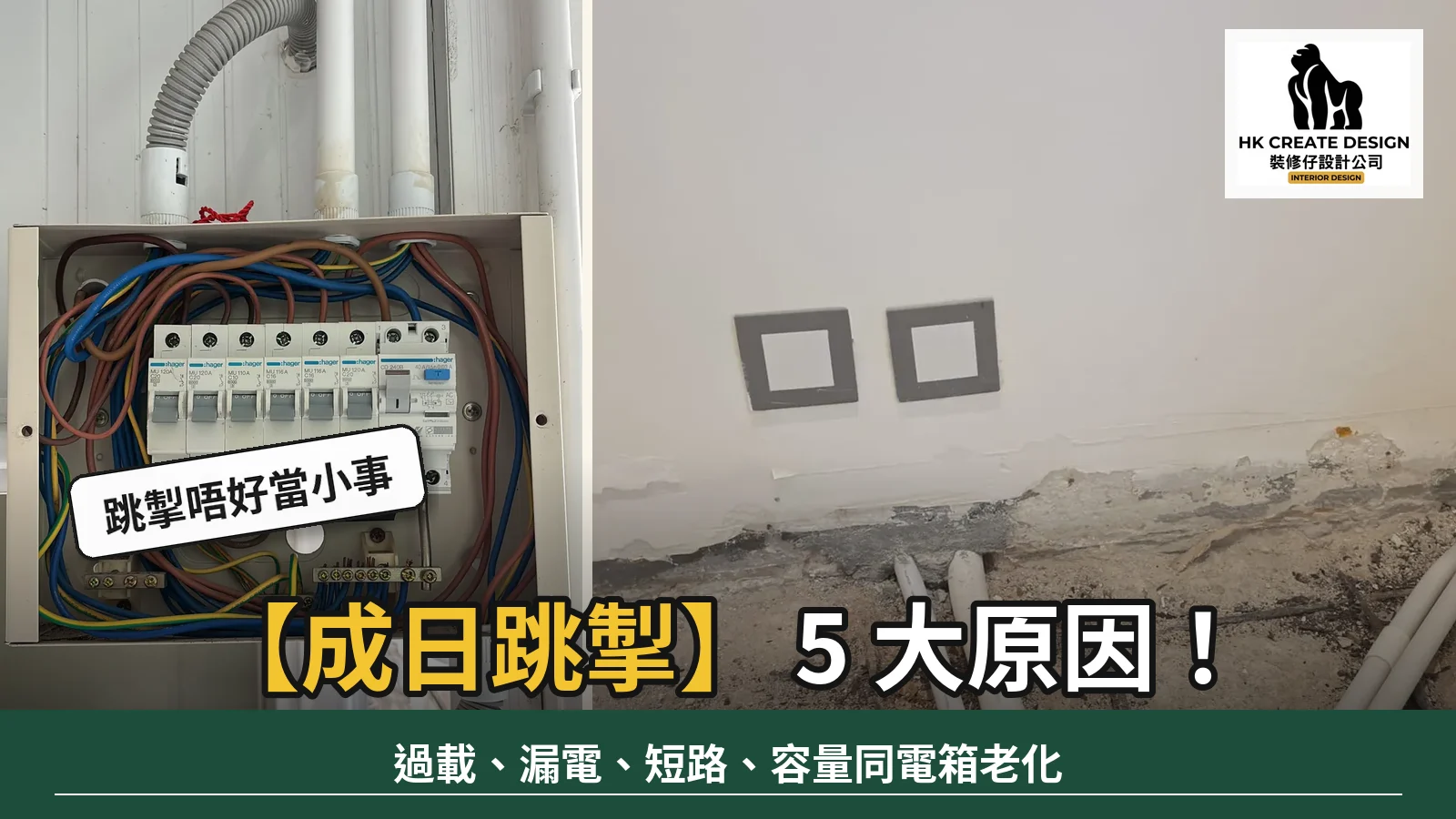
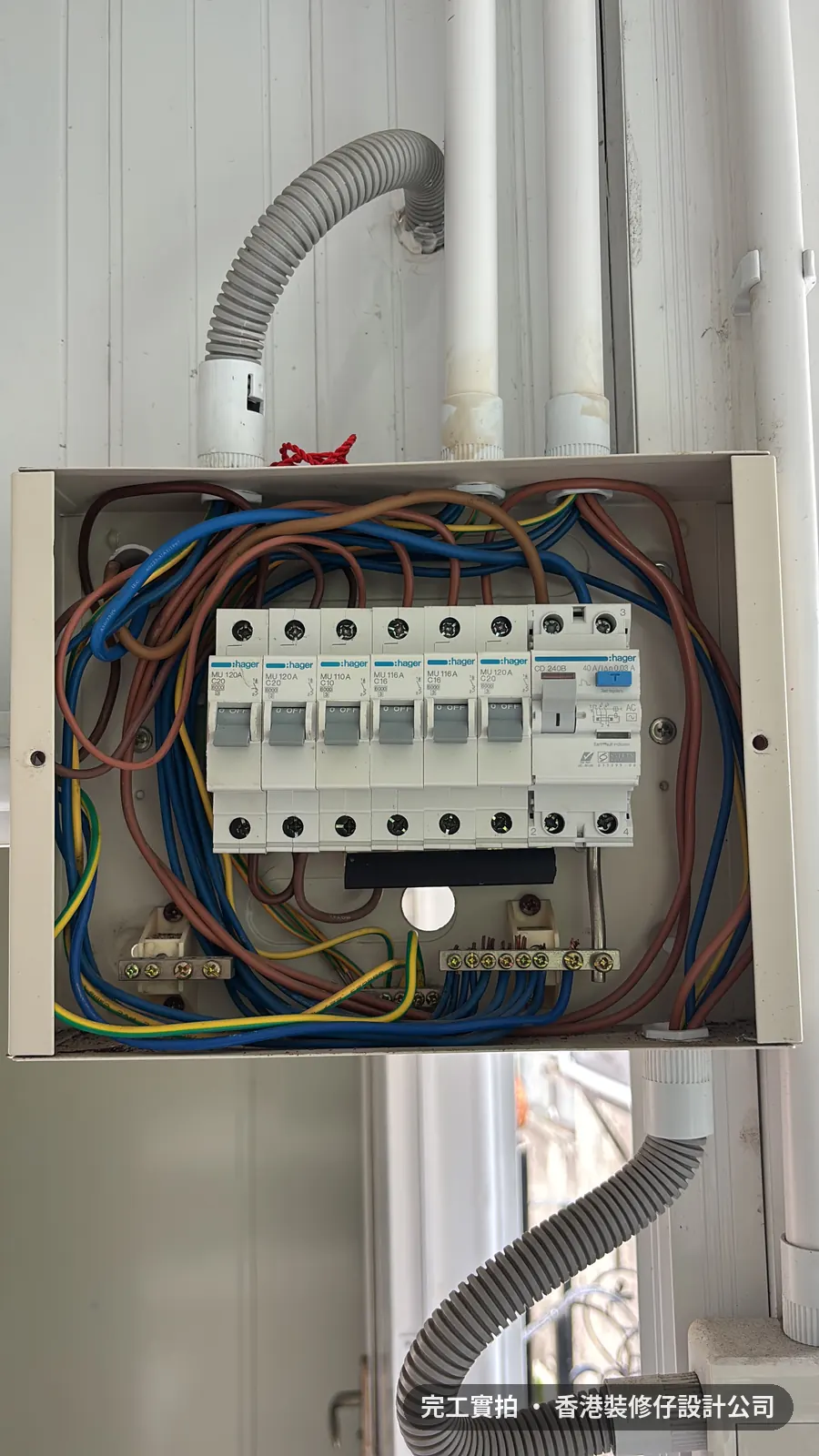
If a breaker trips, first identify which one has tripped
Read the switch labels on the front of the board to see which device tripped. An individual MCB often indicates overload or a short circuit. An RCD often indicates earth leakage, for example from moisture in an appliance or wiring. If the main breaker tripped, total load or the incoming supply may need checking.
EMSD requires RCD protection for socket outlet circuits [2]. A tripped RCD can mean the protection is working correctly.
- MCB trip — overload or short circuit
- RCD trip — earth leakage
- Main breaker trip — supply capacity may have been exceeded
02
Cause 1 — overload
An overload occurs when appliances on one circuit draw too much current together. For example, a rice cooker, kettle, microwave and oven on one kitchen circuit may exceed its MCB rating.
EMSD advises providing enough outlets indoors and using a separate outlet for each high-load appliance.[2] Long-term reliance on multiple extension leads and adaptors can overload a circuit and overheat its outlets and cables.
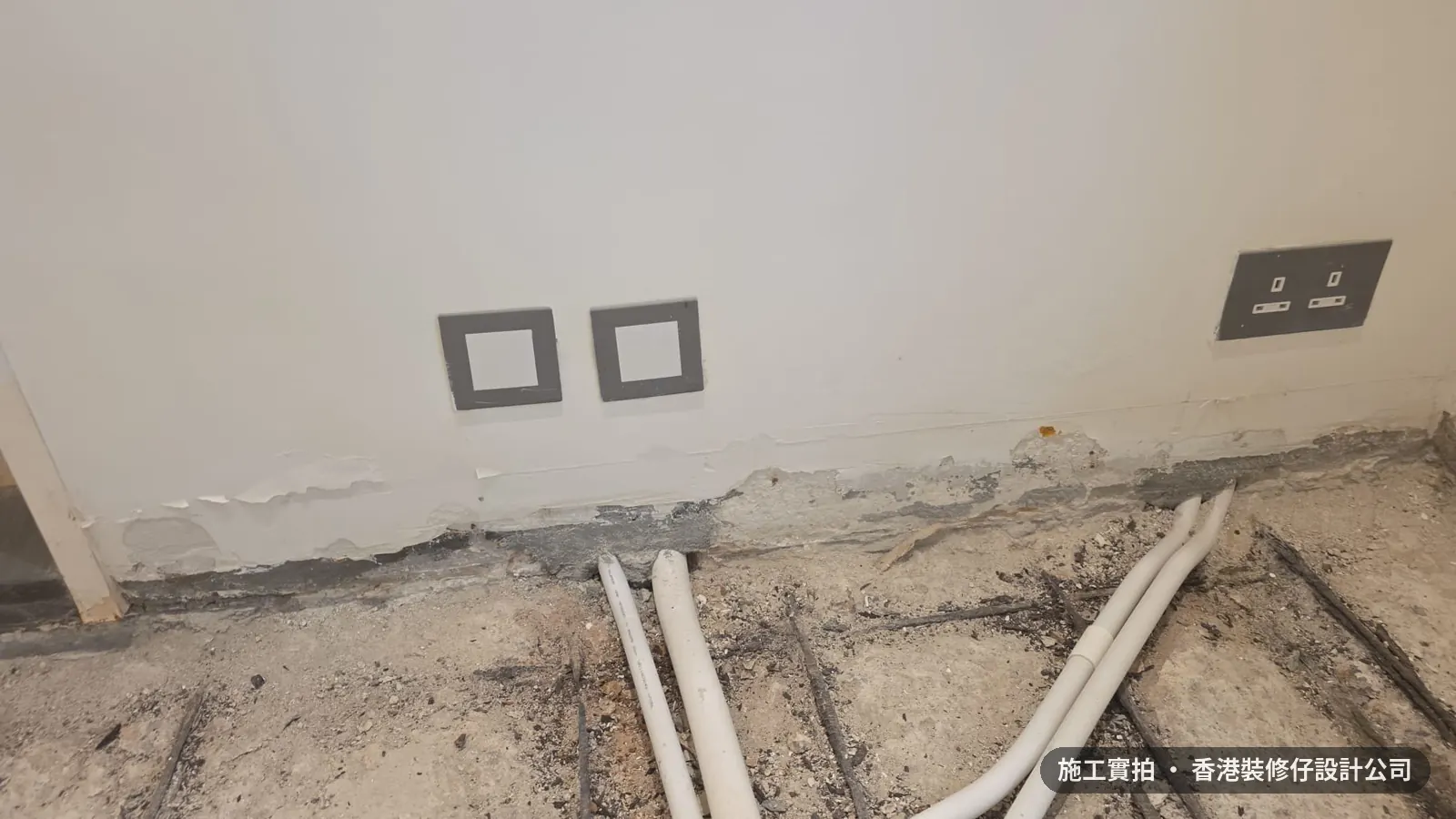
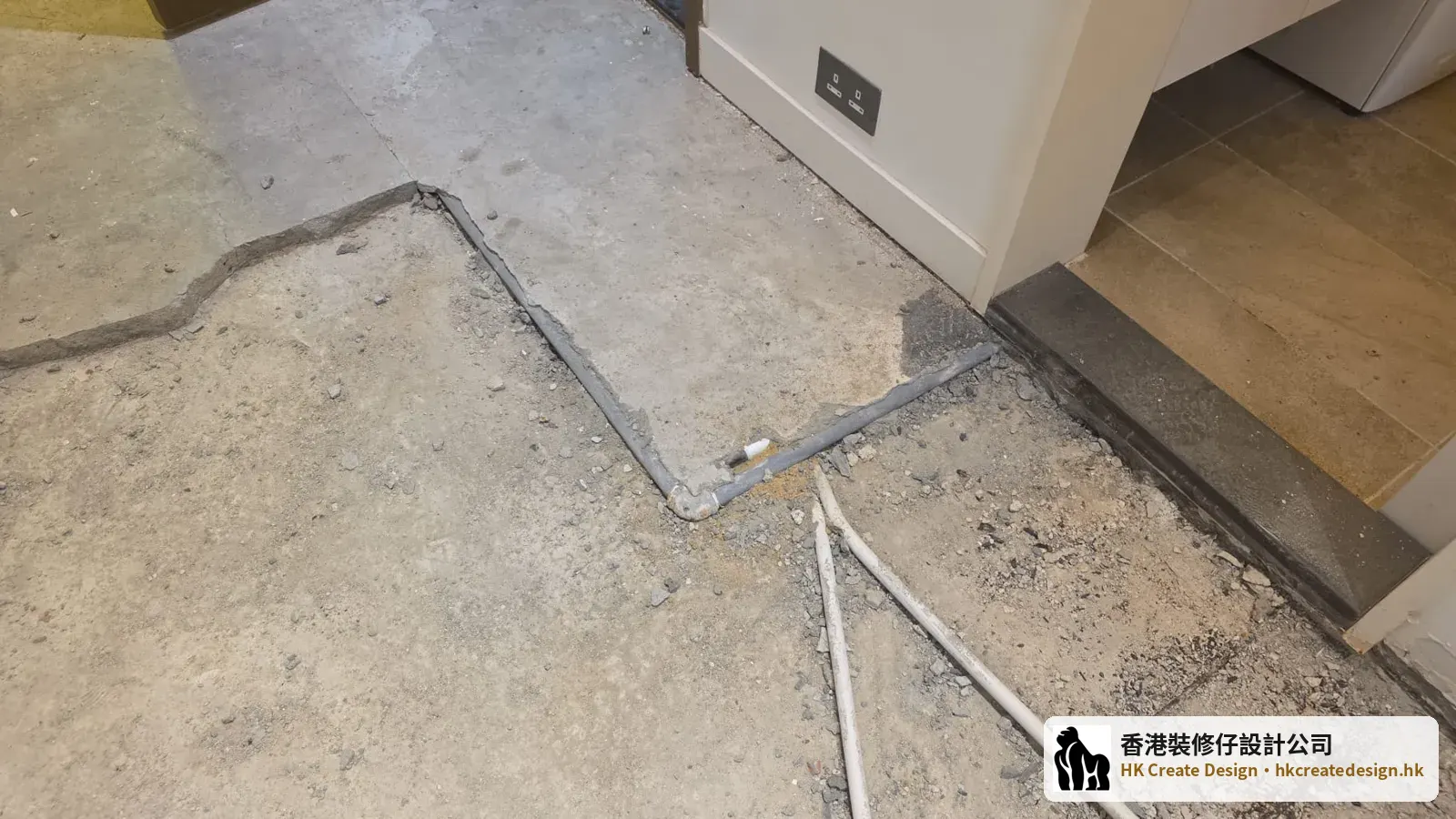
Stagger high-load appliances or ask about a dedicated circuit. HK Create Design lists H06, a new dedicated circuit, at HK$3,350.[1]
- Too many high-load appliances running together
- Avoid relying on extension leads and multiway adaptors
- New dedicated circuit — HK$3,350
03
Cause 2 — earth leakage (RCD trip)
Common causes of RCD trips include water entering an appliance, such as a water heater, washing machine or refrigerator, moisture near an outlet, deteriorated cable insulation and rain getting into outdoor or balcony lights.
If there are no signs of damage or moisture, unplug appliances protected by the RCD where safe, then reset it once. Reconnect dry appliances individually. If one trips the RCD, leave it unplugged for inspection. If the RCD trips with the appliances disconnected, leave the circuit off and contact a registered electrical contractor.
Hong Kong's humid climate can lead to more RCD trips in damp spring weather, often because moisture has entered an outlet or appliance.
- Unplug all accessible appliances where safe
- Reconnect one at a time
- Still trips with appliances unplugged — possible wiring fault
You can swipe left or right on your phone to view the complete table.
| Which device tripped? | Possible cause | Process |
|---|---|---|
| MCB | Overload | Stagger appliance use or add a dedicated circuit |
| MCB trips as soon as it is reset | Short circuit | Call a registered electrical contractor |
| RCD | Earth leakage or moisture | Unplug appliances and check them one at a time |
| Main switch | Incoming supply capacity is too low | Apply to the electricity supplier for increased capacity |
| Frequent unexplained trips | Ageing breaker | Electrical inspection or distribution board replacement |
See the EMSD Household Electrical Safety Handbook for guidance on dedicated circuits. [2]
「Kitchen circuits often trip because several appliances overload them. Adding a dedicated circuit can resolve this without replacing the entire distribution board.」
04
Cause 3 — short circuit
A short circuit occurs when a live conductor touches neutral or earth, causing a large fault current that can trip the MCB immediately. Possible causes include a faulty appliance, a burnt outlet, rodent damage or a cable hit by a nail or drill.
If a breaker trips immediately on reset, a short circuit is possible. Leave it off and arrange a registered electrical contractor's inspection.
If you smell burning, see sparks or find a blackened outlet, isolate the power if the main switch is safe to reach.
- Trips again immediately
- Avoid repeated resets
- Isolate the supply if safe when you smell burning
05
Cause 4 — insufficient supply capacity
If the main breaker trips when the air conditioner, electric water heater and induction hob run together, the incoming supply may be too small. EMSD advises owners to consider future demand when deciding whether to ask the electricity supplier to increase the approved load.[3]
Flats in older buildings may have a limited incoming supply. Additional air conditioners and other high-load appliances can exceed it. Ask the electricity supplier about increasing capacity and arrange for a registered electrical contractor to upgrade the board and incoming cable.
- Main breaker trips when high-load appliances run together
- Apply to the electricity supplier for increased capacity
- Upgrade the distribution board and incoming cable
06
Cause 5 — ageing board or breaker
After many years of service, parts inside an MCB or RCD can deteriorate. It may trip unnecessarily or fail to trip when required. An old fuse box without RCD protection offers less protection against electric shock.
Buildings Department figures show that 24,874 private buildings were at least 30 years old.[8] Many older buildings still have their original distribution boards. Arrange an inspection. HK Create Design lists H01 electrical inspection at HK$770 and H09 Distribution board replacement HK$6,800。[1]
- Ageing breaker
- Fuse box
- Electrical inspection — HK$770
07
Checks you can make and when to call an electrician
You can identify which device tripped, unplug dry and undamaged appliances and reconnect them individually, use the RCD test button and run high-load appliances at different times.
Call a registered electrical contractor if the breaker trips immediately after a reset, you see sparks or signs of overheating, you smell burning or the RCD still trips with appliances unplugged. A new circuit or distribution board also requires a registered contractor. EMSD requires the installation to be inspected and tested by a registered electrical worker before it is re-energised after repairs. The completion certificate is WR1. [4]
Never tape a breaker in the on position, fit a higher-rated fuse to stop it blowing or remove an RCD.
- At home — read the switch labels and unplug appliances where safe
- Call an electrician for an immediate repeat trip or burning smell
- Never tape a breaker on or remove an RCD
08
How many electrical accidents are reported?
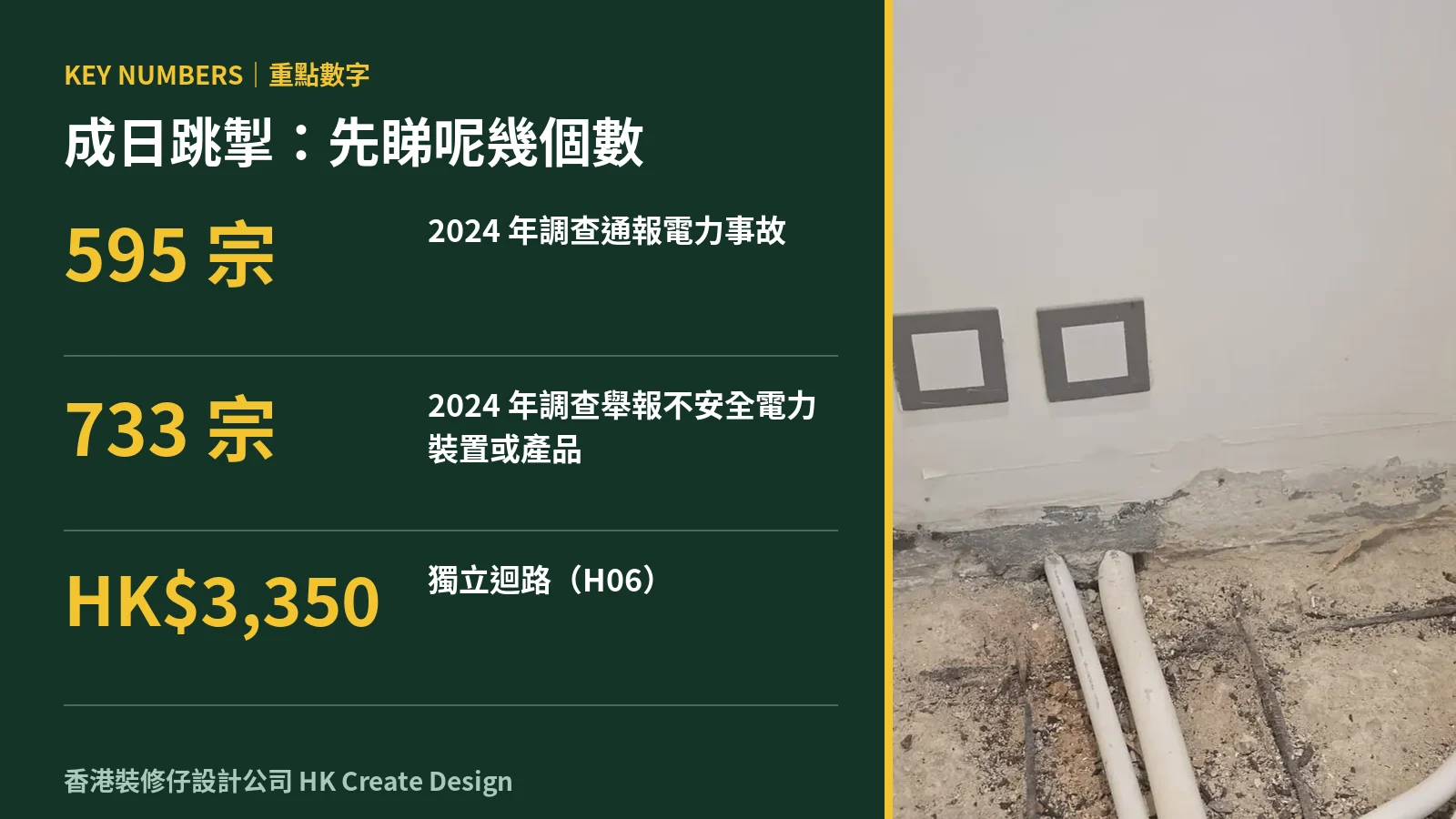
The government's 2026–27 Estimates report that EMSD investigated 595 reported electrical accidents in 2024. The revised estimate for 2025 was 590.[5] In 2024 EMSD also investigated 733 reports of unsafe electrical installations or electrical products.[5]
Under EMSD's 2025 wiring code, from 1 January 2029 new installations and alterations involving a distribution board must provide arc fault detection devices (AFDDs) on socket-outlet circuits in residential flats.[6]
- 595 electrical accidents investigated in 2024
- 733 reports of unsafe installations or products
- From 1 January 2029: AFDDs for residential socket circuits in new installations or alterations involving a board
Example — the circuit trips when the oven comes on
Assumptions
- Oven and kitchen outlets share a circuit
- Spare ways available in the distribution board
- Add a dedicated circuit
How to calculate quantities
- H01 electrical inspection — HK$770
- H06 dedicated circuit — HK$3,350
- Total: HK$4,120
Indicative cost around HK$4,120.
Extra charges may apply if the board has no spare ways or the supply capacity is inadequate. Check the written quotation. [1]
09
Repair costs
HK Create Design's 2026 prices are HK$770 for H01 electrical inspection (HK$1,650 comprehensive), HK$640 for H02 additional 13A outlet, HK$430 for H04 light switch replacement, HK$3,350 for H06 dedicated circuit and HK$6,800 for H09 distribution board replacement.[1]
Typical examples include a dedicated kitchen circuit at HK$3,350, around HK$4,120 with inspection, or a comprehensive inspection and an old fuse box replacement at around HK$8,450. The minimum charge for a small job is HK$2,000.[1]
The Census and Statistics Department recorded average daily wages of HK$1,451.20 for electrical fitters, including electricians, in July 2026.[10] Prices are set out by item so you can check the cost in advance.
- Inspection — HK$770
- Dedicated circuit — HK$3,350
- Distribution board replacement — HK$6,800
10
Everyday ways to prevent overloads and trips
Use the oven, water heater and other high-load appliances at different times. Avoid multiway adaptors and linked extension leads. Keep bathroom and kitchen appliances dry. Test the RCD periodically using its test button. Check outdoor and balcony outlets before humid weather, and arrange periodic electrical inspections in older flats.
EMSD recommends periodic inspection and testing by a registered electrical contractor even where the home's approved load is 100A or less.[9]
- Stagger high-load appliances
- Avoid multiway adaptors
- Keep appliances and outlets dry
- Use the test button regularly
11
Checks you can make at home
First switch off high-load appliances such as the air conditioner, oven and water heater. Look at the switch positions and labels on the front of the board and note which device tripped. If an MCB trips again immediately after a single reset, leave it off and contact a registered electrical contractor.
Step 4. If an RCD tripped and it is safe to do so, unplug appliances on that circuit before a single reset. Reconnect dry appliances individually to see which is associated with the trip. Step 5. If power holds, record the time and appliances in use for the electrician.
Step 6. If the same event happens several times in a week, arrange an electrical inspection promptly.
- Switch off high-load appliances
- Identify which breaker tripped
- Stop if the MCB trips again immediately
- RCD check — reconnect appliances individually
- Log the time and appliances in use
You can swipe left or right on your phone to view the complete table.
| No. | Item | Price |
|---|---|---|
| H01 | Comprehensive electrical inspection | HK$770(HK$1,650) |
| H02 | Added 13A socket | HK$640 |
| H04 | Replace a light switch and its wiring | HK$430 |
| H06 | Dedicated circuit | HK$3,350 |
| H09 | Replace the distribution board | HK$6,800 |
HK Create Design's published 2026 prices. Minimum charge HK$2,000. [1]
12
Frequent trips in an older flat may indicate a need for rewiring
If different rooms in an older flat keep tripping, outlets show signs of overheating or the cable sheath has hardened, the cause may beageing electrical wiring, which an extra circuit alone cannot resolve.
HK Create Design example for an older flat — a replacement distribution board and partialRewiringapproximately HK$13,590. A full rewire of a two-bedroom flat is around HK$30,650.[7] Rewiring and redesigning the circuits can resolve recurring trips caused by wiring or capacity problems. Related reading:Rewiring prices.
- Trips in several rooms
- Outlet overheating
- Hardened cable sheath
13
Air conditioners, water heaters and induction hobs
An air conditioner can draw a high starting current and may trip a shared circuit. Ask about a dedicated circuit for each unit. An electric water heater combines a high load with a wet location and needs an appropriate dedicated circuit and earth-leakage protection. An induction hob is another high-load appliance that needs an appropriately rated circuit.
EMSD advises using a separate socket outlet for each high-load appliance.[2] Check the circuits when fitting or replacing any of these three appliance types to reduce future tripping.
- Dedicated air-conditioning circuit
- Dedicated water heater circuit with RCD protection
- Dedicated induction hob circuit
14
What should a tenant do if the power keeps tripping?
If you rent, first note whether the trips occur when several high-load appliances run together or when a particular appliance is connected. Report signs of a fixed installation fault, such as an overheating outlet or ageing board, to the landlord so a registered electrical contractor can investigate.
After the landlord arranges repairs, ask for a copy of the WR1 certificate confirming that the completed work has been inspected and tested.[4]
- Start with simple checks
- Tell the landlord
- Request a copy of the WR1
15
Using individual appliances to identify a possible earth-leakage fault
An RCD that trips immediately after a reset can indicate leakage in an appliance or circuit. If there are no signs of damage or moisture, unplug accessible appliances where safe before trying a single reset.
If the RCD holds with appliances unplugged, reconnect dry, undamaged appliances one at a time, leaving a pause between each. If one trips the RCD, leave it disconnected and have it checked. Kettles, refrigerators, washing machines, electric water heaters and outdoor equipment can all develop faults.
If the RCD still trips with plug-in appliances disconnected, the fault may be in the fixed wiring, a wired-in light, water heater or air conditioner, or moisture in concealed cables. Leave the circuit off and call a registered electrical contractor[2].
Only operate a switch with dry hands and while standing on a dry surface. If you smell burning or see smoke or sparks, stop. Isolate the power only if it is safe to reach the main switch.
- First unplug appliances throughout the flat where safe
- Reset the RCD
- Reconnect appliances individually
- Isolate the supply if safe when you smell burning
- Identify which breaker trippedIdentify whether the MCB or the RCD tripped.
- Unplug appliancesUnplug appliances on the affected circuit where safe.
- Reset the breakerKeep your hands dry and stand on a dry surface.
- Reconnect one at a timeIdentify the appliance causing the trip.
- Call an electricianStill trips with everything unplugged, or there is a burning smell.
Compiled by HK Create Design.
16
Why are trips more frequent in humid weather and typhoons?
Spring humidity in Hong Kong can exceed 90%, causing condensation on walls and appliances. Moisture in outdoor outlets, bathroom lights or deteriorated connections can cause an RCD to trip.
During typhoons and heavy rain, exposed outlets near windows, balconies and external walls are vulnerable to water ingress. Water entering concealed conduits through a leaking wall can cause earth leakage.
In humid spring weather, use a dehumidifier and keep windows closed. Use weatherproof outlets outdoors and on balconies, and keep the bathroom extractor in working order. Trips during rain warrant a check for water ingress near windows and external walls.
HK Create Design looks for water ingress as well as electrical faults. If the water source remains, replacing the RCD alone may leave the trip unresolved.
- Use a dehumidifier in humid weather
- Use weatherproof outdoor outlets
- Investigate water ingress if the circuit trips when it rains
- Address electrical faults and water ingress together
- Overload or short circuitMCB (miniature circuit breaker)Too many appliances may share the circuit, or the wiring may have a short circuit. Reduce simultaneous loads and have repeated trips investigated.
- Earth leakageRCD (residual current device)Leakage from an appliance or wiring can occur in damp spring weather, bathrooms and outdoor locations. Note which appliance was in use. Keep wet outlets and appliances out of use and have them checked.
These signs guide the investigation. An electrician must test the installation to confirm the fault.
17
Residential arc fault detection devices from 2029: affected works and circuits
Under EMSD's 2025 wiring code, from 1 January 2029 new installations and alterations involving a distribution board must provide arc fault detection devices (AFDDs) on socket-outlet circuits in residential flats[6].
An AFDD detects electrical arcing from damaged wiring or loose connections. Arcing can start a fire without tripping a standard circuit breaker or RCD. Deteriorating wiring and loose plugs are common causes.
If you are rewiring the flat or replacing the distribution board, ask your electrician about space and budget for AFDDs now. This can avoid later board alterations.
When quoting for a replacement distribution board, HK Create Design explains the requirements of the current Code of Practice and the available upgrade options.
- Residential socket circuits: applies from 1 January 2029 to new installations or alterations involving a distribution board
- AFDD detects electrical arcing
- Consider when replacing the distribution board
- Ask the electrician which edition and requirements apply
Example — fuses repeatedly blow in an older building
Assumptions
- Fuse box without RCD protection
- Concealed wiring passes its tests
- Retain existing circuits
How to calculate quantities
- H01 comprehensive electrical inspection — HK$1,650
- H09 distribution board replacement — HK$6,800
- Total: HK$8,450
Indicative cost around HK$8,450.
A new cable run costs extra. The written quotation confirms the price. [1]
18
Six rules for safe use of extension leads
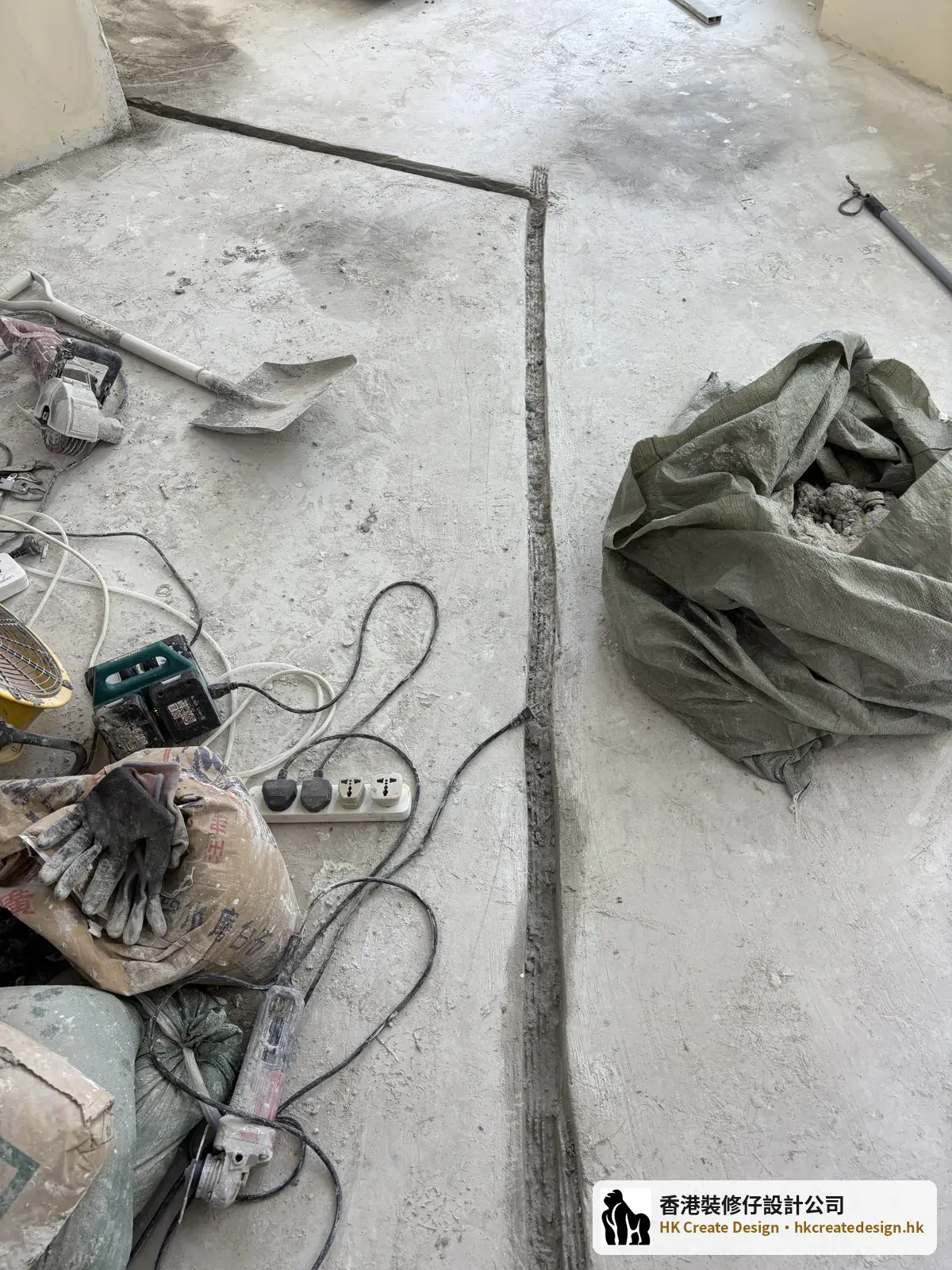
Extension leads can contribute to overheating and tripping. Choose a compliant lead with overload protection, never plug one lead into another and connect high-load appliances such as heaters, kettles and induction hobs directly to a suitable supply.
Keep extension leads uncovered and ventilated, away from rugs, beds and closed cabinets. Replace a lead if its plugs fit loosely, its casing has yellowed or it overheats. Unplug appliances that will be unused for long periods.
If you rely on several extension leads, you may need more outlets. Ask a registered electrical contractor about adding them. HK Create Design lists an additional 13A socket outlet (H02) at HK$640 per group[1], which can cost less than repairing damage from overheating.
EMSD advises against overloading socket outlets or extension leads[3]. Safe use of electricity can prevent a costly accident.
- Choose a compliant extension lead
- Never connect one extension lead to another
- Plug high-load appliances into suitable wall outlets
- Replace an overheating extension lead
19
What to record for the electrician
Before the electrician arrives, note when the trip occurred, which device tripped, what was running and whether it tripped immediately after a previous reset. This can shorten the time needed to trace the fault.
Photograph the front of the board, including the circuit labels and the tripped device. Record any link to the weather, such as trips that only occur when it rains. A few days of observations can help the electrician identify a pattern.
Send the electrician photos and a record of the trips on WhatsApp. This can help them bring the right tools and parts and may save a second call-out.
Send photos to HK Create Design on WhatsApp at 5243 7747. We can discuss the likely causes before arranging a site visit. An H01 electrical inspection starts at HK$770[1].
Compare recent bills if usage has risen without a change in habits. An ageing appliance can consume more energy, though a bill cannot diagnose earth leakage. Refrigerators, electric water heaters and air conditioners that have been in use for more than ten years may merit an efficiency and safety check.
- Record the time of the trip and appliances in use
- Photograph the distribution board and circuit labels
- Note weather conditions
- Send a photo to the electrician on WhatsApp
You can swipe left or right on your phone to view the complete table.
| steps | What is it for? | What the result means |
|---|---|---|
| 1 | Identify which breaker tripped | An MCB trip usually points to overload or a short circuit. An RCD trip usually indicates earth leakage. |
| 2 | Disconnect plug-in appliances on the circuit before a single reset | If the tripping stops, an appliance may be responsible |
| 3 | Reconnect one at a time | If one appliance trips the circuit, leave it unplugged for inspection |
| 4 | Still trips with appliances unplugged | Possible fixed wiring fault — call a registered electrical contractor |
| 5 | Burning smell or sparks | Isolate the power if safe and stop testing |
These checks only help identify a possible cause. Work on fixed wiring requires a registered electrical contractor. [2][3]
20
When should you consider a full rewire?
Repeated trips in different rooms can indicate ageing wiring or inadequate supply capacity across the flat. In homes over 30 years old, cable insulation may have become brittle or lost effectiveness[8].
Consider a rewiring assessment if you still have an old fuse box, outlets are yellowed or show signs of overheating, cables are exposed or cloth-covered, or you rely heavily on extension leads. A full renovation or plans to add high-load appliances, such as air conditioners or an induction hob, are also good times for an assessment.
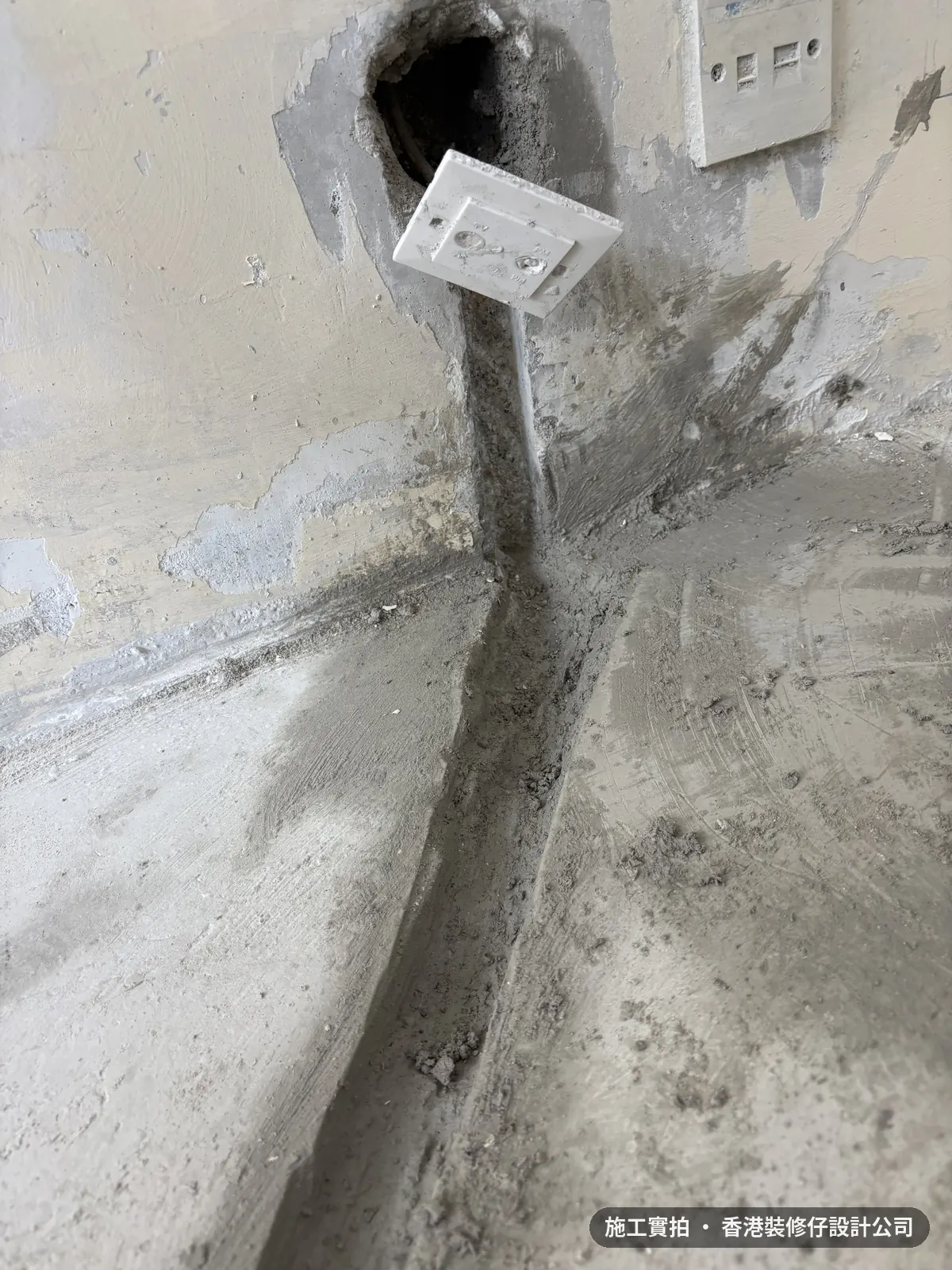
A full rewire often includes a replacement distribution board. The electrician can design the circuits to the current Code of Practice, including dedicated circuits and earth-leakage protection[6]. Find details of HK Create Design's rewiring service on the[7].
Before rewiring, we inspect the existing installation. We then explain the scope and cost of local repairs and a full rewire so you can decide.
If your breakers trip frequently, send a photo of the front of the board to 5243 7747 on WhatsApp. We can discuss whether the wiring needs an on-site assessment.
- Repeated trips in different rooms
- An old fuse box is still in use
- Yellowed or overheating outlets
- Consider during a full renovation
21
Electric shock prevention for households with children or older people
Choose socket outlets with built-in safety shutters to prevent children inserting objects. Keep cables and extension leads tidied away and out of reach.
Older residentshouseholds should consider night lighting and easy-to-reach switches. Motion-activated lights beside beds and along corridors help reduce falls when moving around after dark.
An RCD helps protect against electric shock. Use its test button every three months or as instructed by the manufacturer. If it fails to trip during the test, contact a registered electrical contractor promptly[2].
- Choose shuttered socket outlets
- Keep cables and extension leads out of reach
- Add motion-activated night lights
- Test the RCD every three months
22
How HK Create Design investigates the cause
HK Create Design's team has worked with registered electrical contractors for more than ten years. At a site visit, the electrician tests individual circuits to find the cause before explaining the work and price.
If a dedicated circuit or replacement distribution board is needed, we quote using our published price list and provide the WR1 on completion. The one-year warranty excludes deliberate damage.[1] HK Create Design reports no negative reviews since opening in 2019. WhatsApp 5243 7747. Related guides cover distribution board replacement, signs of ageing wiring andElectrician's charges、WR1。
- Test each circuit individually
- Public price list
- WR1 certificate on completion
Advice from our tradespeople
「Kitchen circuits often trip because several appliances overload them. Adding a dedicated circuit can resolve this without replacing the entire distribution board.」
「When the RCD trips in humid weather, moisture around a balcony light or washing machine is one possible cause. A trip can mean the RCD is protecting you from leakage.」
「An RCD may be tripping to protect you. Never tape it in position or bypass it with a larger breaker. Have the source of the leakage identified and repaired.」
FAQ
17 practical questions answered
01What should I do about repeated trips?
Check which breaker tripped. Unplug appliances where safe and reconnect them individually. If the cause remains unclear, call a registered electrical contractor.
02Does a tripped RCD mean it is faulty?
The RCD is often responding correctly to earth leakage, for example when moisture has entered an appliance.
03What if the breaker trips immediately after resetting?
A short circuit is possible. Leave the breaker off and arrange an inspection by a registered electrical contractor.
04What can you do about frequent kitchen trips?
Run high-load appliances at different times or ask about adding a dedicated circuit (HK$3,350).
05Why does the main breaker trip when the air conditioner and water heater run together?
The incoming supply may be too small. Ask the electricity supplier about increasing the approved capacity.
06Frequent tripping in humid weather?
Moisture can affect outlets or appliances. Keep them dry and have balcony and outdoor outlets checked.
07Does HK Create Design offer a warranty?
A one-year warranty applies, excluding deliberate damage.
08What if different rooms in an older flat keep tripping?
The wiring throughout the flat may have deteriorated. Arrange a full electrical inspection to establish whether the board or wiring needs replacing.
09Who is responsible for recurring trips in a rented flat?
The landlord usually arranges repairs to the fixed installation, subject to the tenancy agreement. Tenants should leave alterations to a registered electrical contractor.
10How do I identify an appliance that may have earth leakage?
If safe, disconnect plug-in appliances before resetting the RCD once. Reconnect dry, undamaged appliances individually. If one causes a trip, leave it unplugged for inspection.
11Is an arc fault detection device (AFDD) compulsory?
From 1 January 2029, residential socket-outlet circuits require AFDDs in new installations or alterations involving a distribution board. Before replacing the board, ask a registered electrical contractor to confirm the scope and required devices.
12Can I plug an electric heater into an extension lead?
Plug high-load appliances such as electric heaters and kettles directly into appropriate wall outlets. An extension lead can overheat.
13Can I reset a breaker as soon as it trips?
If there are no signs of damage, moisture or overheating, the breaker can be reset once. If it trips again immediately, leave it off and arrange an electrical inspection.
14What if the distribution board smells of burning?
Stop using the installation and isolate it only if the main switch is safe to reach. Call a registered electrical contractor urgently. If there is smoke or fire, get to safety and call 999.
15Can I stop the trips by fitting a larger breaker?
No. The breaker rating must match the cable size. A larger breaker can let the wiring overheat without tripping, creating a fire hazard.
16Can frequent trips occur in a new building?
Yes. Running too many appliances at once or earth leakage in one appliance can cause trips in a new flat. Record when the trip occurs, and contact the developer if the flat is still under warranty.
17How much does it cost to fix repeated tripping?
HK Create Design lists H01 electrical inspection from HK$770. RCD or distribution board replacement is quoted after assessment. The minimum job charge is HK$2,000.
CHECK THE BASIS
Data and technical basis, sources can be verified
- [1]HK Create Design 2026 detailed project budget and public price list Accessed: 2026-11-03
- [2]EMSD Household Electrical Safety Handbook — General Installation Requirements Accessed: 2026-11-03
- [3]EMSD safety messages on electrical installations Accessed: 2026-11-03
- [4]EMSD Household Electrical Safety Handbook — New Installations, Additions or Alterations Accessed: 2026-11-03
- [5]Hong Kong Government, 2026–27 Estimates, Head 42, Electrical and Mechanical Services Department Accessed: 2026-11-03
- [6]EMSD summary of revisions to the 2025 Code of Practice for the Electricity (Wiring) Regulations Accessed: 2026-11-03
- [7]HK Create Design rewiring services Accessed: 2026-11-03
- [8]Buildings Department reply on the age of buildings in the 2026–27 expenditure estimates Accessed: 2026-11-03
- [9]Electrical and Mechanical Services Department: Periodic testing of fixed electrical installations Accessed: 2026-11-03
- [10]Census and Statistics Department: Average daily wages of workers on public construction projects, as reported by main contractors (July 2026) Accessed: 2026-11-03